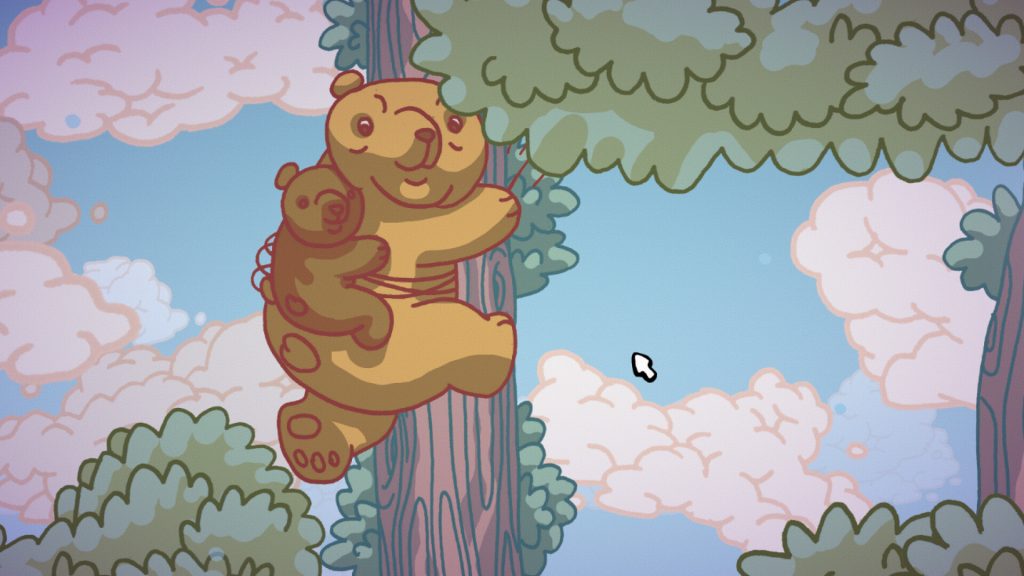
No jump. No run. One grappling hook. The mother bear’s cubs are missing, and every river crossing, ancient ruin, lava cave, cliff face, and reality-distorting wormhole between here and finding them must be navigated with that single tool.
Grapple Bear from Hungarian solo developer ProkischDaniel announces its Steam release with two specific claims that define its identity: every visual element was drawn by hand on paper and digitized without AI assistance, and movement throughout the game relies entirely on grappling hook physics with no conventional platformer locomotion.
The game began as an entry in HEJ Collective’s monthly game development challenge — a Hungarian indie community organization supporting developers since 2019 through regular development challenges, meetups, and mentoring. Grapple Bear earned recognition in that challenge and was subsequently selected as one of the community’s Season 1 publishing label projects, making it a concrete example of community challenge → commercial release.
The Hook-Only Movement Design
The deliberate exclusion of jumping and running from a platformer’s vocabulary is a specific design choice with specific mechanical implications. Jump is the default movement tool in platformers — it provides vertical access, gap-crossing, and enemy avoidance. Removing it forces the game to build every spatial challenge around the constraints and capabilities of grapple hook physics alone.
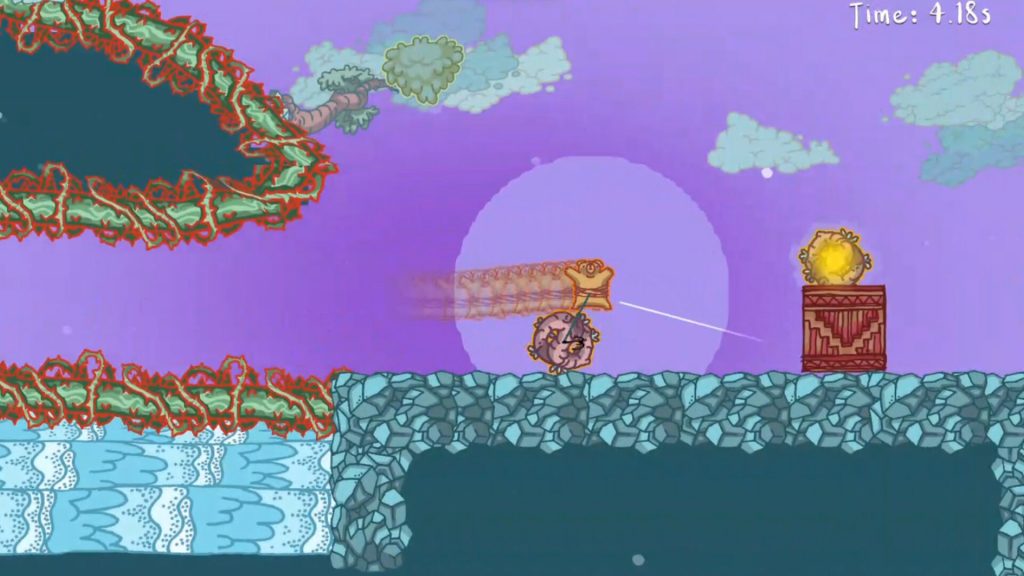
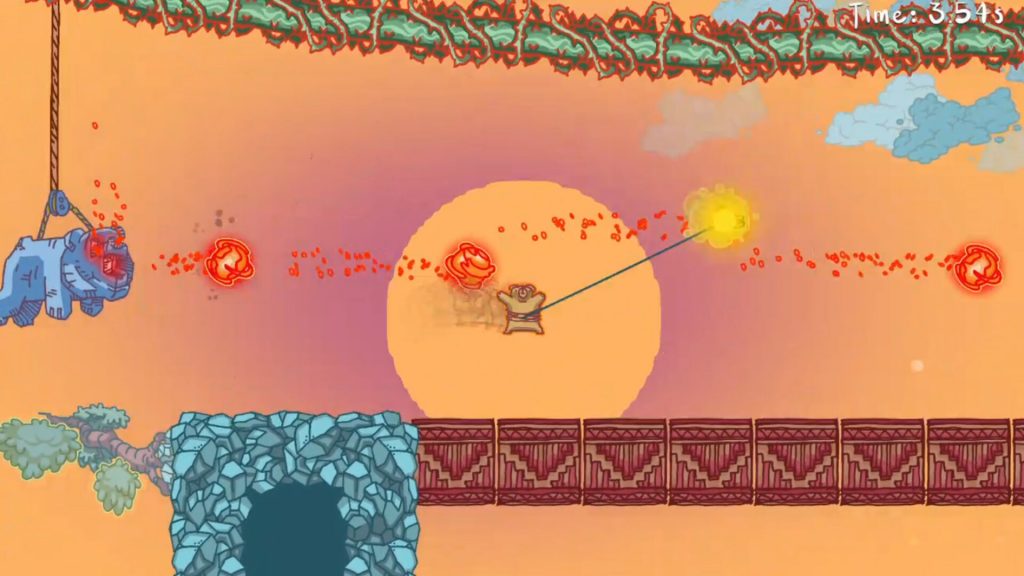
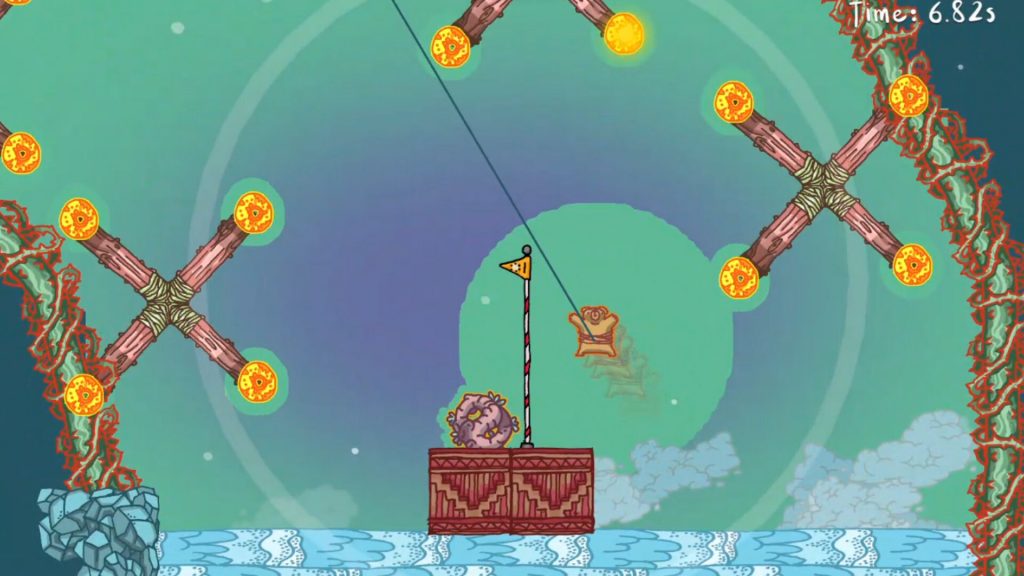
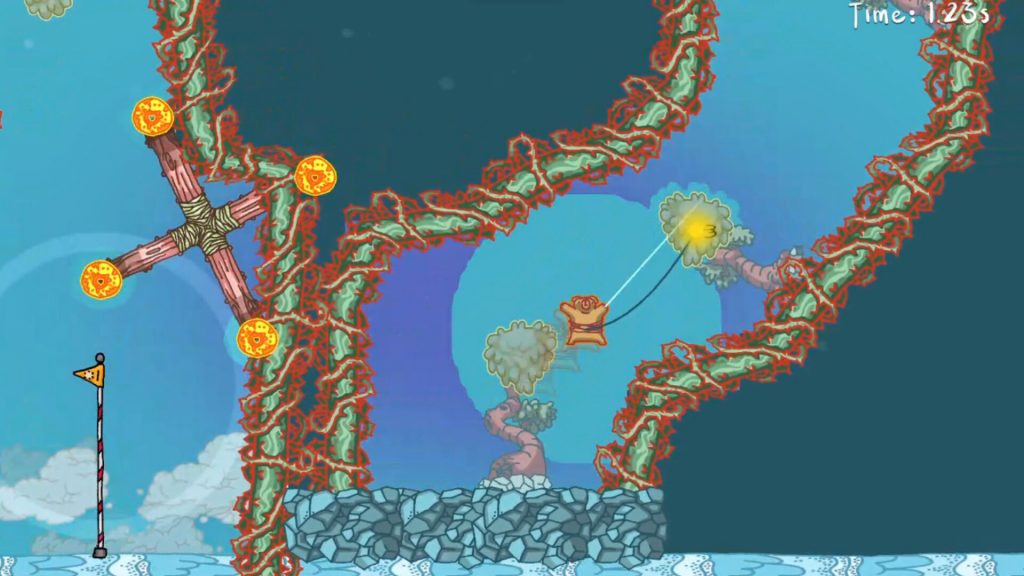
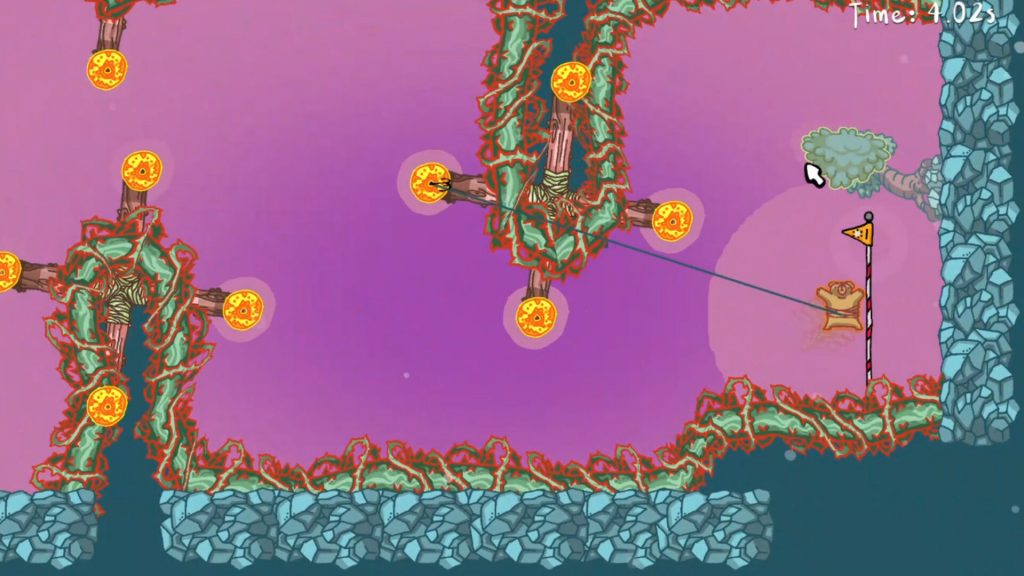
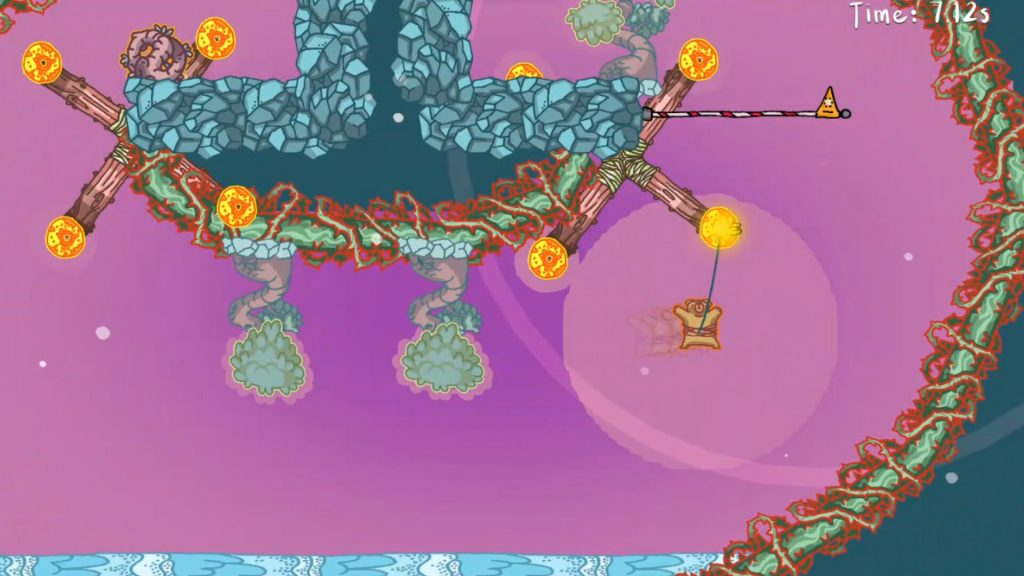
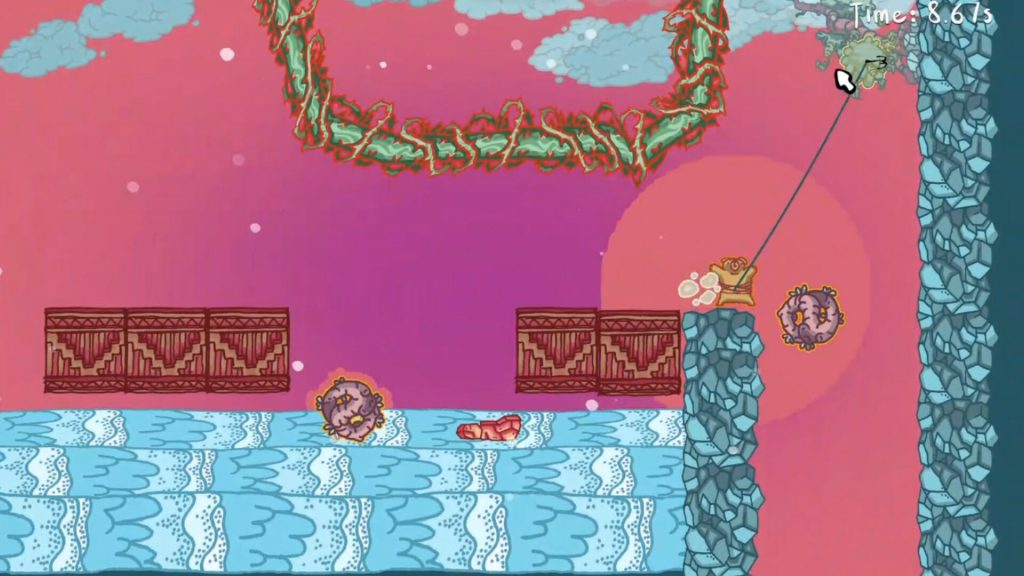
Grapple hook movement requires active decision-making at every moment: where to aim, when to release, how to use momentum from one swing to set up the next. The physical pendulum behavior means that angle, timing, and swing arc all contribute to where the player ends up — which makes grapple traversal feel more like continuous problem-solving than locomotion.
This is the same design philosophy behind games like CELESTE‘s wall-jump focus or Hollow Knight‘s pogo-centric combat: limiting the movement vocabulary forces mastery of what remains rather than allowing players to approximate solutions through mixed technique application.
The “controls are simple but the physical responses require practice to master” description reflects the precision platformer genre’s defining quality — easy to understand, difficult to execute under pressure. With 40+ handcrafted levels, each zone introducing new gimmicks and hazards, the escalating difficulty presumably compounds as players encounter situations requiring increasingly precise hook technique.
The weekly procedural challenge levels and global leaderboards extend the game well past story completion for players who want to optimize their grapple technique against other players’ times — appropriate for a game built entirely around a single, masterable movement system.
The Hand-Drawn Visual Commitment
The “No AI Artwork” declaration is meaningful in the current context where generative AI tools are increasingly common in indie development pipelines — as this coverage has noted in previous articles on CyberSushi and Gacha Capsule Shop Simulator. Those games disclosed AI assistance; Grapple Bear specifically distinguishes itself by the absence of any such assistance.
The actual visual process — drawing everything on paper, then digitizing and coloring — produces a specific aesthetic quality that differentiates hand-drawn work from both pixel art and AI-generated imagery. Each environment in Grapple Bear (peaceful forest, ancient ruins, lava caves, wind-swept cliffs, wormhole space) presumably carries the specific warmth and imperfection of human illustration — line quality that reflects the drawer’s hand, color choices made with editorial intention rather than trained pattern completion.
For a solo developer, this commitment is also a production statement: every visual element represents ProkischDaniel’s direct time investment. The result is a game whose visual identity is entirely traceable to one person’s aesthetic decisions.
The HEJ Collective Path
Grapple Bear‘s trajectory — monthly challenge entry to published commercial game through community infrastructure — demonstrates what indie development communities accomplish when they’re functioning well. HEJ Collective’s monthly challenges provide the external structure that gives developers concrete deadlines and the community feedback that identifies which projects have potential beyond the challenge context.
Grapple Bear earning publishing support through this path means the community identified it as worth backing before any commercial validation existed. This kind of peer-recognition-to-publication pipeline is specifically what small-country indie communities can provide that individual developers lack: the organizational infrastructure to convert community enthusiasm into commercial support.
Hungary’s indie gaming scene doesn’t have the concentrated visibility of larger national gaming industries, but organizations like HEJ Collective building this kind of community infrastructure contribute to the conditions that make visible games possible.
Who This Is For
Strong fit for: precision platformer enthusiasts who specifically appreciate unusual movement constraints; Getting Over It, Only Up, and similar single-mechanic challenge game fans; players who have mastered conventional platformer physics and want a completely different spatial challenge; hand-drawn animation and illustration enthusiasts who value human-crafted visual identity; speedrunners and leaderboard competitors who want a game with replayable challenge content; players interested in the creative output of indie game development communities.
Cautious fit for: platformer players who specifically need jumping available as a movement option; players who find precision platformer failure states frustrating rather than motivating.
Less ideal for: players who dislike high-difficulty platformers; anyone seeking narrative-heavy experiences; players who prefer multiplayer to solo precision challenge.
The Takeaway
Grapple Bear is a focused precision platformer with genuine mechanical identity — no jump, no run, just grapple physics mastered across 40+ handcrafted levels — paired with hand-drawn visuals that carry the specific warmth of illustration made without algorithmic assistance. The HEJ Collective’s origin gives it community roots; the weekly procedural challenges give it long-term competitive engagement; the “No AI Artwork” commitment gives it a production identity that resonates with players who care about these choices.
For precision platformer enthusiasts specifically, a hook-only movement system with handcrafted level design is exactly the kind of constraint-specific challenge the genre builds its audience around.
The cubs are out there. The grapple hook is ready. Everything between here and finding them requires figuring out how to swing, release, aim, and land with one tool and no fallback options.
That’s the game. For the players who want it, that’s exactly enough.
Information regarding ‘Grapple Bear’
| item | detail |
|---|---|
| developer | ProkischDaniel (Hungary, solo developer) |
| Publisher | HEJ Collective / Havi Egy Játék (Season 1 Label) |
| Genre | Precision Platformer |
| Release platform | PC (Steam) |
| Level number | 40 or more handcraft levels |
| Mobile system | Grapple Hook exclusive movement (no jumping or running) |
| graphic style | Hand-drawn illustration (AI artwork not used) |
| Leaderboard | Global Leaderboard / Challenge Level Exclusive Leaderboard |
| Additional content | New procedural challenge level every week |
| HEJ Collective | Established in 2019, a support organization for the Hungarian indie game community |
| Main Keywords | Precision Platformer, Hook, Hand-drawn, Bear, Solo Development, Hungarian Indie |
| Steam Page | Shortcut |