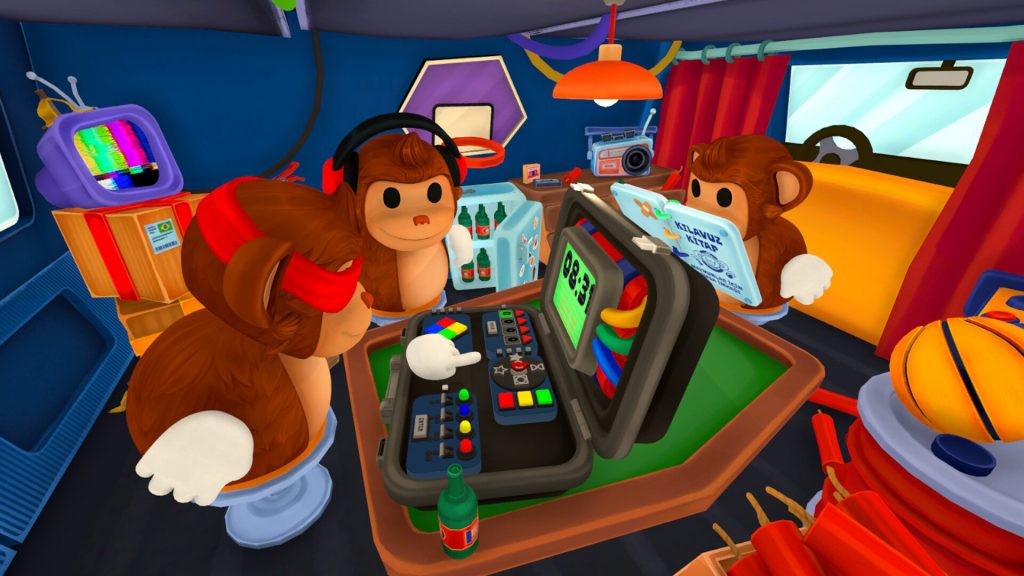
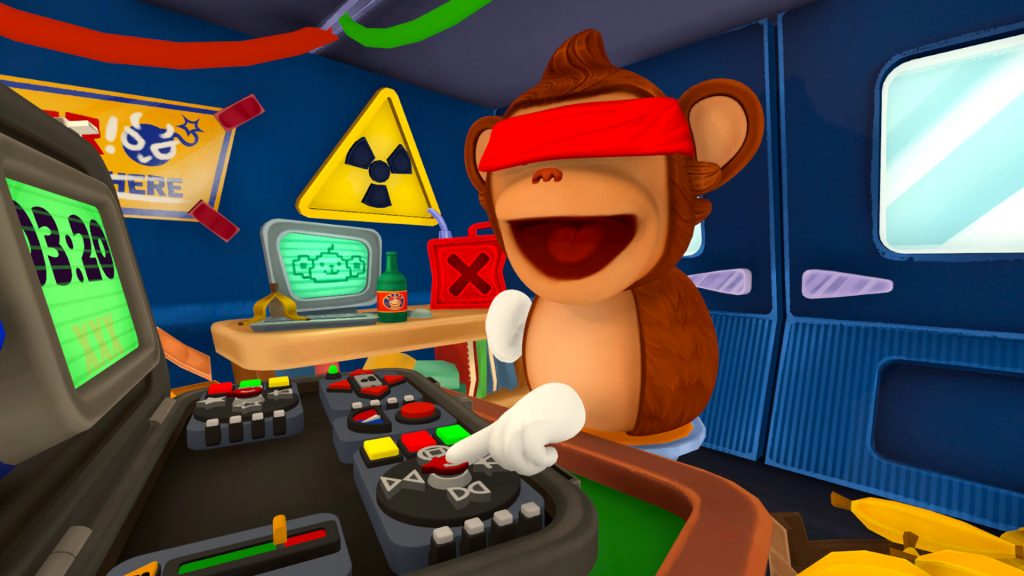
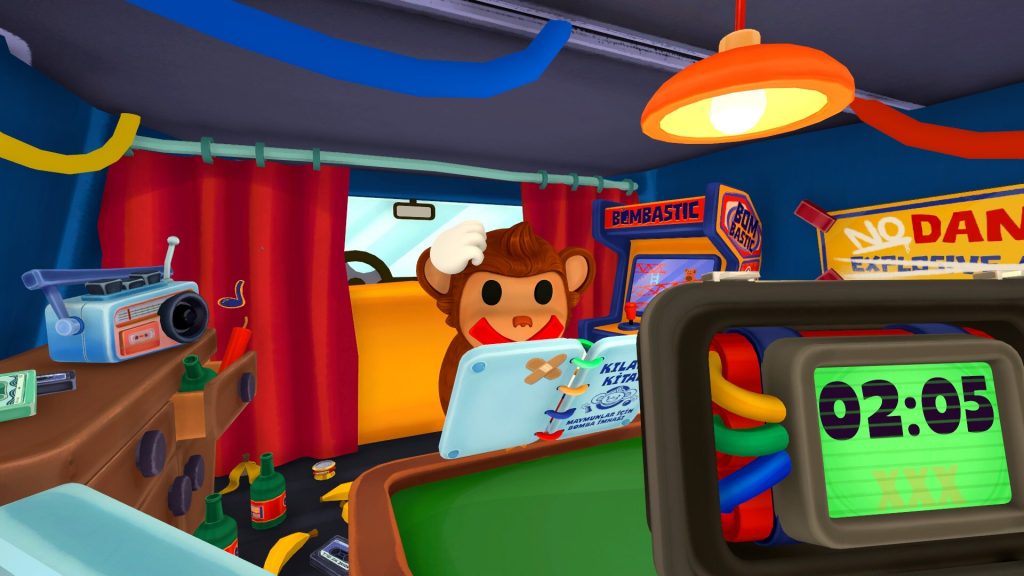
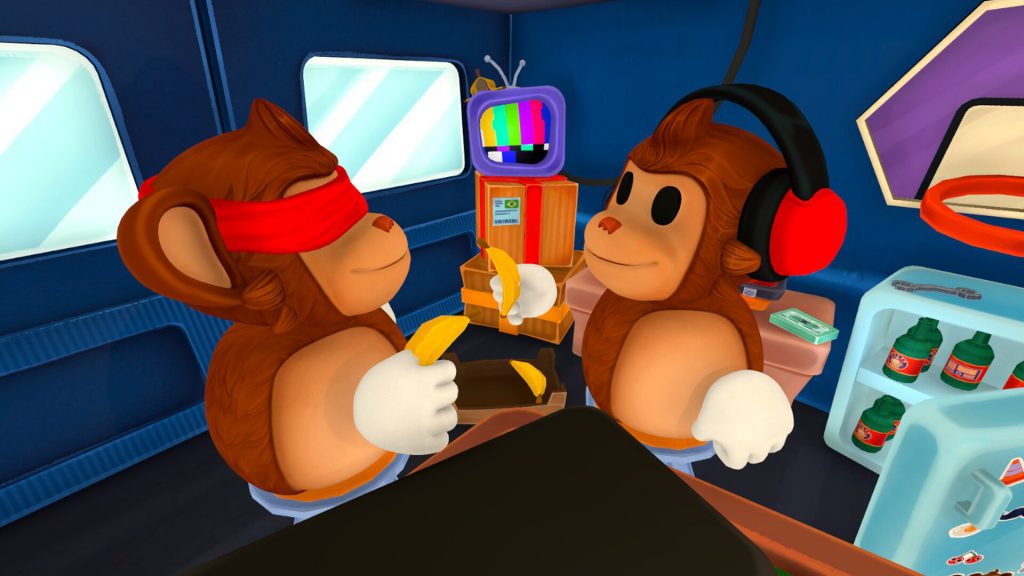
Three monkeys defuse a bomb together. One is blind. One is deaf. One is mute. None of them can perceive the situation the way either of the other two can, and the bomb doesn’t care. This is BOMBANANA!‘s entire design thesis, drawn explicitly from the Three Wise Monkeys motif — and it has now converted a Steam Next Fest phenomenon into a launch that matches the demo’s numbers almost exactly.
The Sensory-Deprivation Communication Core
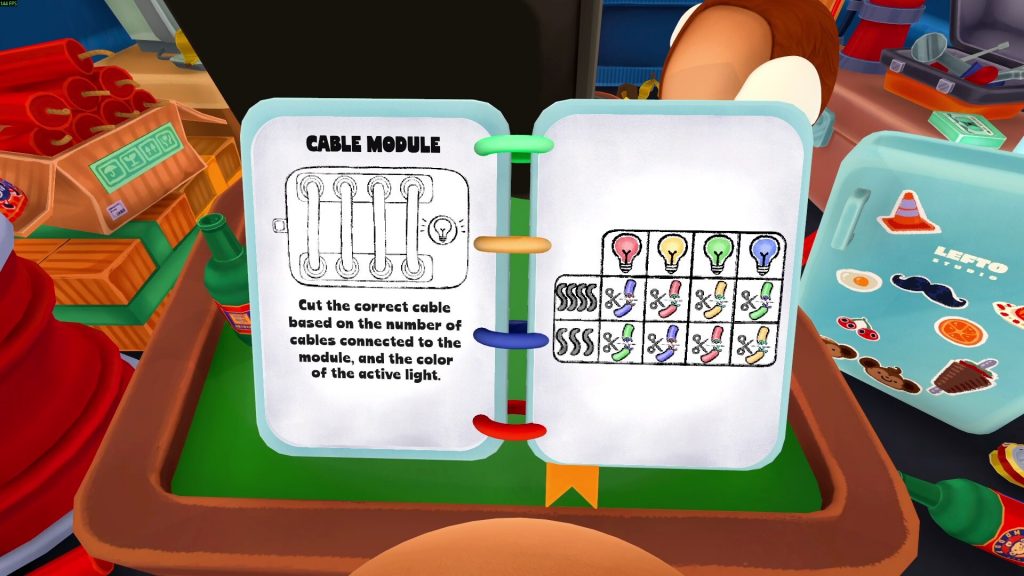
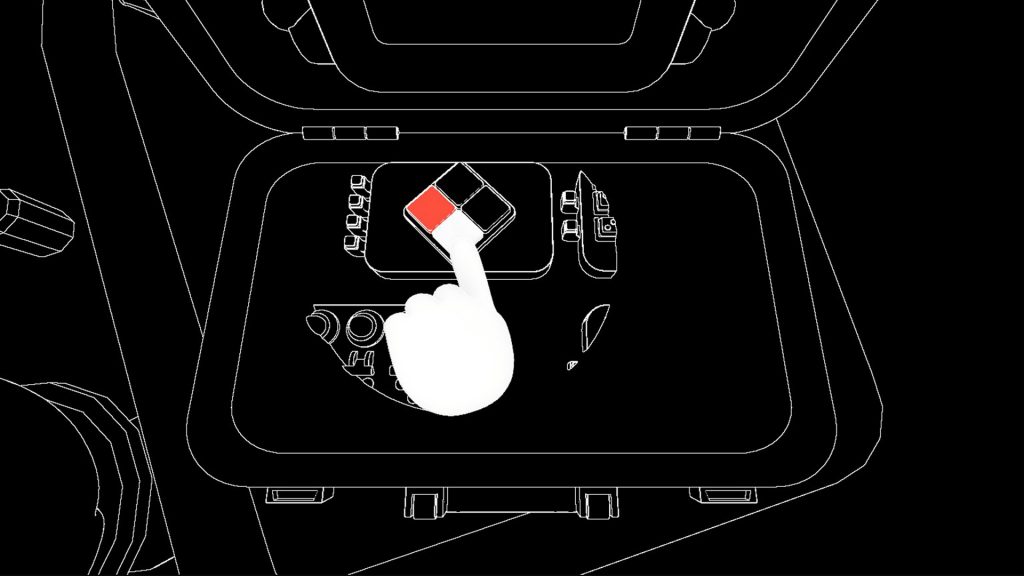
The specific genius of the premise is structural rather than merely thematic. Co-op bomb defusal games (the Keep Talking and Nobody Explodes lineage) already understand that splitting information between players — one person sees the bomb, another reads the manual — generates communication-dependent tension. BOMBANANA! takes this a step further by making the information asymmetry a fixed, permanent condition of each specific player role rather than an assignment that could theoretically be swapped: the blind monkey will never see, the deaf monkey will never hear, the mute monkey will never speak, for the entire session.
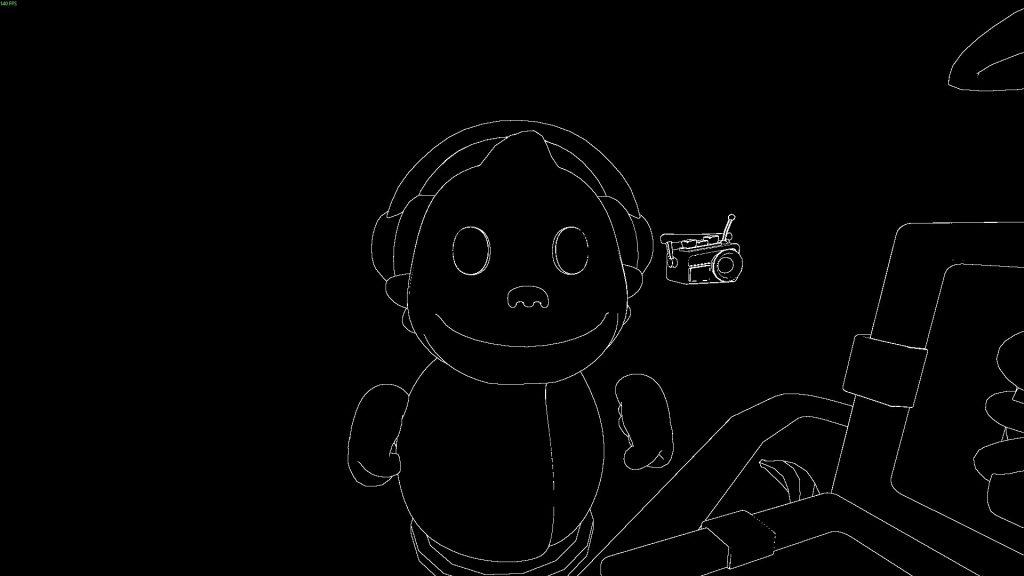
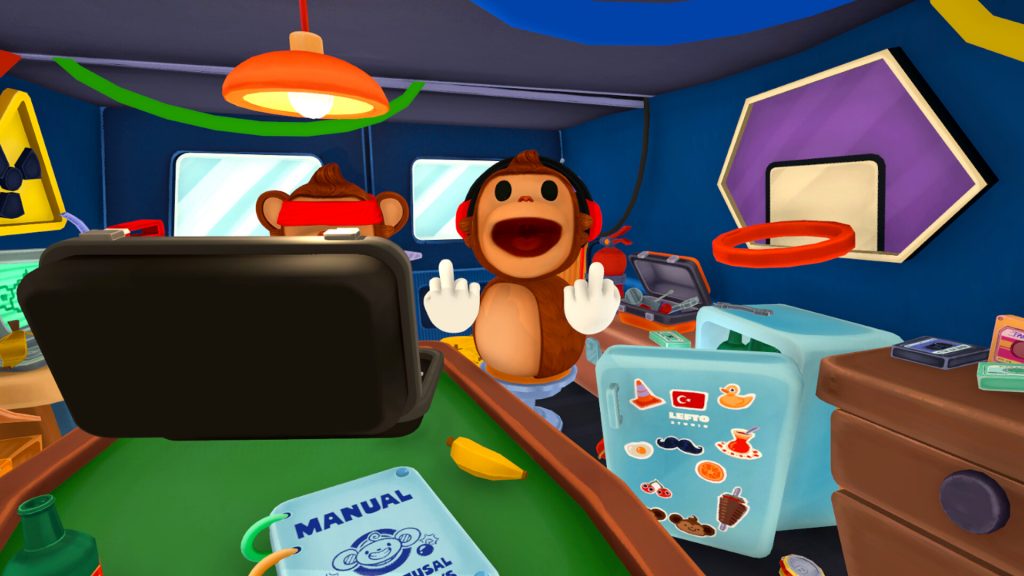
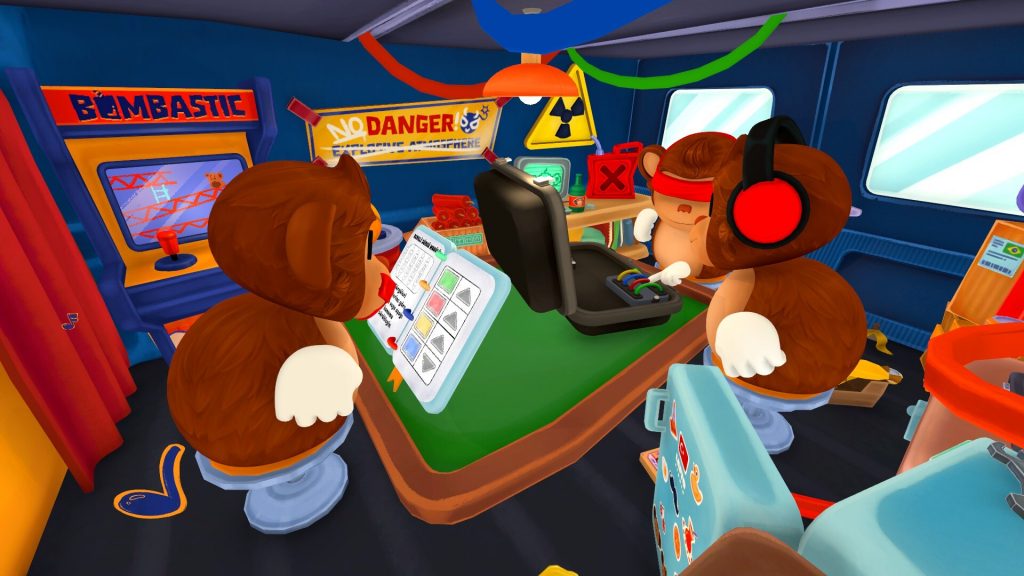
This produces a genuinely different social dynamic than standard “one person has the manual” defusal games. In those games, any player could theoretically hold any role in the next round. In BOMBANANA!, communication itself has to route around a permanent constraint — the deaf monkey needs visual or physical signals, the mute monkey needs to convey information without words, the blind monkey needs everything translated into sound or touch. The comedy the international press specifically singled out — shouting, gesturing, crossed signals, a living room full of noise and confusion — comes directly from three people trying to build a shared understanding through incompatible channels under a countdown.
The framing one outlet used is precise: most bomb-defusal games demand focus and silence; BOMBANANA! makes the noise and chaos themselves the entertainment product.
The 1.0 Content Expansion
The full release adds three modes on top of what the demo offered: Campaign (30 handcrafted levels of escalating difficulty), Endless (procedurally generated wave survival), and Custom (player-configured bomb difficulty, timer, module types, environmental hazards, and allowed mistake count). This is a meaningful content commitment for a party game whose core loop is inherently simple — the campaign’s 30 handcrafted levels in particular address the common criticism that games built on a single strong mechanic run out of content quickly.
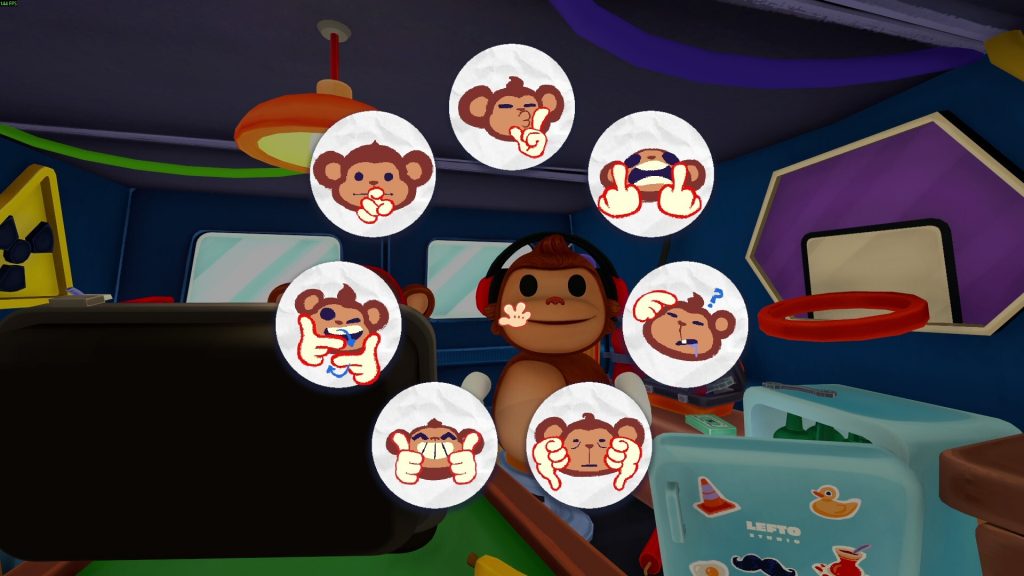
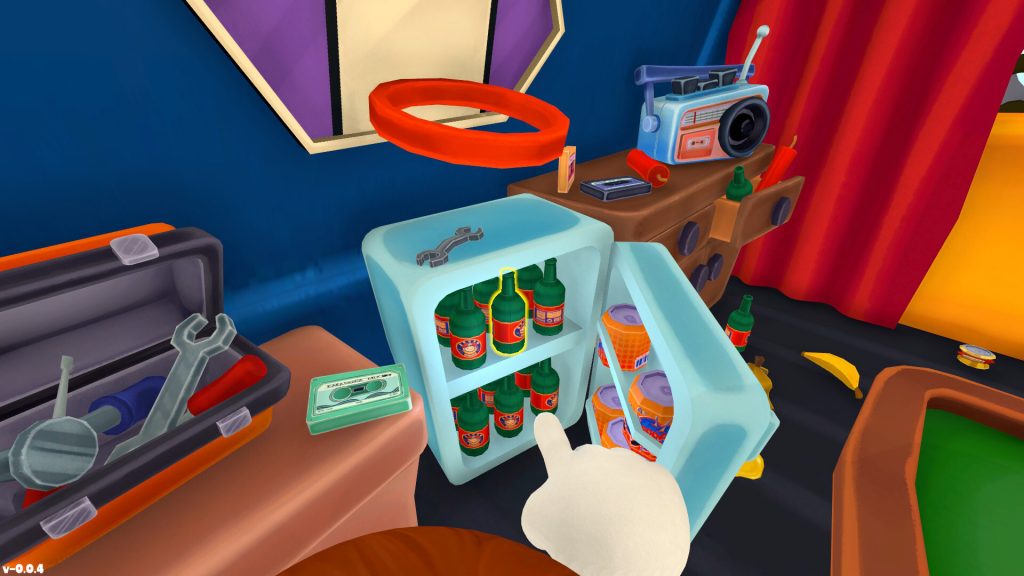
Additional 1.0 additions: new environments, new puzzle types and modifiers, full-body emotes with voice-synced animation, a monkey character redesign, and player interaction options including a slap mechanic. Global lobby browser, room codes, controller and Steam Deck support, and colorblind mode round out the quality-of-life package — the kind of infrastructure that determines whether a party game’s community can actually find each other and play, rather than just wanting to.
The Numbers Holding From Demo to Launch
The trajectory here is worth stating plainly because it’s unusual: #1 most-played demo out of roughly 5,000 Next Fest entrants in June, 40,000 peak concurrent and 675,000 unique players during the festival window, climbing to 6 million cumulative demo players and over 1 million wishlists by launch day — and the September 2 full release opened at 96% Overwhelmingly Positive from 929 reviews, essentially matching the demo’s 97% from 1,395 reviews.
Numbers converting this cleanly from demo hype to launch reception is not guaranteed even for games with strong pre-launch metrics; plenty of heavily-wishlisted games see rating drops at launch when the full price point, expanded scope, or simply a broader and less self-selected audience meets the product. BOMBANANA! held.
The Real Test Ahead
International press coverage has been honest about the actual uncertainty here, and it’s worth repeating rather than glossing over: a game requiring exactly three simultaneous online players has a categorically harder matchmaking and retention problem than games supporting 1-4 or 2-4 flexible player counts. High wishlist and demo-player numbers demonstrate strong initial interest, but they don’t, by themselves, solve the logistics of three specific people needing to be online, interested, and available at the same time, indefinitely, for the game’s core loop to function for any given group.
The launch-day inclusion of a public global lobby browser is the studio’s direct answer to this — allowing solo queuers to find two strangers rather than requiring a pre-formed trio of friends every session — and Steam community response specifically credited the developers for treating multiplayer infrastructure as a launch-day priority rather than a post-launch patch.
The Lefto Studio Pedigree
Istanbul-based Lefto Studio, led by Ufuk Girit, brings direct prior experience in exactly this design space: Liars Bar and We Are So Cooked both built their appeal around player communication and the comedy generated by unpredictable social situations rather than mechanical complexity. BOMBANANA! is the team applying that specific expertise — reading a room, engineering situations where miscommunication becomes the content rather than the failure state — to a new premise with a considerably larger commercial footprint than their prior work.
Who This Is For
Strong fit for: party game groups who specifically want communication-as-mechanic gameplay rather than mechanical skill tests; Keep Talking and Nobody Explodes fans who want the asymmetric-information format taken further with permanent sensory constraints per role; friend trios (exactly three, which is both the game’s strength and its access requirement) looking for a new co-op comedy centerpiece; streaming groups whose audiences enjoy watching miscommunication chaos unfold; players who tried the Next Fest demo and want the expanded 1.0 content.
Cautious fit for: players without a consistent group of exactly three (the global lobby browser mitigates but doesn’t eliminate this); anyone who wants flexible player counts rather than a fixed trio; players who need long-term community sustainability confirmed before investing, given the honest structural challenge noted above.
Less ideal for: solo players; anyone wanting single-player content; players who dislike voice-chat-dependent party games.
The Takeaway
BOMBANANA! took a deceptively simple idea — three monkeys, three permanently different sensory limitations, one bomb, one countdown — and built both a viral Next Fest demo and a launch that matched its numbers almost exactly: 6 million cumulative demo players, over 1 million wishlists, and 96% Overwhelmingly Positive from the first 929 full-release reviews. Thirty handcrafted campaign levels, an Endless mode, deep Custom configuration, and day-one matchmaking infrastructure address the two things that could have undermined the hype: insufficient content and the exactly-three-player logistics problem.
Whether Lefto Studio can sustain a healthy population of three-player lobbies over the months ahead — after the initial wave of curious wishlist-holders and demo veterans convert into a lasting community — is the genuinely open question international coverage has flagged, and it’s the fair one to flag. The blind monkey still can’t see the wire. The deaf monkey still can’t hear the countdown. The mute monkey is gesturing wildly. And for now, at least, the room is very loud in exactly the way the game wants it to be.
$7.99 (20% off) on Steam now.
Information related to ‘BOMBANANA!’
| item | detail |
|---|---|
| Developer | Lefto Studio (Istanbul, Turkey) |
| Publisher | TARK |
| Genre | Cooperative Party Puzzle, Casual, Comedy |
| platform | PC (Steam, Windows·macOS) |
| Release date | September 2, 2026 |
| price | $7.99 (20% launch discount) |
| personnel | Exactly 3-player online co-op |
| result | Over 1 million on wishlists, 6 million cumulative demo users, #1 most played demo at Next Fest 2026 |
| Reactions/Evaluations | Steam ‘Overwhelmingly Positive’ (Full Version 96%, 929 reviews); Demo ‘Overwhelmingly Positive’ (97%, 1,395 reviews) |
| Steam Page | Shortcut |