A retired grandmother hands her small dessert shop to her grandson — a novice Shiba Inu chef who has to learn recipes, source ingredients, and build the shop into something worthy of her legacy. That premise, and the specific promise that every visual asset in it was drawn by hand rather than generated, is what has carried Shiba Sweet from a solo Taiwanese developer’s personal project through a year-plus of international showcase circuit appearances to its September 18 Steam launch.
The Cooking-as-Craft Loop
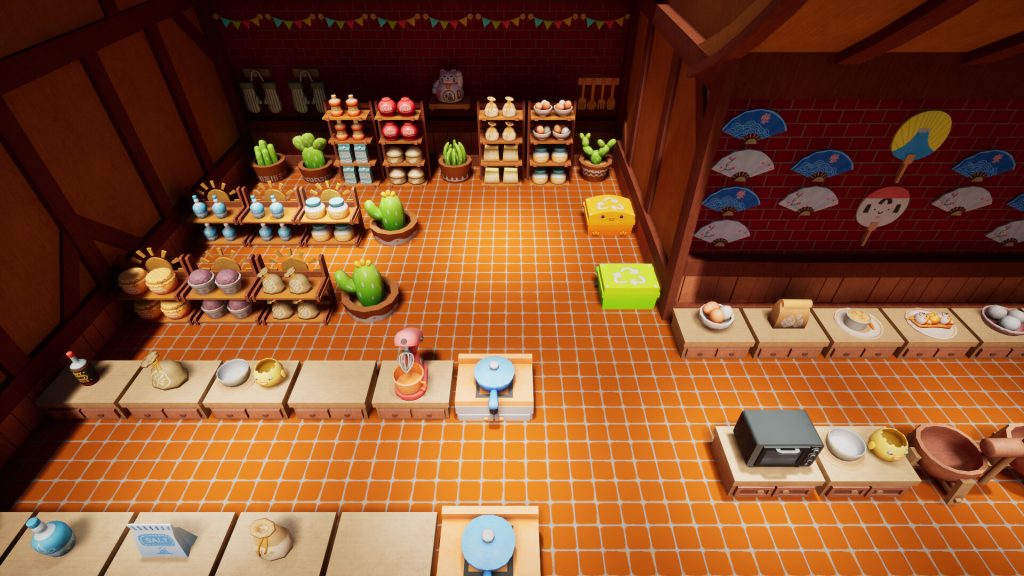
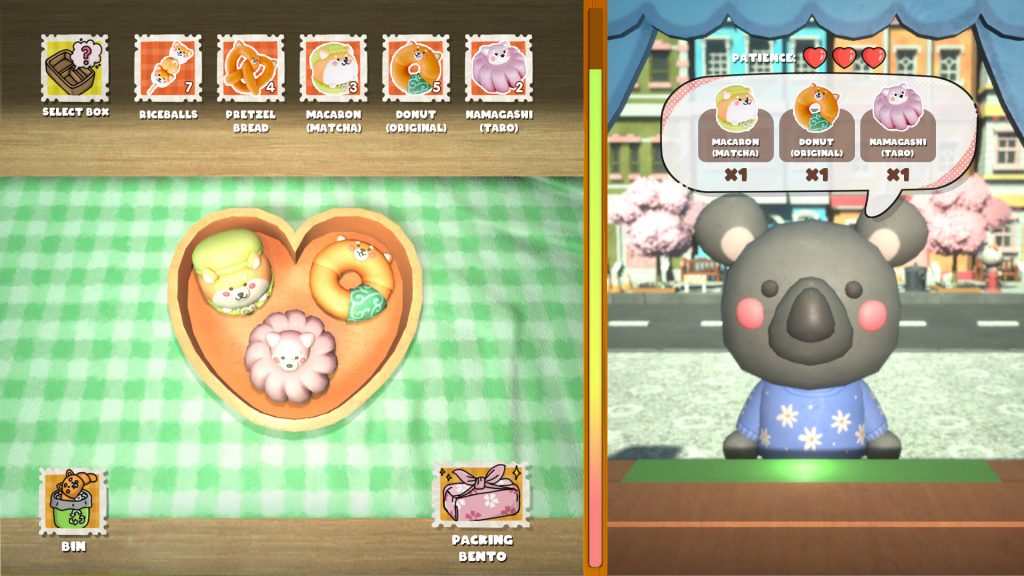
The core gameplay commitment is process rather than result: preparing ingredients, cooking the dessert step by step, packaging it into a takeout box, and serving the customer — not simply presenting a finished dish that appears on command. The example the developer cites is illustrative of this granularity: kneading glutinous rice flour, dropping the dough into boiling water, retrieving it once it floats to the surface, cooling it, then finishing with a proprietary soy syrup glaze. The player experiences the full arc from raw ingredient to finished plate rather than a single “cook” button press.
During rush periods, orders arrive under time pressure, and correctly preparing and boxing the right dessert for the right customer within the time limit is the game’s central challenge layer — still gentle by design, but present enough to give the simulation stakes. The specific small reward the developer is building toward is customers’ satisfied expressions upon receiving their order — the granular feedback loop that cozy management games use to make repetitive service work feel emotionally rewarding rather than purely mechanical.
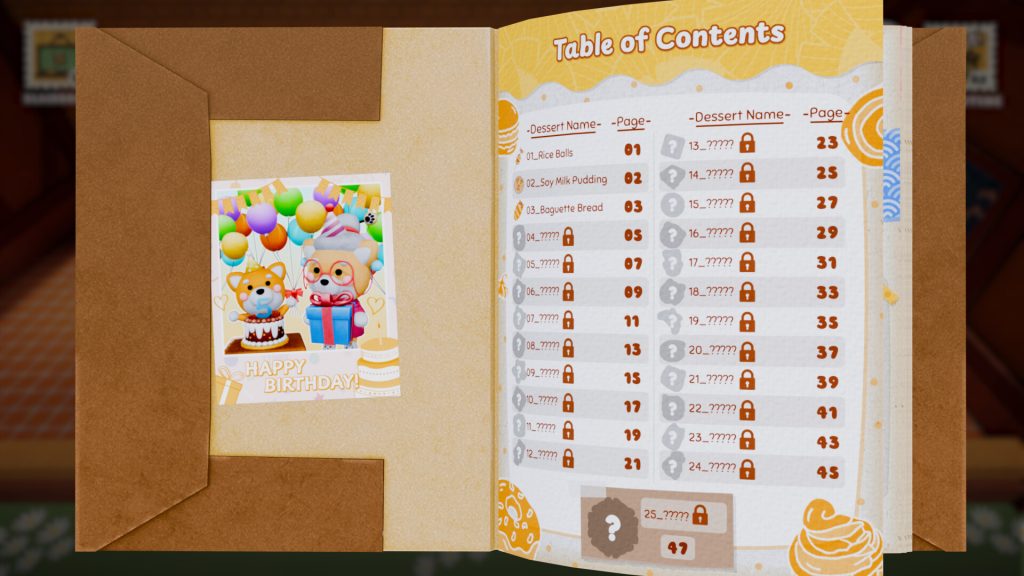
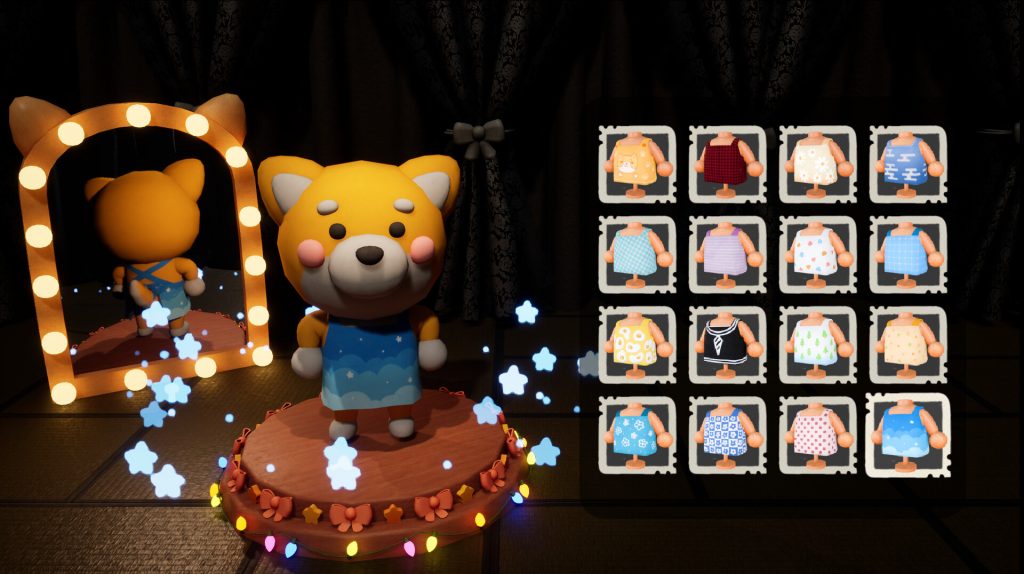
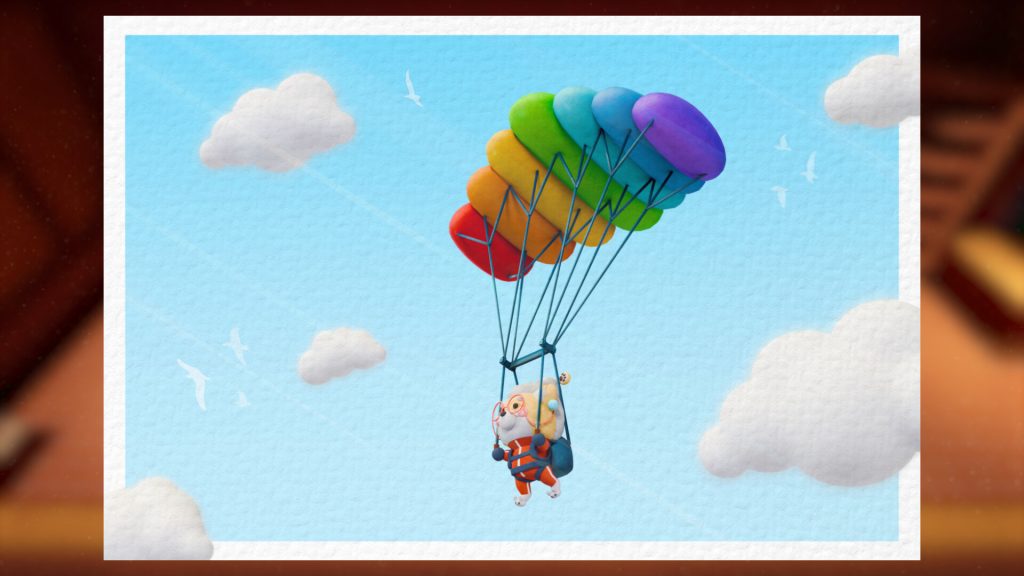
Sales revenue funds new ingredients, kitchen tools, and shop decoration, alongside a collection of apron outfits for the Shiba chef — customization layered on top of the core operational loop. A postcard collection system, populated by messages from the traveling grandmother, adds a family-warmth narrative thread that surfaces gradually as the player progresses, extending the game’s emotional register beyond shop management into an ongoing relationship story.
The No-AI, Hand-Drawn Commitment
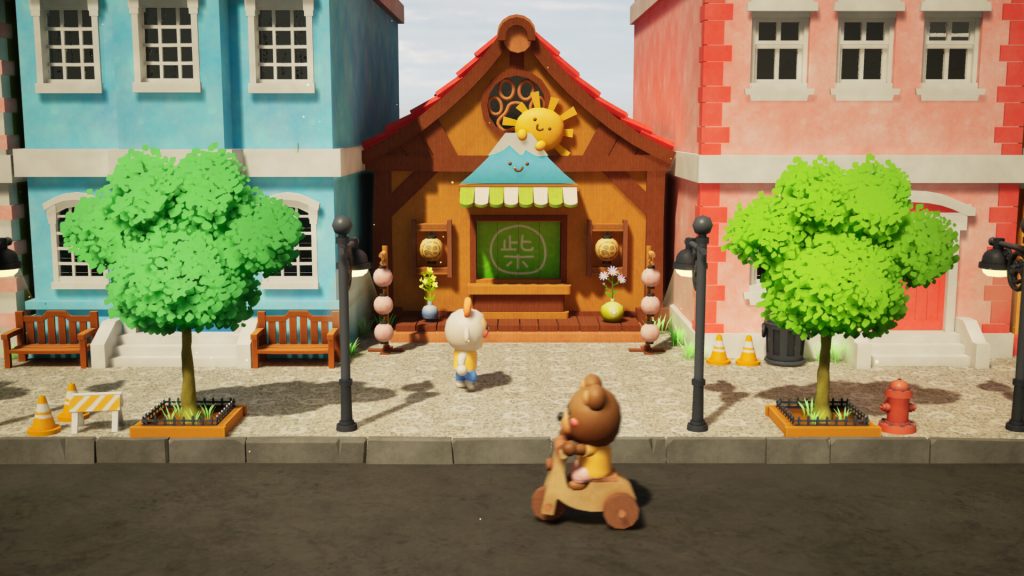
Maowoo’s explicit statement that no AI-generated artwork appears anywhere in Shiba Sweet — that every graphical asset was created directly by the developer — is a meaningful production claim given the developer’s background as a former professional animator. That animation experience is what makes the hand-drawn cartoon 3D visual style achievable at a level of polish that a solo developer without that specific background couldn’t easily replicate: the character and environment work throughout carry the specific texture of someone who has spent a career making things move and feel alive by hand.
The design intent extends this personal-craft quality into gameplay pacing. Rather than competitive intensity or high difficulty, the game commits fully to a relaxed “healing” register — building the shop and the space at a comfortable pace, with cute characters and settings, and no harsh failure states pushing against the cozy tone. Steam’s own tags for the game — Cute, Relaxing, Hand-drawn, Atmospheric — read as an accurate summary rather than marketing language.
The Solo Development Path
Ya Mao handled every stage of Shiba Sweet‘s development alone — concept, design, art, programming — while maintaining a monthly devlog to keep the community engaged throughout. The developer has been open that a family member’s illness caused delays partway through development, and has credited player encouragement during that period with helping the project reach completion. This kind of transparency about the human cost of solo development, paired with a game whose entire premise is about inheriting and caring for something built by family, gives the project’s marketing an authenticity that’s hard to manufacture.
The breakthrough visibility moment came at Wholesome Direct 2025 in June, the digital showcase specifically curated for cozy and wholesome indie games. Since then, Maowoo has kept the game in front of international audiences through Play Expo UK, GDOC Expo, and the Women’s Day Event across both 2025 and 2026 — a sustained, multi-event visibility campaign unusual for a solo developer without external publisher support.
The Press Reception
Following Wholesome Direct 2025, Shiba Sweet drew coverage from Gematsu, Windows Central, Digitally Downloaded, and Boss Rush Network — outlets that specifically praised the premise’s charm (a Shiba Inu inheriting a retired grandmother’s dessert shop) and the distinctiveness of its hand-drawn visual identity, describing it as a standout even within showcases dedicated entirely to cozy and wholesome games. Maowoo has said publicly that being mentioned alongside other established cozy titles and international outlets was a significant source of encouragement during a difficult development period.
The Steam page currently carries five curator reviews ahead of launch — a small but positive early signal — with the primary momentum indicator being the 17,000+ wishlist count built almost entirely through festival visibility rather than paid marketing.
Who This Is For
Strong fit for: cozy and wholesome game fans who specifically value hand-drawn, non-AI visual craft; cooking/management sim players who want granular ingredient-to-plate process over abstracted “serve customer” loops; players drawn to family-relationship narrative threads (the traveling grandmother’s postcards) layered onto shop management; anyone who followed the game through Wholesome Direct or the subsequent festival circuit and wants the full release; Shiba Inu and cute-animal-protagonist enthusiasts.
Cautious fit for: players who want challenge or competitive intensity in their cooking sims; anyone who needs a larger user review base before purchasing (none exist pre-launch); players who prioritize AAA-scale content volume over a personally crafted solo project’s scope.
Less ideal for: players who dislike cooking/management sim mechanics regardless of tone; anyone seeking high-difficulty or time-pressure-intensive gameplay; players wanting multiplayer options.
The Takeaway
Shiba Sweet is a former animator’s solo-built tribute to inherited craft and family care, expressed through a Shiba Inu chef learning to run a grandmother’s dessert shop with every visual asset made by hand rather than generated. The monthly devlogs, the honest disclosure of development delays from family illness, and a year-plus of consistent festival visibility from Wholesome Direct 2025 onward have built a 17,000-wishlist audience before a single Steam review exists.
The dough is rising. The soy syrup is ready. The grandmother’s postcards keep arriving from wherever she’s traveling. And on September 18, one solo developer’s patiently hand-drawn dessert shop opens for business.
Free demo available now. Full release September 18 on Steam.
Information regarding ‘Shiba Inu Dessert Shop (Shiba Sweet) ‘
| item | detail |
|---|---|
| Developer | Maowoo (Ya Mao, Taiwan · Solo Developer) |
| Publisher | Maowoo (Self-publishing) |
| Genre | Casual simulation, cooking/management, healing game |
| platform | PC (Steam) |
| Release date | September 18, 2026 |
| language | English, Japanese, Chinese (Simplified/Traditional), Korean, French, German, etc. |
| etc | No AI artwork used, Steam Deck support, free demo provided |
| result | Over 17,000 items on the wishlist; history of participation in major events such as Wholesome Direct 2025 and Play Expo UK |
| Reactions/Evaluations | Unreleased with no user reviews; reported by numerous international media outlets, including Gematsu, via Wholesome Direct. |
| Steam Page | Shortcut |