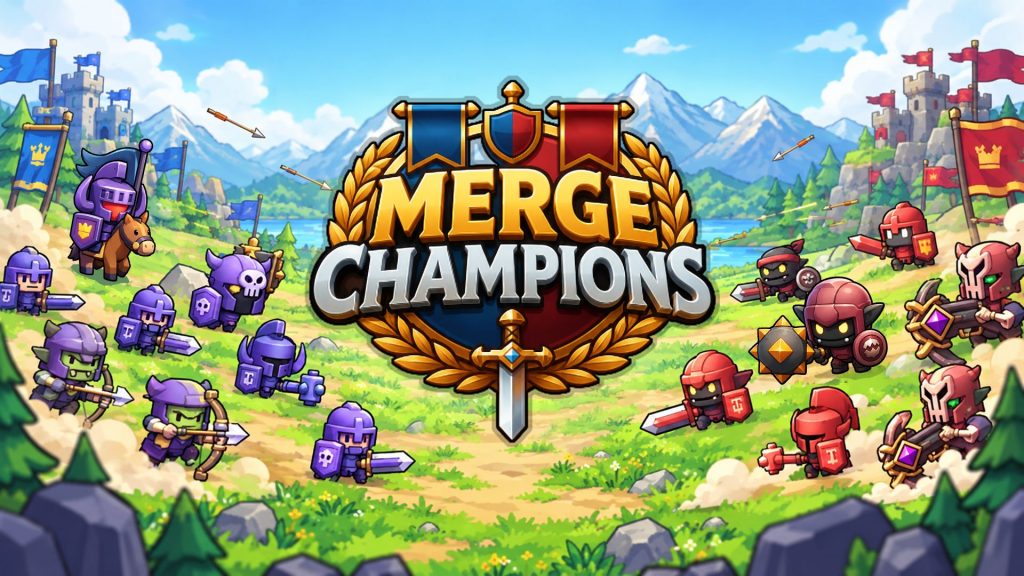
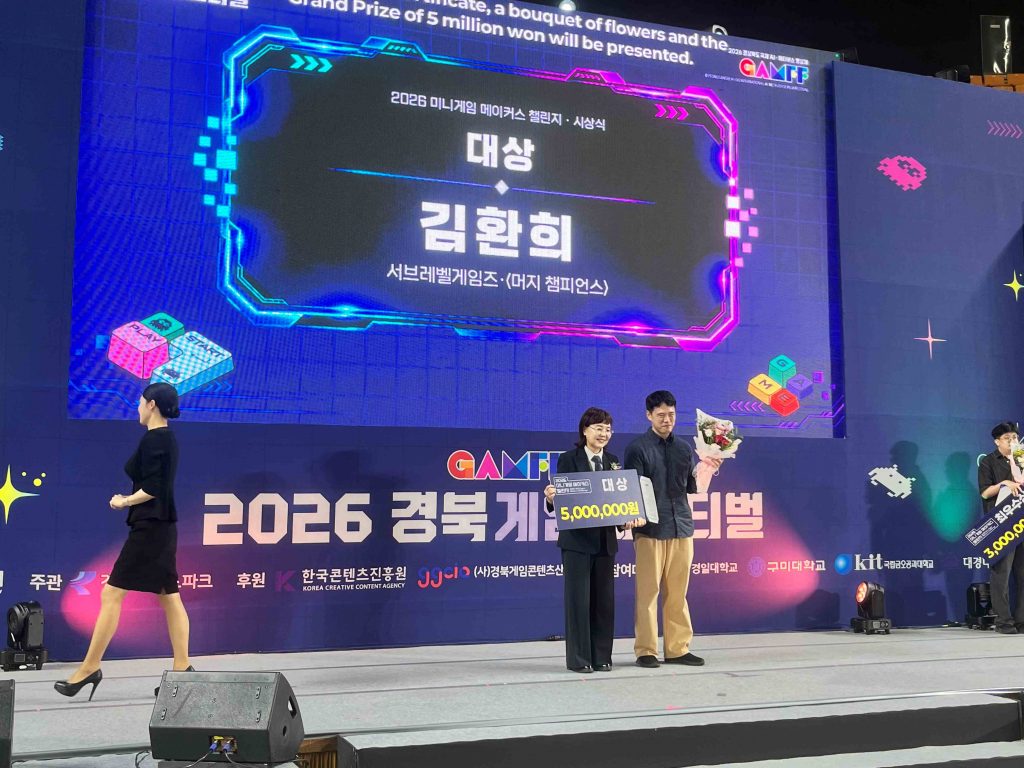
Merge Champions from sublevelgames has won the Grand Prize at the inaugural 2026 Minigame Makers Challenge — a nationwide HTML5 minigame competition that drew roughly 90 submissions in its first year, judged by a seven-person panel drawn from companies that represent the actual commercial minigame and mini-app distribution ecosystem rather than a purely academic or festival jury.
The Competition’s Distinctive Judging Structure
What separates this competition from typical indie game contests is the judging panel’s composition: representatives from ByteDance (TikTok’s parent company), Toss (Viva Republica, the Korean fintech “super app” whose mini-app platform has become a significant minigame distribution channel), Neptune, and SuperJoy — all companies whose business is specifically minigame and mini-app distribution at scale. This isn’t a panel evaluating creative merit in the abstract; it’s a panel evaluating whether a game actually works within the commercial platforms that determine whether HTML5 minigames reach real audiences.
Merge Champions won specifically for its combination of intuitive gameplay and the kind of technical polish that takes full advantage of HTML5’s core accessibility advantage — no installation, no download step, playable instantly from a single click inside a browser or host app.
The HTML5 Distribution Advantage
The specific commercial value the judging panel evaluated is on display in Merge Champions‘s current live status: it’s simultaneously running on Playgama and GetJar (global web game platforms), Google Play (as a standard mobile app), and App in Toss — the mini-app-within-an-app platform inside Korea’s Toss super-app, where users access minigames without leaving the finance app itself.
This multi-platform simultaneous distribution is the practical payoff of HTML5 as a technology choice: a single codebase reaching browser-based web platforms, native app stores, and embedded mini-app ecosystems without separate development efforts for each. For a puzzle genre as mechanically simple and broadly legible as merge puzzles, this distribution breadth matters more than it would for a genre requiring platform-specific control schemes or hardware capabilities.
The Studio’s Statement
sublevelgames CEO Kim Hwan-hee: “It’s very meaningful to have our game’s quality and potential recognized by professionals representing the domestic and international minigame industry. Building on HTML5’s strong accessibility and scalability, we will continue diversifying our platform presence and services to deliver polished entertainment to both domestic and global users.”
The Broader Signal
An inaugural competition drawing 90 submissions and recruiting judges specifically from platform-operating companies (rather than only game studios or academic institutions) suggests KOCCA and its regional partners are treating HTML5 minigames as a distinct commercial category worth dedicated institutional attention — separate from the console/PC/traditional-mobile indie ecosystem that BIC, G-STAR, and similar events serve. For Korean minigame developers specifically, having a competition judged by the companies that actually operate distribution platforms (ByteDance, Toss, Neptune, SuperJoy) provides a more direct signal of commercial viability than jury recognition from a general game industry panel would.