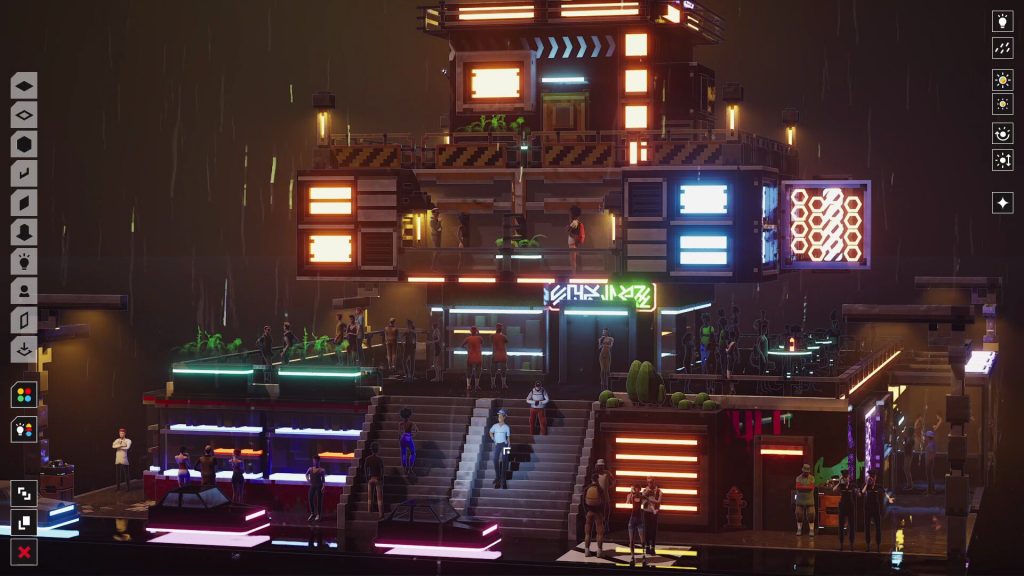
Cyberpunk as a visual tradition has specific temperature associations: cold blue-white neon against concrete, rain that reflects industrial light on wet asphalt, the specific bleakness of a society organized entirely around capital and surveillance. Midnight Moments, the self-published project from Belgian studio Happy Volcano, takes that visual tradition and asks what happens if you apply it to warmth.
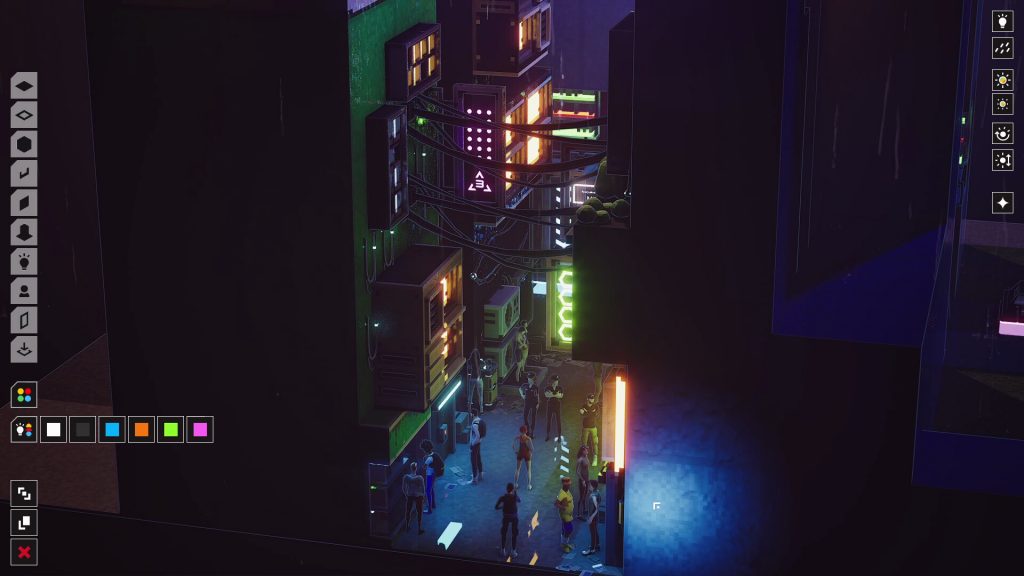
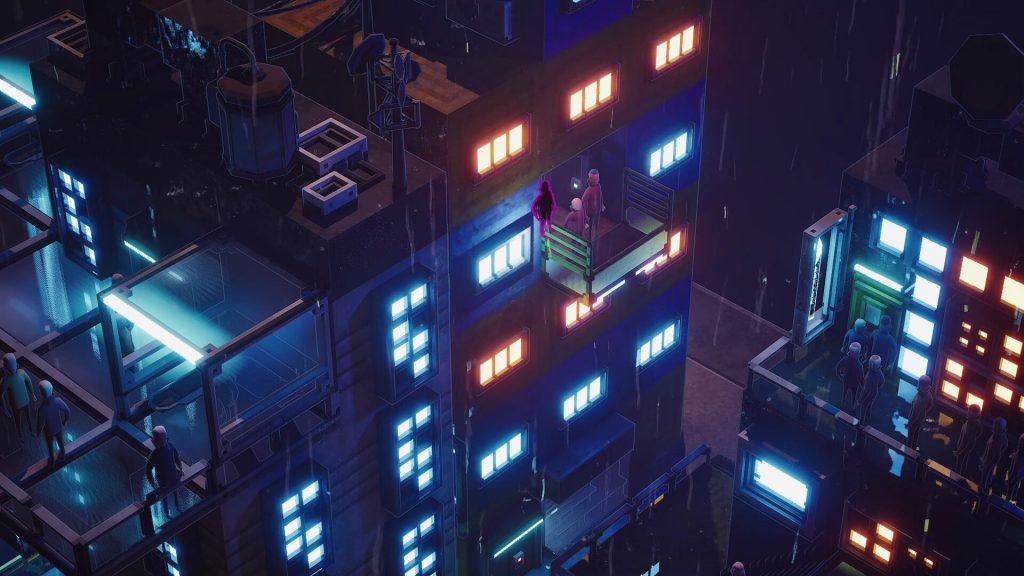
The result: neon-lit alleys that feel cozy rather than threatening, a rainy corner convenience store with its lights on that suggests shelter rather than isolation, a rooftop garden above a cyberpunk city that feels like a secret rather than a refuge from danger. July 30 is the Steam release date. The demo has been available since Steam Next Fest in June, and the response — Kotaku named it among Next Fest’s notable demos; The Escapist called it “a comfortable rest using lo-fi sensibility instead of cyberpunk bleakness” — suggests Happy Volcano has found the tonal register it was looking for.
The Cozy Cyberpunk Synthesis
The genre name “cozy cyberpunk” sounds contradictory until you examine what makes each term operate. Cyberpunk’s visual elements — neon, rain, night, compact urban density, illuminated signs — are aesthetically compelling independent of their narrative associations with corporate dystopia. Lo-fi music has spent years demonstrating that late-night urban visuals work as a relaxation context rather than a thriller context; the rain on glass, the warm light from a corner shop, the reflection of street signs on wet pavement produce calm rather than anxiety when the narrative stakes are removed.
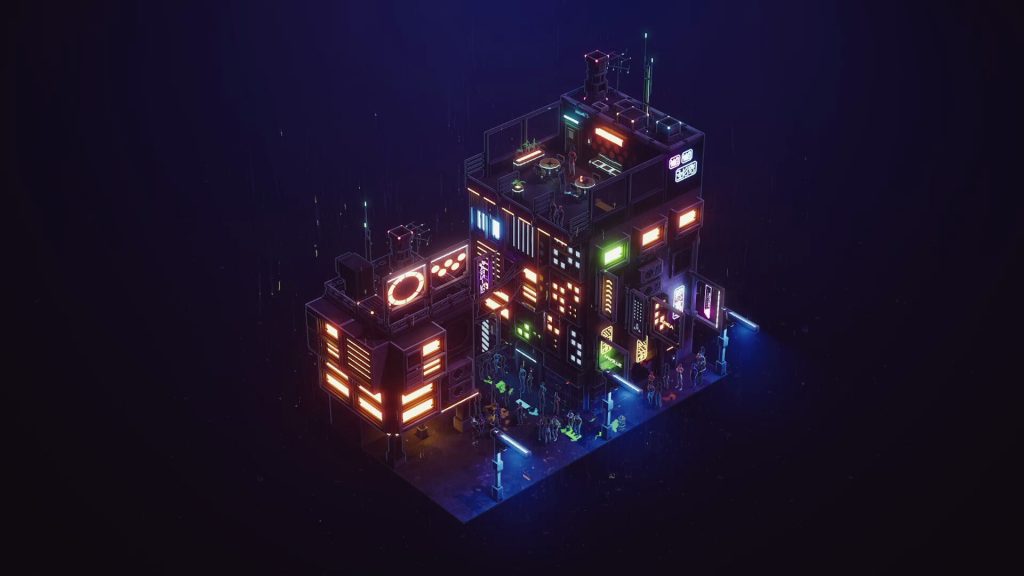
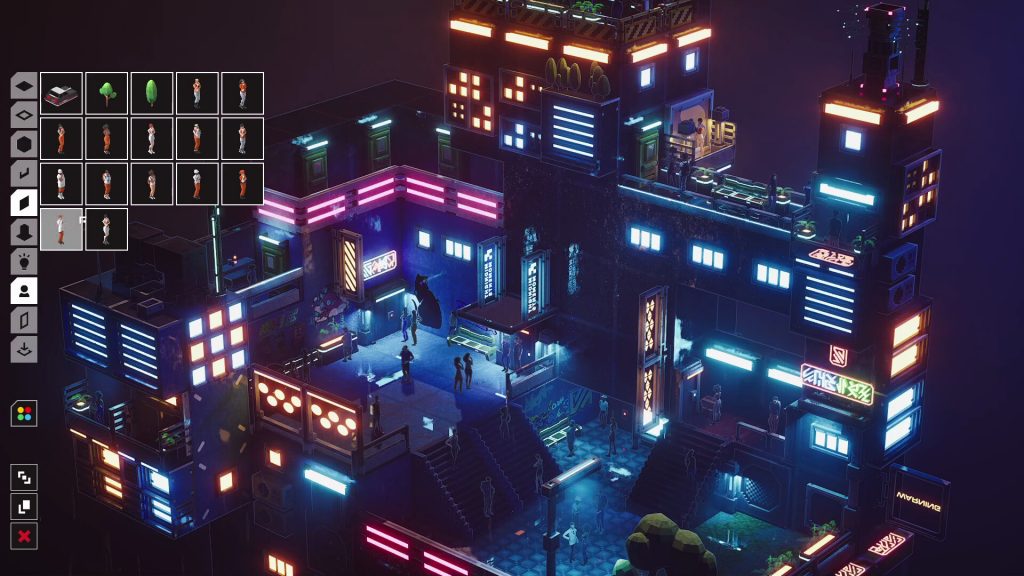
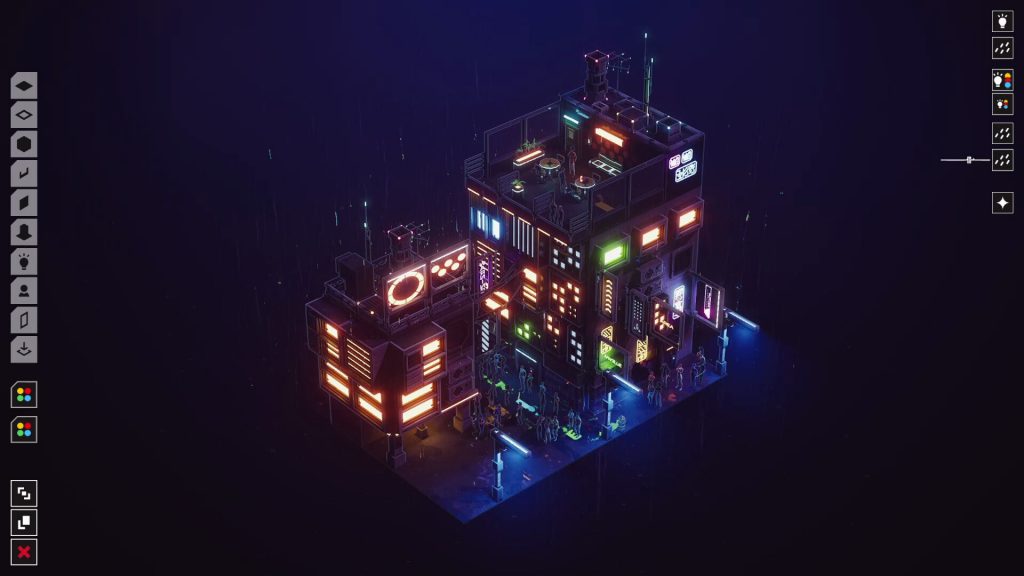
Midnight Moments removes the narrative stakes entirely. There’s no corporation to fight, no megacity to survive, no surveillance state to evade. There’s a small piece of city to build exactly the way you want it, and then to watch it exist. The cyberpunk aesthetic provides the visual richness that makes watching the result satisfying; the absence of cyberpunk narrative provides the pressure-free context that makes building it relaxing.
Game Director David Prinsmel described the intended experience with precision: “We wanted to make a game that is small but beautiful, and truly relaxing — a game about building a small corner of the city yourself, and then having the leisure to look at the completed view for a while.” The phrase “look at the completed view for a while” is the design goal stated as emotional experience: not the satisfaction of completion, but the satisfaction of presence.
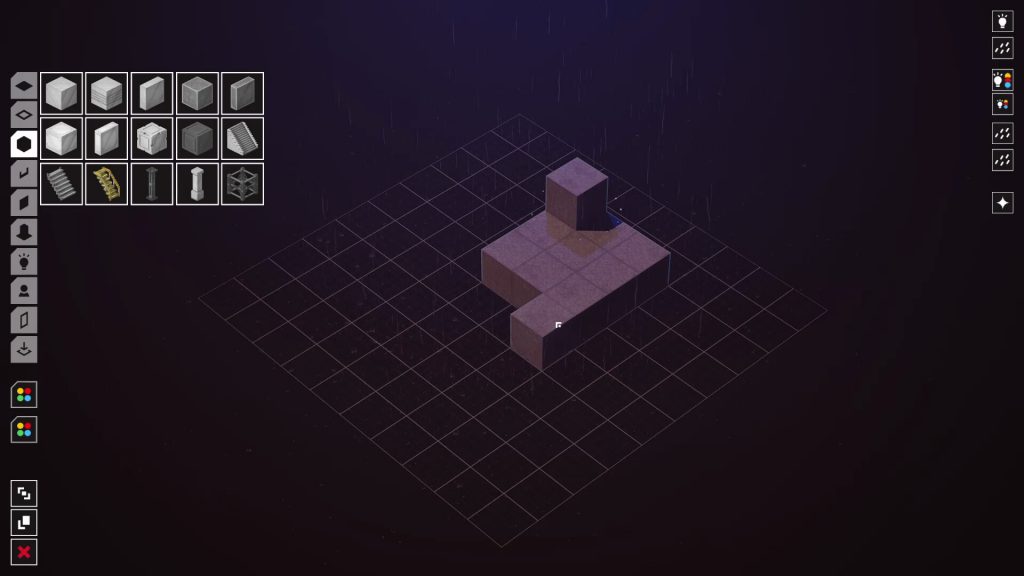
The Building System
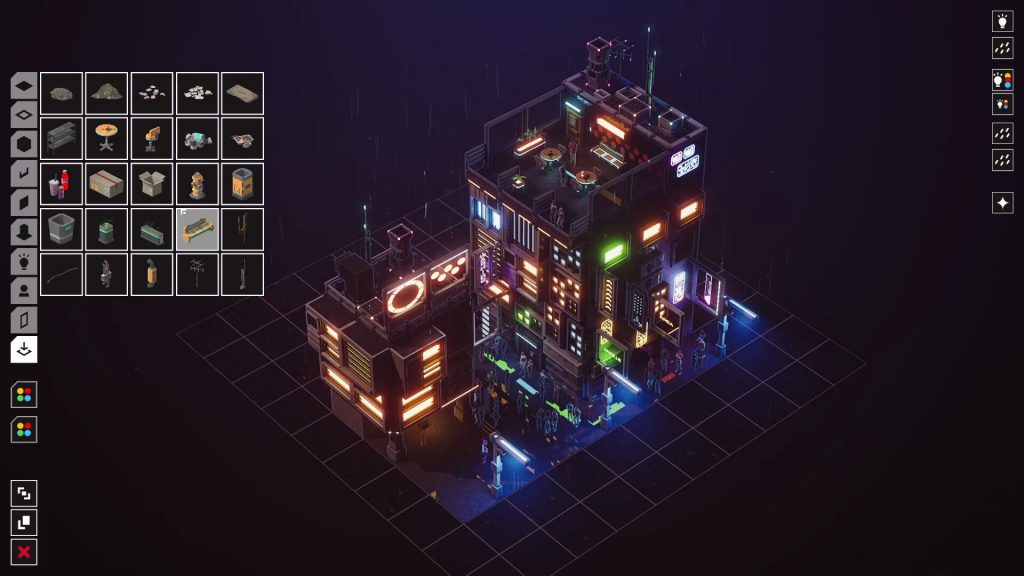
The spatial vocabulary of Midnight Moments — buildings, alleys, small shops, residents, props including streetlights, signs, and planters — is specific enough to create interesting compositional choices without being complex enough to create a learning curve frustration. The depth of a building’s setback from the alley, the density of signage on a particular block, the choice between a rooftop garden and another floor of apartments — these are aesthetic decisions with visible consequences, which is what makes building games satisfying to engage with.
The citizen placement extends the system from architecture into implied narrative. A convenience store with a visible clerk, a pedestrian sheltering under an awning, two figures meeting at a street corner — these aren’t mechanical game elements but visual storytelling prompts. The player isn’t controlling characters; they’re creating the conditions for fictional inhabitants to occupy space in ways that suggest their lives are happening just outside the frame.
This is what the game’s description of “every space where different stories breathe” means in practice: not that the game generates stories, but that the player’s visual arrangements create the impression of stories being possible.
The Production Context Within Happy Volcano
Happy Volcano’s previous work — You Suck at Parking (a competitive racing game notable for its humor and accessibility), The Almost Gone (a narrative puzzle game about death and memory), Modulus: Factory Automation — represents genuinely varied creative output from a studio with a consistent quality standard. The investment from Hiro Capital and Sir Ian Livingstone (the Fighting Fantasy series creator, whose involvement with indie gaming has been sustained and substantial) provides the commercial stability that allows the studio to run a project like Midnight Moments alongside larger productions.
Prinsmel’s framing of this as a project separate from “large projects” is the right way to describe it: Midnight Moments is the studio’s smallest team (two developers and an intern) working on something that prioritizes “atmosphere and sensibility” over the feature scope that larger teams would produce. This isn’t Happy Volcano at full capacity; it’s Happy Volcano giving a small group permission to make something that they specifically find beautiful.
Projects that exist because the people making them specifically wanted to make them, rather than because market research indicated a commercial opportunity, tend to have a quality that’s difficult to manufacture: the sincerity of making something you actually want to exist. Whether Midnight Moments is a cozy cyberpunk diorama builder because the market needed one or because two people and an intern found the concept genuinely compelling is visible in the result. The press response to the demo suggests the latter.
The Lo-Fi Aesthetic and Ambient Sound Design
The rain sounds, the lo-fi background music, and the ambient city sounds that constitute Midnight Moments‘ audio landscape are doing specific psychological work. The lo-fi music genre — characterized by slightly degraded audio quality, slower tempos, and a specific nostalgic warmth — has been used as study and work accompaniment music for years precisely because it creates focus without distraction, presence without demand. Applying it to a building game creates the specific condition of engaged calm: you’re making decisions and seeing their results, but the audio environment is not driving urgency.
Rain as ambient sound has a specific function in relaxation contexts that deserves attention. Rain sounds mask other sounds, creating acoustic isolation that contributes to focus; they also carry cultural associations with being inside and warm while outside is wet, which creates a specific kind of contentment independent of actual conditions. In Midnight Moments, the rain is both visual (reflections on streets, wet-look surfaces) and audio, creating the layered sensory impression of a rainy night spent constructively building something.
Prinsmel specifically mentioned that the game is designed to be played alongside external audio: “music or podcasts.” This is an unusual design acknowledgment — most games implicitly assume their own audio is the primary audio context — and it reflects an understanding that the building activity itself is the foreground while the game’s atmosphere is the background, the same relationship that lo-fi music has with studying.
The Belgium Connection
This is the third Belgian indie project featured in our coverage recently — after Time To Wake Up (Eye Blink Twice) and Helix: Descent N Ascent (Badass Mongoose), Midnight Moments continues Belgium’s pattern of producing indie games with distinctive aesthetic commitments and unusual genre combinations. The country’s indie gaming scene doesn’t have the concentrated industry cluster visibility of some other European gaming nations, but the projects emerging from Belgian studios consistently demonstrate creative specificity rather than genre convention.
Happy Volcano specifically has built a recognizable studio identity through projects that don’t share surface aesthetics but share underlying seriousness: The Almost Gone‘s emotional weight, You Suck at Parking‘s comedic precision, and now Midnight Moments‘ atmospheric commitment all reflect a studio that makes choices based on what the project requires rather than what the category conventionally provides.
Who This Is For
Strong fit for: Tiny Glade fans who want cyberpunk rather than medieval fantasy aesthetics; lo-fi music listeners who want a visual context for their ambient sessions; players who find cozy games satisfying but want something other than pastoral or domestic settings; architecture and city design enthusiasts who want aesthetic creation without mechanical complexity; players who appreciated this coverage’s earlier Woodo or Gendo the Gatherer features and want something urban instead of natural; anyone who has looked at lo-fi music live streams and wanted to actually be in those spaces rather than just watching them.
Cautious fit for: players who need clear objectives or progression metrics to feel engaged with building games; anyone who wants the dramatic stakes of cyberpunk narrative alongside the aesthetic; players who find pure creative freedom without guidance frustrating rather than liberating.
Less ideal for: players seeking action or mechanical challenge; anyone who specifically dislikes cyberpunk aesthetics regardless of tonal register; players who need competitive or multiplayer contexts for sustained engagement.
What to Watch For
The primary question for Midnight Moments is content depth across extended play. Building games with no objectives derives their long-term engagement from the variety of compositional possibilities their element sets provide. Whether the buildings, props, and citizens that Midnight Moments offers create enough distinct visual combinations to sustain creative engagement across many sessions, or whether players exhaust the range of interesting arrangements after initial exploration, will determine the game’s lasting value.
The citizen placement, specifically, is the element most likely to determine this. Props create static visual interest; citizens create implied dynamic relationships that change the meaning of the spaces they occupy. How many citizen types exist, how their placement combinations create varied visual narratives, and whether their presence gives experienced builders new compositional puzzles to solve will significantly extend the game’s creative ceiling.
The Takeaway
Midnight Moments is a project about a very specific experience: building a small, beautiful piece of night city and then watching it exist. That’s the design goal stated plainly by the game director, and the demo response suggests it achieves that goal. Kotaku and The Escapist’s attention to a game this small — made by two people and an intern — reflects the same thing that makes the game worth attention: it knows exactly what it wants to be and it does that thing without distraction.
The cozy cyberpunk tonal synthesis is genuine rather than marketing. Neon and rain and lo-fi warmth and the specific contentment of a corner shop keeping its lights on — these coexist in real cities, in real moments, for anyone who has looked out a window at night in an urban neighborhood and found it beautiful rather than threatening. Midnight Moments is trying to let you build more of those moments.
A rooftop garden above the alley. A convenience store at the corner with the lights on. Somewhere in the middle distance, a pedestrian is moving through the rain under a sign that says something in a language you recognize but don’t quite read. You built all of this. Now you can look at it for a while.
July 30 on Steam. The rain is already running down the windows.
Information regarding ‘Midnight Moments’
| item | detail |
|---|---|
| Developer | Happy Volcano (Leuven, Belgium) |
| Publisher | Happy Volcano (Self-published) |
| Genre | Cozy Cyberpunk Diorama Building / Sandbox |
| Release platform | PC (Steam) |
| Release date | July 30, 2026 |
| demo | Free demo of itch.io available on Steam (to be revealed at Next Fest in June 2026) |
| core system | Building construction, alley composition, placement of props and citizens, free play without goals or timers |
| Development scale | Small team of 2 developers + 1 intern |
| investment firm | Hiro Capital, Sir Ian Livingstone |
| Previous work | You Suck at Parking, Modulus: Factory Automation, The Almost Gone |
| Steam Page | Shortcut |