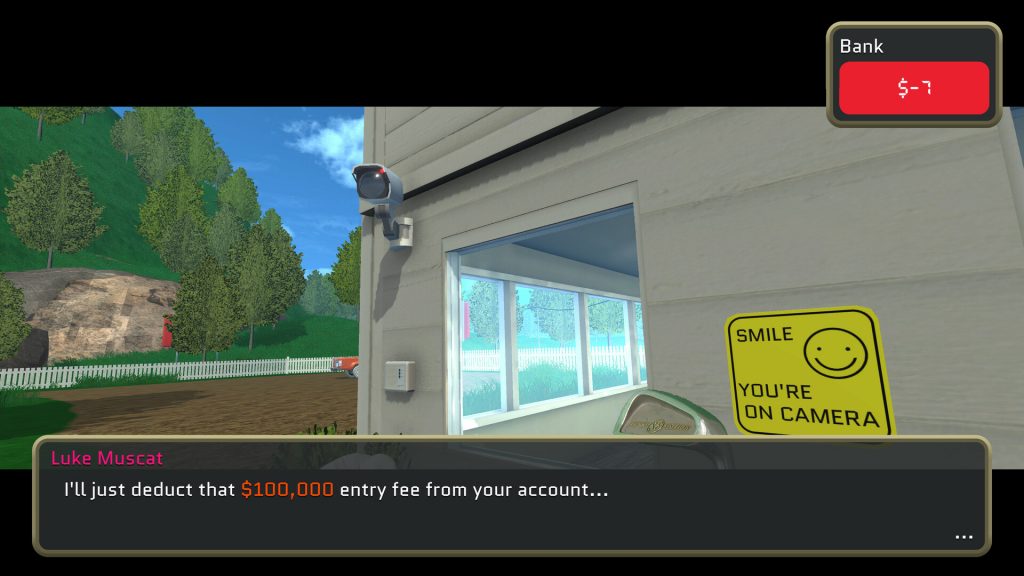
You owe Luke Muscat $100,000. You don’t entirely remember how. And now you’re trapped on a sprawling golf course, and the only way out is to keep playing golf until the increasingly unhinged game developer who put you here decides he’s satisfied. What satisfies him? You’ll have to figure that out yourself. Welcome to Normal Golf Game — which is, the title’s deadpan promise notwithstanding, absolutely not a normal golf game.
The new solo project from Luke Muscat — the Australian designer behind mobile megahits Fruit Ninja and Jetpack Joyride — has been officially revealed with a free Steam demo. And it’s the kind of weird, personal, meta-comedic experiment that only becomes possible when a developer with serious commercial credentials decides to chase the “ultimate challenge of solo game development” instead of another safe hit.
A Premise Built on Black Comedy
The setup is the hook, and it’s a strong one. Through some unexplained series of events, you’ve ended up $100,000 in debt to a deranged game developer named Luke Muscat — yes, the actual developer, cast as the game’s villain — and you’ve been imprisoned on a giant golf course. The nightmare began with golf. Now you have to survive it through more golf.
The meta-narrative structure is the project’s defining characteristic. Having the developer appear as the game’s antagonist is the kind of self-aware comedic conceit that could feel gimmicky in less skilled hands, but Muscat’s background suggests he understands exactly what he’s doing with it. The “you can’t leave until Luke Muscat is satisfied — and you have to discover what satisfies him through play” framing turns the developer-player relationship into the game’s actual mystery. It’s a clever inversion: the person who made the game is, within the fiction, the obstacle to finishing it.
This black comedy register has generated immediate community reaction, with players responding to the audacity of the premise. The combination of recognizable developer, self-deprecating villainy, and the inherent absurdity of being held hostage by golf has produced exactly the kind of word-of-mouth curiosity a solo indie project needs.
Not Actually Golf — Physics Puzzle in Disguise
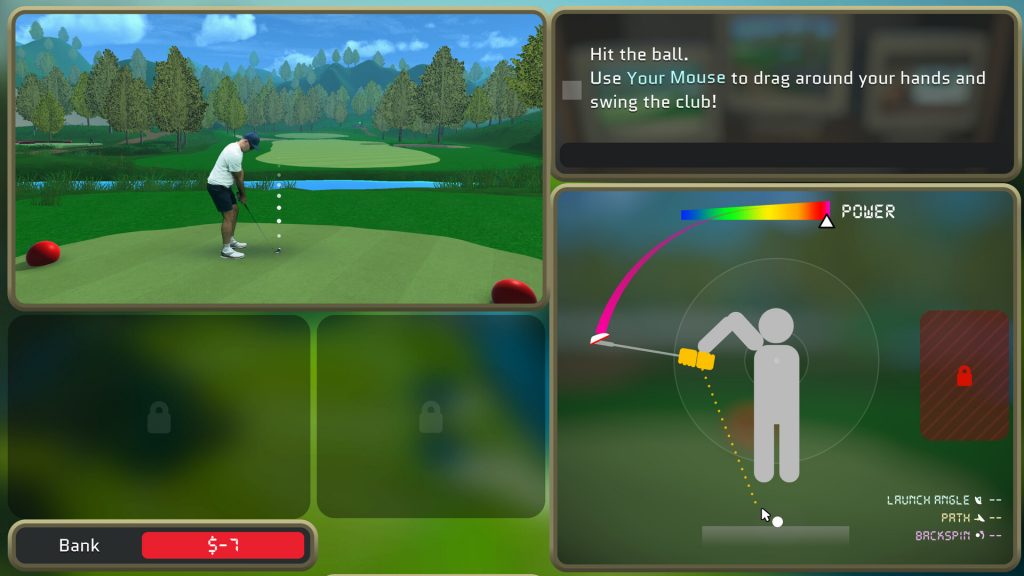
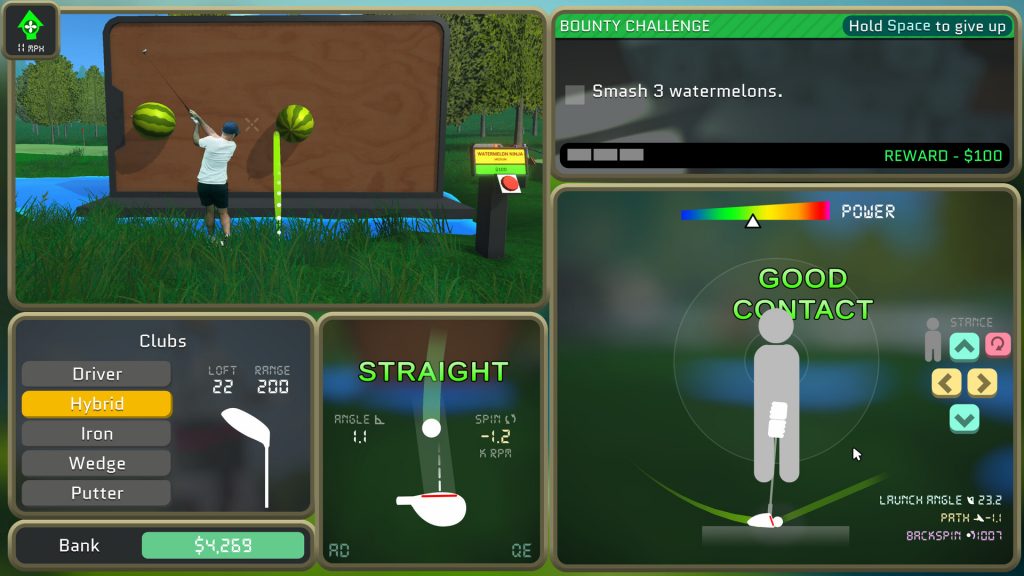
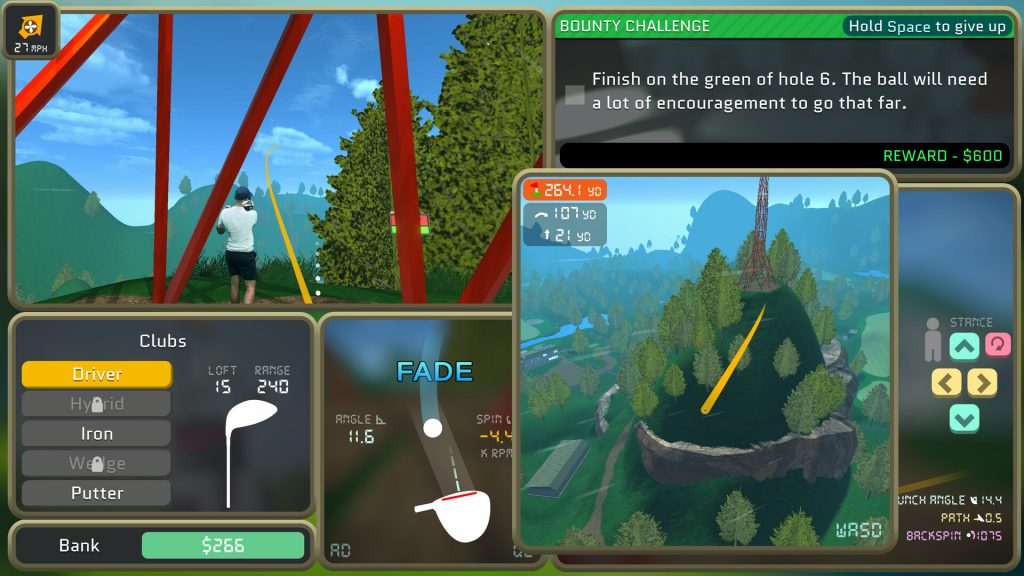
Despite the title, Normal Golf Game isn’t a casual ball-in-hole sports game. It’s a physics-based challenge built around precise manual control — players adjust club path, direction, posture, and clubface angle directly, performing physics-based manipulation rather than selecting from simplified swing options.
The freedom is the point. You can hit the ball from anywhere, using various objects and environmental elements, which combine with exploration to push the game closer to a physics-puzzle challenge adventure than to a traditional sports game. This is where the Getting Over It with Bennett Foddy comparison becomes essential — Normal Golf Game is clearly designed around the failure-repetition-mastery loop that defined Foddy’s punishing climbing game.
That design philosophy is significant. Getting Over It built its entire identity around frustration as a deliberate emotional tool — the game wanted players to suffer, fail, and gradually develop genuine skill through that suffering, with the developer’s narration commenting on the experience throughout. Normal Golf Game appears to be applying that same philosophy to golf physics, with Muscat-as-villain serving the same narrative-commentary function that Foddy’s voice served in Getting Over It.
The skill-development structure is the core appeal. Like Getting Over It, the game is designed around accumulated mastery — failure and repetition building player skill over time. The simple stated goal (“you can’t leave until Luke Muscat is satisfied”) masks a deep challenge structure where the actual difficulty is both mechanical (mastering the physics) and epistemological (figuring out what the game actually wants from you).
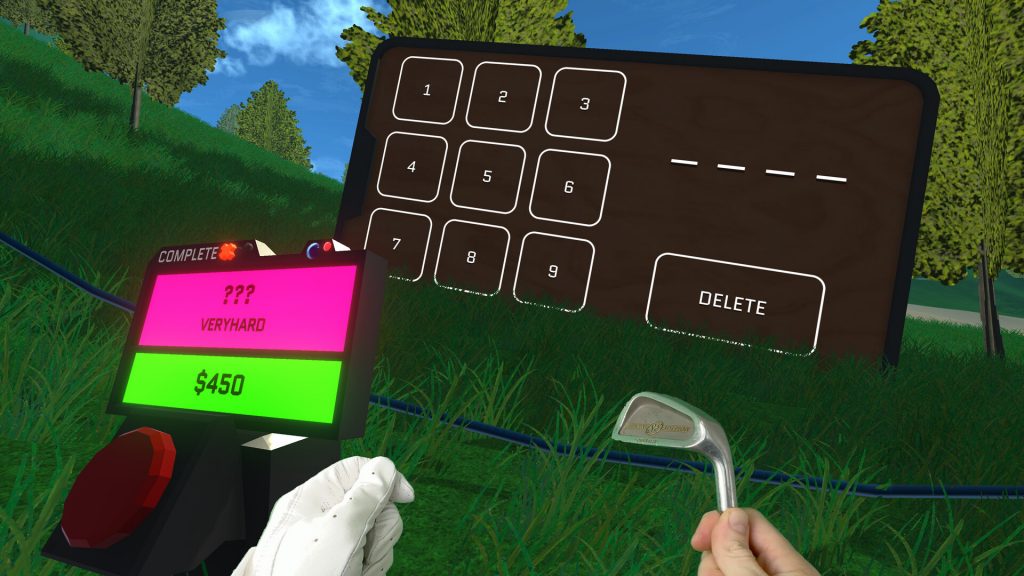
The Aesthetic Tension
The visual presentation plays directly into the meta-comedy. At first glance, the golf course looks peaceful and beautiful — green grass, sunlit scenery, the relaxed atmosphere of an actual golf course. But for the player, this is an inescapable giant trap.
The collision between realistic environment and surreal elements generates the game’s distinctive tension. The developer appearing as the in-game villain anchors the meta-narrative, and the contrast between the pleasant setting and the imprisonment premise produces a specific kind of unease — the dissonance of being trapped somewhere that looks like leisure.
The audio design reinforces this. What initially sounds like peaceful ambient sound and a relaxed golf course atmosphere gradually shifts, across repeated play, toward inducing anxiety and psychological pressure. This is the Getting Over It playbook again — using the gap between the game’s surface presentation and its actual emotional reality to create discomfort. A golf course should be relaxing. This one becomes increasingly oppressive the longer you’re trapped in it.
The Developer’s Pivot
Luke Muscat’s career trajectory makes Normal Golf Game particularly interesting. At Halfbrick Studios in Brisbane, he designed Fruit Ninja in 2010 — a game that sold over 20 million copies in its first year and became one of the defining mobile titles of its era. He followed it with Jetpack Joyride, cementing his reputation as one of mobile gaming’s most successful designers. He later served as a design lead at Snap (the Snapchat company) before transitioning to independent development in 2022.
That background gives Normal Golf Game a specific kind of significance. This isn’t a first-time developer’s experimental project — it’s a proven commercial designer deliberately stepping away from the formula that made him successful to attempt “the ultimate challenge of solo game development.” Muscat has the credentials to make another safe mobile hit. He’s choosing instead to make a weird, personal, physics-based black comedy as a one-person team.
The mobile-to-indie pivot is its own interesting story. Designers who’ve worked at the commercial peak of mobile gaming rarely transition to personal indie projects — the incentive structures usually push the other direction. Muscat’s choice to chase solo development as a creative challenge rather than a commercial calculation reflects the kind of career-stage freedom that produces genuinely distinctive games. He’s not trying to maximize revenue; he’s trying to find out what he can make alone.
The Public Development Model
One of the most notable aspects of a Normal Golf Game is its public development approach. The entire project is being documented through Muscat’s YouTube channel, where a community of approximately 189,000 subscribers has been following the development journey.
This isn’t just development logging — it’s a genuine open-development model where the community participates in shaping the game. The transparency turns the audience into stakeholders, and it produces exactly the kind of invested community that helps solo indie projects reach their audience. By the time Normal Golf Game launches, it won’t be introducing itself to players; it’ll be delivering to an audience that watched it get built.
This model has become increasingly common for solo developers (it parallels the approach taken by developers like the Stardew Valley and various other publicly-documented indie projects), but Muscat’s existing platform and commercial credibility give it more reach than most. The 189,000 subscribers represent a substantial pre-built audience, and the development documentation itself functions as both marketing and community-building.
It also fits the game’s meta-comedy. A game where the developer appears as the villain, built in public by that same developer, with the audience watching him construct the golf-course-prison — there’s a recursive coherence to the whole project that makes the public development model feel like part of the design rather than just promotion.
Community Reaction
The reveal has generated a quick and enthusiastic response across the Steam community and international users. The “$100,000 in debt to Luke Muscat, trapped on a golf course” premise has been the primary driver of the black comedy buzz.
Player reactions have clustered around recognizable themes: comparisons to “Getting Over It meets a weird golf game,” curiosity driven precisely by the game’s insistence that it’s not a normal golf game (“it’s absolutely not a normal golf game, which makes me more curious”), and delight at the developer-as-final-boss conceit (“the setup where the developer appears as the final boss is insane”). The project is attracting attention from both physics-challenge game fans and golf game players simultaneously — two audiences that don’t always overlap.
This dual-audience appeal is one of the project’s strongest commercial signals. Getting Over It fans are drawn by the failure-mastery loop and the meta-narrative; golf game players are drawn by the sport framing and physics manipulation. Normal Golf Game sits at the intersection, which gives it a broader potential audience than either pure category.
Who This Is For
Strong fit for: Getting Over It fans who appreciate punishing physics-mastery games with developer commentary; players who enjoy meta-narrative and self-aware game design; physics-puzzle enthusiasts who want skill-based challenge; anyone curious about what the Fruit Ninja creator makes as a solo developer; golf game players open to unconventional takes on the sport.
Cautious fit for: players who find rage-game / frustration-based design more annoying than rewarding; anyone who prefers traditional, relaxing golf games.
Less ideal for: players who want straightforward sports gameplay without meta-commentary or difficulty spikes; anyone allergic to deliberately punishing game design; players who prefer narrative-light experiences.
What to Watch For
A few questions will shape how Normal Golf Game develops toward full release.
The first is whether the physics system delivers the right kind of difficulty. Getting Over It-style games succeed when their difficulty feels fair-but-punishing — frustrating in a way that produces genuine mastery rather than arbitrary failure. Whether Normal Golf Game‘s golf physics achieve that balance is the central design question, and the demo is where players will start forming opinions.
The second is the meta-narrative’s depth. The developer-as-villain conceit is a great hook, but hooks need substance behind them. Whether the meta-narrative develops into something genuinely clever across the full game, or whether it stays at the level of a funny premise, will affect the game’s lasting impact.
The third is the “satisfaction” mystery. The core goal — discovering what satisfies Luke Muscat — is an intriguing structure, but it places significant weight on the payoff. Whether the mystery resolves into something satisfying or feels arbitrary will shape how players remember the experience.
The fourth is the solo development scope. Muscat is attempting this alone, and solo development of a physics-based game with meta-narrative depth is genuinely demanding. Whether the full game delivers the scope the premise promises is the practical question behind the creative ambition.
The Takeaway
Normal Golf Game is the kind of project that makes the indie space interesting — a commercially proven developer deliberately chasing a weird, personal, technically demanding solo experiment instead of another safe success. The black comedy premise is genuinely funny, the Getting Over It-influenced physics-mastery design is a proven formula in capable hands, the meta-narrative conceit is clever, and the public development model has built a real community around the project.
The risks are the standard risks for ambitious physics-challenge games — whether the difficulty lands as fair-but-punishing rather than arbitrary, whether the meta-narrative has substance behind its hook, and whether the satisfaction mystery pays off. But Muscat’s track record suggests he understands game design at a level that makes these risks worth betting on.
For physics-challenge fans, Getting Over It enthusiasts, and anyone curious about what one of mobile gaming’s most successful designers makes when he’s working alone and chasing a creative challenge rather than a commercial one, the free demo is the fastest way to find out whether Normal Golf Game clicks. It’s available on Steam now, and the full release — whenever Luke Muscat is satisfied — is still ahead.
A $100,000 debt. A golf course you can’t escape. A developer who put you there and won’t let you leave. As deliberately absurd indie pitches go, this is one of the more memorable — and coming from the person who made Fruit Ninja, it’s also one of the more intriguing career pivots in recent indie memory.
The course is waiting. Luke Muscat is watching. And he is not yet satisfied.
Information regarding the ‘Normal Golf Game’
| item | detail |
|---|---|
| Developer / Publisher | Luke Muscat (Australia, solo developer) |
| Genre | Physics-based Golf / Adventure Puzzle / Black Comedy |
| Release platform | PC (Steam) |
| Scheduled for release | Undetermined (Demo currently available) |
| demo | Free Steam demo available to play immediately |
| inspiration | Getting Over It with Bennett Foddy / Trick Shot Simulator / Jetpack Joyride |
| Developer’s previous work | Fruit Ninja (2010) / Jetpack Joyride (2011) — Halfbrick Studios |
| YouTube channel | 189,000 subscribers / Sharing development journey |
| Key Features | Developer appears as the in-game villain / Metanarrative / Physics-based golf controls |
| Main Keywords | Golf, Physics, Meta-humor, Black comedy, Escape, Indie, Solo development |
| Official Channel | YouTube(@lukemuscat) |
| Steam Page | Go to Wishlist/Demo |