Two middle school classmates founded PepperStones while still in university in 2021. Their first game Wetory reached Tokyo Game Show 2022 and earned a Gamescom Best Indie Top 10 selection. HIPS N NOSES is their second project, and it’s making its first public playable appearance at ChinaJoy 2026 in Shanghai — a deliberate choice that reflects which market they’re prioritizing for initial international visibility.
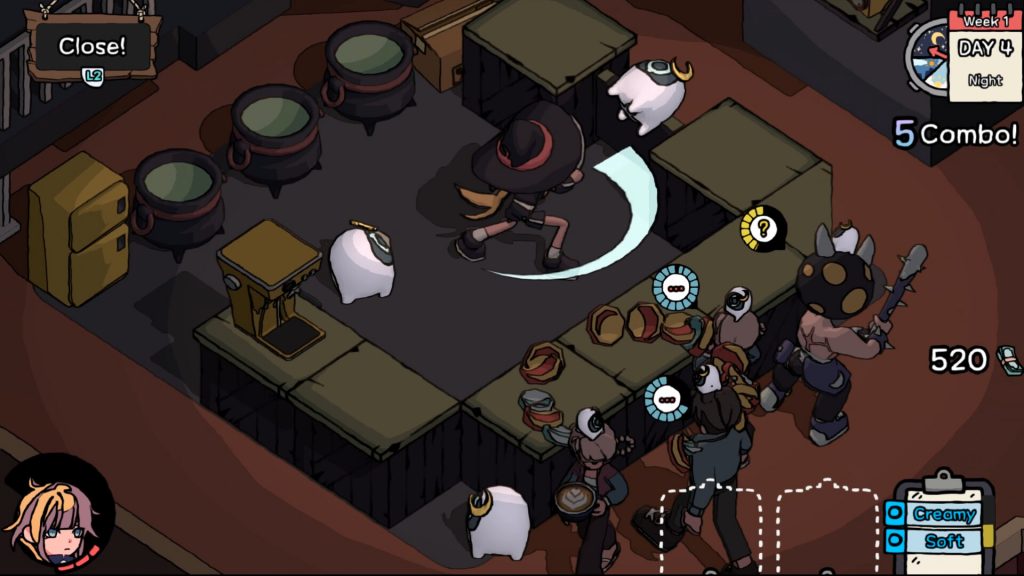
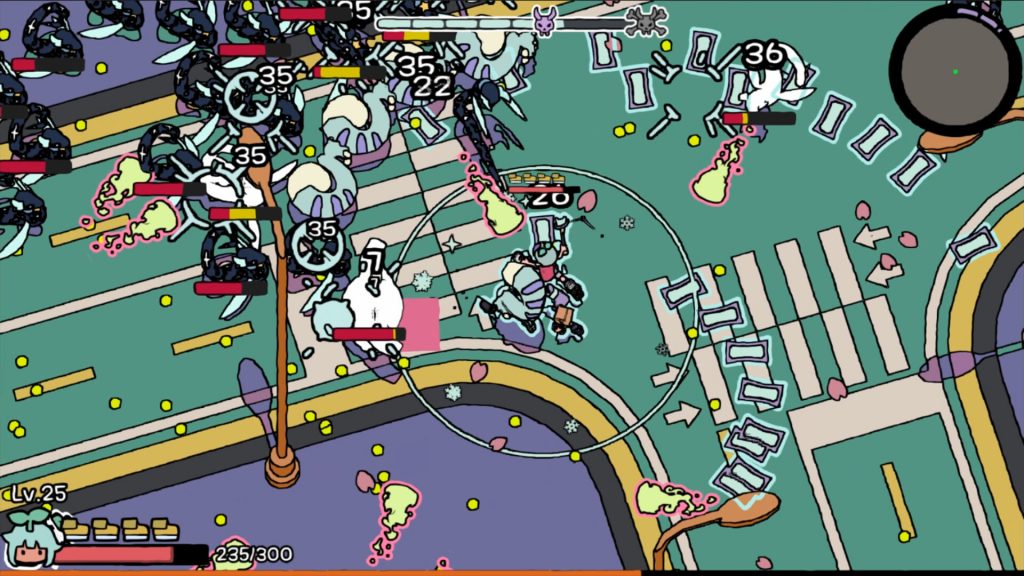
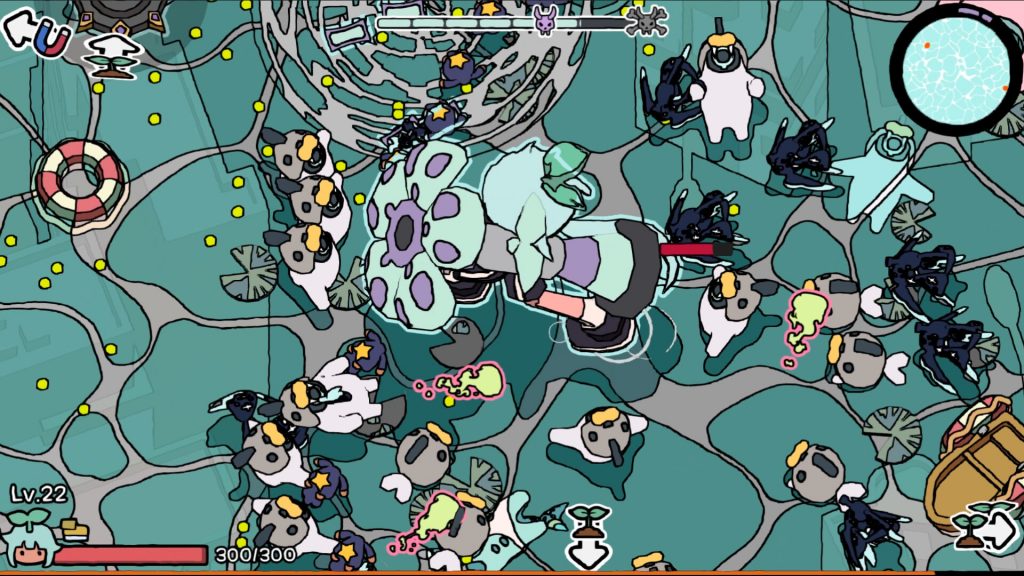
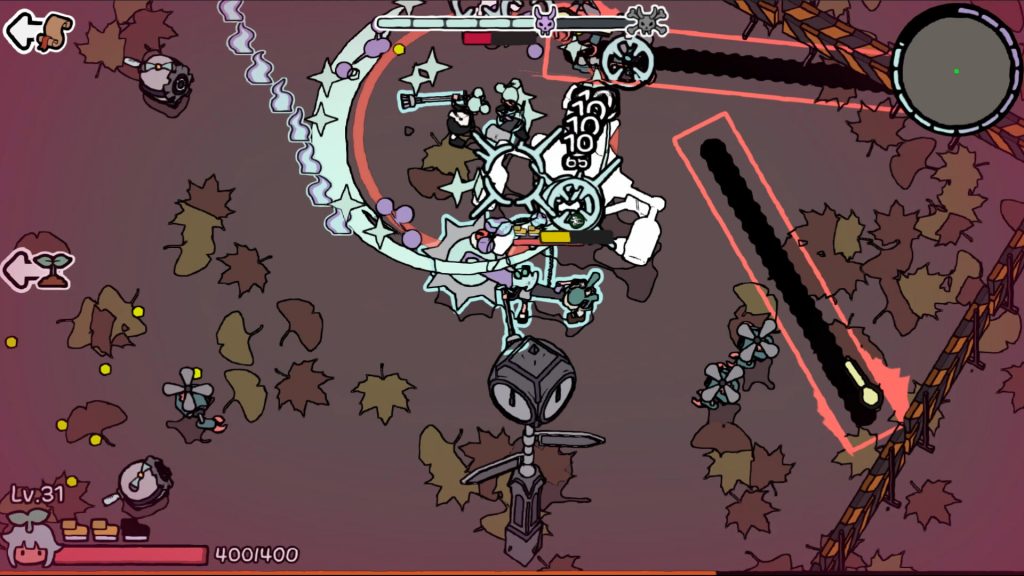
The game’s premise: in a world where nobody can sleep, one girl named Mela can still dream. During the day, she runs a café serving customers who have lost their memories. At night, she enters the nightmare world and fights monsters to collect Memory Flowers. The day’s café performance affects the night’s survival odds; the night’s loot drives the café’s growth. The two genres are not parallel features but a single interconnected system.
[Related Article: Pepperstones Unveils Steam Page and Trailer for New Indie Title ‘HIPS N’ NOSES’]
The Day-Night Loop Design
The structural ambition of HIPS N NOSES is genre synthesis rather than genre combination. Café management games and action roguelites are both well-developed genres with established audiences; building a game that alternates between them would produce something functionally competent but structurally disjointed. The design challenge is creating genuine integration — where engagement with each genre changes and improves engagement with the other.
The integration mechanism appears to be bidirectional resource flow:
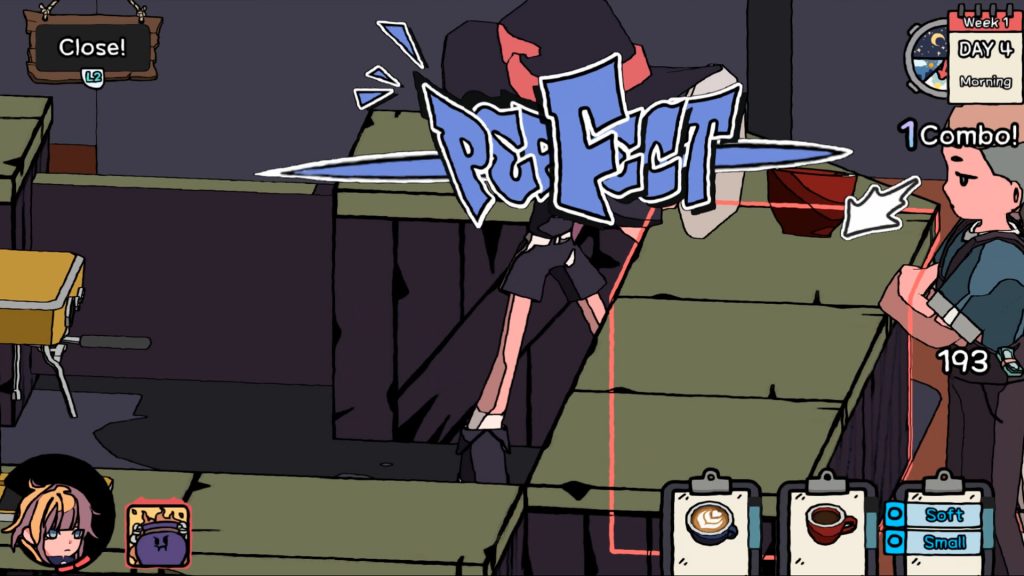
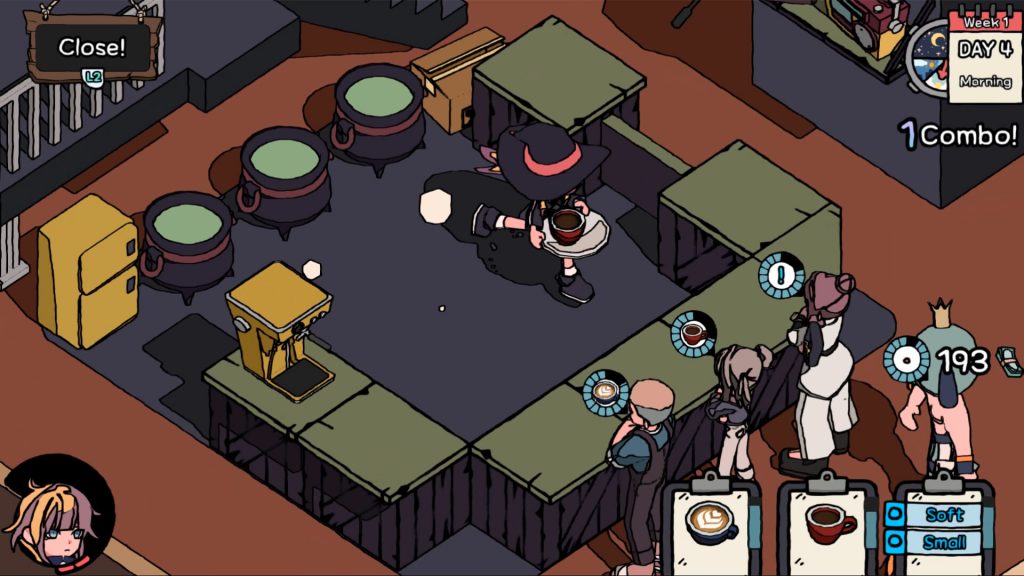
Daytime café management produces revenue and relationships that determine how well-equipped Mela enters the nightmare. A successful café day means better resources for the night’s combat. The “recipe completion through reading customer hints” design — players must understand what each amnesia-affected customer wants by reading conversation hints rather than being told directly — makes the social gameplay in the café genuinely engaging rather than a simple between-combat phase.
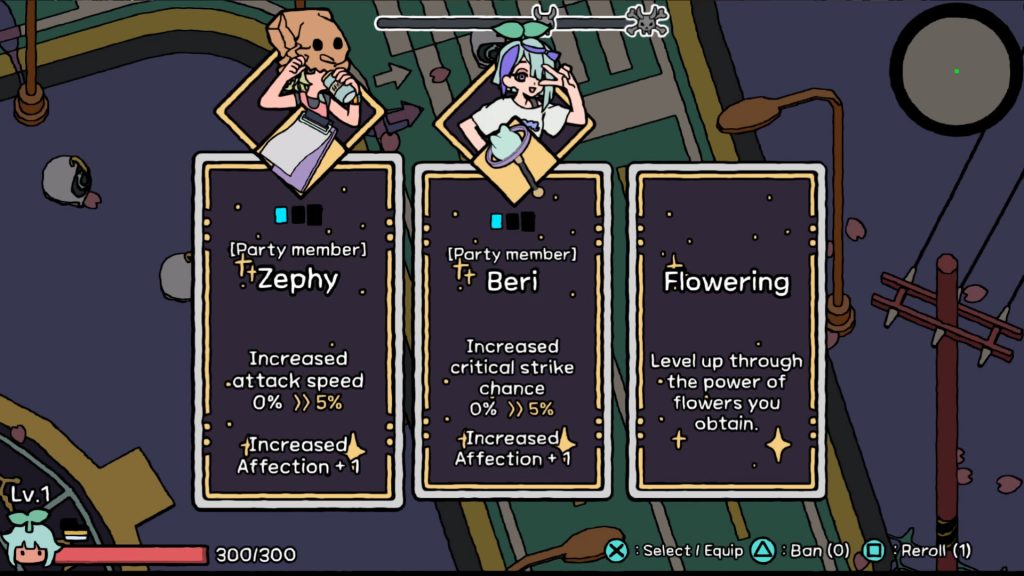
Nighttime combat produces special ingredients that can’t be obtained in the real world and generates loot that funds café infrastructure expansion. A successful nightmare run means new menu options, better equipment, expanded café capacity for the next day.
This creates the specific loop that makes day-and-night cycle games compelling when they work: you’re motivated to do well in each phase because your performance affects the other phase, and neither phase is a rest from the demands of the other. The café isn’t a break from combat; it’s the preparation for combat. The combat isn’t a break from café management; it’s the source of café growth.
The narrative frame — amnesia customers whose café visits are connected to the memory recovery that Mela’s nightmare expeditions enable — gives the loop thematic coherence. The customers are why Mela runs the café; the Memory Flowers are what help the customers; the nightmare combat is how Mela gets the Memory Flowers. The design motivations and the narrative motivations align.
The Recipe System
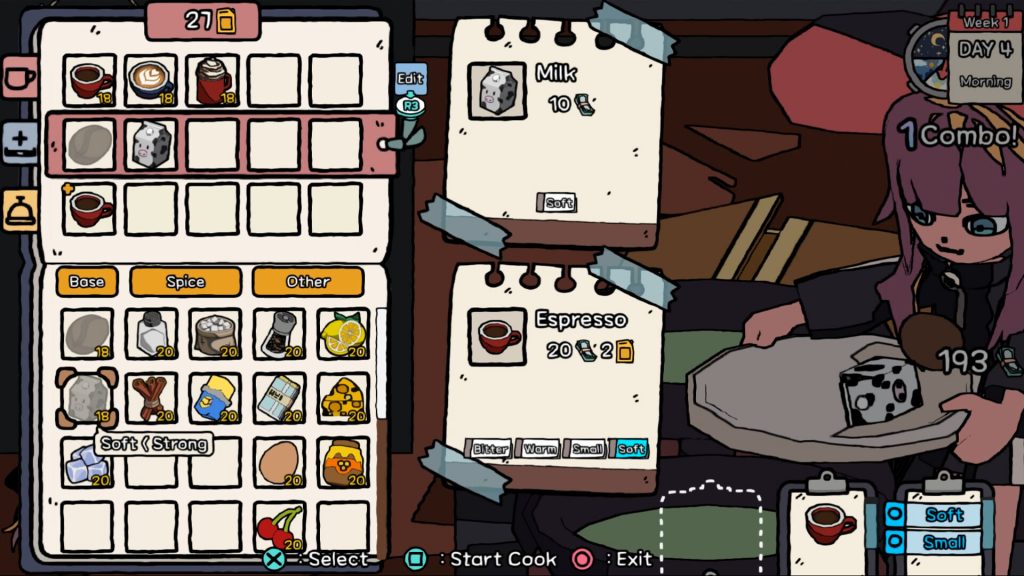
“Inferring recipes from conversation hints” is the specific customer interaction design that distinguishes HIPS N NOSES‘s café gameplay from standard management simulation. In most café management games, orders are explicit: the customer tells you what they want, and the gameplay is production execution. A system where the customer’s preferences are communicated through conversational subtext that players must interpret is a different cognitive engagement — more like social reading than production management.
This creates the specific tension of serving amnesia customers who may not remember what they want, or whose wants are expressed indirectly or incompletely. The recipe completion becomes a small puzzle — what combination of ingredients correctly interprets what this customer is expressing? — that makes each customer interaction meaningful rather than repetitive.
The special nighttime ingredients that only the nightmare world provides extend this design: certain recipes require ingredients that don’t exist in the regular world, which means the café’s menu ceiling is determined by how deeply into the nightmare Mela can venture. The café’s most sophisticated offerings are the ones made from the most dangerous experiences. This is the thematic integration of the two genres at the recipe system level.
The Two-World Visual Contrast
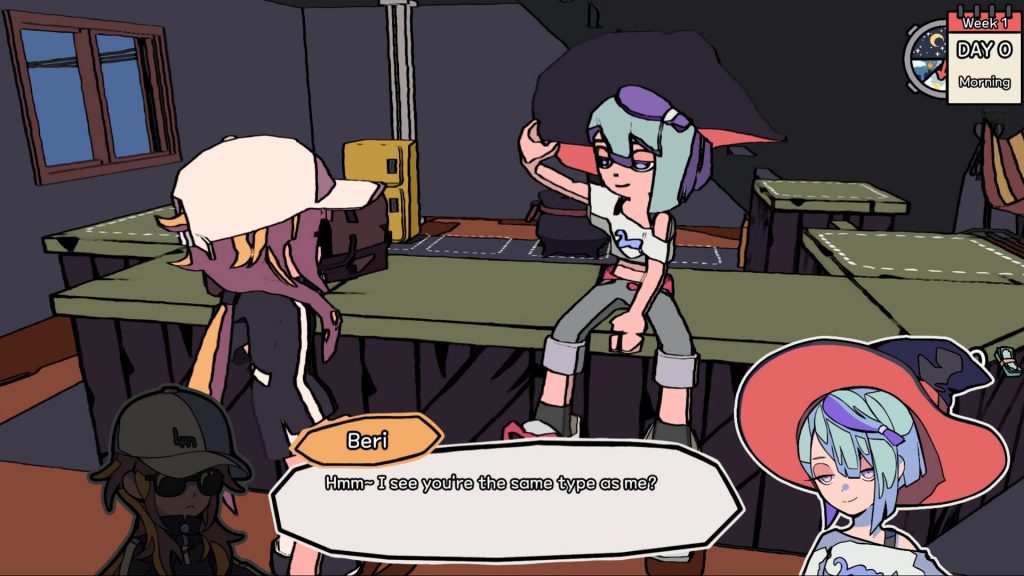
PepperStones’ cartoon art style creating distinct visual registers for the café (warm, cozy, soft) and the nightmare (ominous, surreal, dynamic) is the aesthetic implementation of the day-night thematic contrast. The visual shift from the café environment to the nightmare world signals to players that the gameplay mode has changed while maintaining the consistent art style that gives the game its cohesive identity.
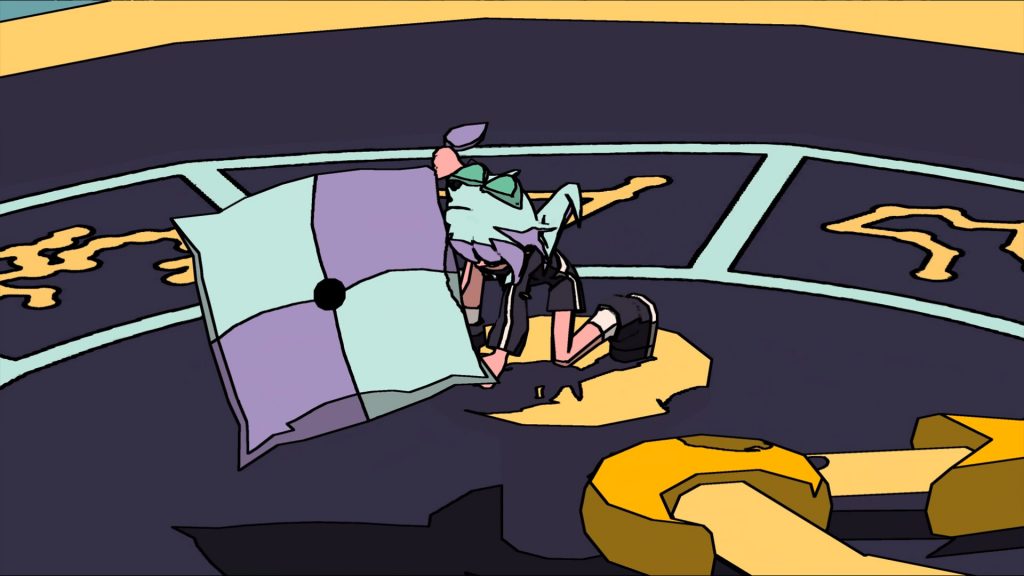
The playtest participants who specifically noted the 3D-based character expression as preferable to typical low-cost sprite animation are identifying the visual investment that distinguishes PepperStones’ work from budget indie productions. Wetory‘s Gamescom recognition was partly visual — the cartoon art style with specific character personality expression has been the studio’s consistent differentiator, and HIPS N NOSES appears to extend this with more sophisticated implementation.
The music and character presentation extending the contrast between the two worlds — rather than using the same audio register for both — means the tonal shift between café and nightmare is confirmed by multiple simultaneous aesthetic signals. Players should feel the shift between worlds rather than only see it.
The PepperStones Studio Context
A studio founded by two middle school classmates in 2021, currently operating as a small team with self-publishing infrastructure and festival showcase experience across Tokyo Game Show and Gamescom — this is the specific developmental stage where the ChinaJoy strategic choice is most revealing. PepperStones has demonstrated global festival credibility with Wetory; they’re using HIPS N NOSES to pursue a different geographic market first.
ChinaJoy is China’s largest gaming exhibition and one of Asia’s most significant gaming events. Choosing Shanghai as the world premiere venue for the first playable demo reflects awareness that the cartoon aesthetic and café management genre combination has specific appeal in East Asian markets, and that establishing visibility in China before the Western festival circuit may produce a stronger global launch trajectory than the conventional Western-first approach.
The self-reported wishlist target exceedance without disclosing the absolute number is the standard early-stage developer communication that acknowledges community interest without committing to specific benchmark claims. The playtest feedback characterization — “hard to put down,” “appealing art style,” “charming combat,” positive café-and-combat combination responses — suggests the core loop is creating engagement for players who’ve tried it.
Who This Is For
Strong fit for: players who want genuine genre synthesis rather than alternating between two unrelated game modes; café management game fans who want action roguelite depth alongside the social simulation; action roguelite players who want a narrative and management layer giving combat context and consequence; K-indie game supporters following PepperStones’ development trajectory; cartoon aesthetic enthusiasts who appreciate the visual contrast between the game’s two worlds; ChinaJoy attendees at Hall N1, Booth G-892.
Cautious fit for: players who want either pure café management or pure action roguelite without the integration overhead; anyone who prefers games where the two genres are cleanly separated rather than bidirectionally dependent; players who need confirmed Early Access content scope before investing wishlist attention.
Less ideal for: players who dislike either genre half of the combination; anyone who wants multiplayer options alongside the solo management/action experience; players seeking the Q1 2027 target to arrive sooner.
What to Watch For
The ChinaJoy demo is the first public evaluation of whether the day-night bidirectional resource loop creates the integrated experience the design describes or whether the two halves feel like separate games sharing a visual style. If players at the Shanghai booth experience the café performance directly affecting their nightmare combat capability — and feel the nightmare loot opening new café possibilities — the integration is working. If the connection feels theoretical rather than felt, the design has more work to do before the Q1 2027 Early Access.
The recipe-from-conversation-hints system specifically needs to strike the balance between engaging puzzle and frustrating ambiguity. If customers’ conversational hints are too obscure, the recipe completion feels like guessing; if they’re too direct, the social reading becomes a formality rather than gameplay. The playtest balance feedback — which the development team says prompted character balance adjustments — suggests they’re iterating on this calibration.
The Takeaway
HIPS N NOSES is PepperStones’ bid to prove that café management and action roguelite can be one game rather than two games sharing a UI — that the day and night aren’t alternating modes but a single loop where success in each creates the conditions for success in the other. The Memory Flower collection that drives both the café’s menu and the customers’ recovery connects the two genre halves at the narrative level; the resource flow in both directions connects them at the mechanical level.
The ChinaJoy world premiere is the first opportunity for players outside the playtest to evaluate whether this integration works as described. PepperStones has the festival track record (Wetory‘s Tokyo Game Show and Gamescom success) that suggests they can execute; HIPS N NOSES is testing whether their ambition has grown appropriately with their experience.
Nobody can sleep. Mela can dream. The café needs running, the nightmare needs entering, and somewhere between the recipe completion and the Memory Flower collection, both problems are the same problem.
ChinaJoy 2026, Hall N1, Booth G-892, July 31–August 3. Steam Early Access Q1 2027.
Information regarding ‘HIPS N NOSES’
| item | detail |
|---|---|
| Developer | PepperStones (South Korea) |
| Publisher | PepperStones.Inc (Self-publishing) |
| Genre | Cafe Management Simulation / Action Roguelike |
| Release platform | PC (Steam), Console |
| Scheduled for Early Access release | Q1 2027 |
| Participation Event | 2026 ChinaJoy (July 31–August 3, 2026, Shanghai New International Expo Center) |
| Booth location | N1 Building G-892 |
| Main contents | World’s first public play demo and new official trailer unveiled simultaneously |
| Previous work | Wetory (Exhibited at Tokyo Game Show 2022, Gamescom Best Indie Top 10) |
| Official Channel | X(@Project_Mela), Instagram(pepperstones_kr), Discord |
| Steam Page | Shortcut |