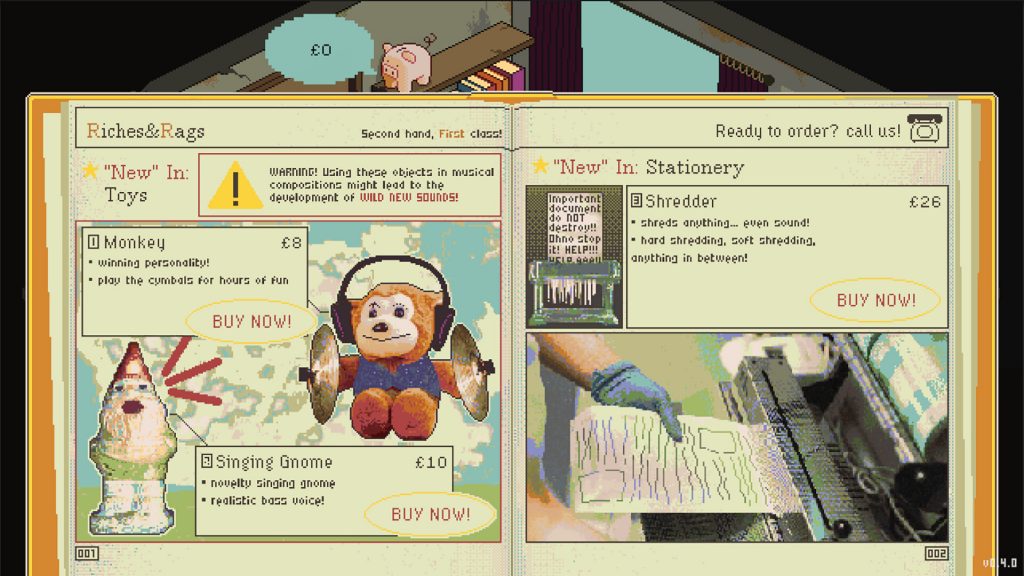
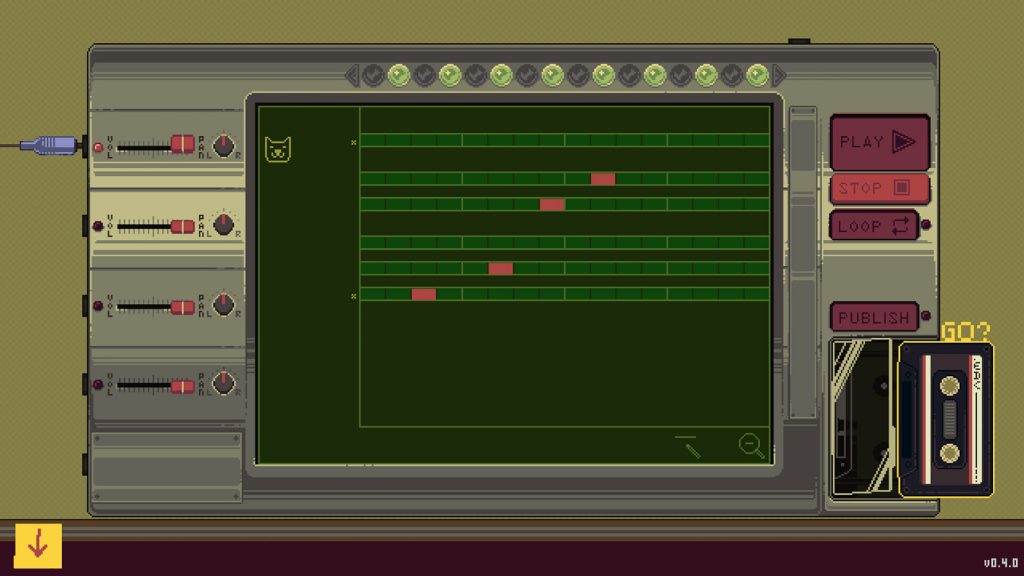
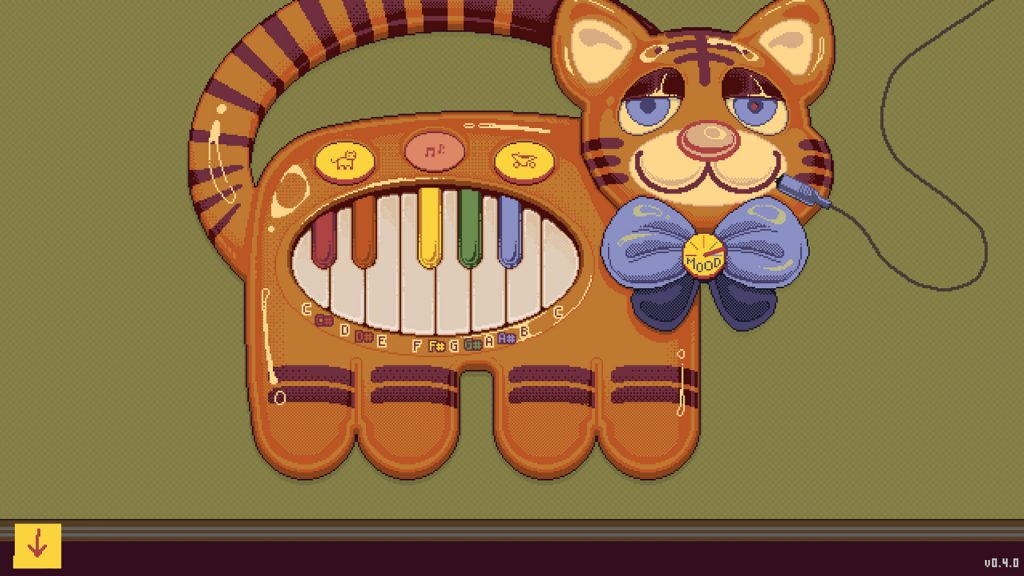
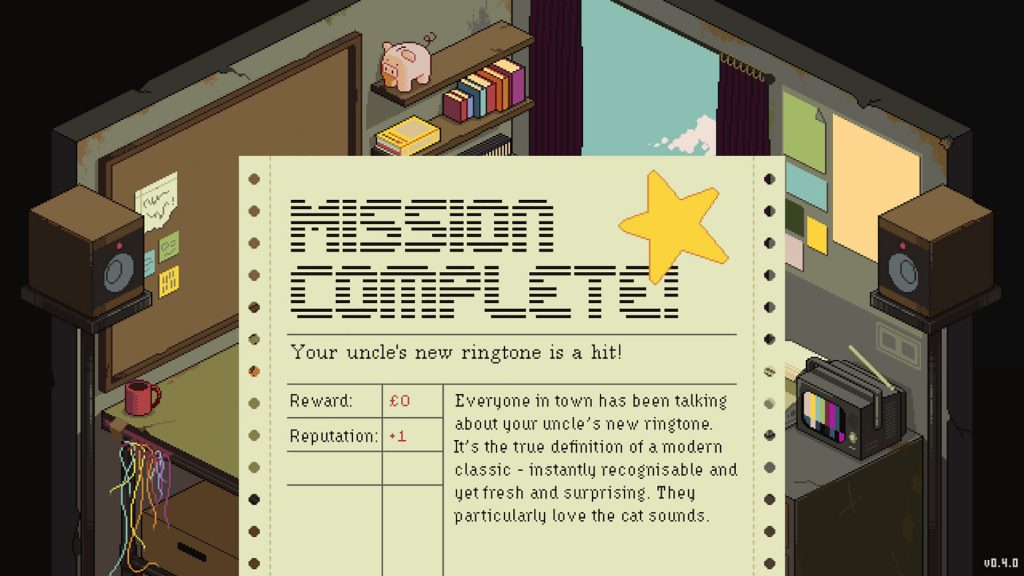
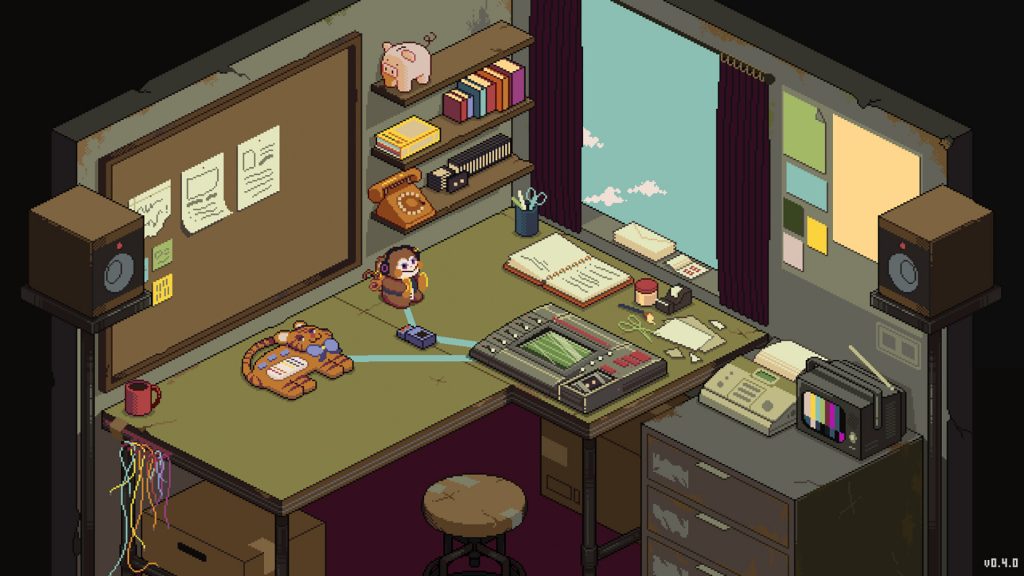
The starting equipment in OFFBEAT is a tiger-shaped toy keyboard and a secondhand 4-track sequencer left by your uncle. The year is the 1980s. The commission you’re about to complete requires music. You will make it with the toy keyboard, the sequencer, and whatever other household objects you can convert into instruments — the singing garden gnome figurine, the paper shredder, the kitchen implements that apparently have sonic properties nobody had previously thought to exploit.
OFFBEAT from London’s Whetstone Games (published by Pantaloon Interactive) entered Early Access on July 22 with 100% positive reviews from 66 users, 50,000+ wishlists cleared before launch (15,000 added in the final day), and a premise that combines music tycoon mechanics with an absurdist instrument-making system that turns everyday objects into unreasonably compelling sound sources.
The comparison that comes to mind is Rhythm Doctor or Trombone Champ — games that take music as their subject matter and find comedy and creativity in unexpected approaches to it. OFFBEAT is working in a different mechanical register (tycoon and production simulation rather than rhythm action) but has the same quality of finding something musically interesting where you wouldn’t expect it.
[Related Article: Music Made in a Game as an Album? Music Tycoon ‘Offbeat’ Demo Released]
The Object-as-Instrument Design
The conceptual core of OFFBEAT is that anything can be an instrument if you decide it’s an instrument. Garden gnomes, paper shredders, kitchen tools — the 1980s indie musician starting with a toy keyboard has the same basic attitude toward sound sources that actual experimental musicians have had since John Cage started treating the prepared piano as a percussion instrument and Pierre Schaeffer recorded trains.
This isn’t just flavor — it shapes the game’s entire aesthetic register. A music game where you use professional instruments is a game about professional music production. A music game where you use garden gnomes is a game about what music is and what makes sound musical. OFFBEAT is in the second category.
The practical implication is that the sound design is doing extraordinary work. Pixelated garden gnomes and paper shredders need to produce sounds that are simultaneously absurd, distinctive, and musically interesting enough that players want to experiment with combining them. The press feedback that “the composition tools are exceptionally complete” alongside “the story reaches full momentum exactly where the Early Access content ends” suggests the instrument system is delivering on this — the absurd objects are making musically interesting sounds, and players are discovering combinations that surprise them.
The WAV export function is the specific feature that distinguishes OFFBEAT from pure music game toys: music created in the game can leave the game. The compositions you make with your singing garden gnome and paper shredder exist as actual audio files that you can use, share, or release. This is the Pantaloon Records connection made concrete — the publisher that bridges indie gaming and the actual music industry, providing a game whose creative output is real musical artifacts.
The Pantaloon Records Dimension
Pantaloon Interactive’s parallel music label Pantaloon Records is the most unusual publisher element in OFFBEAT‘s release. A game publisher running an actual music label suggests the intention of connecting the two industries at a deeper level than marketing alignment — implying that music created in OFFBEAT might have a pathway to the music industry through the publisher’s own label infrastructure.
Whether this connection is realized or remains conceptual will determine if Pantaloon’s dual identity creates genuine value for OFFBEAT players or is primarily an interesting background detail. For players who create music in OFFBEAT with genuine artistic intent, the existence of a music label with an interest in game-created music is a more meaningful support structure than a traditional publisher provides.
The 1980s Tycoon Structure
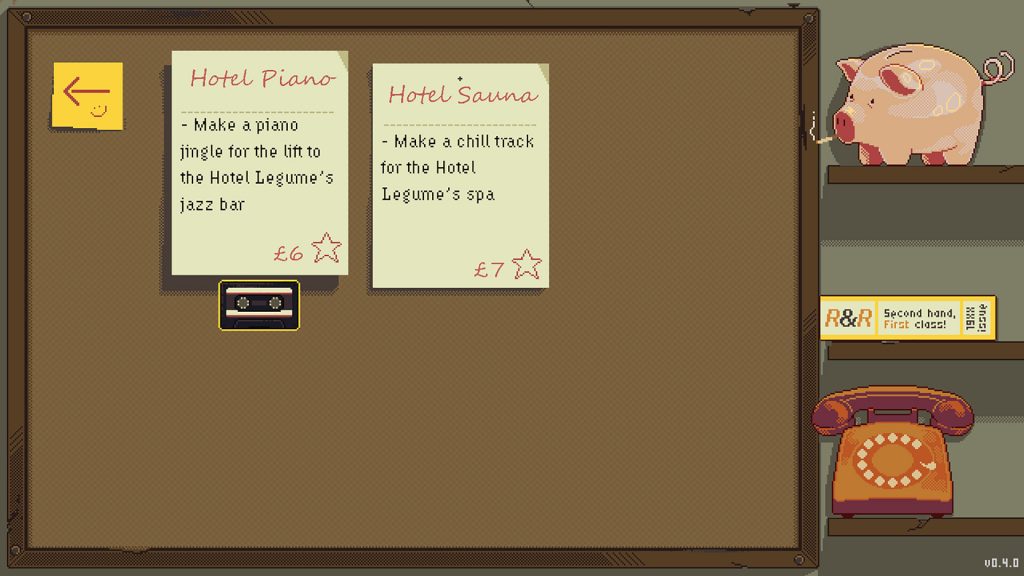
The tycoon framework — take commissions, complete them, build your studio, acquire better equipment, take more ambitious commissions — provides the progression structure that gives the instrument experimentation purposeful context. Without the commission structure, OFFBEAT would be a creative sandbox with no particular direction; without the instrument experimentation, it would be a standard music production tycoon.
The 22 commissions across 2 chapters in the Early Access version provide roughly the first act of what will presumably be a fuller story arc. The press criticism that “the story reaches full momentum exactly where the Early Access content ends” is the standard Early Access complaint about content cutoffs — the game is getting good at the moment it stops — which is simultaneously a criticism of the launch state and a strong argument for the full 2027 release.
The instrument upgrade system added to the Early Access version extends engagement beyond simply acquiring new objects. Upgrading the tiger keyboard presumably changes its sonic character, opens new compositional possibilities, or increases the complexity of what it can contribute to a composition. The strategic tension in upgrade decisions — which instrument to develop, in what order — provides the tycoon game’s characteristic long-term optimization dimension.
The beginner notebook guide is the accessibility addition that ensures players without a musical background can engage with the composition tools. A music production simulation where only players with prior music theory knowledge can meaningfully participate would severely limit the audience; the guide’s explicit beginner orientation suggests Whetstone is deliberately targeting the full range of players who find the object-as-instrument premise interesting.
The 100% Early Access Rating
100% positive reviews from 66 users is the specific number that requires both appreciation and calibration. 66 reviews is a small sample that overrepresents enthusiasts — the players most likely to review within the first days of an Early Access launch are the most motivated supporters of the concept. That said, 100% from 66 reviews means there are no negative reviews at all, which is meaningfully different from 90% from 66 reviews. Even accounting for sample bias, the absence of any negative reviews suggests the game is not currently failing anyone who picks it up.
The mild criticism that upgrade decisions become less strategically tense in the late Early Access content is the exact kind of balance feedback that Early Access is designed to surface. The development team now knows where the strategic tension is dissipating and can address it before the 1.0 release. This is the feedback loop working correctly.
The Whetstone Games Origin
Three people who met in indie developer communities in 2025, forming a London studio and releasing their first commercial game about making music with garden gnomes — this is the specific kind of origin story that the indie gaming community exists to produce. The prior project, Boxroom (an organizing utility for Steam libraries), is so conceptually different from OFFBEAT that it primarily establishes Whetstone’s capability to ship software rather than any creative continuity.
OFFBEAT as a first commercial game is ambitious in scope — music production simulation is technically complex, the object-as-instrument system requires significant sound design work, and the tycoon structure requires balancing multiple progression systems. The 100% launch rating suggests the execution has matched the ambition, at least for the Early Access content currently available.
Who This Is For
Strong fit for: players who are drawn to the object-as-instrument premise specifically and want to discover what everyday objects sound like as musical instruments; music game fans who want creativity and experimentation over rhythm game precision; tycoon game players who want an unusually creative theme for the management progression structure; players who want their game-created music to be exportable real audio files; experimental music enthusiasts who find the concept of garden gnome instruments philosophically interesting rather than merely silly; Pantaloon’s catalog followers who trust the publisher’s taste in distinctive indie concepts.
Cautious fit for: players who want complete games before purchase (Early Access with 2 chapters and 22 commissions is a partial experience); music game players who want rhythm action or performance over production simulation; tycoon players who want complex management layers over the creative composition focus.
Less ideal for: players who want competitive or multiplayer options; anyone who finds music production simulation uninviting regardless of instrument novelty; players who need a complete story arc available at launch.
What to Watch For
The 2027 full release’s primary evaluation point is whether the complete commission and chapter arc delivers the story that the Early Access content sets up but doesn’t complete. The “story reaching full momentum at the cutoff” suggests genuine narrative investment — the full release needs to deliver the story’s completion with appropriate emotional and comedic payoff.
The upgrade system’s strategic tension improvement will be visible in subsequent Early Access updates before the 1.0. If community feedback about late-game upgrade choices feeling less meaningful translates into balance changes that restore strategic tension across the full progression, the development team has demonstrated the responsive design iteration that Early Access is supposed to enable.
The Takeaway
OFFBEAT is a game about the specific discovery that sound exists everywhere, and music is what you choose to make from it. The garden gnomes, the paper shredder, the 1980s toy keyboard — these aren’t jokes about music production but genuine instruments that produce genuine musical outputs that players can export and share. The tycoon structure provides purposeful context for the experimentation; the Pantaloon Records connection suggests the experiment might reach further than the game itself.
100% positive reviews and 50,000 wishlists suggest the audience that was waiting for exactly this has found it. For everyone else, the question is whether the object-as-instrument concept creates the pull to discover what a singing garden gnome sounds like in a musical context.
The tiger keyboard has one octave and impeccable character. The gnome’s singing range is limited but committed. The paper shredder provides percussion nobody ordered. And somewhere in the combination of these things, a 1980s bedroom musician is making something that might not be music by conventional standards but is absolutely music by the only standards that matter.
Early Access now. 1.0 in early 2027. The gnome awaits your artistic direction.
Information regarding ‘OFFBEAT’
| item | detail |
|---|---|
| Developer | Whetstone Games (London, UK) |
| Publisher | Pantaloon Interactive Ltd. |
| Genre | Music Tycoon / Audio Production Simulation |
| Release platform | PC (Steam) |
| Early Access Release Date | July 22, 2026 |
| 1.0 Release Scheduled | Early 2027 |
| price | $11.99 / €11.99 / £10.99 (10% launch discount applied) |
| Early Access Content | 7 types of instruments, 2 chapters, 22 requests |
| New system | Instrument Upgrade System, Laptop Guide for Beginners |
| Steam rating | Very positive (100%, 66 cases) |
| Pre-release Wishlist | Surpassing 50,000 cases |
| Steam Page | Shortcut |