The Three-Year Development Arc
Polylithic‘s November 2023 to August 2026 Early Access period is notable for the magnitude of directional change it represents. A solo hunting-and-gathering experience and a 10-player cooperative colony simulator are not different versions of the same game with additional content — they’re different games with different design priorities, different player experiences, and different communities. The fact that the community itself drove this transformation is the Early Access model working as intended.
The specific additions that transformed the game’s character: cooperative multiplayer (the foundational change from solo to social experience), sandbox mode (from directed progression to player-defined goals), new biomes (expanded environmental variety), expanded skill trees (deeper individual character development), and now the 1.0 content package of character customization, animal companions, hostile tribe combat, narrative cutscenes, and optimizations.
50+ updates across three years is approximately one meaningful update every three weeks — a development cadence that requires sustained commitment and responsive community engagement. The 72% Mostly Positive rating with 129 reviews reflects an audience that has been following the game’s evolution and whose positive assessment accounts for the full development journey rather than only the launch state.
The BBC Documentary Cutscenes
The BBC nature documentary narration style added in 1.0 is the creative choice that most clearly signals what the game has become. BBC nature documentaries narrating Paleolithic human behavior in the same register as David Attenborough narrating animal behavior creates the specific comedic frame of treating prehistoric humans as specimens being observed rather than protagonists being followed.
This narration style works because it creates productive distance between the player’s actual experience (chaos, confusion, basic human needs) and the documentary’s dignified tone (thoughtful observation of human adaptation behavior). When the narration gravely notes that the tribal leader has decided to fight a mammoth with three rocks and no clear strategy, the comedy emerges from the contrast between the narration’s respect and the situation’s absurdity.
This is also the aesthetic evolution that explains Novák’s statement about realizing the game’s goal was creating laughter in chaos. A serious Stone Age survival game would make the Paleolithic period feel appropriately harsh and demanding. Polylithic‘s documentary narration acknowledges the harshness while refusing to treat it solemnly — which is how you create the specific experience of surviving prehistoric conditions while finding it funny rather than oppressive.
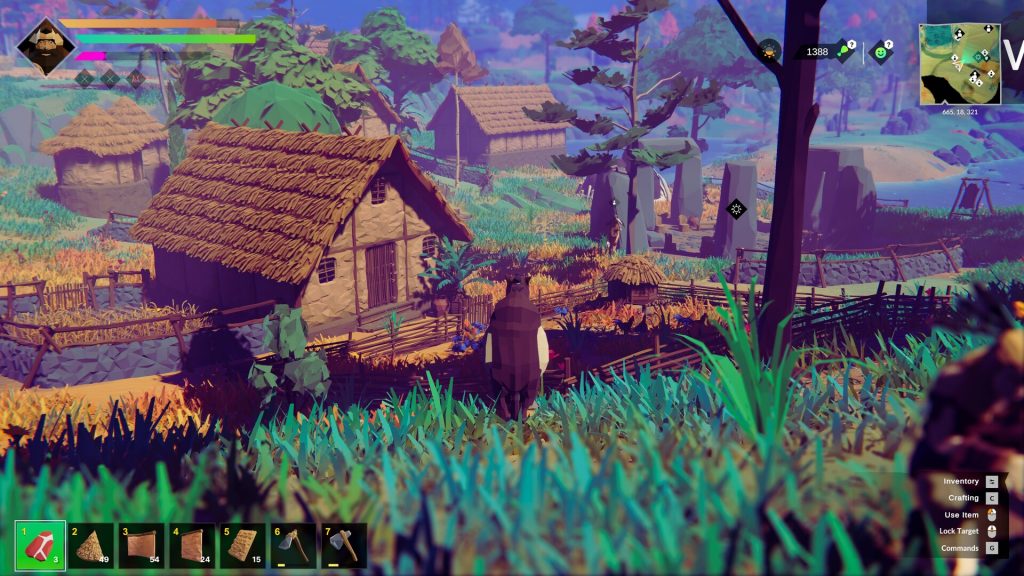
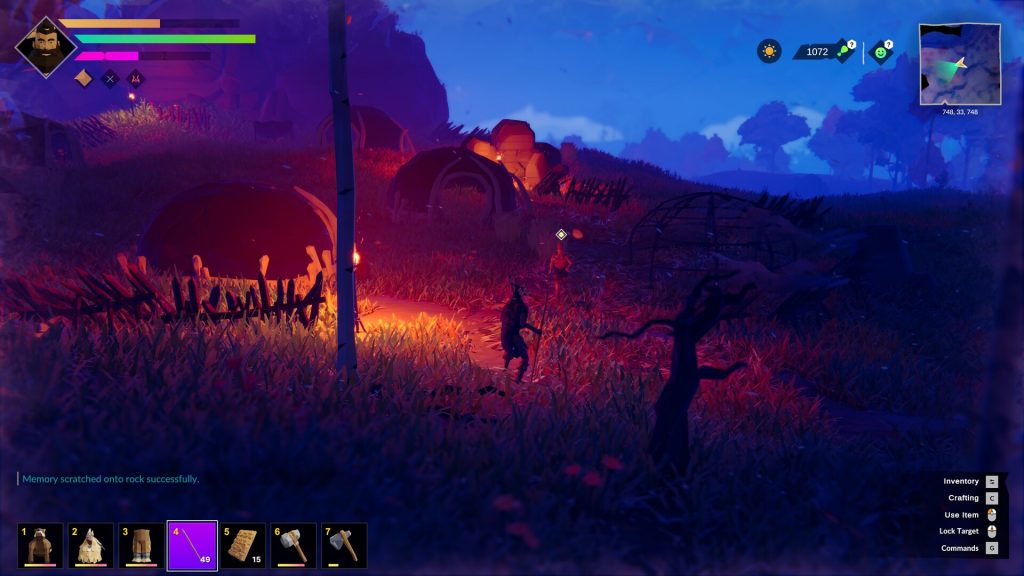
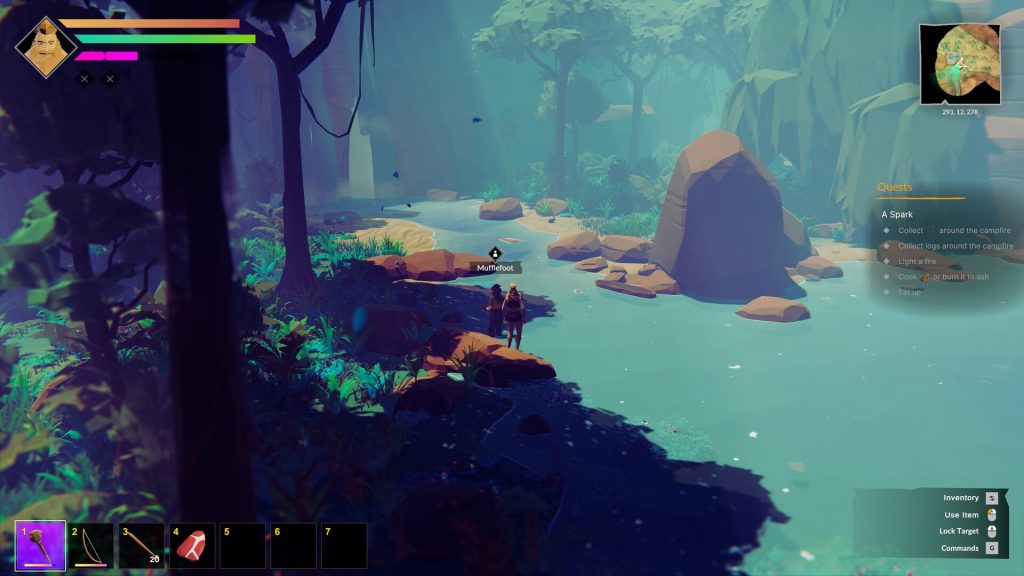
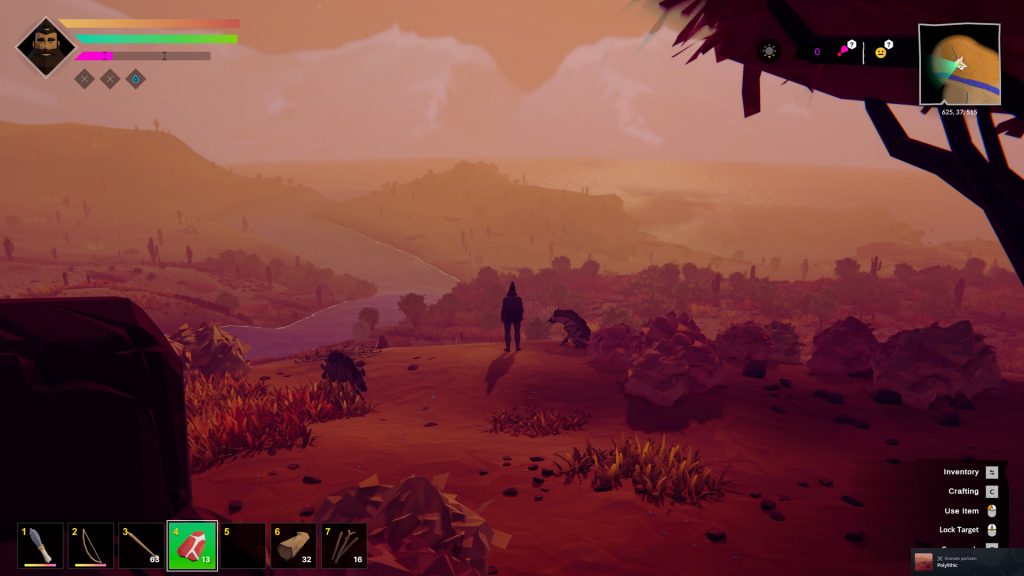
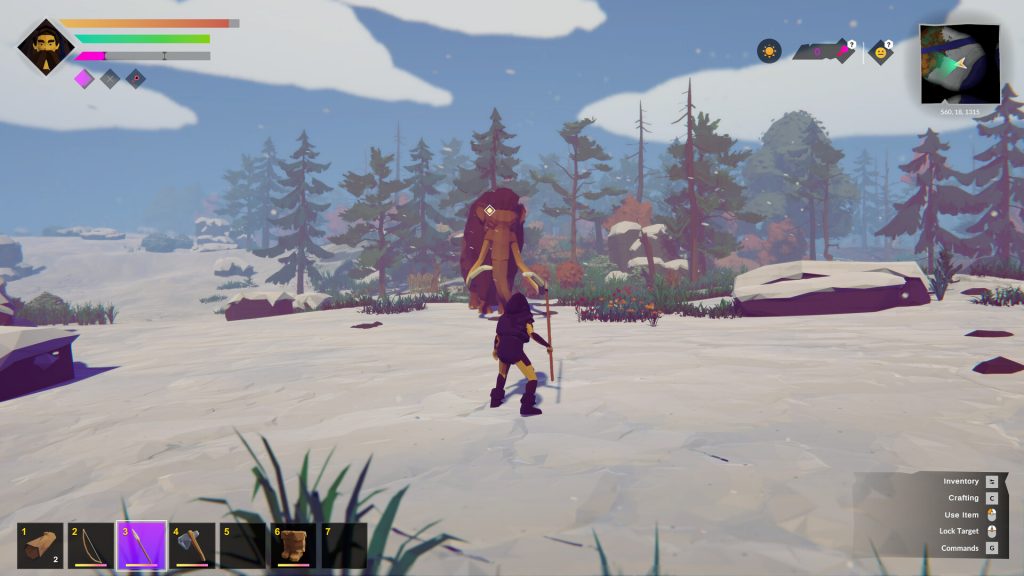
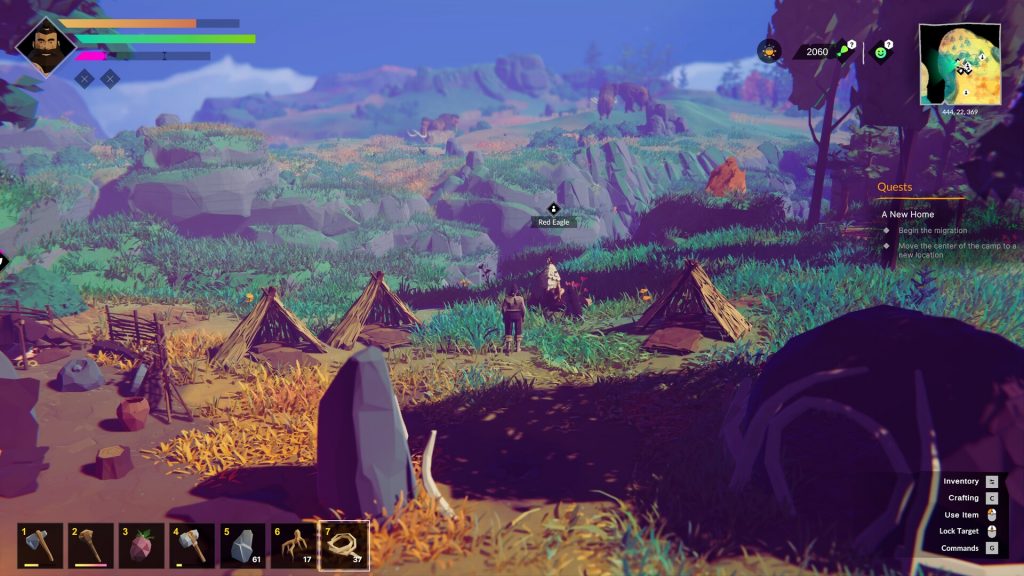
The colorful low-poly visual style works in the same tonal register. Low-poly aesthetics inherently reduce realism, and low-poly combined with bright colors specifically signals “this is not trying to be grim.” The aesthetic is saying the same thing the BBC narration is saying: we know this period was dangerous and difficult, and we’re going to engage with it playfully.
The Cooperative Design
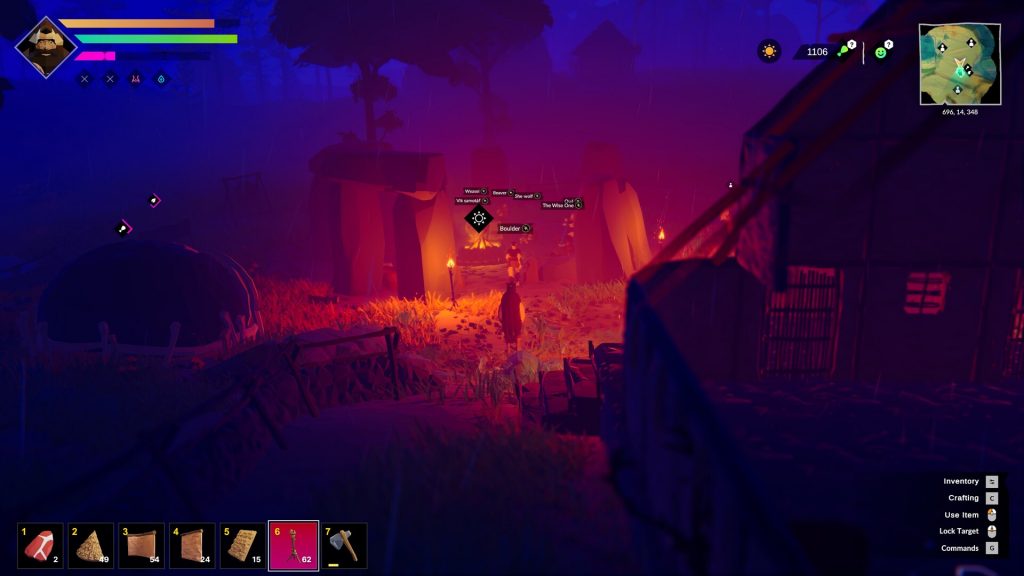
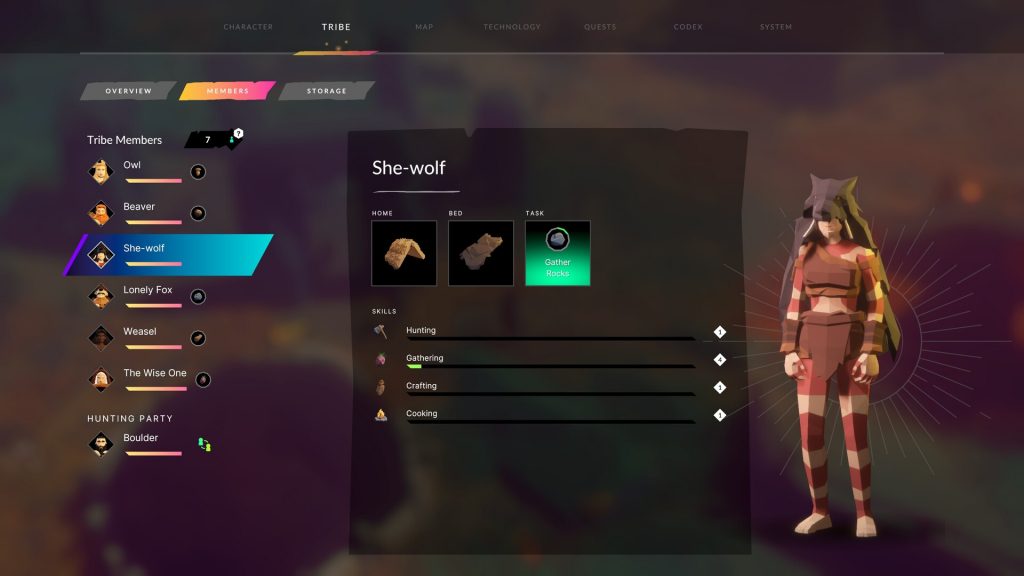
10-player Stone Age tribe management creates social dynamics that solo play structurally can’t generate. The hunting party that splits into incompatible sub-strategies. The person who ate all the stored food. The group decision-making crisis when a mammoth appears. The political dynamics of who gets to be the tribal leader versus who actually is the tribal leader.
These situations emerge from the specific combination of survival game resource pressure, large group coordination challenges, and the Stone Age setting’s specific resource scarcity. The BBC documentary narration framing is particularly appropriate for the cooperative experience because observing a 10-player group attempt to coordinate Paleolithic survival tasks from the outside is exactly what a nature documentary about early human social behavior would depict.
The hyena and dog companion system adds a personal element to the cooperative experience. Animal companions in cooperative survival games serve both mechanical functions (assistance in tasks) and social functions (personalization that gives each player a distinct presence in the shared world). A 10-player tribe where players have individualized companions is visually and mechanically more differentiated than one where all players are identical.
The polyperfect Context
polyperfect is a Czech studio better known in the asset creation space — low-poly asset packs and Unity tools — than in game development. Polylithic represents the studio’s move into game development proper, and the 72% positive rating after three years of Early Access suggests the transition is working. The university game education partnership mentioned in coverage reflects the studio’s broader engagement with the Czech game development ecosystem rather than purely commercial focus.
The indie.io publishing relationship for Polylithic connects polyperfect to the same publisher handling Conjurers (Carl Treadway), Graphite (RipRed), and several other games covered this month — indie.io continuing to build a catalog of diverse genre releases across different studio sizes and national origins.
The 1.0 Content Package
The August 25 1.0 update delivers: character customization, detailed hunger and physical state management, dog and hyena companions, emotion expressions and wildlife interaction behaviors, hostile tribe combat, random recipe-based cooking minigames, new story elements, improved AI, new items and weapons, mushroom varieties, and performance optimization.
The cooking minigame with random recipes is the specific addition most characteristic of Polylithic‘s design philosophy. Random recipe discovery in a Stone Age cooking context is simultaneously historically plausible (early humans absolutely did discover recipes through experimentation) and inherently comedic (the 10-player argument about whether this berry combination is poison or food is exactly the chaos the game is built around).
Hostile tribe combat extends the game’s external pressure beyond the environmental survival challenge. Other human groups competing for the same resources create the specific social and political anxiety that defined actual prehistoric human experience, and the cooperative context makes this pressure shared rather than individual — your tribe needs to coordinate defense, which is its own comedy of errors.
Who This Is For
Strong fit for: cooperative survival game players looking for a 10-player option with its own distinct aesthetic identity; players who want survival game mechanics in a deliberately comedic rather than grim register; low-poly aesthetic enthusiasts who appreciate the colorful visual approach over photo-realistic survival games; players who enjoyed The Universim or similar prehistoric civilization games and want a more chaotic, player-driven experience; friends groups looking for a new cooperative game with social emergence potential; players who have been following Polylithic‘s Early Access development and want the complete 1.0 version.
Cautious fit for: solo survival game players who don’t have a group to play with (the cooperative design suggests the game is most itself with multiple players); players who want historically serious prehistoric survival rather than comedic chaos; survival game enthusiasts who specifically want base-building depth over tribe narrative management.
Less ideal for: players who dislike survival game structure regardless of thematic framing; anyone wanting competitive PvP rather than cooperative play; players seeking narrative-heavy experiences over emergent social gameplay.
What to Watch For
The 1.0 launch’s primary question is whether the game’s expanded content and the BBC narration tone create a cohesive experience that new players can access without the Early Access development journey context. A game that evolved dramatically over three years has accumulated design decisions from different periods of its development; the 1.0 should ideally feel like a unified product rather than accumulated layers.
The hostile tribe AI specifically will be evaluated against the cooperative survival genre’s standard, where enemy faction intelligence makes the difference between interesting strategic pressure and frustrating interference. If the hostile tribes create genuine defensive coordination challenges for the 10-player maximum, the cooperative content has a satisfying adversarial dimension; if they’re primarily obstacle rather than strategic challenge, the combat content is shallower than the release suggests.
The Takeaway
Polylithic completing Early Access is the story of a game that found what it actually wanted to be through three years of community-driven evolution. The solo hunting simulator that began in November 2023 and the 10-player BBC documentary comedy cooperative tribe simulator that arrives August 25 are genuinely different games — and the second one sounds considerably more interesting than the first.
“Creating laughter even in chaos” is the design goal that Pavel Novák identified as the lesson of Early Access, and it’s the design goal that explains every distinctive choice in the 1.0 package. The BBC narration, the hyena companions, the random recipe cooking, the colorful low-poly Stone Age with hostile tribes — these are all serving the same experience: the specific comedy of being human before humanity had figured any of this out yet, shared with up to nine other people who also haven’t figured it out.
August 25. The tribe is forming. The mammoth is somewhere out there. And the BBC documentary that’s apparently been filming this whole time has developed strong opinions about your resource management strategy.
Information related to ‘Polylithic’
| item | detail |
|---|---|
| Developer | polyperfect (Czech Zlin) |
| Publisher | indie.io |
| Genre | Survival / Tribe Building / Crafting / Colony Simulation |
| Release platform | PC (Steam) |
| Early Access Release Date | November 9, 2023 |
| Official release date | August 25, 2026 |
| price | $14.99 (35% discount applied after launch) |
| Supported languages | English, Czech, French, German, Russian, Spanish, Brazilian Portuguese, Chinese, Japanese |
| Maximum number of people | Online co-op up to 10 players |
| Steam rating | Generally positive (72%, 129 cases) |
| Steam Page | Shortcut |