The original Codename CURE is the kind of game that demonstrates sustainable game design in the free-to-play zombie shooter space: 2.5 million players, 16,000+ Steam reviews, and a Very Positive overall rating. That’s not a viral moment — that’s years of the game finding its audience through genuine quality and word-of-mouth. Codename CURE II is Raptor Byte’s decision to rebuild everything that worked from scratch, using Unreal Engine 5, with expanded systems rather than simply updating the original.
The July 24 launch delivered 84% Very Positive from 336 day-one reviews. For a free-to-play co-op FPS launching as a complete sequel rather than an update, this is a strong foundation. The Combat Specialist Pack DLC at 100% positive from 15 reviews confirms players aren’t experiencing the DLC as content that should have been in the base game — the cosmetic and weapon additions are being received as genuine optional extras.
The Rebuilt Foundation
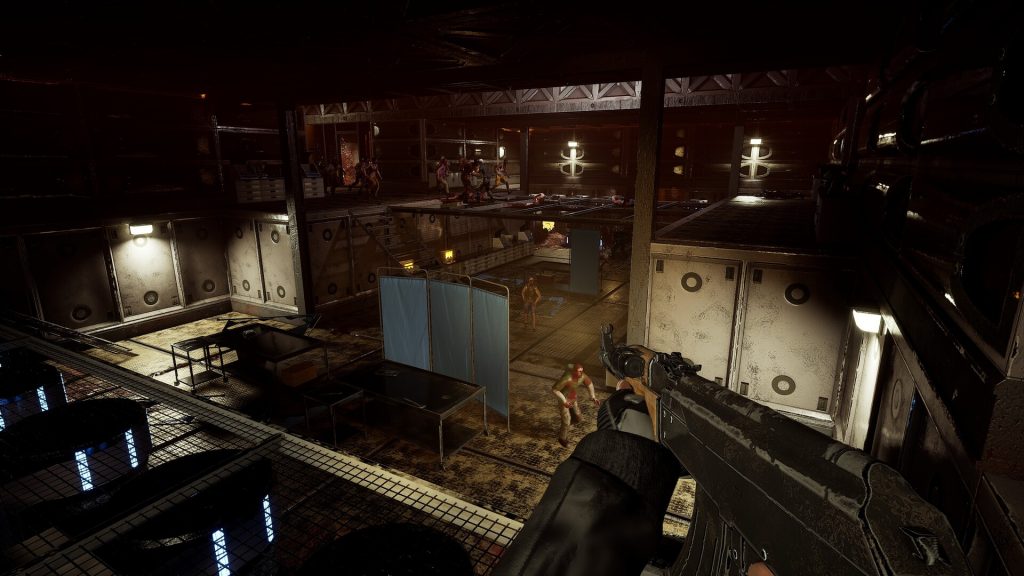
“Rebuilt from scratch” is a phrase developers use for both genuine ground-up reconstruction and for what is effectively a large update with a new title. The specific changes in Codename CURE II suggest the former: Unreal Engine 5 replacing the original’s engine, procedural map generation replacing fixed levels, a quasi-optional boss replacing deterministic encounter design, and a 5-class system replacing the original’s structure.
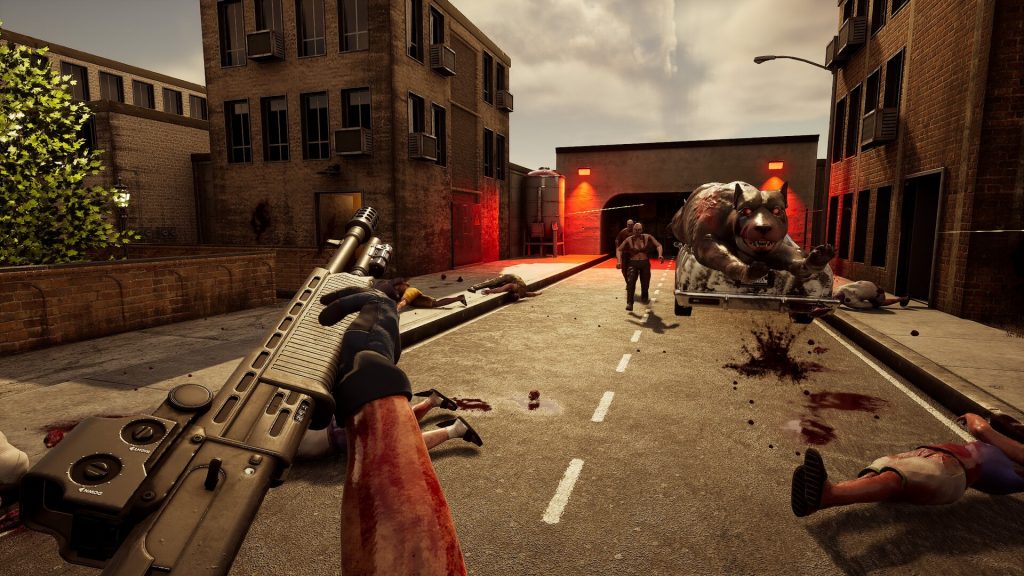
The procedural map generation using tile combinations is the structural change with the most significant gameplay implications. Fixed maps become memorized routes — players who have run a map many times know exactly where enemies appear, where cover is, and what the optimal path looks like. Procedural maps maintain uncertainty across repeated plays: the same tile set in different configurations creates different encounter situations, different routing decisions, and different areas where the team separates versus concentrates.
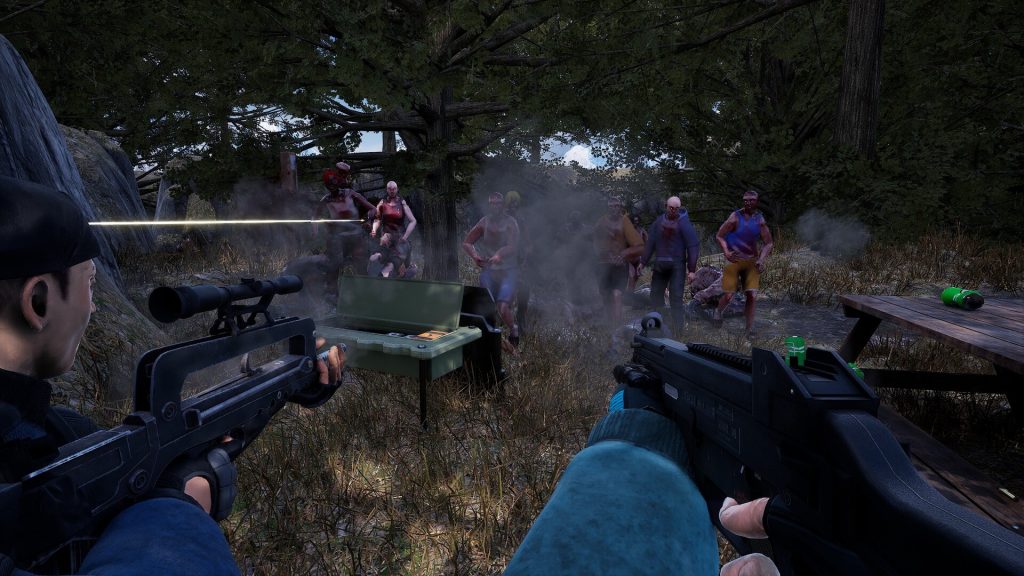
For a co-op zombie game specifically, procedural maps also change the communication dynamic. Teams navigating a known map communicate about tactics; teams navigating an unknown map communicate about what they’re seeing. The latter is more engaging for voice communication because the information being shared is genuinely new rather than confirmation of expectations.
The Reactive Gore System
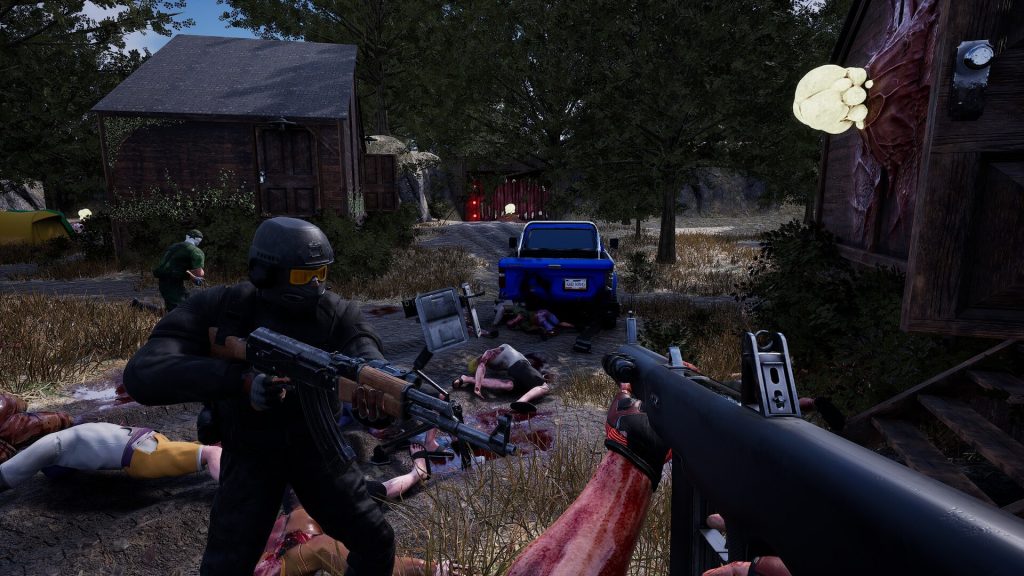
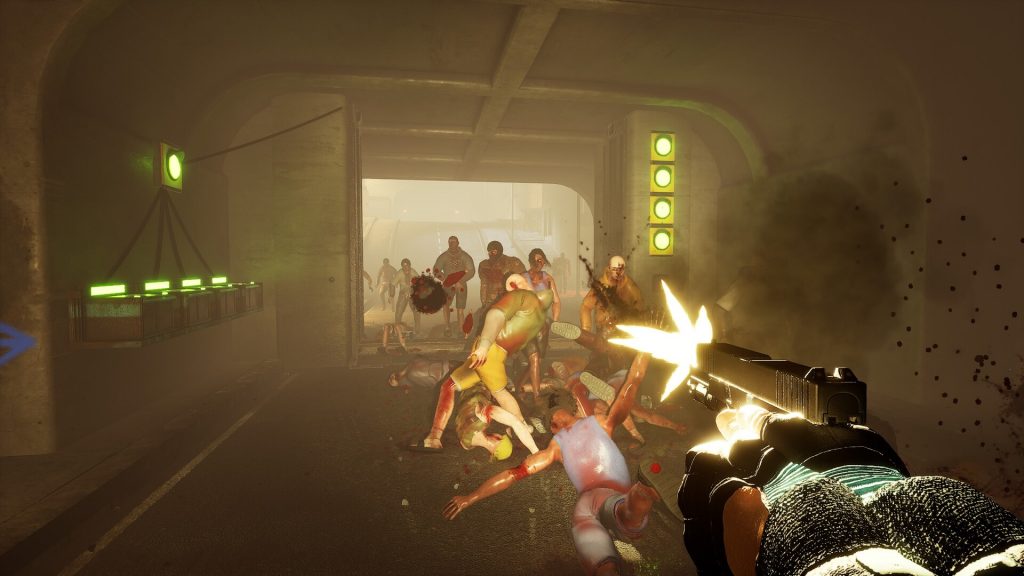
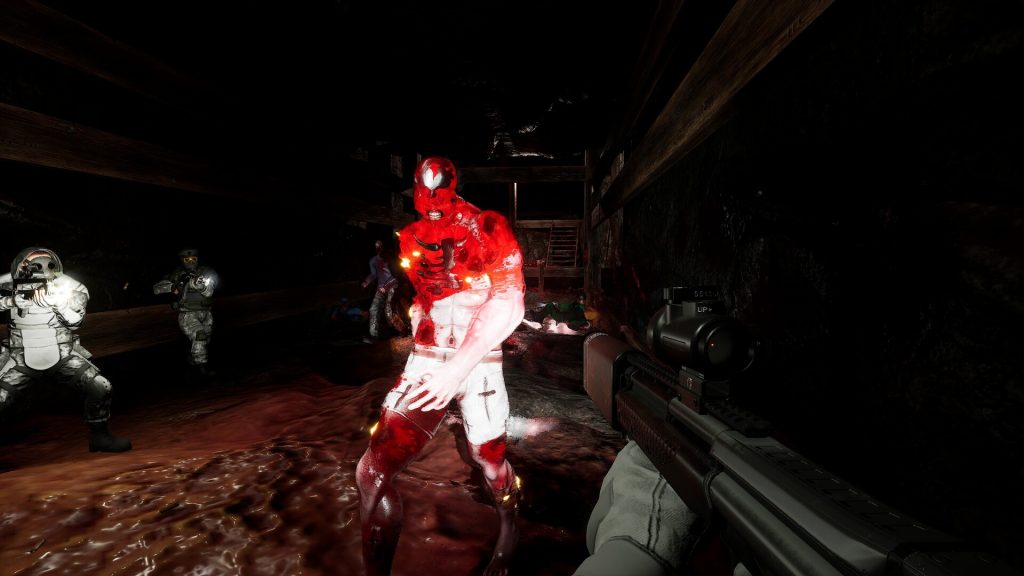
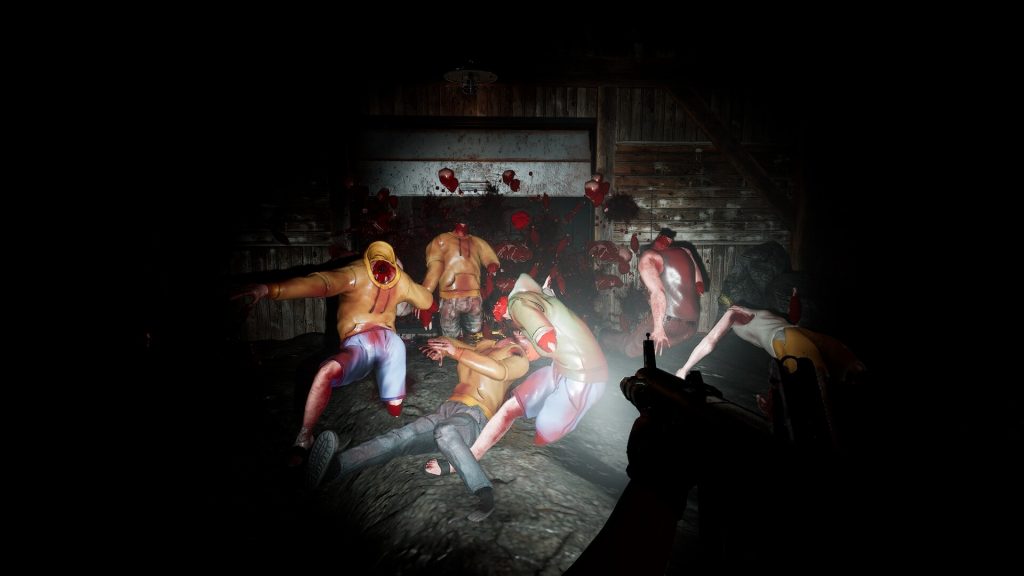
The limb dismemberment, body deformation, and fire propagation system — clothing and bodies that actually burn when exposed to flame, multi-layer damage producing different destruction effects by body part — is the UE5 capability showcase that justifies the engine upgrade for a zombie game specifically.
Zombie games live on combat feel. The feedback that tells you your actions had effect — the visual and audio confirmation that a shot connected, that the enemy is actually damaged, that your actions produce meaningful results — is what sustains moment-to-moment engagement across repeated combat sessions. A reactive gore system where different hits produce different visual results creates this feedback more effectively than a simpler system where shots produce identical effects regardless of where they connect.
The AI enemies using the same equipment as player classes is the design detail that makes the enemy composition feel coherent rather than arbitrary. When infected soldiers appear with recognizable weapon configurations — configurations the player knows from their own class selection — the encounter has implicit information about what the enemy can do rather than requiring the player to learn each enemy type independently.
The Class Structure
Five classes — Pointman, Support, Assault, Technician, Sniper — covering the standard combat role archetypes creates the team composition decisions that make organized co-op play strategically interesting. A five-player team that runs all Snipers is a different challenge than a balanced team with role distribution; the game presumably incentivizes the latter through encounter design that benefits from complementary capabilities.
The Technician class specifically is worth attention in a zombie survival game — a support-adjacent role that implies utility capabilities (traps, equipment maintenance, objective support) rather than pure damage output. If the Technician genuinely provides advantages that pure combat classes can’t replicate, the class creates role investment rather than just aesthetic selection.
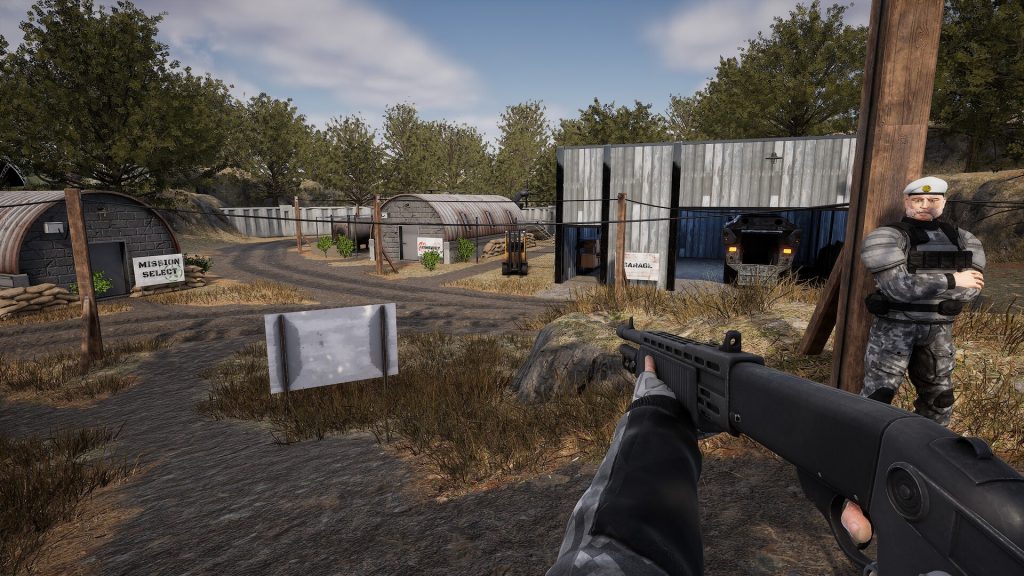
The CURE HQ between-mission hub is the progression infrastructure that connects individual mission runs into a campaign. Equipment maintenance, weapon testing, and rank tracking between missions creates the meta-game layer that sustains engagement across a session rather than making each mission feel self-contained.
The Business Model
Free-to-play with a cosmetic and weapon DLC at $9.99 is the business model that Codename CURE II is testing. The 100% positive DLC reviews suggest the Combat Specialist Pack is landing as a reasonable optional purchase rather than as a pay-to-win addition or overpriced cosmetics bundle.
The specific DLC contents — three new weapons (SPAR12-SA semi-auto shotgun for Pointman, SPAR12-PA pump-action for Technician, Patriot sidearm for all classes), sight and suppressor attachments, and military-style cosmetics — provide genuine gameplay additions alongside the visual customization. Whether the new weapons are meaningfully different from the base game’s weapon set (creating distinct playstyle options) or primarily cosmetically distinguished (providing variety without gameplay differentiation) will determine if the DLC has lasting value for players who buy it.
The free base game significantly expands the potential player pool compared to a paid title. 2.5 million players for the original Codename CURE with a price point is a different growth trajectory than a free-to-play sequel that removes the cost barrier entirely. The question is whether the DLC monetization can sustain development at the revenue level a paid title provides, or whether the audience expansion makes up the difference through volume.
The Steam Deck and Linux Support
Full Steam Deck support and Linux Proton compatibility extend Codename CURE II‘s accessible platforms beyond Windows PC. For a free-to-play co-op FPS, the Steam Deck specifically adds handheld play sessions that may attract players who primarily use their Deck rather than a desktop PC. The UE5 graphics on Steam Deck hardware is the performance question that will determine if the Deck support is fully functional or technically marginal — if the game runs well enough on Deck to provide the intended experience, the support is meaningful; if frame rates or visual quality degrade significantly, it’s limited functionality rather than genuine support.
The Raptor Byte and indie.io Context
Raptor Byte returning with a sequel through indie.io — the same publisher handling Conjurers, Graphite, and Polylithic covered this month — represents indie.io’s continued investment in the free-to-play space alongside their paid indie releases. The sequel relationship with Codename CURE‘s 2.5-million-player audience provides CURE II a pre-existing community that reduces cold-start discovery challenges.
The decision to rebuild rather than update is commercially risky in the sense that it requires the 2.5 million original players to make a new purchase decision — to evaluate the sequel on its own merits rather than inheriting their previous engagement. The 84% day-one rating suggests this risk is paying off: players who knew the original are largely finding the sequel worthy of the rebuild.
Who This Is For
Strong fit for: players who enjoyed the original Codename CURE and want the rebuilt sequel; co-op FPS players looking for a free zombie survival option with genuine class depth; friend groups of up to 5 who want a new shared co-op experience without a purchase barrier; Steam Deck owners who want a compatible co-op FPS; players who appreciate reactive physics and gore in zombie games; anyone who wants the DLC’s additional weapons and customization options to support the developer.
Cautious fit for: players who want guaranteed map layouts for strategic planning (procedural generation prevents this); anyone who finds reactive gore systems uncomfortable regardless of game quality; players who want single-player content alongside the co-op focus.
Less ideal for: players who specifically dislike first-person shooters; anyone who wants competitive PvP modes alongside co-op; players who find zombie apocalypse settings creatively exhausted.
What to Watch For
The procedural map generation’s long-term variety will be the key retention factor. If the tile combinations create genuinely distinct mission configurations across many sessions, the game sustains engagement; if players start recognizing repeated patterns that feel like the same map in different orientations, the procedural system’s freshness fades. How many unique tile sets are available and how they combine will determine this.
The quasi-optional boss “The Disciple” is the encounter design element most worth watching for balance feedback. A boss that can theoretically be avoided but practically can’t always be is the most interesting difficulty modifier available — it creates decision moments (do we take this on or route around it?) rather than mandatory encounters. Whether the avoidance option feels genuinely viable or illusory will affect how players experience late-mission tension.
The Takeaway
Codename CURE II is the sequel that earns its “built from scratch” claim: new engine, new map system, new class structure, new encounter design. The 84% Very Positive day-one rating from 336 reviews confirms that the rebuild has produced something the original’s audience endorses rather than a cosmetically updated version of the same experience. For a free-to-play zombie co-op FPS, this is exactly the launch position a studio wants — genuine enthusiasm, low barrier to entry, and a DLC that players are voluntarily buying to support the development.
Five classes. Procedural maps. Reactive gore. Zero cost to find out if it’s for you. The Disciple is somewhere out in that map, and whether your team handles it or routes around it is a decision you get to make this time.
Free on Steam now. Steam Deck supported. The CURE HQ is prepped, and the next mission is ready.
Information regarding ‘Codename CURE II’
| item | detail |
|---|---|
| Developer | Raptor Byte |
| Publisher | indie.io |
| Genre | Cooperative FPS / Zombie Survival |
| Release platform | PC (Steam, Steam Deck support) |
| Release date | July 24, 2026 |
| price | Free (Free-to-Play) |
| DLC | Combat Specialist Pack $9.99 (20% launch discount) |
| Maximum number of people | Online co-op up to 5 players |
| class | Pointman, Support, Assault, Technician, Sniper |
| Previous work’s performance | Steam rating ‘Very Positive’ (over 16,000), 2.5 million cumulative players |
| Steam Reviews (Main Game) | Very positive (84%, 336 cases) |
| Steam Reviews (DLC) | Positive (100%, 15 cases) |
| Steam Page | Shortcut |