The wealthy left for Mars a century ago. New York was sealed off. The boroughs became territories controlled by criminal organizations. And you, for reasons that involve someone you love needing a large sum of money quickly, have agreed to work as a currency authenticator for one of those organizations — in the back room of a speakeasy, examining bills brought in by debtors, until your own debt is paid.
The Money Man from Ontario-based two-person studio Fenyx Digital (Sava Beric and Ahamed Inhaam) is a dystopian noir narrative game where the primary mechanic is detecting counterfeit currency. Scanners, UV lights, notebooks, and ledgers are your tools. Thirty-one days of shifts are your timeline. Nine possible endings reflect the accumulated weight of choices about who gets through, who doesn’t, and whose side you end up on.
The August Steam demo will be a prequel story, complete with its own branching narrative and moral dilemmas — a standalone precursor rather than a vertical slice of the main game. International press coverage emerged immediately after the July 23 announcement, with Italian and Brazilian outlets among those highlighting the counterfeit detection premise as unusually specific among the document-examination game genre.
The Papers, Please Genealogy
The Money Man is working in the design tradition established by Papers, Please (2013) — the inspection game where the player serves an institutional function that processes people, and the moral weight of the game emerges from the human consequences of those processing decisions. The descending lineage includes Orwell, The Forgotten City, Beholder, and the various games that have followed the template of “you examine things, you make consequential decisions about them, the accumulated decisions determine what kind of story you participated in.”
What distinguishes The Money Man within this genre is the specific inspection object — currency — and the specific institutional context — organized crime rather than government bureaucracy. Papers, Please made you complicit in a totalitarian border control system; The Money Man makes you complicit in criminal economic infrastructure. Both are systems of control operating under their own logic that requires you to process people according to criteria that exist independent of the human costs of applying them.
The 31-day timeline and 9-ending structure suggest a narrative scope closer to Orwell or Beholder than to Papers, Please‘s longer campaign — a finite experience where choices accumulate toward a specific conclusion rather than an indefinitely continuing procedural simulation.
The Currency Authentication System
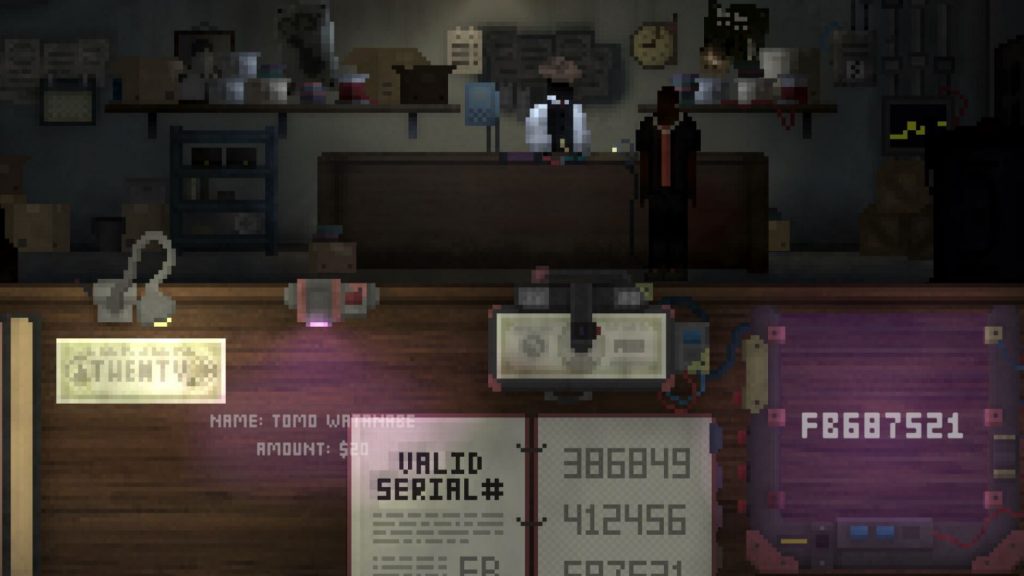
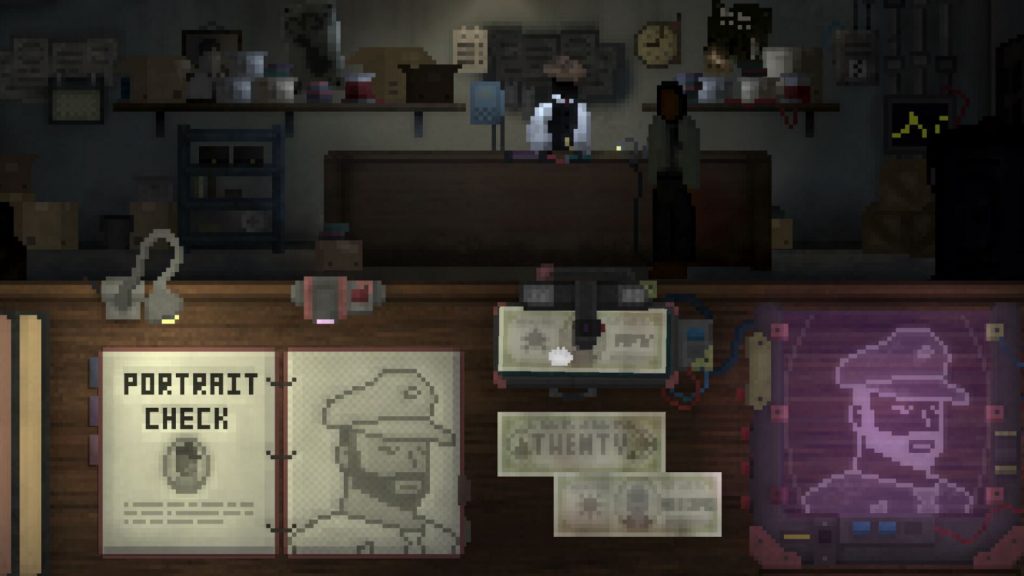
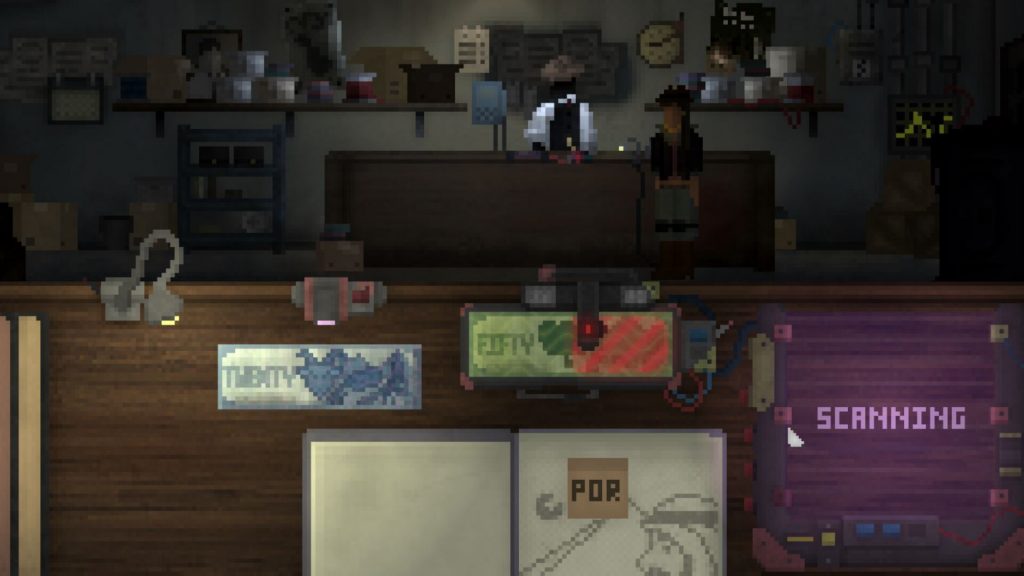
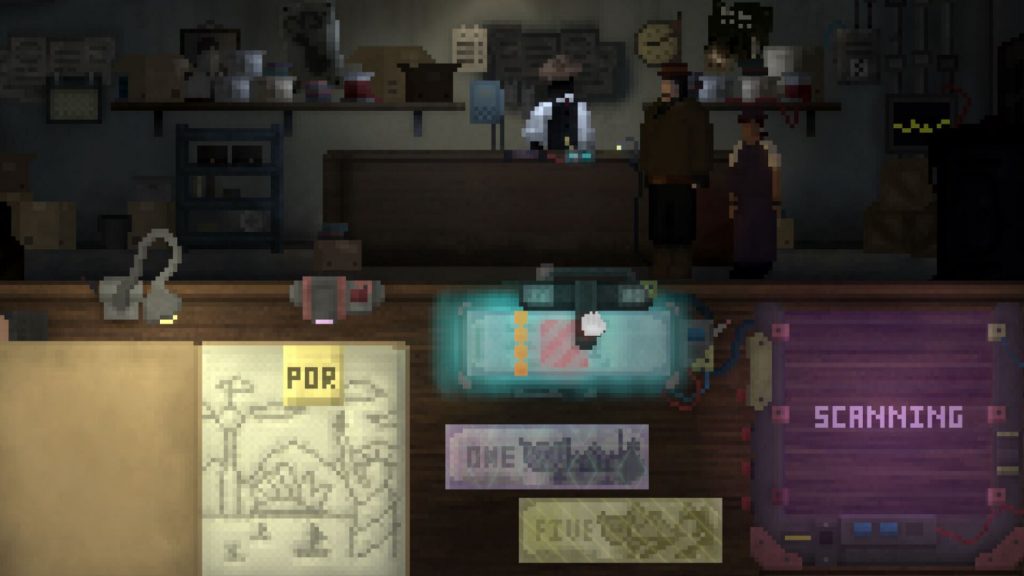
Scanners, UV lights, standard illumination, notebooks, ledgers — the toolkit for detecting counterfeits is the same toolkit that actual currency authentication uses, applied to a fictional future currency system that has been destabilized by the reintroduction of Mars contact.
The “Mars currency arriving on day 11” narrative trigger is the game design equivalent of Papers, Please‘s escalating document requirements — a change to the rules mid-game that forces players to adapt their authentication approach rather than developing a stable routine. Currency that nobody has authenticated before, from a civilization that has been separate for a century, with unknown security features and unknown counterfeiting vulnerabilities, is the specific crisis that raises the stakes from routine job to existential risk.
The cross-referencing between the UV examination, serial number verification, and notebook/ledger comparison creates multi-step authentication rather than single-tool evaluation. A bill that passes UV inspection might fail serial number verification; one with a correct serial number might show UV anomalies. This kind of multi-point authentication creates the specific cognitive engagement of genuine currency examination: you can’t know from any single check whether a bill is real, and the false confidence of one passing check that leads you to skip subsequent checks is where the errors happen.

The Between-Shift Narrative
The speakeasy between-shift social layer — walking freely through the establishment, talking with patrons, collecting rumors — is the information acquisition component that feeds back into the examination work. Papers, Please was almost entirely examination without the social context of who the people you processed were; The Money Man apparently provides more narrative texture around the debtors who appear at the window.
The characters described — police, drug addicts, family members paying debts for loved ones — are the human faces behind the transactions. Knowing that the person presenting currency is a family member trying to cover someone’s medical debt changes the moral weight of failing them on a technicality differently than failing an unknown stranger. The social information complicates the examination in the right ways: it makes the consequential decisions feel more consequential because the consequences are visible.
The loyalty/informant/escape branching structure (remain loyal to the organization, become a police informant, attempt to flee to Mars) provides the major directional choices that the day-to-day examination decisions build toward. The 9 endings suggest more granular variation than a simple three-way branch — presumably the specific texture of your choices within each general direction produces different outcomes.
The Dystopian World and No Results Found Adjacency
The Money Man‘s “wealthy fled to Mars, left New York sealed and controlled by criminals” setup is the specific flavor of near-future dystopia that has become a genre staple since Blade Runner — economic stratification made literal as spatial separation, with the abandoned lower class governed by the power structures that emerge when legitimate institutional authority withdraws.
This setting’s specific value for a counterfeit detection game is what it does to currency. Money from before the wealthy left. Money from after. Money from Mars that nobody has seen in a century. Currency that represents different power systems, different legitimacies, different physical origins — the examination isn’t just technical authentication but a question of which economic systems you’re choosing to serve.
Earlier this month, No Results Found from Jungle Game Lab explored a different kind of investigation — internet searches as detection methodology. The Money Man is pursuing adjacent territory through physical examination of objects rather than digital interfaces. Both games are in the genre of “you investigate things, the investigation has moral weight, your methods determine your understanding of the situation.”

The Pixel Art Noir Register
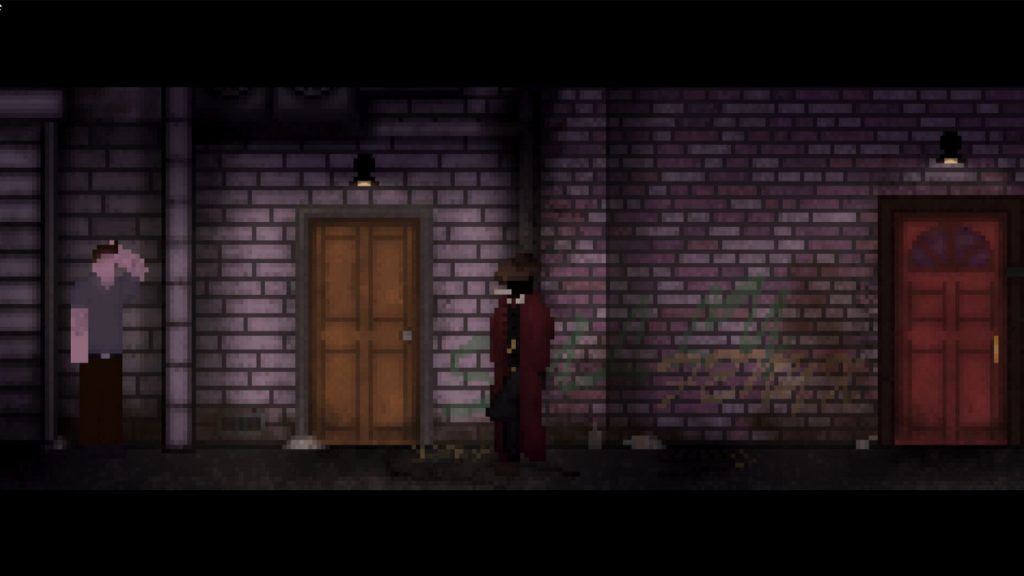
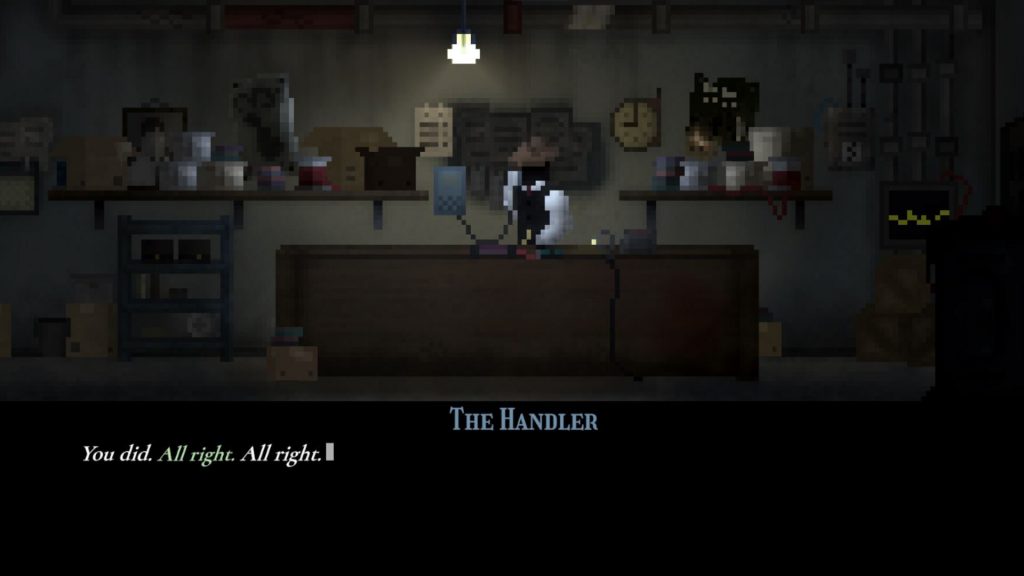
Pixel art in a dystopian noir game is doing tonal work that higher-resolution art doesn’t as naturally achieve. The visual compression of pixel art creates the same kind of ambiguity that noir lighting creates — details that are suggested rather than rendered, shadows that carry information about what’s there without showing it fully. The speakeasy back room illuminated by scanner light and UV is a noir environment that pixel art’s limited palette renders in approximately the right visual register.
The darkness that makes UV examination legible — you need the surrounding area to be dark for the UV features to show clearly — is both a practical photography fact and a noir visual metaphor. You only see the hidden things when you remove the ordinary light and replace it with something that reveals what ordinary light conceals. This is the kind of mechanical-aesthetic coherence that makes inspection games feel like more than document management.
Who This Is For
Strong fit for: Papers, Please and document examination game enthusiasts who want a new setting and inspection object; dystopian noir fiction fans who want interactive engagement with the genre’s themes; players who specifically appreciate games where moral weight emerges from procedural decisions rather than explicit narrative moments; noir fiction readers who want pixel art aesthetics applied to the genre’s visual tradition; Canadian indie game supporters; players who want to try the August demo’s prequel story before committing to the full game.
Cautious fit for: players who found Papers, Please‘s inspection mechanics repetitive over extended play and want more variety; anyone who wants action or physical challenge alongside the examination mechanics; players who prefer positive emotional registers to noir moral weight.
Less ideal for: players who dislike inspection game structure; anyone who wants multiplayer or cooperative options; players seeking humor or lightheartedness rather than dystopian seriousness.
What to Watch For
The August demo will be the first substantive evaluation of whether the counterfeit detection mechanics create the genuine cognitive engagement that the premise implies. Currency authentication with multiple examination tools can produce satisfying detection puzzles or repetitive form-checking depending on how the counterfeit variations are designed and how clearly the correct authentication process is structured.
The prequel story format for the demo — a completely separate narrative rather than a main game excerpt — is an unusual choice that suggests confidence in the demo’s independent value. If the prequel establishes the world, introduces the mechanics, and delivers meaningful moral choices within its own contained story, it will serve as a more effective introduction to the full game than a standard vertical slice would.
The Takeaway
The Money Man is a counterfeit detection noir in a century-abandoned New York controlled by crime organizations, where 31 days of examining bills presented by debtors accumulate toward 9 possible endings and the Mars contact that starts on day 11 complicates everything. The inspection mechanics, the between-shift social information gathering, and the branching loyalty/informant/escape structure are the components of a game that is working clearly in the Papers, Please documentary tradition while bringing its own world and examination subject matter.
The August demo comes first. The full game’s release date is TBA. And somewhere in the distinction between a real bill and a fake one — between the serial number that checks out and the UV pattern that doesn’t — someone’s fate is being decided by whether you caught what was wrong or assumed it was fine.
August 2026 for the demo. Steam wishlist now. The speakeasy back room is waiting.
Information regarding ‘The Money Man’
| item | detail |
|---|---|
| Developer | Fenyx Digital (Ontario, Canada) |
| Genre | Dystopian Noir Adventure / Choice-based Strategy Simulation |
| Release platform | PC (Steam) |
| Announcement date | July 23, 2026 |
| Demo scheduled for release | Early August 2026 |
| Official release date | Undecided |
| Number of endings | 9 types |
| Play period (in-game) | 31st |
| Official Channel | Discord, X, TikTok |
| Steam Page | Shortcut |