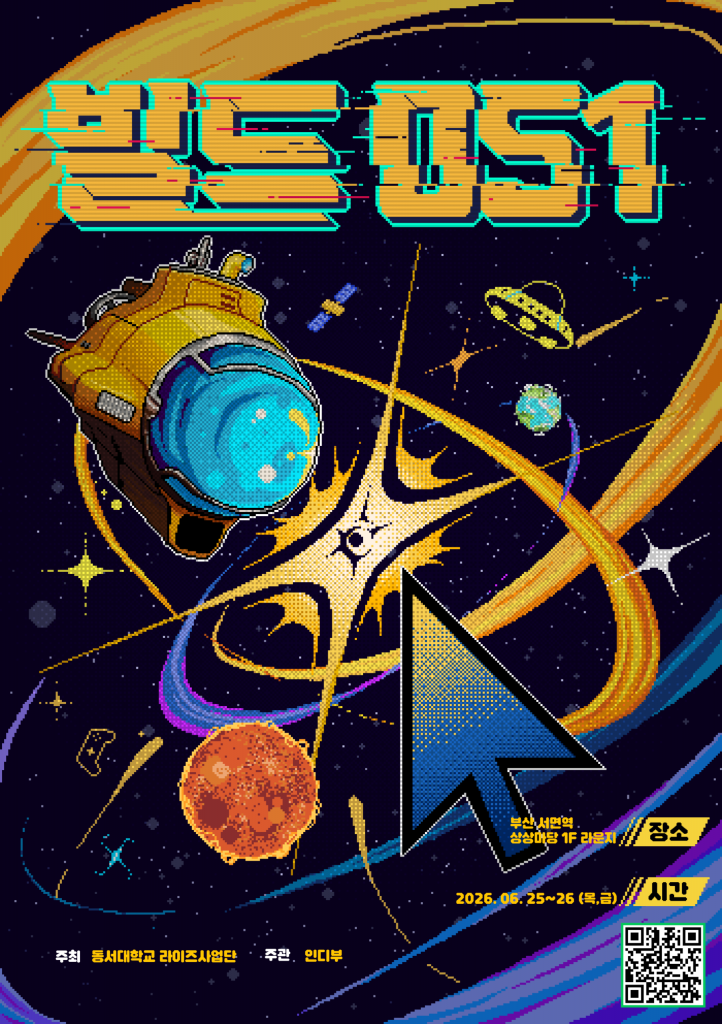
The 4th BUILD 051 (빌드 051) ran June 25-26 at the KT&G Sangsangmadang venue in Busan’s Seomyeon district, organized by Indibu (Indira Busan) under the auspices of Dong-seo University’s Anchor Project and supported by Smilegate and the Busan IT Industry Promotion Agency. Fifty development teams participated — approximately 20 student teams and 30 companies — presenting work across the full spectrum from early prototypes to near-publisher-ready builds.
The event is worth understanding on its own terms before evaluating it. BUILD 051 is specifically not a consumer gaming expo. It is a regional developer community gathering where the feedback loop between makers is the point — developers playing each other’s games, sharing development knowledge, and building the kind of peer relationships that sustain creative communities over time. Its closest international parallels are events like Nordic Game’s community events or the GDC Independent Games Summit rather than PAX or Gamescom.
The All-Volunteer Infrastructure
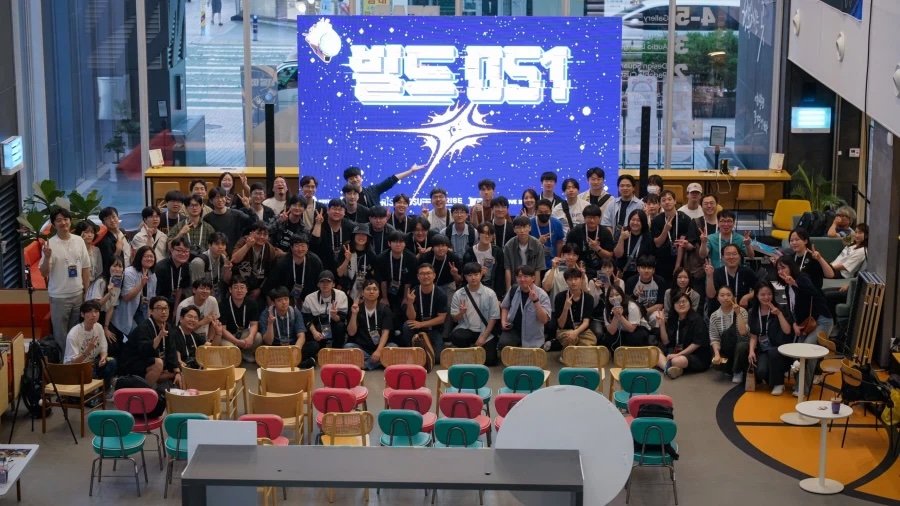
The detail that BUILD 051 operates entirely on volunteer labor from gaming industry professionals is worth examining carefully. Consumer gaming expos typically require professional event management infrastructure, sponsor-funded logistics, and organizational overhead that concentrates naturally in industry centers. An all-volunteer event organized by and for developers in a regional city eliminates these barriers at the cost of depending on community commitment rather than institutional funding.
The growth from approximately 20 teams at the first edition to 40 at the second and 50 at the fourth demonstrates that this model is sustainable — at least within the specific community that Indibu has built in the Busan area. Volunteer-operated community events either grow or collapse based on whether the community believes in them enough to keep contributing labor; BUILD 051’s growth pattern suggests genuine community investment rather than institutional mandate.
The Seomyeon KT&G Sangsangmadang venue location is specifically noted as chosen for high pedestrian traffic — a deliberate decision to expose general public visitors to indie games they wouldn’t otherwise encounter rather than staging the event only for the existing developer community. This outward orientation is characteristic of healthy regional gaming events: serving the existing community while building the broader audience.
The Park Dong-heung Memorial
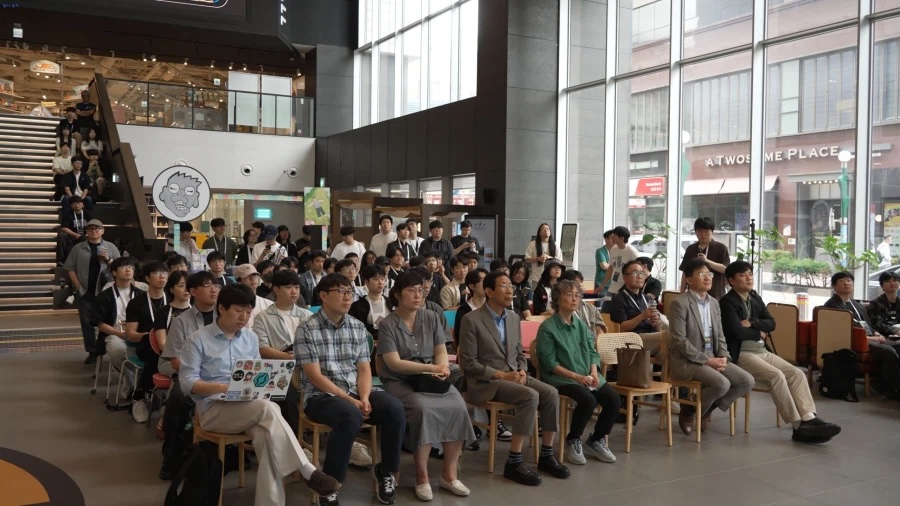
The most significant element of this year’s BUILD 051 was the memorial session for the late developer Park Dong-heung (known under the pen name “Ddongddongbae”), recognized as a pioneer of Korean indie game creation. The session included a visit from four family members, a commendation presented by the organizing committee, and a remarkable subsequent gesture: the family donated the condolence funds back to BUILD 051 specifically for improving the development environment of student developers.
This is the kind of moment that defines community character rather than simply characterizing it. The family’s choice to return the condolence funds for the benefit of the next generation of developers, which the late Park believed in, is both a tribute to what he valued and a practical investment in the continuation of what he worked toward.
The inauguration of the DDB Award (named for the “Ddongddongbae” pen name) formalizes this memorial into an ongoing tradition. The award-giving form to the late developer’s values — creativity, dedication to the craft, support for emerging voices — ensures that BUILD 051’s community history doesn’t remain in the past. The colleagues and collaborators who reconnected through the memorial session and the planned archiving project to document Park’s contributions extend the impact beyond the single event.
The Award Recipients
The student division’s Next Blue Award went to Dong-seo University’s Vaeirus team for “Dancing Zombie” — recognition from within the university that co-organizes the event, which suggests either genuine merit or, at a minimum, the quality floor that university programs are producing. Four additional teams received Featured Team recognition: froggy wiggy Studio, SmallBoots, Turtle Studio, and PLOOPY — a distribution of recognition across multiple emerging teams rather than concentrating on a single winner.
The general division’s Deep Blue Award went to Busan’s Matseideuul team for “Break Shoot.” The jury’s special Lighthouse Award — and the double recognition it represents — went to Ulsan’s Reverie team, which took the prize in both categories simultaneously. Reverie winning across two award categories from different geographic bases (Ulsan versus Busan) reflects the regional scope BUILD 051 is trying to serve: the “부울경” (Busan-Ulsan-Gyeongnam) area is a broader regional ecosystem rather than a single city’s community.
The Regional Gaming Ecosystem Context
The statistics that BUILD 051 operates within are worth stating explicitly. More than 1,000 students at over 6 universities in the Busan-Gyeongnam region are studying game development. Over 130 game companies in the region release more than 60 games annually. This is a substantial regional gaming industry — not Seoul’s concentrated hub, but a distributed ecosystem with significant human and institutional capital.
BUILD 051’s role within this ecosystem is specifically connective: bringing together the student pipeline, the professional community, and the institutional support (university programs, public agencies, private sponsors) in a format where their direct interaction produces value that none of them could generate separately. Students receive feedback from professionals on work in progress; professionals encounter emerging talent before that talent enters the job market; institutional sponsors connect their support directly to projects rather than to abstract programs.
The “virtuous cycle” that Dong-seo University Anchor Project Director Hwang Ki-hyun describes — feedback leading to better builds, better builds leading to employment or entrepreneurship — is the mechanism by which community events create economic value beyond their immediate occasion. A developer who receives specific, actionable feedback at BUILD 051 and applies it produces a better game, which is more commercially viable, which validates the region’s gaming ecosystem more broadly.
What BUILD 051 Represents in the Korean Indie Context
Korean indie game development is geographically concentrated in Seoul and its surroundings — BIC (Busan Indie Connect Festival) is the most prominent exception, itself a Busan-based event with national and international reach. BUILD 051 operates at a more local scale than BIC, with the specific mandate of serving the Busan-Ulsan-Gyeongnam regional ecosystem rather than the national or international indie community.
This local specificity is a feature rather than a limitation. Regional gaming communities develop differently from national ones — the specific universities, companies, and civic institutions of a region create distinct opportunities and constraints that regional events can address in ways that national events can’t. A Busan-area developer can build genuine peer relationships at BUILD 051 with other local developers in ways that large national events don’t facilitate.
The comparison to BUILD 051’s international parallels is also worth noting: local, developer-focused events with all-volunteer operations exist in many gaming regions globally — from small European gaming cities’ developer nights to regional Japanese game development communities. These events are often the actual generative engine of indie gaming culture, even when larger events attract more press attention.
The Fourth Year and Forward
The growth trajectory — roughly doubling from the first to the second edition, then adding 25% more at the fourth — suggests BUILD 051 has moved through the early-expansion phase into a more stable growth pattern appropriate to the actual size of the regional developer community. Sustainable regional events don’t grow indefinitely; they stabilize at a scale that reflects the community they serve.
The addition of the DDB Award and the archiving project represents BUILD 051 maturing from an annual gathering into an event with accumulated history and cultural memory. Events that develop this institutional depth become different kinds of community anchors than events that exist only in their present iteration — they carry the record of what the community has built and the names of the people who built it.
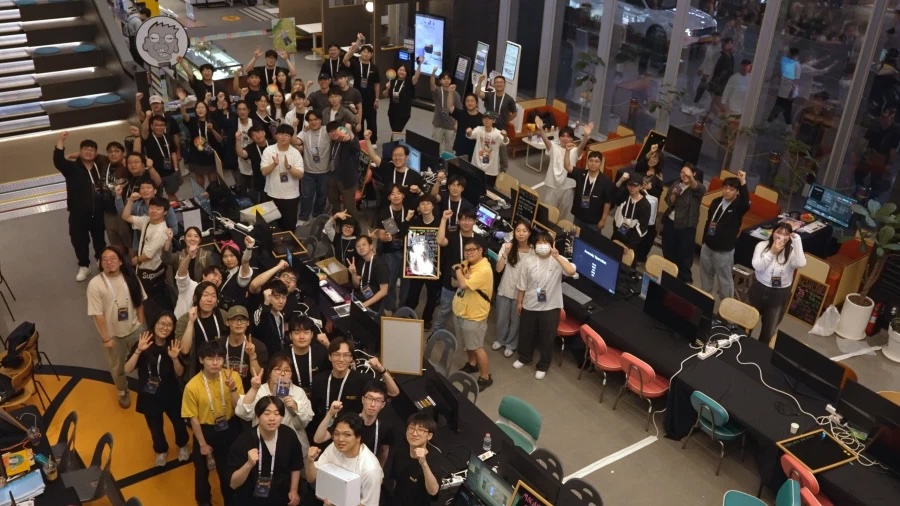
What the KT&G Sangsangmadang venue saw on June 25-26 was fifty teams, two days, a community’s fourth year of building something that belongs to them, and a moment where a family’s generosity connected the legacy of a developer who believed in this community to the next generation of developers he would have wanted to believe in.
That’s what regional indie gaming ecosystems look like when they’re working.
Information regarding the 4th Build 051
| item | detail |
|---|---|
| Event name | Build 051 (4th) |
| date | June 25 (Thu) – 26 (Fri), 2026, for 2 days |
| location | Busan Seomyeon KT&G Sangsang Madang 1st Floor Lounge |
| Host | Dongseo University Anchor Project Team |
| subjectivity | Indibu (Indira Busan) |
| boost | Smilegate, Smilegate Orange Planet Startup Foundation, Busan Information Industry Promotion Agency |
| Operating method | A 100% volunteer system by industry professionals, not led by major publishers |
| Participation scale | A total of 50 teams (approx. 20 student teams, approximately 30 corporate teams) |
| Level of submissions | From the initial prototype to the publisher meeting stage and the final build, it varies. |
| Special session | Memorial session for the late developer Park Dong-heung, visit to the bereaved family and presentation of a plaque of appreciation, and donation of consolation money to improve the student development environment |
| Student Category Award | Next Blue Award: Dongseo University Vaeirus Team ‘Dancing Zombie’ / Featured: froggy wiggy, SmallBoots, Turtle Studio, PLOOPY |
| General Category Award | Deep Blue Award: Busan Massei Team ‘Break Shoot’ |
| Special Award | Lighthouse Award (Special Jury Prize): Ulsan Reverie Team (2-time winner) |
| Purpose of the event | Centered on direct feedback and communication among developers, linking to the growth of the local indie ecosystem and employment/startup |
| Size growth trend | Round 1: Approx. 20 teams → Round 2: Approx. 40 teams → Round 4: 50 teams |