In 2015, Kostas Skiftas and Sarah Duffield-Harding made a Flash game in a game jam about a world where dinosaurs and humans coexist. They could have released it and moved on. Instead, they decided to keep going until the wordless adventure they wanted to exist actually existed. Ten years later, Theropods is on Steam and GOG, published by Dionous Games, complete with everything a decade of iteration, an engine change, a pandemic, and a Kickstarter produced.
“We could have released the 2015 game jam version and called it done,” they wrote. “But we kept rebuilding it until it became the wordless adventure we always wanted it to be. Seeing it release on Steam and GOG today is a dream we’ve held for a long time, finally becoming real.”
The No-Text Commitment
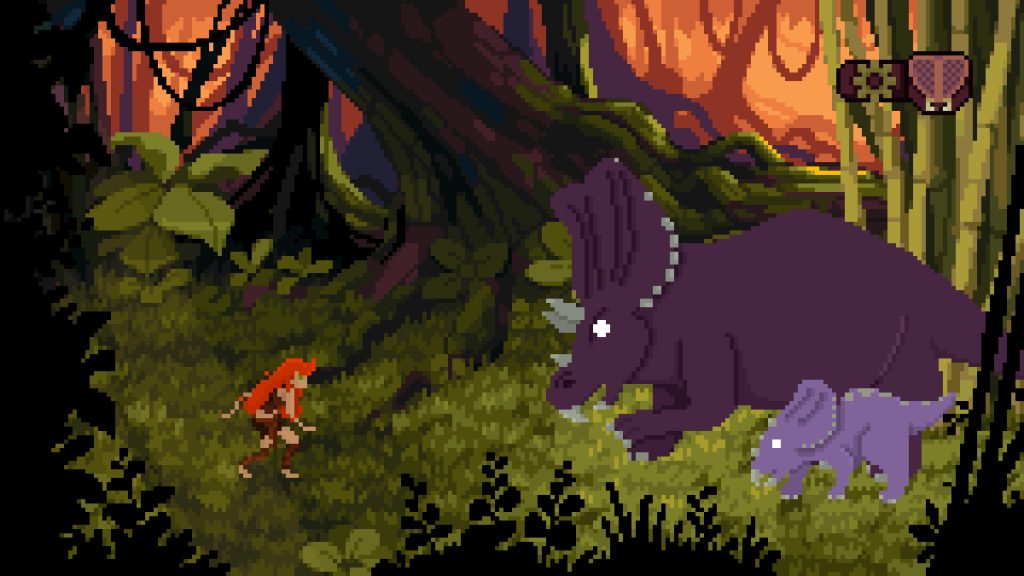
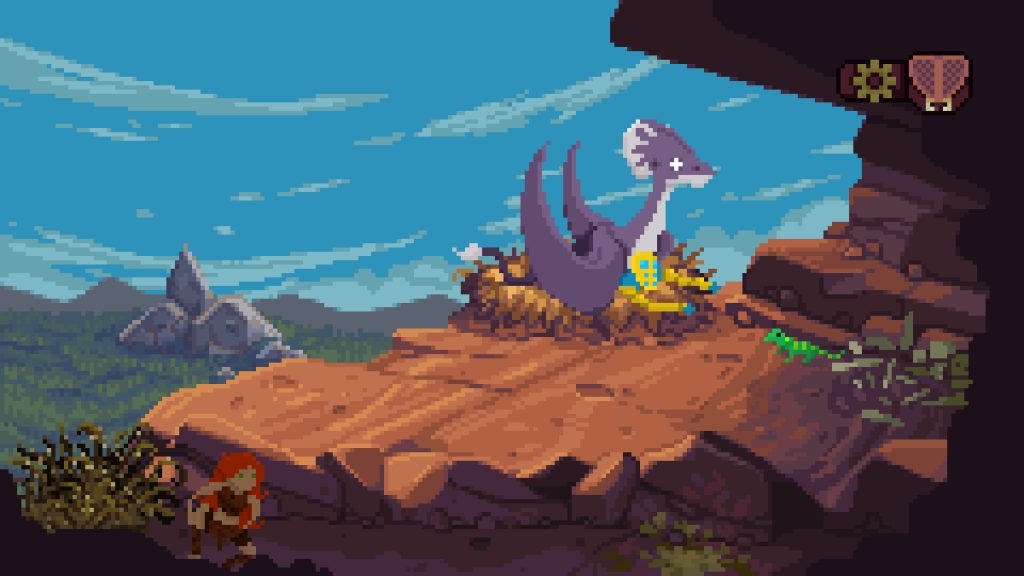
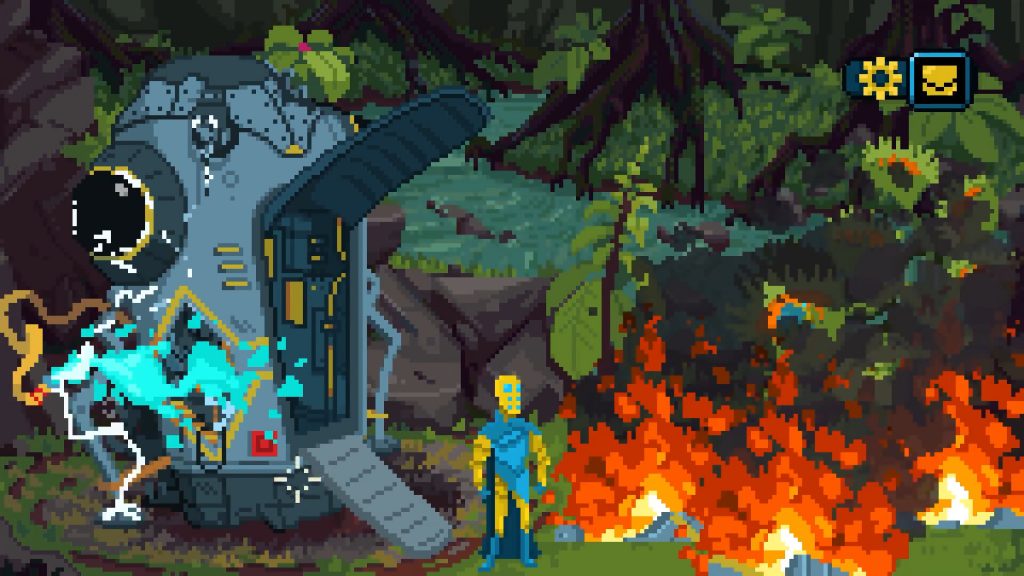
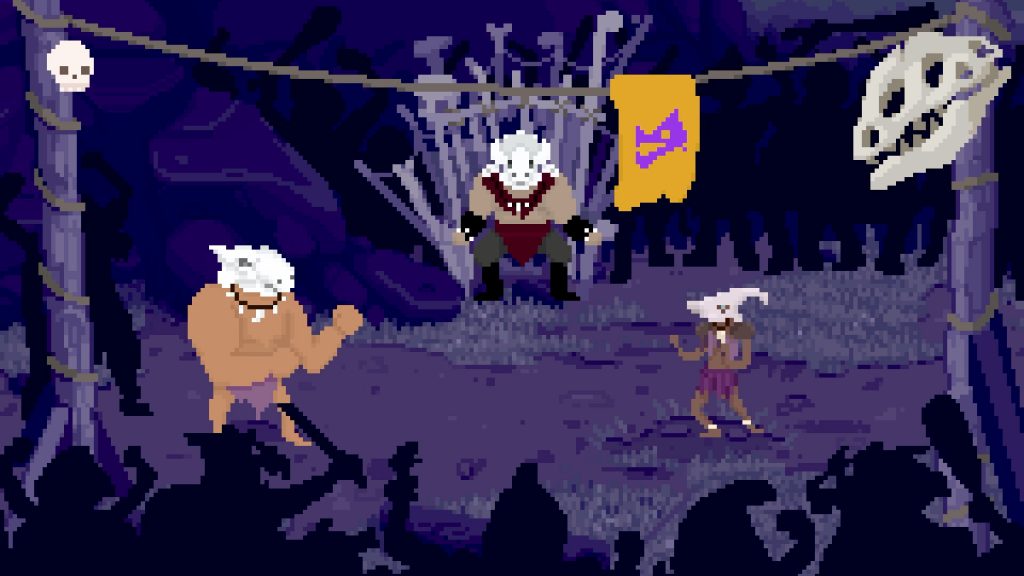
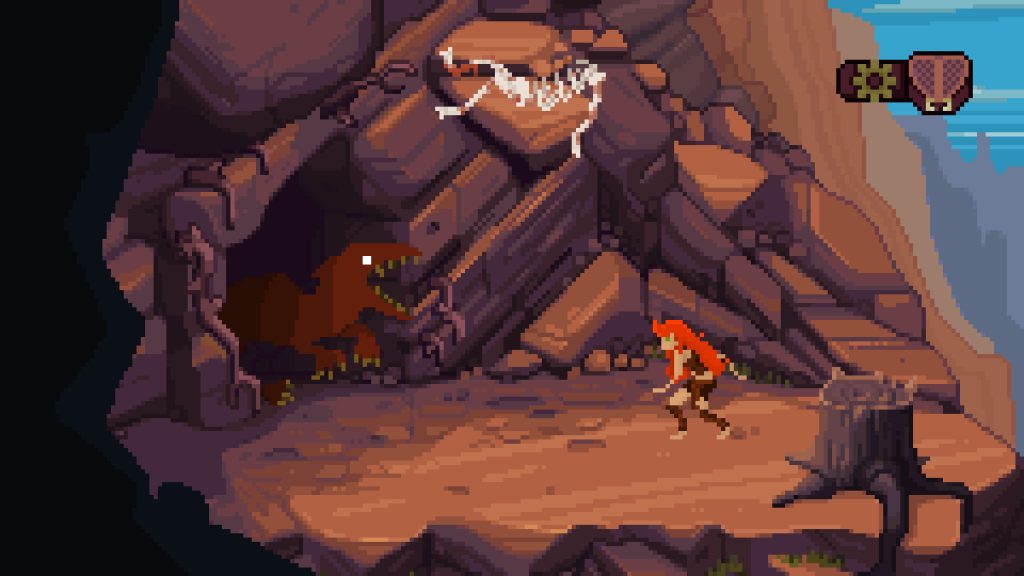
Every choice in Theropods‘s design flows from a single premise: no words. No dialogue, no subtitles, no descriptive text, no interaction prompts. The entire story of a young hunter trying to rescue tribe members from a savage group, the improbable encounter with a crashed spaceship and its astronaut passenger, the SF mystery that gradually unfolds beneath the prehistoric adventure — all of it communicated through character animation, environment, sound, and the behavior of the world’s creatures.
This commitment is technically difficult in a specific way that forces design rigor. Any story element that can’t be communicated visually has to be cut or redesigned until it can be. Every character’s motivation, relationship dynamic, and plot development have to be legible through body language, facial expression, and contextual action rather than explanation. The result, when it works, is a narrative that players don’t receive but discover — reading the world’s signs rather than being told what they mean.
The Amanita Design reference that the developers cite is precise. Machinarium and Creaks both communicate in primarily visual registers, using minimal text as labels rather than storytelling. The specific quality of Amanita’s work that Theropods is building toward is the sense of a world with consistent internal logic that players can learn and apply — where solutions emerge from understanding rather than from finding the correct item combination.
The World and Its Logic
A prehistoric setting where humans hunt alongside dinosaurs, into which a spaceship crashes and deposits an astronaut who speaks no language the hunter recognizes — this is an extraordinary meeting of cultural contexts that the wordless format handles more naturally than dialogue would. The hunter and the astronaut cannot communicate verbally. The game doesn’t give them a magical translation; it gives them shared circumstances and the specific universal communication of gesture, expression, and demonstrated action.
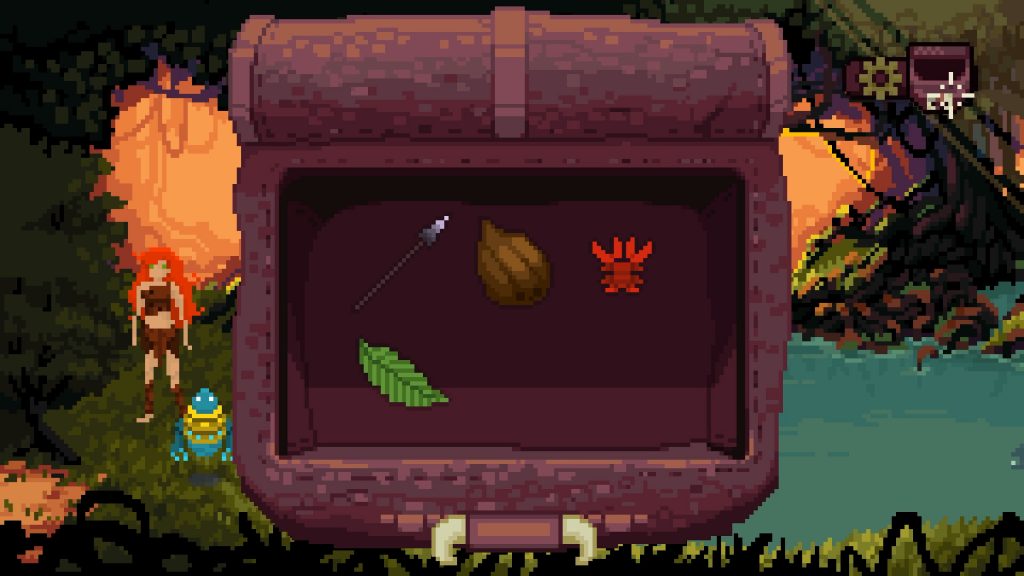
The puzzle design grows from this. Creatures have behavior patterns that players can observe and use — dinosaurs respond to specific stimuli, predators can be distracted by alternative prey, the world operates according to its own ecological logic rather than game-puzzle logic. Solutions emerge from understanding the world rather than from inventory management.
The shift from rescue mission to SF mystery is the narrative deepening that prevents the prehistoric survival adventure from remaining a surface-level genre experience. The hunter’s world has rules; the crashed spacecraft represents something that doesn’t fit those rules; investigating the discrepancy produces the SF dimension that the marketing materials hint at without fully revealing.
The Production: Frame-by-Frame Through a Decade
Every character, every dinosaur, every background is hand-drawn, animated frame by frame, and converted to pixel art. This is the production approach that the Amanita comparison implies: work that accumulates quality through individual human decisions at the frame level rather than through procedural or efficiency-optimized production methods. The result has the specific warmth and intentionality that this kind of production produces.
The decade of development included an engine change and the COVID-19 pandemic, both of which would have ended projects with fewer committed developers. That Lost Token kept building through these interruptions reflects the specific quality of commitment that “we kept rebuilding it until it was what we wanted” describes. The 2015 Flash game and the 2026 Steam release are the same creative vision at different stages of development rather than different projects.
The Amanita Design Lineage
Placing Theropods in the Amanita Design lineage is useful as a quality signal and tonal indicator. Amanita’s games share specific qualities: hand-crafted visual identity, puzzle logic that rewards world observation over item-combination trial-and-error, emotional warmth delivered through non-verbal character expression, and a sense of a world made by specific people with specific aesthetic sensibilities rather than assembled from genre parts.
Theropods aspires to this lineage from the outside — a small team without Amanita’s institutional resources making a game with comparable creative ambitions. Whether the execution achieves the aspiration or gestures toward it is what players who have followed both studios will evaluate.
The Narrative Context This Month
Theropods appears this month alongside Seina: A Tale of Spirits and Finding Polka as part of an unexpected cluster of wordless games reaching their audiences simultaneously. All three chose to remove language and trust players to read the world through other means. All three made different choices about what that removal looks like in practice: Seina uses watercolor environments and gesture, Finding Polka uses ballpoint pen mark-making and walking, Theropods uses frame-by-frame hand-drawn animation and a world with discoverable logic.
The coincidence suggests something specific about where game narrative is exploring at this moment: the question of what stories games can tell without words, and what those stories can communicate that word-dependent storytelling can’t.
Who This Is For
Strong fit for: Machinarium and Creaks fans who want the Amanita Design visual and puzzle sensibility from a different team; point-and-click adventure players who specifically want observation-based puzzle design over inventory management; players who responded to Finding Polka or Seina and want wordless storytelling in a different context; pixel art enthusiasts who appreciate frame-by-frame hand animation; players who want a complete game with consistent internal world logic at the adventure genre’s core.
Cautious fit for: point-and-click players who specifically want dialogue-driven character interaction; anyone who finds wordless storytelling emotionally distancing rather than immersive; players who want faster puzzle resolution over observation-based discovery.
Less ideal for: players who dislike point-and-click adventure genre mechanics; anyone wanting action or time pressure alongside the puzzle content; players seeking multiplayer options.
The Takeaway
Theropods is the game that two people decided to keep making until it was what they wanted, through a decade that included an engine change, a pandemic, and everything else that a long development involves. The wordless format is not a constraint they accepted, but a commitment they built toward — the entire design exists to serve a story that must be read rather than told.
A prehistoric hunter who can’t speak to an astronaut. An astronaut who can’t speak to anyone in this world. A SF mystery embedded in a world where dinosaurs and humans share space. And ten years of hand-drawn frames that make the animation say everything the text is forbidden from saying.
Available now on Steam and GOG.
Information regarding ‘ Theropods ‘
| item | detail |
|---|---|
| Developer | Lost Token |
| Publisher | Dionous Games |
| Genre | Point-and-click adventure, puzzle, pixel art |
| platform | PC (Steam, GOG) |
| Release date | August 20, 2026 |
| Development period | About 10 years (started as a 2015 Game Jam project) |
| characteristic | Storytelling without dialogue, subtitles, or text |
| graphics | Pixel art created by producing hand-drawn animation frame by frame |
| worldview | A world combining prehistoric times and sci-fi mystery |
| Key elements | Dinosaurs, Puzzles, Environmental Interaction, Predator Avoidance, Survival and Friendship |
| crowdfunding | Kickstarter campaign success |
| Steam Page | Shortcut |