The Nordic game development scene held its annual showcase this week in Malmö, and the results reflected exactly what the region has become known for: technical ambition meeting design distinctiveness across a remarkably broad spectrum of work. The Nordic Game Awards 2026, held during the NG26 Spring conference at Slagthuset, recognized winners ranging from massive multiplayer extraction shooters to family-friendly LEGO adventures to handcrafted stop-motion dark fantasy — a roster that captures why Nordic development continues to punch significantly above its population weight.
The headline winner was Embark Studios’ ARC Raiders, which took home three major prizes, including the top Nordic Game of the Year award. But the broader winners list tells a more interesting story about where Nordic gaming is right now.
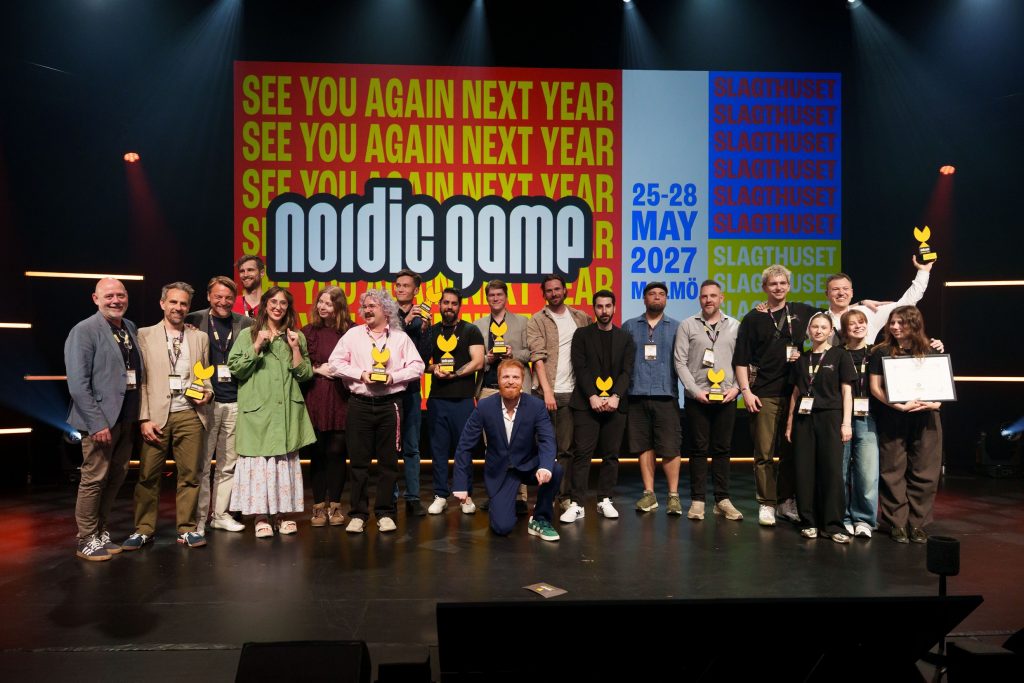
The following are the major winners of the Nordic Game Awards 2026 .
■ Nordic Game of the Year / Best Technology / Best Audio
ARC Raiders – Embark Studios (Sweden)
The grand prize and two technical category wins for ARC Raiders establish it as the year’s standout Nordic release. The multiplayer extraction shooter, set in a devastated future Earth threatened by massive mechanical lifeforms called ARC, has players navigating between surface and underground locations to secure resources and engage in survival combat.
The triple win is significant beyond the trophies themselves. Best Technology and Best Audio aren’t just supplementary recognitions — they’re signals about the production quality underlying the game’s reception. ARC Raiders‘ technical accomplishment in delivering its large-scale environments and tension-heavy combat structure clearly impressed the jury, and the audio design recognition reflects how central sound work has become to the extraction shooter genre’s signature atmosphere.
Embark Studios specifically deserves note here. Founded by former DICE leadership (the Battlefield developers), Embark has been pursuing a distinctive design philosophy that combines AAA-scale production with experimental gameplay structures. Their previous title, The Finals, established their willingness to take genre risks, and ARC Raiders extends that pattern. The extraction shooter genre is competitive — Tarkov, Hunt: Showdown, Dark and Darker, and others have established the format — but ARC Raiders‘ specific approach (man-versus-machine framing, large-scale environmental staging, technical polish) has clearly differentiated it within the space.
For Embark specifically, the Nordic Game of the Year recognition is a major industry validation moment. They’ve been one of the more closely watched studios coming out of the post-DICE Swedish development scene, and ARC Raiders‘ Nordic Game of the Year win confirms their position as one of the region’s premier active developers.
■ Best Art
The Midnight Walk – MoonHood (Sweden)
The Best Art prize, going to The Midnight Walk, recognizes one of the most visually distinctive Nordic releases in recent memory. The dark fantasy adventure leverages stop-motion sensibility and hand-crafted visual style to create what the jury clearly recognized as a singular aesthetic achievement.
Stop-motion aesthetics in games have a specific lineage — Harold Halibut, The Tomorrow Children, certain LittleBigPlanet work — but pure handcrafted execution at the level The Midnight Walk appears to achieve remains rare. The technical and artistic commitment required to render games in styles that read as physically crafted rather than digitally generated is substantial, and recognizing that craft investment is exactly what art-category awards exist for.
The dreamy atmosphere and artistic direction combine into the kind of distinctive visual identity that helps small studios stand out in crowded indie markets. MoonHood’s win signals that the Swedish development scene continues to produce work where aesthetic distinctiveness is treated as a primary value rather than an afterthought to gameplay systems.
atmosphere, and artistic direction, and won the Best Art award based on its distinctive visual identity.
■ Best Game Design
Split Fiction – Hazelight Studios (Sweden)
Hazelight Studios continues its dominance of cooperative game design with Split Fiction winning Best Game Design. Following the runaway success of It Takes Two (which won multiple Game of the Year awards globally), Hazelight has clearly become the gold standard for split-screen cooperative design — and Split Fiction extends that reputation.
The game’s combination of different worldviews and genre-blending ideas, woven together through creative cooperative mechanics, represents exactly the kind of design ambition that the cooperative space has been waiting for. Where most multiplayer games optimize for individual achievement within shared spaces, Hazelight specifically designs for genuine collaboration — players whose abilities and perspectives must complement each other to progress.
The Best Game Design recognition is meaningful for the broader Nordic design conversation. Hazelight’s success has demonstrated that cooperative-first design philosophy has real commercial viability, and Split Fiction‘s recognition encourages other Nordic studios to pursue similarly ambitious co-op designs rather than defaulting to standard genre formats.
■ Best Fun for Everyone
LEGO Voyagers – Light Brick Studio (Denmark)
The Best Fun for Everyone category recognition for LEGO Voyagers highlights Light Brick Studio’s success in family-friendly cooperative design. The LEGO brand brings inherent cross-generational appeal, but LEGO Voyagers‘ specific approach — intuitive play structure, cooperative-centered design, broad age accessibility — represents thoughtful engagement with what “fun for everyone” actually requires.
Family-friendly game design is genuinely difficult. Games that target broad age ranges often fall into traps of being too simple for adults or too complex for children. LEGO Voyagers‘ recognition in this category suggests Light Brick has found the calibration that works across generations.
The Danish development context is also worth noting. Denmark’s gaming scene has produced significant cooperative and family-friendly work alongside the country’s broader emphasis on accessible, well-designed media. LEGO Voyagers fit naturally into that tradition while extending it through the specific LEGO partnership.
■ Best Debut
Discounty – Crinkle Cut Games (Denmark)
The Best Debut category recognition for Discounty highlights one of the more promising new Nordic studios. The game has earned attention for its distinctive concept and fresh gameplay, combining a unique worldview, humor sensibility, and casual-strategic gameplay elements.
Best Debut categories serve a specific industry function — identifying the studios likely to define the next era of regional development. Crinkle Cut Games’ recognition positions them as one of the Danish indie scene’s studios to watch, joining the broader cohort of recent Danish indie successes.
The combination of distinctive concept, humor, and strategic elements suggests Crinkle Cut understands what makes indie debuts memorable: not just one strong element but the integration of multiple distinctive choices into a coherent experience.
What the Awards Reveal About Nordic Development
Looking across the Nordic Game Awards 2026 winners produces several interesting patterns about where Nordic development currently stands.
Genre breadth is real. The winners span extraction shooting, dark fantasy adventure, cooperative action, family-friendly adventure, and casual strategy. This is not a regional scene defined by a single genre specialization — Nordic studios are competing seriously across virtually every gaming category.
Swedish dominance continues at the top tier. Four of the six winners listed are Swedish studios (Embark, MoonHood, Hazelight, plus ARC Raiders across three categories). Sweden’s position as the leading Nordic gaming nation remains clear, though Denmark’s two winners (Light Brick, Crinkle Cut) demonstrate a meaningful contribution from the broader region.
Both AAA and indie tiers are healthy. ARC Raiders and Split Fiction operate at AAA production scale; The Midnight Walk and Discounty are indie productions. The fact that both tiers produced award-winning work signals a regional scene with healthy distribution across studio sizes rather than concentration at any single scale.
Craft and design ambition remain central values. The award categories themselves (Best Art, Best Game Design, Best Technology, Best Audio) emphasize the elements that separate craft-focused development from market-driven development. Nordic studios continue to win these categories because they continue to prioritize these values in their development cultures.
Cooperative and family-friendly design has institutional support. With Hazelight winning Best Game Design for cooperative work and Light Brick winning Best Fun for Everyone for family-friendly design, the Nordic awards system clearly values these design directions as central rather than peripheral. This contrasts with industry-wide trends that often prioritize solo competitive experiences over cooperative or family designs.
The Nordic Gaming Conference Context
The awards were held during NG26 Spring, which positions them within the broader Nordic Game conference — one of the region’s most important industry events. The conference brings developers, publishers, investors, and creators together for networking, business development, and industry discussion that shapes Nordic gaming’s trajectory.
This conference-integrated awards structure matters. Unlike awards held at consumer events, the Nordic Game Awards function as recognition within an industry context where the winners’ broader business implications can be discussed and developed in real time. Studios winning at NG26 Spring are immediately surrounded by potential investors, publishing partners, and collaboration opportunities — turning award recognition into practical business momentum.
For studios outside the Nordic region, the awards serve as a curated discovery tool. Games winning at this level typically signal serious craft investment and design distinctiveness worth international attention. International publishers, distribution partners, and press should be paying attention to the winners list as a regional radar of what’s developing in one of the world’s most consistently productive indie regions.
How Nordic Gaming Continues to Punch Above Its Weight
It’s worth establishing the broader context of Nordic gaming achievement. Sweden, Denmark, Finland, Norway, and Iceland combine for a relatively modest total population (~27 million), yet the region produces an outsized share of internationally significant games. Mojang (Minecraft), Mojang’s broader Swedish development cluster, EA DICE, Avalanche Studios, the Hitman and Just Cause franchises, Cities: Skylines, Limbo and Inside, Among Us‘s development ecosystem connections, and countless indie hits — Nordic gaming consistently delivers above what raw resources would predict.
The Nordic Game Awards 2026 winners reflect this pattern continuing. ARC Raiders competes seriously with international AAA productions. The Midnight Walk delivers craft at a level rare outside the world’s most artistically committed studios. Split Fiction extends a Hazelight design tradition that’s now defining a global subgenre. LEGO Voyagers succeeds in a category that requires careful design discipline. Discounty represents the next generation taking shape.
This isn’t accidental. Nordic gaming benefits from substantial governmental support for cultural industries, strong educational pipelines (especially Sweden’s specialized game development programs), tight regional networks that facilitate knowledge sharing, and a cultural environment that takes games seriously as a creative medium. The Nordic Game Awards function as one of the visible artifacts of that broader ecosystem.
What to Watch For
A few patterns from this year’s awards will likely shape conversations across the rest of 2026 and into 2027.
The first is ARC Raiders‘ commercial trajectory. Triple-award wins at a major regional ceremony typically translate into commercial momentum. How the extraction shooter performs against established competition in the genre will affect how Embark Studios’ broader strategic positioning develops.
The second is whether The Midnight Walk‘s aesthetic approach influences other Nordic projects. Stop-motion and handcrafted aesthetics in games are technically demanding, and The Midnight Walk‘s recognition might inspire other studios to pursue similarly ambitious visual approaches.
The third is Hazelight’s continued cooperative dominance. With It Takes Two and now Split Fiction, the studio has effectively defined what serious cooperative game design looks like in the contemporary market. Whether they continue this dominance or whether competitors emerge from the recognition will be one of the design conversations of the next year.
The fourth is Danish indie’s continued momentum. Two winners from Denmark (LEGO Voyagers, Discounty) in different categories suggest the country’s indie scene continues maturing into a serious regional force.
The Takeaway
The Nordic Game Awards 2026 results paint a picture of a regional gaming ecosystem in healthy form. The genre breadth, craft prioritization, design ambition, and successful development across multiple studio scales all suggest Nordic gaming will continue producing some of the more interesting work in the international indie and AAA-adjacent space.
For players, the awards serve as a useful guide to projects worth attention. ARC Raiders, The Midnight Walk, Split Fiction, LEGO Voyagers, and Discounty represent different facets of what’s currently strongest in Nordic development — and any of them deserve consideration depending on individual preferences.
For the industry, the awards reaffirm Nordic gaming’s continued centrality to the global development conversation. The studios recognized at Slagthuset on May 28 will be shaping international gaming conversation across the rest of 2026 and beyond. Embark, MoonHood, Hazelight, Light Brick, and Crinkle Cut Games join the broader Nordic studio cohort that consistently produces work international audiences want to engage with.
For other regional gaming scenes, the Nordic model continues to offer lessons. Strong educational infrastructure, government support for creative industries, tight knowledge-sharing networks, and cultural respect for games as creative medium combine into an ecosystem that produces results disproportionate to its raw scale.
Malmö hosted gaming’s most successful regional scene at NG26 Spring, and the awards confirmed why Nordic development remains one of international gaming’s essential conversations. The winners list isn’t just a recognition of past work — it’s a preview of where some of the next year’s most significant gaming developments will come from.