August 14 is the day before Korean Liberation Day. The choice of release date is not incidental. The Newspapers of the Day is a game about what happened to Korean journalism during the 1920s–1945 Japanese colonial period — about the editors who made daily decisions between publishing truth and surviving the Government-General’s censorship. Releasing on the day before liberation is making a statement about what this history means to the people making the game.
divingstudio is a Korean university student team — their first project, built around a historical subject that requires both research commitment and creative ambition to engage with honestly. The demo covering approximately half the game’s content is available on Steam now.
The Editor’s Chair as Game Design
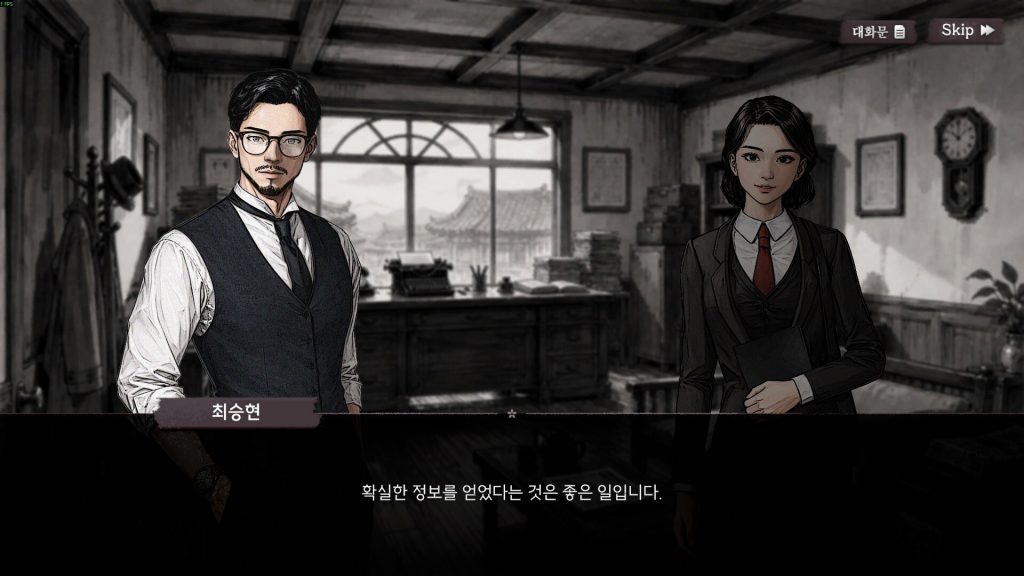
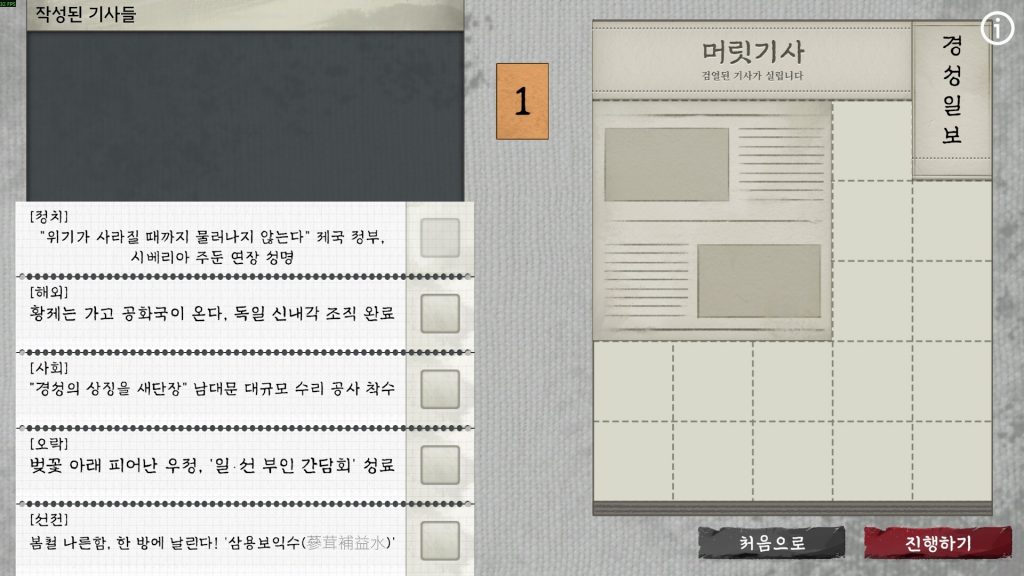
The premise places the player as a newspaper editor in 1920s colonial Gyeongseong (Seoul). Each day, a single edition of the newspaper must be completed. The decisions that complete it are the game: which articles to include, which sentences to delete, where to place stories on the page.
This is the Papers, Please structure applied to journalism specifically — and the specific application matters. Border control inspection processes people according to criteria that exist independent of their humanity; the tragedy is that the criteria don’t account for what the people being processed actually are. Newspaper editing under colonial censorship processes information according to criteria that exist to suppress what information can do — the tragedy is that the suppressed information is precisely what the people who need it most are being denied.
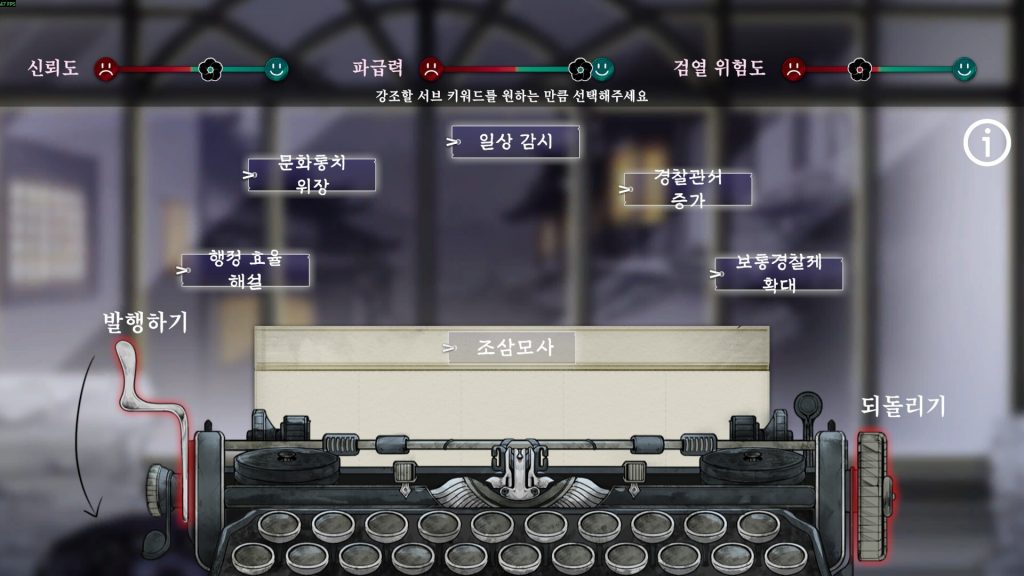
The daily balance the game forces is specific to what journalism actually is. Too critical, and the Government-General censors the paper entirely — no newspaper means no information reaches anyone. Too cautious, and readers lose trust — no trust means the newspaper loses its purpose and its audience. The player must navigate between these failure states every day, knowing that each decision accumulates over 25 years of colonial history.
The specific moral weight of this balance is different from standard political simulation games. The question isn’t “how do I optimize my power position?” It’s “how do I maintain the conditions under which any journalism at all can continue, while publishing enough truth that continuing feels worth it?”
The Reporting System
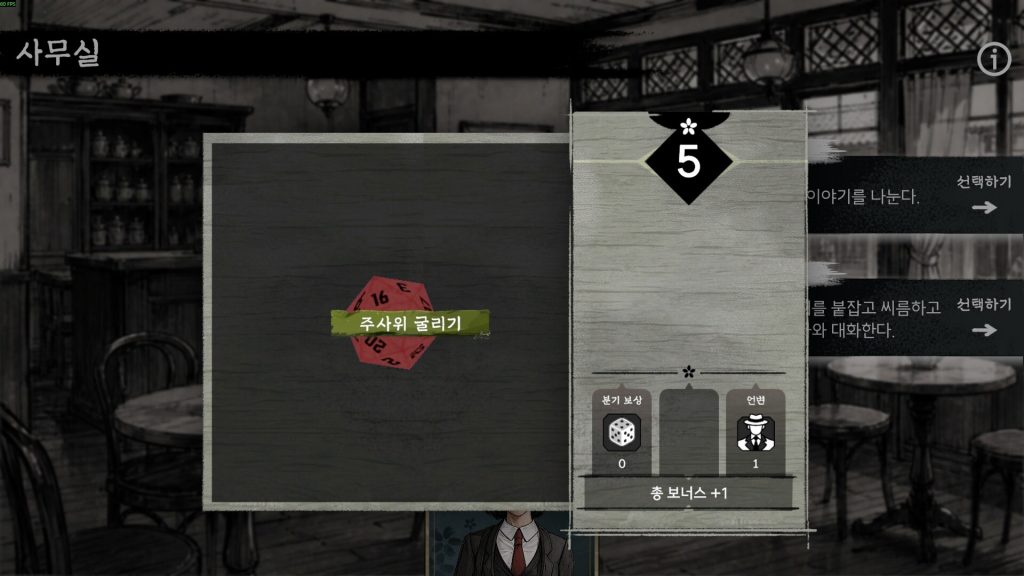
Investigative reporting doesn’t happen only in the editorial office. Journalists go into the field, meet people, collect testimony, and get closer to events’ actual truth. Each investigative attempt uses dice-based resolution against four stats: connections, eloquence, intellect, and physical condition. Successful reporting produces more substantial articles; aggressive reporting risks the journalists themselves and potentially the entire paper.
The risk-reward structure of field reporting is the game’s primary tactical layer. A cautious paper that relies only on safe information produces safe articles — unlikely to be censored, unlikely to inspire trust. An aggressive paper that pushes for difficult truths produces important journalism — and risks the people doing the journalism and the institution they work for.
The editor must also sometimes take direct action — moving through darkness to avoid patrol units, seeking clues personally when formal reporting channels are blocked. This gives the player direct experience of the physical danger that the abstract reporting decisions create for the journalists they’re managing.
The Keyword Accumulation System
The long-term scoop mechanic — connecting keywords collected across multiple editions to produce a story that changes the historical moment — is the game’s most ambitious design element. Daily journalism accumulates; the patterns in what’s happening become visible across time in ways that no single day’s reporting can show. A keyword collected in edition three connects to a keyword from edition seven, and together they point toward something that neither alone would reveal.
This design captures something true about how major journalism actually works: the investigation of significant stories isn’t a single-day event but an accumulation of smaller pieces assembled into a complete picture over time. The player who is paying attention across the full game period — who remembers what they saw and how it connects to what they’re seeing now — can produce journalism that a player focused only on daily decisions cannot.
The multiple endings that result from 25 years of accumulated choices are the consequence of this long-form approach. Does the newspaper survive until liberation? Is it shut down by censorship? Does it survive with its integrity intact, or as a compromised institution that continued at the cost of its original purpose? The answers depend on thousands of small decisions made across a simulated quarter-century.
The Visual Design
Monochrome with a single exception — the red stamp of censorship — is the visual decision that does the most work in The Newspapers of the Day. Black-and-white period aesthetics communicate the historical setting and the newspaper medium simultaneously: this is how newspapers looked, this is how historical documentation looks, this is a world where color has been drained by the conditions being depicted.
The red censorship stamp is the violation of this monochrome. Red in a black-and-white world is impossible to ignore, which is exactly what censorship is — the forced intrusion of external authority into a space that should be defined by editorial judgment. The stamp says: this decision belongs to us now, not to you. The color carries that message before the player has read a word of what it’s covering.
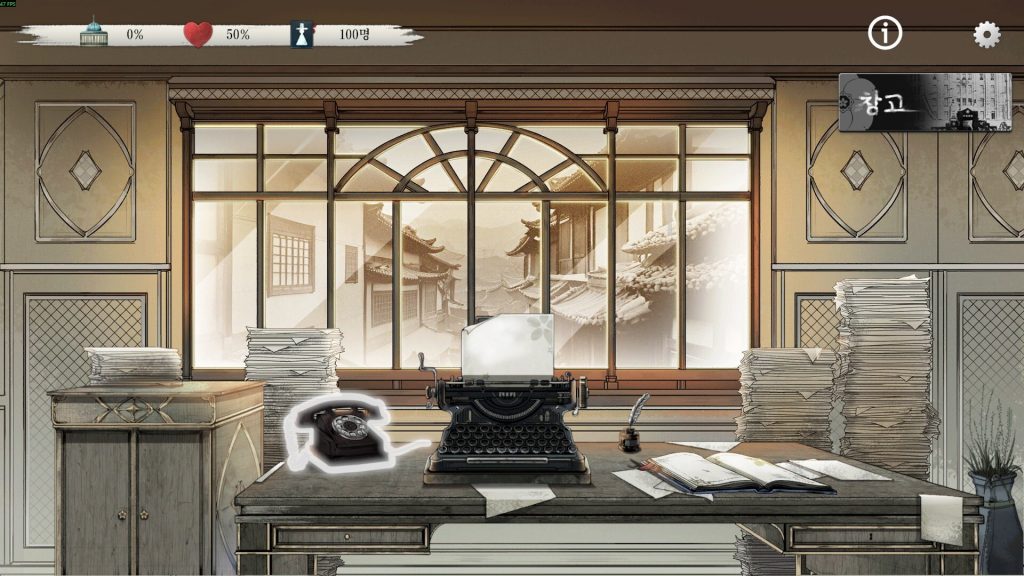
Hand-drawn illustration alongside text-driven progression creates the historical aesthetic that distinguishes this from games that use archival photographs or photorealistic period settings. Illustration implies interpretation — someone drew this, someone understood it, someone is showing it to you through their understanding rather than through documentary objectivity.

The Papers, Please and Beholder Lineage
The Newspapers of the Day works in the tradition of games that make institutional complicity their subject — that place players in positions where the system they’re serving produces moral costs, and where the choices they make within the system define what kind of person they are. Papers, Please made border control into this; Beholder made building surveillance into it; The Newspapers of the Day makes colonial press censorship into it.
The specific historical grounding — this is Korean history, this actually happened, these were real conditions that real journalists navigated — gives the game weight that purely fictional versions of the same premise can’t achieve. The player isn’t making choices in an invented political system; they’re navigating a documented historical reality whose outcomes are known. How the Japanese colonial government’s press censorship affected Korean journalism between 1920 and 1945 is a historical record. The game is asking: what would you have done?
The August 14 release date answers this question with context. The people who made this game know what liberation day means to Korean history. They made a game about the 25 years before it.
The AI Disclosure
Divingstudio’s transparency about generative AI use is the most detailed and clearly bounded such disclosure among the Korean indie games covered this month. Specific uses: background images, character concept art, UI icons, newspaper article and public opinion text drafts, localization review. Boundaries: all results manually reviewed and revised. The declaration that “all content in the game has been reviewed and modified by the development team” is the accountability statement that contextualizes the AI assistance as a tool rather than a replacement.
For a university student team making their first game, this level of transparency about tool use — and the specificity about where AI helped and what human oversight looked like — sets a standard that established studios sometimes don’t meet.
Who This Is For
Strong fit for: Papers, Please and Beholder players who want institutional complicity applied to Korean colonial history specifically; Korean players who want historically grounded game engagement with this period; international players seeking games that approach non-Western historical subjects with the seriousness they deserve; political simulation enthusiasts who want moral weight alongside management systems; narrative game fans who want accumulated long-form consequence (25 years of choices) rather than immediate branch resolution; Korean indie game supporters who want to follow debut university team projects.
Cautious fit for: players who want primarily action or real-time mechanics alongside the simulation; anyone who finds the colonial period subject matter too historically heavy for game engagement; players who want the full game immediately rather than waiting for the August 14 release after trying the demo.
Less ideal for: players who dislike text-heavy simulation games; anyone wanting multiplayer options; players seeking historical games with military or strategic conflict focus rather than civilian institutional experience.
The Takeaway
The Newspapers of the Day is a university student team’s first game about one of Korean history’s most significant periods — the 25 years of colonial press censorship from 1920 to liberation — built as a newspaper editing simulation where daily choices accumulate into a historical outcome. The Papers, Please structure is applied to journalism specifically; the 25-year timeline gives the keyword accumulation system genuine historical scope, and the red censorship stamp on a monochrome page is the visual decision that makes the game’s subject immediately legible.
The August 14 release date is the final argument about why this game exists and what it means to the people who made it.
The edition needs completing. The censors are watching. The reporters are in the field. And somewhere in the decision about which sentence to cut and which to keep, a newspaper’s 25-year history is being written.
Steam and STOVE, August 14. Free demo available now.
Information regarding ‘The Newspapers of the Day’
| item | detail |
|---|---|
| Developer / Publisher | divingstudio (South Korea, university student development team) |
| Genre | History and political simulation adventure |
| Release platform | PC (Steam, STOVE) |
| Official release date | August 14, 2026 |
| Player count | Single player |
| Supported languages | Korean, English |
| core system | Article editing and censorship decisions, dice-based reporting, keyword-combined scoops, reporter stress management |
| Ending | Multiple endings based on choices from 1920 to 1945 |
| Steam rating | Pre-counting (Upcoming Releases) |
| Official Channel | X, Discord |
| Steam Page | Shortcut |
| Demo Page | Shortcut |