After 20 months in Early Access, the ink-painting action roguelite Realm of Ink has officially launched its 1.0 version across PC and all major consoles simultaneously. The release closes one of the more visually distinctive Early Access journeys in recent memory and arrives with consistently strong community reception — 89% Very Positive on Steam recently, 94% across English-language reviews. The simultaneous multi-platform launch and the inclusion of a BlazBlue Entropy Effect crossover suggest publisher 4Divinity is treating this as a major commercial moment rather than a routine 1.0 conversion.
The genre conversation around Realm of Ink has been simple from the start: this is one of the most visually committed action roguelites currently on the market, and the question has been whether the gameplay holds up to the art. After 20 months of public refinement and the full release landing where it has, the answer appears to be yes.
[Related Article: Ink-Painted Roguelite Action ‘Realm of Ink’ Confirmed for May 26 Release]
The Ink Painting Aesthetic Is Not Decorative
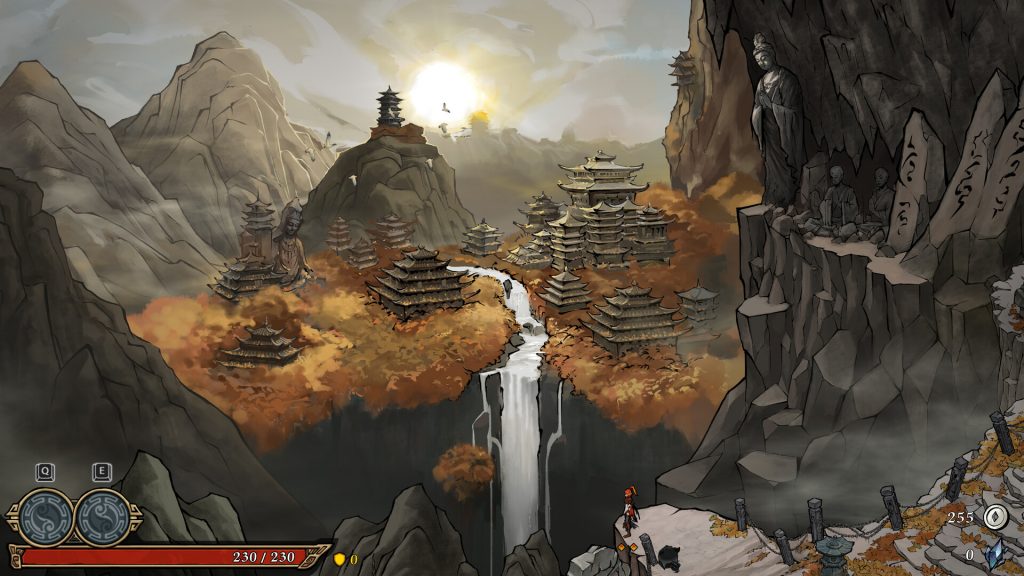
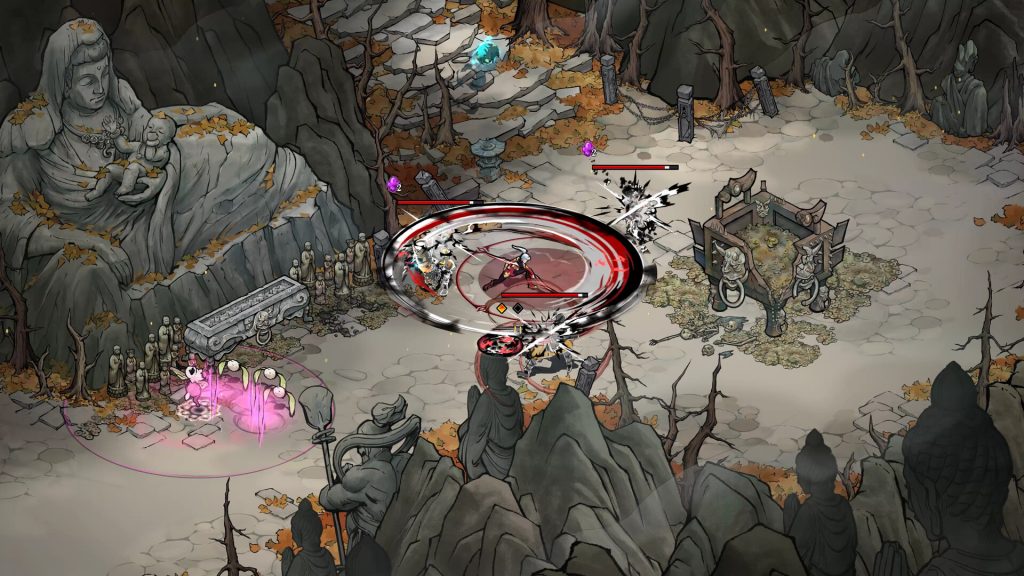
The first thing to address is the visual identity. Realm of Ink draws directly from traditional Chinese ink painting (水墨, shuǐmò) — a discipline with thousands of years of artistic heritage and a distinctive visual grammar built around restrained brushwork, negative space, and tonal control. Games have flirted with ink painting aesthetics before (Okami most famously, though that’s Japanese sumi-e), but committed implementations remain rare.
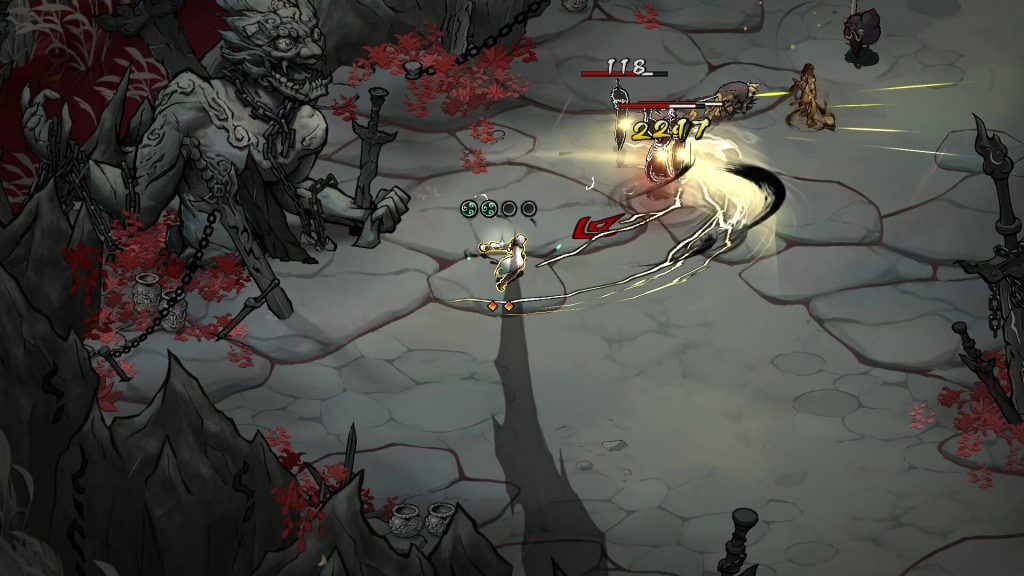
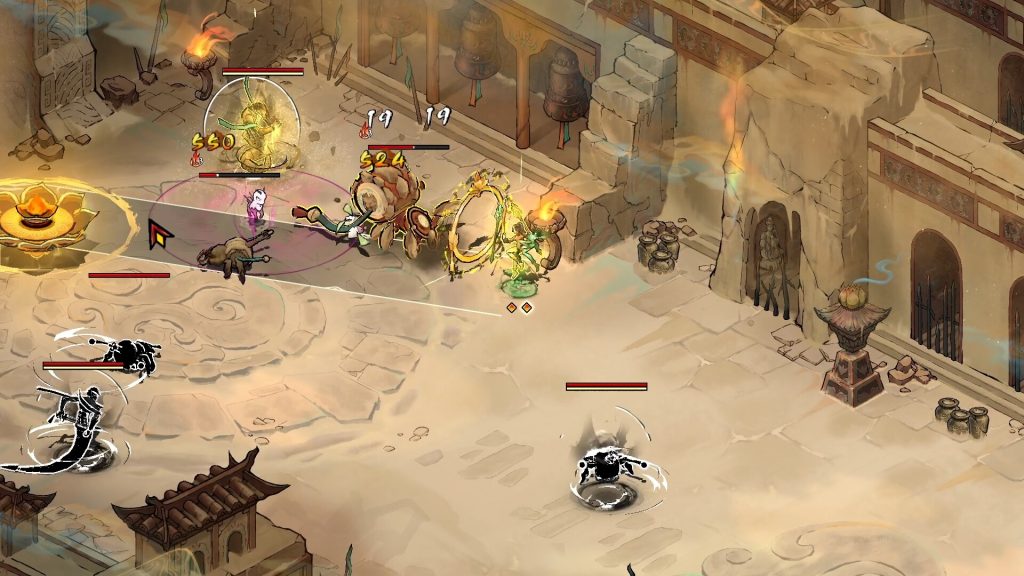
Realm of Ink commits. The 2.5D presentation lets the team render environments that read as living ink paintings — backgrounds with the characteristic wash gradients and brush textures, character animations that incorporate ink-flow visual logic, particle effects that look like splattered or dispersing ink. This isn’t an anime aesthetic with Chinese motifs. It’s an attempt to make a video game look like a Chinese ink painting in motion.
That visual commitment matters because it gives the game a register no Western or Japanese action roguelite can match. The genre has settled into recognizable aesthetic patterns over the last decade — pixel art, hand-drawn 2D, neon synthwave, dark fantasy. Realm of Ink operates in a visual space that hasn’t been explored at this level of dedication, and the result is one of the more genuinely distinctive action roguelites currently available.
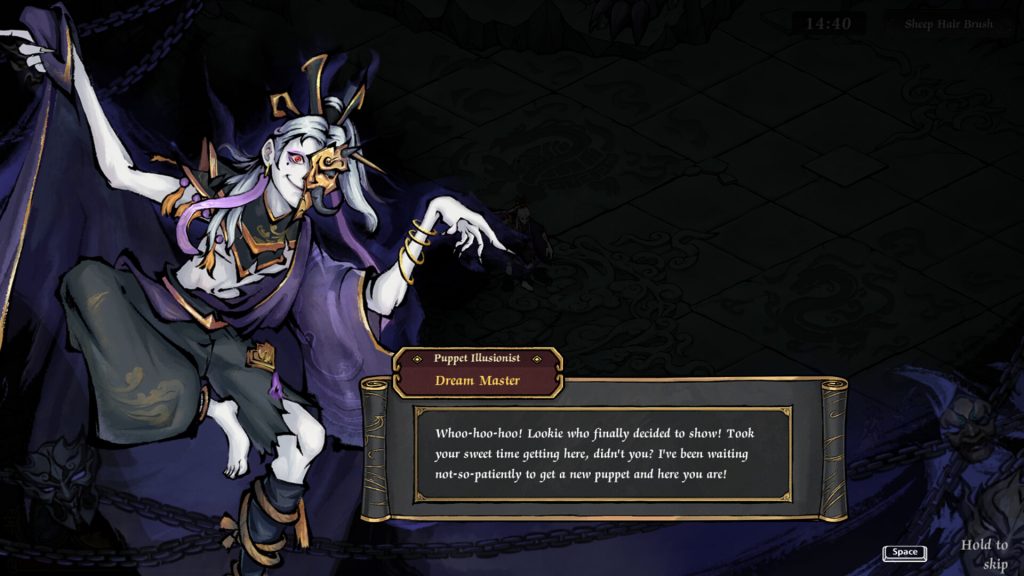
The art direction also supports the narrative concept in ways that matter. The protagonist Red exists in “a world written in ink” and gradually discovers she’s living out a fate already written in someone’s book. The ink-painting aesthetic isn’t just a stylistic choice — it’s the world’s literal substance. Players are navigating, fighting, and rewriting their fate within a medium that is itself the visual medium. The conceptual coherence between art and narrative is unusually tight.
A Story About Rewriting Your Fate
The narrative premise — a swordsman named Red trapped in an ink-written world, chasing a mysterious Fox Demon, discovering that her existence is being authored by an unknown writer — is the kind of metafictional setup that could easily collapse into pretentiousness. The execution avoids this pitfall by treating the metafiction as a gameplay structure rather than a literary statement.
The “rewriting your ending” concept becomes mechanical in the roguelite loop itself. Each death returns Red to the Inn — the game’s safe zone — where she encounters companions, unlocks new battle forms, acquires upgrades, and progresses. The rebirth-into-narrative cycle isn’t just thematic decoration; it’s the structural logic that justifies the roguelite genre’s repeated-death-and-progression pattern. Realm of Ink offers one of the more thematically integrated explanations for why roguelite progression exists in any genre release.
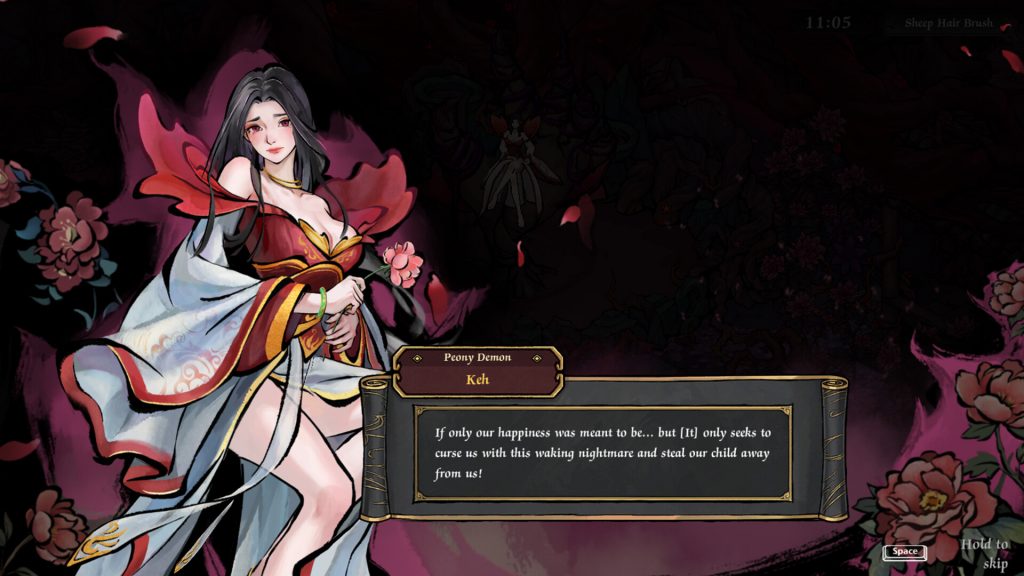
The mythological grounding adds further depth. Four regions inspired by Chinese mythology and literature host 20+ mythological beings, with lore events and character interactions revealing hidden stories about the ink world. This isn’t generic Eastern fantasy — it’s a specific engagement with Chinese cultural heritage as creative source material. Players familiar with Chinese mythology will recognize references; players unfamiliar will encounter genuinely unfamiliar mythological structures rather than generic fantasy reskins.
Combat Forms and Build Variety
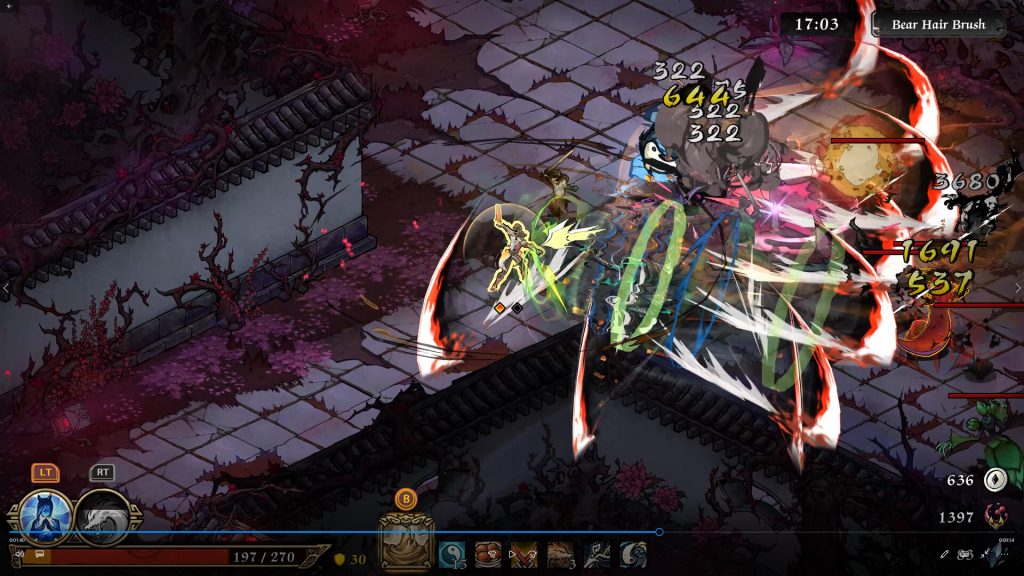
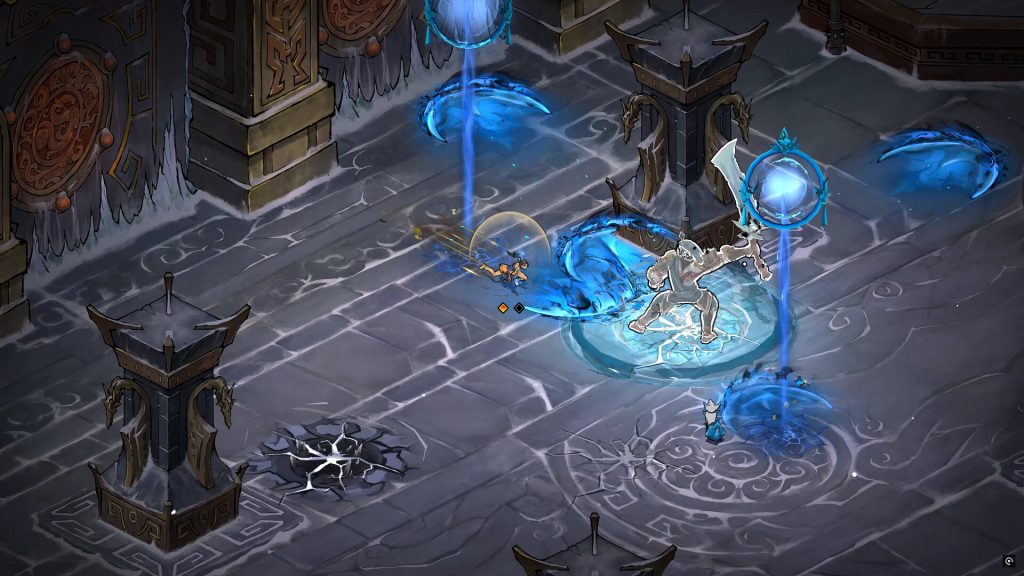
The mechanical depth lives in the combat form system. Nine different battle forms, each with unique weapons, techniques, combat styles, and build strategies, provide the variety roguelites depend on for replay engagement. These aren’t cosmetic variants — they represent distinct combat philosophies that change how the game actually plays.
Combined with 40+ attribute-based Ink Gems and 200+ traits and relic systems, the build crafting space is substantial. The mathematics of possible build combinations across these systems produces genuine variety across runs, addressing one of the genre’s recurring failure modes — runs that feel mechanically identical despite surface-level variation.
The Ink Pet companion system adds another layer. The ink-based companion fighting alongside the player can evolve into 15+ different forms based on combinations and combat style choices. This is the kind of build-defining companion system that gives individual runs a distinct identity, and it integrates with the broader build crafting rather than running parallel to it.
For roguelite players who specifically value build variety as the genre’s core appeal, Realm of Ink offers one of the deeper recent contributions to the format. Whether the depth supports hundreds of hours of engagement at the level of Hades, Dead Cells, or Hades II is the longer-term question, but the foundation is genuinely substantive.
The Inn as Hub
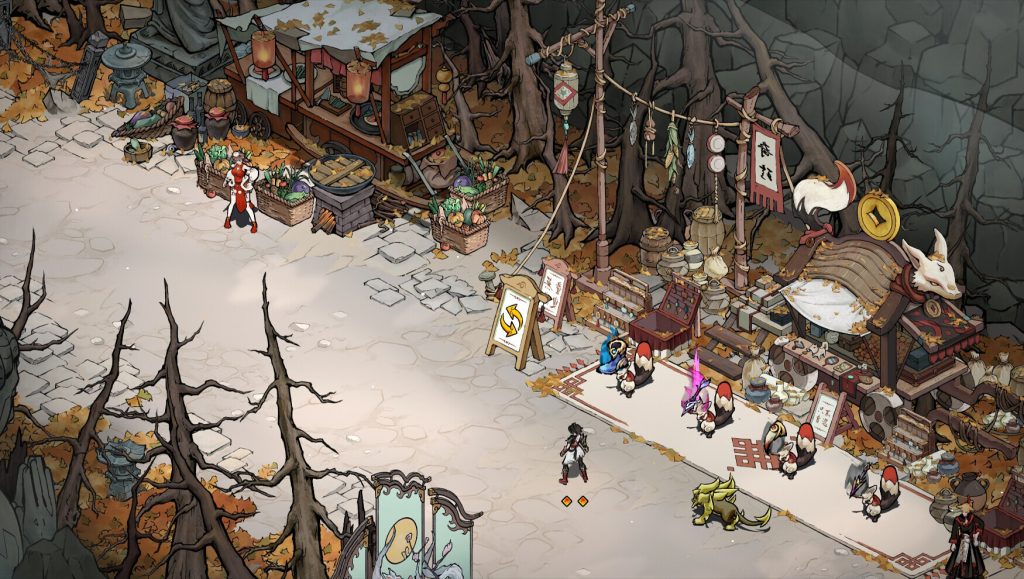
The Inn’s structure as the game’s hub-and-progression space deserves specific note. Roguelites depend heavily on their hub design — the space players return to between runs determines pacing, narrative integration, and how meta-progression feels. Realm of Ink‘s Inn provides character interactions, new battle form unlocks, upgrade acquisition, and various unlockable elements, structured around the rebirth-after-death narrative logic.
This is the right hub design for the game’s themes. Returning to the Inn after each death isn’t framed as resetting a run — it’s framed as another iteration in the story being written about you, with each iteration providing opportunities to influence the next chapter. The narrative and mechanical purposes align, which is rarer than it should be in roguelites that treat their hubs as functional necessities rather than thematic opportunities.
The BlazBlue Crossover
The launch-day collaboration with 91Act’s BlazBlue Entropy Effect is worth specific attention. The stage 4 boss Oread joins Realm of Ink as a new playable battle form, with dedicated Ink Gems, 2 limited Ink Pet skins, and aggressive playstyle-focused abilities supporting new build strategies.
This is the kind of cross-game collaboration that signals confidence on multiple fronts. BlazBlue Entropy Effect is itself a successful action title, and the willingness of both teams to integrate content reflects mutual respect for the projects involved. For Realm of Ink players, Oread adds genuine new gameplay variety at launch rather than functioning as cosmetic decoration. The collaboration extends the game’s roster meaningfully while serving as a marketing event for both titles.
Crossover content has become an established pattern in the action and roguelite genres, but the quality of integration varies enormously. Realm of Ink‘s Oread integration — with mechanical depth equivalent to existing battle forms rather than guest character status — represents the more substantive approach to crossover content.
The Early Access Journey
The 20-month Early Access period (September 2024 through May 2026) deserves acknowledgment. Long Early Access journeys for action roguelites can go in either direction — some projects use the time to genuinely refine and expand, others let their initial momentum dissipate before reaching 1.0.
Realm of Ink‘s Steam review trajectory across Early Access has been consistently positive, and the 1.0 release reception (89% Very Positive recent / 94% English-language) suggests the development time was productively spent rather than treadmilling toward an eventual release. The Early Access community appears satisfied with the journey, which is the meaningful long-term outcome.
The simultaneous multi-platform launch at 1.0 — PC, PS4/5, Xbox Series X|S, and Nintendo Switch all releasing the same day, also signals significant preparation. Multi-platform indie launches are technically demanding, and the publisher’s willingness to commit to simultaneous availability across five platforms indicates confidence in both the project and the studio’s execution capability.
How the Reception Has Landed
The 94% positive English-language Steam review reception is particularly notable. Chinese-developed games sometimes face friction in international reception due to cultural context, translation quality, or stylistic preferences. Realm of Ink clearing 94% in English reviews demonstrates the project transcends regional appeal — the ink painting aesthetic, action mechanics, and narrative concept resonate broadly rather than appealing only to players already invested in Chinese cultural products.
The 89% recent review score (compared to higher historical averages) reflects the typical pattern of any successful Early Access project’s 1.0 launch — broader audience exposure brings a broader range of expectations, with some launch period reviews from players who would have been better matches for the game’s specific identity. The persistent Very Positive rating across both timeframes is a meaningful signal.
A Studio Building Track Record
Leap Studio’s release of Realm of Ink establishes the team’s commercial trajectory in the action roguelite space. The successful Early Access execution, sustained community engagement, multi-platform 1.0 launch, and major crossover collaboration all represent significant development and publishing milestones.
4Divinity’s publisher role is also notable. As a GCL Global Holdings subsidiary, 4Divinity operates within a larger publishing infrastructure that supports the multi-platform launch and international marketing efforts. The Gamescom Latam 2026 showing at the Nuuvem booth indicates ongoing investment in international market expansion beyond the initial English-speaking territories.
For Chinese-developed indie games specifically, Realm of Ink represents the kind of internationally competitive release that establishes the broader market category. Chinese indie development has been quietly building global presence over the last several years — projects like Black Myth: Wukong (technically AAA but with indie sensibilities), Bloodbath Kavkaz, and others have demonstrated that Chinese game development can compete at international quality levels. Realm of Ink adds to that trajectory at the action roguelite scale.
Who This Is For
Strong fit for: action roguelite enthusiasts seeking distinctive visual identity; Hades, Dead Cells, Slay the Spire fans interested in expanding the genre vocabulary; players drawn to Chinese mythology and cultural source material; fans of Okami or similar artistically committed action games; build crafting enthusiasts who value depth across 40+ Ink Gems and 200+ traits.
Cautious fit for: players who prefer Western-developed action roguelites for cultural familiarity; anyone allergic to 2.5D perspectives in favor of full 3D or strict 2D presentations.
Less ideal for: players who want fast-twitch action without metafictional narrative layers; anyone uninterested in mythological or culturally specific source material; players who prefer punishing difficulty over balanced progression.
What to Watch For
A few questions will shape Realm of Ink‘s post-1.0 trajectory.
The first is platform-specific reception. Multi-platform simultaneous launches reveal platform-specific issues that take time to surface. How the Switch, Xbox, and PlayStation versions perform technically and how players on each platform respond will become clearer over the launch period.
The second is the content roadmap. The BlazBlue Entropy Effect crossover demonstrates an appetite for collaborative content. Whether additional crossovers, content expansions, or DLC follow will determine the game’s longer commercial arc.
The third is community formation around build variety. Action roguelites depend on long-term engagement through theory crafting, build sharing, and community discovery of optimal strategies. Whether Realm of Ink‘s community develops these patterns will significantly affect the game’s longevity.
The fourth is broader international expansion. The Gamescom Latam showing suggests continued international market development. How the game performs in Latin American, European, and other markets beyond initial English-speaking territories will indicate the scope of the project’s global appeal.
The Verdict
Realm of Ink completes its 20-month Early Access journey as one of the more visually and conceptually distinctive action roguelites in the current market. The Chinese ink painting aesthetic is genuinely committed rather than superficially applied. The metafictional narrative concept integrates with the roguelite structure in unusually meaningful ways. The build variety across nine battle forms, 40+ Ink Gems, 200+ traits, and 15+ Ink Pet evolutions provides genre-appropriate depth.
The 89-94% Steam reception range across the launch period reflects what the gameplay actually delivers: a well-constructed action roguelite with a distinctive identity that earns its positive press response without overselling its ambitions. The simultaneous multi-platform launch makes the game accessible across virtually every relevant platform, and the BlazBlue Entropy Effect crossover provides immediate launch-day content variety.
For action roguelite players who’ve worked through the genre’s recent major releases and are looking for projects with a distinctive identity, Realm of Ink is a clear recommendation. For players new to the genre but interested in the ink painting aesthetic or Chinese mythological source material, it’s an accessible entry point. For players outside these categories, the free demo on Steam and Xbox is the fastest way to discover whether the game’s wavelength matches yours.
Verdict: Strongly recommend. One of the more genuinely distinctive action roguelites in the current market, completing its Early Access journey with the polish and content depth that justifies the development time. The ink painting aesthetic is the headline feature, but the build variety, narrative integration, and combat depth that support it earn the project a positive reception on its own: a successful 1.0 launch and a clear recommendation for genre enthusiasts.
A swordsman trapped in a world of ink. A Fox Demon to chase. A fate already written, waiting to be rewritten one death at a time. As action roguelite pitches go, Realm of Ink‘s remains one of the more compelling — and the full release delivers on the promise.
Information regarding ‘Realm of Ink’
| item | detail |
|---|---|
| Developer | Leap Studio |
| Publisher | 4Divinity (subsidiary of GCL Global Holdings) |
| Genre | Dark Action Roguelite / 2.5D Hack and Slash |
| Release platform | PC (Steam) / PS4·5 / Xbox Series X|S / Nintendo Switch |
| Official release date | May 26, 2026 (Simultaneous across all platforms) |
| Early access begins | September 26, 2024 |
| Steam Review | Very Positive (Recent 89% / English Reviews 94%) |
| Collaboration | BlazBlue Entropy Effect × Oread (91Act) |
| Free Demo | Available on PC (Steam) and Xbox |
| Field experience | Gamescom LATAM 2026 Nuuvem Booth (1407~1410) |
| Main Keywords | Ink painting, 2.5D, Roguelite, Swordsmanship action, Chinese mythology, Build crafting |
| Steam Page | Shortcut |