A boy named Trey wakes up in a red forest with no memory of who he is. A local boy named Ales finds him, and their meeting becomes the starting point of an adventure across the unknown continent of Tarea. It’s the kind of opening that immediately signals the genre’s classical lineage — JRPGs have been opening with amnesiac protagonists for decades — and LumenTale: Memories of Trey knows exactly what tradition it’s joining.
The debut release from Milan-based Beehive Studios, published by Team17, launched May 26 on Steam and Nintendo Switch (with Switch 2 backward compatibility) to Metacritic scores in the 84-88 range and consistent press characterization as a “passionate love letter combining Pokémon and Final Fantasy combat elements independently.” For a debut indie monster collector competing directly in a genre where The Pokémon Company has decades of dominance, that’s the kind of reception that justifies attention.
Earning the Comparisons
The Pokémon and Final Fantasy reference points get thrown around too easily in monster collector reviews. Most projects in the space borrow surface elements from Pokémon without engaging with the design depth that makes the franchise’s combat work. Fewer still successfully integrate Final Fantasy’s tactical sensibilities. LumenTale is one of the rare cases where both comparisons are earned — and where the synthesis produces something that isn’t just imitation.
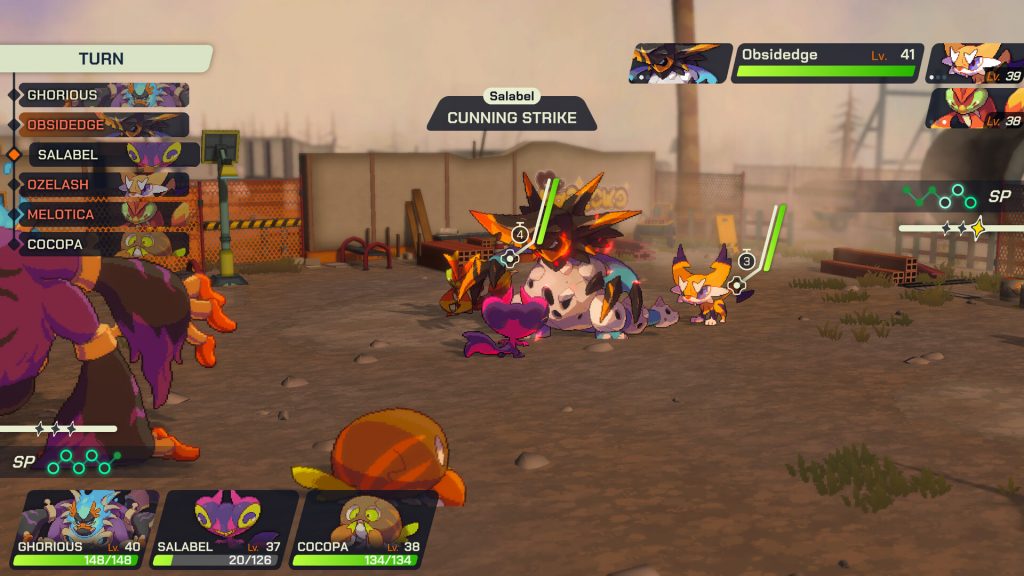
The Pokémon DNA shows in the creature-collection structure, the type-system thinking (here rebranded as emotional attributes), and the broader exploration-and-encounter rhythm. The Final Fantasy DNA shows in the combat encounter design itself — particularly the 4v4 team battle structure that opens up tactical possibilities Pokemon’s 1v1 framework specifically constrains.
This is the key design move. Pokémon’s combat depth is genuinely sophisticated, but it operates within tight structural limits — one active monster per side, with switching as a major tactical layer. Final Fantasy’s combat, especially in its strategic incarnations, operates with full party deployment. LumenTale takes Pokémon’s monster-collection-and-typing logic and grafts it onto Final Fantasy’s team-deployment combat structure. The result is recognizable to both traditions but identical to neither.
For a debut indie project in one of gaming’s most established genres, this is exactly the kind of distinctive structural choice that justifies existence. LumenTale isn’t asking players to choose between Pokémon and a worse alternative; it’s offering a different combat sensibility that exists in conversation with both reference points.
The Five Emotional Attributes
The type system reframing as “emotional attributes” is the project’s most charming design touch. Where Pokémon uses elemental types (fire, water, grass, etc.) and Final Fantasy variants use traditional fantasy classifications, LumenTale organizes its 140 Animons across five emotional categories. Each attribute carries distinct combat implications.
The “Serenity” attribute increases critical hit probability, suggesting calm focus as a combat advantage. The “Fear” attribute applies psychological pressure to enemies, disrupting their combat flow. Other emotional attributes carry their own mechanical signatures. Emotions become combat mechanics, not flavor — the system functions as more than reskinned typing.
This is a more thematically coherent type system than the genre standard. Pokémon’s elemental types work mechanically but bear no real relationship to the creatures’ personalities or how players actually engage with them emotionally. LumenTale‘s emotional attributes connect the combat layer to the relationship layer that the game prioritizes elsewhere. A Serenity-attribute Animon doesn’t just have different combat properties; it has a different personality that the player engages with.
Whether the system actually produces meaningfully different tactical experiences across the 140-creature roster, or whether dominant strategies emerge that flatten the apparent variety, is the question that will determine the game’s strategic longevity. Early reception suggests the design is delivering meaningful diversity, but the genre’s competitive depth typically reveals itself only after substantial play time.

The Animon Roster
140 collectible Animons is a substantial scope for a debut indie monster collector. For context, the original Pokémon Red/Blue launched with 151. Beehive Studios is shipping at near-Pokemon-launch scale, which represents serious art and design investment for a small studio.
The creature designs themselves have received consistent praise across early reception, with reviewers noting that the Animons combine cuteness with personality in ways that feel deliberately crafted rather than derivatively assembled. Monster collector games live or die on creature design — players form emotional attachments to specific creatures, and weak designs collapse the entire collecting motivation. LumenTale appears to have cleared this bar.
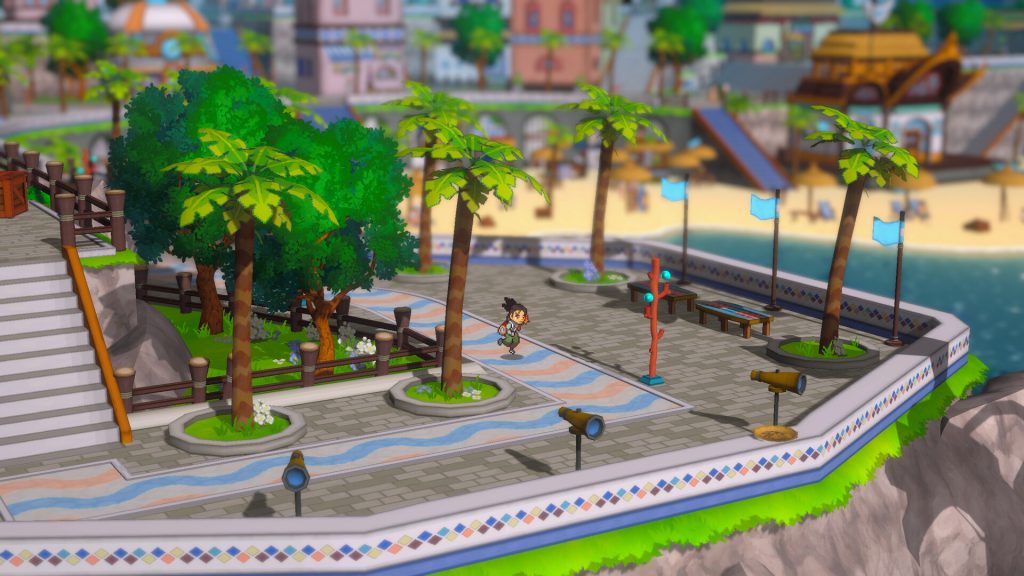
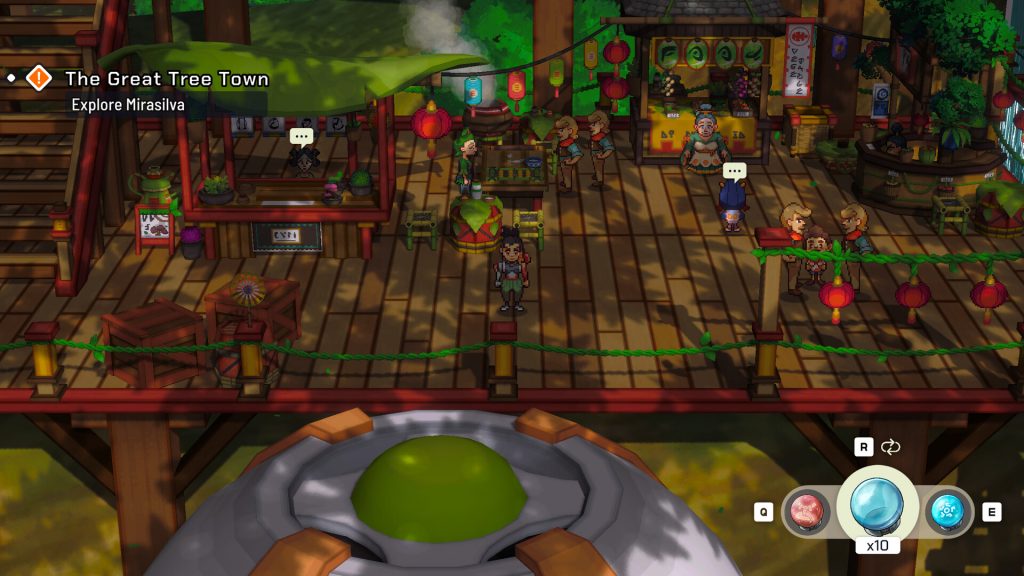
The visual style supports the creature work. Pixel-based sprites that evoke classic Pokémon nostalgia, paired with modern animation detail, strike a register that respects the genre’s heritage while feeling contemporary rather than purely retro. The continent of Tarea is rendered with distinct regional palettes and atmospheres, which gives the exploration loop visual variety even when the underlying gameplay structure is familiar.
The professional soundtrack — released as part of the Steam-exclusive Lumen Edition — has been singled out as a project strength, supporting the immersive quality reviewers have consistently praised.
Anispace and the Bond System
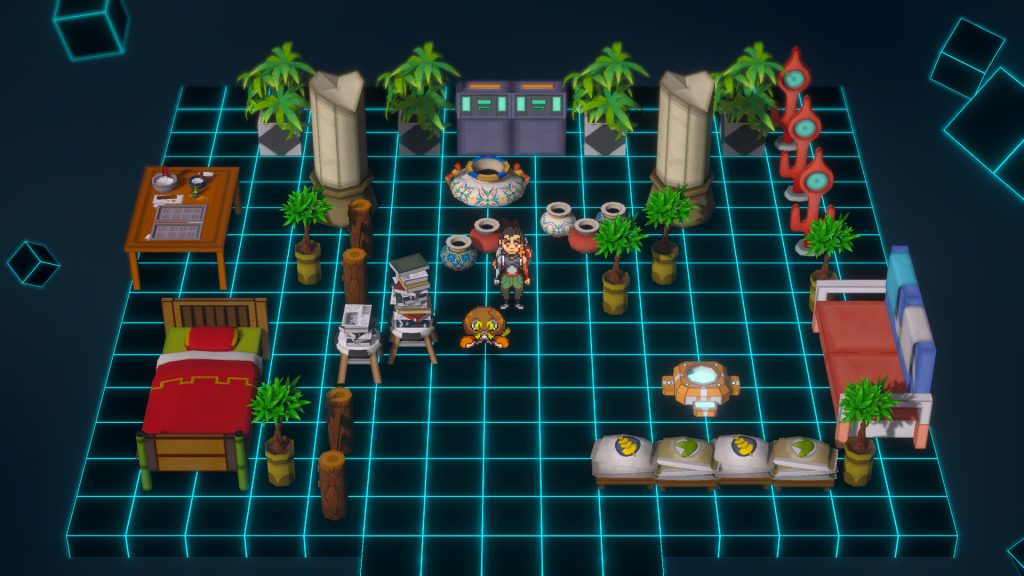
The most distinctive design element beyond combat is the Anispace system. This is LumenTale‘s personal space mechanic — a hub where players train Animons, craft and place furniture, and customize their own creative environment. It functions as both a progression hub and an expression layer.
What makes Anispace more than a stat-boosting menu is the bond system layered into it. Time spent with Animons in Anispace strengthens bonds that affect combat performance. This converts the genre’s typical “creatures as tools” relationship into “creatures as companions you grow with.” The mechanical difference is small; the emotional difference is significant.
Pokémon has flirted with similar systems across its history (Pokémon-Amie, the various refresh mechanics), but they’ve typically been peripheral rather than central. LumenTale positions the bond system closer to the core experience, which fits the game’s broader emotional emphasis. The five-attribute emotional combat system and the bond-based companion growth system reinforce each other thematically — this is a monster collector that takes its emotional framing seriously rather than treating it as decoration.
For players who’ve grown frustrated with monster collectors that emphasize the collecting and battling while treating the creatures as interchangeable tools, LumenTale‘s investment in the relationship layer is one of its most appealing features.
The Story Layer
The amnesiac protagonist framing is genre-standard, but LumenTale‘s execution has received consistent praise for narrative coherence and emotional weight. Trey’s memory loss and his journey across Tarea with Ales serve as the structural spine, but the writing reportedly delivers more than the setup might suggest.
The “Memories of Trey” subtitle telegraphs that recovered memory will drive narrative progression — a familiar JRPG structure where each revelation reframes earlier events. Whether the story payoff lands with genuine emotional impact or settles into genre conventions is the kind of thing that becomes clear only after full playthroughs, but early reception suggests Beehive Studios has put serious writing investment into the project.
The narrative-systems-art coherence has been a consistent thread in positive reviews. When reviewers describe the project as “an impressive debut where story, systems, and art harmonize,” they’re describing a level of integrated craft that distinguishes serious projects from genre exercises. LumenTale appears to be delivering at that level.
The Technical Friction
Honest evaluation requires acknowledging the technical issues that have surfaced in reviews. Some reviewers have reported progression difficulties in specific environments and bug occurrences across various scenarios. The framing in these reviews — that the content quality outpaces the optimization — captures the pattern: this is a game where the design ambition has run slightly ahead of the technical polish.
This isn’t catastrophic. The Metacritic score range (84-88) reflects that the technical issues are noted but not dominating the reception. The Switch and Switch 2 versions specifically warrant attention, as multi-platform indie launches frequently develop platform-specific issues that take patches to address. Players sensitive to technical roughness should consider waiting for initial patches; players willing to accept some friction for an otherwise strong genre release will find the trade-off acceptable.
Team17’s track record as a publisher includes substantial post-launch support for their indie partners, which suggests the technical issues are likely to be addressed across the early launch period rather than left unresolved.
How the Press Has Read It
The press response has been notably uniform in its core assessment. The “passionate love letter combining Pokémon and Final Fantasy combat” framing has appeared across multiple outlets, suggesting reviewers are converging on the same understanding of what the project is.
What’s more meaningful is the consistent observation that LumenTale transcends its inspirations. Reviews describing the project as “more than a Pokémon fan game with its own identity” capture the threshold the project has crossed — it’s being evaluated as an independent entry in the genre rather than measured against its reference points.
The “nostalgia-evoking while adding new combat structure freshness” framing represents the balance the project is striking. Pure nostalgia exercises feel hollow; pure innovation without genre awareness produces alienating products. LumenTale sits in the productive middle ground where genre fans can recognize what’s familiar while engaging with what’s distinctive.
The 84-88 Metacritic range is significant for a debut indie monster collector. This isn’t outlier coverage from a single enthusiastic outlet; it’s a consistent positive reception across multiple critical perspectives. That kind of unified assessment from a debut release suggests the project has genuine quality rather than scattered strengths and weaknesses balancing out to average scores.
A Studio Worth Watching
Beehive Studios was founded in 2021, making LumenTale: Memories of Trey their debut release. The studio’s stated mission — to “surprise as many people as possible” — has clearly informed the project’s design philosophy. Surprising the audience in a genre as established as monster collecting requires real creative ambition rather than refined execution of existing formulas, and LumenTale delivers on that requirement.
The Team17 publishing relationship is a meaningful context. Team17 has built a catalog around supporting indie projects across multiple genres — Hell Let Loose, Overcooked!, Yooka-Laylee, Bone Tomahawk, and many others. Their continued investment in creature-collection RPGs through LumenTale signals the genre’s broader market opportunity, particularly as players increasingly look beyond The Pokémon Company’s offerings for fresh takes on the format.
For Italian indie specifically, LumenTale represents the kind of internationally competitive debut that puts a small national scene on the global map. Italian game development has been quietly building momentum — projects like Mediterranea Inferno, Saturnalia, and others have established a track record for distinctive design from Italian studios. LumenTale joins that trajectory with one of the most commercially ambitious recent debuts.
The Switch 2 Backward Compatibility Factor
The Switch 2 backward compatibility deserves specific note. As Switch 2 builds its software library, games that launch on the original Switch with confirmed backward compatibility benefit from accessing both audiences simultaneously. LumenTale is positioned to reach players still on Switch 1 while remaining available to the growing Switch 2 user base.
For a monster collector specifically, the Switch ecosystem matters disproportionately. Nintendo’s platforms have been the natural home for the genre since Pokémon’s inception, and players in the monster collection audience are heavily represented on Switch. Launching with confirmed cross-Switch availability gives LumenTale access to the genre’s most important audience without platform fragmentation.
Who This Is For
Strong fit for: Pokemon players curious about alternative monster collectors with distinctive mechanical identity; JRPG fans interested in seeing classical combat structures evolved; players who appreciate emotional or thematic combat systems beyond elemental typing; collectors who value relationship systems with their creatures; anyone in the broader Italian or European indie scene curious about Beehive Studios’ debut.
Cautious fit for: players who specifically dislike Pokémon-derived monster collection structures; anyone unwilling to accept some launch-period technical roughness.
Less ideal for: hardcore competitive monster collectors looking for a Pokémon replacement at full competitive depth; players who avoid amnesiac-protagonist narrative framings; anyone allergic to pixel art aesthetics.
What to Watch For
A few questions will shape LumenTale‘s longer-term reception.
The first is post-launch patch support. Technical issues that get addressed quickly become footnotes; technical issues that persist become defining characteristics. Team17’s track record suggests support is likely, but the actual patch cadence will determine outcomes.
The second is the strategic depth of the emotional attribute system across full play. Early reception suggests the system delivers meaningful variety, but monster collector strategic depth typically reveals itself only after dozens of hours. Whether the five-attribute system supports the kind of competitive complexity that sustains long-term engagement is the central design question for the game’s longer arc.
The third is community formation. Monster collectors depend heavily on player communities for sustained engagement — trading networks, competitive scenes, and strategy discussion. LumenTale‘s ability to develop a meaningful community around its 140-Animon roster and 4v4 team battle structure will significantly affect whether players remain engaged a year from launch.
The fourth is the content roadmap. Whether Beehive Studios continues supporting LumenTale with content additions and balance updates, or treats the debut as complete and moves to the next projects, will affect how the game positions in the genre over time.
The Verdict
LumenTale: Memories of Trey is one of the more genuinely accomplished monster collector debuts in recent memory. The Metacritic score range (84-88) reflects what the actual play experience delivers: strong combat innovation that earns its Pokémon and Final Fantasy comparisons, a distinctive emotional attribute system that goes beyond reskinned typing, a substantial 140-Animon roster with thoughtful creature designs, meaningful Anispace and bond systems that prioritize relationship over collection-as-acquisition, and a narrative that delivers more than its amnesiac-protagonist setup suggests.
The technical friction is real but not disqualifying. Players who can tolerate some launch-period roughness for a genuinely innovative monster collector entry will find the trade-off worthwhile. Players who need fully polished launches should wait for initial patches.
For Italian indie specifically and the monster collector genre broadly, this is a meaningful debut release. Beehive Studios has demonstrated that small studios can compete in established genres by leading with creative ambition rather than scale of production. The Pokémon Company isn’t going to feel competitive pressure from a single indie release, but the cumulative effect of projects like LumenTale, Palworld, TemTem, and others continues to reshape what monster collector players expect from the genre.
Verdict: Strongly recommend with technical caveats. One of the more substantively innovative monster collector debuts in years. The combat innovations are real, the creature design quality is solid, and the emotional framing elevates the experience beyond pure mechanical collection. Some technical roughness at launch, but the underlying quality justifies engagement — and likely places Beehive Studios as a studio to follow across their next projects.
A boy with no memories. A continent called Tarea. 140 creatures organized around the emotions that animate them. As 2026 monster collector pitches go, LumenTale‘s is one of the more thoughtfully constructed — and based on early reception, the game largely delivers on that promise. The genre is healthier for releases like this existing.
Information regarding ‘LumenTale: Memories of Trey’
| item | detail |
|---|---|
| Developer | Beehive Studios (Milan, Italy / Established in 2021) |
| Publisher | Team17 |
| Genre | Monster Collecting RPG / Turn-based JRPG / Adventure |
| Release platform | PC (Steam) / Nintendo Switch / Nintendo Switch 2 (Backward compatible) |
| Release date | May 26, 2026 |
| price | £21.99 / $24.99 USD |
| Metacritic | 84~88 points |
| Animon Su | 140 types (5 emotional attributes) |
| Combat style | 1v1 ~ 4v4 Turn-based Team Battle |
| Edition | Standard · Deluxe (Steam · Switch) / Lumen Edition (Steam Exclusive, includes soundtrack and artbook) |
| Key Features | Animon Space / Animon Trade Station / Cooking and Crafting |
| Main Keywords | Monster collecting, Turn-based RPG, Pokémon-like, Animon, Tarea, Amnesia, Italian indie |
| Steam Page | Shortcut |