A former outlaw gunslinger named Rose discovers that her daughter Rosebud’s soul has been sealed inside a locket — imprisoned by Envy, one of the Seven Deadly Sins. The only way to get her back is to hunt down the other six Sins and harvest their power, working at the command of the entity that took her daughter in the first place. It’s the kind of premise that could go in dozens of directions; Rose and Locket, the just-released action adventure platformer from New Zealand indie studio Whistling Wizard, takes it somewhere genuinely distinctive.
Published by Ninja Kiwi — the Auckland studio better known for the Bloons Tower Defense series — Rose and Locket arrived on Steam this week for PC and Mac, capping a development arc that’s been building anticipation since the project’s PAX Australia 2023 reveal.
A Visual Identity That Earns Its Comparisons
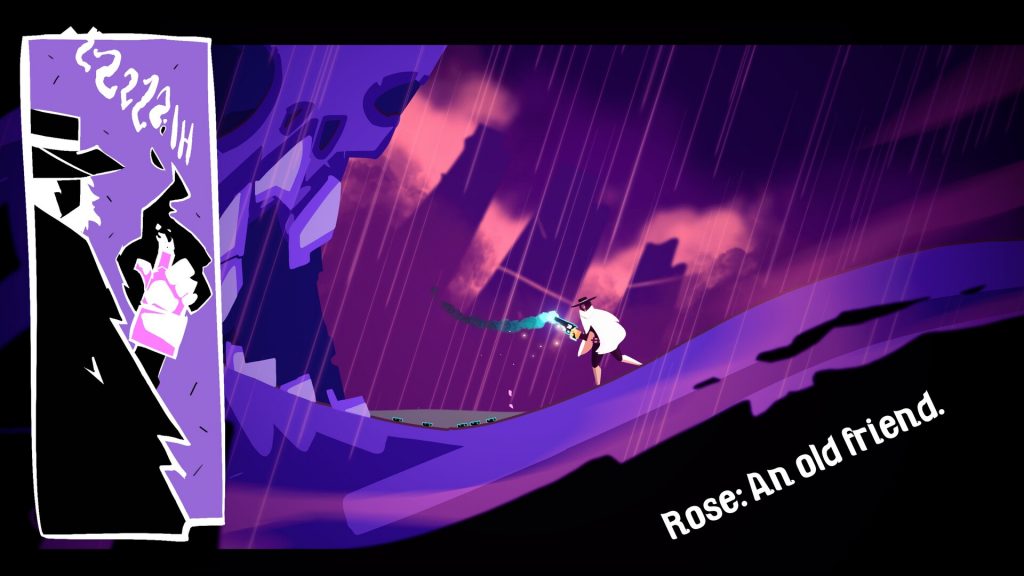
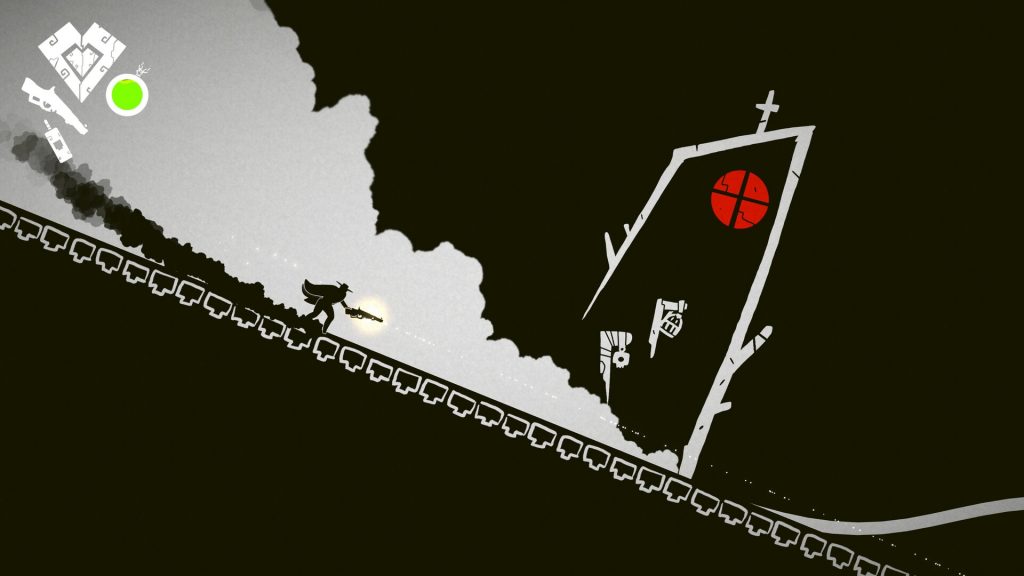
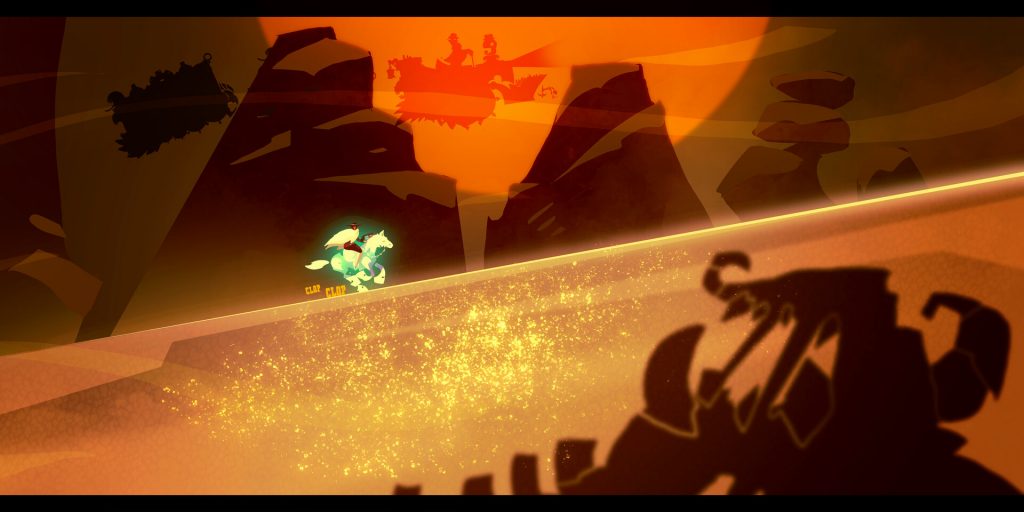
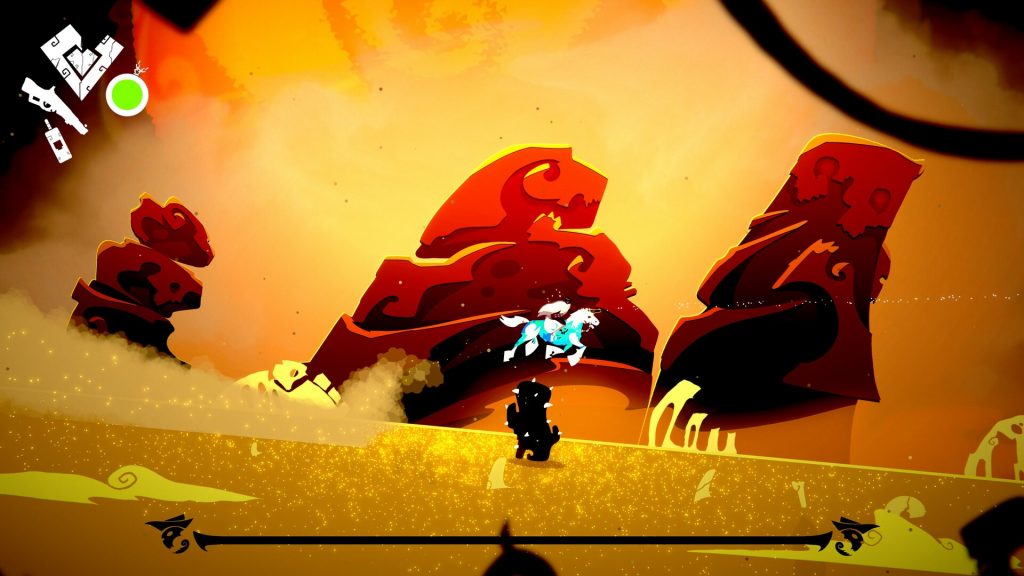
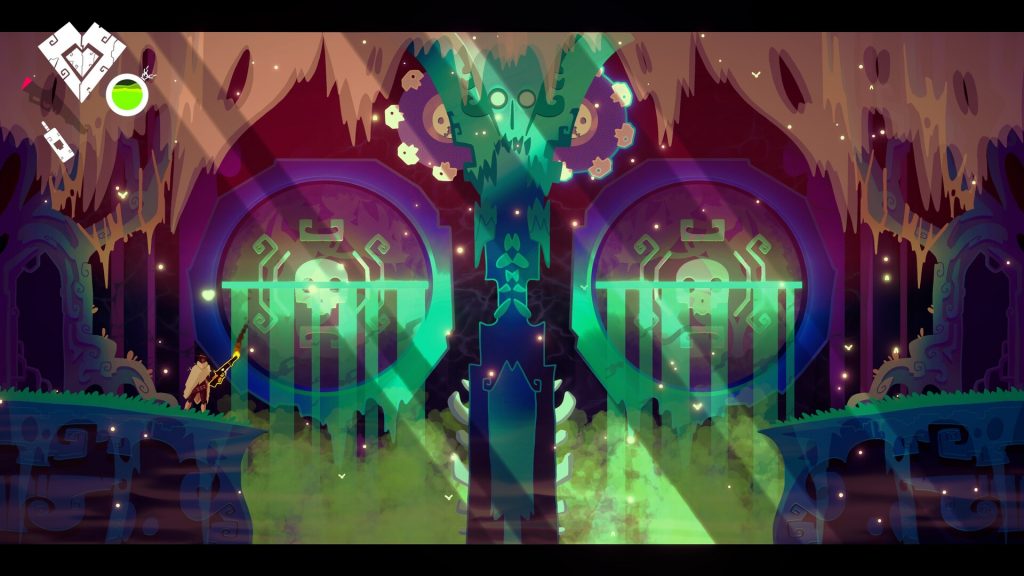
The first thing to address is the art. Rose and Locket‘s visual style is unmistakable, and the Samurai Jack inspiration the developers cite is exactly what’s on screen. Bold silhouettes. Strong color contrasts. Animation that prioritizes graphic impact over fluid motion, in the tradition of Genndy Tartakovsky’s work on Samurai Jack itself. The hand-drawn animation moves the game closer to a living graphic novel than to a conventional platformer.
The Samurai Jack comparison is one of those references that works only if the project earns it, because the show set a high bar for cartoon visual design. Rose and Locket earn it. The frame composition borrows the show’s confident use of negative space. The character animation prioritizes posture and silhouette over detail. The action sequences read as carefully drawn panels brought to motion rather than continuously animated movement.
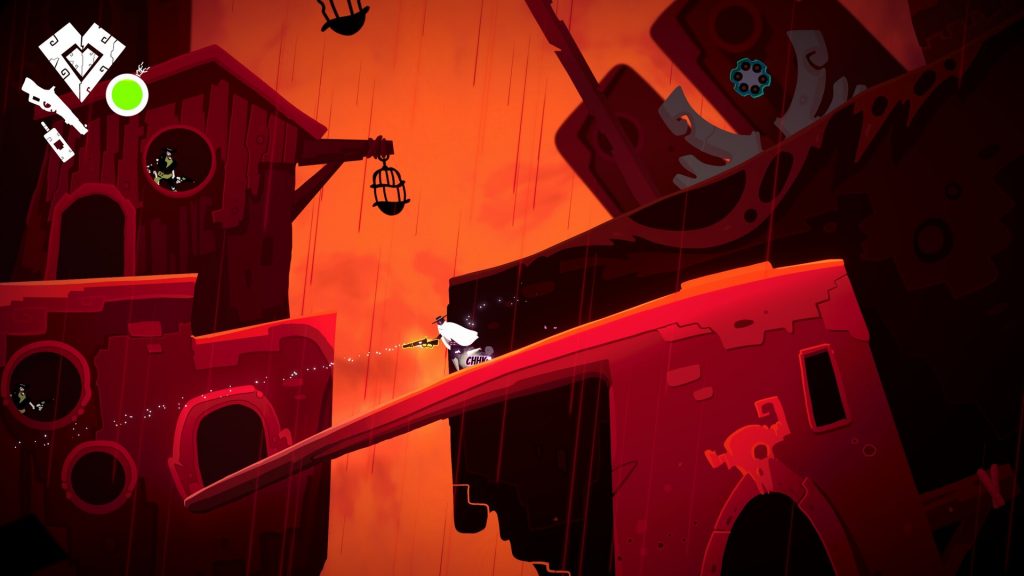
What lifts the visual identity from “well-executed” to “distinctive” is the thematic coherence. Each region of the Underwest — the western underworld where Rose hunts the Sins — is designed as an independent themed space representing one of the deadly sins. The Mirrorverse of Pride, where Pride’s domain literally bends visual reality through reflective surfaces, exemplifies the approach. Each Sin’s territory has its own color palette, spatial logic, and visual rhythm. The game isn’t just set across multiple environments — it’s set across multiple visual philosophies, each unified by the underlying hand-drawn craft.
The full voice acting and cinematic narration push the graphic novel comparison further. Voice work in indie platformers is often serviceable rather than memorable; Rose and Locket invest in the audio performances at a level that supports its cinematic ambitions. Combined with the deliberate cinematic framing of key sequences, the result is closer to interactive animation than traditional gameplay punctuated with cutscenes.
The 360° Shooting Gallery Combat
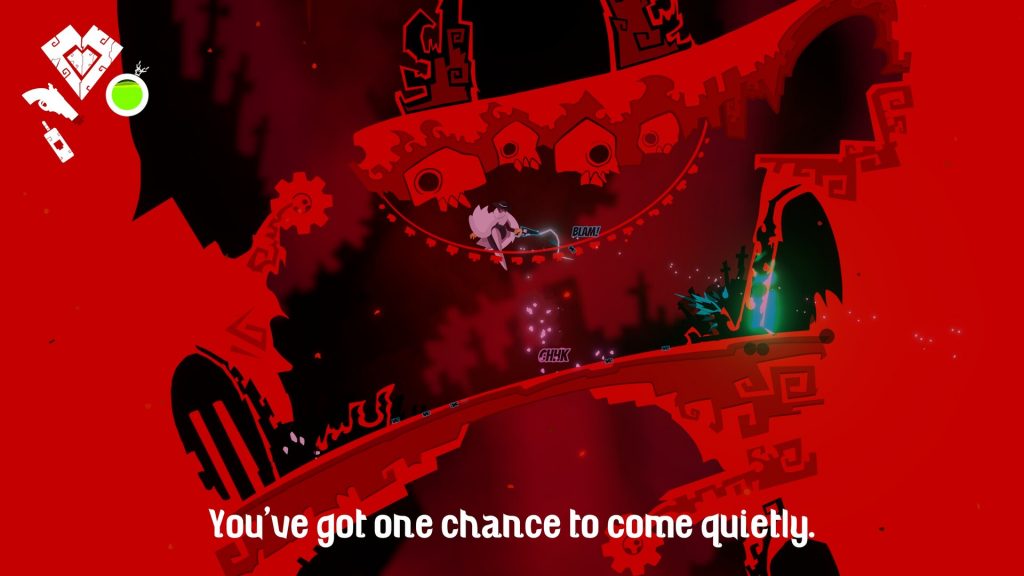
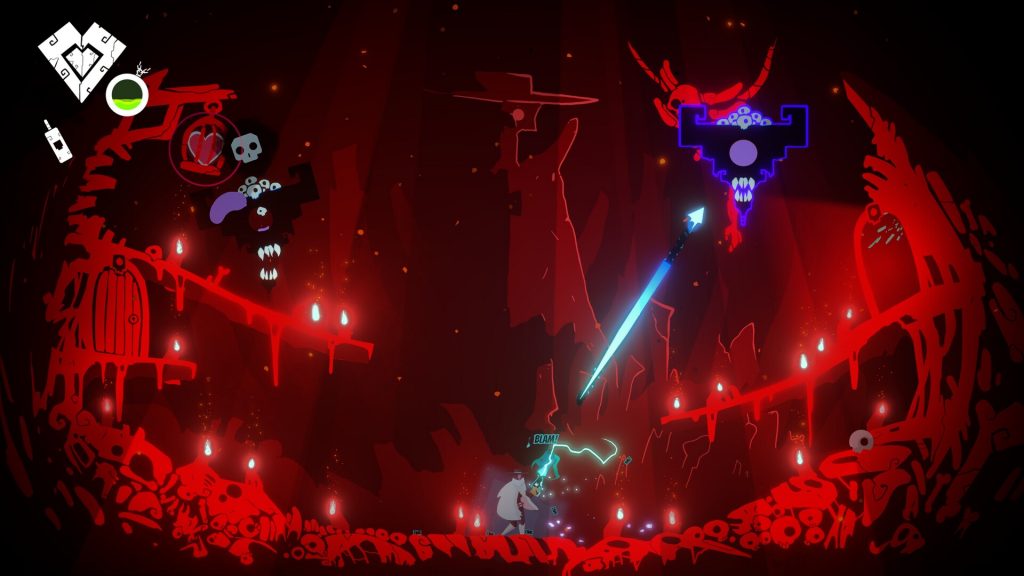
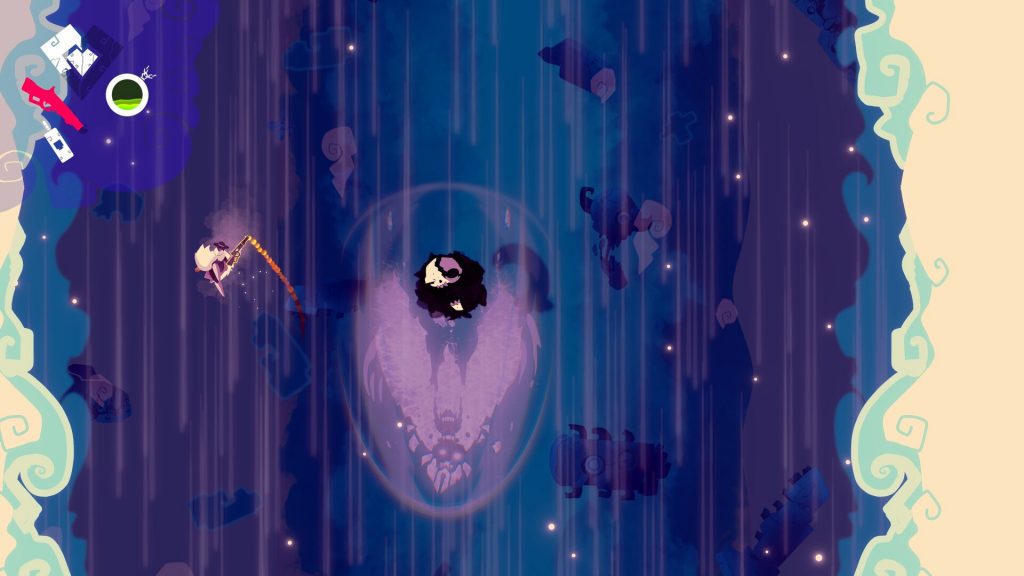
The mechanical signature of Rose and Locket is its boss battle design. Each of the six remaining Sins — Pride, Greed, Lust, Gluttony, Wrath, Sloth — manifests not as a stage-ending obstacle but as a complete 360° shooting gallery encounter with its own conceptual identity and attack patterns.
This is the right design choice for the game’s aesthetic and thematic ambitions. Conventional platformer boss design would have meant each Sin is essentially a damage sponge with a few unique attacks. The shooting gallery approach turns each encounter into its own elaborate set piece — bullet-hell adjacent but framed through gunslinger combat rather than abstract patterns, with each Sin’s visual identity informing how the encounter actually plays.
The moment-to-moment combat layer supports this through aerial evasion, precision shooting, and rapid repositioning. The combat philosophy combines Western gunslinger style with bullet-hell patterns and boss rush intensity, producing something that feels distinctly its own rather than borrowed from any single reference point.
This is the kind of action design that’s hard to evaluate without playing — written descriptions of combat systems often sound similar even when the actual feel diverges significantly. But the demo reception and early hands-on coverage have consistently emphasized the responsiveness and stylistic clarity of the combat, suggesting the execution is matching the design ambition.
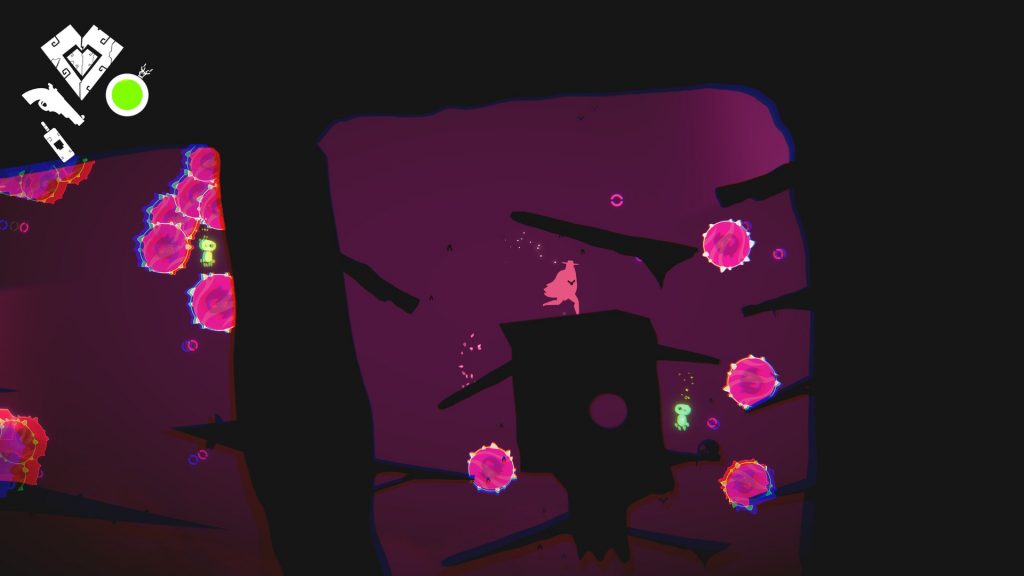
The Western Underworld
The Underwest setting is more interesting than the standard “weird western” genre tag suggests. Western fiction has been combined with supernatural elements often enough that “western fantasy” is now a recognizable category (Weird West, Hard West, Blood West, the broader Stephen King’s The Dark Tower lineage). Rose and Locket‘s contribution is the underworld framing — the Underwest isn’t a Western frontier with magical elements; it’s an explicitly subterranean spiritual landscape that uses Western iconography as its surface aesthetic.
The seven-sins structure provides the navigational logic. Rose descends through the Underwest by hunting each Sin in turn, with the territory mapping onto a kind of inverted moral cosmology. This is closer to Dante’s Inferno‘s structural logic than to typical Western fiction’s geography — the player progresses by descending through layers of moral meaning rather than traveling across physical territory.
The combination of these influences produces a setting that’s harder to summarize than describe. It’s Western enough to deliver gunslinging satisfaction. It’s mythological enough to support seven distinct boss encounters with thematic weight. It’s animated enough to make the visual transitions between regions feel genuinely dramatic rather than just aesthetic shifts.
The Emotional Architecture
What separates Rose and Locket from a stylized action game with thematic decoration is the family narrative running underneath the combat. Rose’s hunt isn’t motivated by abstract justice or external mission objectives — it’s motivated by her daughter being held hostage in the locket she carries around her neck. The deadly sins aren’t villains to defeat in the service of saving the world; they’re obstacles between a mother and her child.
This framing changes how the gameplay reads. Every boss encounter is in service of the same goal: getting closer to releasing Rosebud’s soul. Every act of violence is committed under the command of the entity that imprisoned her in the first place. The moral architecture is genuinely complicated — Rose is doing terrible things for understandable reasons, in service of a captor who claims it’s the only path to her daughter’s freedom.
The developer’s framing — that “everything is not as it appears” — is the kind of statement that either signals a meaningful narrative twist or sets up disappointment. Without spoiling what unfolds, the game’s progression structure suggests Whistling Wizard has put real writing investment into the eventual reveals. Whether they land emotionally will be one of the things players talk about as the post-launch discourse develops.
A Studio With a Coherent Sensibility
Whistling Wizard’s design philosophy comes through clearly in the project: prioritizing distinctive art style, atmospheric direction, and strong thematic consciousness over technical showcase. Rose and Locket combine hand-drawn animation visuals with a symbolic narrative built around the seven deadly sins, attempting to balance fast action gameplay with artistic expression.
This is the kind of design priority that produces memorable games even when individual mechanical elements have rough edges. Studios that lead with aesthetic and thematic vision tend to make games that hold together as experiences, even when specific systems aren’t perfectly tuned. Studios that lead with mechanical refinement sometimes produce games that play beautifully but lack identity. Rose and Locket are clearly the former kind of project.
The Ninja Kiwi publishing relationship is worth noting. Ninja Kiwi is best known for the casual-friendly Bloons series, which has built a substantial commercial empire on accessible tower defense gameplay. Publishing a hand-drawn dark fantasy action platformer is a meaningful expansion of their catalog identity and signals the studio’s investment in supporting more artistically ambitious indie work alongside their flagship franchise.
For New Zealand indie specifically, Rose and Locket join a small but growing scene. The country’s indie output has been quietly building international visibility — Unclear Games’ The Florist, recently announced, is another notable upcoming horror release. Rose and Locket‘s arrival adds momentum to that broader trajectory.
How the Press Has Read It
Pre-launch coverage has been consistently positive, with the long anticipation arc since PAX Australia 2023 doing much of the work to build awareness within the indie press. Well-Played described the game as “a project I’ve been waiting for since experiencing it at PAX Australia 2023,” framing it as an impressive achievement for New Zealand indie development.
The Steam Next Fest demo response was particularly strong. User reactions during the demo period included variations on “one of the best demos I’ve played in recent years” — the kind of organic enthusiasm that’s hard to manufacture and that typically signals the actual game beneath the marketing is delivering.
The two-and-a-half-year arc from first reveal to release has built community investment in the project. Long pre-launch development isn’t always positive for indie releases — some projects lose momentum or get overshadowed by competing titles. Rose and Locket appear to have used the time productively, with each major showing building rather than diminishing the audience’s interest.
Who This Is For
Strong fit for: hand-drawn art style enthusiasts (Cuphead, Hollow Knight aesthetic appreciators); action platformer fans looking for distinctive style alongside mechanical depth; players drawn to Samurai Jack‘s visual register or graphic novel aesthetics generally; weird western and dark fantasy fans; players who appreciate cinematic indie games with full voice acting; bullet hell players who’d enjoy the genre filtered through gunslinger combat rather than space shooter framing.
Cautious fit for: pure platforming fans who prefer mechanical depth over aesthetic emphasis; players who specifically dislike boss-rush-heavy structures.
Less ideal for: players who want continuous platforming flow without major combat interruptions; anyone allergic to dark fantasy or western fiction aesthetics; players who prefer minimalist visual styles over heavily stylized art.
What to Watch For
A few questions will shape Rose and Locket‘s longer-term reception.
The first is whether the seven-sins structure sustains across the full game. The risk in any “defeat the X bosses” structural design is that the encounters start blurring together by the fourth or fifth iteration. Rose and Locket‘s investment in giving each Sin distinct visual identity, mechanical conceit, and thematic weight is designed to prevent this — whether it succeeds across the entire roster is the central design question for full-game evaluation.
The second is the narrative payoff. The “everything is not as it appears” framing sets expectations for meaningful reveals. Whether the eventual story turns land emotionally or feels like genre-standard twists will significantly affect how players remember the game.
The third is the combat depth ceiling. Action games depend heavily on whether their core combat has enough variety and refinement to support extended engagement. The acrobatic gunslinging concept needs to sustain across multiple boss encounters and the connecting gameplay between them.
The fourth is the community reception. Demo enthusiasm doesn’t always translate to launch reception, and the first wave of full-game player feedback will reveal whether the project’s strengths hold up at full scope.
The Verdict
Rose and Locket is the kind of indie release that justifies the scene’s existence. A small New Zealand studio committed to a specific aesthetic and thematic vision, executed across nearly three years of development, delivered with full voice acting and cinematic ambition that exceeds what most indie projects attempt. The hand-drawn art is genuinely beautiful. The seven-sins structure provides clear thematic and mechanical scaffolding. The mother-daughter narrative gives the violence emotional weight that pure action games typically lack.
The risks are the standard risks for stylistically ambitious indie projects — whether the execution holds up at full scope, whether the narrative pays off its setup, and whether the boss rush structure sustains engagement across the full game. None of these are concerns about whether Rose and Locket is worth playing; they’re questions about how strongly it lands.
For players who appreciate hand-drawn animation, distinctive action design, and indie games that aim for cinematic impact, this is a launch-day recommendation. For everyone else, it’s worth investigating based on whether the aesthetic register matches your wavelength.
Verdict: Strongly recommend for the right audience; worth investigating for everyone else A genuinely distinctive indie action adventure that delivers on its ambitious aesthetic vision. One of the more visually accomplished platformers of recent memory, with thematic depth that elevates it above pure action spectacle.
A gunslinger. A locked-away daughter. Seven sins to hunt across an underworld rendered in hand-drawn fury. As 2026 indie pitches go, Rose and Locket‘s is one of the more confident ones — and based on early reception, the game delivers on what it promises. The Underwest is waiting.
Information regarding ‘Rose and Locket’
| item | detail |
|---|---|
| Developer | Whistling Wizard (New Zealand) |
| Publisher | Ninja Kiwi (Auckland, New Zealand / Developer of the Bloons series) |
| Genre | 2D Action Adventure Platformer / Western Fantasy |
| Release platform | PC·Mac (Steam) |
| Release date | May 27, 2026 (May 26, Korea time) |
| Art style | Hand-drawn Animation / Graphic Novel / Samurai Jack Inspiration |
| Core gameplay | 360° Shooting Gallery Boss Battle / Acrobatic Gunsling / Seven Deadly Sins Hunt |
| characteristic | Full voice acting and narration / Cinematic set pieces |
| Public history | First unveiled at PAX Australia 2023 |
| inspiration | Samurai Jack / Classic Comics Aesthetics |
| Main Keywords | Western, Underworld, Gunslinger, Seven Deadly Sins, Boss Battle, Hand Draw, Graphic Novel |
| Official Channel | X(@WWGAMINGNZ) · YouTube · Instagram · TikTok · Discord |
| Steam Page | Shortcut |