The bodycam horror FPS micro-genre has become one of the more interesting indie spaces over the last two years. Triggered initially by viral attention around projects like Unrecord and accelerated by the broader found-footage aesthetic revival, it’s a small but distinct corner of horror gaming that prizes documentary realism over cinematic polish. A.A.U. Black Site, the just-launched Early Access debut from Serbian studio Raspberry Studio, is the latest entry in that space — and based on the Mixed Steam reception at 62% Positive, it’s also one of the most divisive.
The split reception is worth examining honestly, because A.A.U. Black Site is the kind of project where the ambition and the execution are clearly visible on different layers — and where the genre’s expectations make the friction harder to ignore than it would be in other contexts.
The Bodycam Premise, Committed
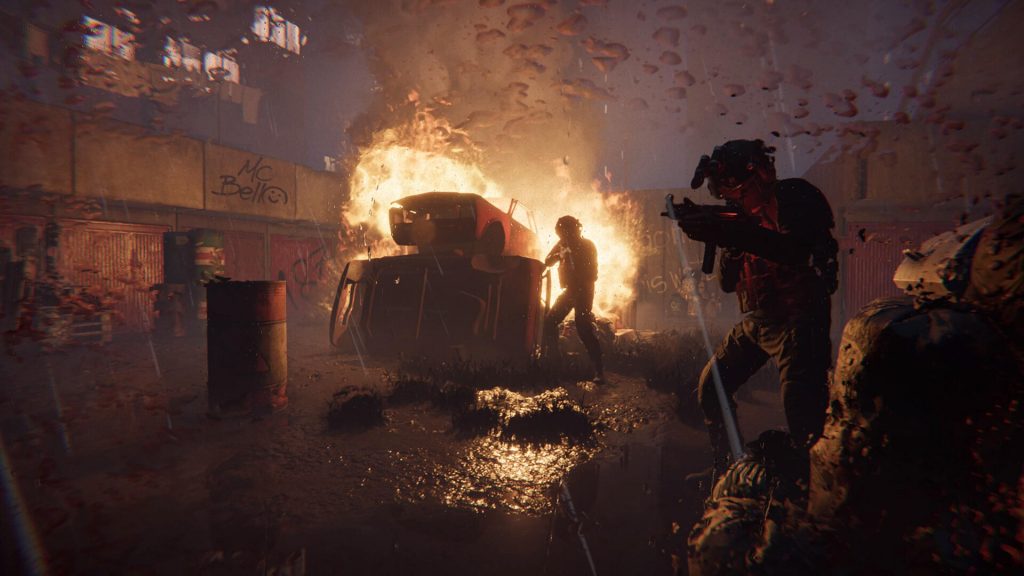
The game’s central premise is straightforward and effective. A soldier framed for something he didn’t do has been abandoned in hostile territory. Communications are dead. His unit is gone. The only record of what happens next is the bodycam strapped to his chest, recording everything from mundane survival to supernatural confrontation.
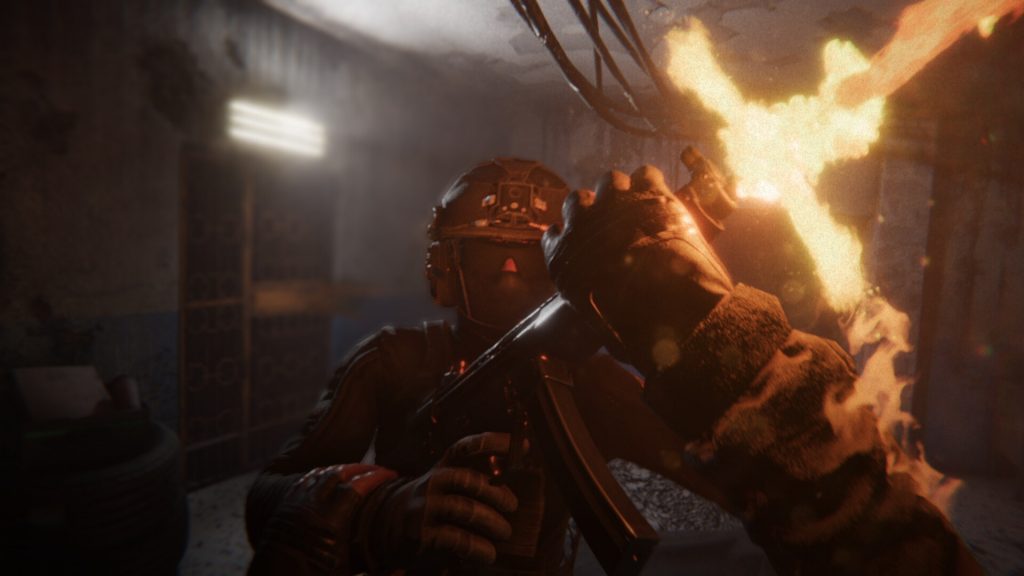
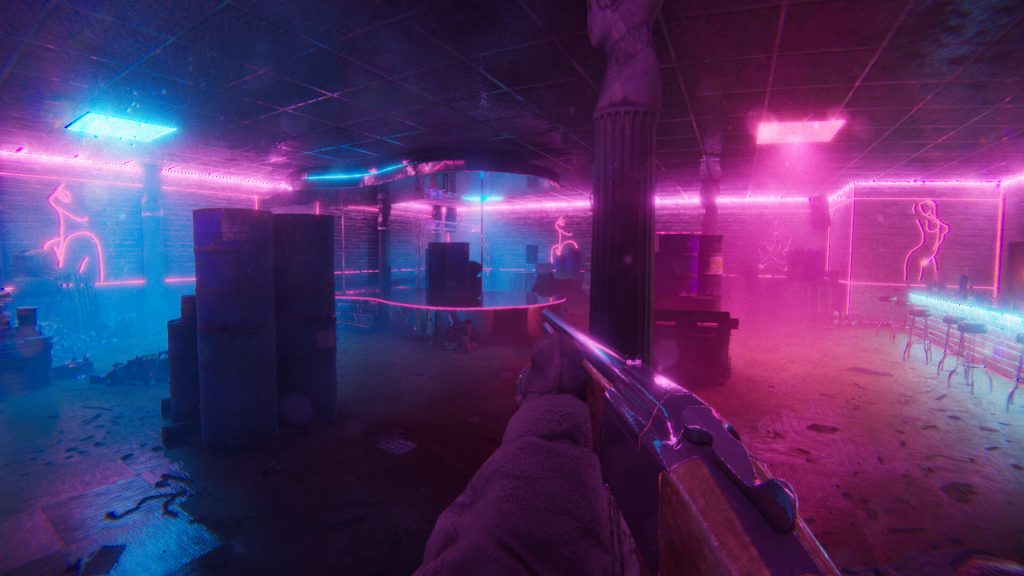
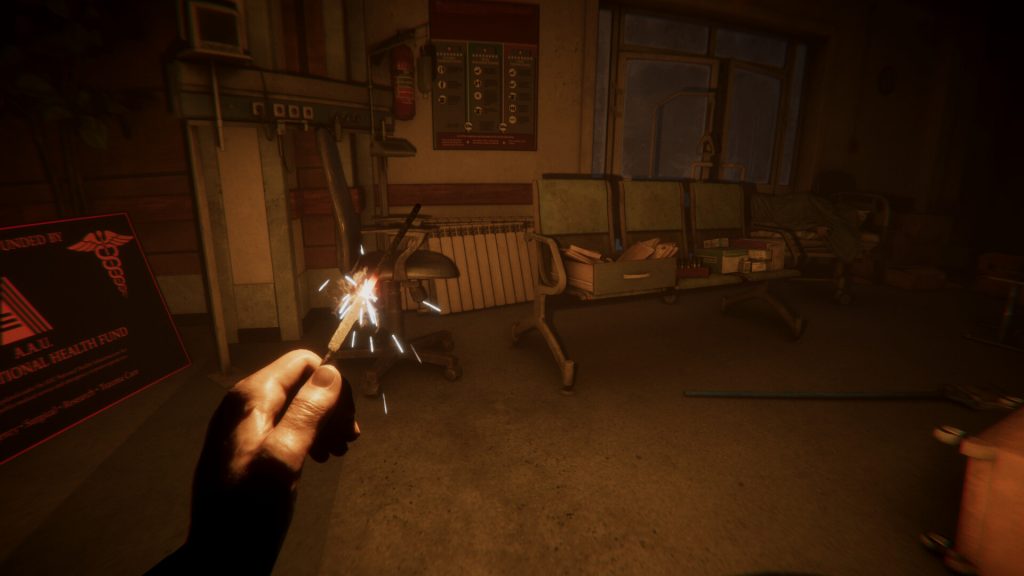
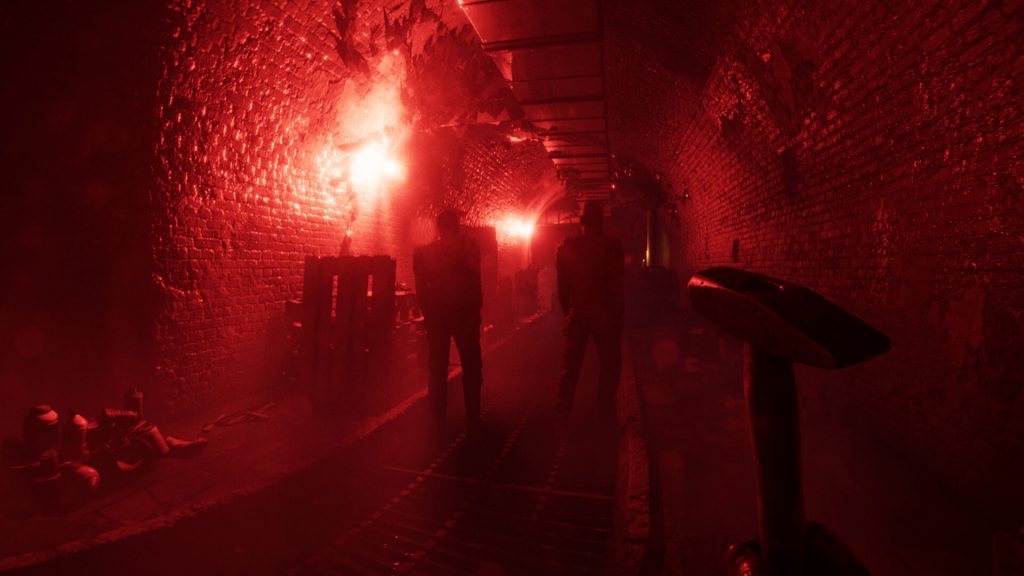
The bodycam framing isn’t just an aesthetic choice — it’s the structural foundation that determines how every other system in the game reads. The first-person view is shakier than standard FPS conventions. The visual register prioritizes the appearance of authentic footage over cinematic clarity. Tight enclosed spaces dominate the level design. The boundary between reality and hallucination, between operational threat and psychological breakdown, blurs across the entire experience.
This is the right approach for the genre. Bodycam horror works when it fully commits to the documentary illusion; it falls apart the moment the game starts feeling like a game wearing bodycam clothes. A.A.U. Black Site commits as fully as the technology allows, and that commitment is what’s earning the project its strongest early reactions from players who connect with the wavelength.
The Setting as Real Texture
The Uzovnica setting deserves particular attention. A.A.U. Black Site takes place in a ruined Serbian region, with a 1990s-coded framing that carries unavoidable resonance with the actual historical period the area is associated with. The game doesn’t dramatize this directly — it isn’t a Yugoslav Wars game — but the visual texture of post-conflict Serbian landscape gives the project an authenticity that wholly fictional bodycam horror settings can’t match.
This is one of the genre’s underused tools. Bodycam aesthetic works best when the locations being captured feel like real places that exist. Generic abandoned warehouses or fictional facilities are easier to design but less impactful. Specific, culturally grounded settings — Serbian ruins, Eastern European decay, the visual register of post-Soviet collapse — produce a different kind of dread because they connect to recognizable real-world textures.
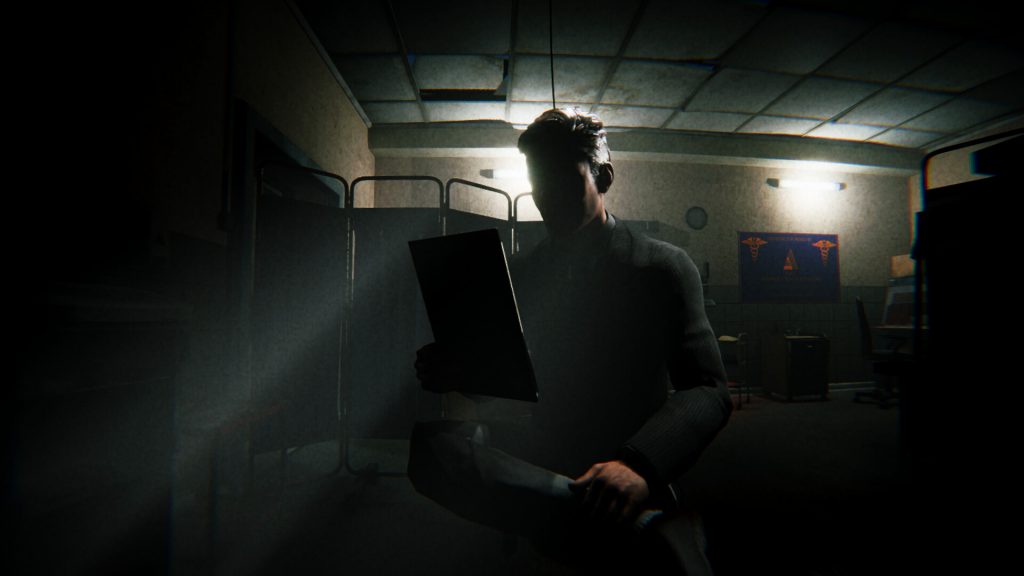
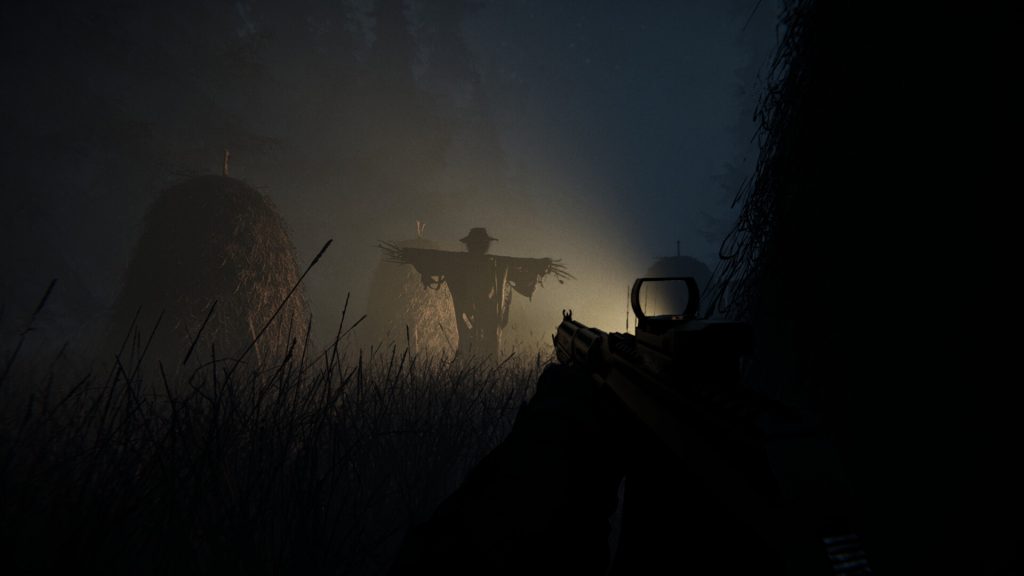
Layering supernatural horror onto military realism in this setting is a particular kind of design swing. The military components carry the grounded credibility; the demons and anomalies introduce the genre escalation. When the synthesis works, it produces the bodycam horror equivalent of The Mist — recognizable reality punctured by impossible threat. When it doesn’t, the supernatural elements can feel grafted onto a more interesting military thriller. The Early Access version appears to land somewhere in the middle, with the supernatural integration being one of the elements that will likely evolve significantly over the development period.
The Adaptive AI Is the Headline Feature
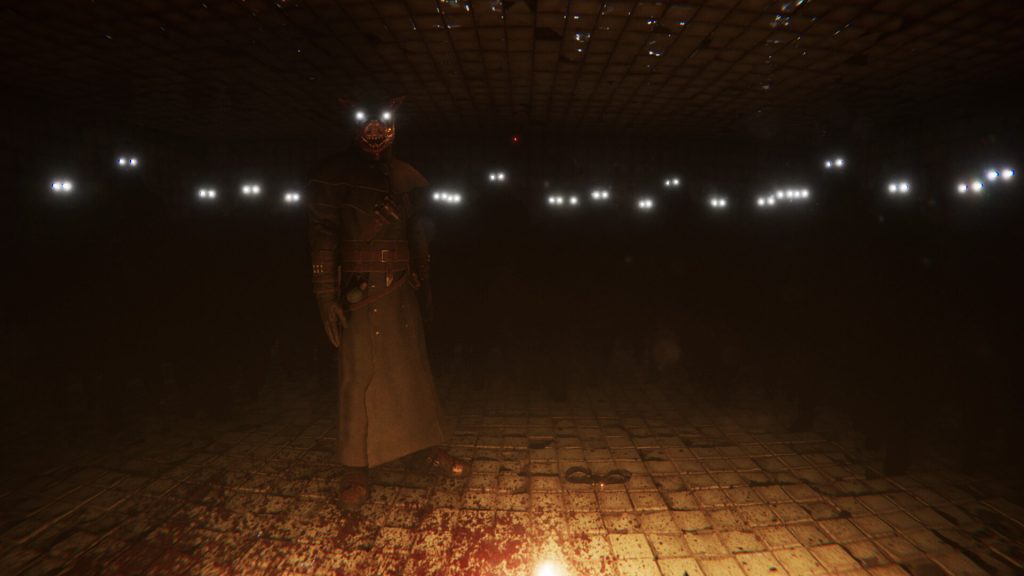
The mechanical achievement worth flagging is the anomaly AI. Some enemies are built on over 16,000 lines of behavioral code, designed not to follow patterns but to learn player tendencies and counter-strategize. This is a meaningful technical ambition for an indie horror project, and it positions A.A.U. Black Site in a territory most genre entries don’t attempt.
The dynamic horror difficulty system layers on top of this. Enemy aggression and intelligence scale to player skill — repeated failure eases the pressure, while skilled play produces more aggressive and unpredictable threats. This is the right design philosophy for a genre where difficulty calibration significantly affects the horror experience. Horror that’s too easy stops being frightening; horror that’s too hard becomes frustrating rather than dread-inducing. Adaptive scaling addresses both problems automatically.
Whether the AI delivers on the technical promise in practice is one of the open questions for the full release. 16,000 lines of behavioral code is meaningful complexity, but complexity doesn’t automatically translate into perceived intelligence. Players notice when AI feels responsive and adaptive; they also notice when complex AI produces behavior that just feels random rather than strategic. Early reception suggests the AI is one of the project’s stronger elements, but the full development period will determine whether the system scales to longer-form play.
The Six-Stage Reactive Soundtrack
The audio design deserves explicit recognition. The six-stage reactive soundtrack — moving from quiet ambient dread during stealth to layered combat music when threats escalate — is one of the more sophisticated audio systems in indie horror. Stealth maintains low, ominous tones; combat introduces percussion, bass, and guitar; player detection or situation deterioration intensifies music density and aggression.
Reactive soundtracks in games aren’t new (the Doom Eternal combat music transitions are a recent high-profile example), but they’re rare in horror specifically. Most horror games either commit to fixed atmospheric scores or rely on stingers triggered by scripted events. A.A.U. Black Site‘s approach — six-stage dynamic transitions tied to the actual play state — is a more ambitious design choice, and one that suits the bodycam framing particularly well.
The audio system also addresses one of horror gaming’s quieter problems: scripted music cues telegraph upcoming events. If the music swells, the player knows something is about to happen, even if they don’t yet know what. Reactive systems that respond to actual player state instead of scripted triggers preserve the dread of not knowing what’s coming, which is functionally the entire point of the genre.
Why the Reception Is Mixed
The 62% Positive Steam reception requires honest engagement. A.A.U. Black Site isn’t reviewing as well as the ambition suggests it should, and understanding why matters for prospective players.
Several patterns emerge from player feedback. Optimization and technical stability appear to be inconsistent, which particularly affects bodycam horror — a genre that depends on smooth visual fidelity to maintain the documentary illusion. Performance hitches or rendering issues break the bodycam frame more severely than they would break a conventional FPS frame.
Content scope at Early Access launch is also a factor. Two missions is a defensible Early Access starting point, but it places significant weight on each player’s first impression. If those missions don’t fully land, there isn’t enough additional content to recover the experience. The developer roadmap promises substantial additions — story chapters, weapons, enemies, regions — but Early Access reception is shaped by what’s playable today, not what’s planned.
The supernatural-military synthesis appears to be uneven. Some players are engaging deeply with the genre fusion; others find the tonal transitions abrupt or unconvincing. This is the kind of execution problem that typically improves through development iteration as the team learns which transitions land and which don’t.
What’s important to recognize is that 62% Positive in a niche genre with a small review pool can shift significantly with continued development. The Steam Next Fest reception before launch was reportedly positive, and the gap between Next Fest enthusiasm and Mixed launch reception suggests the gap is execution-level rather than fundamental — fixable through patches and content additions rather than indicating a misjudged design.
The Studio Context
Raspberry Studio is a debut team from Loznica, Serbia — the same region the game depicts. This is the kind of cultural authenticity that can’t be manufactured. Setting your debut bodycam horror in a place you actually know, with the visual specificity that local knowledge provides, is one of the things small studios can do that larger productions structurally can’t.
The publisher relationship with IZilla Games (an Infernozilla affiliate) is worth noting. Infernozilla has built a small but distinctive catalog around horror and experimental indie projects, and their willingness to back a Serbian debut studio’s bodycam horror project signals continued investment in geographic and creative diversification in horror publishing.
The development trajectory across Early Access will be critical. Raspberry Studio has shown active community engagement during the Next Fest period and into launch, with explicit commitments to ongoing content addition. Horror Early Access projects live or die on developer responsiveness — players are willing to accept rough edges if they see the team addressing them visibly, and they disengage quickly if patches feel scattered or unresponsive to feedback patterns.
The Genre Context
It’s worth situating A.A.U. Black Site within the broader bodycam horror moment. The genre is currently defined by a small number of high-visibility projects (Unrecord, Bodycam, and adjacent work), with most entries struggling to differentiate themselves from a recognizable aesthetic template. A.A.U. Black Site differentiates through three specific moves: the Serbian cultural specificity, the adaptive AI ambition, and the reactive soundtrack system. None of these are guaranteed to land, but the combination represents a real attempt to find what the bodycam horror genre can be beyond the surface aesthetic.
This matters because micro-genres benefit from internal variety. Bodycam horror that all looks and plays the same will stop being interesting quickly. A bodycam horror that explores different settings, different mechanical philosophies, and different cultural perspectives will sustain audience attention longer. A.A.U. Black Site is contributing to the latter, even when individual execution elements falter.
Who This Is For
Strong fit for: bodycam horror fans interested in seeing the genre extended into new cultural territory; players who appreciate adaptive AI experimentation; fans of military horror who want supernatural escalation; horror players willing to support Early Access development for projects with clear ambition; anyone interested in Serbian or Eastern European indie development specifically.
Cautious fit for: bodycam horror fans who’ve found the genre’s existing entries already overlong or repetitive; players who avoid Mixed-rated Early Access projects on principle; anyone who needs polished launch experiences without rough edges.
Less ideal for: players sensitive to performance and optimization issues; anyone who prefers horror with cleaner separation between supernatural and realistic elements; players who want longer initial content scope.
What to Watch For
A few questions will shape A.A.U. Black Site‘s arc across Early Access.
The first is patch responsiveness. Whether Raspberry Studio addresses optimization, technical stability, and the most consistent player feedback quickly will determine whether the 62% Positive rating climbs or stalls. Early Access ratings can shift significantly with active development; they can also calcify if developers appear unresponsive.
The second is content cadence. Two missions at launch, with promised additions of story chapters, weapons, enemies, and regions, set a development expectation. How quickly and substantially those additions arrive will determine whether the project builds momentum or loses early adopters.
The third is the supernatural integration. The military-realism-meets-demonic-horror synthesis is the project’s most distinctive narrative element, and the most uneven element based on early reception. Refining this across development will significantly affect the final reception.
The fourth is the AI system’s actual capability. 16,000 lines of behavioral code is a meaningful technical investment; whether players consistently perceive that complexity as genuinely adaptive intelligence rather than just complicated patterns will determine whether the AI becomes a signature feature or a marketing point that doesn’t survive scrutiny.
The Verdict
A.A.U. Black Site is one of those Early Access projects where the ambition and the execution are clearly visible on different layers. The bodycam horror premise is well-suited to the developer’s cultural and geographic context. The adaptive AI represents a meaningful technical investment. The reactive soundtrack system is genuinely sophisticated for the project’s scale. The Serbian setting brings authenticity that comparable projects can’t match.
At the same time, the 62% Mixed reception reflects real execution friction that the marketing language and developer roadmap can’t substitute for. Players paying $14.99 (or $13.49 with the launch discount) at Early Access are paying for what’s available now, and what’s available now is a foundation rather than a complete experience.
The honest framework for evaluating A.A.U. Black Site right now is whether you want to support a project with this combination of ambition and friction during its development period, or whether you prefer to wait for either substantially improved reception or 1.0 release.
Early Access Verdict: Cautiously recommend for genre enthusiasts; wait-and-see for general horror players. A debut with real ambition and clear cultural specificity, currently held back by execution friction that’s typical of Early Access but matters for first impressions. Worth watching across development; worth supporting now if the bodycam horror genre and Serbian indie scene specifically interest you.
A framed soldier, a Serbian ruin, a bodycam recording everything that follows. The pitch lands. The execution is still finding itself. The next six months of patches will determine which version of this game we’re really discussing.
Information regarding the AAU Black Site
| item | detail |
|---|---|
| Developer | Raspberry Studio (Roznica, Serbia) |
| Publisher | IZilla Games (Infernozilla family) |
| Genre | Bodycam Psychological Horror FPS / Tactical Action / Adventure |
| Release platform | PC (Steam Early Access) |
| Release date | May 21, 2026 (Early Access) |
| price | $14.99 / €14.99 / £12.99 (10% launch discount applied) |
| Steam Review | Mixed 62% (64 items) |
| Weapon types | 20+ types (assault rifles, SMGs, pistols, etc.) |
| core system | Bodycam Found Footage / 16,000 Lines Anomaly AI / Level 6 Responsive Soundtrack / Dynamic Horror Difficulty |
| background | Uzovnica, a ruined region in Serbia (set in the 1990s) |
| Main Keywords | Bodycam, Psychological Horror, Found Footage, Serbia, Adaptive AI, FPS, Anomaly |
| Official Channel | Discord · YouTube · X · Reddit · Instagram · TikTok |
| Steam Page | Shortcut |