One team member at Blue Anemoia used to be an insurance underwriter. That professional experience — the specific cognitive and moral weight of approving or rejecting coverage applications under conditions of genuine uncertainty — is the design origin of Wave of Signatures: Blue Sign.
The game launches free August 14 as Jungle Game Lab’s fifth cohort project covered this month, following No Results Found, ON&OFF, A.D.D., and SURA: Shattered Star. What this month’s Jungle Game Lab releases collectively demonstrate is a program producing developers willing to build games around unusually specific premises: internet cult investigation, circuit-design deckbuilding, Backrooms bureaucracy, sword-draw mark systems, and now maritime insurance underwriting in an Age of Sail fictional setting.
The Underwriter’s Dilemma as Game Design
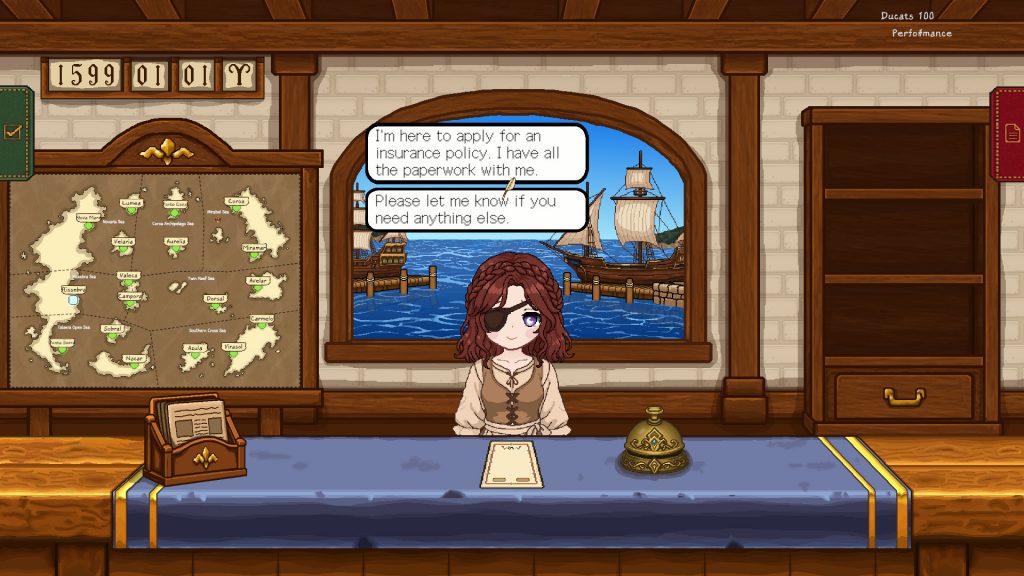
Insurance underwriting is a decision-making profession defined by irreducible uncertainty. The underwriter reviewing a ship’s application for coverage cannot board the vessel, cannot verify every document’s accuracy, cannot know whether the captain’s self-reported competence matches reality, and cannot predict whether a specific voyage will encounter the conditions that turn a manageable risk into a catastrophic one. The decision to approve or reject must be made with incomplete information, and the consequences of that decision emerge later — sometimes much later.
This professional reality maps onto game design with unusual precision. The Papers, Please documentary tradition (covered this week in the The Money Man preview) builds games around inspection with moral weight — you examine things, you make decisions, the decisions have consequences you eventually learn about. Wave of Signatures applies this structure to insurance underwriting specifically, which adds the dimension of genuine probabilistic uncertainty that border control inspection doesn’t have in the same way.
A visa document is either valid or fraudulent; the uncertainty is about the document’s authenticity. A ship’s insurance application is always genuine — the question is whether the risk the ship actually represents is accurately characterized by the documents, and whether the risk that IS accurately characterized is one the insurer should accept. These are different kinds of judgment problems, and the distinction matters for what kind of thinking the game requires.
The “no correct answer” design commitment reflects the underwriter’s actual professional situation. Experienced underwriters develop judgment about acceptable risk — intuitions refined through seeing what outcomes followed from previous decisions. A game that presents insurance applications with objectively correct answers would be a puzzle game with insurance aesthetics. One that presents genuinely ambiguous risk assessments, where different players applying different judgment frameworks reach different defensible conclusions that lead to different outcomes, is doing something closer to what the profession actually involves.
The Rumor and Documentary Evidence Tension
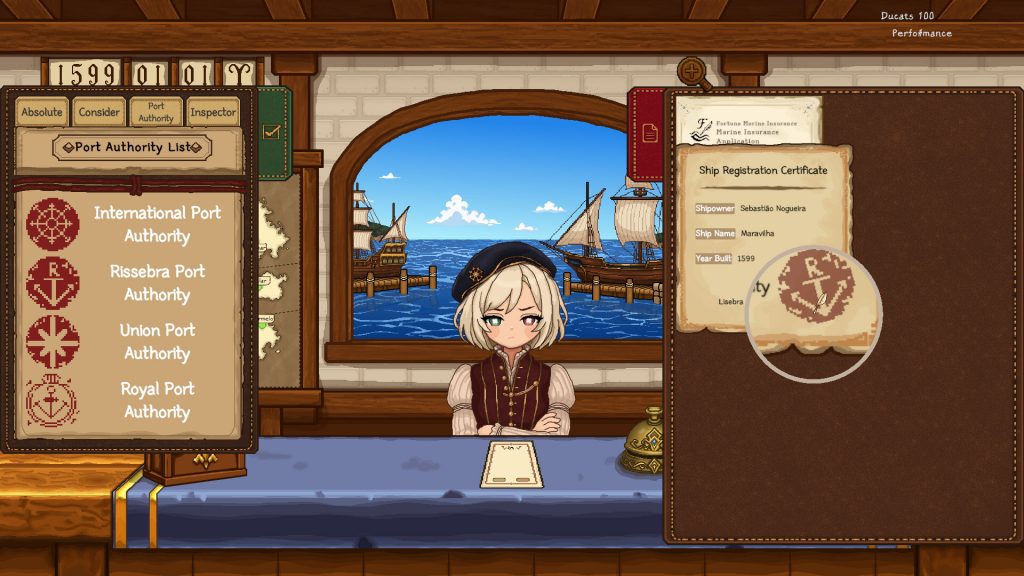
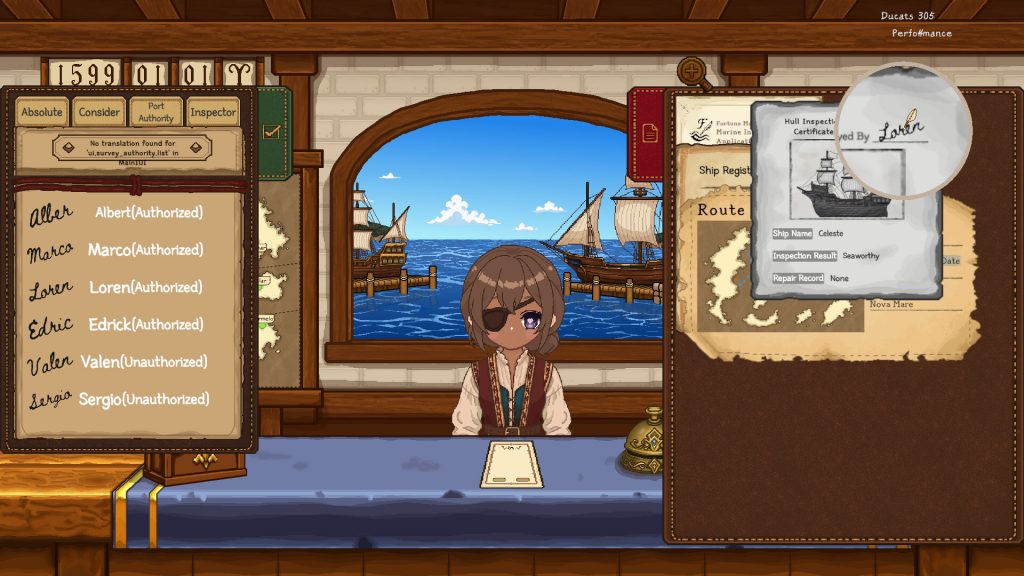
The inclusion of unofficial information — rumors, reputation, interpersonal trust — alongside formal documentation is the specific design detail that distinguishes Wave of Signatures from a pure document examination game. Real insurance underwriting doesn’t occur in a vacuum of official paperwork; market reputation, professional relationships, and informal information about specific clients inform decisions alongside the formal application materials.
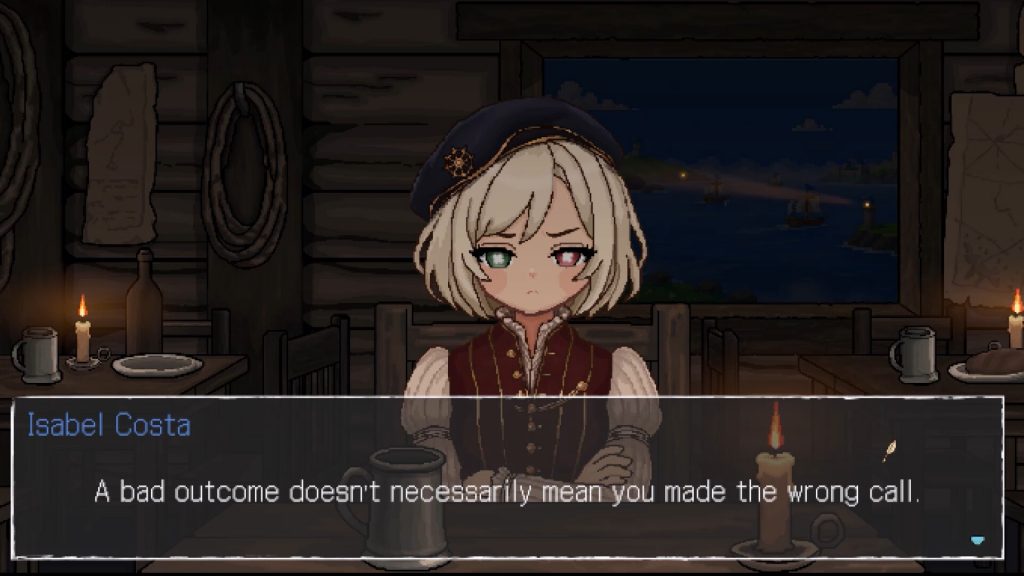
The game’s design apparently reflects this: players can consider only the official documents, or they can weight the informal information that circulates in the tavern conversations and the senior underwriter’s after-work stories. Different weightings of these information sources produce different decision frameworks and different outcomes.
This creates a genuine value question that the game doesn’t resolve for the player: is it appropriate to reject an application based on unverifiable rumors? Is dismissing rumors a more rigorous approach, or is it ignoring relevant information? The game’s multi-ending structure means players who answer these questions differently experience different stories — which is the correct design response to a domain where reasonable people genuinely disagree about what constitutes good judgment.
The Age of Sail Setting
The Age of Exploration as the setting for maritime insurance underwriting is historically apt: the period when merchant shipping networks expanded dramatically is exactly when marine insurance developed as a commercial institution. Lloyd’s of London emerged from exactly this context — merchants and underwriters meeting in coffee houses to arrange coverage for voyages that faced genuine catastrophic risk from weather, piracy, and navigational uncertainty.
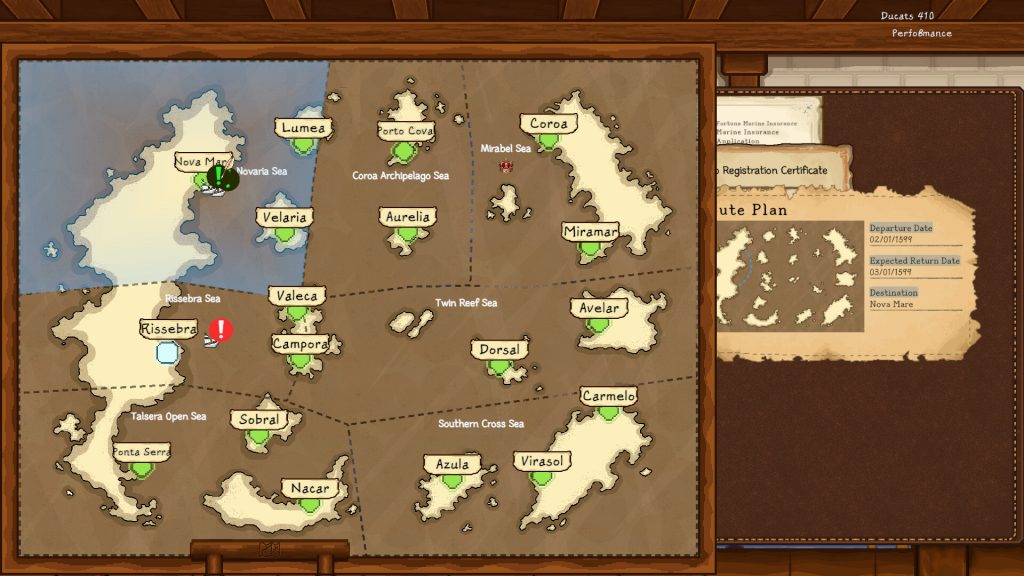
The fictional port city of Risevra in this period creates the right historical density: enough voyages to create routine underwriting work, enough genuine danger in those voyages to make the risk assessment meaningful, and enough cultural richness to give the tavern scenes and character conversations texture beyond the desk work. The romantic atmosphere of Age of Sail adventures coexisting with the cold professional calculation of risk assessment is the tonal combination the developer describes — the same world that contains heroic maritime exploration also contains the actuarial mathematics of who bears the financial risk when ships don’t return.
The Jungle Game Lab Cohort 5 Context
This is the fifth Jungle Game Lab Cohort 5 project from this month, and the pattern across all five is legible: each game takes a specific, unusual design premise — often derived from direct personal or professional experience — and builds a complete game concept around it. No Results Found came from internet mystery culture; A.D.D. from Backrooms mythology and bureaucratic horror; SURA from the batdo/napdo martial arts tradition; Wave of Signatures from an actual insurance underwriter’s experience of professional judgment under uncertainty.
The free price point across all five Jungle Game Lab August releases is consistent: the program is prioritizing player access over revenue for debut projects, treating initial reach as more valuable than immediate monetization. For a game about a professional domain that most players have never directly experienced, free distribution removes the barrier that might prevent players from trying something unusual.
The seven-language support at launch — including European Spanish and European Portuguese alongside the Asian language set — signals genuine international distribution ambition from a program that could have reasonably limited initial language scope.

Who This Is For
Strong fit for: Papers, Please and document examination game enthusiasts who want a new inspection domain with genuine moral ambiguity; players who find the insurance underwriting premise either professionally familiar or fascinatingly foreign; narrative game fans who want branching consequences from procedural decision-making; Jungle Game Lab followers completing the month’s cohort set; players who appreciate games built from direct professional experience rather than genre conventions; anyone drawn to the Age of Sail historical setting in an unusual functional context.
Cautious fit for: players who want clear correct answers in their document examination games; anyone who finds insurance underwriting a specifically unappealing subject regardless of game quality; players who want action or mechanical variety beyond text and document examination.
Less ideal for: players who dislike text-heavy narrative games; anyone wanting multiplayer options; players seeking visual spectacle over deliberate judgment-based gameplay.
What to Watch For
The core evaluation question for Wave of Signatures is whether the “no correct answer” design commitment produces genuine moral and intellectual engagement or the frustration of ambiguity without adequate information to form reasoned judgment. Document examination games that withhold too much information make players feel they’re guessing; those that provide sufficient information make them feel they’re actually assessing risk. The balance the game strikes will determine whether players experience the weight of judgment or the randomness of outcome.
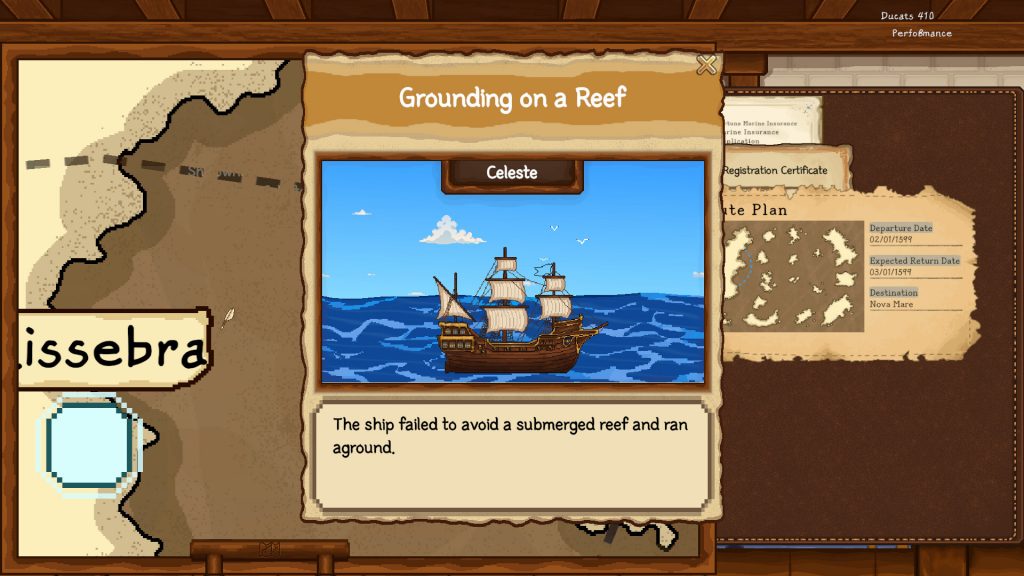
The post-decision outcome revelation — learning what happened to the ships you approved and rejected — is where the game’s moral design is tested. If outcomes feel meaningfully connected to the risk factors revealed in the application materials, the judgment structure is coherent. If outcomes feel disconnected from the evidence available during examination, the game is delivering consequences without genuine accountability.
The Takeaway
Wave of Signatures: Blue Sign is the Jungle Game Lab’s most professionally specific premise of the month: an insurance underwriter’s experience of approving and rejecting coverage applications amid genuine uncertainty, translated into a document-review narrative game set in an Age of Sail port city. The design doesn’t offer correct answers because the profession doesn’t offer them; it offers information, uncertainty, and the consequences of however you weigh them.
For a free release from a debut team built around one member’s professional experience, the ambition is specific, and the premise is unusually grounded. August 14 will reveal whether the judgment framework the game presents creates the engagement that real underwriting apparently does for people who find the work compelling.
The application is on your desk. The ship wants to sail. The documents say what they say, the rumors say something different, and the senior underwriter at the tavern tonight will have opinions about your decision. What matters is whether you can explain your reasoning when the outcome arrives.
Free on Steam, August 14, 4:00 PM KST.
Information regarding ‘Signature of the Wave: Blue Sign’
| item | detail |
|---|---|
| Development team | Blue Anemoia (Jungle Game Lab 5th Batch) |
| distributor | Jungle Game Lab |
| Genre | Document-based narrative simulation |
| Release platform | PC (Windows, Steam) |
| Release date | August 14, 2026, 4:00 PM (KST) |
| Player count | Single player |
| price | free |
| Supported languages | Korean, English, Japanese, Simplified/Traditional Chinese, Spanish (Spain), Portuguese (Portugal) |
| Steam rating | Pre-counting (Upcoming Releases) |
| Official Channel | Official Website, Discord, X, YouTube |
| Steam Page | Shortcut |