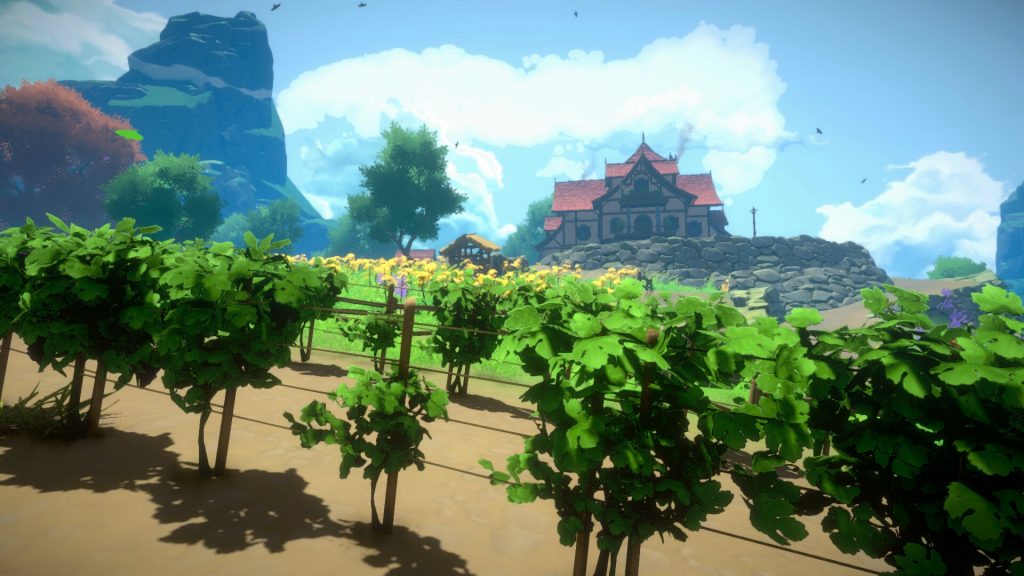
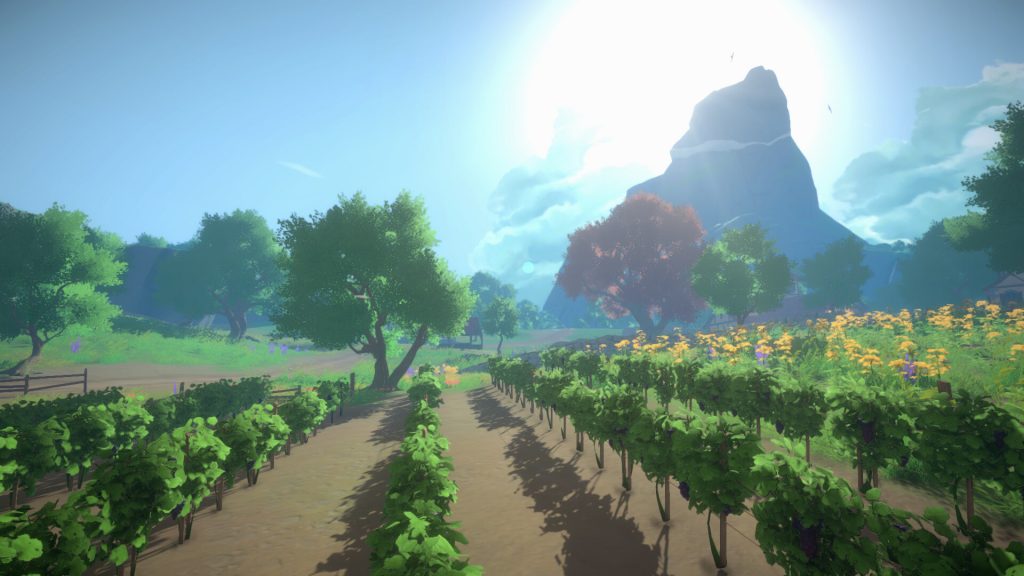
No combat. No failure. No time limits. In a serene valley where vineyards stretch toward sunlit hills, peaceful hours unfold as you build your dream château alongside friends. Cozy Builder, the healing sandbox builder from small family studio Pangea Game Studios, joins Steam Next Fest (June 15-22) — and this event marks the first reveal of the game’s multiplayer functionality, presented through an expanded free demo that lets players experience the game directly.
The premise is gentle restoration: a vineyard valley that lost its vitality to an earthquake, waiting for an architect to rebuild fallen houses, breathe life back into the village, and complete a personal château. With its distinctive modular puzzle building system and the warm comfort of conflict-free design, Cozy Builder positions itself within the growing cozy gaming space while offering a genuinely fresh approach to the building genre.
The Restoration Premise
The setting choice provides both narrative foundation and emotional resonance. Cozy Builder takes place in a vineyard valley that lost its vitality to an earthquake. Players become architects who restore collapsed houses, breathe life back into the village, and complete their own château.
This restoration framing distinguishes Cozy Builder from pure construction games. Rather than building from nothing on empty land, players engage with rebuilding — taking damaged structures and restoring them, taking a devastated community and helping it recover. This restoration emphasis carries a different emotional weight than pure creation. There’s something inherently meaningful about restoration, about taking something broken and making it whole again.
The earthquake premise also provides gentle narrative justification for the gameplay without imposing the kind of stakes that would compromise the cozy register. The earthquake happened in the past; the player’s role is recovery and renewal, not crisis response. This positions the game in hopeful, forward-looking territory — the disaster is the setup for restoration, not an ongoing threat.
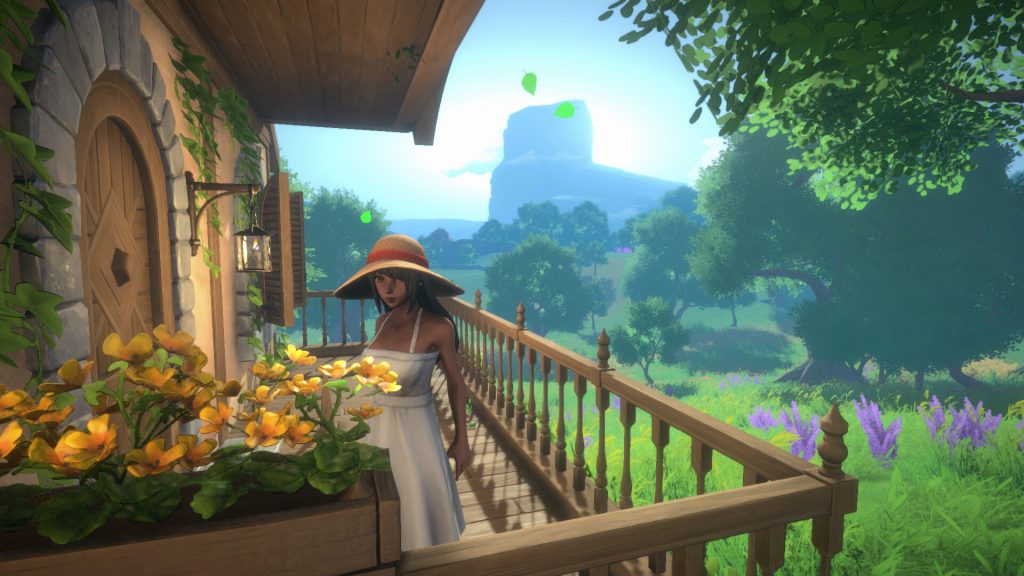
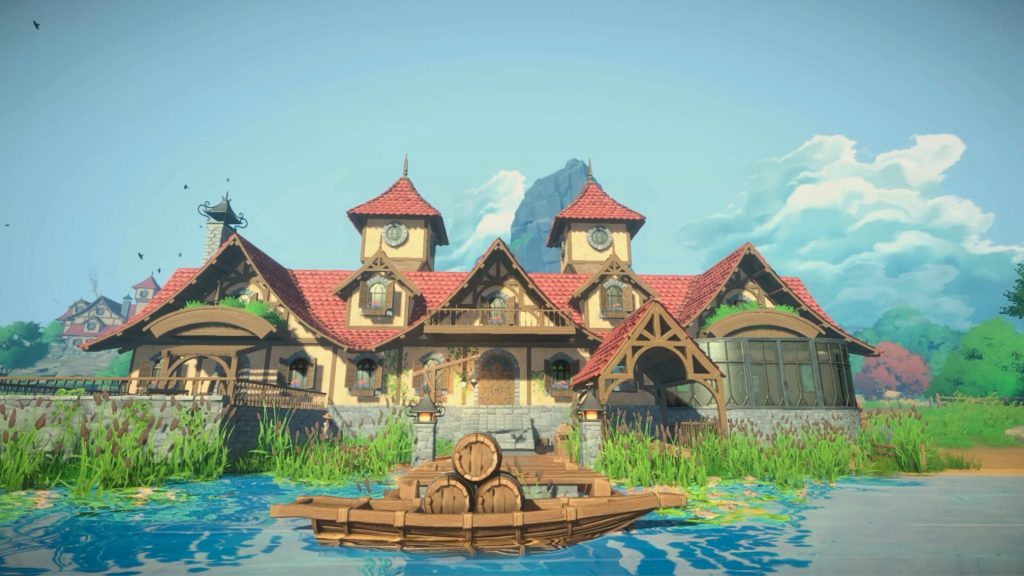
The French countryside setting completes the atmospheric foundation. The game charmingly implements French rural scenery — sunlit hills, ivy-covered gardens, and glass greenhouses. This specific cultural setting (French wine country) provides a distinctive visual identity and connects to the broader cultural romance around French vineyard life, wine making, and pastoral countryside living that international audiences find appealing.
The Modular Puzzle Building System
The most genuinely distinctive design element of Cozy Builder is its modular puzzle-building system. Unlike similar-genre games centered on free-form construction, Cozy Builder‘s core is restoring earthquake-damaged buildings by fitting them together like puzzles.
This puzzle-based approach represents a meaningful departure from typical building games. Most construction games offer either free-form creativity (place anything anywhere) or template-following (build predetermined structures). Cozy Builder‘s modular puzzle approach occupies an interesting middle ground — players restore damaged structures by understanding their composition and completing them like puzzles, making the process of understanding and completing the structure itself the center of gameplay.
This design philosophy provides specific appeal. Pure free-form building can be paralyzing for players who don’t have a strong creative vision — the blank canvas intimidates rather than inspires. Pure template-following lacks creative engagement. The puzzle-restoration approach provides structure (the damaged building defines the goal) while requiring engagement (figuring out how to restore it). This balance makes the building accessible to players who find pure creative building overwhelming while maintaining engagement that template-following lacks.
The puzzle framing also creates natural satisfaction loops. Each restored building provides the completion satisfaction that puzzles deliver — the pleasure of fitting pieces together correctly, of taking something broken and methodically making it whole. This satisfaction is more structured than free-form building’s open-ended creativity, providing clear achievement moments throughout play.
The building’s convenience features enhance the creative experience. Builder Cam, Smart Placement, and blueprint preview functions have been added to broaden creative possibilities. These quality-of-life features address common building game frustrations (awkward camera control, imprecise placement, inability to preview plans), making the restoration process smoother and more enjoyable.
The Conflict-Free Design Philosophy
Cozy Builder‘s commitment to peaceful design is explicit and central to its identity. The game has no combat, no failure states, and no time limits. This peaceful structure allows players to focus entirely on the process of creation and restoration.
This design philosophy reflects the core values of the cozy gaming movement. Cozy games deliberately reject the stress, challenge, and failure that define most gaming. By eliminating combat (no threats), failure states (no losing), and time pressure (no rushing), Cozy Builder creates a space for pure creative engagement without anxiety.
For the cozy gaming audience specifically, this conflict-free design is precisely the appeal. Many players come to cozy games seeking respite from the stress of both challenging games and stressful daily life. A building game with no failure conditions provides exactly the low-stakes creative space that allows relaxation and creative expression without pressure.
The ambient design reinforces this peaceful register. Gentle music combined with the living sounds of grape harvesting and wine making creates an atmosphere close to a “healing space.” The audio environment supports the meditative quality that the conflict-free design enables — players exist in a calm, pleasant space where the only objectives are creative ones.
The grape harvesting and wine-making elements add gentle life-simulation content beyond pure building. These activities provide variety and connect to the vineyard setting, giving players additional peaceful activities to engage with. Wine making specifically connects to the French countryside theme while providing the kind of slow, process-oriented activity that suits the cozy register.
The Multiplayer Addition
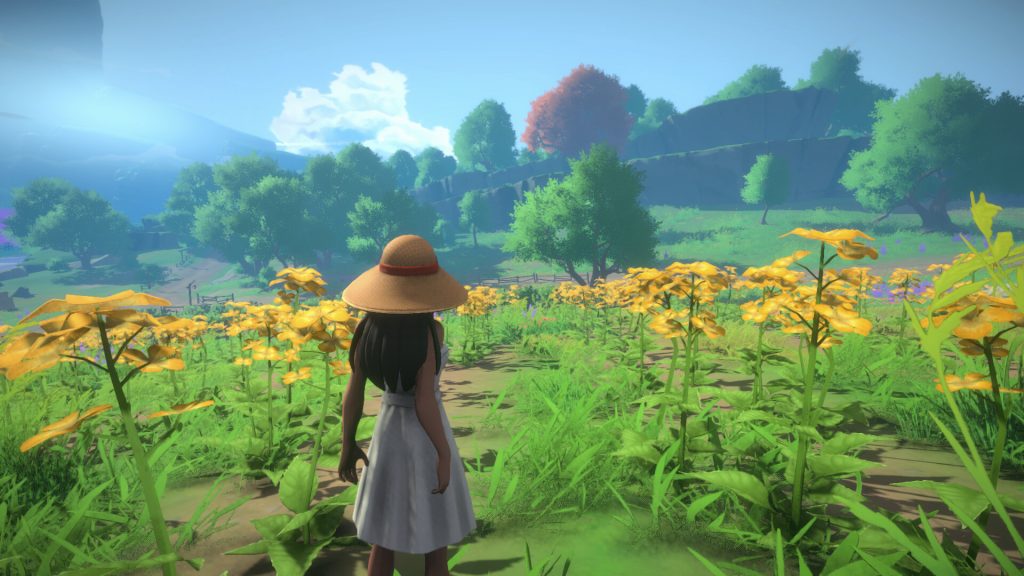
The Steam Next Fest demo’s introduction of multiplayer functionality represents a significant expansion of Cozy Builder‘s appeal. Players can enjoy cooperative play, building and decorating houses with friends, alongside interior and exterior decoration, grape harvesting, and wine and jam making.
Cooperative cozy building has proven appeal across the genre. Shared creative projects — building and decorating together — provide social connection within the peaceful, cozy framework. The combination of relaxing solo-viable gameplay with cooperative options accommodates different player preferences while extending the game’s social appeal.
For cozy games specifically, multiplayer cooperation adds a meaningful dimension. The peaceful, low-stakes nature of the cozy building translates naturally to cooperative play — without competition or failure pressure, players can simply create together, sharing the restoration process and the satisfaction of rebuilding the valley. This collaborative creation provides the kind of positive social gaming experience that contrasts with the competitive stress of many multiplayer games.
The expanded content (interior/exterior decoration, grape harvesting, wine and jam making) provides cooperative activities beyond pure building. Friends can divide tasks, collaborate on projects, or simply enjoy the peaceful valley together. This content variety ensures cooperative play offers sustained engagement rather than just shared building.
The Community-Driven Development
Cozy Builder has pursued community-responsive development since its Steam House & Home Fest appearance, continuously updating while actively incorporating community feedback. New building goals and decoration elements, performance improvements, and convenience enhancements have been continuously implemented, and the Next Fest version represents the most polished build, incorporating all these improvements.
This community-driven development approach reflects healthy indie development practice. By engaging with community feedback across multiple showcase appearances (House & Home Fest, now Next Fest), Pangea Game Studios has refined the game based on actual player input rather than just internal vision. This iterative improvement typically produces better final products than isolated development.
The structure combining cozy genre comfort with puzzle elements has earned positive reactions from international communities and media. The ability to simultaneously enjoy building and restoration, and cooperative play through multiplayer, has been particularly noted as a standout element. This reception suggests the project’s distinctive elements — the puzzle-restoration approach and the cooperative options — resonate with the cozy gaming audience.
The Family Studio Context
Pangea Game Studios is a small, family-run indie developer. They focus on creating warm, creative games that players can enjoy together, based on their love of architecture, cozy worlds, and imaginative play. Cozy Builder is their first work, developed with completion driven by community communication.
The family studio context adds a meaningful dimension to Cozy Builder‘s identity. Family-run development brings particular qualities — personal investment, coherent creative vision, and the kind of warmth that comes from people creating together what they personally believe in. For a cozy game specifically, this family-creation context aligns naturally with the warm, peaceful values the game embodies.
The studio’s stated focus — architecture, cozy worlds, imaginative play, games players enjoy together — reflects exactly the values Cozy Builder expresses. This alignment between studio values and game design suggests authentic creative vision rather than market-driven calculation. The game exists because the developers love what it represents, and that authenticity tends to produce more genuine experiences than purely commercial development.
As a debut project, Cozy Builder represents Pangea Game Studios, establishing their creative identity. The community-driven development approach suggests they’re building both a game and a relationship with their audience, which bodes well for long-term studio development and ongoing game support.
The Cozy Gaming Context
Cozy Builder arrives during the continued growth of cozy gaming as a significant market category. The genre — encompassing games like Stardew Valley, Animal Crossing, Unpacking, A Short Hike, and many others — has demonstrated substantial commercial viability and dedicated audience appetite.
Within this space, Cozy Builder occupies a specific niche: cozy architecture and restoration. While many cozy games focus on farming, life simulation, or exploration, Cozy Builder’s emphasis on building and restoration provides a distinctive positioning. The modular puzzle building system further distinguishes it from both pure cozy games and pure building games.
The conflict-free, multiplayer-supported, restoration-focused approach positions Cozy Builder well within current cozy gaming trends while offering enough distinctiveness to stand out. As the cozy market grows more crowded, this kind of clear, distinctive identity becomes increasingly important for visibility.
Who This Is For
Strong fit for: cozy gaming enthusiasts seeking building-focused experiences; players who enjoy restoration and renovation themes; Townscaper, Tiny Glade, and other relaxing building game fans; players who find pure free-form building overwhelming and prefer structured creativity; cooperative cozy gaming groups; French countryside aesthetic appreciators; players seeking conflict-free relaxation; and architecture and design enthusiasts.
Cautious fit for: players who specifically prefer free-form building over puzzle-structured restoration; anyone who finds conflict-free games lacking in engagement.
Less ideal for: players seeking challenge, competition, or stakes; anyone who finds building games tedious; players who prefer action or narrative-driven experiences.
What to Watch For
A few questions will shape Cozy Builder‘s development toward release.
The first is whether the modular puzzle building sustains engagement across the full game. The puzzle-restoration approach is distinctive; whether it provides enough variety and depth to remain engaging across an entire valley restoration will determine the experience’s longevity.
The second is the multiplayer implementation quality. The newly introduced cooperative play needs to function smoothly to deliver the collaborative creation experience it promises. How well the multiplayer performs will significantly affect the social appeal.
The third is the content scope. Cozy building games need sufficient content (buildings to restore, decoration options, activities) to sustain extended play. How much content the full release provides will affect its value proposition.
The fourth is the creative freedom balance. The puzzle-restoration approach provides structure, but cozy building fans often value creative expression. Whether Cozy Builder provides enough creative freedom within its puzzle framework to satisfy players who want personal expression will affect reception among the building game audience.
The Takeaway
Cozy Builder is one of the more distinctive cozy building games on the horizon, combining genuinely fresh design (modular puzzle restoration system), peaceful values (no combat, failure, or time limits), meaningful theming (earthquake recovery, French vineyard restoration), and the warm authenticity of family-studio development. The addition of multiplayer cooperation extends its appeal while maintaining the cozy register that defines its identity.
For cozy gaming enthusiasts specifically, the free Steam Next Fest demo provides an immediate opportunity to experience the puzzle-restoration approach and the newly introduced multiplayer. The combination of structured creativity and peaceful design offers exactly the kind of relaxing creative engagement that cozy gaming audiences appreciate.
For building game fans, Cozy Builder‘s modular puzzle approach provides a distinctive alternative to both free-form building and template-following construction. The restoration emphasis adds emotional resonance that pure construction games lack.
For players seeking peaceful cooperative experiences, the multiplayer addition makes Cozy Builder a candidate for relaxing shared creative time. Building and restoring together in a conflict-free environment provides the kind of positive social gaming that contrasts with competitive multiplayer stress.
A vineyard valley was quietened by an earthquake. Fallen houses waiting to be restored. Sunlit hills, ivy-covered gardens, glass greenhouses. The puzzle-satisfaction of fitting damaged structures back together. Grape harvesting and wine making provide a gentle life-simulation rhythm. No combat, no failure, no time pressure — just the peaceful work of restoration. And now, friends who can join to rebuild the valley together.
As cozy building game pitches go, Cozy Builder‘s is one of the more genuinely peaceful of 2026 — and the free Steam Next Fest demo (June 15-22) provides immediate access to experience both the distinctive puzzle-restoration building and the newly-revealed cooperative multiplayer. The valley is quiet. The houses are waiting. And there’s no pressure at all — just the gentle satisfaction of making something broken whole again, alone or with friends.
Rebuild the château. Restore the valley. Make the broken whole. In Cozy Builder, there’s nothing to fear and nothing to lose — only the peaceful pleasure of creation in a sunlit French vineyard valley.
Information regarding ‘Cozy Builder’
| item | detail |
|---|---|
| Developer | Pangea Game Studios |
| Genre | Cozy Sandbox Builder / Building Simulation |
| Release platform | PC (Steam) |
| Scheduled for official release | Undecided |
| Play Mode | Single Player / Multiplayer |
| Core mechanics | Modular Puzzle Building / House Restoration / Grape Harvest & Wine Making |
| background | French-style vineyard valley damaged by the earthquake |
| characteristic | No Combat, No Failure, No Time Limit |
| demo | Free Steam demo available |
| Next Fest | Participation from June 15–22, 2026 |
| Main Keywords | Cozy, Architecture, Restoration, Chateau, Vineyard, Multiplayer, Healing, Sandbox |
| Steam Page | Shortcut |