There are major Chinese games that Western audiences know — Genshin Impact, Black Myth: Wukong, and the Honkai franchise. Then there are major Chinese games that have built enormous followings within China while remaining nearly invisible to international audiences due to language barriers. The Scroll of Taiwu (太吾绘卷) belongs firmly in the second category — until now. After eight years in Early Access during which it accumulated over 3.4 million players within China, the indie wuxia sandbox RPG is finally getting its 1.0 release with full English support on June 17.
For Western players who follow Chinese indie development, this is one of the most anticipated cultural-translation moments in years. For the broader international RPG audience, The Scroll of Taiwu: Beyond the Dome represents access to a game that has been quietly defining what wuxia gaming can be while most of the world wasn’t watching.
The Scale of What Just Became Available
It’s worth establishing the scope of The Scroll of Taiwu‘s Chinese cultural footprint before discussing the game itself. 3.4 million players is a substantial number for any indie game globally. Within Chinese indie specifically, it represents one of the most successful domestic indie RPGs of the modern era — a game that found its audience, sustained that audience across 8 years of Early Access development, and grew into a cultural phenomenon within Chinese gaming circles.
The development origin story is also worth noting. Founder Qie Zi began the project through an RPG Maker demo that built an initial fan community. The 2018 Early Access launch came from a small team with limited coding experience, but the project sustained itself through years of consistent updates and expansions that gradually transformed it from a rough prototype into one of Chinese indie’s defining works.
This trajectory — from RPG Maker community demo to 3.4M player commercial success — represents one of the most genuinely impressive indie development arcs in any country’s indie scene. ConchShip Games’ growth as a studio has paralleled the project’s growth as a game, with each iteration teaching the team more about what their world could become.
The 1.0 release positions The Scroll of Taiwu not as a new project but as the culmination of nearly a decade of development. ConchShip describes V1.0 as “the completed form of years of project development” — recognition that the long Early Access period has produced something genuinely substantial rather than just extended development.
The Wuxia Foundation
For international audiences, understanding The Scroll of Taiwu requires understanding wuxia as a cultural form. Wuxia (literally “martial heroes”) is a centuries-old Chinese literary tradition focused on martial artists navigating the “jianghu” — the underworld of warriors, sects, schools, and codes of honor that operates parallel to mainstream society. The genre has produced massive cultural artifacts: Jin Yong’s novels, countless films and television adaptations, comic series, and gaming adaptations.
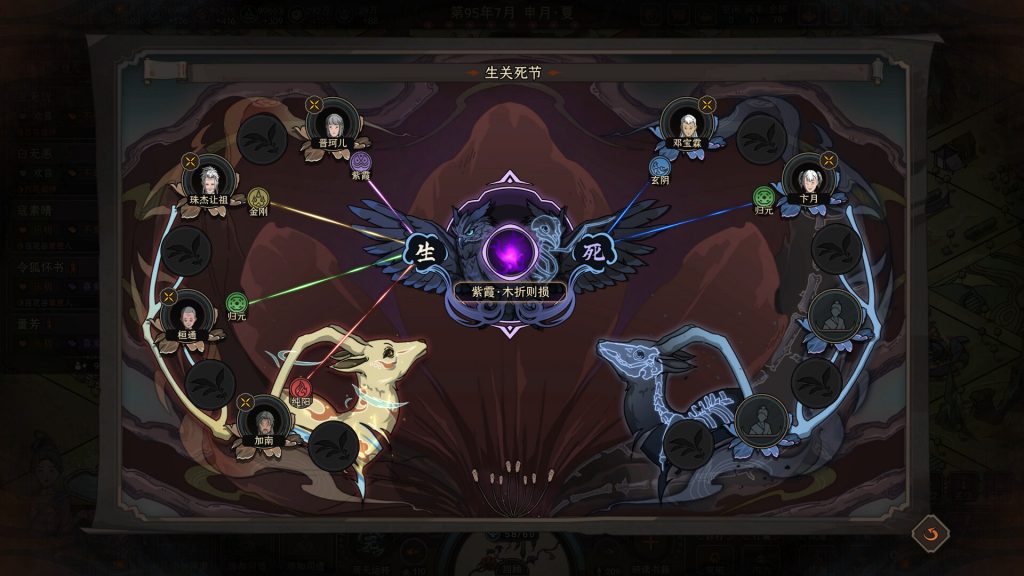
The wuxia tradition has specific structural elements: martial arts schools (門派) with distinct philosophies and techniques, the cultivation of internal energy (内功), masters and disciples passing on knowledge across generations, codes of honor that supersede legal frameworks, and a moral universe where individual virtue and martial prowess intertwine. These elements aren’t just decorative — they’re the genre’s fundamental grammar.
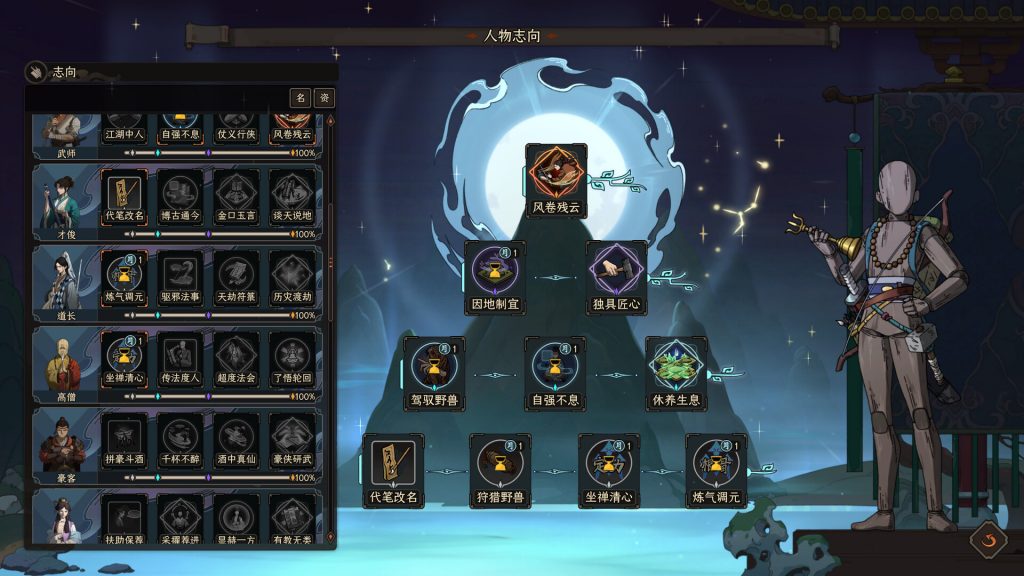
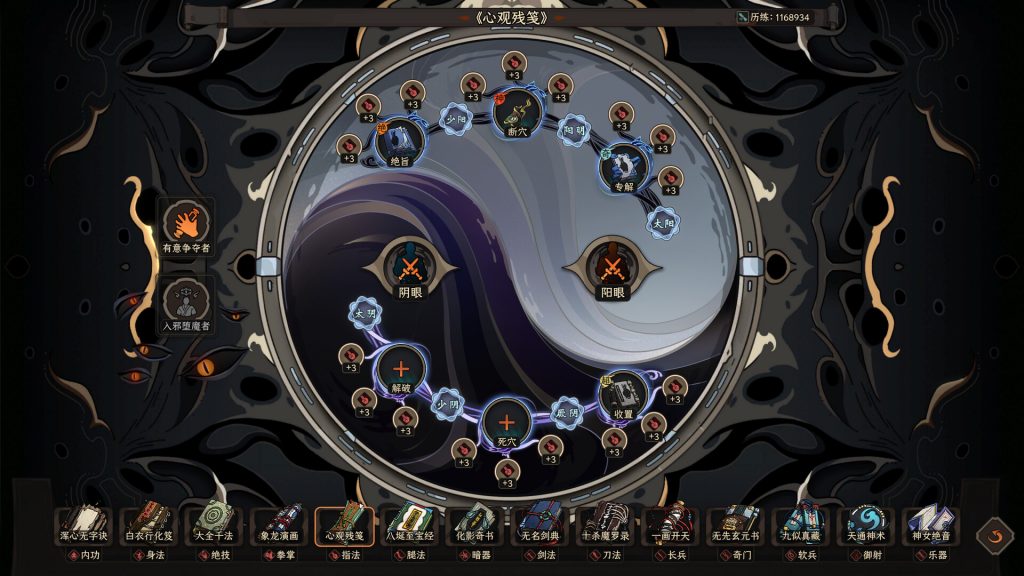
The Scroll of Taiwu embeds this wuxia tradition in interactive form with remarkable thoroughness. Players become heirs to the mystical Taiwu clan, beginning journeys to confront ancient calamities. But the path is determined entirely by player choice — which martial arts schools to study with, which techniques to master from thousands available, what relationships to build, what role to play in the broader jianghu society.
This level of wuxia authenticity is rare in international gaming. Western games inspired by wuxia tend to extract surface elements (martial arts combat, ancient Chinese aesthetics) while reshaping the structural framework around Western RPG conventions. The Scroll of Taiwu operates within the wuxia tradition itself — its systems, narrative structures, and design philosophies are wuxia-native rather than wuxia-flavored.
The Sandbox Scope
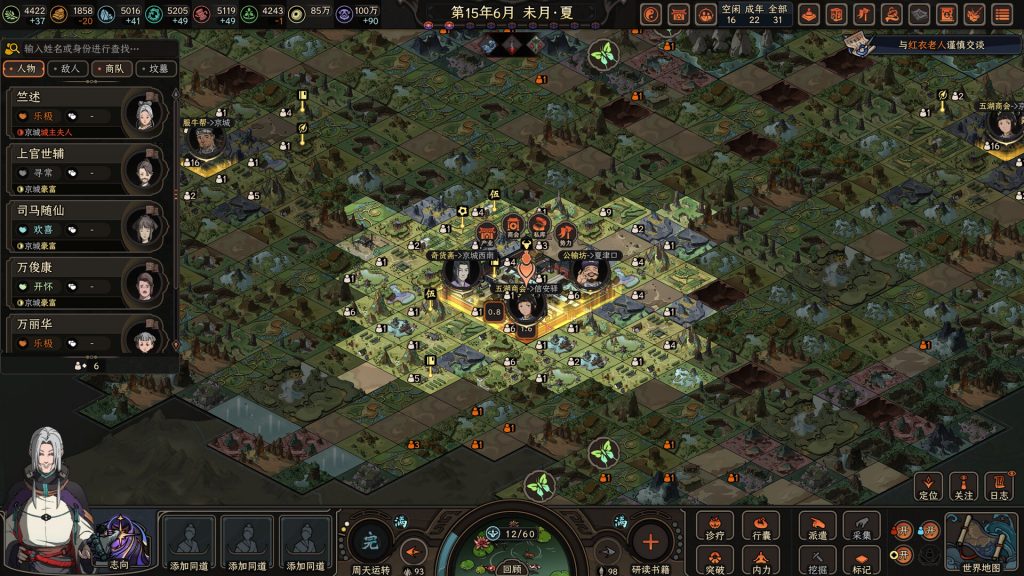
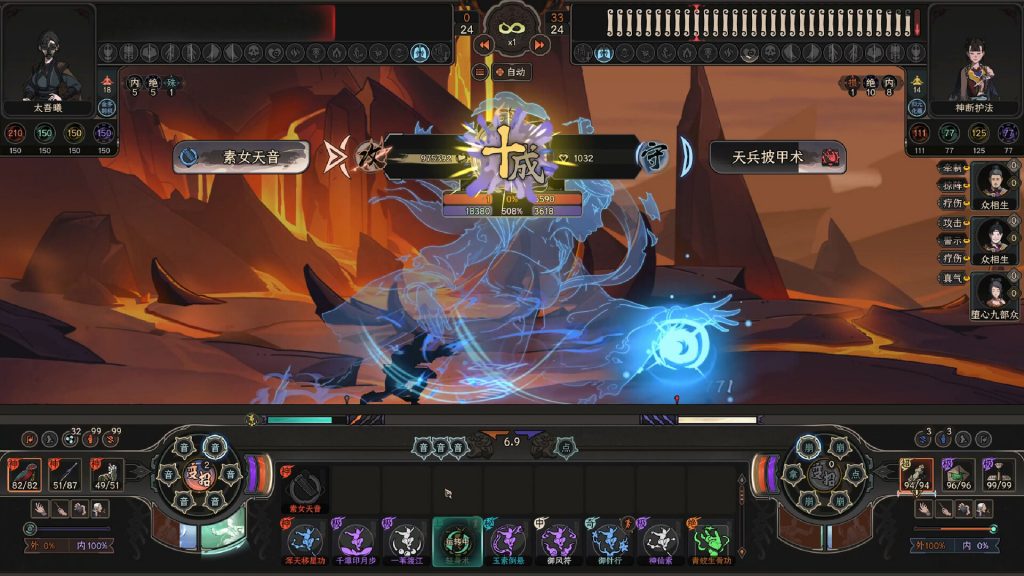
The mechanical scope of The Scroll of Taiwu extends far beyond standard RPG frameworks. Players can train in thousands of different martial arts techniques across multiple sect affiliations. They can build and expand villages, crafting weapons, medicines, and equipment. They can form families and pass knowledge and skills down to their children through generational inheritance systems.
This last element is particularly important. The generational inheritance system means that the Scroll of Taiwu operates across longer time scales than most RPGs. Individual characters age, marry, raise children, and eventually die — but the player’s investment continues through their descendants, who can inherit techniques, properties, and ongoing relationships. The game operates as a multi-generational chronicle rather than a single hero’s adventure.
The NPC simulation supports this scope. Every NPC in the world lives an independent life — aging, forming relationships, contracting illnesses, responding dynamically to player actions. This isn’t conventional NPC AI that responds to direct player interaction; it’s a full life simulation where the entire world’s population continues developing whether the player engages with them or not. Returning to a town after years of in-game time produces genuine surprise as to who has died, who has married, who has risen to prominence, and how the political landscape has shifted.
This kind of comprehensive world simulation is rare even in games specifically designed around it. Dwarf Fortress, Crusader Kings, and certain Mount & Blade installations operate in similar territory, but few wuxia games attempt this level of systemic life modeling. The Scroll of Taiwu‘s 8-year development has clearly been spent partially on building and refining these systems to the point where they actually function rather than just appearing to function.
Beyond the major systems, the game includes the kind of distinctive minor content that signals serious cultural research: cricket fighting (a traditional Chinese pastime), traditional medicine crafting, and life simulation elements that capture the texture of historical Chinese life. These details aren’t just flavor — they’re the kind of cultural authenticity that distinguishes serious wuxia games from generic Asian-themed action games.
The Visual and Aesthetic Approach
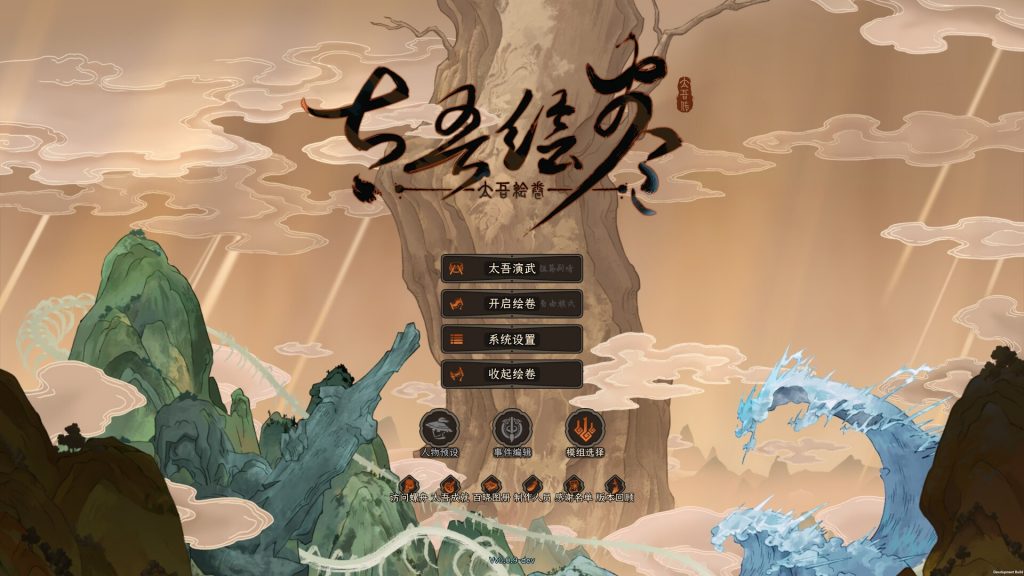
The 1.0 update significantly overhauls the game’s visual presentation. Improved lighting systems, refreshed visuals, and UI improvements address what years of Early Access players have been requesting. The visual foundation combines ink painting (水墨) influences with pixel art and traditional Chinese aesthetics — capturing the visual register of wuxia novels and ink paintings in interactive form.
The ink painting connection is significant. Traditional Chinese ink painting (shuǐmò) has specific visual grammar: emphasis on negative space, restrained brushwork, and focus on essential elements rather than detailed reproduction. Wuxia fiction has long been visually associated with this register. The Scroll of Taiwu‘s aesthetic commitment to ink painting influence captures something culturally fundamental about how wuxia stories are visually imagined.
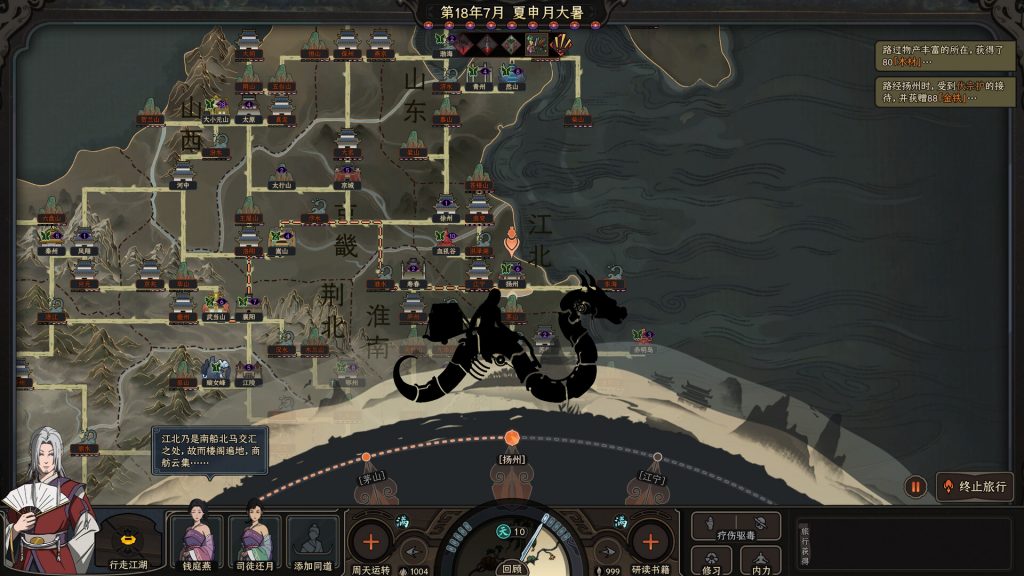
The world of Shenzhou (神洲) — the ancient Chinese mythological setting — features 15 regions, each with distinct cultures, environments, and folklore. This regional variety is one of the 1.0 update’s emphases, with each area now featuring full storyline development. The interconnected nature of these regions means players experience them as parts of a single living world rather than as separate gameplay areas.
Audio design supports the immersion. Traditional Chinese instrumental music plays as players engage in martial arts contests, cultivation training, travel, and practice. Procedural generation continuously reshapes the world, ensuring that each playthrough produces different relationships, conflicts, training paths, and competitions. This combination of cultural authenticity and procedural variation produces a wuxia experience that feels both faithful to tradition and uniquely personal to each player.
The English Translation Question
For international audiences, the English translation is the most important practical question. Chinese RPGs with complex systems and culturally specific content have historically struggled with translation quality — both linguistic accuracy and cultural translation that maintains comprehensibility without flattening cultural specificity.
The Scroll of Taiwu faces particular translation challenges because of its wuxia foundation. Wuxia terminology is culturally specific in ways that don’t translate cleanly to English. Martial arts technique names often draw from poetic, literary, or philosophical sources that lose meaning when literally translated. Sect names, character titles, and cultural references all require careful handling.
Whether the V1.0 English translation handles these challenges effectively will significantly affect international reception. Strong translation can make The Scroll of Taiwu genuinely accessible to international audiences in ways its 8-year development has earned. Weak translation could leave the project feeling fragmentary or confusing to players who haven’t grown up with wuxia conventions.
The 1.0 update includes new onboarding systems, which suggests ConchShip understands that international players will need more guidance entering this culturally specific space than Chinese players required. How effectively this onboarding bridges the cultural gap will be one of the most important questions for the international launch.
How the Press Has Read It
International coverage has begun acknowledging the project’s significance. RPG Site described the launch as “finally arriving with English support after over 7 years of Early Access,” capturing the historical scale of the development project. Noisy Pixel framed the release as “a massive open-world sandbox RPG inspired by Chinese mythology and wuxia novels finally opening its doors to global players.”
The framing across coverage emphasizes the scale of what’s becoming accessible. The Scroll of Taiwu isn’t just another indie RPG launching — it’s the international release of a game that has been one of Chinese gaming’s significant cultural artifacts for nearly a decade. Coverage that recognizes this scale is positioning the launch correctly for the international audience.
For Western players who follow Chinese indie development, this kind of release represents the slow but accelerating process of Chinese indie gaming becoming part of the international gaming conversation. Major Chinese mobile and AAA games have crossed international borders for years. Chinese indie has been slower to cross over, with language barriers being the primary obstacle. The Scroll of Taiwu‘s English release represents another step in this broader cultural translation process.
The 1.0 Update Content
The V1.0 update specifically includes several major additions that justify the version designation:
15 Regional Storylines: Full narrative content for each of the game’s 15 distinct regions, providing the major narrative scaffolding that the Early Access version reportedly had in more fragmentary form.
Enhanced NPC AI: Improvements to the already-sophisticated NPC simulation systems, presumably refining behaviors, relationship dynamics, and response patterns based on years of feedback.
Overhauled Visuals, Lighting, and UI: The comprehensive visual update brings the game’s presentation to contemporary standards.
New Onboarding System: Particularly important for international players entering a wuxia space, they may not have prior experience with.
English Language Support: The first-ever full English localization, opening the game to global audiences.
These additions transform what was already a substantial Early Access experience into what ConchShip describes as the complete realization of the project’s original vision. For players who engaged with the Early Access version (mostly Chinese), the 1.0 update represents the culmination of long-development work. For international players engaging for the first time, the 1.0 release is essentially a new game arriving with 8 years of accumulated refinement.
Who This Is For
Strong fit for: hardcore RPG fans seeking genuinely deep simulation systems; wuxia enthusiasts and Chinese culture fans; Mount & Blade, Crusader Kings, and Dwarf Fortress players appreciating comprehensive world simulation; players curious about Chinese indie gaming at the highest tier; anyone interested in generational gameplay across long time scales; fans of complex sandbox RPGs with extensive content depth.
Cautious fit for: players who prefer action-focused combat over systems-focused gameplay; anyone uncomfortable with the steeper learning curve that culturally specific deep RPGs typically require; players who specifically prefer Western fantasy aesthetic registers.
Less ideal for: action RPG players seeking immediate gameplay satisfaction; anyone allergic to text-heavy or simulation-heavy gameplay; players who avoid games with extensive learning curves.
What to Watch For
A few questions will shape The Scroll of Taiwu‘s international reception when V1.0 arrives on June 17.
The first and most critical is English translation quality. International players’ ability to engage meaningfully with the game’s wuxia foundation depends entirely on how the cultural and linguistic translation handles the complexity. Strong translation transforms the project from “potentially great Chinese game with language barrier” to “globally accessible major indie RPG.” Weak translation could leave the game frustratingly inaccessible despite the years of development and polish.
The second is onboarding effectiveness for international players. The new onboarding system needs to bridge the substantial cultural gap between Chinese players who grew up understanding wuxia conventions and international players encountering them for the first time. How well this onboarding teaches both the mechanics and the cultural context will determine whether international players engage successfully with the deep systems.
The third is system performance and stability. 8 years of development should produce a polished product, but ambitious sandbox RPGs frequently encounter technical issues at launch. How V1.0 performs in real-world play will affect launch reception significantly.
The fourth is community formation around the international launch. Chinese player communities have been engaging with The Scroll of Taiwu for years; international communities are starting from scratch. How successfully ConchShip facilitates international community development through Discord, Steam discussions, and other channels will affect long-term engagement.
The Takeaway
The Scroll of Taiwu: Beyond the Dome is one of the most genuinely significant indie RPG releases of 2026 — a project that has been one of Chinese indie gaming’s major cultural artifacts for nearly a decade, finally becoming accessible to international audiences. The 3.4 million Chinese player figure isn’t just a marketing number; it represents the depth of the player community that has sustained 8 years of Early Access development and shaped the game into what it has become.
For RPG enthusiasts who appreciate genuinely deep simulation systems and don’t mind investing time in learning culturally specific frameworks, this is one of the most exciting releases on the horizon. The combination of wuxia authenticity, comprehensive world simulation, generational inheritance, and 8 years of refined development promises something genuinely distinctive within international gaming.
For players interested in Chinese culture broadly, The Scroll of Taiwu represents one of the more accessible serious entries into wuxia tradition through interactive media. The game’s commitment to genre authenticity means engagement actually teaches players about the cultural framework rather than reducing it to aesthetic surface.
For the broader gaming industry, this release represents an important moment in the gradual internationalization of Chinese indie gaming. Major commercial Chinese games have crossed international borders for years through mobile platforms and AAA properties. Chinese indie crossing over at this scale, with this level of cultural specificity preserved, is a more recent phenomenon and one that will affect how Western audiences understand Chinese gaming’s full scope.
8 years of development. 3.4 million Chinese players. 15 regions of an ancient mythological world. Thousands of martial arts techniques. Generational inheritance systems. Comprehensive NPC life simulation. All will finally be accessible to English-speaking audiences for the first time on June 17.
The jianghu has been operating without English-speaking participants for nearly a decade. That’s about to change. Whether the international audience embraces what ConchShip Games has built will be one of the most interesting cultural translation moments in recent gaming history — and based on what the game appears to actually be, the embrace is likely to be substantial.
Welcome to the Taiwu Clan. Welcome to Shenzhou. Welcome to one of indie gaming’s most quietly impressive projects, finally available to discover.
Information regarding ‘The Scroll of Taiwu: Beyond the Dome’
| item | detail |
|---|---|
| Developer / Publisher | ConchShip Games (Yunnan, China) |
| Genre | Open World Martial Arts Sandbox RPG / Life Simulation / Roguelike |
| Release platform | PC (Steam) |
| Release date | June 17, 2026 (V1.0 Official Release) |
| Early access begins | 2018 (about 8 years) |
| price | $29.99 |
| Cumulative Players | 3.4 million+ |
| 1.0 New Content | 15 Region Storylines / Enhanced NPC AI / Revamped Visuals, Lighting, and UI / New Onboarding |
| Language support | English (Initial Support) / Simplified Chinese |
| worldview | Ancient Chinese Mythology: Shenzhou / Martial Arts / Taoism |
| Main systems | Thousands of types of martial arts / Village construction / Generational succession / Crafting, medicinal herbs, cricket fighting |
| Main Keywords | Wuxia, Chinese Mythology, Sandbox, RPG, Generation Succession, Jianghu, Procedural Generation, Global First Release |
| Official Channel | X · YouTube · Discord |
| Steam Page | Shortcut |