Four direction keys. That’s everything. Up, down, left, right — the complete control scheme of KAZ, the grid-based roguelite action game from solo developer Kalinarm, published by French publisher HAKURO. No jump button, no attack button, no special ability trigger. Movement is the interface, and everything else — combat, item collection, buff management, spell combinations — emerges from how you use those four inputs against a grid full of things that want to end your run.
The 96% Steam rating from launch reviews is the immediate validation that the minimal-input design philosophy is landing. DayOne called it “a good example of game design that appears simple on the surface but shows surprising depth as you play.” Softpedia gave it 8/10 for graphics and 9/10 for sound, identifying the audio design as its strongest element. Metacritic-listed reviews describe it as expanding “accessible gameplay into a sensory and immersive play experience.” The consensus is consistent: KAZ is doing more with less than most games with ten times the control complexity.
The Four-Direction Design
The constraint of four directional inputs is doing specific design work that more complex control schemes preclude. When you have only four possible actions, every mechanical element the game adds — combo systems, buff and debuff states, item interactions, spell combinations — must be expressed through those four inputs rather than through additional buttons. This forces a specific kind of design clarity: if a mechanic can’t be meaningfully expressed through directional movement on a grid, it can’t be in the game.
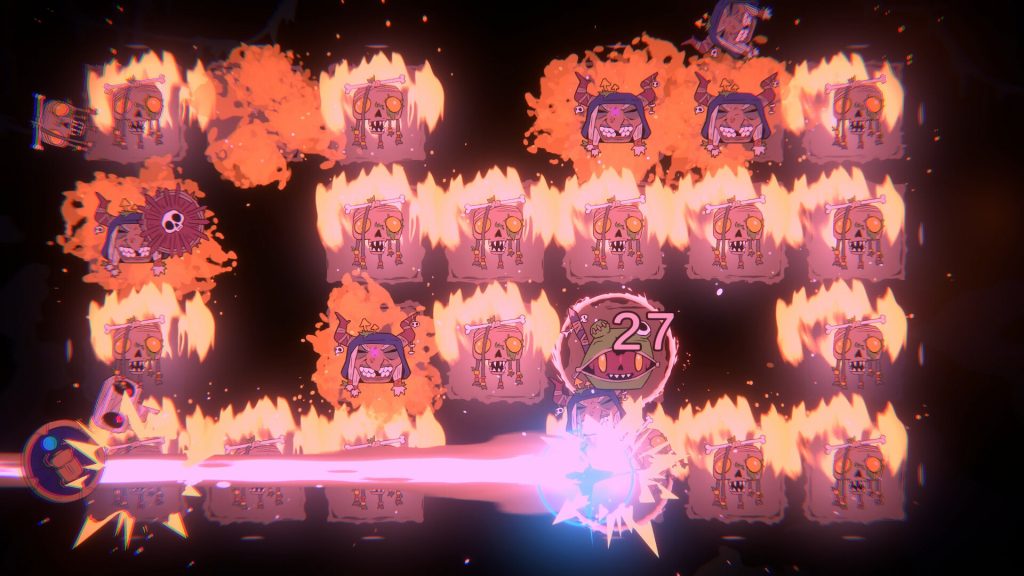
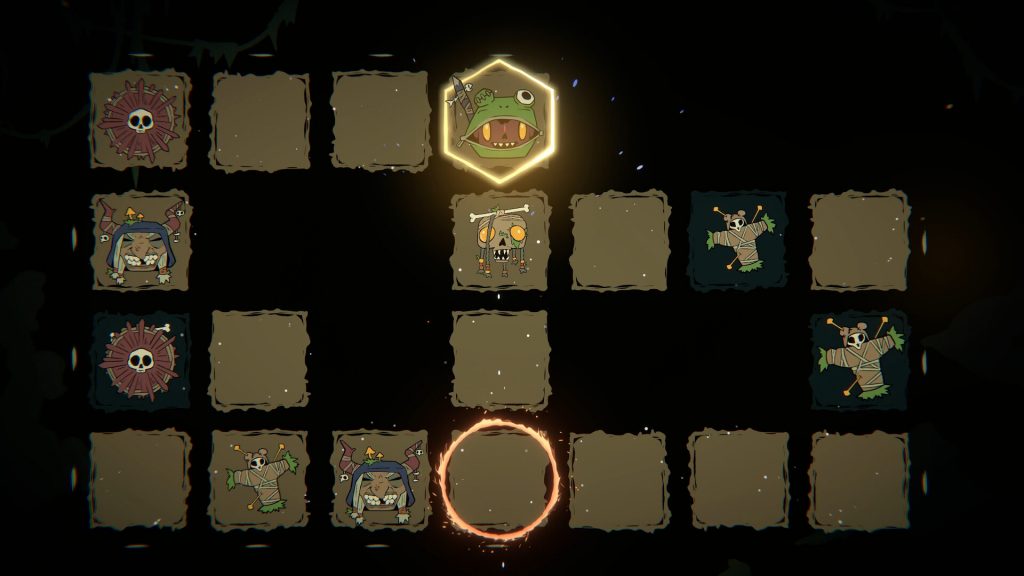
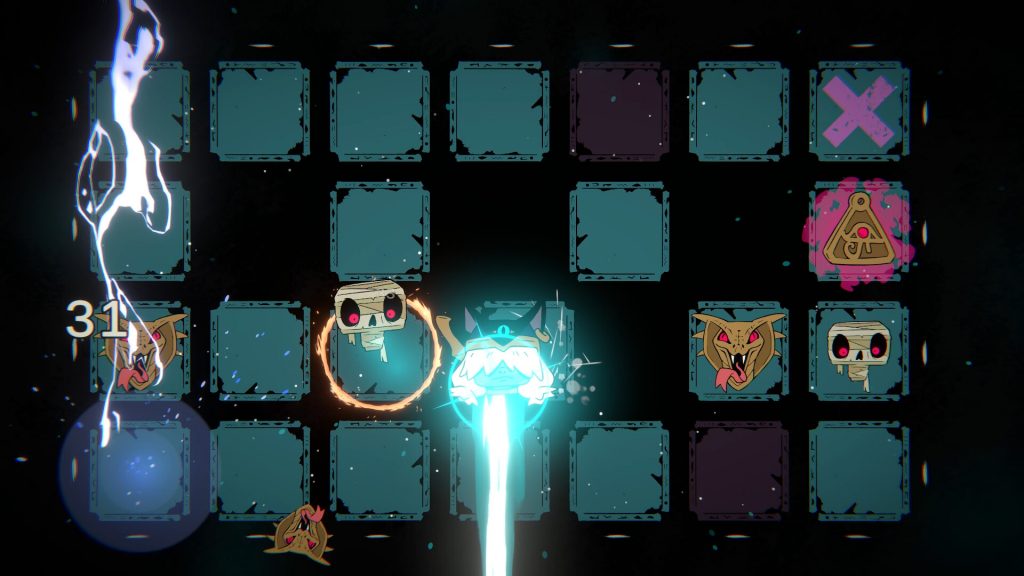
The design consequences are visible in how the depth emerges. KAZ‘s complexity isn’t complexity of input — it’s complexity of state. The grid at any moment has enemies, items, spell effects, and terrain elements whose interactions with each other and with directional movement create tactical situations that require genuine thought. The player isn’t managing a complex control scheme; they’re managing a complex situation with a simple tool.
DayOne’s observation — “the more familiar you become with it, the more fun you can feel” — describes the specific learning curve that well-designed minimal-control games produce. The ceiling for skilled play is high precisely because the floor for beginner play is accessible; you can start playing immediately, but you keep finding new depth as you understand the interaction systems better.
The Audio-Visual Design
Softpedia’s 9/10 sound rating and TheSixthAxis’s specific praise for the music-visual harmony reflect a design where audio isn’t supplementary but mechanically integrated. The escalating soundtrack as score increases — background music becoming more intense as the player’s point total rises — uses audio to communicate game state rather than simply accompanying the visual experience.
This is the rhythm game lineage in KAZ‘s DNA. Rhythm games learned decades ago that audio feedback amplifies the satisfaction of correctly timed actions in ways that visual feedback alone can’t match. Applying this principle to a roguelite — where the “correctly timed actions” are tactical decisions rather than beat-matched inputs — produces the specific “hand feel” quality that the game is praised for. Each move that correctly executes a combo, triggers a buff, or chains an item effect has sonic confirmation that makes the decision feel satisfying rather than merely effective.
Each hero having a dedicated theme song extends this from system design into character identity. The musical personality of a hero reinforces their mechanical personality — which means the audio design is doing narrative work alongside the functional feedback work.
GameGrin’s note about some character UI color combinations reducing readability is the one consistent criticism across reviews. This is worth noting as a legitimate accessibility concern rather than dismissing: a game that rewards precise tactical decision-making needs its UI to communicate state clearly, and color combinations that reduce legibility work against the game’s own demands.
The No Stress Mode
The alternative mode that manages move count instead of time pressure is the correct design response to the accessibility challenge that high-speed grid games typically face. Speed-dependent arcade games exclude players who either can’t or prefer not to engage with real-time pressure — not because they lack strategic capability but because the time constraint specifically prevents deliberate tactical thinking.
KAZ‘s No Stress mode separates the strategic depth from the real-time pressure, making the tactical system available to players who want to engage with item combinations, buff management, and combo chains without the physical demand of fast reflexes. This isn’t a “casual mode” that reduces challenge; it’s a mode that changes which kind of challenge is primary. Skilled No Stress play is genuine skill expression — it’s just strategic skill rather than reflex skill.
Cubed3’s note about hand fatigue during extended sessions in the standard mode suggests the physical demand of rapid directional inputs accumulates across long play sessions. The No Stress mode addresses this directly for players who want extended engagement without physical strain.
The Community-Developed Themes
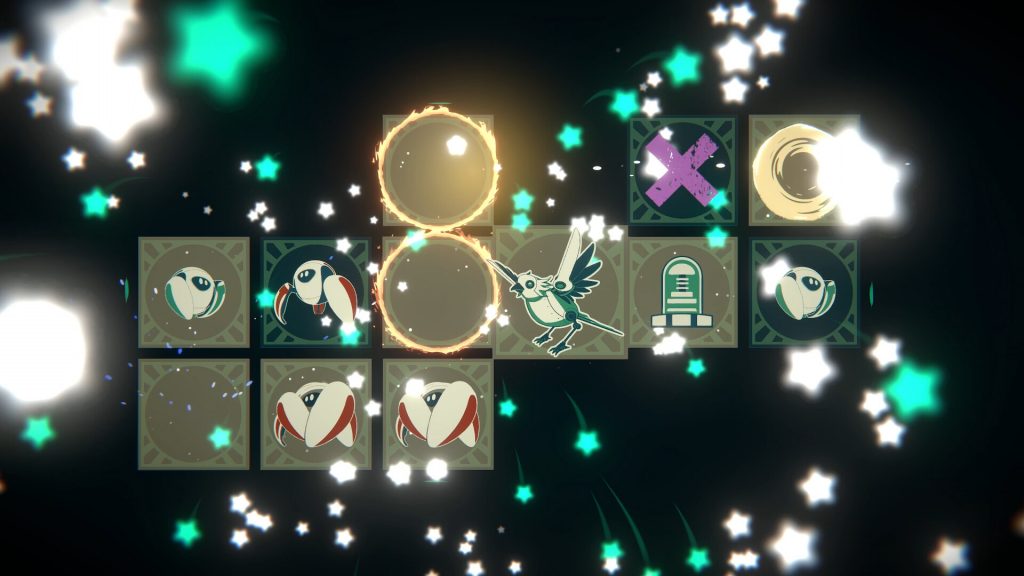
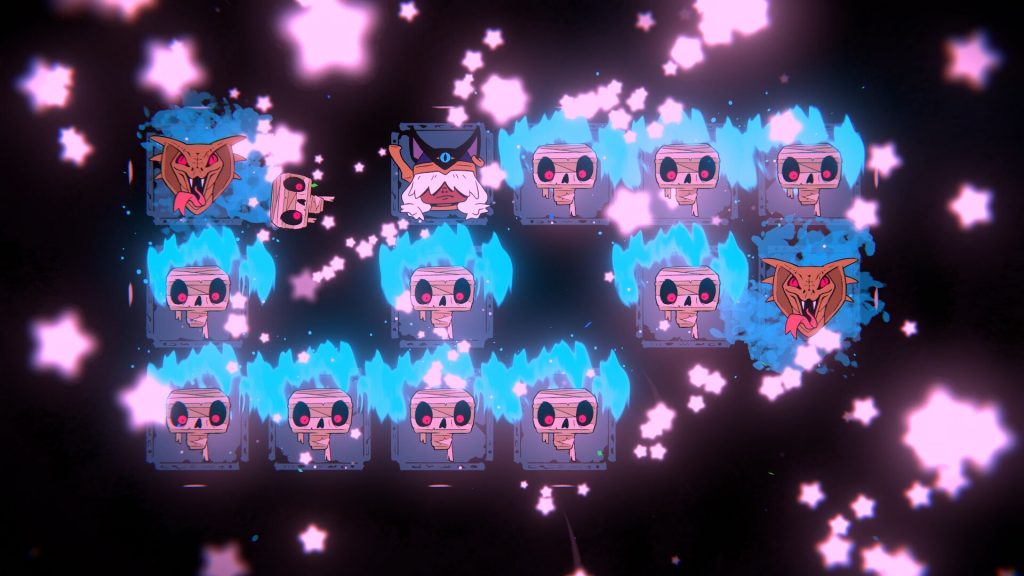
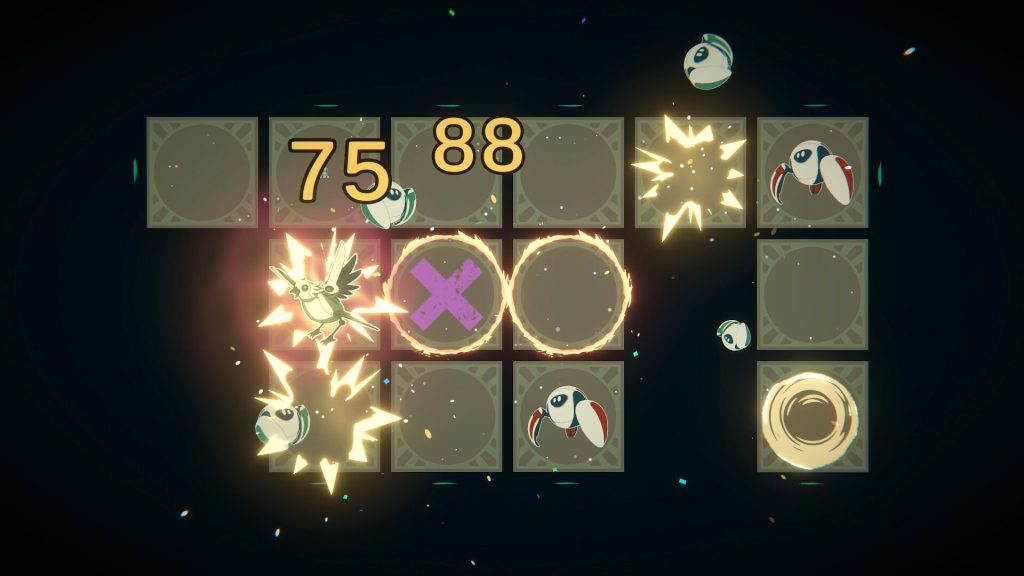
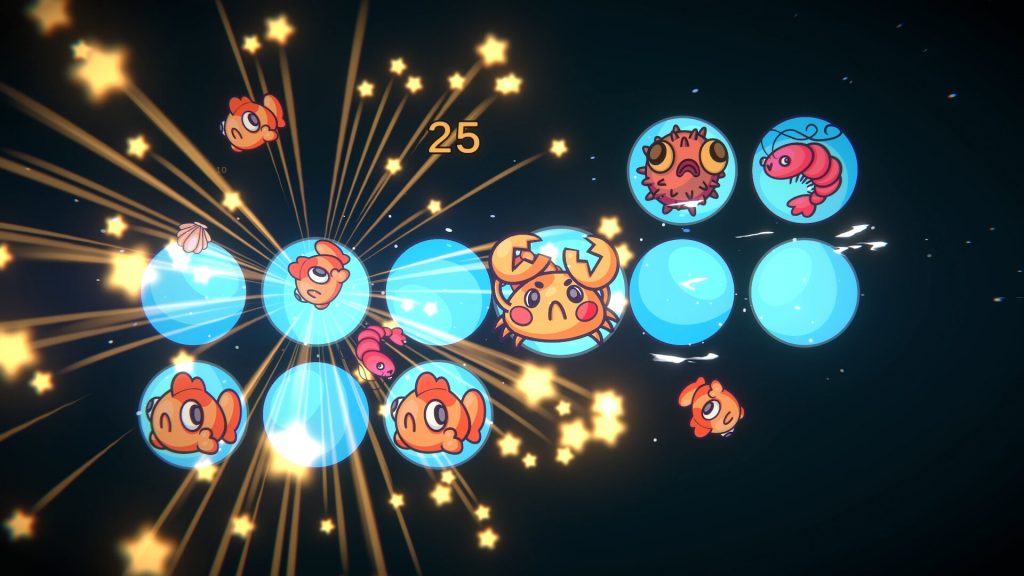
The 25+ themes developed collaboratively with the KAZ community and various artists are providing something that most solo-developed games lack: content scope that exceeds what a single developer can produce. Each theme provides different power-ups and play styles rather than purely cosmetic variation — which means the community creation process has expanded the game’s strategic variety, not just its appearance options.
GameGrin’s note that quality varies across themes is honest and expected from community-creation processes. The value of community themes isn’t uniformly excellent execution; it’s the range of approaches and the investment of community members who care enough to create content for a game they love. The best community themes probably enrich KAZ‘s variety significantly; the weaker ones are probably still playable if not optimal.
The Kalinarm and HAKURO Context
Kalinarm’s previous project Linkito established the developer’s interest in “implementing deep play within simple rules” — the same design philosophy that KAZ executes at a higher scale and ambition. This is the correct trajectory for a solo developer learning their craft: demonstrate the philosophy in a smaller scope, then execute it with more content and system depth in the follow-up.
HAKURO, as publisher — operating under the PixCapital Group investment structure — provides the distribution and promotional infrastructure that allows Kalinarm to focus on development. The nine-language text support (French, German, Italian, Spanish, Polish, Brazilian Portuguese, Russian, Simplified Chinese alongside English) indicates publishing infrastructure that single developers typically can’t arrange independently.
At $6.99 with a 15% launch discount, KAZ is in the tier where the risk calculation is essentially trivial for players who find the concept appealing. A game with 96% Steam ratings and consistent praise for depth-behind-simplicity at under $7 (currently under $6 with the discount) represents genuine value for the roguelite audience.
Who This Is For
Strong fit for: roguelite enthusiasts who specifically appreciate accessible control schemes with deep tactical systems; players who enjoy score-attack replayability alongside content progression; rhythm game fans who want their audio-feedback satisfaction in a strategy context; players who have bounced off complex control roguelites and want the strategic depth without the input complexity; No Stress mode players who want pure tactical challenge without time pressure; community-content enthusiasts who enjoy player-created additions to base games.
Cautious fit for: players who specifically want complex control schemes as part of their roguelite engagement; anyone who finds grid-based movement limiting compared to free-movement action roguelites; players concerned about hand fatigue in extended sessions (the No Stress mode addresses this partially).
Less ideal for: players who need narrative content alongside mechanical engagement; anyone who dislikes arcade-style score competition; players seeking cooperative or multiplayer experiences.
What to Watch For
The planned weekly and monthly challenge content post-launch will determine KAZ‘s long-term engagement trajectory. Grid roguelites with score competition live on fresh challenge content that gives skilled players new problems to solve and new records to chase. Whether HAKURO and Kalinarm deliver this content on a schedule that maintains community engagement will be the key post-launch evaluation.
The 28-review sample for the 96% rating is small enough that the score will move as more reviews arrive. Whether the rating sustains at Very Positive or climbs toward Overwhelmingly Positive as the sample grows will confirm or complicate the early enthusiast response.
The Takeaway
KAZ is what happens when a solo developer identifies a specific design philosophy — depth through minimal controls — and executes it with enough content breadth (5 modes, 145+ quests, 110+ items, 25+ themes) and audiovisual investment to make that philosophy feel complete rather than constrained. The 96% rating confirms the execution is working. The critical consensus on depth-behind-simplicity confirms the design philosophy is landing.
At $6.99 with a launch discount and four buttons required to play it, KAZ has the lowest entry barriers of almost anything covering comparable strategic depth in the roguelite space. For players who have ever thought, “I want to think hard about grid tactics without also thinking hard about my control inputs,” this is the correct game.
Up, down, left, right. That’s everything. The depth is in what happens next.
Information regarding ‘KAZ’
| item | detail |
|---|---|
| Developer | Kalinarm (Solo Developed) |
| Publisher | HAKURO (PixCapital Group) |
| Genre | Action Roguelike / Arcade |
| Release platform | PC (Steam) |
| Release date | July 13, 2026 |
| price | $6.99 / €6.99 / £6.29 (15% launch discount) |
| Steam rating | 96% positive (based on 28 cases) |
| Content scale | 5 game modes, over 145 quests, over 110 items, over 35 debuffs, over 25 themes |
| Steam Page | Shortcut |