Five million downloads is the kind of milestone that validates a studio’s first commercial project beyond any question. Fire Totem Games — an Austrian indie studio that started as friends who liked making games in 2017, grew from solo development through various prototypes, and now operates as a six-person team — is celebrating this milestone with the addition of “The Living Room,” the fourth level in A Webbing Journey‘s growing house exploration. The update brings 10 new quests, a playable piano, hidden ancient spider ruins, and new mysterious creatures alongside the expanded environment.
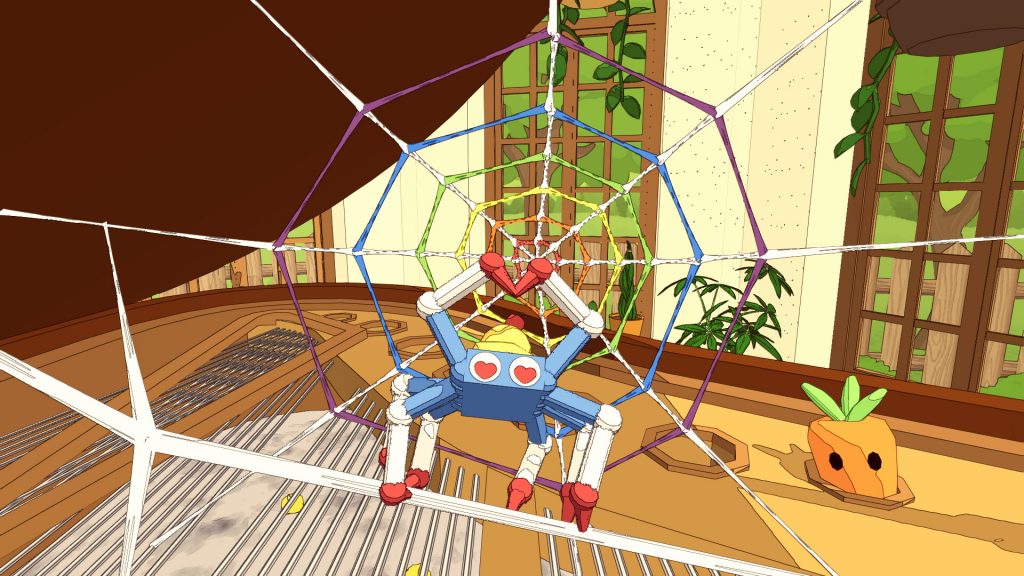
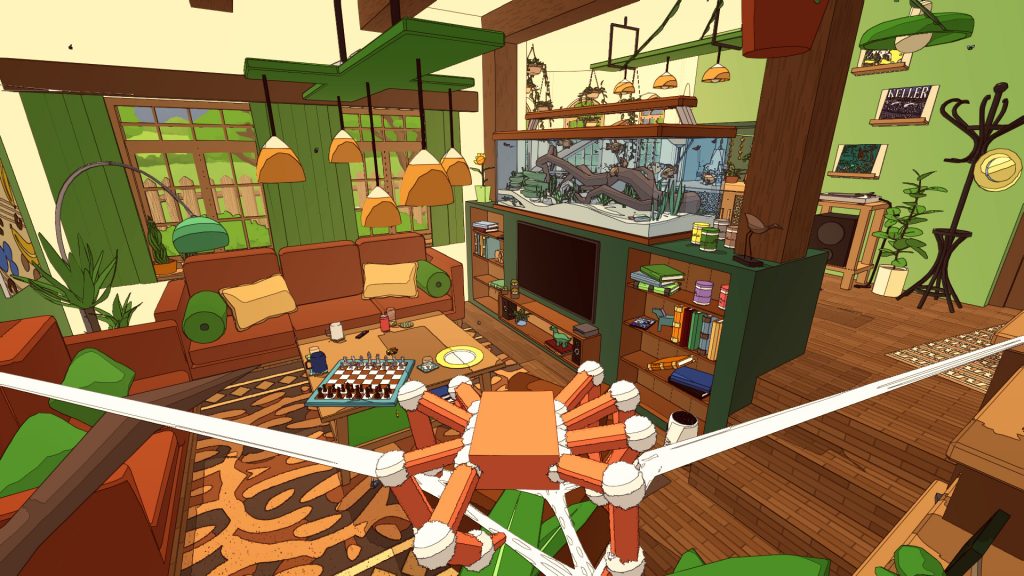
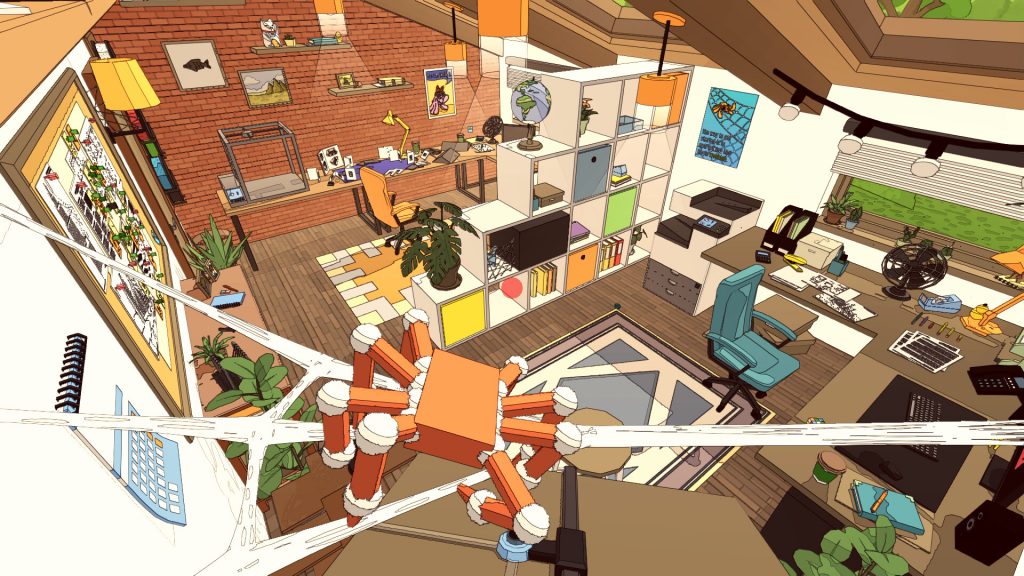
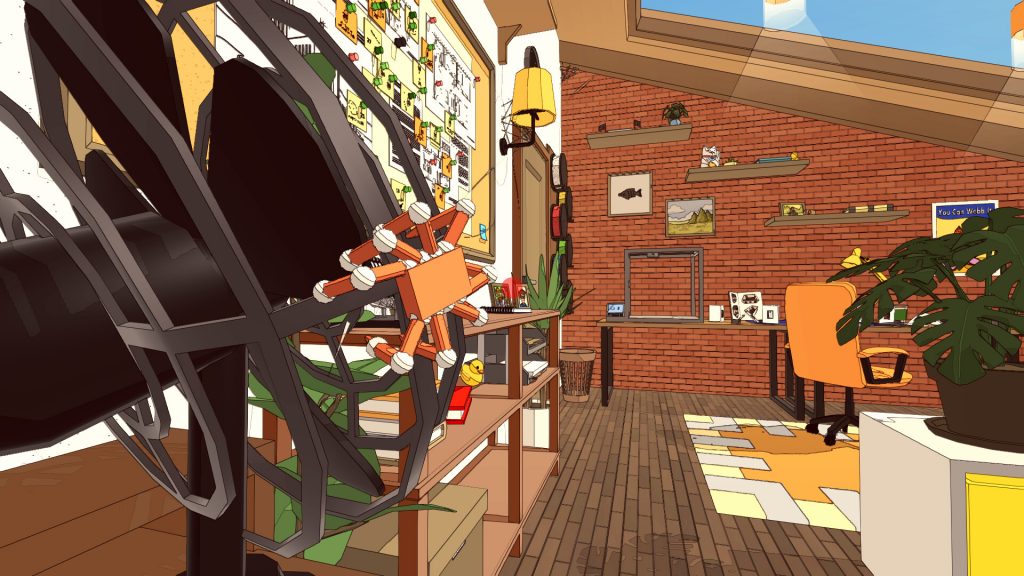
The game’s premise is one of those concepts that feels immediately obvious in retrospect: you are Silky, a small spider, and an ordinary house is your world. What humans experience as a living room — sofa, fireplace, piano, fish tank — you experience as a landscape of enormous structures to scale, traverse, and interact with through web mechanics. The physics engine makes those interactions unpredictable in the ways that make sandbox games genuinely playful.
The Scale Inversion
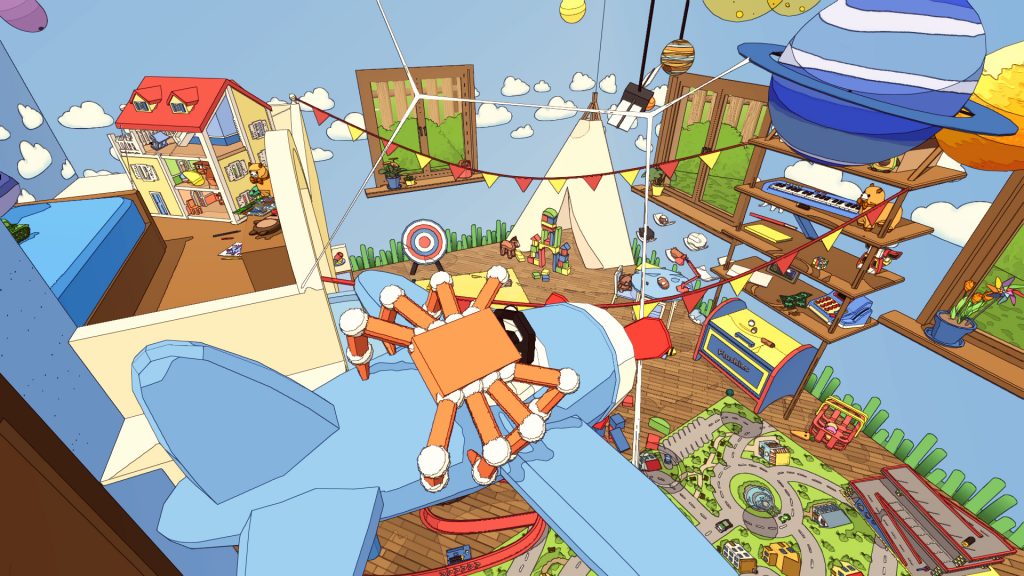
The foundational creative insight of A Webbing Journey is scale inversion — taking familiar domestic spaces and making them enormous by changing the perspective through which they’re experienced. This is the technique that makes films like Honey, I Shrunk the Kids or the Borrowers adaptation permanently compelling: familiar objects becoming alien structures, known environments becoming unexplored territories.
For games, scale inversion has specific mechanical advantages. Domestic spaces at the human scale offer limited movement options and predictable physics interactions. At the spider scale, those same spaces offer vertical traversal across every surface, object interactions with things too large to move conventionally, and the specific spatial experience of a sofa cushion as a landscape feature rather than a piece of furniture.
The living room, specifically, is well-chosen as the fourth level because it’s the most socially loaded domestic space — the room where families gather, where entertainment happens, where the television and the fireplace, and comfortable seating create the specific warmth of home. At the spider scale, these associations remain in the player’s cultural memory while the physical experience of the space becomes completely transformed.

The Physics Sandbox Foundation
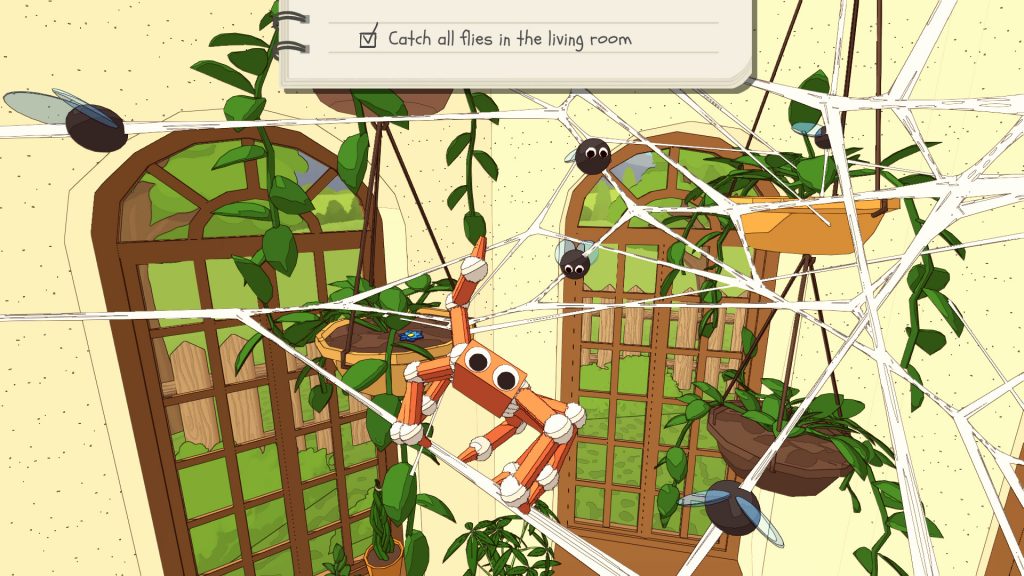
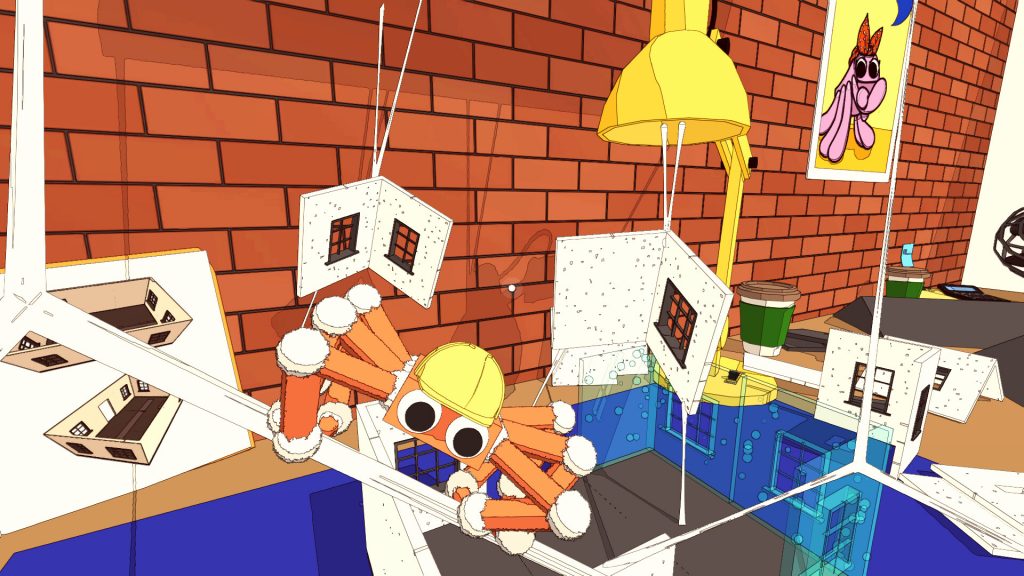
The web mechanics that define A Webbing Journey‘s moment-to-moment gameplay serve multiple functions simultaneously. Web generation as a traversal tool — swinging between objects, bridging gaps, descending from heights — gives the game its Spider-Man-adjacent movement feel in miniature. Web generation as a manipulation tool — pulling objects, connecting items, applying force to distant elements — is the puzzle-solving layer that turns the sandbox into a structured experience.
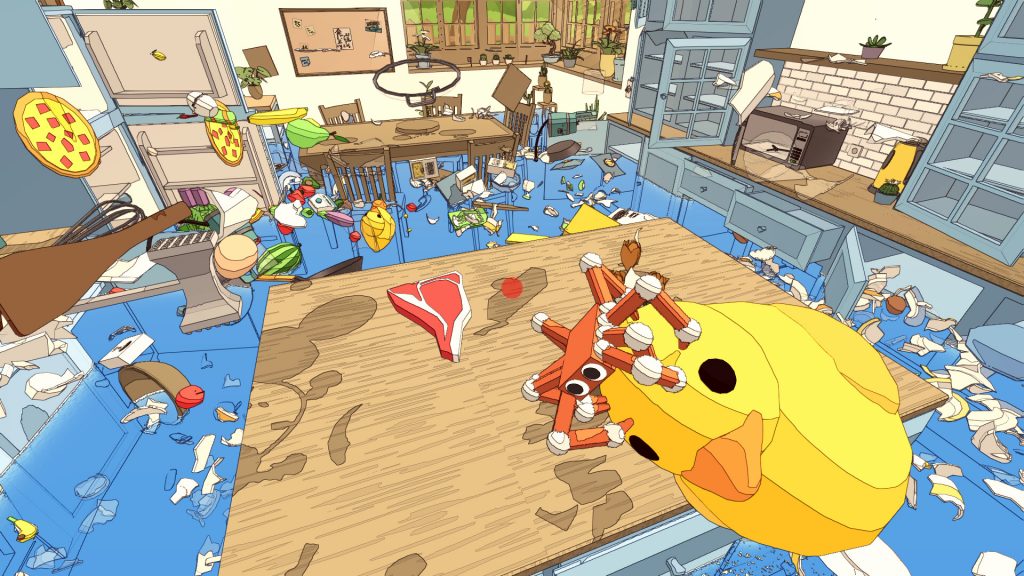
The combination of these two uses creates the specific kind of physics interaction that generates shareable moments. When Silky pulls one object with a web strand that’s connected to something else, which creates a chain reaction that affects a third thing, which resolves the puzzle but also knocks over something else entirely — that sequence is the emergent sandbox moment that spreads on social media. The game’s viral trajectory through SNS is directly attributable to this quality: physics interactions that are predictable enough to be intentional but unpredictable enough to generate surprises.
The quests ground this open-ended sandbox in specific objectives. Baking cookies, doing dishes, watering plants — human chores reframed as spider adventures — give the physics interactions purpose. The 10 new Living Room quests extend this into new territory: living room racing, teaching a creature named Shmupe to sing, preparing a romantic movie night, brewing spider potions, and uncovering ancient spider murals. The range from mundane (racing through the furniture landscape) to absurd (ancient spider murals in a living room) to charming (preparing a romantic movie night at spider scale) reflects the tonal variety that makes the game accessible across ages.

The Audio Design of Domestic Scale
The sound design choice to make the piano playable — web contact with piano keys producing actual notes — is a specific interactive design decision that rewards exploration with genuine audio feedback. A piano that produces real notes when a spider crosses it is a toy as much as a puzzle element: players will inevitably spend time playing music, exploring the instrument, and potentially attempting recognizable melodies with their web mechanics.
This interactive audio approach extends the broader sound design philosophy that the development team has built into A Webbing Journey. The crackle of a fireplace, the water sounds of a fish tank, the resonance of different surfaces — these are the sounds that make the space feel inhabited and real rather than a game set dressed to look like a living room. At the spider scale, these ambient sounds have specific spatial meaning: the fireplace warmth has proximity implications, the fish tank is a distinct environmental zone.
The 5 Million Downloads Trajectory
Fire Totem Games’ path from 2017 solo project to six-person studio with 5 million mobile downloads on their first commercial game represents a development trajectory that played out over nearly a decade of incremental growth. The studio didn’t launch with A Webbing Journey — they built it through “various prototypes,” gaining experience before committing to the commercial project.
The viral SNS spread that drove the download count is the result of that accumulated design quality rather than marketing investment. Physics sandbox games with distinctive perspectives generate shareable content when the interactions are surprising, and the visual premise is immediately legible — and “small spider in a big house doing domestic chores with physics” communicates immediately in a short video clip. Someone watching Silky use web strands to slide a cookie sheet into an oven at spider scale understands the game immediately and finds it charming.
Future Friends Games, as a publisher, provides a commercial infrastructure appropriate to the milestone. Their portfolio (Exo One, SUMMERHOUSE, CloverPit) reflects editorial taste for distinctive, atmospheric experiences — A Webbing Journey‘s warm domestic sandbox fits this identity.
The Free-to-Start Model
The free-to-start mobile model is the correct commercial approach for a game whose audience discovery happens through social media virality. The friction of a purchase requirement would have significantly reduced the conversion from “saw a clip and wanted to try it” to “actually installed and played it.” Five million downloads is a number that a paid mobile game essentially never achieves.
The Steam Early Access version exists for the PC audience that prefers that platform, and presumably carries a price point that reflects the development investment more directly. The multi-platform strategy — free mobile for maximum discovery, priced PC for the dedicated gaming audience — reflects sophisticated commercial thinking for a six-person studio.
The ongoing content update commitment (mobile and Steam both receiving continued updates) is the correct model for this type of game. A physics sandbox with house exploration has natural content extension potential — additional rooms, additional quest types, additional objects to interact with — that can sustain ongoing player engagement across update cycles.
The Living Room as Milestone Content
The specific choice to celebrate 5 million downloads with “The Living Room” as the milestone level is meaningful. The living room is the domestic space that most directly represents home and gathering — it’s the room that the five million people who downloaded this game likely associate most strongly with domestic warmth and relaxation. Adding it as the celebration content creates symbolic alignment between the milestone and the content.
The hidden ancient spider murals and new mysterious creature additions suggest the game is expanding its narrative ambition alongside its content scope. A physics sandbox that begins to layer in lore — what are the ancient spider murals? Who is Shmupe? — creates the discovery dimension that transforms exploration from pure play to narrative investigation. Players who find the murals have a reason to think about the world’s history; players who meet Shmupe and teach them to sing have a character relationship.
Who This Is For
Strong fit for: casual mobile gamers looking for charming, physics-based play; families seeking content accessible to children and adults; Untitled Goose Game and similar “inhabit an unusual perspective” game fans; physics sandbox enthusiasts; players who enjoy emergent interaction over scripted gameplay; anyone charmed by the premise of domestic chores done by a helpful spider; completionists motivated by quest completion and exploration.
Cautious fit for: players who specifically want mechanical challenge over exploratory play; anyone who dislikes free-to-start monetization models on mobile; PC players waiting for the game’s full release state rather than Early Access.
Less ideal for: players seeking narrative depth or dramatic stakes; anyone who finds physics-based puzzle imprecision frustrating; players who need competitive or high-stakes gameplay.
What to Watch For
A few questions will shape A Webbing Journey‘s continued development.
The first is the Steam Early Access roadmap pacing. The mobile version has four levels; the Steam version’s development path toward full release needs to match or exceed the mobile content while justifying the PC price point. How quickly additional levels arrive for Steam players will affect early access reception.
The second is whether the narrative elements (ancient spider murals, Shmupe) develop into something substantive or remain charming one-off details. A physics sandbox with growing lore becomes a different and potentially deeper experience than pure play.
The third is the monetization balance in the free-to-start model. Mobile free-to-play games live or die on whether their monetization feels fair or extractive; whether A Webbing Journey‘s approach maintains the accessibility that drove 5 million downloads while generating sustainable revenue will affect both player goodwill and the studio’s ability to continue development.
The fourth is whether the viral content continues to generate new player discovery. The initial SNS spread drove the first major download count; whether the Living Room update and subsequent updates continue to produce the shareable physics moments that spread organically will determine the game’s growth trajectory.
The Takeaway
A Webbing Journey‘s 5 million download milestone and The Living Room update represent a studio’s successful execution on a simple, charming premise: what if you were a helpful spider in a human house, and all the physics interactions that entail? Fire Totem Games built from a 2017 solo project to a six-person team with a commercially successful first game through the kind of patient, quality-focused development that is rarer than it should be.
The Living Room is the right celebration content — the most symbolically domestic space in the house, filled with interactive objects (piano, fireplace, fish tank), quest variety ranging from racing to teaching a creature to sing, and the mystery of ancient spider murals that suggest the world has more history than any individual play session can reveal.
For the five million people who’ve already found Silky, this is more house to explore. For the players who haven’t tried it yet, it’s a free-to-start mobile game where a spider uses web mechanics to help humans with chores and the physics are genuinely unpredictable in delightful ways.
The piano is in the living room. The web will reach the keys. The note it makes when Silky’s web makes contact is real. And the ancient spider murals on the wall suggest that someone was here long before the humans moved in.
Information related to ‘A Webbing Journey’
| item | detail |
|---|---|
| Developer | Fire Totem Games |
| Publisher | Future Friends Games |
| Genre | Physics-based Sandbox / Puzzle Action |
| Release platform | Android / iOS / Steam (Early Access) |
| Price Model | Free-to-start |
| Cumulative downloads | Mobile surpasses 5 million downloads |
| Current level | 4 (based on Android and iOS) |
| New Update | Fourth Level ‘The Living Room’ Added, 10 New Quests |
| Key Features | Full surface movement, dynamic web generation, web swinging, object interaction, character customization |
| Establishment of a development company | 2017 (Austria), current 6-member system |
| Publisher’s Representative Work | CloverPit, Exo One, SUMMERHOUSE |
| Main Keywords | Spider, Sandbox, Physics-based, Viral, Mobile, Quest, Free to play |
| Android Store | Shortcut |
| Apple Store | Shortcut |
| Steam Page | Shortcut |