You are not the victim. The humans occupying these Victorian buildings are. Your job is to deploy the right combination of ghosts, demons, and monsters to make them leave — by any means terrifying.
Ghost Keeper from Polish studio Quest Craft (published by Gaming Factory) exits Early Access with its 1.0 release on July 16, completing the transition from community-shaped work-in-progress to finished horror strategy game. The Victorian England setting, the ghost-side perspective on haunting, and the black comedy tone that the community has been evaluating at 86-90% positive throughout Early Access are all intact in the full release — now accompanied by 8 handcrafted campaign maps, 9 controllable ghost types, and the Brotherhood of Light’s new hunter “The Destroyer” as the primary antagonistic force.
The game has been described by its community as the spiritual successor to Ghost Master — the 2003 Muckyfoot Productions strategy game that gave players command of ghost forces rather than of humans being haunted. Ghost Master is one of those games that has maintained devoted cult appreciation across two decades without anyone having revived its specific formula. Ghost Keeper is the most direct attempt at that revival currently available.
The Perspective Inversion
Horror games derive their tension from vulnerability — the player is the human in danger, the monster is the threat, and survival requires understanding and evading something more powerful than you. Ghost Keeper inverts this entirely. The player commands the monsters; the humans are the objective; the satisfaction comes from orchestrating effective scares rather than surviving them.
This inversion produces a fundamentally different emotional register. Where conventional horror creates anxiety in the player, Ghost Keeper creates something closer to the satisfaction of a puzzle solved — the right ghost combination in the right location producing the fear cascade that empties a room is intellectually satisfying rather than emotionally threatening. The black comedy tone reflects this: when you’re the source of the horror rather than its target, the dread becomes absurdist rather than existential.
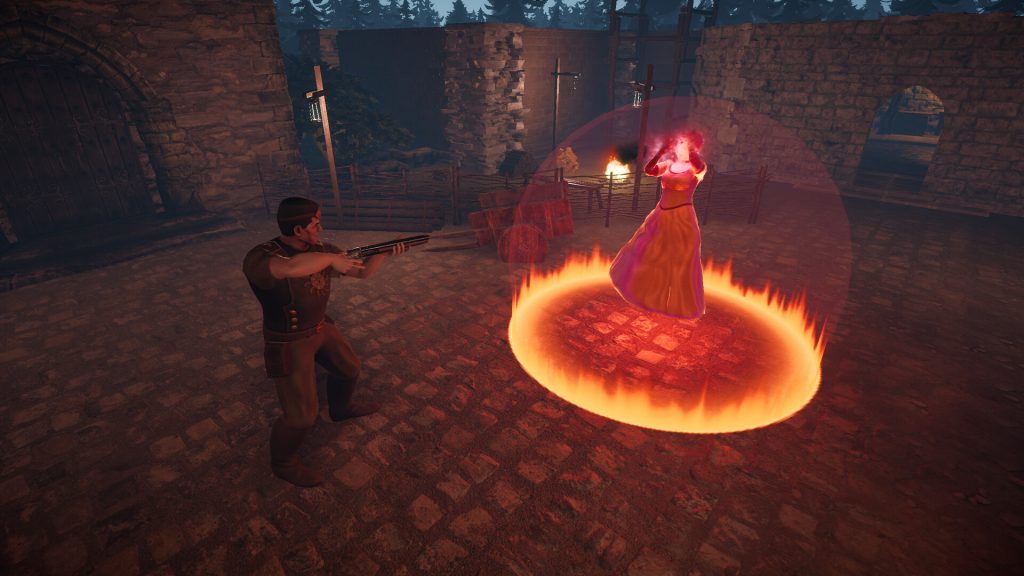
The Brotherhood of Light, as a counter-force, reintroduces genuine challenge. A ghost game where humans simply flee without resistance would be trivially easy; the Brotherhood’s hunters — including the new Destroyer in the 1.0 release — create the adversarial pressure that makes the ghost-deployment strategy meaningful. You’re not just creating an effective haunting; you’re creating one that the Brotherhood’s specialists can’t quickly counter. The tactical layer of avoiding or confronting professional ghost hunters while also maintaining the haunting pressure on regular civilians is where the game’s strategic depth lives.
The Victorian Setting’s Specific Suitability
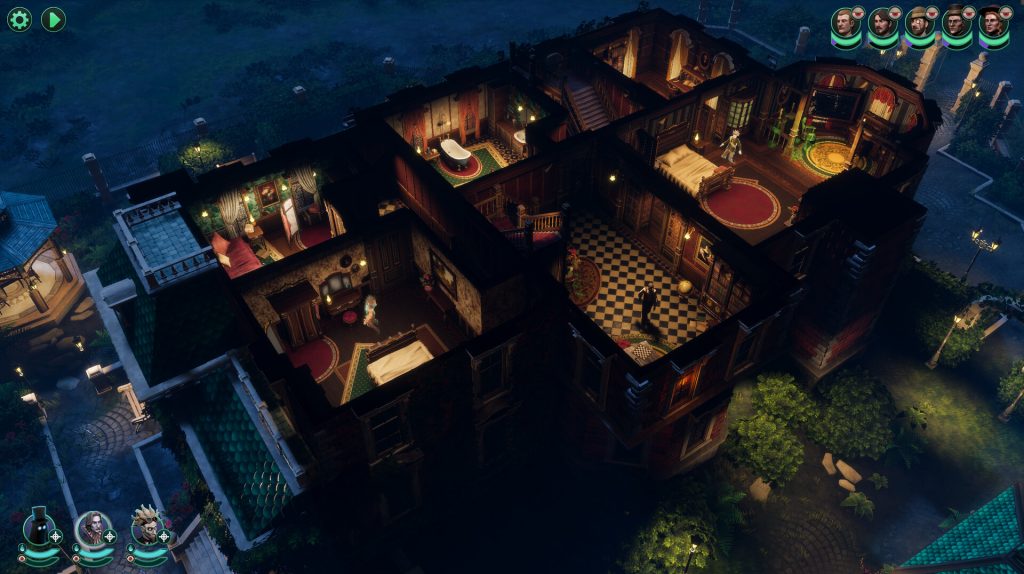
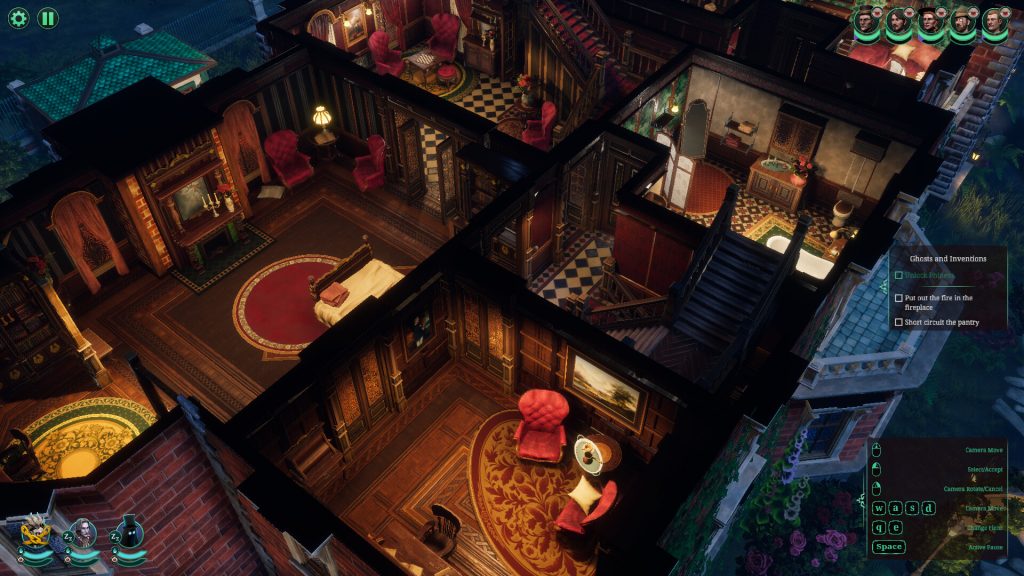
Victorian England is the correct period for this game, and the reasoning extends beyond the obvious ghost-story associations. The Victorian era produced the Gothic fiction tradition — Poe, Sheridan Le Fanu, Bram Stoker — that established the aesthetic vocabulary of haunted houses, spectral presences, and the specific horror of the familiar made threatening. Victorian architecture’s specific qualities (heavy wood, high ceilings, narrow staircases, formal rooms with specific social functions) create natural spatial conditions for effective ghost deployment. And Victorian society’s specific anxieties — the rationalism of the scientific age confronting traditions of supernatural belief — provide exactly the kind of cultural tension that makes ghost stories dramatically resonant.
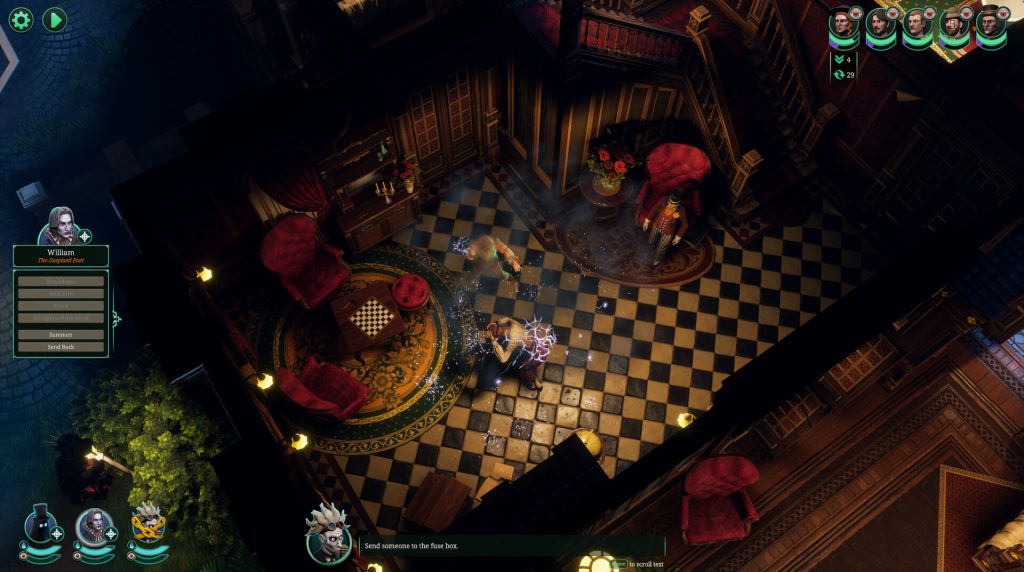
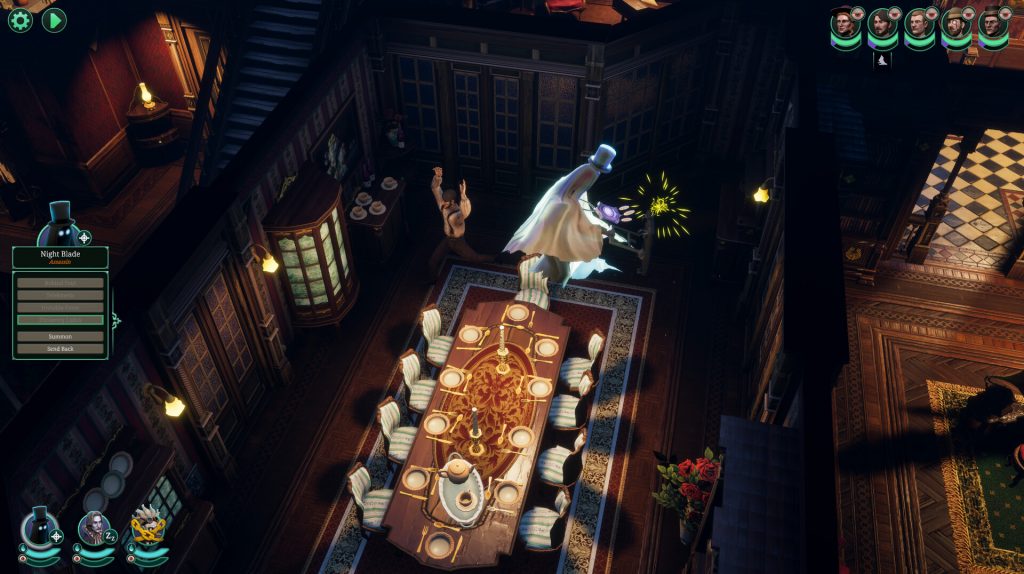
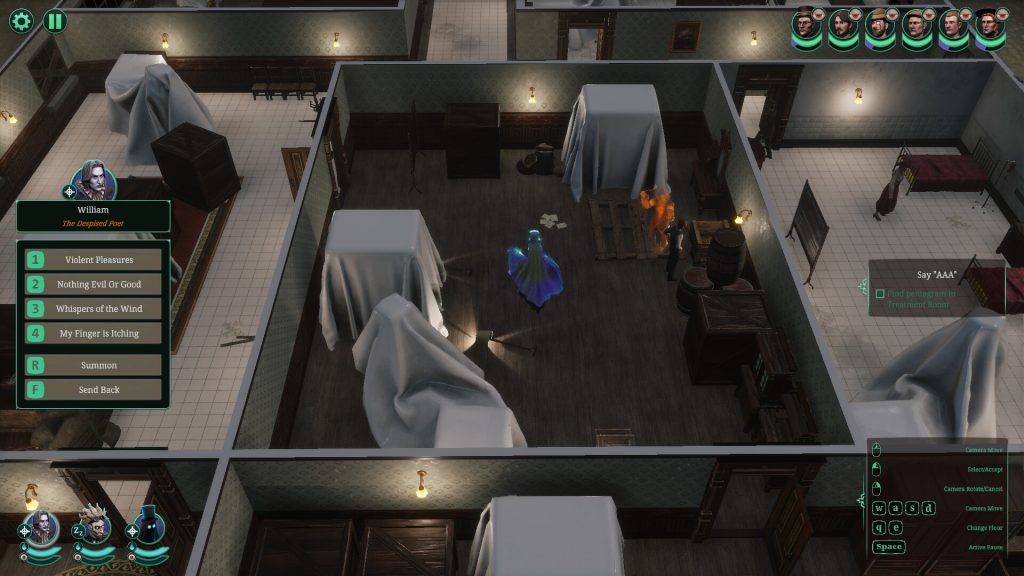
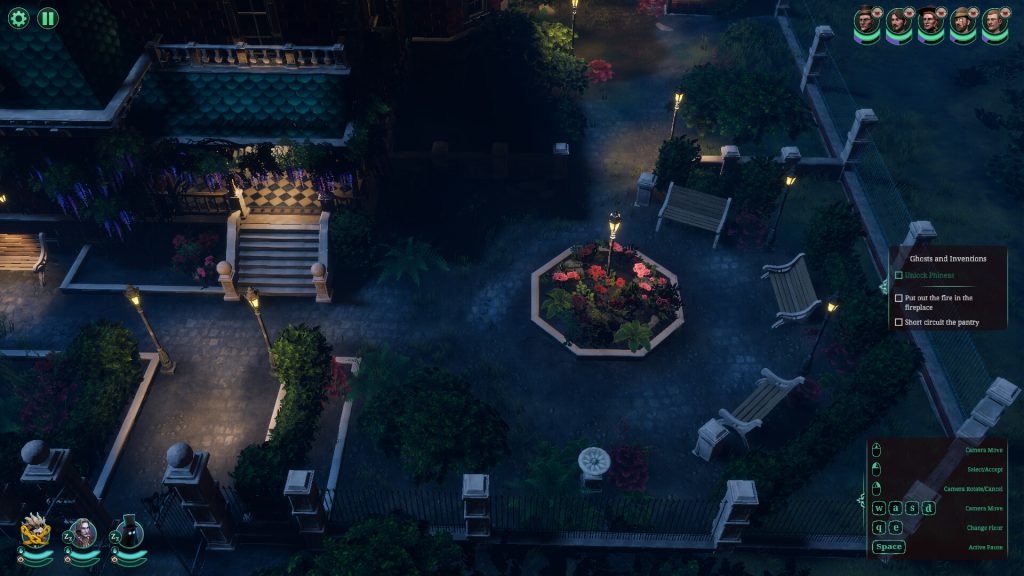
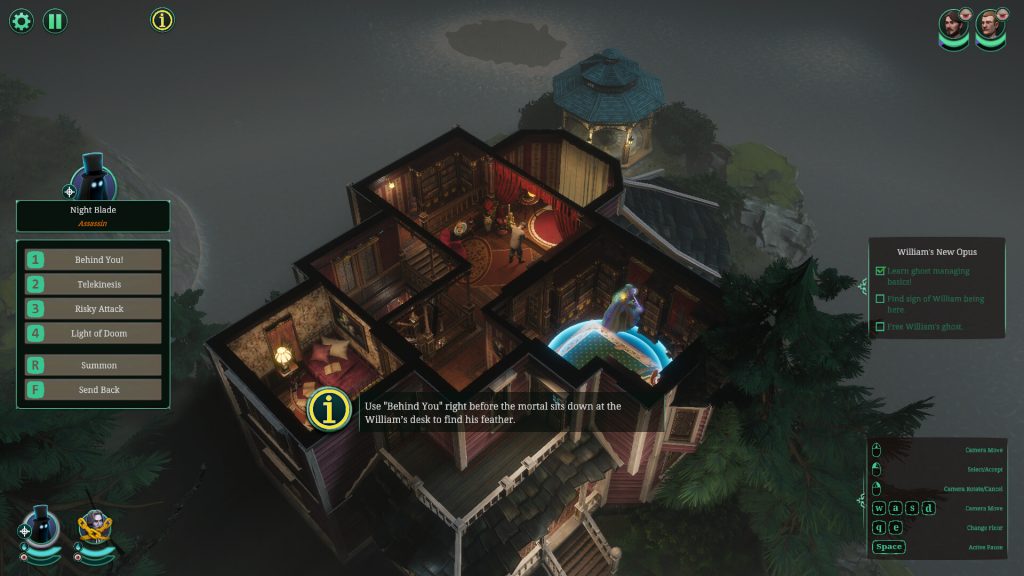
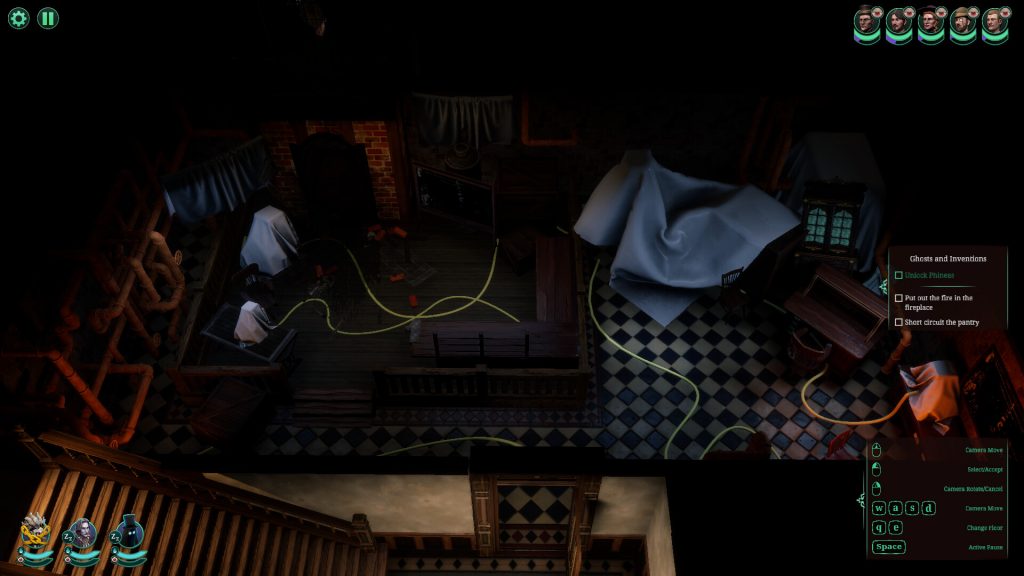
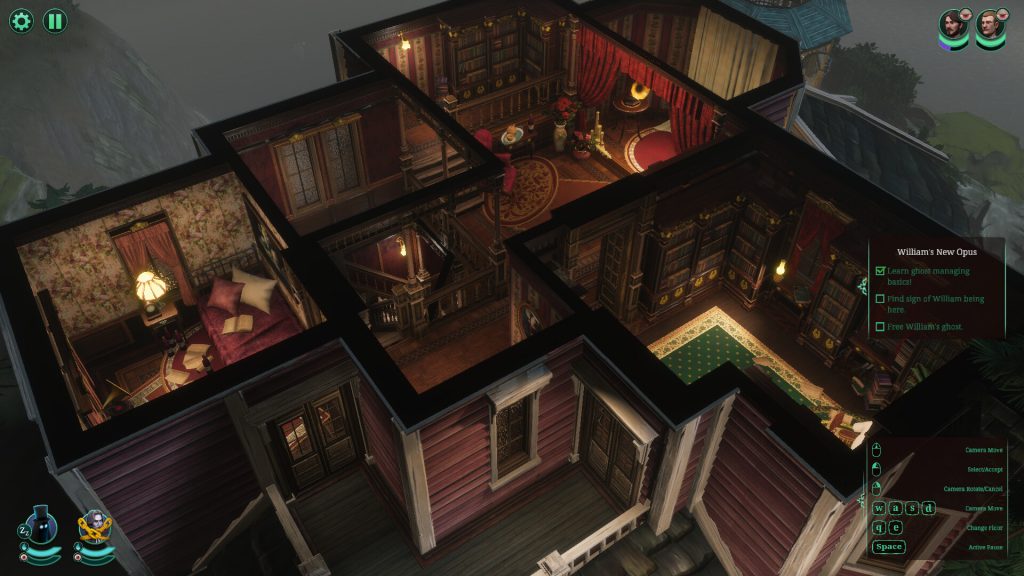
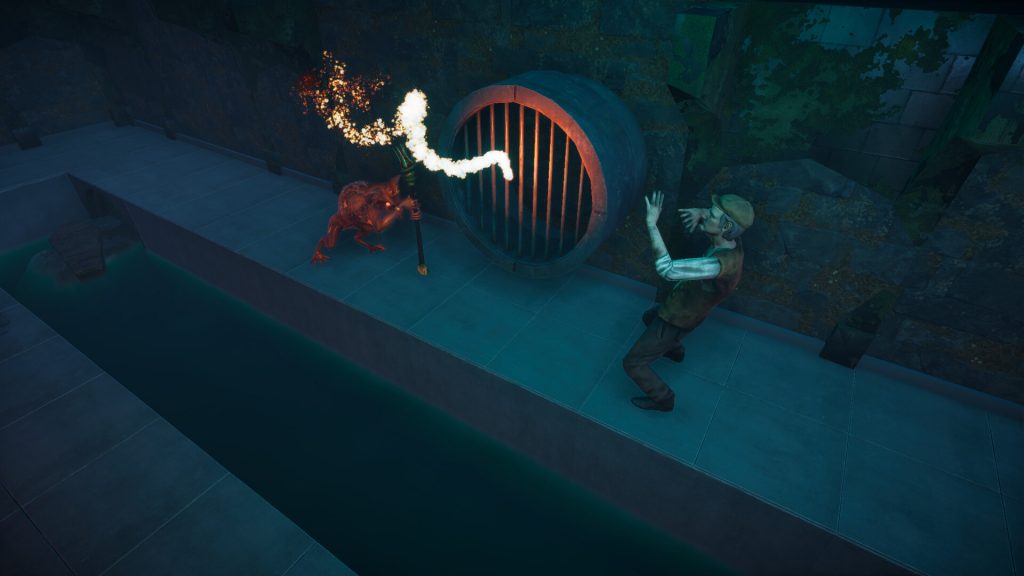
The 8 handcrafted campaign maps — William’s manor, Phineas’s estate, city sewers, cemetery, village, fish market, mad dentist’s office, Brotherhood of Light secret outpost — demonstrate the variety of Victorian environments the game explores while maintaining period coherence. The mad dentist’s office specifically suggests the game understands that Victorian settings need not be exclusively aristocratic; the specific horror of Victorian medicine and the specific horror of Victorian dentistry in particular are underexplored gaming territory.
The Nine Ghost Roster
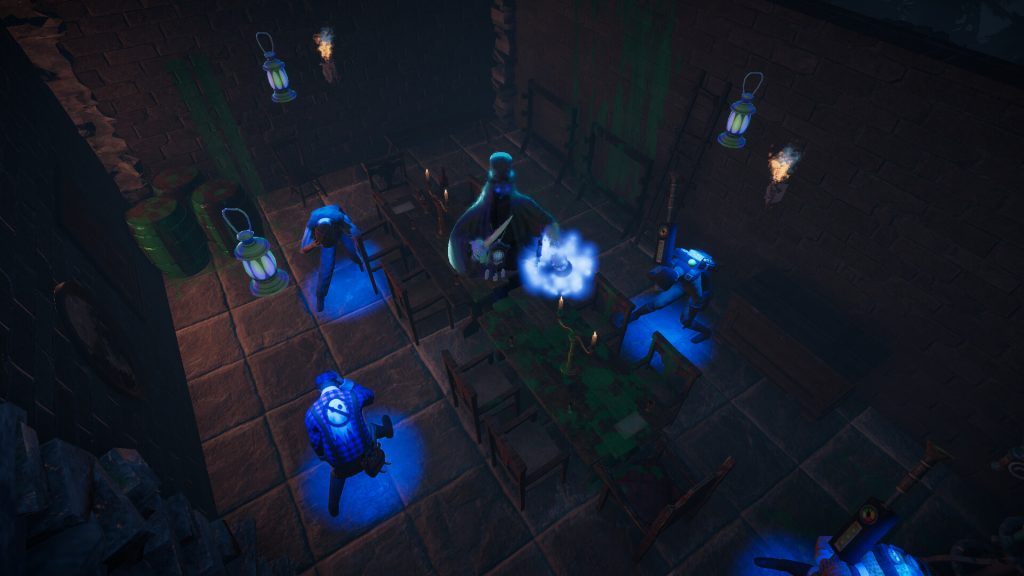
William (a vengeful poet), Shadowmaw, Night Blade, Phineas, Vorglast, Ratahel, Dr. Percival, Sir Sounds de León, and Madame Lysandra Veil — the nine ghost types in the 1.0 release have specific named identities rather than generic monster categories, which matters for the game’s tonal register.
Named ghosts with individual backstories and personalities are characters rather than units. The vengeful Victorian poet William haunting his manor is a narrative image; “Haunted House Ghost Type 3” is a game mechanic. The distinction affects how the player relates to the entities they’re deploying — with characters, there’s the implied question of why each ghost is haunting, what they want from the humans they’re tormenting, what resolution of their unfinished business would look like.
The skill and role differentiation between ghost types creates the combination strategy that makes deployment decisions meaningful. Not every ghost works in every situation; the same target that one ghost terrifies effectively might be resistant to another. Understanding which ghost types address which human psychological vulnerabilities — and which combinations amplify each other’s effects — is the learning curve on which the game’s tactical depth is built on.
The Early Access Development Process
The 86-90% positive rating maintained throughout Early Access reflects a game that was working at a fundamental level from its initial release, with the iterative process improving quality rather than correcting fundamental problems. Early feedback about haunting timing, pacing, and specific bugs has been addressed through patches — the description of the 1.0 version as “the definitive version completed together with the community during Early Access” reflects genuine collaborative iteration rather than formulaic acknowledgment.
The specific streaming suitability that community feedback identified is worth examining as a commercial consideration. Horror strategy games where unpredictable situations emerge from the interaction of ghost abilities, human AI behavior, and Brotherhood hunter responses generate the kind of “what just happened” moments that streaming content rewards. Each haunting is procedurally emergent even when the map is handcrafted — the specific sequence of human responses to specific ghost deployments creates unique situations that are entertaining to watch precisely because neither the player nor the audience can fully predict them.
Quest Craft’s portfolio context — Pizza Slice pizza shop simulation, Organic Burger Simulator — suggests a studio that pursues specific niche concepts with genuine commitment rather than genre trend-chasing. “From gamers to gamers” as a development philosophy reflects exactly the kind of “we play this genre, and we wanted this specific game to exist” motivation that produces the best niche games. The Ghost Master community’s long-unfulfilled desire for a successor is the specific audience Quest Craft is building for.
The Ghost Master Legacy
Ghost Master‘s 2003 release was moderately commercially successful and critically appreciated, but the subsequent collapse of Vivendi Universal’s game division meant the game received no sequel despite a dedicated fanbase. The two decades since have seen multiple community attempts to create spiritual successors that have mostly remained in development limbo. Ghost Keeper completing Early Access and releasing a 1.0 version makes it the most realized attempt at the formula currently available.
The comparison benefits both games: the Ghost Master community provides Ghost Keeper with a built-in audience who specifically know what they want from this genre, while Ghost Keeper‘s successful Early Access demonstrates the concept’s commercial viability to any developer considering the space. Whether Ghost Keeper fully satisfies the Ghost Master nostalgia or represents something adjacent-but-distinct from the original will emerge from the community conversation following the 1.0 release.
Who This Is For
Strong fit for: Ghost Master players who have been waiting twenty years for something similar; horror game enthusiasts who are tired of being the victim and want to be the threat; strategy and puzzle game players who want unusual thematic framing; players who appreciate black comedy as a tonal register; streamers seeking games that generate unpredictable entertaining moments; anyone who has played horror games and thought “I want to know what it looks like from the other side.”
Cautious fit for: players who specifically want fear as their primary horror game emotion (the inversion of perspective changes the horror’s effect from anxiety to dark satisfaction); strategy enthusiasts who want deep mechanical complexity over the puzzle-strategy blend that ghost management provides.
Less ideal for: players who dislike strategy games regardless of theme; anyone who wants action-based horror; players who find Victorian setting aesthetics unappealing.
What to Watch For
The 1.0 release’s primary evaluation question is whether the 8-map handcrafted campaign provides sufficient length and variety to feel like a complete game experience at $12.99. Early Access releases that maintained high ratings on limited content sometimes struggle when the complete scope is evaluated against full-game expectations.
The Brotherhood of Light’s new Destroyer hunter specifically tests whether the counter-force design has been effectively expanded — if the Destroyer represents genuinely new strategic challenges rather than a stronger version of existing hunters, the 1.0 release extends the tactical vocabulary rather than simply scaling existing difficulty.
The Takeaway
Ghost Keeper is the most realized attempt in two decades to revive the ghost-side horror strategy formula that Ghost Master established and never got to continue. Quest Craft’s Early Access development process — maintaining 86-90% positive ratings throughout while iterating on community feedback — has produced a 1.0 release that reflects what the player base actually wants from the concept rather than what the developers assumed they’d want.
The Victorian setting is right. The nine named ghost characters are right. The Brotherhood of Light as tactical opposition is right. And the black comedy tonal register — the specific pleasure of efficient haunting rather than the anxiety of being haunted — is precisely the inversion that this genre formula has always been about.
The humans are in the manor. The Brotherhood is coming. The poet’s ghost has unfinished business. And somewhere in the combination of Shadowmaw’s specific abilities and Madame Lysandra Veil’s particular talents, there’s a haunting that makes William’s house vacant by morning.
July 16. The ghosts have been waiting long enough.
Information regarding ‘Ghost Keeper’
| item | detail |
|---|---|
| Developer | Quest Craft |
| Publisher | Gaming Factory |
| Genre | Reverse Ghost Strategy / Puzzle Simulation |
| Release platform | PC (Steam) |
| Official release date | July 16, 2026 (17:00 UTC / 19:00 CEST) |
| price | $12.99 (Launch discount coming soon) |
| Early Access Evaluation | 86~90% positive |
| 1.0 New Content | Full campaign for 8 regions, 9 types of ghosts, and new hunter ‘Destroyer’ added |
| Steam Page | Shortcut |