The vampire survivors-like genre is built on a specific design philosophy: automate the attacks, let players focus on movement and build selection. The player’s job is positioning and progression decisions, not targeting. PengPong, the bullet heaven roguelite from Korean developer Sandy Floor, is asking a different question: what if the shooting required skill?
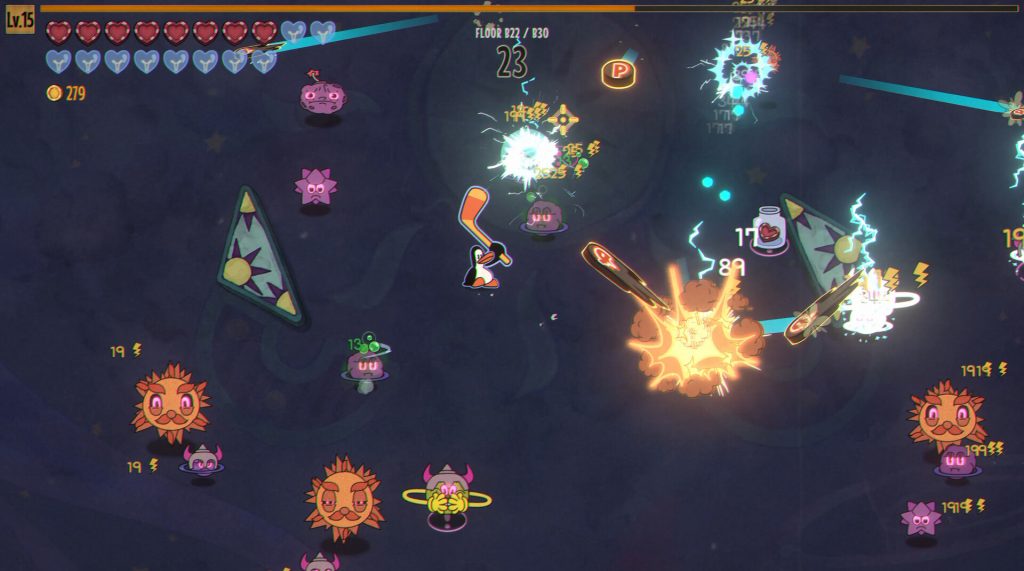
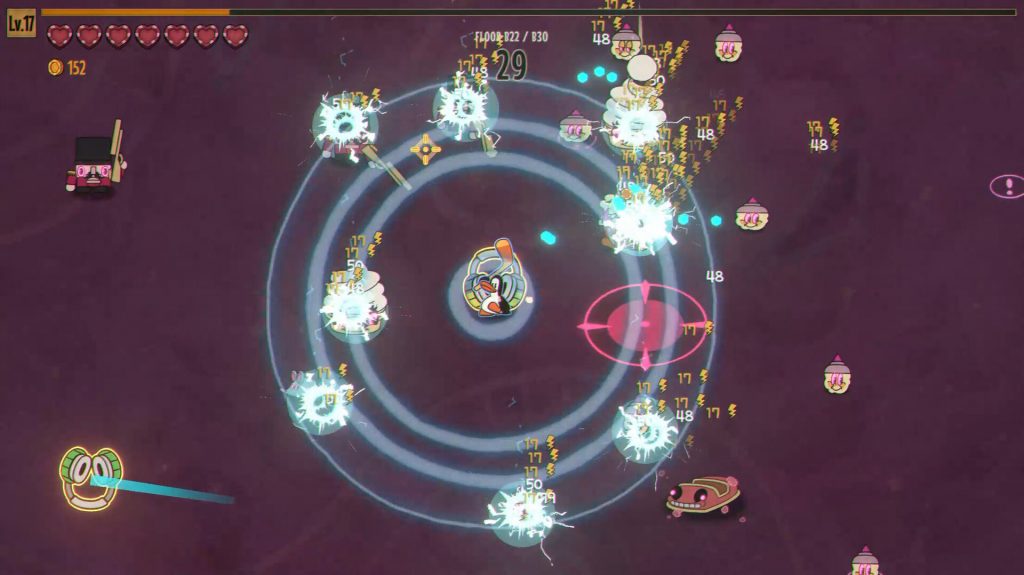
The answer is a hockey stick and the physics of reflection. Players swing the stick to deflect weapons and objects toward enemies, calculating angles to cause chain reactions — pinball-style bounces that sweep through multiple enemies in sequences the player designed. The auto-attack satisfaction of bullet heaven roguelites remains (screen-filling projectiles, escalating build power, watching a developed run demolish enemy waves), but the routing of those projectiles requires active player input and spatial reasoning rather than passive positioning.
G-STAR 2025’s Indie Showcase audience voted it Best Game. Steam Next Fest June 2026 ranked it #81 of 4,300+ entries. Wishlists have exceeded 20,000. August 20 is the release date.

The Reflection Mechanic as Genre Differentiation
Bullet heaven games accumulate genre fatigue through a specific mechanism: once the core auto-attack structure is understood, differentiation becomes primarily aesthetic and build variety rather than mechanical. The player does the same things across every bullet heaven game — move, avoid, select upgrades — with different visual presentations and different ability combinations.
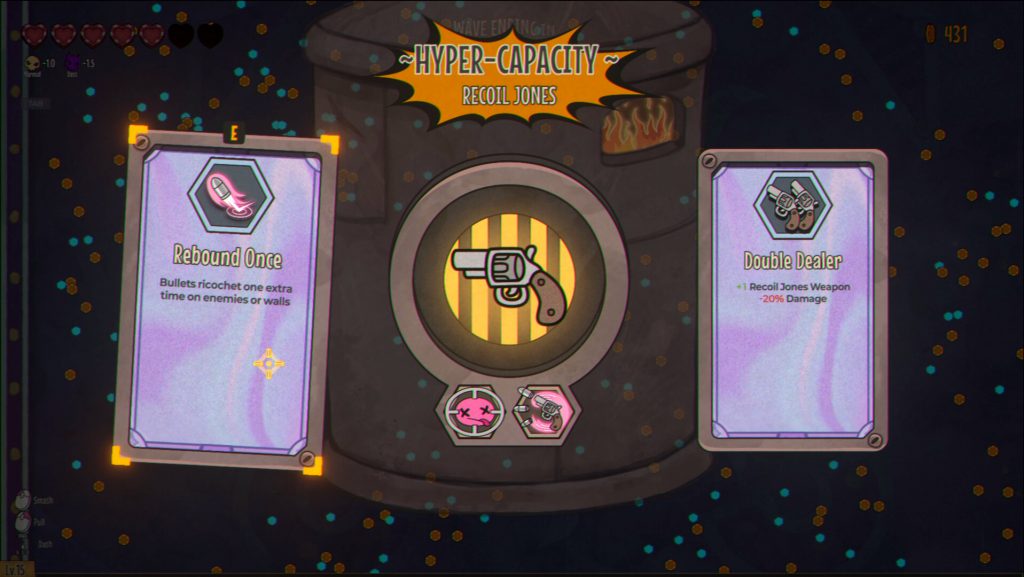
PengPong‘s reflection mechanic introduces a variable that existing bullet heaven games don’t require: active skill expression through precise aiming. The difference between a shot that hits one enemy and a shot that bounces through eight enemies is the angle at which the player deflects the initial projectile. This is a skill ceiling that pure auto-attack games don’t have — the theoretical maximum performance of a given build is achievable regardless of player skill; in PengPong, the same build produces different results based on how well the player executes the reflection geometry.
This doesn’t make PengPong a pure skill game — the roguelite build progression still provides the primary power growth, and a well-constructed build with mediocre execution outperforms a poorly-constructed build with excellent execution. But it adds a layer of mechanical engagement that keeps each combat moment active rather than passive, and it creates the specific satisfaction of a chain reaction executed exactly as planned.
Sandy Floor CEO Lee Jong-chang describes the target audience precisely: “gamers who love survivor-like games but miss the physical feel of skilled play.” This is a real segment — players who bounced off auto-attack bullet heaven games not because they dislike the genre structure but because they specifically want active combat agency.
The Pinball Ancestry
The hockey stick deflection mechanic places PengPong in the ancestry of pinball and breakout games — spatial games built entirely around angle management and consequence chains. Pinball’s appeal is specifically the unpredictability of perfect execution creating imperfect results: you aimed the plunger precisely but the ball bounced differently than expected, creating either disaster or opportunity.
PengPong domesticates this unpredictability within the roguelite structure. The player has more control over the initial angle than the pinball’s launch mechanism allows, which makes successful chain executions feel more attributable to player skill than luck. But the interaction of multiple projectiles in a dense battlefield introduces enough emergent complexity that planning gives way to improvisation, which gives way to occasional spectacular unplanned outcomes — the bullet heaven equivalent of a multiball.
The vintage cartoon aesthetic (1930s-1980s animation visual style, as noted in earlier preview coverage) pairs well with this pinball-inflected gameplay. Rubber-hose animation characters have a physical quality — bouncy, elastically responsive to impact — that matches the feel of a game built around physical object reflection.
The Development Validation History
Four rounds of focus group testing with 150+ global user feedback participants, a G.ROUND intensive user test earning the highest score, G-STAR 2025 Indie Showcase Best Game from audience voting, Steam Next Fest June 2026 top 81 ranking — this is an unusually well-validated pre-launch development process.
The significance of this testing history is what it means for the August 20 release: the game arriving at launch has been substantially shaped by player response rather than purely by developer vision. The 30-floor restructuring from the previous wave system, the lobby and progression system overhaul, the boss pattern improvements — these are specific changes made in response to specific feedback rather than assumed improvements.
Each round of testing that produces specific design changes reduces the gap between what the developer thinks the game is and what players actually experience. Four rounds of this is more than most indie games receive, and the result is a v1.0 whose rough edges have been identified and addressed before release rather than discovered by paying customers afterward.
The Structure and Content
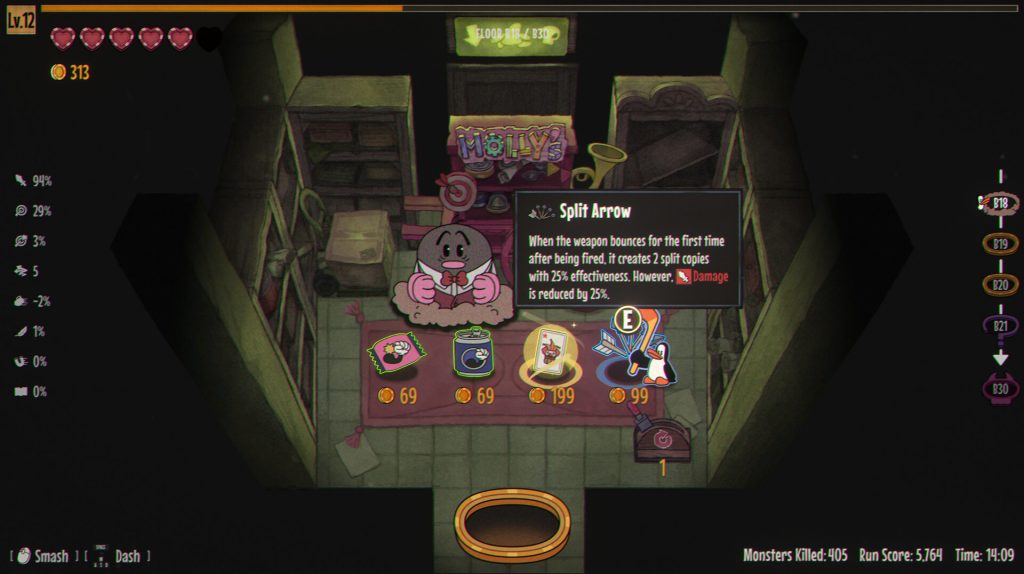
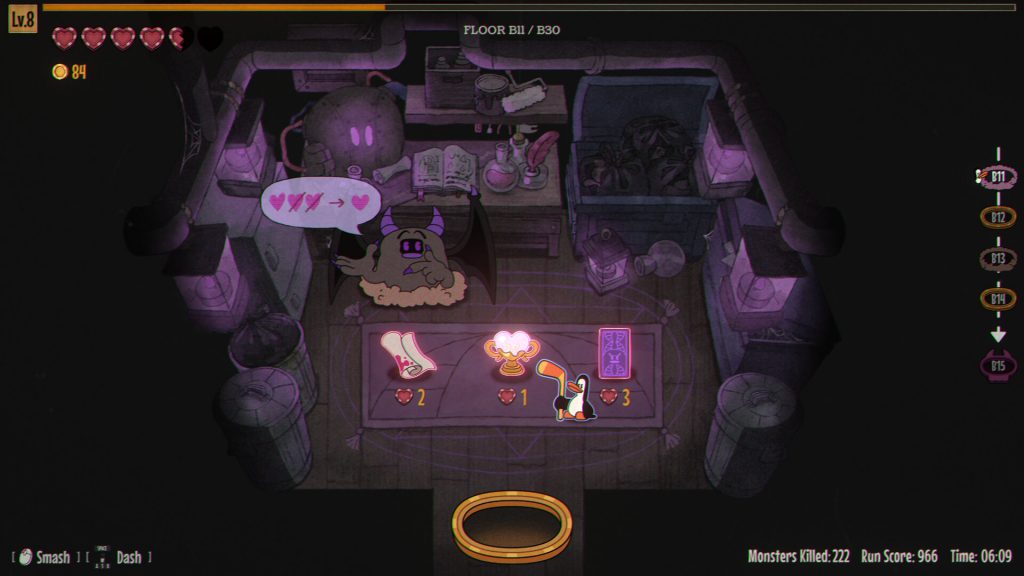
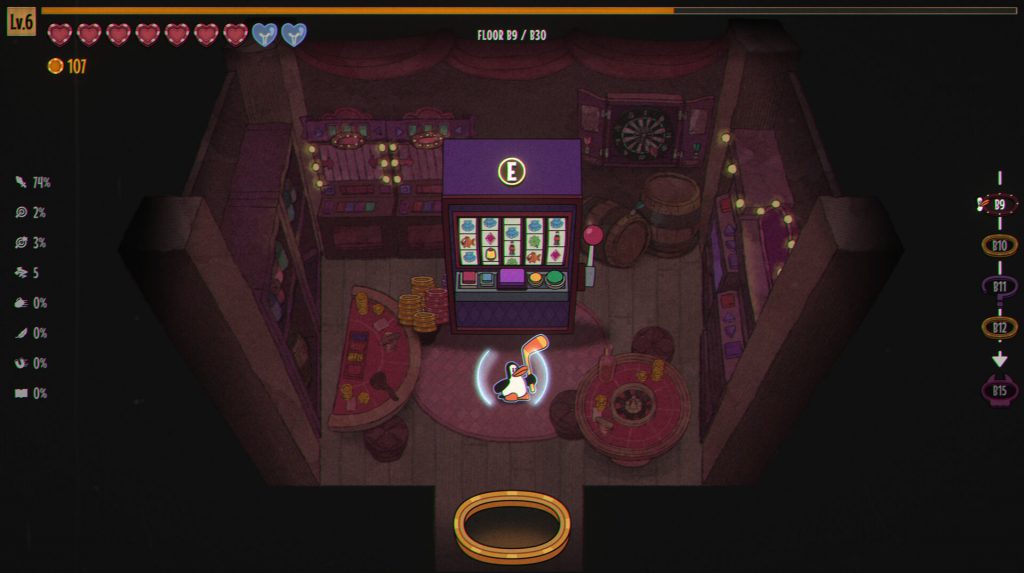
Thirty floors replacing the previous wave structure provide clear progression benchmarks rather than indefinite wave escalation. A floor-based structure gives players a concrete sense of where they are in the run — floor 10 of 30 is a different cognitive position than “wave 100 of infinite” — and creates natural difficulty escalation checkpoints.
The planned post-launch 2-player co-op mode suggests Sandy Floor views the core game as a single-player experience first, with the cooperative dimension as an addition rather than a foundation. This is the opposite of games designed around cooperative play from the start, and it means the single-player experience should be complete and satisfying without the co-op mode.
The Gamirror Games co-publishing arrangement provides international distribution support alongside Sandy Floor’s domestic publishing. Gamirror Games has been active in helping Korean indie games reach global markets, and their involvement gives PengPong a global release infrastructure that domestic-only publishing wouldn’t provide.
Who This Is For
Strong fit for: bullet heaven/vampire survivors-like players who specifically want active combat agency rather than pure auto-attack structure; pinball and breakout game enthusiasts who appreciate angle calculation and chain reactions; roguelite players who enjoy build variety with active skill expression; players who followed G-STAR 2025 and have been waiting for the full release; K-indie action game enthusiasts; players who found auto-attack bullet heaven games satisfying in structure but lacking in moment-to-moment engagement.
Cautious fit for: bullet heaven players who specifically prefer pure auto-attack (the aiming mechanic adds complexity that the genre typically doesn’t require); players who want large-team cooperative options at launch rather than the post-launch 2-player addition.
Less ideal for: players who dislike roguelite structure; anyone who finds physics-based aiming frustrating rather than satisfying; players seeking narrative content.
What to Watch For
The primary question for PengPong‘s August 20 release is whether the reflection physics feel satisfying across the full 30-floor run. Physics-based combat is engaging when the system is expressive — when different angles produce meaningfully different outcomes and players can see the connection between their input and the results. Whether the reflection geometry remains interesting as runs progress and enemy density increases, or whether it becomes overwhelming to the point where angle calculation breaks down into approximate swinging, will determine the mechanical depth’s staying power.
The co-op mode planned for post-launch raises expectations for the timeline and quality of that addition. The most engaged PengPong players will want to bring friends into the reflection physics system, and how quickly Sandy Floor delivers the cooperative mode will affect the community’s perception of the post-launch support commitment.
The Takeaway
PengPong has earned its pre-launch attention through validation mechanisms that matter: audience vote at G-STAR, top-100 Steam Next Fest ranking from a pool of 4,300 entries, 20,000+ wishlists built through a demonstrated concept rather than marketing spend. The core mechanic — active reflection physics in a bullet heaven structure — addresses a real audience need (skill expression in a skill-passive genre) with a specific and well-tested solution.
Sandy Floor has described wanting to give players “the enjoyment of fun the game itself provides while trying various builds repeatedly without getting bored.” The reflection physics adds the active engagement layer that makes repeated runs feel different through player execution rather than only through build variation — which is the specific thing that sustains roguelite engagement past the point where any particular build feels discovered rather than novel.
The hockey stick is ready. The enemies are coming. The chain reaction is one perfectly calculated angle away.
August 20.
Information related to ‘Pengpong’
| item | detail |
|---|---|
| Developer | Sandy Floor (CEO Lee Jong-chang) |
| Publisher | Sandy Floor × Gamirror Games Co-publishing |
| Genre | Bullet Heaven Roguelike / Reflexive Physics-Based Action |
| Release platform | PC (Steam) |
| Release date | August 20, 2026 |
| demo | Steam free trial demo available |
| Core mechanics | Hockey stick reflex physics-based combat / 30-layer structure |
| Scheduled content | 2-Player Co-op Mode (Scheduled to be added after release) |
| premier | G-STAR 2025 Indie Showcase Audience Choice Award for Best Game |
| Wishlist | more than 20,000 |
| Steam Next Fest Rankings | Ranked 81st out of 4,300 (June 2026) |
| Main Keywords | Roguelike, Survivor, Pinball, Reflexes, Physics, Hands-on, Korean Indie |
| Steam Page | Shortcut |