Outbound — Square Glade Games’ cozy campervan open-world adventure set in a near-future sustainable energy utopia — has delivered its first major content update less than two months after launch. The Fishing Update arrives free across all six platforms simultaneously, adding 32 fish species across 4 biomes, three fishing rod tiers, fish tank display options, fisherman’s cabin exploration points, 6 new staircase types, and 4 new interior door options. For a game that launched to 250,000+ players on the strength of its core premise (electric campervan as home, world as destination), the update strengthens two of the experience’s most natural extensions: the world’s ecosystem and the home’s architectural possibilities.
[Related Article] A healing trip in a single camper van… ‘Outbound’ officially launched
The Fishing System Design Philosophy
The most notable detail in the Fishing Update isn’t the 32 fish species or the biome variety — it’s the design intent statement. The developers describe the fishing system as designed around collection and decoration rather than survival. Fish are journal entries and aquarium inhabitants, not food or crafting materials.
This distinction matters significantly for the kind of experience the update is building. Survival game fishing creates instrumental motivation: catch fish to eat, maintain stat bars, sustain the progression loop. Collection-oriented fishing creates intrinsic motivation: catch fish because completing the journal is satisfying, because the specific fish in your tank is an aesthetic and personal choice. After all, seeing all 32 species catalogued represents accomplished exploration.
For Outbound specifically, this design choice is coherent with the game’s foundational premise. A sustainable utopian world where energy is abundant and survival isn’t precarious, doesn’t need fishing for sustenance. But a world built around cozy exploration and the pleasure of making a mobile home genuinely yours benefits enormously from a collection system that rewards attention to different water bodies across different biomes with specific, catalogueable, displayable finds.
The three fishing rod tiers tied to specific body of water types add light mechanical depth — you can’t simply fish anywhere with any equipment, requiring some attention to which rod suits which environment. This creates gentle discovery motivation to explore different water bodies rather than maximizing efficiency at any single location.
The Architecture Expansion
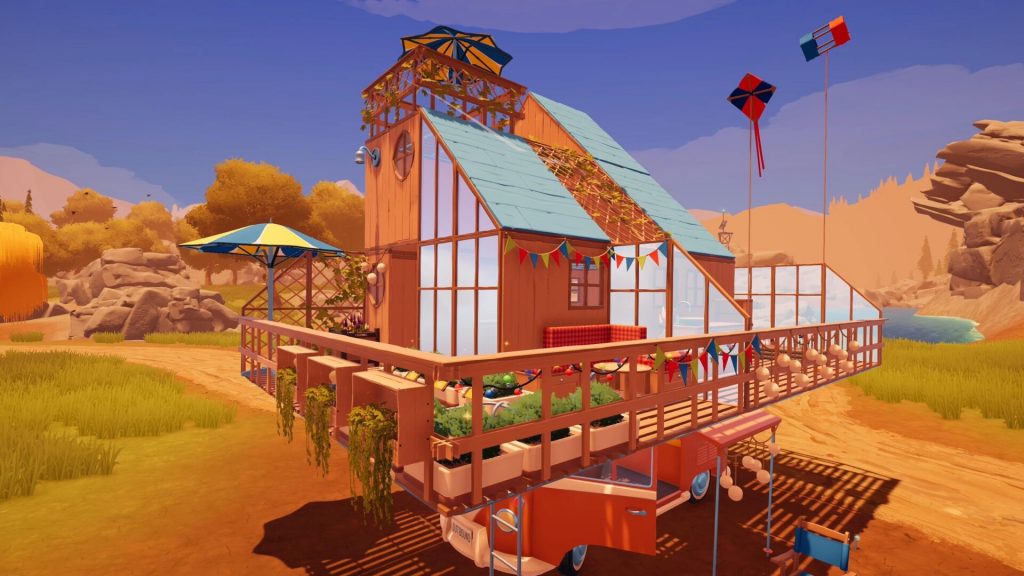
Six new staircase types enabling multi-level structures is a more significant addition than it might initially appear. The modular campervan building system’s previous limitation to essentially single-level interior design constrained the spatial possibilities for player expression. Multi-level interiors — lofted sleeping areas above living spaces, rooftop access from interior stairs, split-level room configurations — fundamentally expand what players can build.
Four new door types add room division options and similarly expand architectural expression. Interior doors are the difference between a campervan that’s one open space and one that has genuinely distinct rooms with functional separation — privacy, designated purposes, the specific satisfactions of designing a home rather than a vehicle.
The fisherman’s cabin scattered across the world serves as exploration landmarks that create natural destinations for the fishing content. Exploration games benefit from having reasons to go to specific places rather than anywhere being equally valid as a destination; the cabins turn bodies of water from background landscape into destinations worth seeking.
The Honest Reception Assessment
Outbound‘s commercial performance is genuinely strong — 250,000+ players in weeks from a game with $24.99 pricing represents real engagement. The 1,000,000+ pre-launch Steam wishlists indicated significant pre-existing audience appetite for the campervan cozy exploration concept. These numbers represent players who found the game and stayed with it.
The Mostly Positive rating from 1,500 reviews, however, indicates the experience has generated mixed responses rather than the near-unanimous enthusiasm that the pre-launch wishlist count might have predicted. The specific criticisms are worth taking seriously rather than dismissing as unreasonable expectations: content volume concerns and repetitive crafting systems are legitimate feedback about whether a game sustains engagement across extended play.
The developer response controversy — where initial reactions to negative reviews created community friction before the team adjusted its approach — is worth noting because how studios respond to criticism affects long-term community trust. The pivot to focusing on multiplayer stabilization, UI improvements, and bug fixes represents the correct post-launch development priority ordering for a game where these were the primary negative feedback points.
TierraGamer’s 75/100, But Why Tho’s praise for beautiful landscapes and relaxed play, and TechRadar’s concern about repetition in extended sessions constitute a coherent picture: Outbound delivers its atmospheric promise and the experience of its world compellingly, while the systems underneath that atmosphere may not provide sufficient variety for players who engage with it as a deep survival craft game rather than a cozy exploration experience.
The Fishing Update directly addresses the content volume concern by adding meaningful new activity. Whether 32 fish species and the associated collection gameplay is sufficient to address this concern for players who found the initial content thin depends on whether those players specifically wanted more to do or specifically wanted the existing systems to be deeper.
The Post-Launch Update Commitment
Delivering a free, simultaneous multi-platform update less than two months after launch signals Square Glade Games’ commitment to supporting Outbound as a live game rather than treating it as a completed product. For a game that sold 250,000 copies at $24.99, the post-launch community is a constituency worth maintaining — each retained player is both a potential future content purchaser and a word-of-mouth advocate.
The simultaneous multi-platform delivery deserves specific acknowledgment because it’s genuinely difficult. Maintaining update parity across PC (two storefronts), PS5, Xbox, Switch, and Switch 2 simultaneously requires development and QA infrastructure that many small studios treat as prohibitively complex, choosing instead to deliver updates on PC first and console later. Square Glade Games’ commitment to simultaneous release protects the console player community from the second-class treatment that often accompanies this kind of asymmetric update scheduling.
Publisher Silver Lining Interactive’s involvement presumably contributes to this multi-platform support infrastructure — the publishing relationship providing platform certification management that allows the development team to focus on content rather than platform compliance.
The Outbound Core Experience
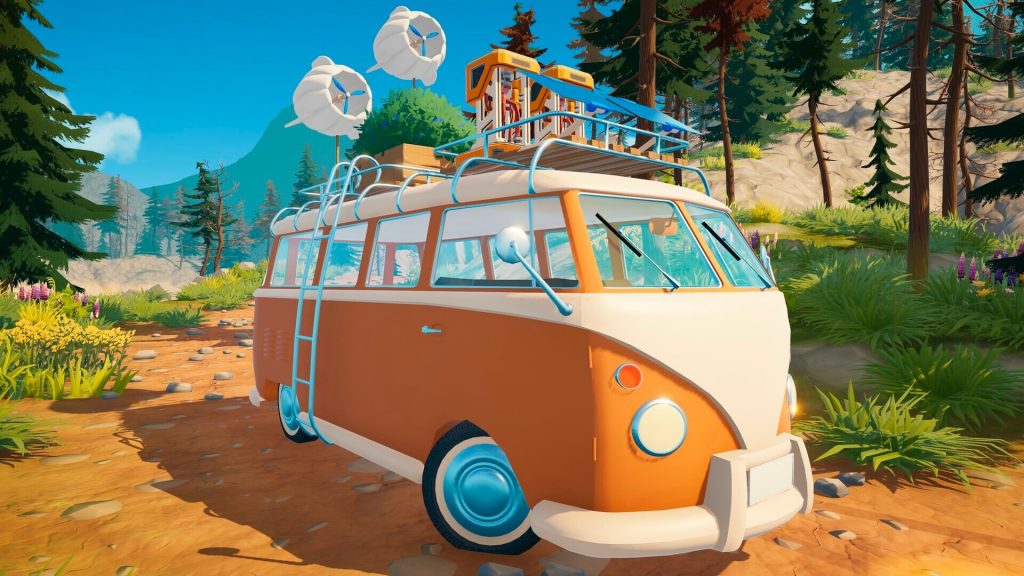
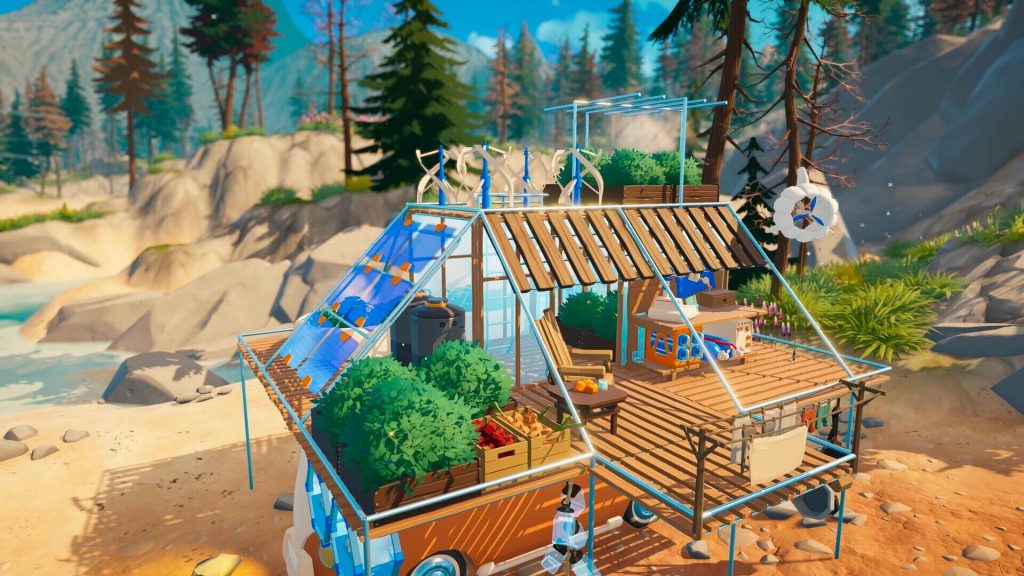
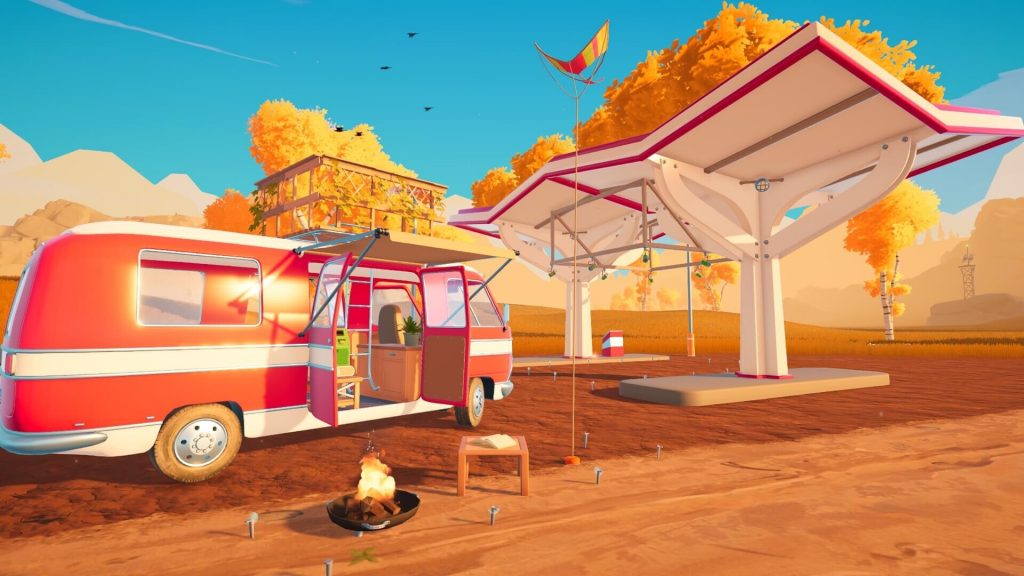
For players unfamiliar with the base game, Outbound is set in a near-future world where sustainable energy has transformed society. Players start with an empty electric campervan and build it into a genuine home while traveling an open world. Solar panels, wind turbines, and hydroelectric generation power the vehicle and camp systems. The modular building system covers the campervan interior and exterior, the roof (which can hold a small farm), and all the furnishing and decoration within. The Paws & Whiskers lodge provides pet adoption options. Up to four players can share this mobile home experience online.
The core fantasy is specifically the freedom of having a home that goes with you — not survival in a hostile world but exploration of a welcoming one from a base that’s entirely personal. This distinguishes Outbound from survival craft games that use similar building systems for protection against threats; in Outbound, the building is an expression rather than a defense.
Who This Is For
Strong fit for: cozy game enthusiasts who specifically want exploration and base building rather than survival pressure; Stardew Valley fans who want the collection and decorating satisfaction in an open-world mobile context; fishing game enthusiasts who specifically want collection-oriented rather than survival-oriented fishing; cooperative gaming groups seeking relaxed shared-space experiences; Nintendo Switch players wanting cozy exploration with quality production values; completionists motivated by fish journal completion.
Cautious fit for: players who specifically want deeper survival and crafting systems (the Fishing Update adds collection content but not survival depth); anyone who found the initial content volume insufficient and is waiting for more substantial content before returning.
Less ideal for: players seeking challenging survival gameplay; anyone who dislikes open-ended cozy games without clear narrative structure; players expecting the building depth of dedicated construction games like Valheim or 7 Days to Die.
What to Watch For
The Fishing Update establishes a post-launch support pattern. Future updates will reveal whether Square Glade Games is treating Outbound as a game requiring content cadence to maintain engagement or as a complete experience being polished.
The repetitive crafting concern from negative reviews suggests the next most impactful update would address system depth rather than activity variety — adding more things to do has limited value if the underlying systems don’t sustain engagement. Whether Square Glade Games interprets their review feedback as “players want more content” or “players want deeper systems” will shape the update roadmap’s effect on the Mostly Positive rating.
The Takeaway
The Fishing Update is exactly what it should be: a meaningful content addition that expands two natural dimensions of Outbound‘s experience (the world’s ecosystem and the home’s architectural possibilities), delivered free to all existing players simultaneously across six platforms, two months after launch. The 32 fish species and collection-oriented design philosophy add the right kind of content for a game built around personal expression and world exploration rather than survival optimization.
For the 250,000+ players who found Outbound and stayed with it, the update gives them new reasons to engage with biomes they may have already explored and new architectural tools for continuing to make their campervan genuinely their own. For players who bounced off the initial version’s content concerns, the Fishing Update alone probably isn’t sufficient to change the fundamental systems experience — though it does represent a studio that’s actively listening and continuing to build.
Somewhere in the sustainable utopia, four friends have parked their campervan beside a mountain lake. Two are fishing, trying to find a species that hasn’t appeared in the journal yet. One is inside, trying to figure out which of the six new staircases creates the loft they’ve been imagining. The fourth is up on the roof, checking the solar panel output.
This is the life Outbound is selling. For the people who want it, the Fishing Update just made it better.
Information related to ‘Outbound’
| item | detail |
|---|---|
| Developer | Square Glade Games (Netherlands, co-founded by Toby and Mark) |
| Publisher | Silver Lining Interactive |
| Genre | Cozy Exploration / Base Building / Open World Survival Craft |
| Release platform | PC (Steam · Epic Games Store), PS5, Xbox Series X|S, Nintendo Switch, Nintendo Switch 2 |
| Release date | May 11, 2026 (PC·Xbox) / May 14, 2026 (PS5·Switch) |
| Phishing update | July 1, 2026 (Free on all platforms) |
| price | $24.99 / £19.99 |
| Player count | Single Player / Online Co-op (Up to 4 players) |
| Launch Performance | Over 250,000 players within weeks of launch, surpassed 1 million on Steam wishlists prior to release |
| core system | Modular campervan construction, energy management, fishing and crop cultivation, pets, world exploration |
| Steam Page | Shortcut |