Another shift begins. You descend hundreds of meters underground, arrange your monitors, settle into the guard booth, and start checking who is — and isn’t — allowed to use the elevator. The credentials look correct. The person seems normal. But something about the way they hold their badge makes you look twice. Security 51 from Alawar launches July 27 on Steam, combining the bureaucratic document-checking of Papers, Please with the paranoid entity-identification of SCP Foundation horror. The Steam demo has earned 82% Very Positive from 123 reviews.
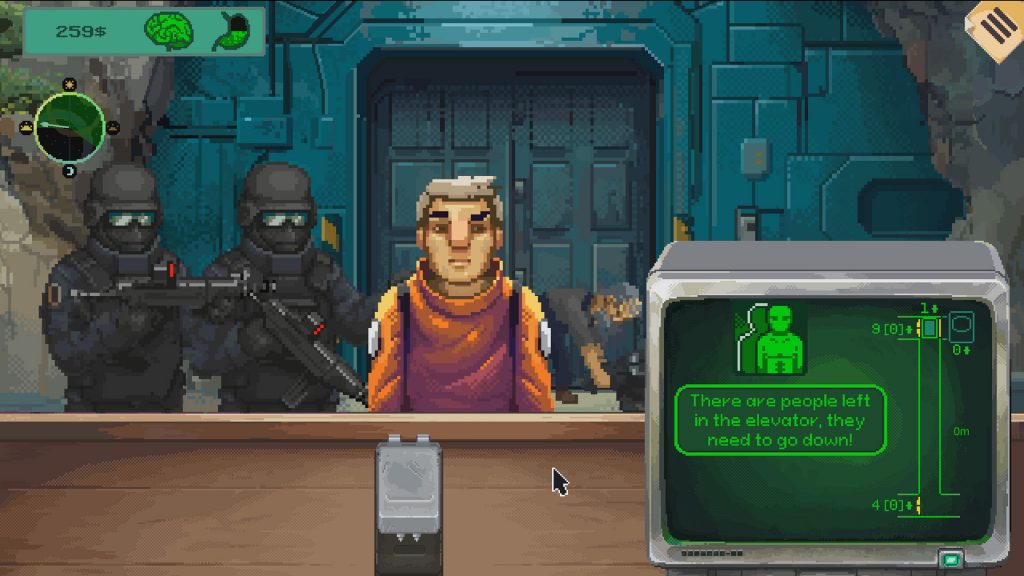
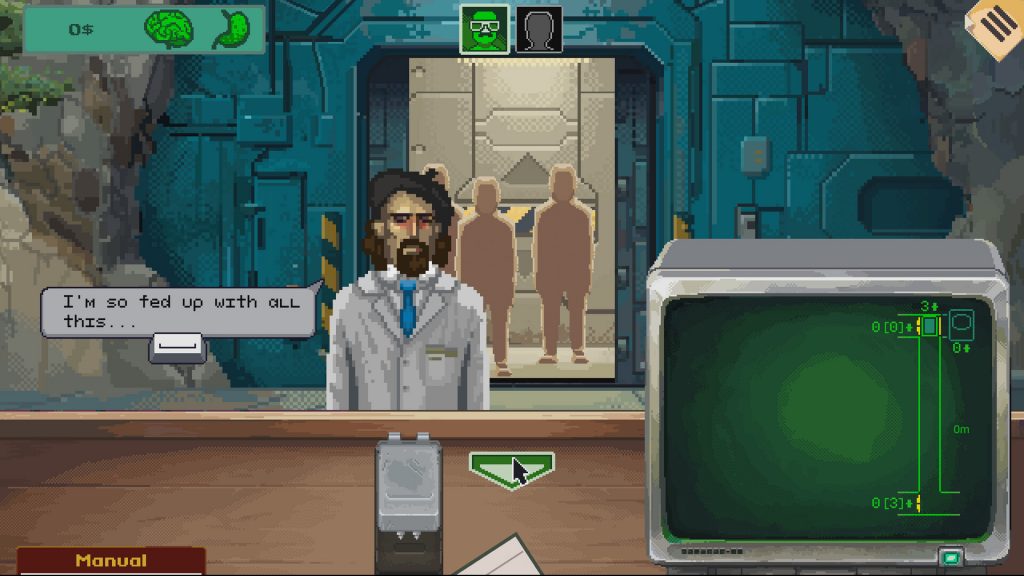
The concept is elegant and immediately legible: you are a security guard at Area 51’s underground facility, and your job is to determine who boards the elevator and who never leaves. The premise takes Papers, Please‘s “find the discrepancy” mechanical loop and applies it to a setting where the discrepancies aren’t forged documents but inhuman entities attempting to pass as human. The gameplay question shifts from “is this visa expired?” to “is this person a person?”
The Papers, Please Lineage
Lucas Pope’s Papers, Please (2013) established one of indie gaming’s most distinctive genres — the bureaucratic simulator where the moral and psychological weight of institutional authority falls on the player through mundane decision-making. Checking documents, stamping approvals and rejections, catching discrepancies between physical reality and official paperwork: these are not conventionally exciting game verbs. Papers, Please made them genuinely tense by making every decision consequential and by embedding them in a setting (a totalitarian border checkpoint) where the human cost of those decisions was always visible.
The games that have followed in this lineage — Orwell, Do Not Feed the Monkeys, Not Tonight, Beholder — have all found different settings and themes while preserving the core tension: you are a functionary within a system, your decisions have real consequences, and the system’s demands often conflict with human decency.
Security 51 applies this template to a specifically American paranoia context. Area 51 as a setting carries decades of accumulated conspiracy mythology — secret government facilities, extraterrestrial research, security classifications that exist precisely to hide what most people aren’t cleared to know. Placing the player as a low-level security guard in this mythology is perfect for the Papers, Please formula: you are the bureaucratic instrument of a system whose full scope is deliberately withheld from you.
The Alawar Pedigree
Alawar’s studio history makes Security 51 feel like a natural culmination rather than a genre experiment. The Beholder series — where players manage an apartment building under a totalitarian government, simultaneously surveilling tenants and managing their own moral compromises — established Alawar as the studio most committed to games about surveillance, authority, and ethical complexity under institutional pressure. Do Not Feed the Monkeys applied similar voyeuristic ethical anxiety to the act of watching people through surveillance cameras. Wall World and Karate Survivor show genre range, but the thread connecting Alawar’s most distinctive work is moral weight under systemic constraint.
Security 51 extends this lineage into horror territory. Previous Alawar titles created moral anxiety through human situations — the person you’re surveilling has needs and secrets; the tenant you’re reporting on has a family. Security 51 creates a different anxiety: what if the entity you’re processing isn’t human at all, and the stakes of misidentification are existential rather than merely ethical?
The Progressive Scanner System
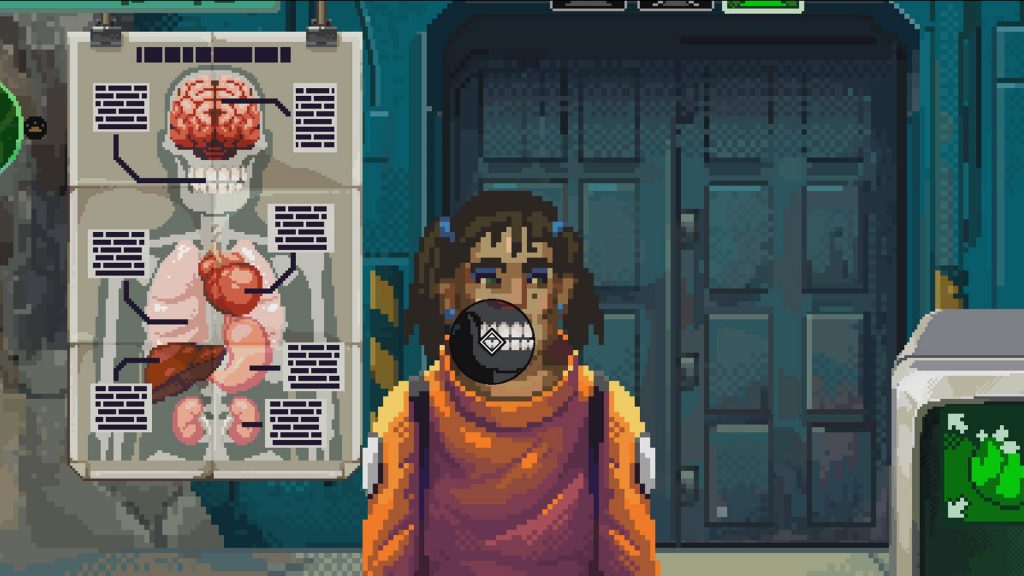
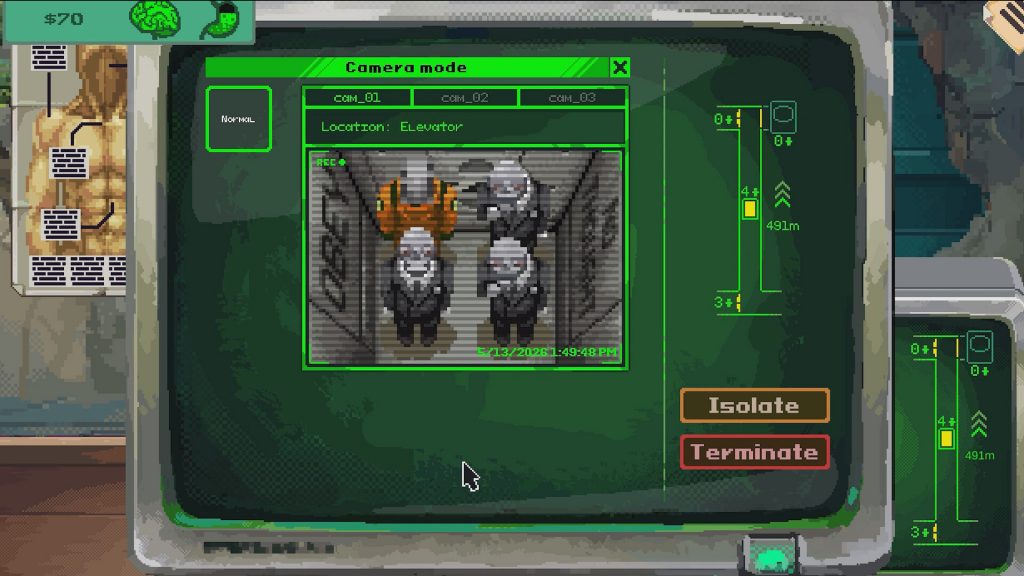
The core mechanical escalation — progressively unlocking more sophisticated detection equipment — is the Security 51 design element most worth examining. Starting with document review and verbal assessment, then adding thermal imaging, bone scanning, fingerprinting, and blood analysis creates a specific narrative of growing capability paired with growing uncertainty.
This escalation works psychologically in a specific way. Early shifts with limited tools create uncertainty through ignorance: you can only check what you can check, and you know there’s more you’re not seeing. Later shifts with advanced tools create uncertainty through information overload: now you have thermal imaging showing something’s body heat is wrong, bone scans revealing an internal structure that doesn’t match human anatomy, blood analysis returning results that fall outside normal human parameters. More information doesn’t necessarily create more certainty — it creates more specific ways to be unsettled.
The bone scanner specifically is a design choice that communicates Lovecraftian-adjacent horror. What’s wrong with the bones of the entity in front of you? What would a bone scan show that would confirm your worst suspicion? The tool exists to answer a question that human sensory experience can’t, which means the horror of what the scanner might reveal is built into the mechanic before it reveals anything.
Thermal imaging’s horror application is equally elegant. Body heat as a distinguishing characteristic assumes biological bodies that generate heat in human-typical ways. An entity that passes every documentary check but shows thermal imaging that doesn’t match human body heat patterns has definitively revealed itself through a layer of physical reality it couldn’t control or falsify.
The SCP Foundation Connection
SCP Foundation is the collaborative fiction project that has been producing procedurally expanding horror mythology since 2008 — thousands of documented “Secure, Contain, Protect” entries describing anomalous entities and objects, written in the clinical bureaucratic language of institutional documentation. The SCP aesthetic is specifically the intersection of bureaucratic language and existential horror: the horror is real and devastating, but it’s described in the flat affect of a government report.
This aesthetic aligns perfectly with both Security 51‘s security-guard setting and Alawar’s bureaucratic game design tradition. A guard checking credentials in Area 51’s underground bunker is already operating in SCP Foundation aesthetic territory — the government documentation, the security classifications, the institutional authority that exists to contain something that can’t be publicly acknowledged.
The SCP Foundation horror model — where entities that appear human have specific observable differences that can be detected through the right investigative approach — maps directly onto Security 51‘s scanner progression. SCP documentation frequently describes how anomalous entities can be identified: what they do wrong when attempting to pass as human, what physical characteristics betray their nature, and what institutional processes exist specifically to catch them. The game is, in essence, asking players to run SCP containment procedures.
The Repetition Problem
The honest assessment requires addressing the gameplay feedback directly. Mainstream Outside’s review — “around day 12, fatigue from repetition begins to set in” — identifies a structural challenge that the full release must address. The Papers, Please lineage has a known fatigue risk: the document-checking loop is compelling in early stages when it’s new and when escalation is providing regular novelty, but becomes grinding when it stabilizes into a known routine.
Papers, Please addressed this through narrative escalation — the political situation in Arstotzka deteriorates, new document types are introduced, the cost of mistakes increases, and moral dilemmas become more acute. Security 51 has a natural escalation path through the scanner system, but whether new tools arrive frequently enough to prevent repetition fatigue, and whether the narrative around them is compelling enough to make each new capability feel like a story development rather than a mechanical addition, will determine whether the full game sustains engagement beyond the demo’s scope.
The recommendation that “additional side content would significantly improve the game” points toward the specific solution: diegetic content that gives shifts character beyond the entity-checking routine. What happens in the facility between checks? What do colleagues say? What documents do you overhear or accidentally encounter? The Papers, Please model enriched its bureaucratic loop with the human context of Arstotzka’s residents, guards, and political events visible through the checkpoint. Security 51 needs an equivalent — things happening in Area 51’s underground facility that make each shift feel like a chapter of an unfolding story rather than a repetition of the previous shift.
The Pixel Aesthetic and 1990s Temporal Setting
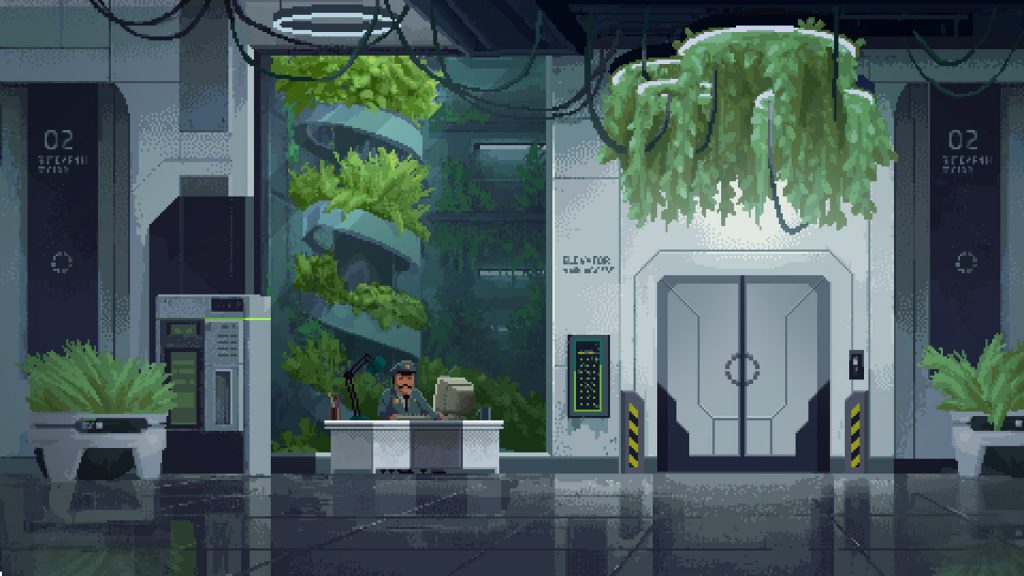
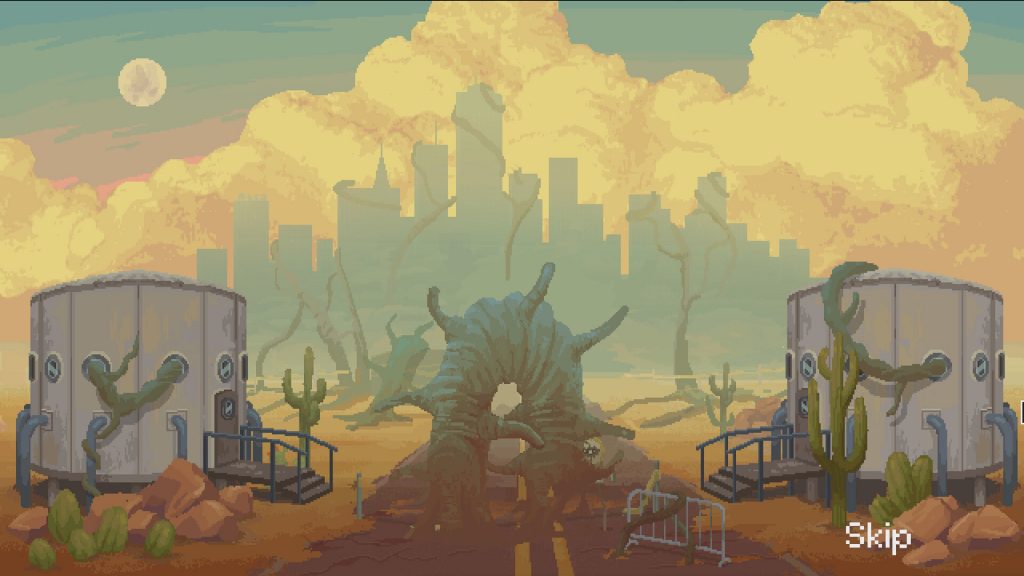
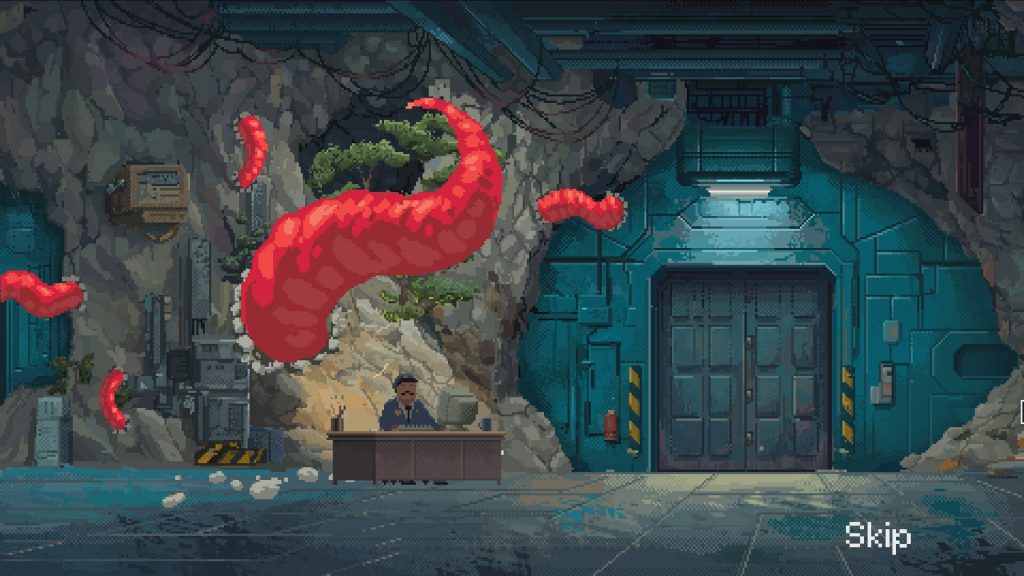
The 1990s retro pixel aesthetic for Area 51 is the perfect aesthetic choice. Area 51 conspiracy culture reached its cultural peak in the 1990s — The X-Files, alien abduction narratives, the specific visual language of grainy VHS footage, and government-issued equipment. The game’s temporal setting isn’t arbitrary nostalgia; it’s placing players at the specific historical moment when Area 51 mythology was most culturally alive.
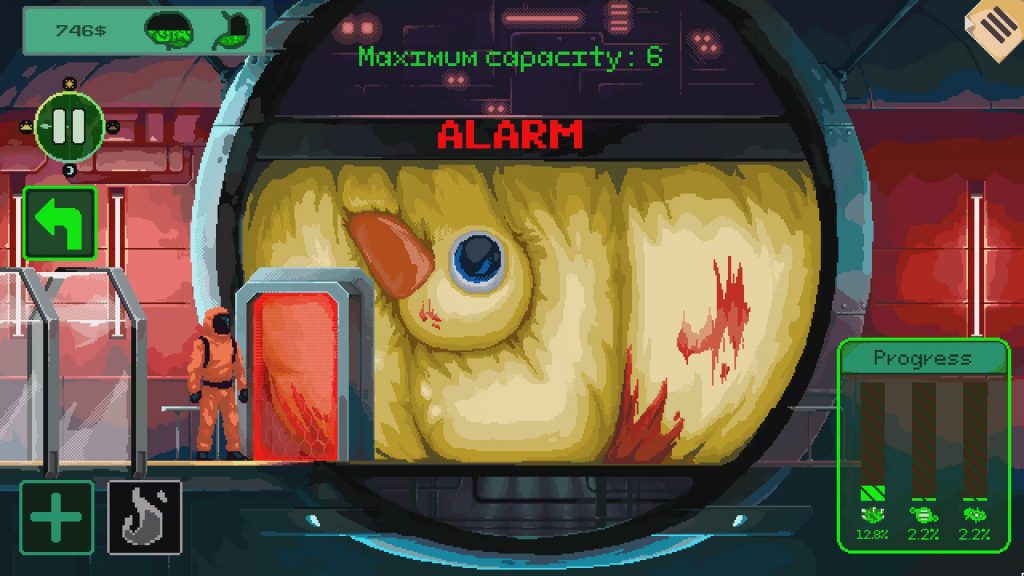
Pixel graphics in atmospheric horror have a specific quality different from both photorealism and stylized 3D. The limited visual information in pixel art creates the same imagination-filling effect that radio horror achieves through audio — the specifics that the graphics don’t render are completed by the player’s imagination. Lovecraftian horror specifically benefits from this treatment: the less precisely the entity is depicted, the more unsettling it can be.
The clinical, bureaucratic 1990s government facility aesthetic — chunky monitors, printed documents, fluorescent lighting, security check procedures done with physical stamps and physical scanners — grounds the alien horror in the specific material culture of that era.
Who This Is For
Strong fit for: Papers, Please enthusiasts seeking a darker horror register; SCP Foundation readers who want interactive engagement with that aesthetic; Area 51 and government conspiracy mythology fans; atmospheric horror players who prefer psychological tension over jump scares; players who appreciated Beholder and Alawar’s surveillance-game catalog; document-puzzle and investigation game fans; players who enjoy games where information is power and withholding information creates dread.
Cautious fit for: players who specifically found Papers, Please repetitive and are concerned the formula will reproduce that experience; anyone who prefers active horror gameplay over procedural observation.
Less ideal for: players seeking action-based horror; anyone who finds bureaucratic simulation tedious regardless of setting; players who need fast-paced gameplay over deliberate, atmospheric pacing.
What to Watch For
A few questions will shape Security 51‘s July 27 reception.
The first is how aggressively the scanner escalation paces. If new detection tools arrive frequently and each reveals disturbing information specific to that tool’s capabilities, the repetition concern is manageable. If the game reaches a stable scanner loadout too early and then repeats the same detection routine with varied entities, fatigue will set in for many players.
The second is the narrative content density. What happens in Area 51 between entity-checking sessions? Whether the facility feels inhabited by an ongoing story or merely provides bureaucratic tasks will significantly affect the experience’s staying power.
The third is how the long-term consequence system is realized. Decisions affecting multiple shifts later is a compelling structural promise — the entity you let through on day 5 causes consequences on day 10. Whether these delayed consequences create genuine retrospective horror or merely punitive outcomes will determine whether the system adds depth or frustration.
The fourth is content length and pacing. How many shifts does Security 51 contain, and how does it distribute its revelations? A game that reveals too much too quickly loses the paranoid uncertainty that makes entity-checking tense; a game that withholds too long becomes repetitive before payoff arrives.
The Takeaway
Security 51 is one of July 2026’s most anticipated atmospheric horror releases for the specific audience that finds Papers, Please-style bureaucratic tension genuinely compelling. Alawar’s established expertise in morally weighted institutional simulations, combined with the Area 51/SCP Foundation aesthetic and the progressive scanner system, creates a premise with clear potential.
The 82% Very Positive demo reception confirms the atmospheric foundation works. The repetition feedback from extended play identifies the development challenge that the full release must meet: sustaining the paranoid entity-identification tension across the game’s full length without the routine calcifying into mere procedure.
What Yogomi identified — “the process of becoming progressively less certain that the person in front of you is actually human” — is the specific emotional experience Security 51 is designed to produce. That experience, extended and escalated across a full game’s worth of shifts, with consequences that compound across days, would be one of 2026’s most distinctive horror releases.
The shift is starting. The elevator is waiting. The person presenting their credentials looks perfectly normal. But the thermal scanner shows something wrong with the heat distribution in their left hand, and the bone scanner shows a structural configuration that your training tells you shouldn’t exist.
You have to decide. And you won’t find out if you were right until three shifts from now, if ever.
Information regarding ‘Security 51’
| item | detail |
|---|---|
| Developer / Publisher | Alawar (established in 1999) |
| Genre | Atmospheric Horror Security Guard Simulator / Point and Click Puzzle / Investigation |
| Release platform | PC (Steam) |
| Scheduled for release | July 27, 2026 |
| Steam Demo Review | Very positive 82% (123 items) |
| inspiration | Papers, Please / SCP Paranoia |
| background | Area 51 bunker hundreds of meters underground |
| core system | Verification of documents, passes, and verbal orders / Thermal imaging and bone scanners / Elevator control / Dynamic day-night shifts |
| characteristic | Long-term consequences of decisions / Gradual tool unlocking / Pixel graphics / 1990s retro |
| Art style | 2D Pixel Graphics / Retro / Atmosphere |
| Developer’s previous work | Beholder Series / Do Not Feed the Monkeys / Karate Survivor / Wall World |
| Main Keywords | Area 51, Security Guard, Bureaucratic Fear, Papers Please, SCP, Aliens, Conspiracy Theory, Document Review |
| Official Channel | Discord · X · YouTube |
| Steam Page | Go to Wishlist |