A giant sword falls from the sky and impales itself in the world of Armorial. Then the smaller swords begin falling — a rain of cursed blades that slowly drain the world’s vitality, each one feeding the celestial catastrophe overhead. Colt, who discovers he can wield the fallen swords, must collect and master them to fight back against the heaven-born evil destroying his world.
The premise of Swordcery tells you immediately what kind of game this is: swords are the resource, swords are the progression, and the variety of what those swords can do is the mechanical canvas. Mike Henriet and Don Thurakichprempri — two of the six cinematic animators who worked on God of War (2018 Game of the Year) at Sony Santa Monica — spent eight years building it and launched it on Steam Early Access on August 11.
The Eight Years
2019 founding, 2026 Early Access launch: approximately seven years of active development between the studio’s establishment and the first public commercial release. For a two-person team, this timeline reflects the specific challenge of building a complete roguelite action RPG from scratch while presumably maintaining other income — two people cannot simply stop having living expenses for eight years.
What this timeline produces, ideally, is a design that has been iterated on long enough to have had its bad ideas removed and its good ideas developed to appropriate depth. The roguelite genre specifically rewards iteration: the balance between build variety, encounter design, and progression feel is something that becomes clear through repeated playtesting rather than upfront design. Eight years is enough time to discover what isn’t working and fix it.
The God of War background is the credential that gives the studio immediate professional credibility before anyone has played Swordcery. That game’s 2018 GOTY status reflects exceptional animation quality among other things — the cinematic animators who worked on it have demonstrated their capability in one of the industry’s most demanding technical and artistic contexts. What that specific background brings to a roguelite action RPG is a deep understanding of how character movement and combat feel, communicated through animation, which is arguably the genre’s most important quality after gameplay design.
The Design Pivot From Source Material
The specific creative decision that the developers made is worth examining: two people who worked on a game defined by its somber Nordic mythology and weight — God of War‘s deliberate, heavy combat, its oppressive visual palette, its narrative gravity — chose to make something colorful, comedic, and light.
This is not a sequel mentality. These are two people who knew exactly what that other kind of game requires and chose to make something that requires different things. The colorful, vibrant 3D top-down visual style and the playful humor embedded throughout suggest developers who wanted to express creative dimensions that AAA production contexts didn’t accommodate — the specific freedom of not serving a $100M+ franchise.
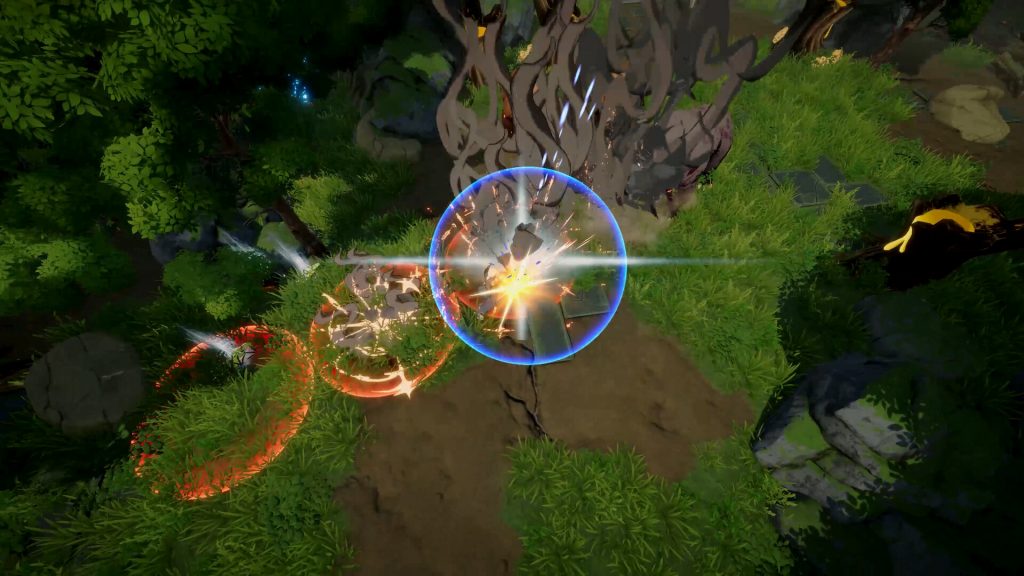
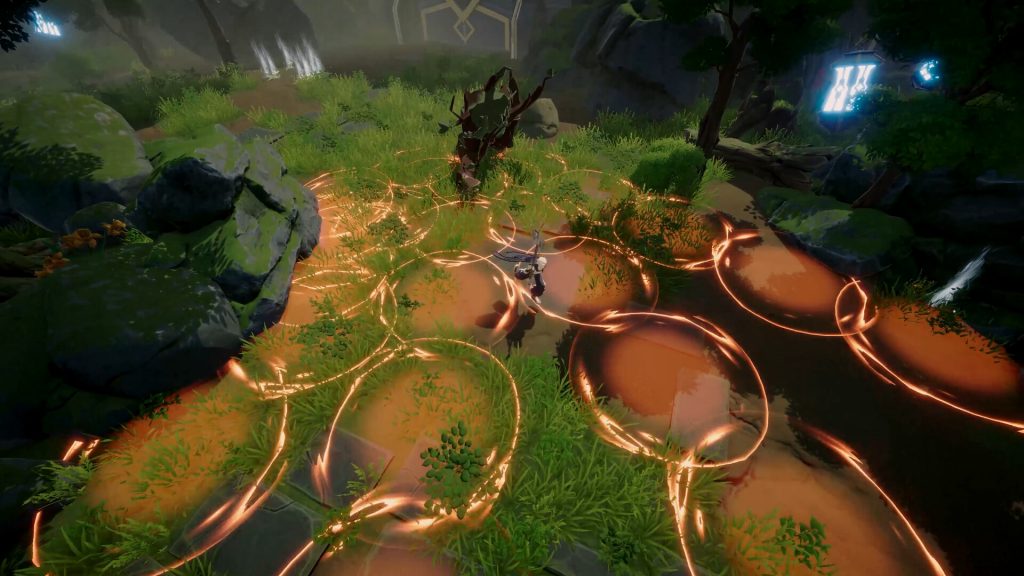
The result, based on the preview coverage and the game’s described content, is a roguelite that uses high-quality animation craft in service of comedy: swords that work like boomerangs, summon lightning, trap enemies in boxes, or generate refrigerators. The absurdity is intentional and deliberate rather than incidental.
The Sword Collection System
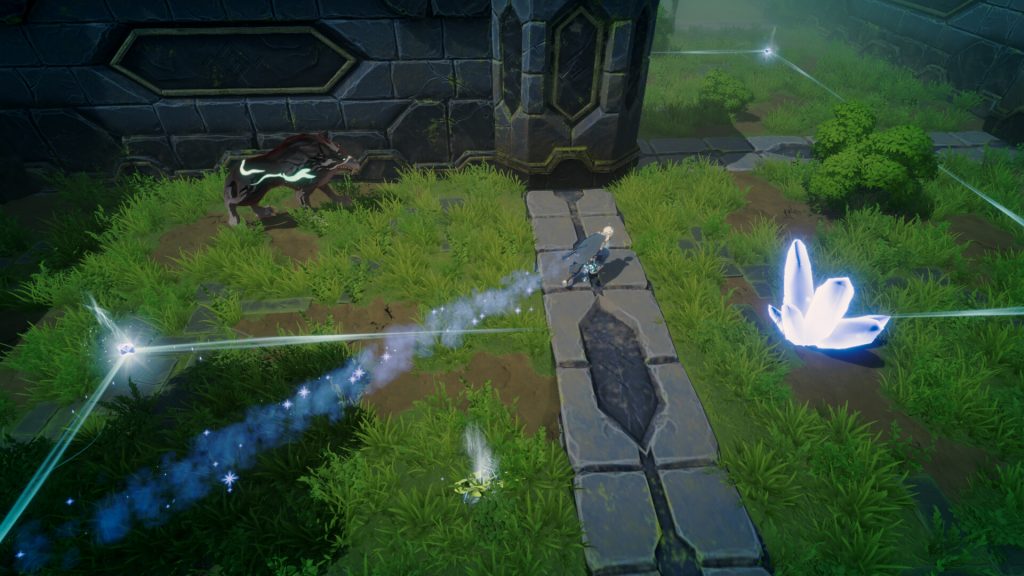
Each sword in Swordcery belongs to a sword class with its own attack patterns and magical abilities. The roguelite run is organized around discovering swords with unique capabilities and assembling them into a functional combat identity, combined with relics and class upgrades that modify how those swords behave.
The specific sword examples — boomerang-throw, lightning strike, enemy containment, ice generation — suggest a design that embraces mechanical variety over physical realism. These are magic swords in a world where magical swords are falling from the sky; the expected function of a sword (cut things) is the baseline from which each blade departs toward something unexpected.
This creates the roguelite’s core replayability engine: what combination of unexpected sword capabilities will this run assemble, and how will they interact? A run that builds around the boomerang-throw sword uses arena space differently than one built around the lightning sword; both use the game’s combat differently than one organized around the ice generation capability. The run-to-run variation emerges from the sword discovery sequence and the player’s choices among discovered options.
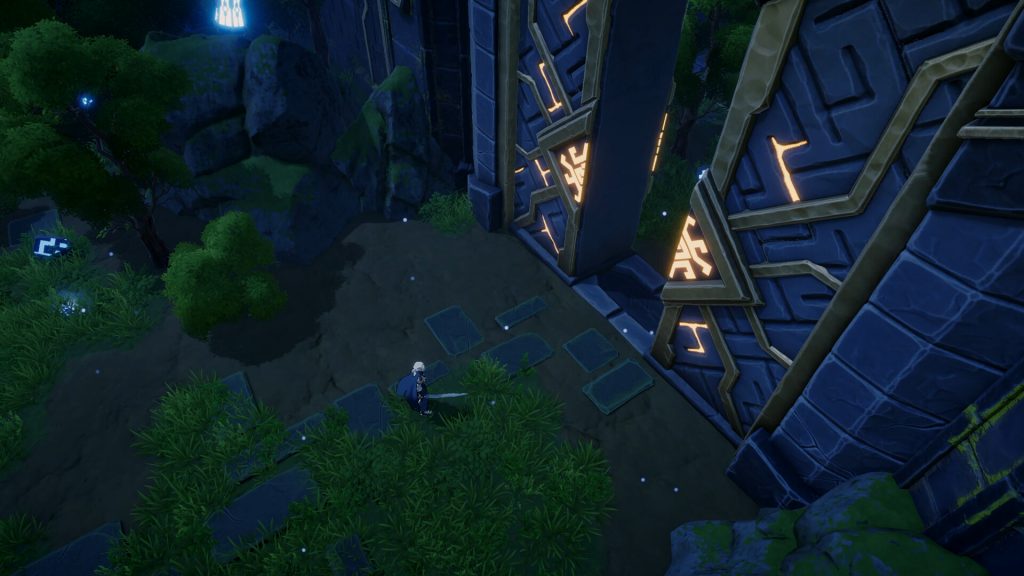
The procedurally generated dungeons vary the context in which those sword combinations are tested — different enemy compositions, different layouts, different demands on what the current build can handle. The combination of procedural environment and procedural build creates the double-layered variability that roguelites need to sustain extended play.
The Press Reception
RPGamer, GameGrin, Capsule Computers, GamesBeat, and DayOne all covered Swordcery before launch, with the God of War animator background and the comedic-roguelite design angle as the primary hooks. This is a meaningful pre-launch press spread for a two-person studio’s debut — it indicates that the concept and the pedigree together were sufficiently interesting to generate coverage without requiring paid promotion.
The 30,000 pre-launch wishlists confirm that the press coverage translated into genuine audience interest. For comparison, 30,000 wishlists is a healthy signal for an indie Early Access launch — not in the tier of viral phenomena, but solidly in the range that suggests a game will find and sustain a player community.
The Early Access Position
The game launched Early Access on August 11. User reviews haven’t accumulated to a meaningful sample size yet — this article is being written immediately post-launch. The free demo provides the most direct evaluation tool for players who want to assess the combat feel before purchasing.
The Early Access model for a roguelite with 8 years of development behind it is an interesting choice — it suggests the developers consider the current build a solid foundation that benefits from community feedback rather than a complete and polished product. Given that roguelite balance and content variety are the dimensions where player feedback is most valuable, this is the correct assessment of where the genre benefits from external input.
Who Is This For
Strong fit for: roguelite action RPG enthusiasts who want sword-collection as the build variety engine; players who appreciate when AAA-pedigree developers apply their craft to original indie projects in unexpected tonal directions; comedic roguelite fans who want high-quality animation supporting absurdist combat mechanics; players who have tried the demo and want the full Early Access content; Hades and similar action roguelite players looking for new entries with strong fundamental feel.
Cautious fit for: players who want the God of War team’s somber gravity rather than comedic lightness; roguelite players who want finished games before purchase; players who need established review scores before evaluating Early Access games.
Less ideal for: players who dislike roguelite structure; anyone wanting cooperative or multiplayer options; players seeking heavy narrative content alongside the roguelite combat.
What to Watch For
The Early Access community’s reception in the first weeks will provide the quality signal that the pre-launch press coverage and wishlist counts cannot. Whether the sword-collection variety sustains engagement across extended play, whether the class upgrade and relic systems create meaningful build depth, and whether the comedic tone remains fresh rather than becoming one-note across a full run are the specific questions player reviews will address.
The post-Early Access roadmap — described as forthcoming — will also clarify what additional content Temple Door Games is planning to add before the 1.0 release.
The Takeaway
Swordcery is two God of War animators making the game they specifically wanted to make rather than the game their professional background might predict — colorful, comedic, sword-collection roguelite rather than somber action epic. Eight years of development and 30,000 pre-launch wishlists got the game to Early Access; the player community’s response to the sword variety, combat feel, and build depth over the coming weeks will determine whether that development period produced what the team was aiming for.
The swords are falling. Armorial is dying. Colt can wield what’s fallen. And somewhere in the procedural dungeon, a boomerang sword and an ice refrigerator sword are about to discover whether they synergize.
Early Access now on Steam. Free demo available. Eight years in the making.
Information regarding ‘Swordcery’
| item | detail |
|---|---|
| Developer | Temple Door Games (Los Angeles, USA, Mike Henrié and Don Turakicci-Prempri, a two-person team) |
| Publisher | Temple Door Games (Self-publishing) |
| Genre | Action / Indie / RPG (Early Access, Hard Slash Roguelike) |
| Release platform | PC (Steam) |
| Early Access Release Date | August 11, 2026 |
| Development period | About 8 years |
| Wishlist | Surpassed 30,000 units just before launch |
| User ratings | Official reviews not yet tallied immediately after Early Access release (Free demo provided separately) |
| Key Experience | Both members of the development team are former cinematic animators from God of War, the 2018 ‘Game of the Year’. |
| Steam Page | Shortcut |