Every actor on the stage has ambitions. Someone wants the villain’s role. Someone refuses to share a scene with a specific colleague. Someone has a fear that makes certain roles impossible. Someone needs the costume changed before they can inhabit the character. And somewhere in the intersection of all these personalities, desires, and conflicts, there’s a casting arrangement that lets the performance actually happen.
I Want to Play the Villain! from Triomatica Games is a logic puzzle game built around this casting problem — finding the arrangement of actors, roles, scenes, and costumes that satisfies everyone’s needs simultaneously. The free Steam demo arrives August 17; Q1 2027 is the full release target across nine platforms.
Triomatica Games is a Ukrainian studio founded in 2020 that handles art, programming, and publishing internally. Boxville — their hand-drawn puzzle adventure about a city of tin-can residents who communicate without words — earned a Very Positive 91% on Steam and won two industry awards before Boxville 2 continued the series with a GDWC 2025 finalist selection. The hand-drawn aesthetic quality that earned those awards carries directly into the new project.
The Casting Puzzle as a Logic Problem
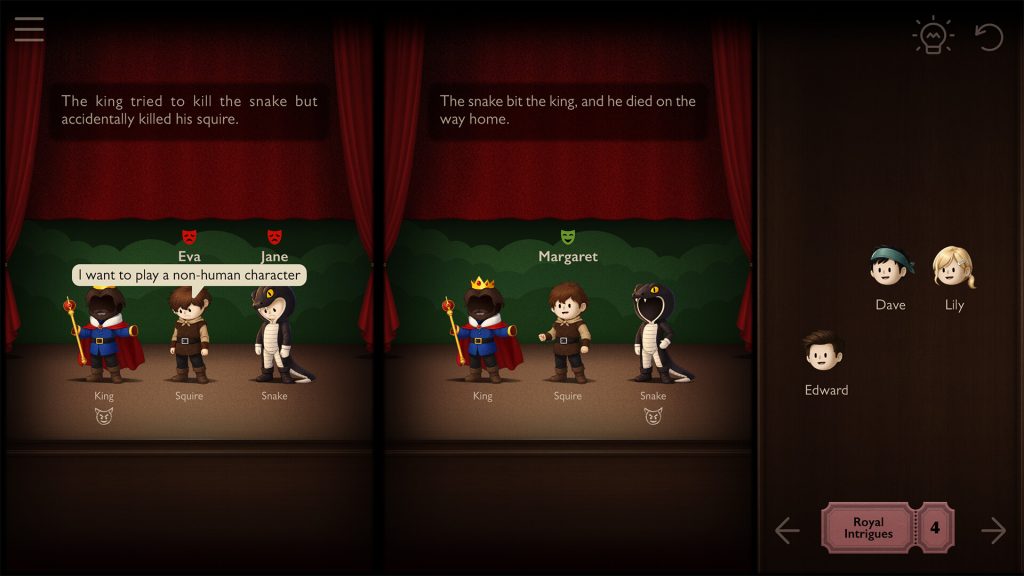
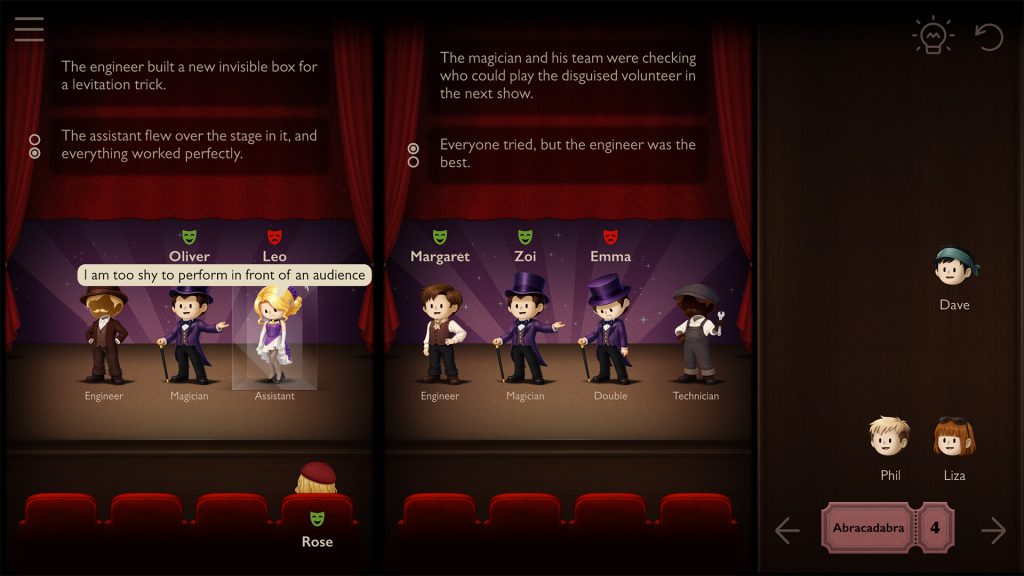
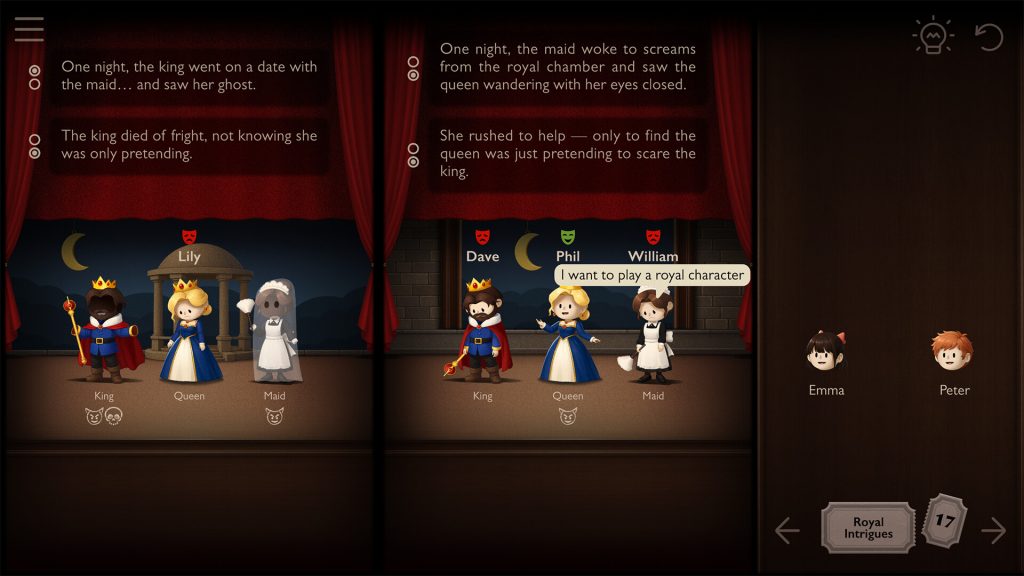
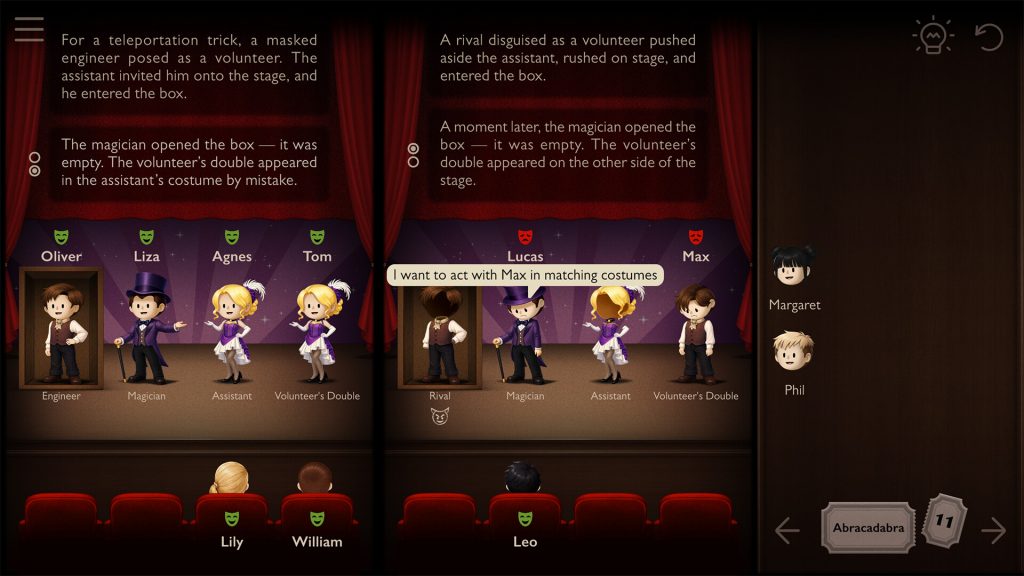
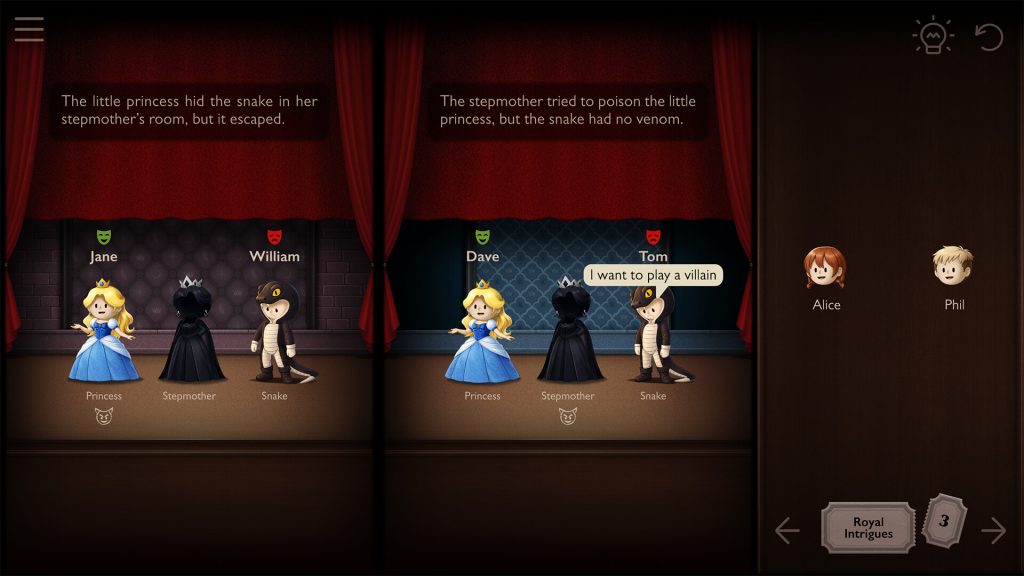
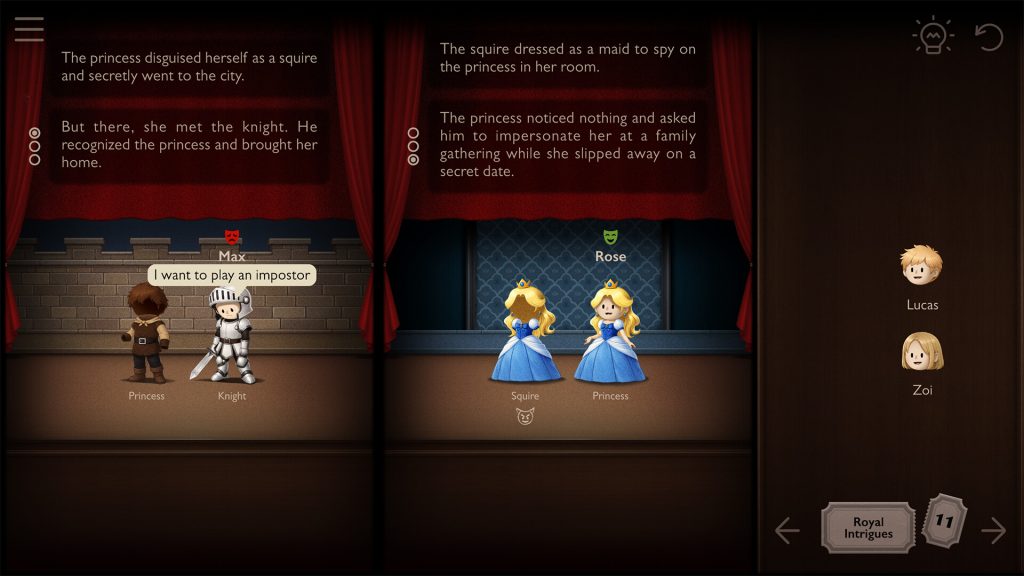
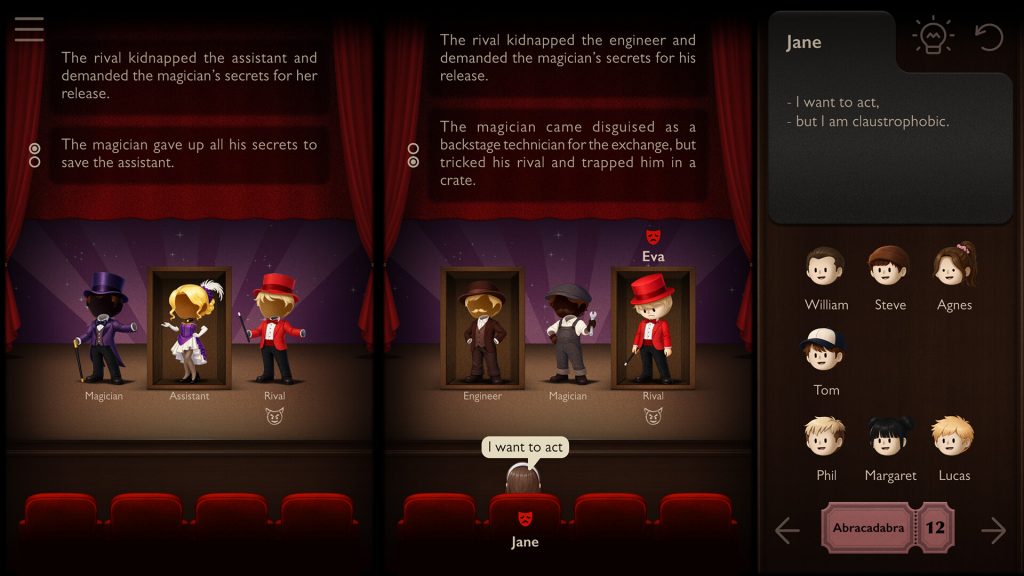
The mechanics described map onto the specific structure of constraint-satisfaction puzzles: given a set of actors with individual preferences, fears, relationships, and ambitions, find an arrangement of casting, costumes, and narrative choices that satisfies all constraints simultaneously.
This is a design space with genuine depth. Each actor’s requirements create constraints that interact with other actors’ constraints — giving the villain role to Actor A satisfies their ambition but might put them in a scene with Actor B, whom they refuse to share the stage with. Changing Actor B’s role resolves the scene conflict but might give Actor B a fear-inducing situation that requires a different resolution. The cascade of constraint interactions is where logic puzzles generate their specific satisfaction: the moment when a solution path becomes visible through the tangle of requirements.
The chapter-by-chapter introduction of new characters, settings, and puzzle rules is the progression design that prevents the constraint-satisfaction format from becoming familiar. Each chapter is essentially a new puzzle system within the shared theatrical frame — the rules that govern what needs to be satisfied change alongside the cast that needs satisfying. Players who have learned one chapter’s logic need to adapt rather than apply a memorized solution approach.
The Theatre Setting as Puzzle Frame
Theatre as a puzzle setting has specific advantages that the game is well-positioned to use. Theatre already operates through constraint satisfaction in practice: directors making casting decisions must balance actor compatibility, character requirements, production logistics, and interpersonal dynamics simultaneously. The puzzle game is asking players to do what theatre directors actually do — find the arrangement that makes everything work — rather than imposing an arbitrary puzzle structure on an unrelated setting.
The actors’ desires, ambitions, fears, and relationship with each other are the puzzle elements that feel natural to the setting precisely because these are real theatrical concerns. An actor who wants the villain role is a recognizable theatrical character type; an actor who fears a specific type of scene is a recognizable casting challenge. The puzzle logic and the theatrical reality align in ways that make the solutions feel earned rather than arbitrary.
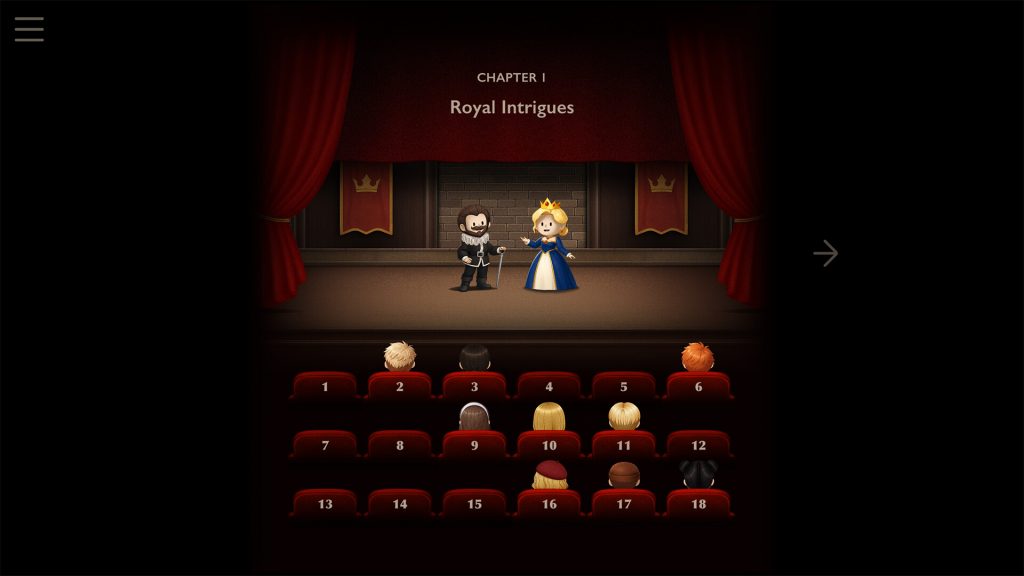
The visual presentation — hand-drawn characters on theatrical stages, warm color palettes, the specific aesthetic of backstage theatrical life — gives the puzzle content immediate charm. Triomatica’s established hand-drawn quality from the Boxville series means the visual identity of I Want to Play the Villain! carries the same craft that earned those games their critical recognition.
The Ukrainian Studio Context
This is the third Ukrainian indie project covered this month, alongside Hollow Home (Twigames, Kyiv) and I Know a Spot (Bohdan Kvas). Triomatica Games represents yet another dimension of Ukrainian creative output: not war documentation (Hollow Home) or peaceful nature simulation (I Know a Spot), but theatrical comedy and puzzle design. The breadth of Ukrainian indie game development across emotional registers and genres — from tragedy to nature cozy to theatrical whimsy — reflects a creative community that is building toward diverse futures simultaneously.
Triomatica’s self-publishing model — handling art, programming, and distribution internally — is the operational structure that makes the 9-platform release scope ambitious but achievable without external publisher overhead.
Who Is This For
Strong fit for: logic puzzle enthusiasts who want constraint-satisfaction puzzles in a theatrical setting; Boxville fans who want Triomatica’s next project; players who appreciate hand-drawn art quality in puzzle games; theatre enthusiasts who want interactive engagement with the social and personality dynamics of theatrical production; puzzle game players who want chapter-by-chapter rule evolution rather than a single fixed system applied across the full game.
Cautious fit for: puzzle players who prefer action-adjacent or spatial puzzle design over constraint-satisfaction logic; players who want the demo before forming an opinion (August 17 provides this); anyone who needs confirmed Steam reviews before wishlisting.
Less ideal for: players who dislike puzzle games; anyone seeking action or real-time mechanics; players wanting multiplayer options.
The Takeaway
I Want to Play the Villain! Is Triomatica Games applying the hand-drawn charm and puzzle design craft that earned Boxville its awards to a new subject: the interpersonal logic puzzle of casting a theatre production whose actors all have incompatible ambitions? The theatrical setting is as natural a home for constraint-satisfaction puzzle design as any the genre has found, and Triomatica’s track record suggests the execution will meet the concept.
August 17 for the demo. Q1 2027 for the full production. Everyone wants the villain role. Not everyone can have it. The arrangement that makes the performance work is somewhere in the tangle of desires.
Information regarding ‘I Want to Play the Villain!’
| item | detail |
|---|---|
| Developer | Triomatica Games (Ukraine, established in 2020) |
| Genre | Logic puzzle based on a play |
| Release platform | PC (Steam, Epic Games Store, GOG), PS4/PS5, Xbox One/Series X|S, Nintendo Switch/Switch 2, iOS, Android |
| Demo release date | August 17, 2026 (Steam) |
| Scheduled for official release | Q1 2027 |
| Supported Languages (Upcoming) | 13 languages including English and Ukrainian |
| Developer’s previous work | Boxville (Steam review ‘Very Positive’ 91%, GDWC 2023 Mobile Award, PGA ’23 Best Indie International Game Award) |
| Steam rating | Pre-counting (public stage) |
| Official Channel | Discord, YouTube, X, Instagram |
| Steam Page | Shortcut |