Stop moving and die. This is the complete design philosophy of Neon One-Man Army from Turkish solo developer Emirhan Topal (RipeXT Studio), expressed in one sentence and built into every mechanical system the game contains.
The FPS roguelite being developed as RipeXT’s debut commercial project organizes everything around the maintenance of momentum: a physics-based grappling gun that preserves accumulated speed between swings, a core rule that makes airborne players more defensively capable and longer-ranged than grounded ones, and the governing principle that the most dangerous place on any map is the floor. Not because enemies come from below — because stopping to stand on it is where players die.
The Grappling Hook Physics
The physics-based grappling hook is the mechanic that makes everything else work, and the specific design decision that distinguishes it from generic “player has a grappling hook” implementations is the speed-preservation system. When momentum is lost between swings — when each grapple resets velocity rather than carrying it forward — grappling becomes a traversal tool. When momentum carries through — when the speed built in one swing transfers into the next — grappling becomes movement itself.
Neon One-Man Army is building the latter. The speed accumulated through a swing persists into the next grapple attempt, which means skilled players can string together chains of increasing velocity that make the environment a flow system rather than an obstacle course. Each successful swing is an investment in the next one; the player who has been swinging for several seconds in a row is moving faster than the player who just launched their first grapple.
The ground as “recharge station” framing — land briefly to recover stamina, then immediately launch back into the air — is the rhythm this creates at the macro level. Extended aerial sequences followed by brief ground contact followed by immediate return to air. Players are not navigating terrain; they are navigating the momentum requirements of the next aerial sequence.
The asymmetric defensive properties of airborne versus grounded states make this rhythm strategically rather than just aesthetically motivated. Being in the air isn’t just faster — it’s safer, at least defensively. Combined with the extended weapon range that being airborne provides, the air is simultaneously the highest movement capability, the highest defensive state, and the longest attack reach. The ground is the opposite: lower capability in every relevant dimension. The design is saying: the game rewards aerial skill with aerial advantage, and punishes stopping.
The Card Draft Build System
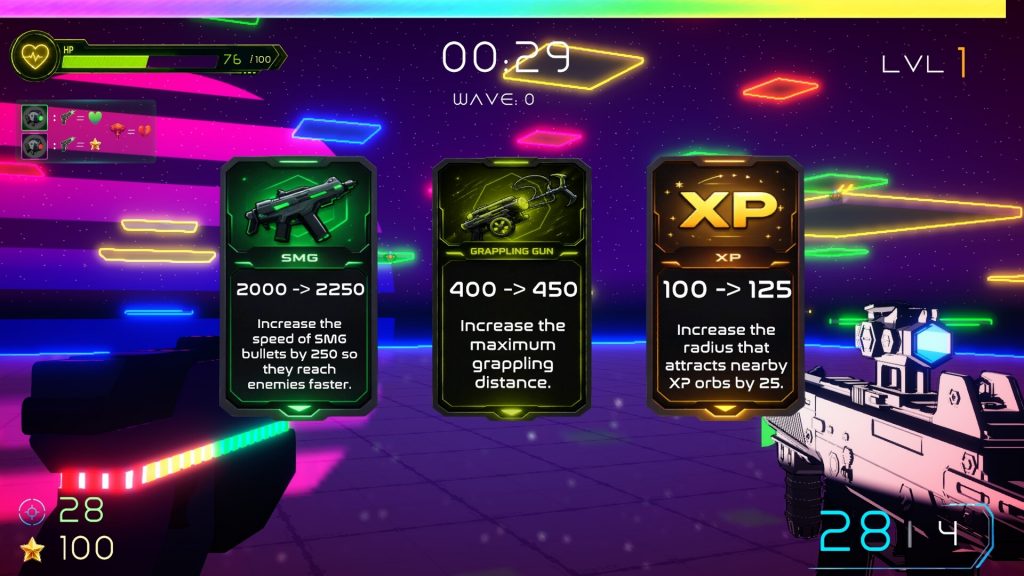
The card draft system per level-up is the roguelite layer that creates run-to-run variety without requiring the player to stop moving long enough to navigate a complex menu. Each level-up presents a selection of cards; the player chooses one; their build evolves.
The specific interaction between card builds and the grappling momentum system creates the combinatorial depth the game is pursuing. A card that extends grapple range changes the geometry of viable swing chains. A card that modifies aerial bonuses changes the risk calculus of how long to stay airborne. A card that buffs a specific weapon type changes which enemies to prioritize during a run’s aerial sequences.
The referenced build archetypes — concentrated firepower, aerial control with extended grappling range, maximum-speed rush — are different expressions of the same underlying system rather than different game modes. All three maintain the momentum-or-death philosophy; they just optimise different aspects of how that momentum is built and used.
The card combinations that produce synergistic effects — where the passive of one card multiplies the effect of another — are what roguelites use to create the late-run power fantasy that motivates repeated play. The specific visual of these synergies expressing in neon effects over a vertical cyberpunk city is the aesthetic context the game is building toward as its satisfaction delivery moment.
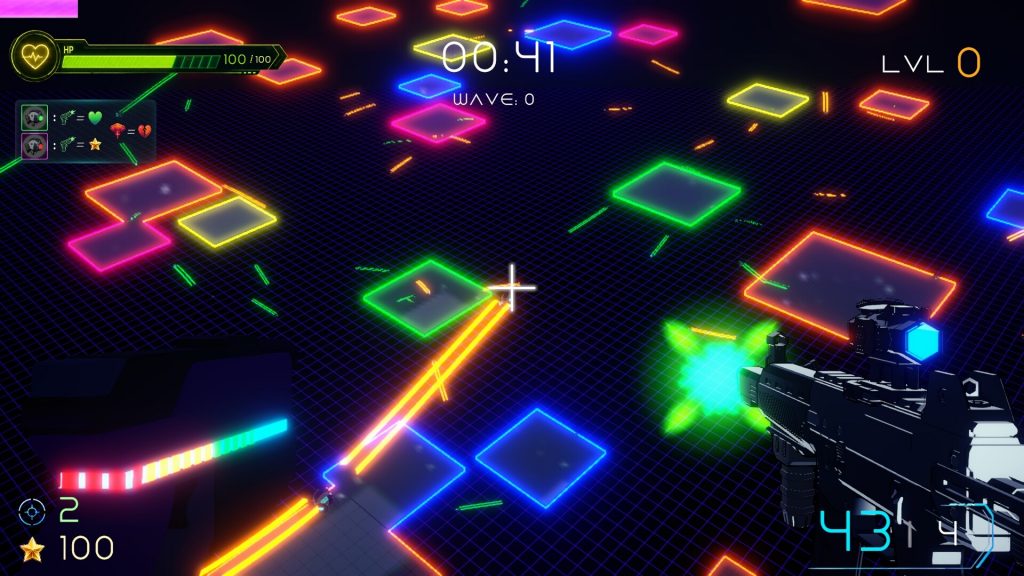
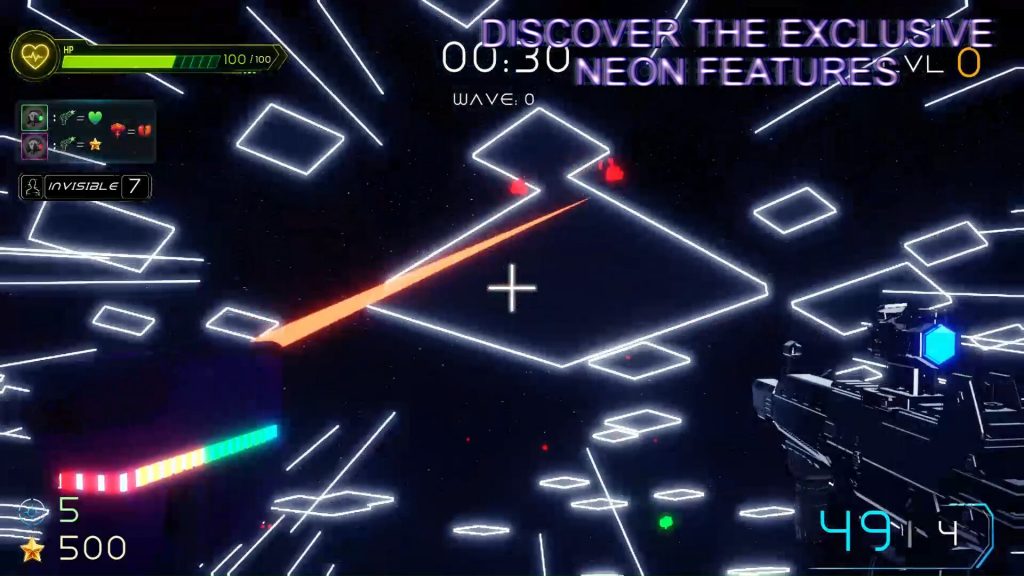
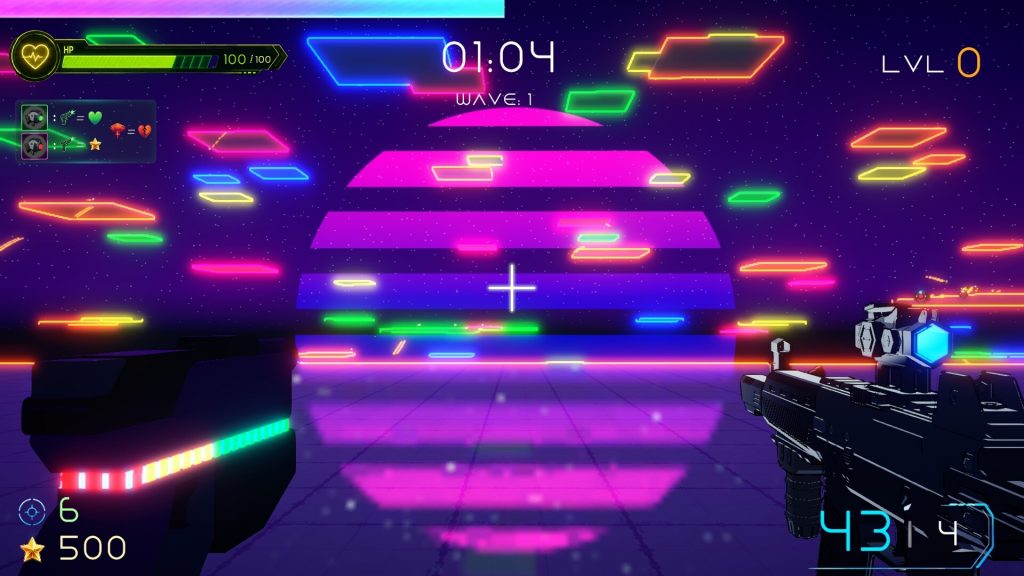
The Kill Milestone Elite Skill Box
The kill milestone system adds a separate progression layer that runs parallel to the card draft builds. Reaching specific kill count thresholds during a run triggers an Elite Skill Box — a reward containing powerful active skills that can shift the run’s late-game dynamics substantially.
The timing dimension is the system’s most interesting design element. A strong active skill acquired early in a run interacts with the card build at a different developmental stage than the same skill acquired late. Build synergy that would make a skill devastating might not exist yet; or the build might be exactly what the skill needs to become the run’s primary win condition.
The positioning of elite skills as potential “game-changers” that can alter the run’s trajectory at any point creates the specific roguelite narrative of the “clutch acquisition” — the Elite Skill Box that arrives exactly when the current build’s ceiling has been reached, opening a new power path that the preceding build has prepared for without fully realizing.
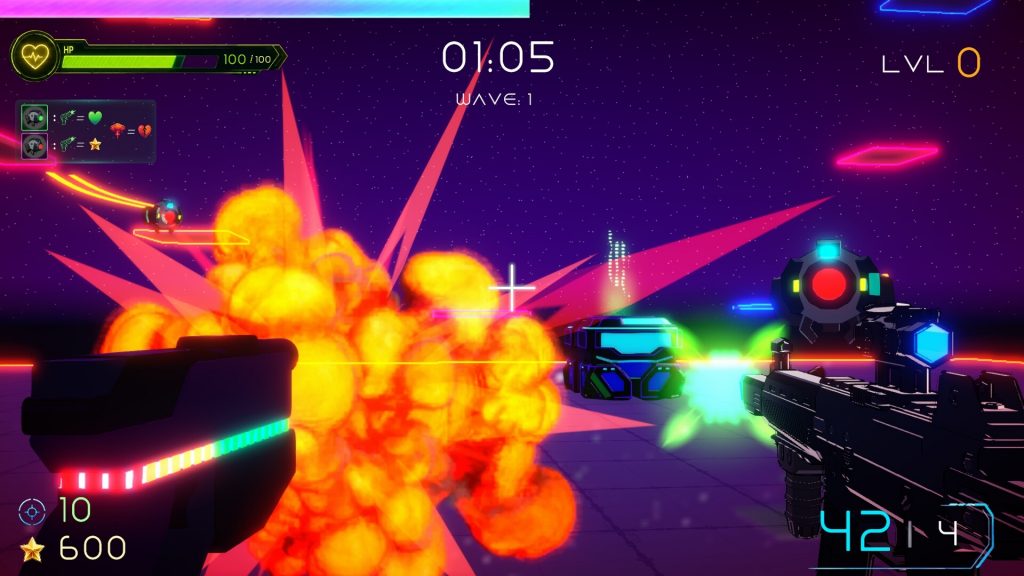
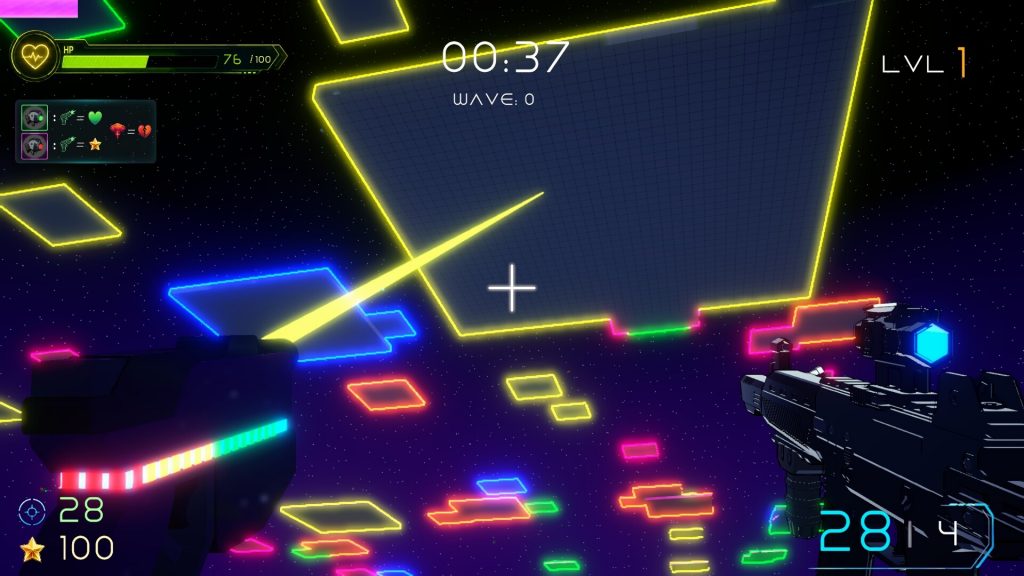
The Neon Cyberpunk Visual Identity
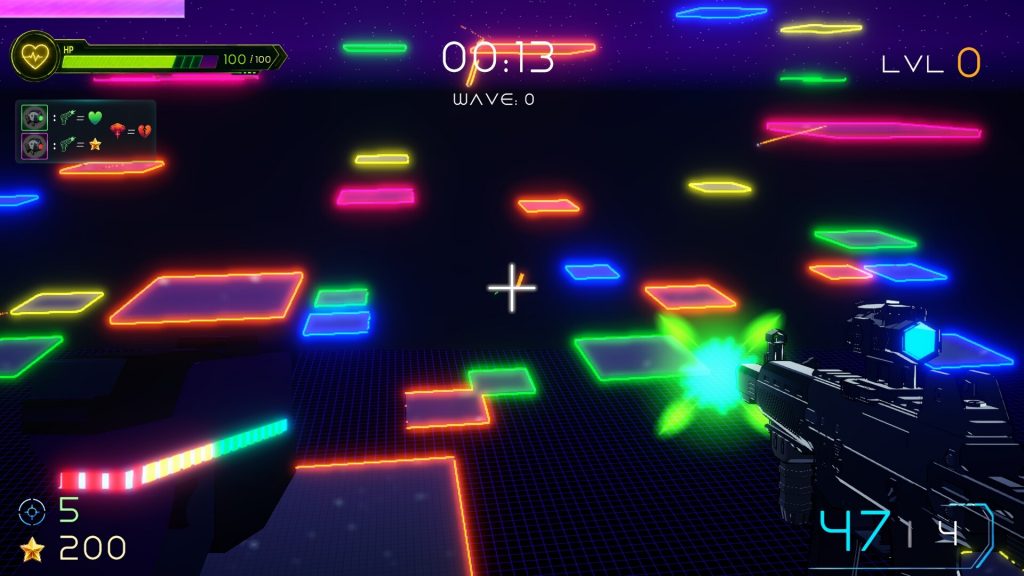
The developer’s specific note that the visual design was developed with eye comfort as a co-consideration alongside aesthetic impact is the design decision that distinguishes this from standard neon-saturated cyberpunk presentations. Neon aesthetics in games frequently sacrifice extended playability for immediate visual impact — colors that are striking in trailers can produce fatigue during extended play sessions.
Neon One-Man Army is apparently attempting to achieve the neon cyberpunk visual register while keeping the specific hues within ranges that allow long play sessions without the eye strain that high-saturation neon environments typically produce. Whether this is achievable and how the balance has been struck is one of the specific evaluations the demo will allow when it becomes available.
The vertical city architecture is the specific spatial design that the grappling hook momentum system requires to function as intended. A game about high-speed aerial traversal needs vertical geometry — towers, platforms at different heights, the connectivity of the third dimension. Horizontal spaces flattened to two effective dimensions don’t generate the momentum chains that the game’s core mechanic is designed to enable.
The reference games — Mullet MadJack’s retro animation momentum shooter, Roboquest’s cartoon co-op FPS roguelite, Cyber Hook’s grappling traversal game — are the correct reference points because they share specific qualities that Neon One-Man Army is working within: either the momentum emphasis, the FPS roguelite structure, or the grappling traversal mechanic. The visual distinction Emirhan Topal is pursuing is the neon cyberpunk register applied to this mechanical combination, which none of the references exactly occupies.
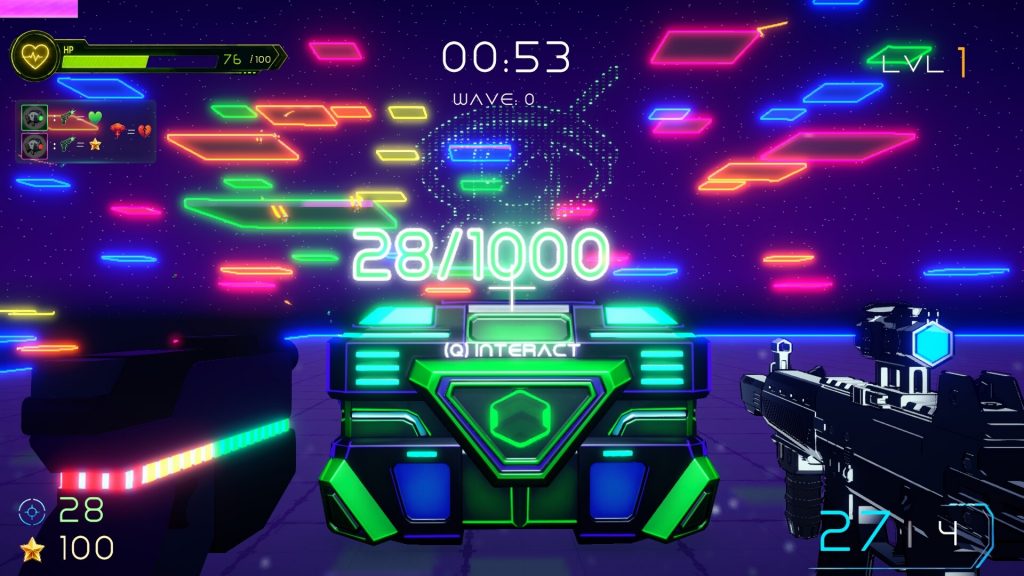
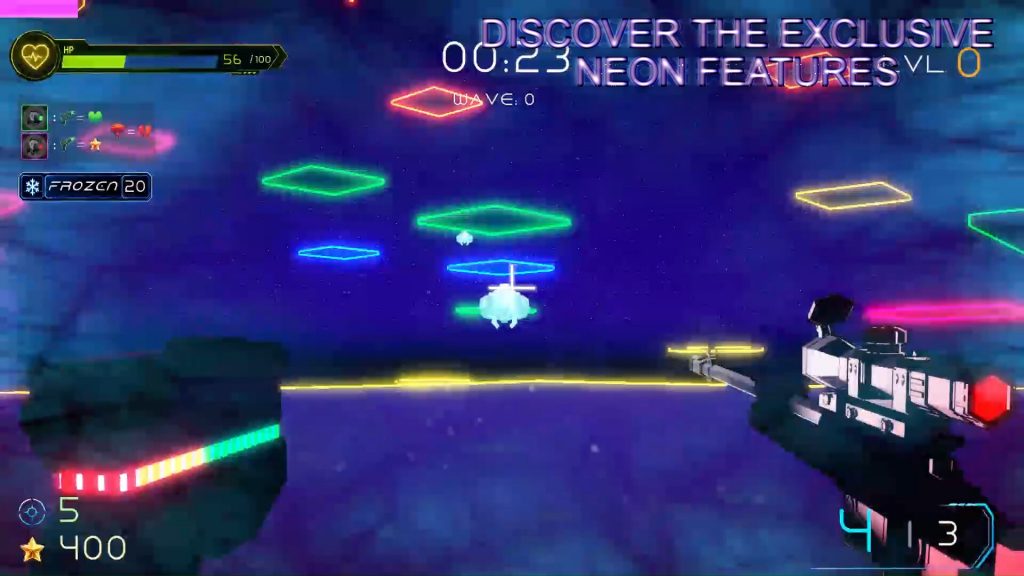
Who Is This For
Strong fit for: momentum-based FPS players who want the genre’s velocity emphasis combined with roguelite build variety; Mullet MadJack players who want the momentum-or-death philosophy in a grappling hook context; Roboquest fans who want the FPS roguelite structure with more aerial emphasis; cyberpunk aesthetic enthusiasts who want the visual register applied to something faster and more kinetic than the genre typically is; card draft roguelite players who want the build system expressed through constant movement rather than deliberate strategic pausing.
Cautious fit for: FPS roguelite players who prefer ground-based combat over aerial traversal; players who find physics-based movement systems that require momentum management cognitively demanding rather than satisfying; anyone who needs a demo or confirmed release date before engaging.
Less ideal for: players who dislike first-person perspective; anyone wanting cooperative or multiplayer options; players seeking narrative content alongside the roguelite structure.
What to Watch For
The 2026 release target without a specific date is the current development state — the wishlist is open, but neither a demo nor a release window has been confirmed. The visual and mechanical concepts are both sufficiently specific that the design intention is legible; whether the execution delivers on momentum-preservation physics that feel satisfying across extended play sessions is what the game’s eventual demo will reveal.
The kill milestone Elite Skill Box pacing is the specific balance question worth watching: how frequently these skills appear, how powerful they are relative to the card build at the time of acquisition, and whether different runs produce meaningfully different skill timings that create distinct run narratives.
The Takeaway
Neon One-Man Army is a Turkish solo developer’s debut commercial project built around a single design commitment: momentum maintenance as the primary survival skill, expressed through physics-based grappling that preserves speed between swings, a rule set that makes the air safer than the ground, and card builds that extend the momentum system’s variety across repeated runs.
The philosophy “the floor is the enemy” is both an intuitive design statement and a complete mechanical specification. The floor is where speed is lost. The air is where capability peaks. The grappling gun is how you stay in the air. The cards determine how you express capability while you’re there. The Elite Skill Boxes determine when that expression becomes overwhelming.
Neon city. Vertical architecture. Robots are coming from everywhere. The floor directly below is the most dangerous surface in the environment.
Don’t land. Don’t stop. Steam wishlist is open now.
Information regarding ‘NEON ONE-MAN ARMY’
| item | detail |
|---|---|
| Developer / Publisher | RipeXT Studio (Solo Development / Developer: Emirhan Topal) |
| Genre | First-person FPS Roguelite / Momentum Action Shooter / Cyberpunk |
| Release platform | PC (Steam) |
| Scheduled for release | 2026 (Date TBD) |
| core system | Physics-based Grappling Hook (No Speed Loss Between Swings) / Card Draft Build / Kill Milestone Elite Skill Box |
| Key Rules | Air = Increased Defense + Extended Weapon Range / Stop = Death |
| Art style | Neon Cyberpunk / Dreamy Vertical City / Eye-friendly Color Tones |
| Genre reference works | Mullet MadJack / Roboquest / Cyber Hook |
| Main Keywords | FPS, Grappling Hook, Momentum, Roguelite, Neon, Cyberpunk, Card Draft, Robots, Solo Development |
| Steam Page | Go to Wishlist |