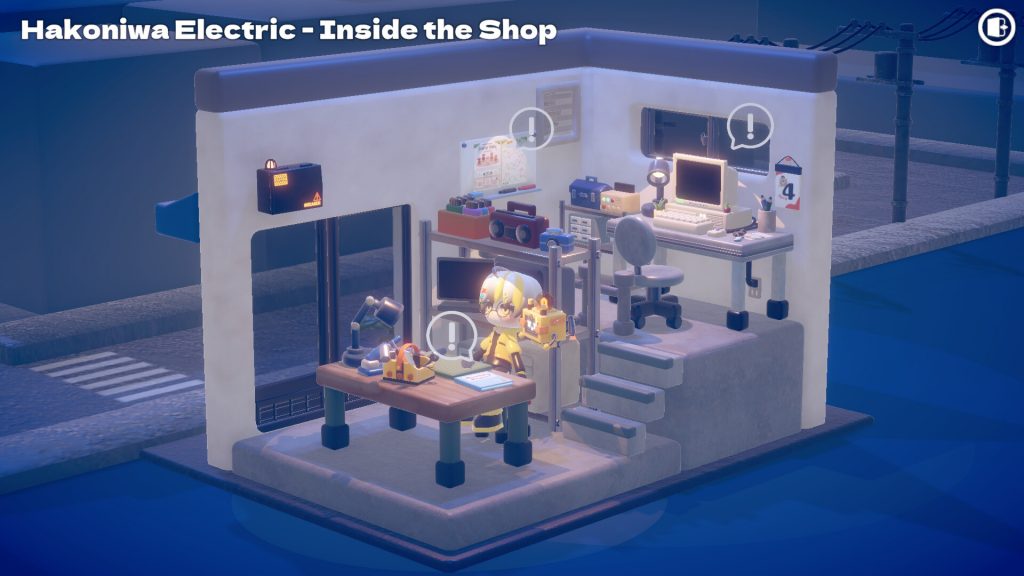
A miniature electrical shop, inherited from a vacationing grandfather. A new manager named Akari. A robot partner called Lampy. And a village full of residents whose small everyday problems require the kind of attention that a dedicated, if overwhelmed, new shopkeeper can provide.
Hakoniwa Electric from Japanese solo developer ANETTAI is a relaxed puzzle exploration game whose isometric miniature world sits at the intersection of the cozy genre’s warmest qualities — seasonal change, gentle narrative, low-pressure problem solving — expressed through the specific setting of a small-town electrical repair shop. The demo covering the first two of twelve planned stages is available now; a full release is targeted for 2026. Korean language support has been added in the latest update.
The Puzzle Structure
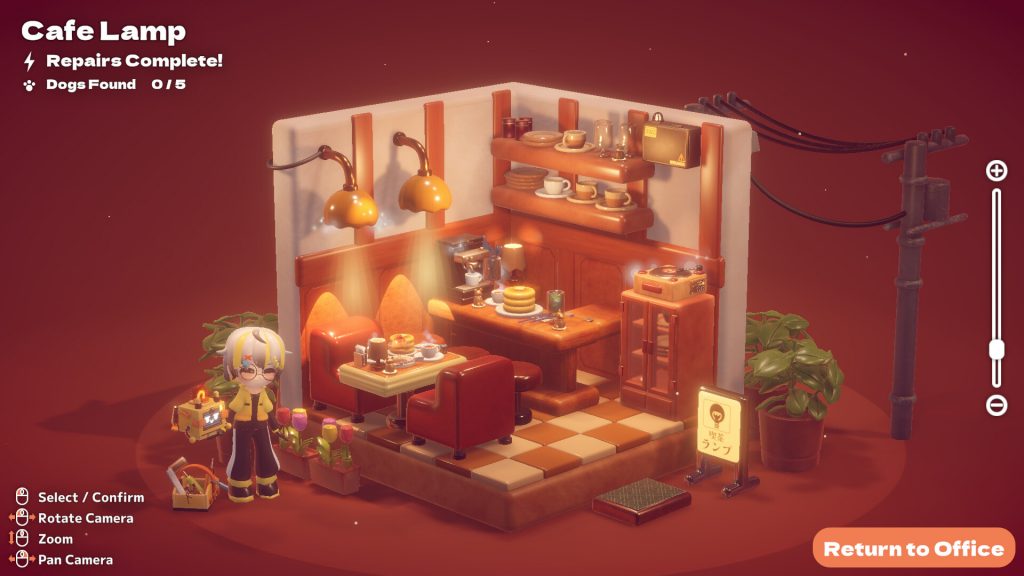
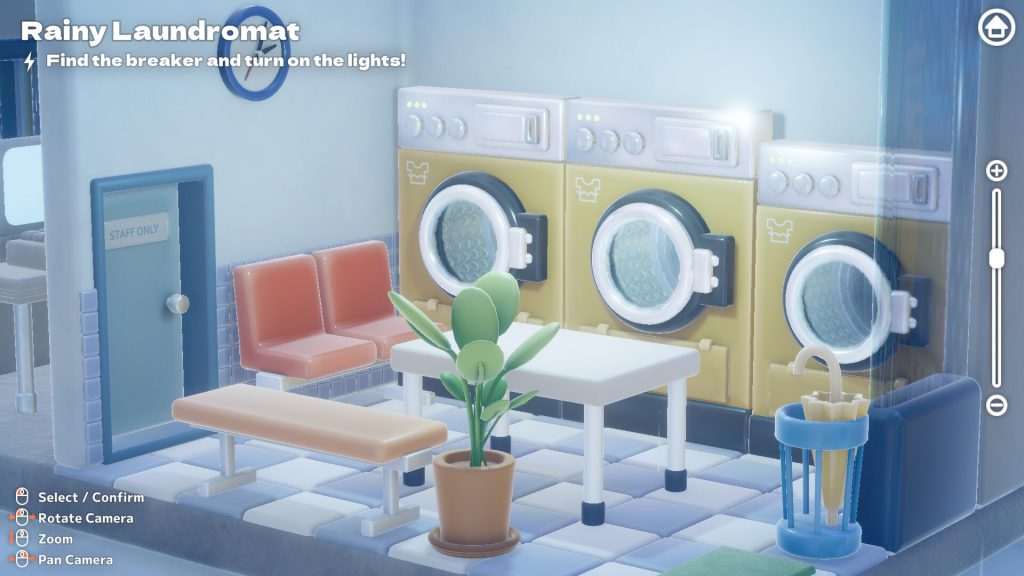
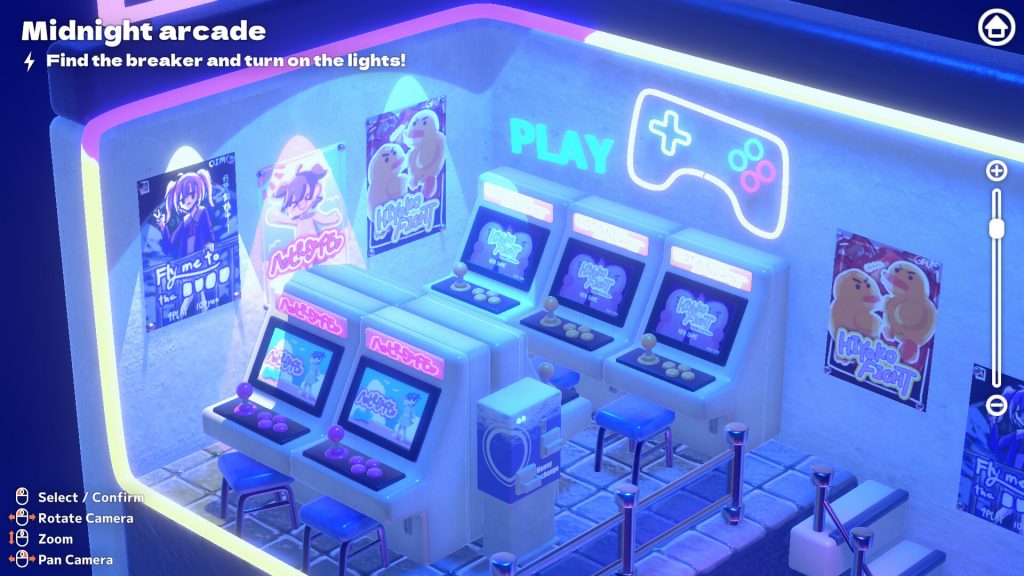
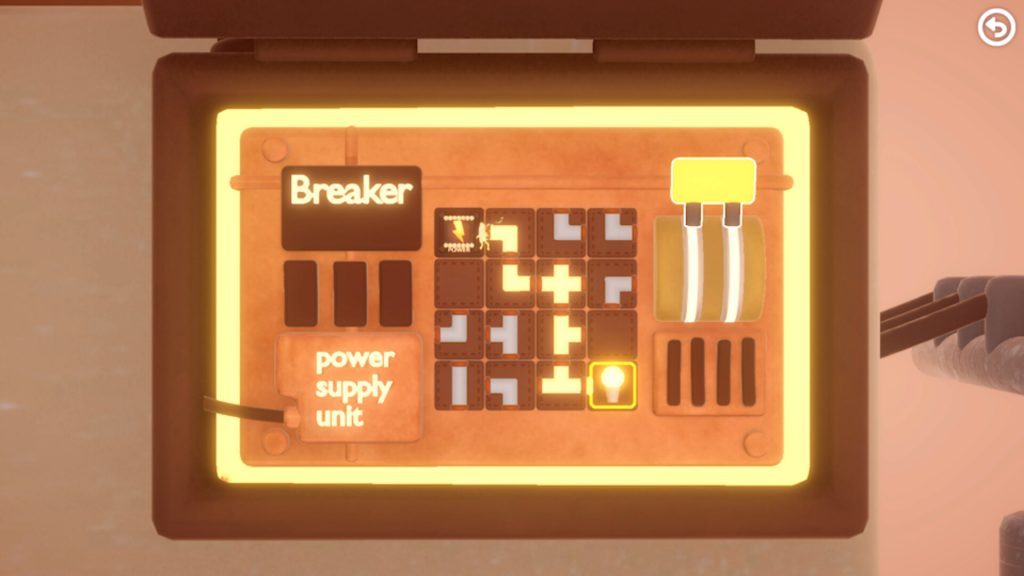
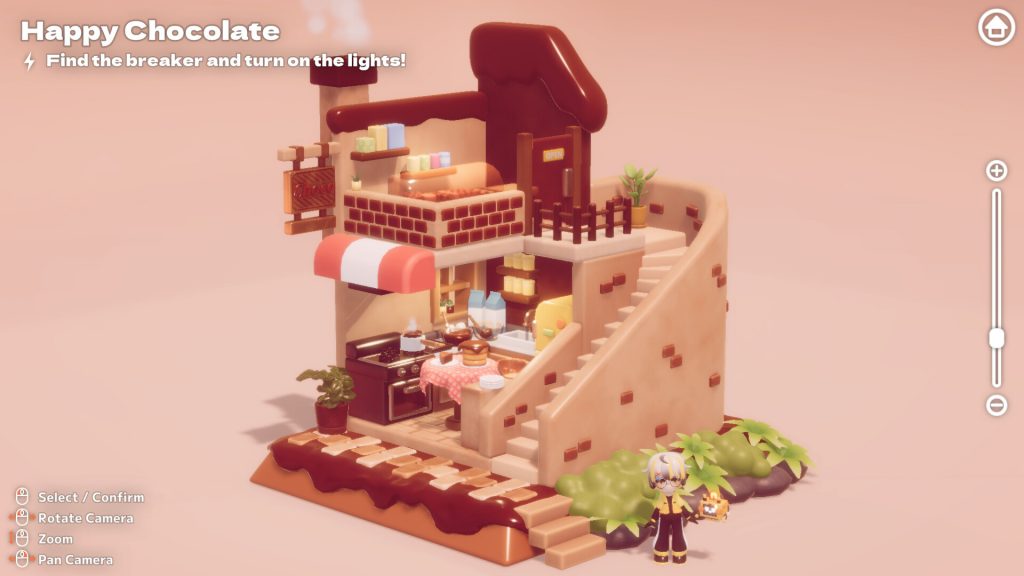
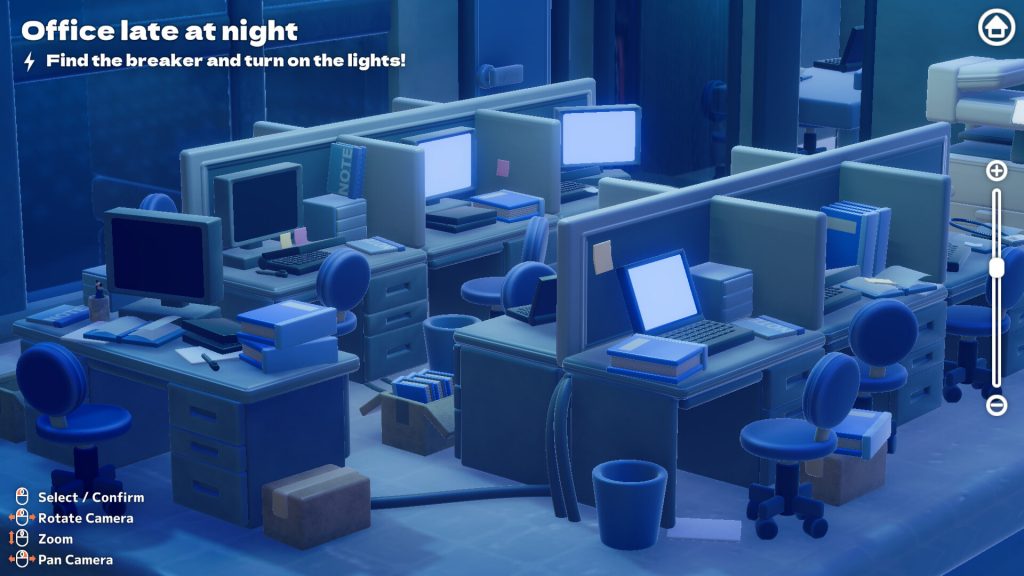
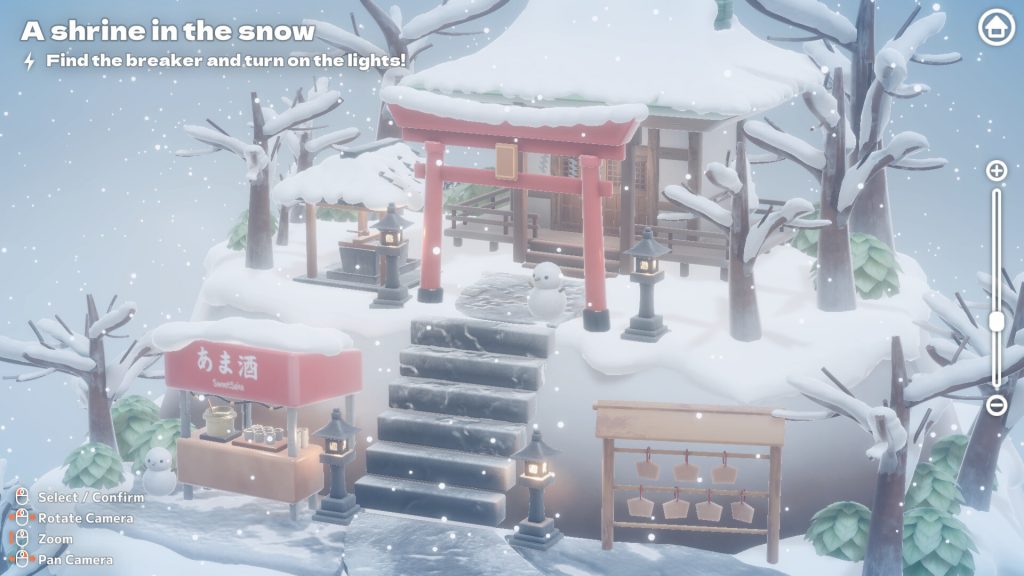
The core gameplay loop is elegantly sequential. Each stage begins in darkness — the electrical supply to the miniature space is out, and restoring it is the first act. Circuit breaker puzzles that restore power reveal the stage’s full contents: objects that were invisible or dormant in the dark become present and interactable once the lights are on.
Those objects — a record player, a coffee maker, household appliances that have stopped working — each contain their own puzzle. Rotating circuit pieces to complete electrical paths, identifying what’s broken, figuring out the specific mechanical logic of each device’s problem: these are the puzzle types that the electrical shop setting naturally generates. The setting isn’t just aesthetic; it’s the premise that makes the puzzle variety feel coherent rather than arbitrary.
The two-stage structure of each level — restore power, then repair what the power reveals — creates a satisfying rhythm of anticipation and payoff. Darkness that gives way to warmth, followed by the specific satisfaction of things that were broken starting to work again. This is the healing game’s core promise made procedural rather than atmospheric: the player is actively causing the restoration rather than passively experiencing it.
The Miniature Isometric World
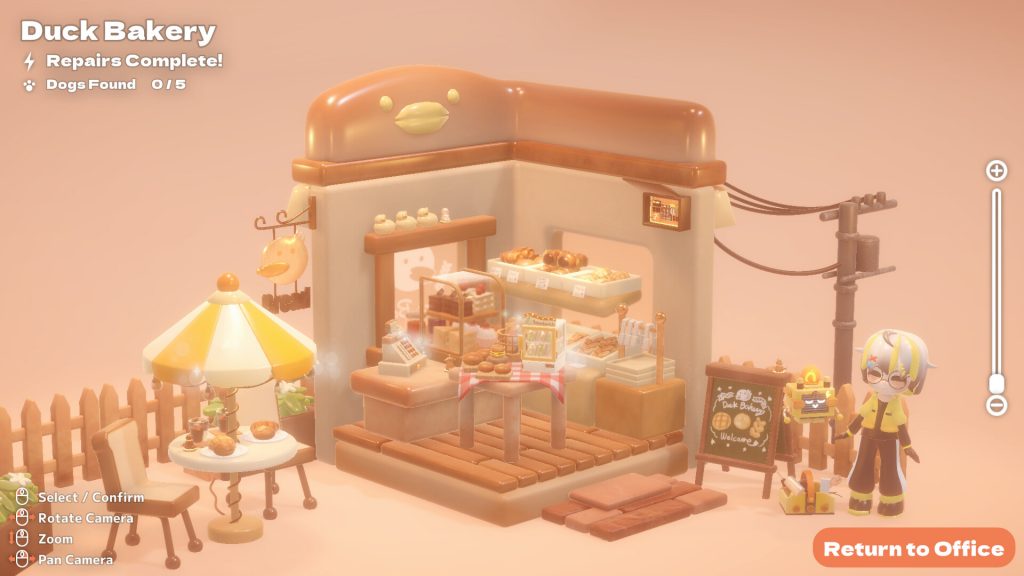
Isometric 3D with a miniature scale — the game is described as looking like a small garden that fits in the palm of your hand — is the visual approach that gives Hakoniwa Electric its distinctive spatial quality. Miniature-scale worlds create a specific kind of visual relationship: everything is visible simultaneously, the space is comprehensible at a glance, and the player has a god’s-eye relationship to the stage that makes puzzle-solving feel manageable rather than overwhelming.
The seasonal changes that animate the stages as the game progresses — the village coming to life across the seasons, the shop and its surroundings changing with the time of year — extend the miniature world’s appeal beyond puzzle content. Watching a space change across seasons creates the same accumulating fondness that cozy life simulation games build through time passage. The seasonal transformation gives the player a reason to feel attached to the miniature space independently of whether they’re actively solving anything in it.
Akari’s monthly report — updated at each stage completion — records her feelings and daily experiences during her year in the village. This narrative layer gives the puzzle completion emotional weight: each stage resolved is another chapter in Akari’s year, and the report makes that explicit rather than implied.
The ANETTAI Design Identity
A developer who describes themselves specifically as specializing in “cozy sensibility and atmospheric experiences” is making a creative identity statement that the game either validates or contradicts through its execution. The 100% demo rating from 16 reviews suggests validation: players who found the game through press coverage and demo availability connected with the specific quality the developer is pursuing.
The debut status makes the demo rating particularly meaningful. A first game that achieves 100% positive reviews is demonstrating that the creative direction is communicating clearly to the players it’s intended to reach — that the concept of a miniature electrical shop puzzle exploration game with seasonal narrative is not an interesting idea that fails to land in execution, but an interesting idea that lands exactly as intended.
The Korean Language Addition
The decision to add Korean language support specifically — alongside the existing English, Japanese, and Chinese support — signals awareness of where the cozy game audience is concentrated in Asia. Korean players represent a meaningful segment of the cozy game market, and Korean-language availability reduces the friction that keeps non-English-native players from engaging with games that would otherwise appeal to them.
The timing of the Korean addition alongside the new puzzle update suggests a development approach that’s expanding accessibility in parallel with content development rather than treating localization as a post-completion task.
Who Is This For
Strong fit for: cozy puzzle game enthusiasts who want the genre’s warmth expressed through a specific functional setting (electrical repair) rather than farming or nature; isometric miniature world aesthetic fans; players who appreciate the “restoration of warmth” emotional arc as a game experience; players discovering the game through the Korean language addition; Gematsu and Niche Gamer readers who followed the original coverage and want to track development progress.
Cautious fit for: puzzle players who want a significant mechanical challenge rather than gentle problem-solving; players who need more than two demo stages before evaluating; anyone who wants a release date before engaging.
Less ideal for: players who dislike puzzle games regardless of theme; anyone wanting action or multiplayer options; players who specifically need the full twelve stages available at the demo stage.
The Takeaway
Hakoniwa Electric is a Japanese solo developer’s first game about the specific cozy experience of restoring light and function to small spaces — expressed through an electrical shop, a village of residents with everyday problems, a seasonal year, and twelve miniature stages where things that were dark and broken become bright and working again. The isometric miniature scale, the two-stage restoration rhythm, and Akari’s monthly report accumulating across a year give the concept both visual identity and narrative texture.
The free demo’s first two stages are available now on Steam. Korean is now supported. The twelve stages of a year in the village are waiting.
The circuit breaker is ready. The record player will work again once the connection is complete. And somewhere in the miniature electrical shop, a new manager and her robot partner are figuring out how to make a small village’s lights stay on.
Information regarding ‘Hakoniwa Electric’
| item | detail |
|---|---|
| Developer | ANETTAI (Japan, Solo Developing) |
| Publisher | ANETTAI (Self-publishing) |
| Genre | Casual (Relaxed Puzzle Exploration) |
| Release platform | PC (Steam) |
| Demo release date | June 4, 2026 (Revealed in conjunction with Steam Next Fest) |
| Official release date | Scheduled for release in 2026 (exact date TBD) |
| Supported languages | English, Japanese, Chinese (Simplified/Traditional), Korean (Newly added) |
| Note | Use of AI in Part of Game Localization Process (Developer Official Announcement) |
| Demo User Reviews | Very positive (100%, 16 cases) |
| Steam Page | Shortcut |