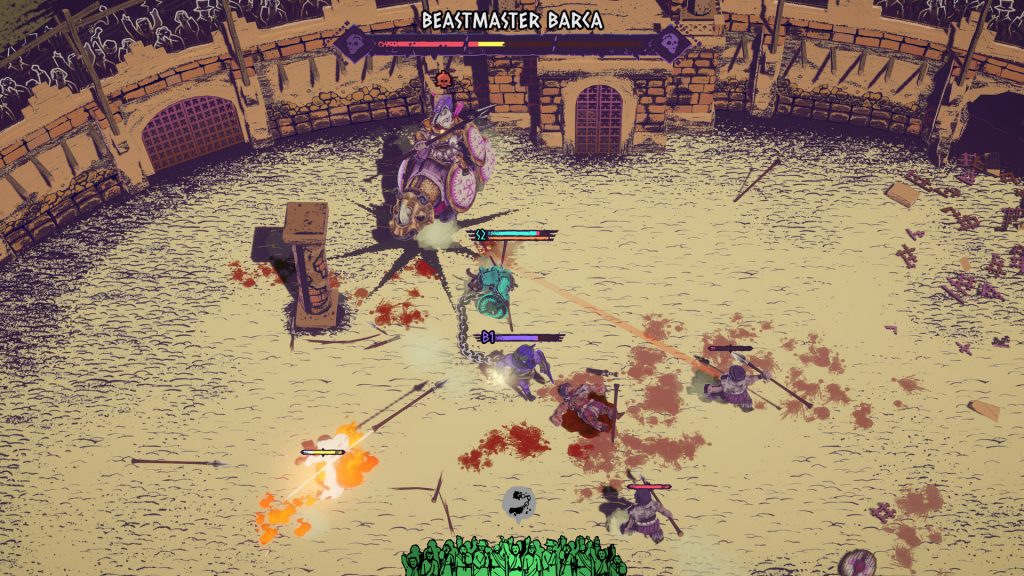
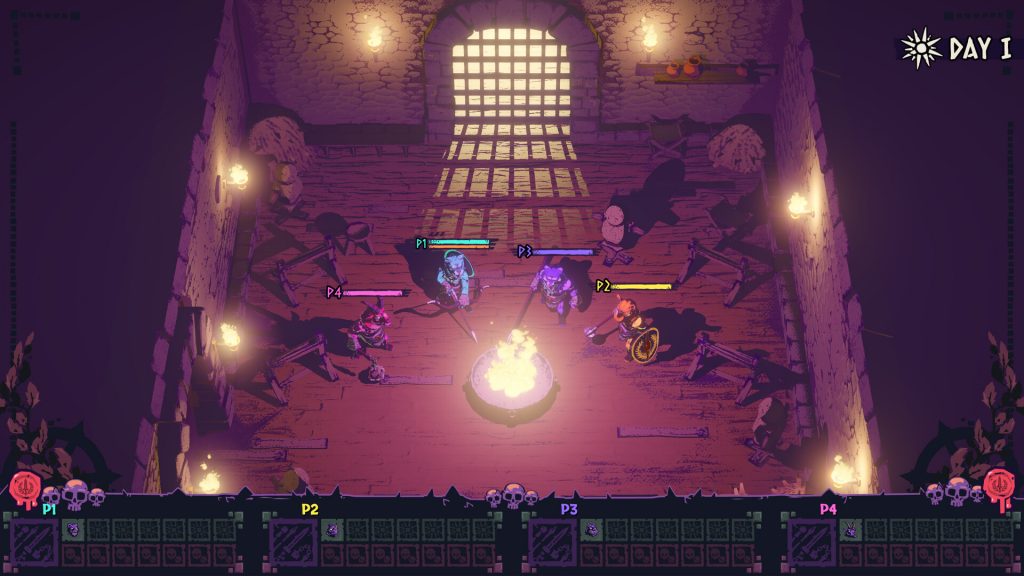
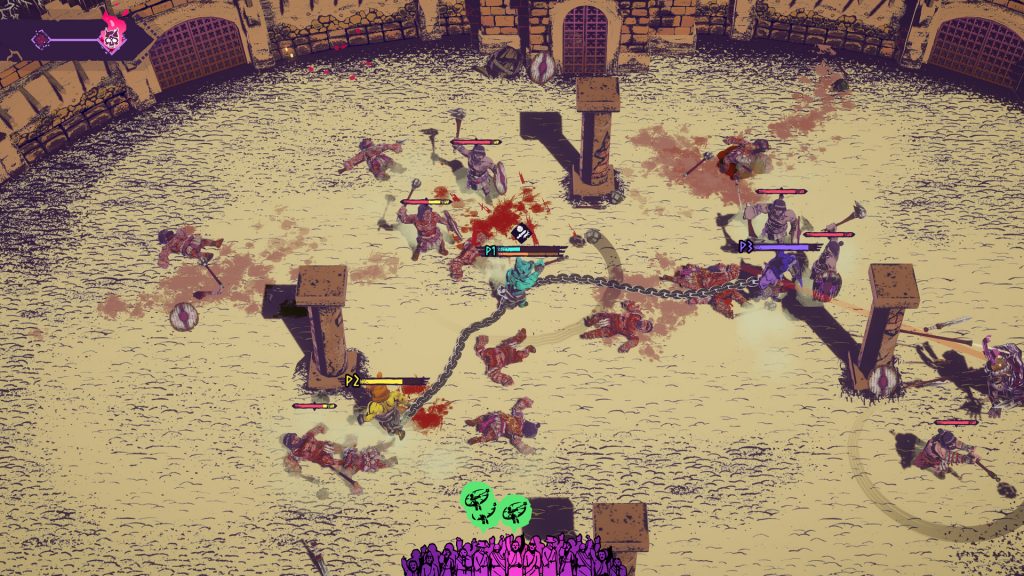
Two gladiators standing in a Roman colosseum, chained together. The chain is a weapon. The chain is a snare for enemies. The chain is also what drags one player back when the other falls. Welcome to Chained Beasts, the upcoming cooperative gladiator roguelike from Australian-New Zealand indie studio Featherweight Games — and one of the more genuinely exciting indie multiplayer projects on the immediate horizon, based on current demo response.
Confirmed for Fall 2026 release on Steam with a new trailer recently published, Chained Beasts has accumulated remarkable demo metrics: 98% Overwhelmingly Positive across 509 Steam reviews and 125,000+ wishlists before full release. Creators IronPineapple and VaatiVidya played the demo together and called it “one of the best demos of all time.” For a cooperative roguelike from an Australian-New Zealand studio without major publisher backing, this is the kind of trajectory that establishes projects as significant indie events before they ever launch.
The Demo Reception That Changed Everything
The 98% Overwhelmingly Positive rating across 509 reviews is the headline metric, but its context matters more. Demo ratings on Steam often skew lower than full release ratings because players engaging with demos haven’t paid anything and tend toward critical evaluation. A 98% positive rating on a free demo suggests genuinely exceptional reception rather than just polite enthusiasm.
The 125,000+ wishlist accumulation represents another significant milestone. Multiplayer roguelikes typically build wishlists more slowly than single-player titles because the social-dependency aspect makes solo evaluation harder. Chained Beasts achieving this wishlist level pre-launch suggests substantial community confidence about both the gameplay quality and the social experience the game will provide.
Most significantly, the IronPineapple and VaatiVidya cooperative play sessions established cultural validation that traditional press coverage can’t match. Both creators have established credibility within the action gaming and roguelike community — IronPineapple, particularly through his Soulslike coverage, and VaatiVidya, through his FromSoftware lore analysis. Their genuinely positive responses (IronPineapple’s “fucking fun” reaction notwithstanding) signal to their audiences that Chained Beasts operates at the quality level these audiences appreciate.
The fact that VaatiVidya specifically called it “one of the best demos of all time” is particularly significant. VaatiVidya plays many games but rarely uses superlative framing for indie titles. The strength of the endorsement reflects exceptional demo experience, not just polite content creator enthusiasm.
The Colosseum as a Combat System
Chained Beasts operates as a top-down 3D action roguelike combining cooperative multiplayer with physics-based combat. The colosseum setting — reminiscent of ancient Rome’s gladiatorial arenas — isn’t a decorative background but a core combat element.
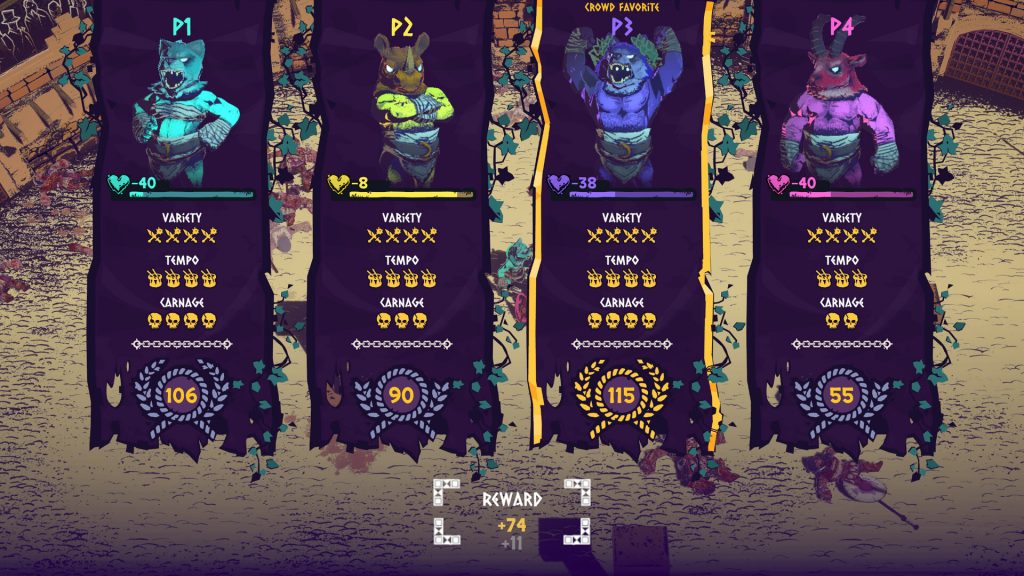
Stone pillars, traps, spike walls, snake pits, and various objects within the arena physically interact with combat, and leveraging them produces the game’s signature gameplay moments. Players can throw urns at enemies, push opponents into traps, and hurl weapons across the arena — every action becomes a “spectacle.” The audience’s cheers translate into greater rewards; conversely, growing jeers transform the combat into something more brutal.
This crowd engagement system is doing meaningful design work beyond aesthetic flourish. Real Roman gladiatorial combat operated partially as a performance — successful gladiators understood they were entertaining an audience as much as fighting opponents. Chained Beasts embeds this performance dimension mechanically, making players continuously balance survival concerns against entertainment value generation.
The arena interactivity creates the kind of environmental combat that distinguishes great action games from competent ones. When environments are pure backdrops, combat becomes predictable repetition. When environments offer dozens of usable elements, combat becomes a continuous improvisation problem — exactly what cooperative action games need to maintain freshness across extended play.
The Chain: Cooperation and Chaos Simultaneously
The chain mechanic is Chained Beasts‘ defining feature. Players are literally chained to their teammates, creating the kind of forced cooperative dynamic that produces both intentional teamwork and emergent comedy.
The chain functions as multiple gameplay verbs simultaneously. It’s a weapon that trips enemies and adjusts positions. It’s a tool for tactical maneuvering when teams coordinate. And when teams fail to coordinate, it’s a hindrance that drags allies into danger they didn’t anticipate. The simultaneous presence of cooperation and chaos potential is what gives Chained Beasts its distinctive character.
This design philosophy aligns with successful cooperative game patterns. It Takes Two showed how forced cooperation produces deeper player connections than optional cooperation. Chained Together (the major 2024 indie hit) demonstrated that chain physics specifically can generate sustained viral engagement. Chained Beasts applies these principles to the gladiatorial roguelike context, creating mechanics that produce both strategic depth and comedy chaos.
The “chained gladiators” framing also taps into specific cultural memory. Roman gladiators were sometimes literally chained to each other in combat — historical precedent gives the mechanic narrative grounding beyond pure gameplay innovation. Players engaging with the game are participating in a cultural framework that has existed for two millennia, even while experiencing it through entirely modern gameplay design.
The Injury System
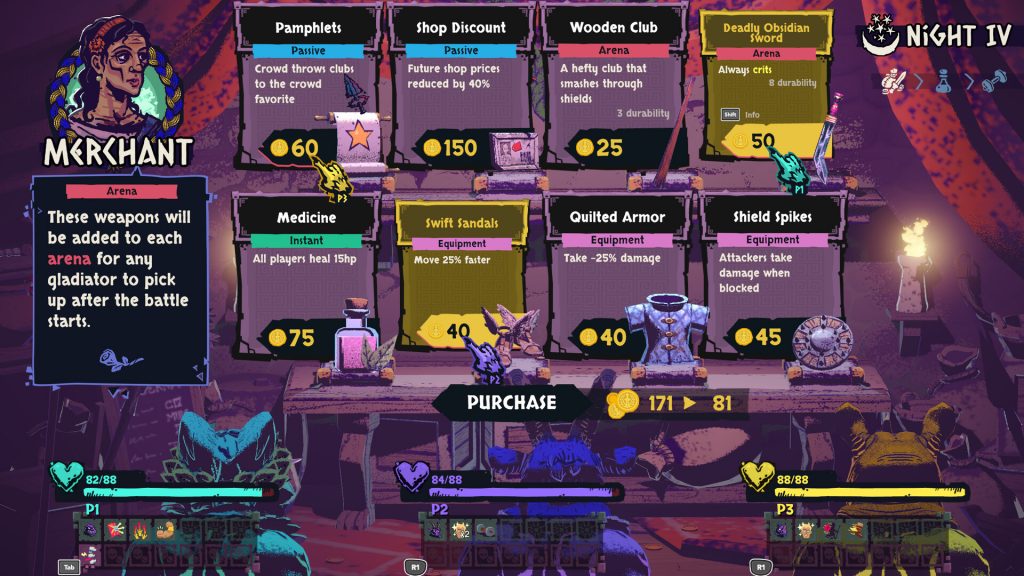
The most differentiated mechanical element in Chained Beasts is the permanent injury system. Accumulated physical and mental injuries from combat aren’t temporary disadvantages — they’re persistent effects that change how players play.
This is a roguelike design taken in an unusual direction. Traditional roguelikes operate on death-and-restart cycles where each run begins fresh. Chained Beasts‘ injury system creates a different progression dynamic — players who survive multiple combats accumulate disadvantages that shape future play, creating an arc where characters become increasingly broken even as they grow more experienced.
This design captures something true about gladiatorial reality. Real gladiators didn’t operate on death-and-restart cycles; they fought repeatedly, accumulated injuries, and either retired from combat or died eventually. Chained Beasts‘ injury system simulates this trajectory while preserving the roguelike’s strategic depth.
As reputation grows, players face stronger gladiators in increasingly difficult combats. The combination of mounting injuries and escalating challenges creates rising tension across the game’s progression — eventually requiring multiplayer cooperation to manage encounters that solo play can’t handle. This natural progression toward forced multiplayer dependency provides a genuine reason for the cooperative format beyond mere genre convention.
The Australian-New Zealand Indie Context
Featherweight Games is based across Australia and New Zealand, representing one of the more visible Australian-New Zealand indie projects of recent memory. The ANZ region has been gradually producing more internationally visible indie work, though it hasn’t yet achieved the kind of cluster visibility that Nordic, Polish, or Korean indie scenes have established.
Chained Beasts represents the kind of project that elevates regional indie visibility. The 125,000+ wishlist accumulation and 98% positive demo reception aren’t just commercial successes for Featherweight specifically — they’re proof points that ANZ indie development can compete at the highest international levels. Each high-profile success makes future ANZ indie projects more likely to receive serious attention from the press, platforms, and audiences.
The ANZ IndieFest showcase participation establishes the project within its regional development ecosystem. Showcase platforms specifically for ANZ developers help concentrate regional attention on the area’s best work, building the kind of community infrastructure that establishes regional indie scenes as international forces.
Co-director Dylan Bevis articulated the project’s design philosophy in announcement materials: “The brutal combat and injuries, the chaos of uncontrollable chains, and the strange yet tense moments of cooperation are all designed for one goal — to create unforgettable gladiatorial battles with friends.” He further emphasized that community feedback became a significant force during development.
This community-engaged development approach is exactly what produces 98% Overwhelmingly Positive demo reception. Studios that listen to player feedback during demo iteration typically deliver substantially better final products than studios that ship and ignore community response.
Why Cooperative Roguelikes Are Hard
It’s worth establishing why Chained Beasts‘ demo success matters within the cooperative roguelike subgenre specifically. Cooperative roguelikes face design challenges that single-player roguelikes don’t.
Difficulty Balance Across Player Counts: Games balanced for 1 player are too easy for 4-player teams; games balanced for 4 players are impossible solo. Successful cooperative roguelikes must scale difficulty meaningfully across player counts without breaking either extreme.
Synchronization Challenges: Cooperative games require player synchronization that single-player doesn’t. When one player advances faster than others, or when players want different play styles, the cooperative experience suffers.
Progression System Design: Single-player roguelike progression is straightforward; cooperative roguelike progression needs to account for variable player participation and the impact of teammate decisions on each player’s progression.
Communication Burden: Cooperative games require player communication. Voice chat tools handle this for organized friend groups, but create friction for matchmade strangers.
The 98% Overwhelmingly Positive demo rating suggests Chained Beasts has solved or substantially addressed these challenges. The combination of chain physics and injury system specifically appears designed to handle multiple of these issues simultaneously — the chain creates forced player coordination, the injury system creates emergent strategy variation across teammates.
The Crowd Engagement Mechanic in Practice
The crowd engagement system deserves additional attention because it serves multiple design functions simultaneously.
It provides moment-to-moment feedback that pure combat outcome metrics wouldn’t deliver. Players know not just whether they’re winning combats but how spectacular their wins look — useful information for refining their play styles toward more impressive performances.
It creates a difficulty-tuning system that adapts to player engagement. Boring play produces crowd booing, which makes combat more brutal — punishing players for safe play and rewarding aggressive entertainment value. This dynamic difficulty system ensures combat remains compelling even when players develop more conservative strategies.
It establishes a thematic consistency between gameplay and setting. Gladiatorial combat existed to entertain audiences; the crowd engagement system mechanically reinforces that this is fundamentally what the game is about. Players aren’t just surviving — they’re performing for spectators whose response shapes their experience.
It generates the kind of narrative moments that streamers and content creators thrive on. “The crowd went wild when I did this” produces shareable moments that pure mechanical accomplishment doesn’t. The system is structured for the streaming economy that increasingly drives indie game discovery.
Who This Is For
Strong fit for: cooperative roguelike enthusiasts (Risk of Rain 2, Children of Morta, Wizard of Legend fans); physics-based combat appreciators (Mordhau, Chivalry 2 players); friend groups seeking new cooperative gladiator experiences; Chained Together fans drawn to similar physical-connection multiplayer; IronPineapple and VaatiVidya audience members; players who enjoy roguelike injury and permanent-consequence systems; Australian-New Zealand indie scene followers; anyone interested in gladiatorial combat themes.
Cautious fit for: players who specifically prefer pure cooperative experiences without chaos elements; anyone uncomfortable with the brutality the gladiator setting implies.
Less ideal for: players who avoid multiplayer-focused games; anyone who specifically prefers single-player roguelike experiences; players who dislike physics-heavy combat systems.
What to Watch For
A few questions will shape Chained Beasts‘ Fall 2026 release.
The first is whether the full game maintains the demo’s quality across substantially expanded content. Demos typically polish their featured content extensively; whether the full game maintains comparable polish across all areas will determine sustained reception.
The second is the long-term cooperative engagement patterns. Cooperative games live or die based on whether they sustain friend group return engagement. How well Chained Beasts‘ content variety and progression systems support repeated multi-session play will affect commercial longevity.
The third is the quality of the online infrastructure. Cooperative multiplayer requires solid netcode, smooth matchmaking, and reliable connection handling. How well Featherweight Games’ technical infrastructure handles real-world player loads will significantly affect launch reception.
The fourth is the difficulty balance across player counts. Cooperative roguelikes require careful scaling between solo and full-team play. Whether Chained Beasts delivers satisfying experiences across all player counts will determine its accessibility to varied audiences.
The Takeaway
Chained Beasts is one of the most genuinely exciting cooperative roguelike projects on the immediate horizon, combining distinctive design vision (physics-based chain combat, permanent injury system, crowd engagement mechanics), exceptional demo reception (98% Overwhelmingly Positive across 509 reviews), substantial pre-release momentum (125,000+ wishlists), influential creator endorsement (IronPineapple, VaatiVidya), and the kind of community-engaged development approach that typically produces polished final releases.
For cooperative roguelike fans, this is one of the clearest “wishlist immediately” recommendations of 2026. The demo evidence is exceptional, the gameplay concept is genuinely innovative, and the cooperation-chaos dynamic suggests the kind of memorable multiplayer experience that becomes long-term friend-group rotation entries.
For Australian-New Zealand indie scene observers, Chained Beasts represents one of the more visible international successes from the region in recent memory. The project’s commercial and critical trajectory could meaningfully elevate ANZ indie visibility in international gaming conversation.
For broader cooperative gaming audiences, the Fall 2026 release timing positions Chained Beasts as a major friend group multiplayer candidate during the busy late-year gaming season. Players seeking new cooperative experiences for autumn-winter friend gathering rotations should mark the release window.
Two gladiators chained together in a Roman colosseum. Stone pillars and snake pits and traps and spike walls and urns to throw. A crowd that cheers brilliance and jeers cowardice, with their response shaping combat brutality. A chain that can be a weapon, a snare, or an unwanted tether, dragging allies into danger. Permanent injuries that change play style across runs rather than resetting on death. All from an Australian-New Zealand indie studio that’s earned the kind of pre-release demo reception most indie games never approach.
As cooperative roguelike pitches go, Chained Beasts‘ is one of the most genuinely promising of 2026 — and the demo reception suggests Featherweight Games has built something that the broader cooperative gaming community will be discussing well beyond launch.
The colosseum is open. The chains are connecting players. The crowd is gathering. And one of the most distinctive cooperative indie releases of Fall 2026 is preparing to demonstrate that physics-based gladiatorial combat with friends can produce gaming experiences that simpler designs can’t match.
Information regarding ‘Chained Beasts’
| item | detail |
|---|---|
| Developer / Publisher | Featherweight Games (Australia and New Zealand) |
| Genre | 1–4 Player Co-op Gladiator Roguelike / Top-down Hack and Slash / Physics-based Action |
| Release platform | PC (Steam) |
| Scheduled for release | Autumn 2026 |
| Play Mode | Solo / Local/Online Co-op Up to 4 players |
| Steam Demo Review | Overwhelmingly positive 98% (509 items) |
| Wishlist | 125,000 cases+ |
| Reactions from major creators | IronPineapple “It’s fucking fun” / VaatiVidya “One of the best demos of all time” |
| Public history | ANZ IndieFest / Games Press |
| core system | Physics-based chain combat / Permanent injury system / Spectator engagement / Environment-based combat |
| Main Keywords | Gladiator, Co-op, Chain, Colosseum, Roguelike, Physics, Rome, Injury System |
| Official Channel | Discord · X · YouTube |
| Steam Page | Go to Wishlist |