When game developers describe their projects as “blurring the boundaries between game and creative tool,” the claim usually means metaphorically — the game contains creative elements that feel like genuine creation. OFFBEAT, the upcoming music tycoon game from London-based Whetstone Games, takes the claim literally. Music made inside the game is extracted as WAV files. Music made inside the game can be released on real music platforms. The first single, “Not Your Uncle’s Ringtone” — produced entirely inside OFFBEAT by Creative Director Ed Sibley — has just been released as an actual single through Pantaloon Records, a real label established specifically for this purpose.
This isn’t gamification of music production. It isn’t education that simulates music production. OFFBEAT is a music production tool that happens to also be a tycoon game — and the distinction matters because few games have actually attempted what OFFBEAT is doing.
The Itch.io demo is currently available, with a Steam version coming soon. Approximately 6-8 months of Early Access development will precede the planned late-2026 official release.
A Tycoon Game That Outputs Real Files
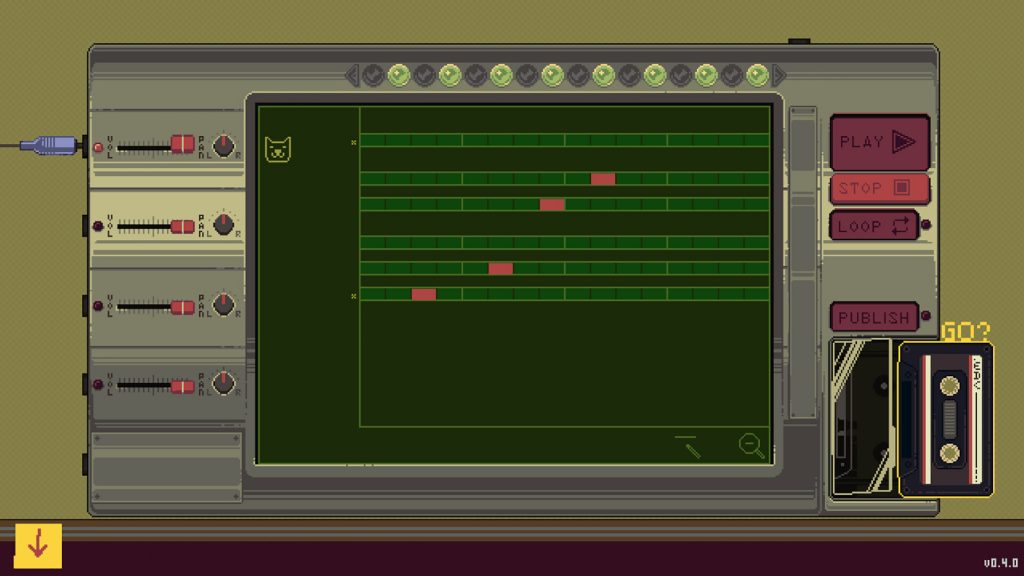
The single most distinctive feature of OFFBEAT deserves direct examination because it’s genuinely unusual within the gaming medium. Music compositions completed through the in-game sequencer save to the player’s computer as WAV files — actual audio data that can be played in any media player, edited in external software, shared online, or potentially released commercially.
Most music-themed games operate as music games (rhythm games, music puzzle games) or music-flavored simulations where players experience music creation without actually creating music. OFFBEAT‘s WAV export feature crosses an important line: the music players make is genuinely music, not just gameplay artifacts that suggest music.
The development team is explicit that OFFBEAT isn’t trying to compete with professional Digital Audio Workstations (DAWs). The complex feature sets of Ableton Live, FL Studio, Logic Pro, or Pro Tools require years of professional training to use effectively. OFFBEAT offers what the team describes as enough functionality to experience composition, arrangement, and sound design while producing audible results — not enough to replace professional tools, but enough to demystify them.
This positioning is strategically important. OFFBEAT targets the audience that wants to engage with music creation but finds professional DAWs intimidating. By packaging music production within familiar tycoon-game vocabulary (acquire equipment, grow your studio, complete jobs for clients), the project lowers the entry barrier dramatically. Players who would never download Ableton might happily play OFFBEAT — and the WAV export feature means their tycoon-game success produces real music they can actually share.
Garden Gnomes as Synthesizers
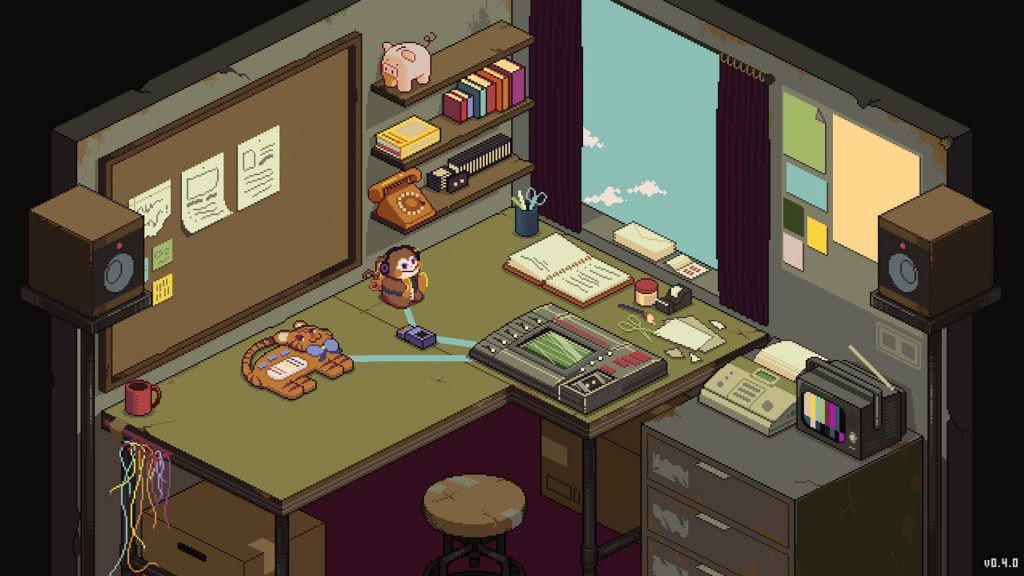
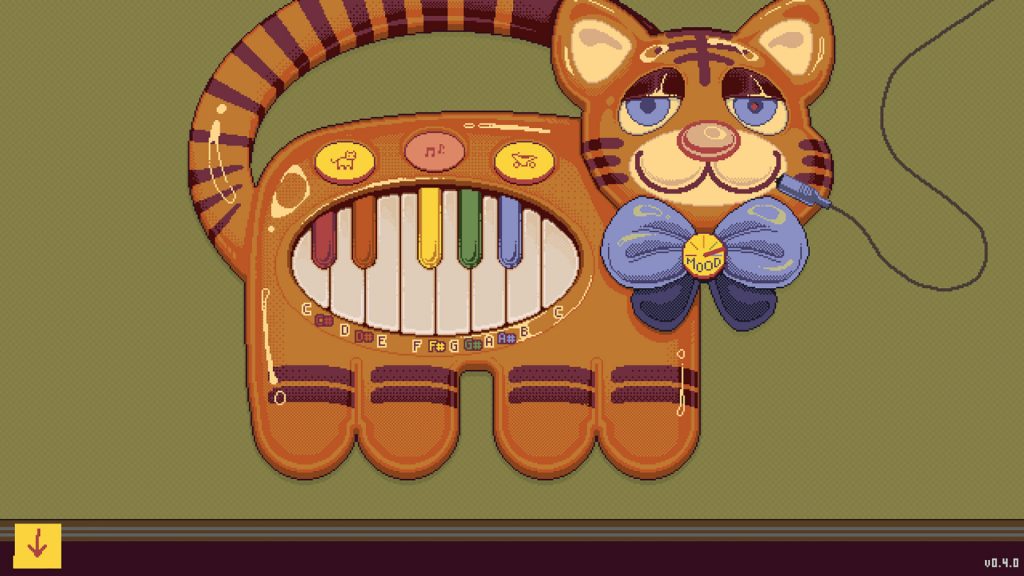
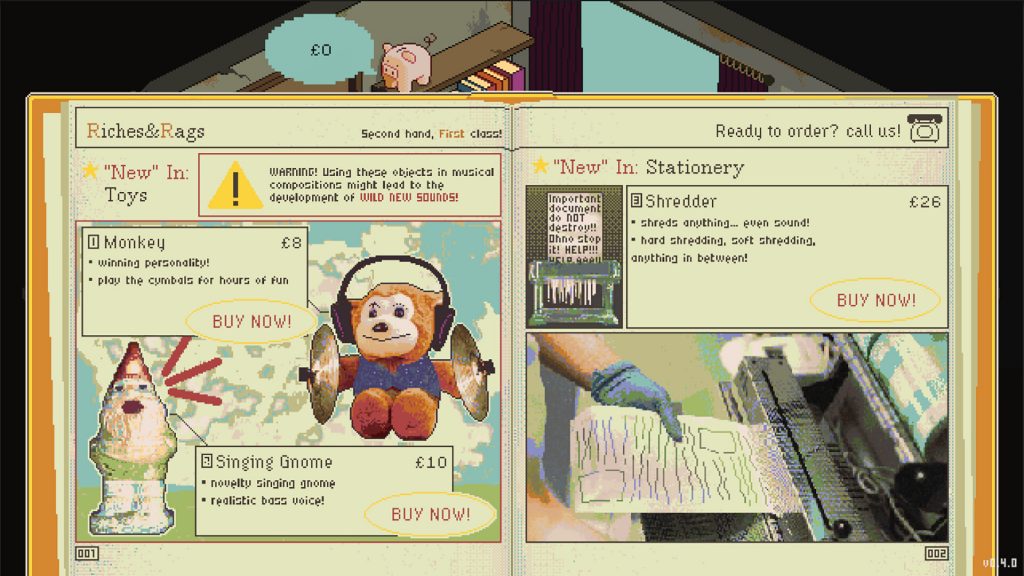
The aesthetic and conceptual approach of OFFBEAT is delightfully strange. Instead of professional studios with expensive equipment, the game features garden ornaments, kitchen utensils, office supplies, and toys functioning as synthesizers. Garden gnomes produce sounds. Spatulas generate beats. The unpredictability of which objects produce what sounds becomes part of the experimentation.
This design choice does important work. Professional music production aesthetic intimidates beginners — the gear photos, the technical terminology, the studio mystique all create barriers to entry. OFFBEAT deliberately undermines this intimidation by replacing professional aesthetics with absurd domestic objects. Players don’t need to learn what a Moog synthesizer looks like to engage with the game; they need to figure out what sound their garden gnome produces.
The “you don’t know what it does until you connect it” element creates exploratory gameplay that mirrors real synthesis experimentation. Professional synthesizers reward exactly this kind of exploration — patching combinations of modulation sources and destinations to discover unexpected sounds. OFFBEAT simulates this exploratory process through an accessible visual metaphor.
The pixel art style supports the approachable aesthetic. Professional music production software’s visual register is dense, technical, and often visually overwhelming for newcomers. OFFBEAT‘s pixel art creates immediate visual comfort while still communicating enough information for meaningful play. This is the right aesthetic choice for the project’s accessibility goals.
The Tycoon Structure
The gameplay foundation borrows from tycoon genre conventions while adapting them to music production. Players grow their studio by:
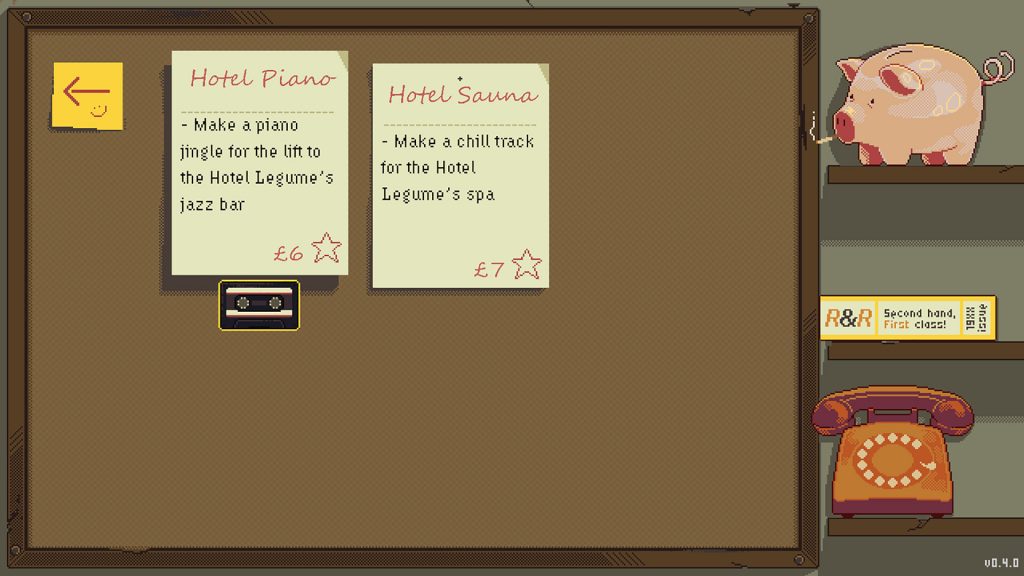
The “Riches & Rags” Catalog: Purchasing new equipment to expand sonic possibilities. This shopping/acquisition loop provides clear progression and gives players reason to engage with the economic dimensions of the game.
Electric Lacey’s Modifications: A characterful technician handles upgrades and modifications, adding personality to what would otherwise be pure system management.
Diverse Clients and Eccentric Characters: Various clients and unusual characters appear throughout, adding narrative texture to the music production process.
Genre-Themed Chapters: Each themed chapter focuses on different electronic music genres, providing structured progression through electronic music’s diverse subgenres.
This tycoon structure serves multiple purposes simultaneously. It motivates continued engagement (the standard “grow my business” loop that’s worked in gaming for decades). It introduces players to music production concepts through digestible context (each chapter focusing on a specific genre). It generates the kind of personality and humor that makes spending time with the game enjoyable beyond pure mechanical satisfaction.
The character-driven approach is particularly important. Pure tycoon games can feel cold and transactional. Adding Electric Lacey and assorted eccentric characters transforms the experience into something warmer and more sociable — appropriate for a project that wants to feel welcoming rather than intimidating.
The Pantaloon Records Strategy
The most genuinely innovative element of OFFBEAT‘s rollout isn’t the game itself — it’s the surrounding ecosystem. Publisher Pantaloon Interactive has established a separate record label, Pantaloon Records, specifically to release in-game-produced music as commercial singles.
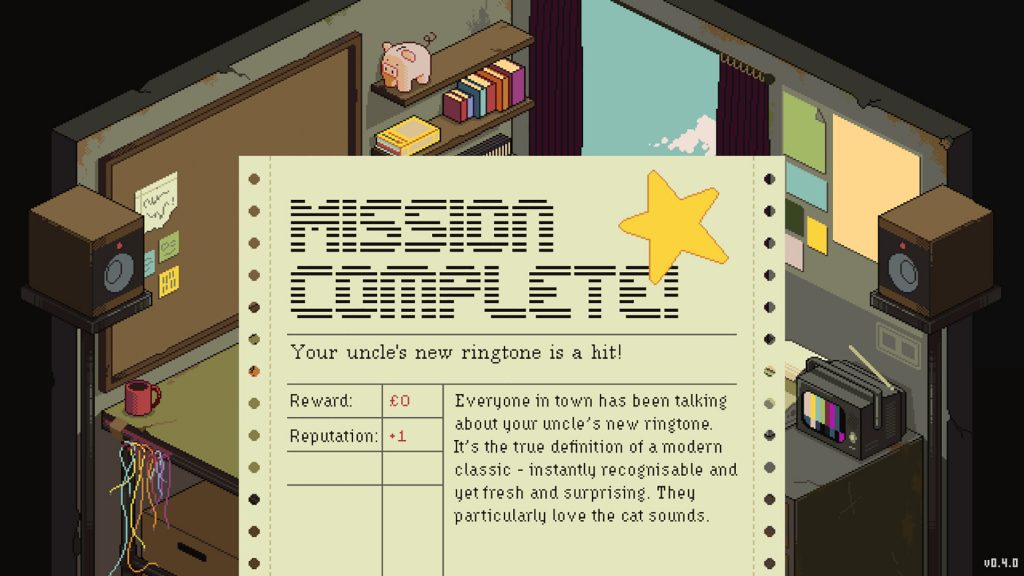
The first such release, “Not Your Uncle’s Ringtone” by Creative Director Ed Sibley, is now available as an actual commercial single produced entirely within OFFBEAT. Sibley’s account of the creation: “I needed music for the trailer, and since this is a music creation game, I wanted to make the track inside the game itself. I launched OFFBEAT, connected various pieces of equipment, and I liked the result enough that I ended up releasing it as a single.”
This isn’t marketing performance. It’s a working demonstration that OFFBEAT can produce music good enough to enter the actual commercial music market. The implications are significant: Pantaloon’s plan to release player-created tracks through Pantaloon Records means that OFFBEAT players aren’t just making personal music — they’re potentially producing commercial releases.
This connection between game, music production software, and music industry represents a genuinely novel experiment. Various creative tools (Mario Paint, Dreams, LittleBigPlanet) have allowed players to create content, but few have established formal pathways from in-game creation to commercial release. OFFBEAT is attempting to build exactly this infrastructure.
The label-establishment investment also demonstrates Pantaloon Interactive’s commitment to the project’s vision. Setting up a record label isn’t a casual marketing decision — it requires legal infrastructure, distribution agreements, royalty management, and ongoing operational commitment. This level of investment signals that Pantaloon genuinely believes OFFBEAT can produce music worth releasing commercially over time.
The Educational Mission
Beyond entertainment, OFFBEAT has explicit educational ambitions. The development team’s stated goal is to lower the entry barriers to music production — making the expensive and complex-feeling music creation process accessible through a familiar game format.
Players naturally learn synthesizer concepts, sound design fundamentals, composition principles, and recording basics through gameplay. The structure introduces these concepts gradually rather than dumping them on players upfront. By playing OFFBEAT for hours, players develop an intuitive understanding of music production concepts that would otherwise require formal study or extensive trial-and-error with professional software.
The development team’s framing is significant: “The goal isn’t to make music well, but to express freely and experiment.” This permission-to-experiment ethos is exactly what beginners need. Professional music production tools intimidate partly through their implicit demand for excellence — you and open Ableton feel obligated to produce something good. OFFBEAT explicitly removes that pressure, encouraging exploration over polished output.
This educational positioning could give OFFBEAT unusual longevity. Music education software targets specific niche audiences; entertainment games target broader markets but rarely teach lasting skills. OFFBEAT‘s combination of entertainment accessibility with genuine skill development could serve both audiences simultaneously, building player communities that continue using the game’s skills in other contexts.
Where Press Coverage Has Focused
International gaming press response has emphasized OFFBEAT‘s genre-crossing nature rather than treating it as a typical tycoon game. The combination of music production simulation, educational elements, and actual audio production capability has generated coverage that recognizes the project as more than entertainment.
The ability to release in-game-produced music as actual commercial releases has been singled out specifically as a new approach not seen in previous music games. This framing positions OFFBEAT within an emerging category of creative-tool games rather than within traditional gaming categories.
The Itch.io demo allows direct evaluation rather than relying purely on conceptual interest. Players curious about whether the WAV export feature actually delivers usable audio can test the claim themselves, which is the right approach for a project whose central feature depends on delivery quality rather than conceptual promise.
Who This Is For
Strong fit for: music creation enthusiasts looking for accessible entry points to production; electronic music genre fans interested in understanding production techniques; tycoon game players curious about creative-economy variations; pixel art aesthetic enthusiasts; creative-tool game players (Dreams, Mario Paint, LittleBigPlanet); anyone who’s wanted to try music production but been intimidated by professional DAWs; potential commercial musicians seeking unconventional production tools.
Cautious fit for: serious music producers who already use professional DAWs (likely to find OFFBEAT too limited for serious work); anyone seeking pure entertainment without creative engagement.
Less ideal for: players uninterested in music or electronic music genres specifically; players who prefer pure gameplay challenges without creative output; anyone seeking traditional rhythm games rather than production simulation.
What to Watch For
A few questions will shape OFFBEAT‘s development arc through Early Access toward the late 2026 full release.
The first is the audio quality of game-produced music. Whether the WAV files exported from OFFBEAT sound genuinely good enough to enjoy outside the game context, or whether they remain identifiable as game-produced audio, will determine the feature’s actual usefulness. Sibley’s “Not Your Uncle’s Ringtone” provides one data point; broader player-produced music will reveal the full quality range.
The second is the depth of the music production systems. Music games can fall into the trap of providing initial novelty without sustaining engagement. Whether OFFBEAT‘s systems offer enough depth for sustained creative engagement, or whether players exhaust the creative possibilities quickly will determine long-term engagement patterns.
The third is the Pantaloon Records experiment’s success. The label’s commitment to releasing player-created music sounds compelling but requires functional commercial infrastructure: quality curation, marketing capability, distribution relationships, and royalty management. How well this music industry experiment actually delivers commercial releases will affect the project’s broader cultural significance.
The fourth is the Early Access community development. OFFBEAT‘s combination of creative tool and tycoon game depends heavily on engaged community sharing creations, refining systems through feedback, and developing collective expertise. How well Whetstone Games facilitates this community will affect the game’s evolution during the 6-8 month Early Access period.
The Takeaway
OFFBEAT is one of the more genuinely innovative indie games currently in development, combining accessible game format, educational ambitions, real audio production capability, and ambitious music industry experimentation into a single coherent vision. The fact that the development team has already produced an actual commercial release using the game itself provides proof-of-concept that no description-based marketing could match.
For aspiring music creators specifically, OFFBEAT offers exactly the kind of accessible entry point that music production has historically lacked. The friendly tycoon-game framing, the absurd object-as-synthesizer design, and the explicit “experiment freely” philosophy all reduce the intimidation that keeps potential musicians from engaging with creation. If OFFBEAT succeeds at converting interested-but-intimidated players into active music makers, it could have an impact beyond its own commercial performance.
For broader gaming audiences, OFFBEAT represents the kind of creative tool game that has produced some of gaming’s most enduring works (Dreams, LittleBigPlanet, Mario Paint). These projects succeed not just as entertainment but as platforms that produce community-created content over the years. OFFBEAT‘s music production focus extends this tradition into territory that hasn’t been well-explored before.
For the music industry, the Pantaloon Records experiment is genuinely interesting regardless of whether OFFBEAT itself succeeds commercially. The pathway from game-based creation to commercial release represents a new model for music discovery and production that could influence how the music industry approaches accessible creation tools more broadly.
The Itch.io demo is available now. The Steam Early Access is coming soon. Pantaloon Records is operational. “Not Your Uncle’s Ringtone” is streaming on actual music platforms. The infrastructure for the experiment is built; what remains is to see whether players engage with the creative possibilities and produce music worth the label’s commercial commitment.
A garden gnome connected to a sequencer producing electronic music. Spatulas generating beats. Office supplies add texture. A tycoon game wrapped around an actual music production tool. A British indie studio attempting to lower the barriers to music creation while building bridges from gameplay to commercial release.
As experiments in cross-medium creative tools go, OFFBEAT‘s is one of the more genuinely ambitious of recent memory — and the fact that the development team has already demonstrated the concept works by releasing real commercial music made entirely within the game positions the project for unusual cultural resonance. Whether OFFBEAT becomes a niche curiosity or a paradigm-shifting creative platform depends on execution across the coming year, but the foundation is genuinely promising.
The studios are taking shape. The garden gnomes are warming up. The synthesizer connections are being patched. And somewhere between gaming and music production, OFFBEAT is quietly building something neither industry has quite seen before.
Information regarding ‘OFFBEAT’
| item | detail |
|---|---|
| Developer | Whetstone Games (London, UK) |
| Publisher | Pantaloon Interactive Ltd. |
| Genre | Music Tycoon / Audio Production Simulation / Music Immersive Sim |
| Release platform | PC (Scheduled for Steam Early Access) / Itch.io (Demo available) |
| Scheduled for release | Early access in the second half of 2026 (scheduled for 6–8 months) |
| Art style | Pixel Art / Retro |
| Key Features | In-game Sequencer / WAV File Extraction / Unstructured Synthesizer Objects |
| Related labels | Pantaloon Records (Release of in-game produced tracks) |
| First single | ‘Not Your Uncle’s Ringtone’ — Composed by Ed Sibley, In-game Production |
| Main Keywords | Music production, Tycoon, Synthesizer, Creativity, Experimentation, Pixel art, Retro, WAV extraction |
| Official Channel | Discord · Bluesky · YouTube · TikTok |
| Steam Page | Go to Wishlist |