<The content includes material related to drug trafficking.>
Mr Trippy is the debut project from Silver Bullet — the self-development label that Silver Lining Interactive has just formally launched, converting what was previously an internal incubator program into a label that makes its own games. The announcement positions Silver Lining Interactive as both a publisher supporting other developers and a studio making its own projects simultaneously, with Mr Trippy as the first demonstration of what the internal creative direction produces when given a full project to express itself in.
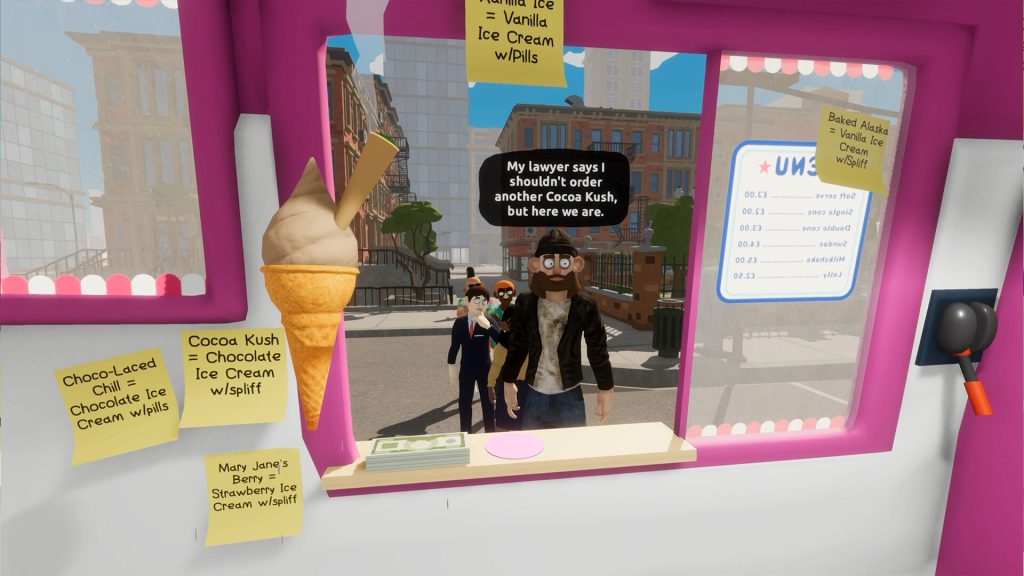
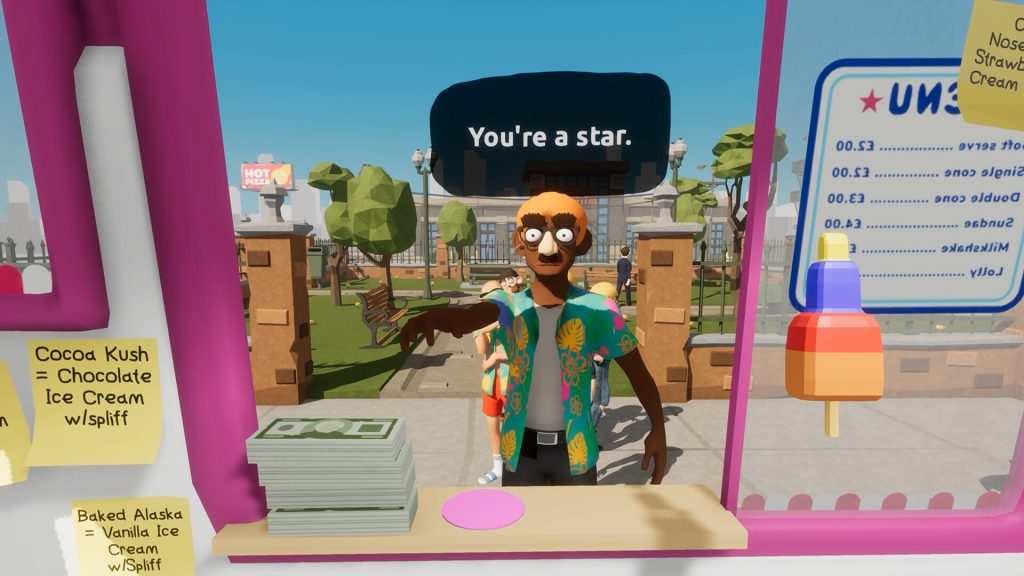
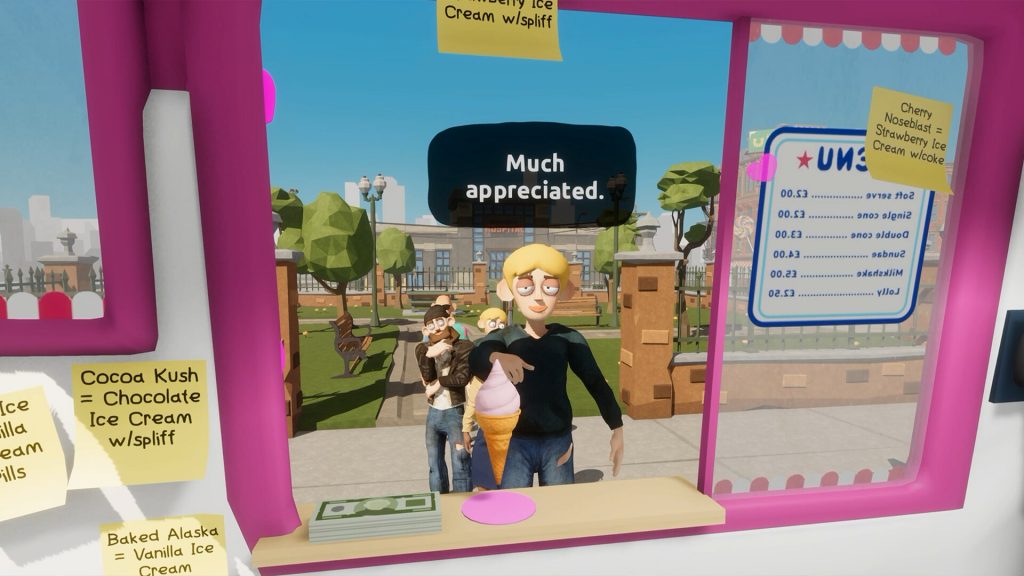
The premise is a drug trafficking management simulation disguised as an ice cream truck business, rendered in cartoon 3D with meme-adjacent humor and an open-world structure. That premise communicated fast: Gematsu, Niche Gamer, and Blue’s News all covered the announcement within 24 hours. A concept that travels on its own momentum.
The Business Expansion Systems
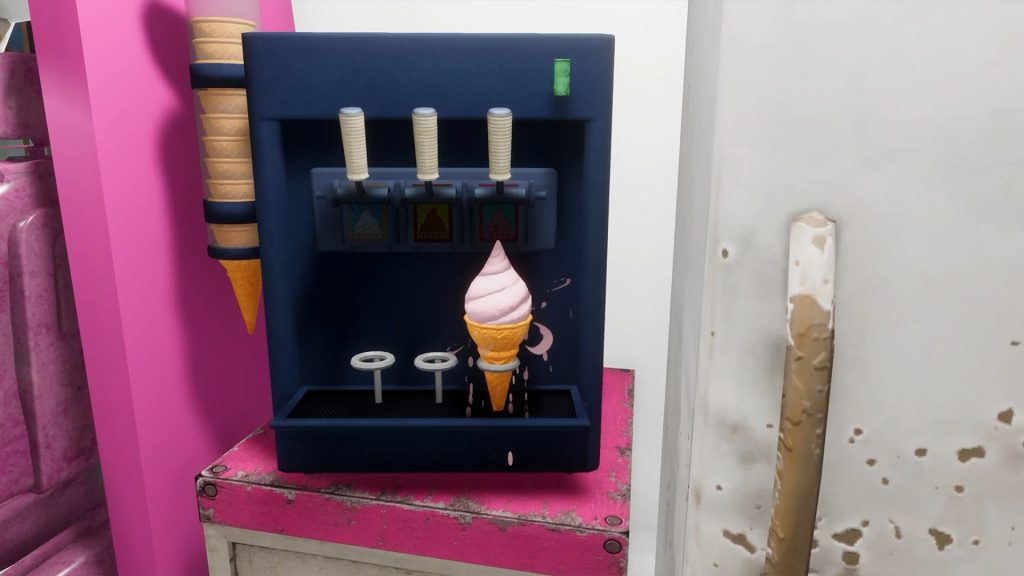
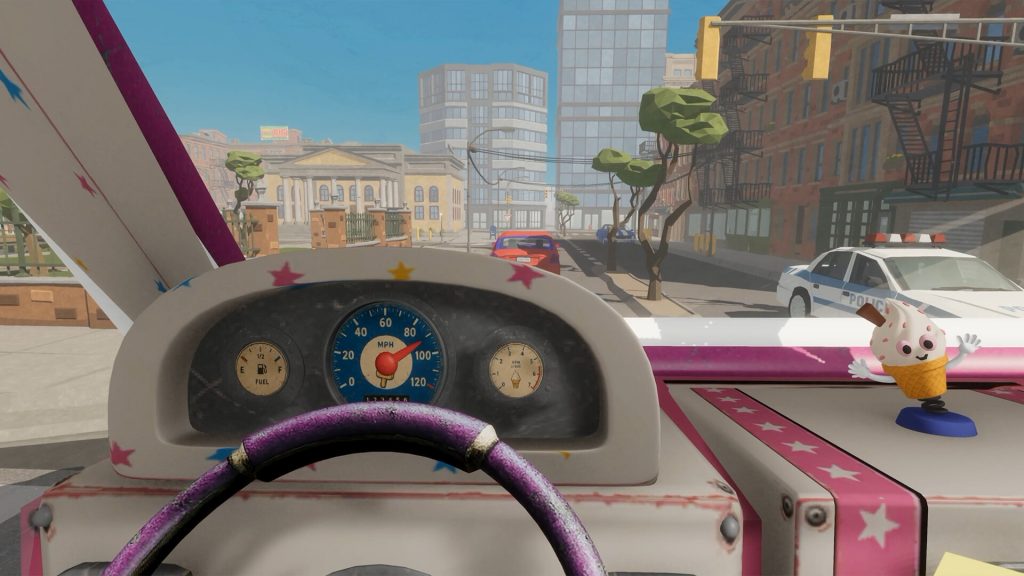
The ice cream truck is the starting point rather than the entirety of the game’s scope. As the operation generates profit, the truck can be upgraded from its initial run-down state into a more capable mobile operation — better equipment, expanded capacity, improved performance on both the legitimate and illegal sides of the business.
New territories provide the geographic expansion that keeps the criminal enterprise growing. Different neighborhoods have different customer demographics (different types of clientele for both businesses), different police presence patterns (affecting how aggressively the illegal side can operate), and different business opportunities. Moving into a new area is a risk-reward calculation: the untapped market is more profitable, but the unfamiliar territory means learning new patrol patterns and customer behaviors from scratch.
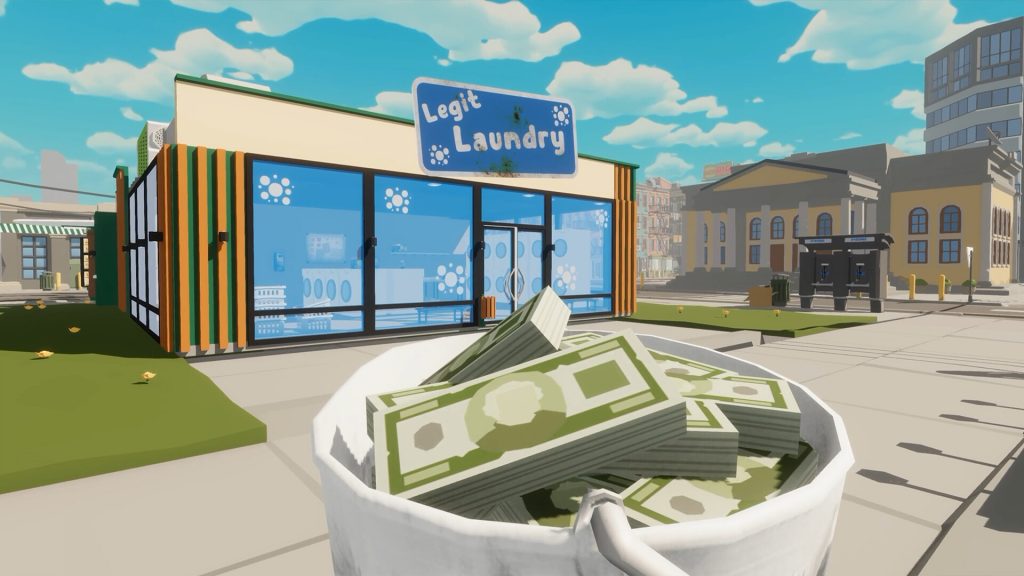
The money laundering system is the financial management layer that separates Mr Trippy from games where illegal money is simply counted as profit. Illegal proceeds need to be cleaned through local business fronts before they’re available for reinvestment in the operation. This isn’t purely mechanical friction — it reflects an actual operational requirement of criminal enterprises that games almost never model. The laundering pipeline creates its own management concerns: which businesses are available for laundering, how much capacity they have, and how the clean money flows back into the business.
The Tonal Approach
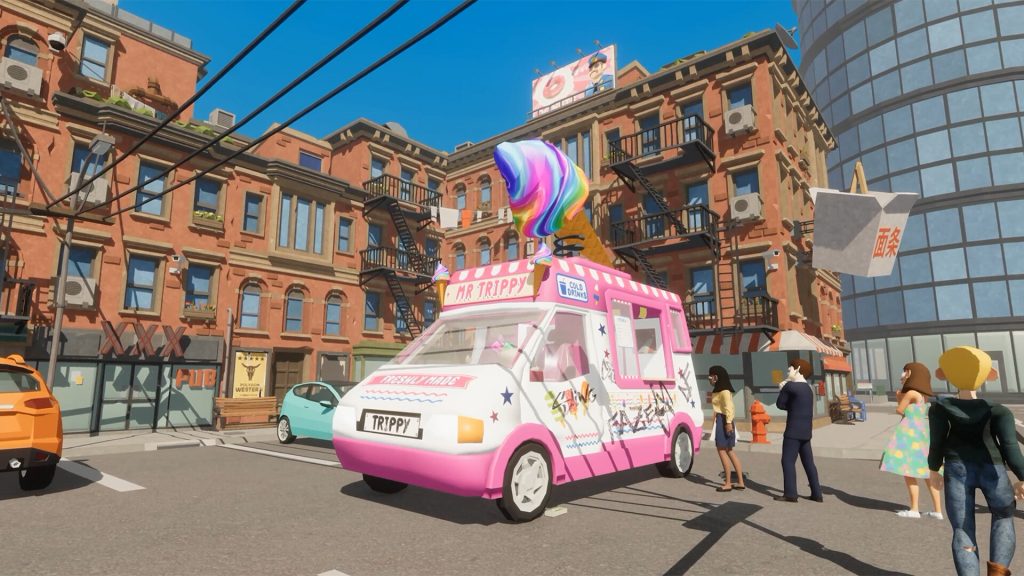
The cartoon 3D visuals, colorful palette, and meme/comedy/parody Steam tags are doing specific tonal work. Mr Trippy is not trying to make drug trafficking feel serious, meaningful, or morally weighty. It is treating criminal enterprise as an absurdist management game premise — the same relationship that Monopoly has to real estate investment, or that Prison Architect has to incarceration, or that the Grand Theft Auto series has to organized crime when it’s at its most satirical. The playful presentation signals: we are here for the mechanics and the comedy, not for realism or moral seriousness.
This matters because the alternative — an earnest, gritty portrayal of drug trafficking as a genuinely dark activity — would produce a fundamentally different game requiring fundamentally different design commitments. The cartoon style releases players from the moral weight that the subject matter would otherwise carry, which is what allows the management game’s optimization satisfactions to operate without uncomfortable friction. You’re not simulating the human cost of drug trafficking; you’re playing a heat management and business expansion puzzle that uses drug trafficking as its thematic skin.
The “No drugs in this truck, sir” tagline is the encapsulation of this tonal register — a joke about the obvious lie that the premise requires its protagonist to maintain, delivered in the format of the protagonist saying it to a customer. The game is in on its own absurdity from the first marketing line.
The Open World Structure
The open world framing for what is essentially a management simulation is an unusual structural choice that suggests Mr Trippy is more spatially grounded than a pure top-down management game. First-person 3D with an open world implies the player is physically present in the environment, driving the truck between neighborhoods, experiencing the city as a space to inhabit rather than a map to manage.
This physical presence in the world presumably changes how the heat management system feels. Seeing undercover investigators in the environment, navigating the truck between customers, physically moving to new territories — these are experiential rather than abstract management decisions. The cartoon visual style in a first-person perspective with an open-world structure is closer to Untitled Goose Game‘s physical occupation of a space than to a traditional management simulation’s overhead view.
How well the open-world structure serves the management game underneath it will be one of the primary evaluations when the game becomes playable. Open worlds in management games can provide genuine spatial engagement or can feel like a visually expensive way of presenting information that overhead views would communicate more efficiently.
The Silver Lining Interactive Portfolio Context
Silver Lining Interactive has previously published the Outbound fishing update (which this coverage noted earlier this month) as well as other indie titles. The move from publishing to also developing means the company is now competing in the same space it has been supporting — which creates an interesting dynamic with the indie developers the Silver Bullet incubator program continues to serve. Whether the company manages to maintain a clear separation between its incubator support role and its direct development competitive interests will be something the indie development community watches.
For Mr Trippy specifically, the in-house development context means the game has had access to all of Silver Lining’s publishing and marketing expertise from day one — the game is being developed by people who understand how games are released commercially because they have been releasing other people’s games commercially. This is a genuine advantage that first-time indie developers typically don’t have.
Who Is This For
Strong fit for: players who respond to absurdist criminal management premises with immediate interest; Recettear, Shop Titans, and other store management game fans who want an illegal version of that genre; black comedy simulation enthusiasts who appreciate games that take absurd premises seriously as game design challenges; players who want open world structure in a management game context; anyone for whom “ice cream truck drug operation” generated an immediate laugh followed by “wait, how does that work mechanically.”
Cautious fit for: players who want gritty crime simulation with genuine moral weight rather than cartoon comedy management; anyone who finds drug trafficking as a game premise uncomfortable regardless of tone; players who need a release date before adding something to their wishlist; anyone who specifically wants Korean language support (not currently planned).
Less ideal for: players who dislike management simulation structure; anyone who finds the subject matter off-putting regardless of tonal framing; players seeking multiplayer or competitive modes.
What to Watch For
The release date announcement will be the most significant next information point. Concept announcements without dates leave the discovery moment and the wishlist momentum disconnected from the commercial event that would convert them — how quickly Silver Bullet moves from announcement to playable demo or release date will determine how much of the immediate press interest becomes sustained community attention.
The open-world execution is the specific design question most worth watching in the full game. Managing the heat mechanic, serving dual customer types, and expanding the operation work as concepts that need physical space to express them in. Whether the open world provides genuine engagement with those concepts or functions as a visually elaborate management screen will determine whether Mr Trippy achieves the specific experience its premise promises.
The Takeaway
Mr Trippy is Silver Lining Interactive, testing whether a publisher can make games as well as it helps others make them — with a debut concept specifically designed to generate immediate attention through premise rather than through polish or production scope. The ice cream truck drug operation is immediately comprehensible, immediately funny, and immediately raises the question of how the mechanics actually work, which is the correct first impression for a game announced before it has a release date.
Silver Bullet’s launch as a formal development label, rather than just a program name, signals that this isn’t an experiment the company is prepared to abandon if Mr Trippy doesn’t immediately succeed. It’s a commitment to the idea that publishing expertise and development practice belong together, and that the team at Silver Lining has enough of both to make something worth playing.
The truck has ice cream. And other things. No release date yet. The Steam wishlist is open while we wait to find out what exactly is in the back.
Information regarding ‘Mr. Trippy’
| item | detail |
|---|---|
| Developer | Silver Bullet (a newly established development label under Silver Lining Interactive) |
| Publisher | Silver Lining Interactive |
| Genre | Casual / Indie / Simulation (Management Simulation, Black Comedy) |
| Release platform | PC (Steam) |
| Release date | Undetermined (Can be added to wishlist) |
| Supported languages | English, French, German, Spanish, Portuguese, Simplified Chinese |
| adult content | Includes depictions related to drug and narcotic trafficking and sales |
| Steam Page | Shortcut |