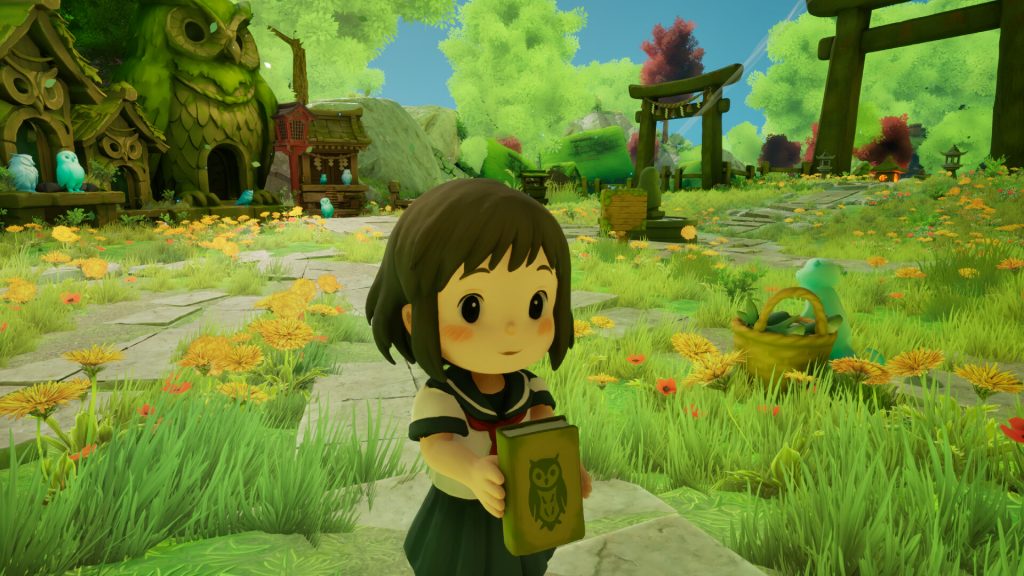
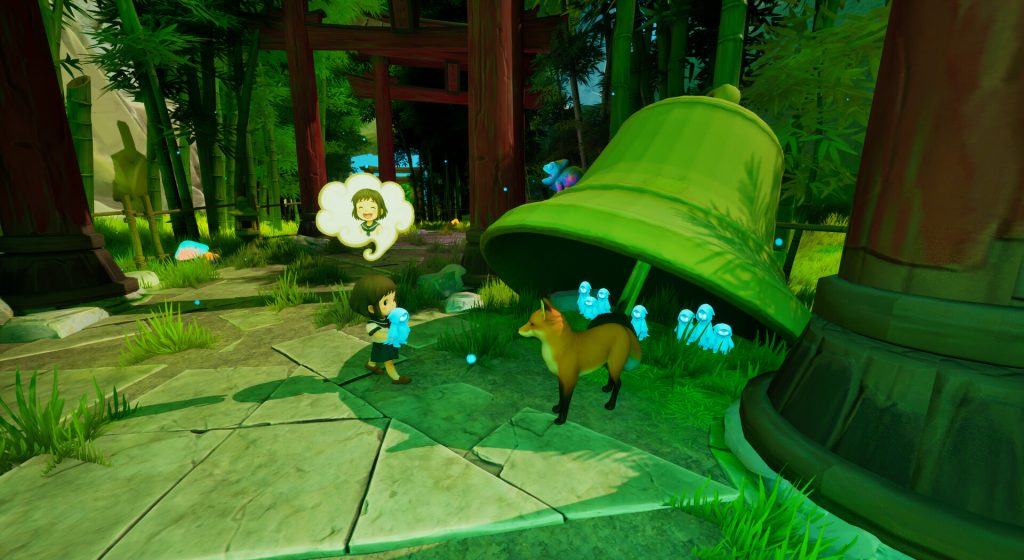
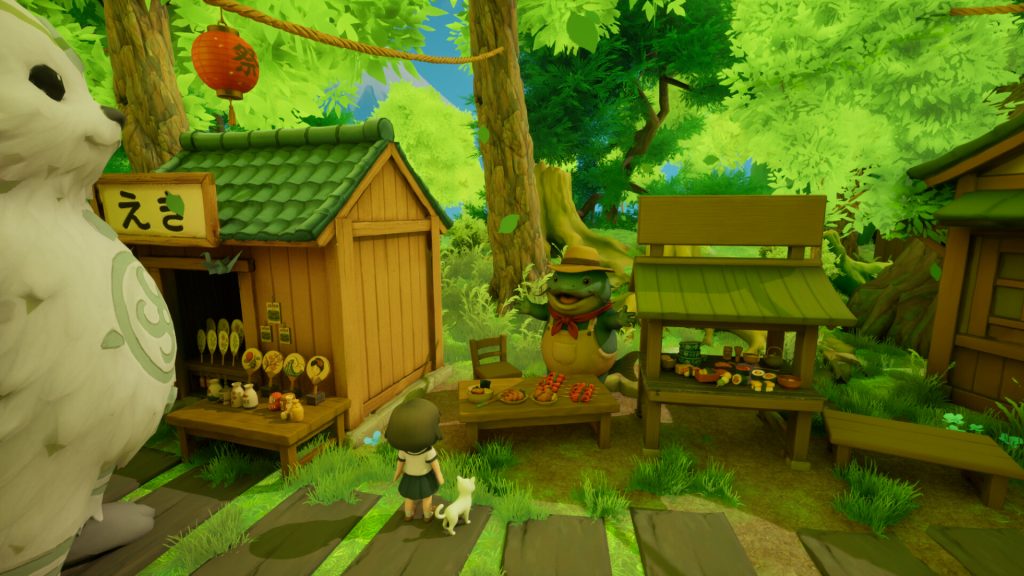
A girl named Mika follows her missing cat Seina into a spirit world of foggy forests, moss-covered shrines, and ancient ruins where natural memory and old folklore are still alive. No combat. No time limits. Only the world to explore, the spirits to commune with, and the small puzzles that open the next quiet discovery.
Seina: A Tale of Spirits from Greek solo developer Argyro Brotsi (POFUPOFU STUDIOS) arrives at its Steam demo on August 11, following coverage from Gematsu, GamerBraves, Console Creatures, Creative Bloq, and IndieGames since the December 2025 first reveal. The demo is the first public playtest; the full release targets 2026.
The development origin is unusually specific. Brotsi visited Japan for the first time in 2024 and came back having been most affected not by the famous cities but by the quieter rural villages — the sense that small, everyday moments carry meaning. The game that emerged from this experience communicates in watercolor, gesture, and silence.
The Non-Verbal Storytelling Decision
The choice to tell Seina’s story without dialogue text is a meaningful creative commitment rather than a scope simplification. Non-verbal storytelling in games requires replacing the most efficient information-transmission tool available (text) with slower, less direct methods: character animation, environmental design, contextual sound, and the player’s own inference. This is harder to execute than written dialogue because every emotional beat that the story needs to land must be communicated through performance and space rather than through words.
The tradition Brotsi is working within is a specific and small one: Gris told its story of grief through color and movement without text; Flower communicated emotional states through environmental response to player input; Journey made the connection between two strangers through shared movement in an inhospitable landscape. What these games share is the understanding that removing language forces both creator and player to engage with the emotional content more directly — there’s no narration to explain what the character is feeling because the character’s body and the environment must show it instead.
The “character gesture, expression, and environmental clues” delivery method means players who pay attention will understand more than players who rush. A shrine’s specific deterioration pattern might reveal something about what happened there. Seina’s body language in a particular moment might communicate something about her relationship to the spirit world. The story is there for those who look for it, rather than delivered regardless of whether the player is paying attention.
Brotsi’s decision not to use combat or time pressure alongside this storytelling approach is consistent. Both combat and timers redirect player attention from the environment to the threat; a game that wants players to read environments for narrative meaning needs to remove the stimuli that compete with that attention. The only things happening in any moment of Seina are exploration, gentle puzzles, and the world itself — which creates the attentional space the non-verbal storytelling requires to work.
The Japanese Village and Its Translation
The gap between source experience and creative work is one of the interesting questions Seina raises. Brotsi is a Greek developer who traveled to Japan, was moved by specific qualities of rural Japanese villages — the atmosphere, the architecture, the particular feeling of places where natural environment and human spiritual practice have been in dialogue for centuries — and is now building a digital world that attempts to recreate what those qualities felt like from the inside.
The resulting world (foggy forests, moss-covered shrines, ancient ruins, animal spirits) is clearly Japanese-influenced rather than Greek-inflected. Whether this is cultural appreciation or something more complicated is the question that the execution will answer more definitively than the intent. The visual quality and the feeling of inhabiting the spaces, rather than the cultural accuracy of their representation, will determine whether the game communicates what moved the developer when they walked through those actual villages.
The solo development choice that Brotsi describes — “I can incorporate my ideas completely without anyone’s input and work at my own pace” — extends this. The creative vision is Brotsi’s alone, which means the translation from Japanese rural experience to interactive watercolor world is entirely filtered through one Greek artist’s perception. This produces creative coherence alongside whatever distortions a single perspective always involves.
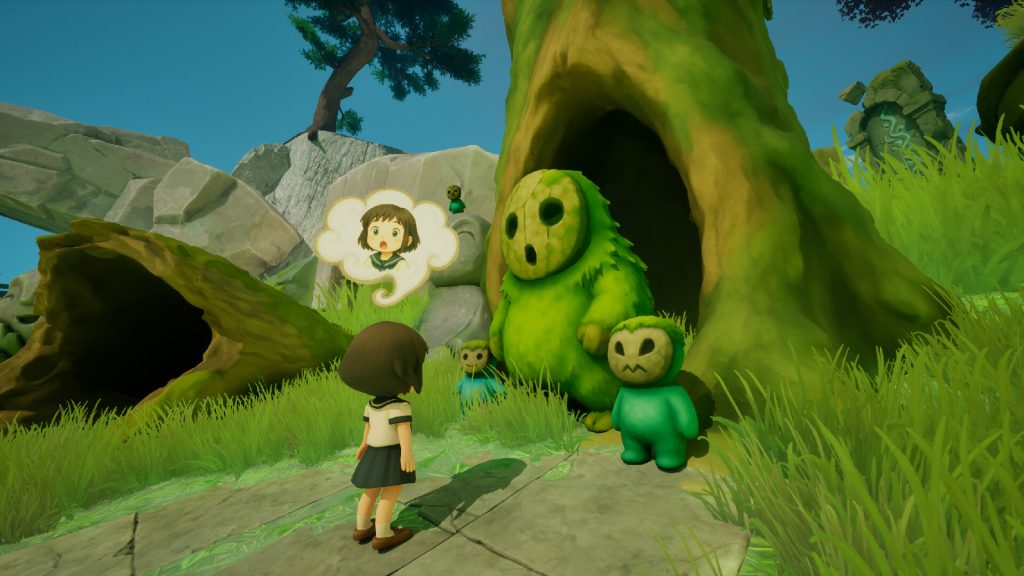
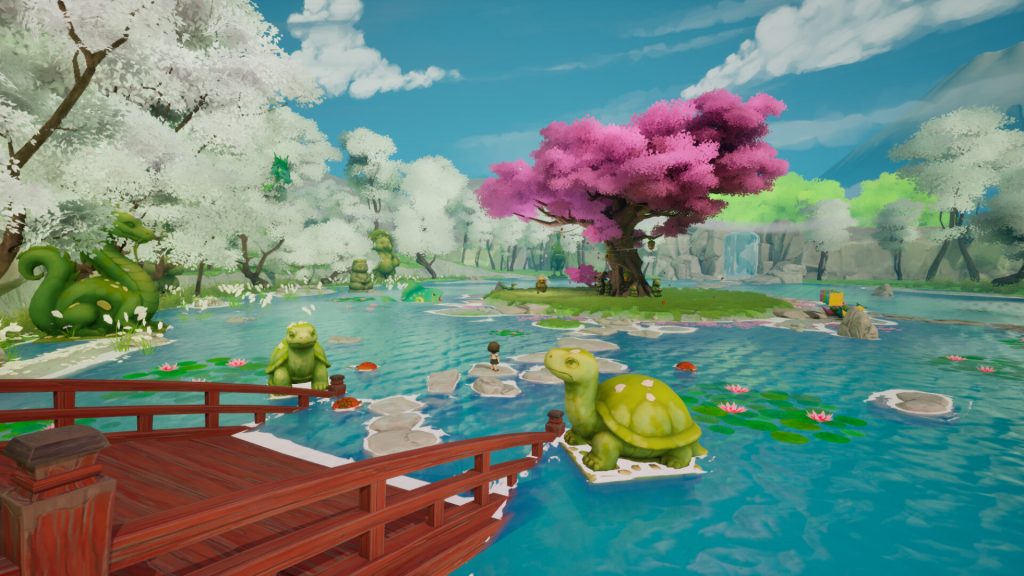
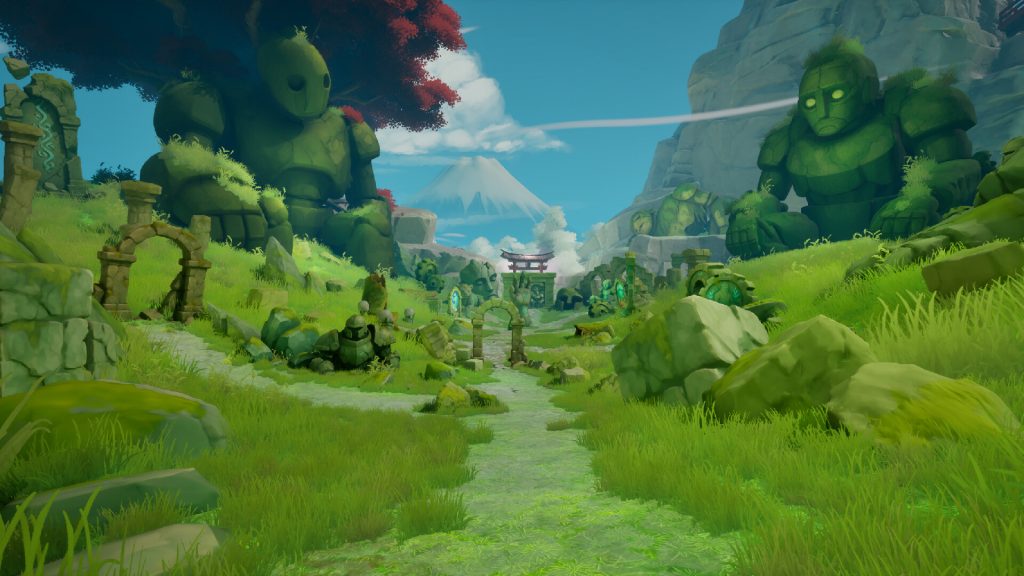
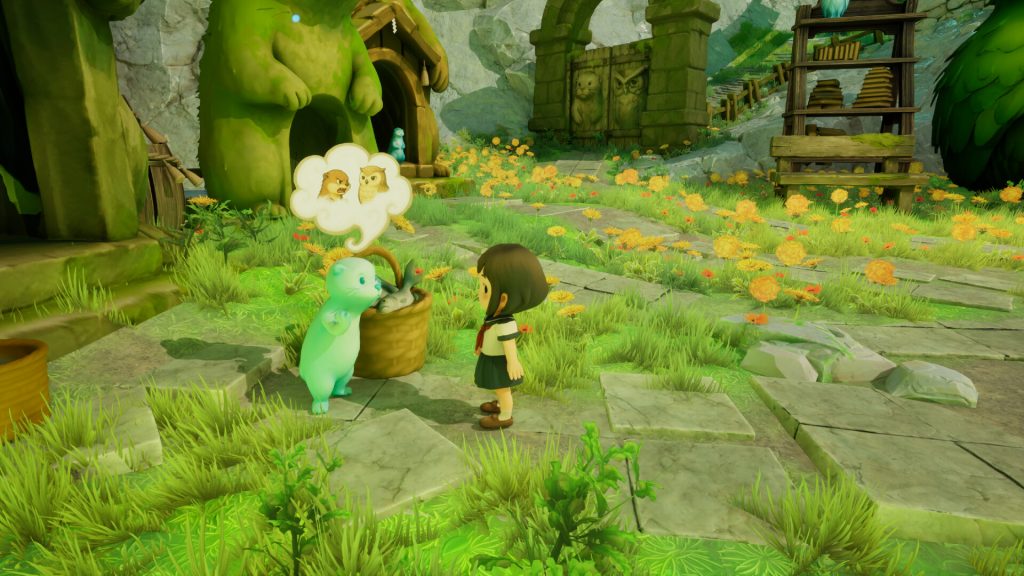
The Watercolor in Unreal Engine 5
The combination of hand-painted watercolor aesthetics with Unreal Engine 5 as the development foundation is technically demanding in the specific way that UE5’s feature set doesn’t naturally produce. Unreal Engine 5’s signature capabilities — Nanite geometry, Lumen global illumination, high-fidelity real-time rendering — produce photorealistic results by default. Achieving genuine watercolor quality in UE5 requires working against the engine’s tendencies, applying custom shaders and post-processing to transform what the renderer produces into something that reads as hand-painted.
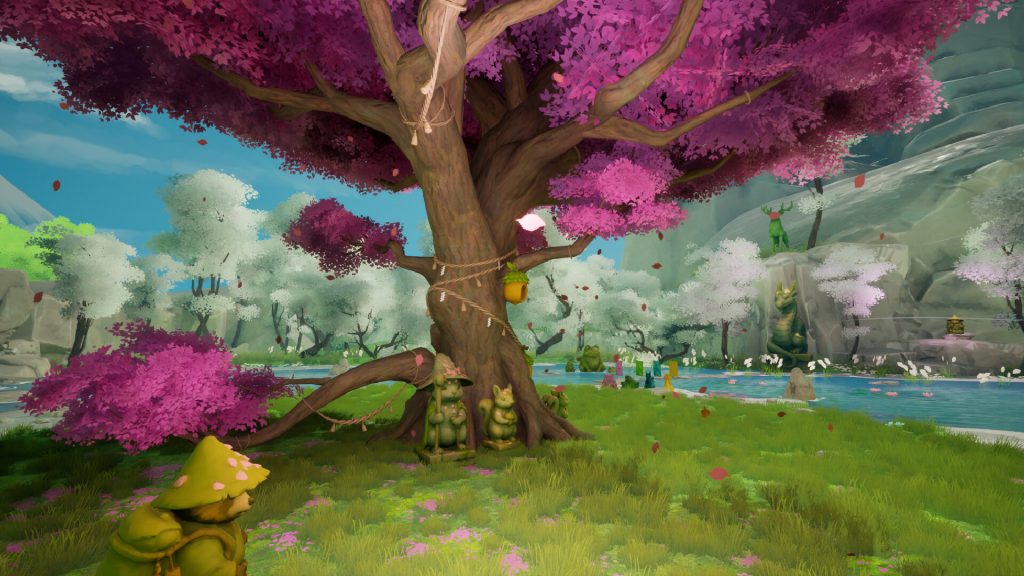
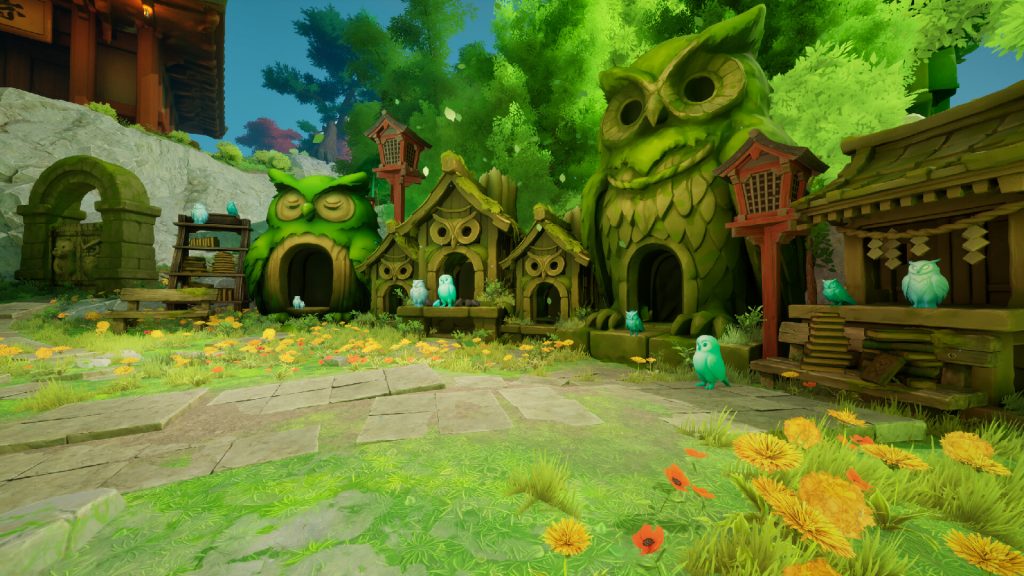
The cover art and screenshots suggest Brotsi is achieving this — the environments read as watercolor illustrations with organic color bleeding, soft edge quality, and the specific warmth of pigment in water on paper rather than light through pixels. If the demo delivers this visual quality consistently across different lighting conditions and environments, it will be one of the more technically accomplished watercolor presentations in recent memory, particularly notable given the solo development context.
Shrines with morning mist, forests in different light conditions, ancient ruins at different times of day — each of these is a different visual challenge for the watercolor approach. Whether the aesthetic holds across the variety of conditions the world contains is part of what the demo will reveal.
The Spirit World Encounter Design
Animal spirits that respond to player’s “small touches and actions” with “lively reactions” is the interactivity model that the game is building its engagement around in the absence of combat or scored mechanics. If a spirit responds distinctively to different player approaches — if curiosity produces different reactions than hesitation, if a particular gesture communicates something the spirit responds to — the interaction layer is genuinely expressive. If the spirits primarily have scripted interaction triggers that produce standard animations, the “lively reactions” are more limited than the language implies.
The ruins and shrine investigation — where Mika’s exploration gradually clarifies why Seina came here, and reveals the “special bond” between Mika and this spirit world — is the narrative mystery that gives the exploration directional purpose. Players aren’t just wandering through beautiful environments; they’re following a thread. The gentle puzzles presumably mark moments where the thread becomes temporarily inaccessible until the player figures out what the environment is asking.
The Context of This Month’s Animal Companions
Seina is the second game this month that centers a human-animal bond as its primary emotional relationship, after Finding Polka (Shinnosuke Kumazawa) — whose August 12 release makes the two games effectively simultaneous. The comparison reveals different approaches to similar emotional territory: Finding Polka is a memorial to a dog who died before the game was finished, built in ballpoint pen, communicated entirely through walking; Seina is a world built from a Japanese village’s atmosphere, in watercolor, structured around finding a cat in a spirit world.
Both games are about following an animal into somewhere unfamiliar. Both avoid combat and pressure. Both rely on the specific quality of hand-drawn mark-making to communicate warmth and personal investment. The aesthetic and emotional territory they’re exploring overlaps, while the cultural contexts and specific emotional registers they’re working from are entirely distinct.
Who Is This For
Strong fit for: Gris and Journey players who specifically want non-verbal visual storytelling; Studio Ghibli animation fans who want to inhabit the aesthetic register of that cinema interactively; watercolor art enthusiasts who appreciate the visual quality of hand-painted illustration in game form; players who have been looking for a healing adventure with no combat or time pressure since Flower or Abzû; Finding Polka players who want another take on the human-animal bond in a non-verbal exploration format; players interested in how non-Japanese creators engage with Japanese aesthetic and spiritual traditions.
Cautious fit for: players who need mechanical challenge to stay engaged with exploration; anyone who finds the absence of dialogue in narrative games alienating rather than immersive; players who need release dates before committing attention to upcoming games.
Less ideal for: players who want action or combat alongside exploration; anyone who dislikes slow-paced exploration games; players seeking multiplayer experiences.
What to Watch For
The August 11 demo is the first opportunity to evaluate whether the non-verbal storytelling succeeds in communicating Mika’s emotional journey without text — whether the gesture and environment do the work that dialogue usually handles. This is the game’s most significant creative bet, and the demo provides the direct evidence of whether the bet is paying off.
The UE5 watercolor quality across different lighting and environmental conditions is the second evaluation point. Static screenshots suggest the aesthetic is working; animated gameplay in varied conditions will reveal whether it holds throughout or whether certain conditions compromise the watercolor impression.
The Takeaway
Seina: A Tale of Spirits is a Greek solo developer’s attempt to recreate in interactive watercolor the feeling of being in a Japanese rural village where human spiritual practice and natural environment have been in conversation for centuries — without dialogue, without combat, without time pressure, with a missing cat as the narrative thread and a spirit world as the territory. The creative ambition is specific, the aesthetic approach is committed, and the development origin (a 2024 first trip to Japan, rural villages making more impression than famous cities) is genuinely personal.
August 11 is when the demo becomes evaluable. The watercolor shrines are drawn. The mist is in the forests. Seina is somewhere in this world. And Mika is following quietly to find out why.
Information regarding ‘Seina : A Tale of Spirits’
| item | detail |
|---|---|
| Developer | Argyro Brotsi (Solo developer, founder of Popupopu Studio) |
| Publisher | POFUPOFU STUDIOS |
| Genre | Adventure / Casual / Indie (Healing, Exploration) |
| Release platform | PC (Steam), PS5, Xbox Series, Nintendo Switch 2 |
| engine | Unreal Engine 5 |
| Demo release date | Released for free on Steam on August 11, 2026 at 11:00 AM (UK local time) |
| Official release date | Scheduled for release within 2026 |
| Supported languages | Supports a total of 23 language interfaces and subtitles (including Korean), audio is supported in English only. |
| reaction | 3 Steam curators have posted reviews; there are no user reviews yet as the official release has not yet begun. |
| Steam Page | Shortcut |