Two years after launch, Chained Together has done something most $4.99 indie games never approach: cleared 10 million Steam sales, sustained 90% Very Positive review status across 50,000+ reviews, and accumulated enough cultural momentum that French developer Anegar Games has now signed a long-term publishing partnership with Secret Mode to support extended growth and content expansion. Most indie games that achieve substantial early success see attention fade within months as new releases capture the streamer cycle. Chained Together is doing the opposite — entering a deliberate long-service mode after two years of organic growth that’s accumulated commercial scale most major studio releases never reach.
This partnership announcement isn’t just a business transaction. It signals the recognition that Chained Together has evolved from “successful viral indie release” into something closer to “established gaming franchise with multi-year operational potential” — and that the team behind it intends to develop the property accordingly rather than ride its current momentum until it fades.
The Viral Success Pattern That Actually Sustained
Most viral indie successes follow a predictable curve: explosive launch attention through streamer/YouTube coverage, peak engagement for 2-4 months, then steady decline as new viral candidates capture community attention. Chained Together‘s trajectory has been different — and the difference is worth examining.
The game launched June 2024 and immediately became streamer/YouTuber content. The combination of premise (up to 4 players physically chained together attempting platforming), price point ($4.99), and accessibility (anyone could play, no skill prerequisites) made it ideal viral material. Friends playing together, accidents happening, falls and recoveries generating both comedy and frustration — exactly the content that drives streaming engagement.
What’s unusual is how this content cycle sustained rather than peaked. Two years later, new play videos and broadcast content are still being produced regularly. The game continues generating fresh streamer engagement despite hundreds of competing viral candidates appearing across the period.
The Golden Joystick Awards 2024 and Streamer Awards 2024 wins helped legitimize the property beyond pure viral phenomenon into recognized industry success. Awards visibility brings post-launch audience that pure streamer momentum doesn’t reach — players who follow industry awards but might not actively follow streamer culture.
The 10 million sales figure represents extraordinary indie achievement at the $4.99 price point. Even accounting for substantial Steam revenue share, the project has generated commercial returns that justify continued investment many times over. For Anegar Games specifically, this commercial success has transformed them from emerging indie studio into established developer with significant resources for future projects.
The Premise: Why Simple Concepts Travel Far
It’s worth examining why Chained Together specifically achieved this trajectory while many similar-concept games haven’t. The premise distillation is genuinely elegant — players are chained together attempting to climb. That’s almost all of it. The simplicity is the point.
Simple premises that produce complex emergent behavior are gaming’s most reliable viral formula. Among Us was social deduction in space — simple. Fall Guys was battle royale platforming — simple. Phasmophobia was cooperative ghost hunting — simple. Each premise can be explained in one sentence to potential players, demonstrated visually in seconds, and immediately suggests the comedic potential viewers will encounter.
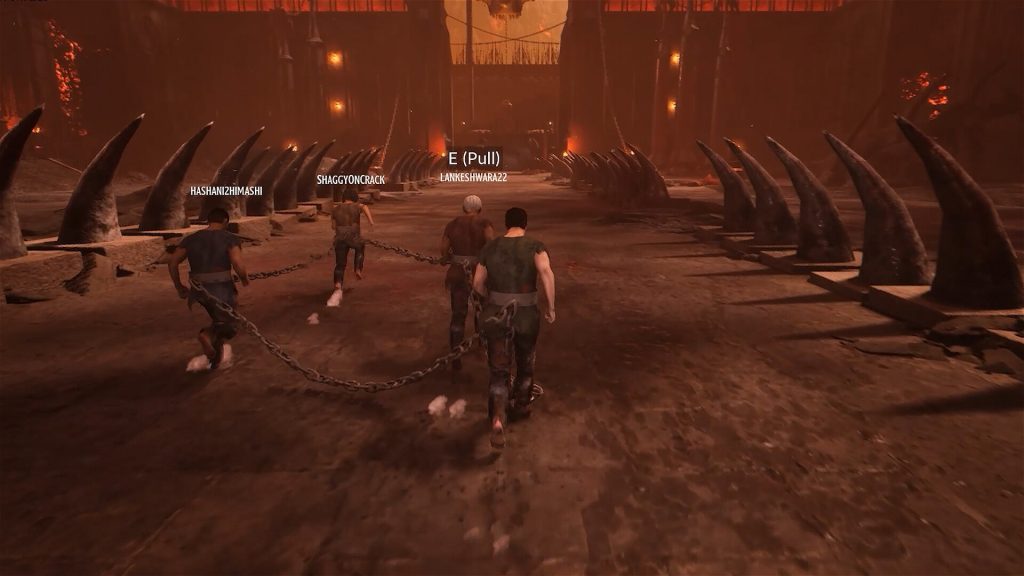
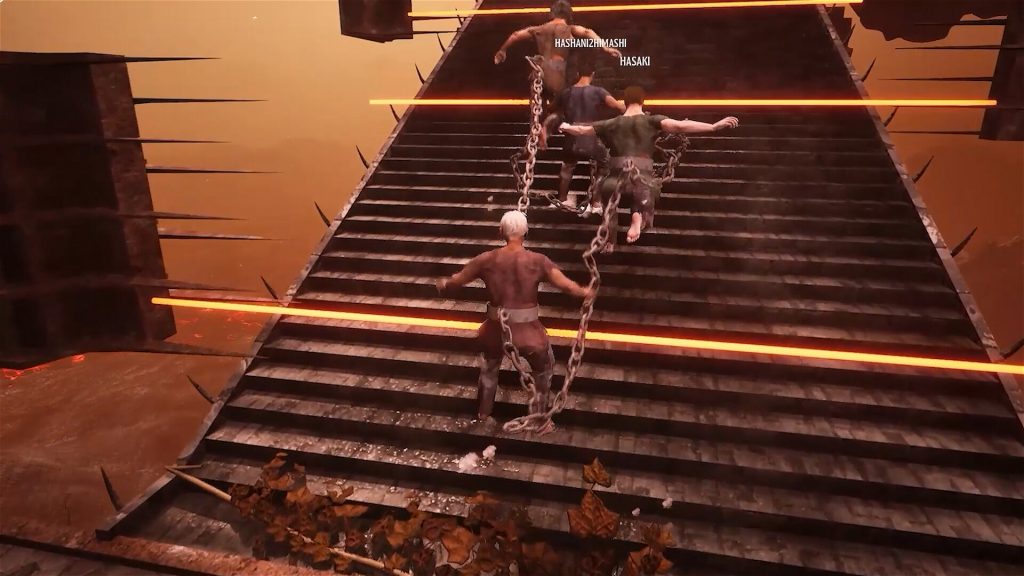
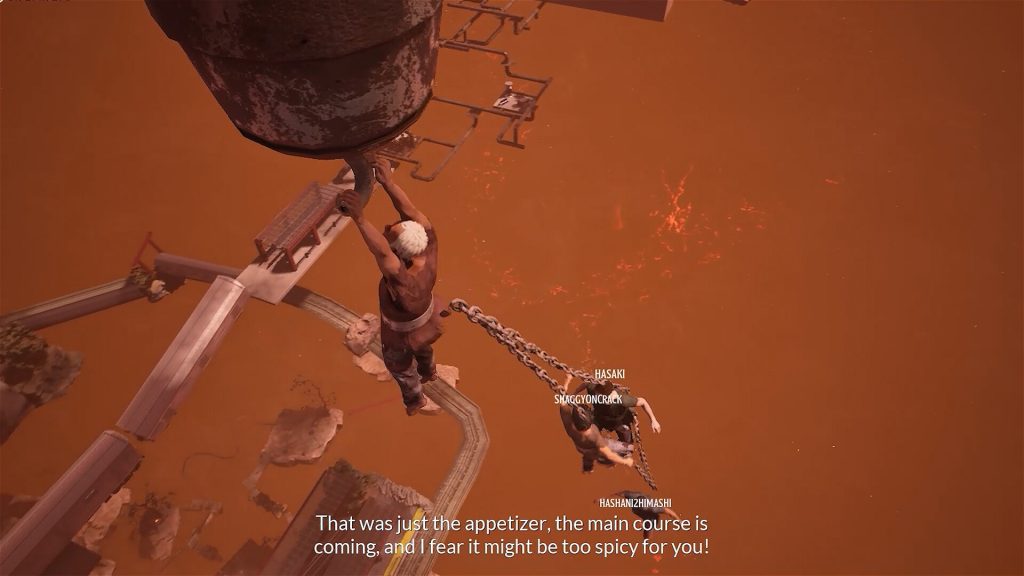
Chained Together‘s chain physics produces exactly this kind of emergent comedy. When one player jumps, others are pulled along. When one player mistimes a movement, the entire team can fall. The physics engine creates situations that no designer scripted but that all players recognize as inevitable consequences of the core mechanic. Players don’t have to learn complex systems to understand what’s funny about Chained Together — they immediately understand that a single sliced rope and four panicked friends produce maximum comedy.
This kind of “the mechanics ARE the joke” design is exceptionally hard to achieve through complex systems. The simpler the foundation, the more clearly the emergent humor can emerge from it. Chained Together succeeds partly because Anegar Games resisted the temptation to add complexity that would have obscured the fundamental comedy of the chain mechanic.
The Hell-to-Heaven Vertical Journey
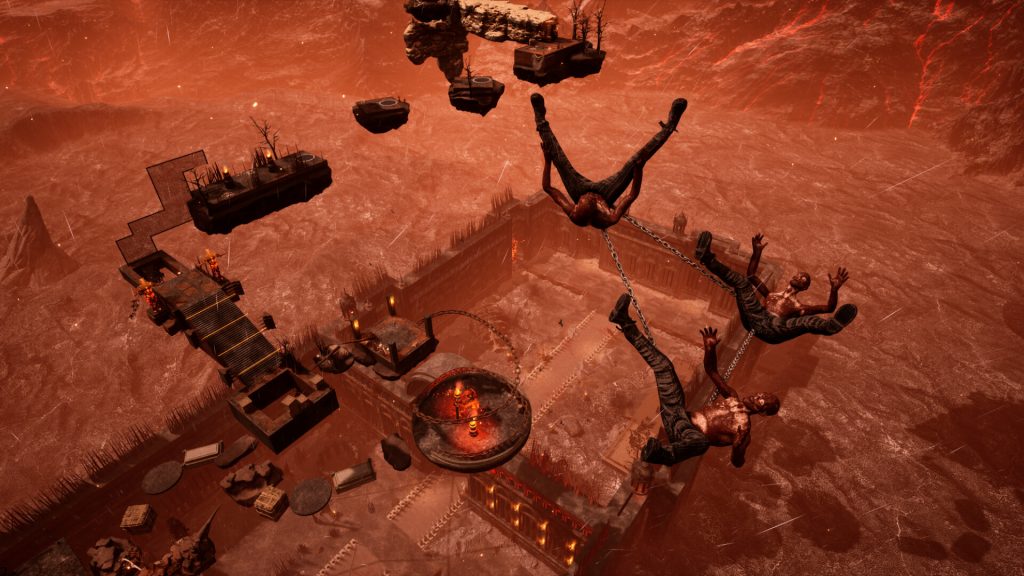
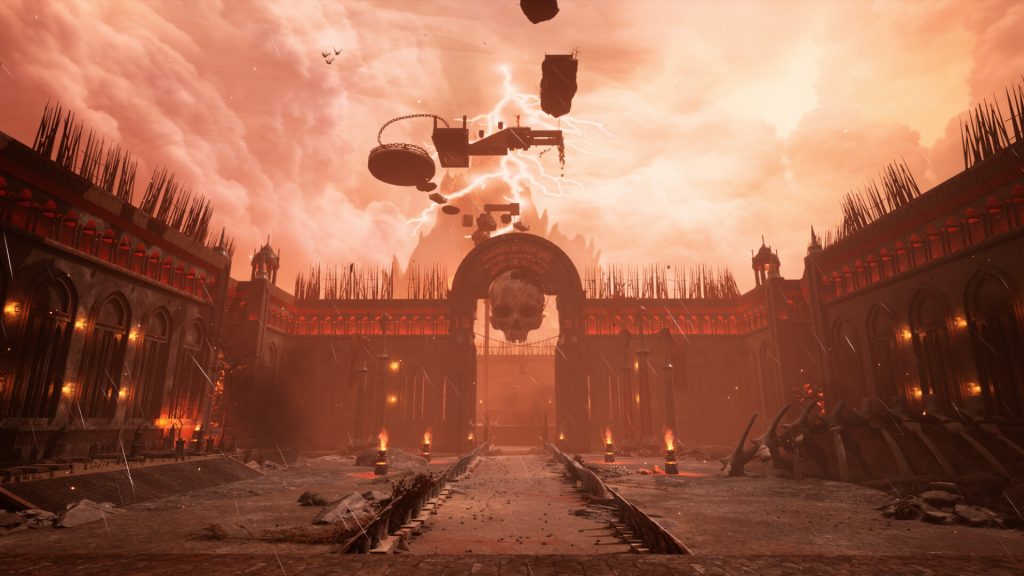
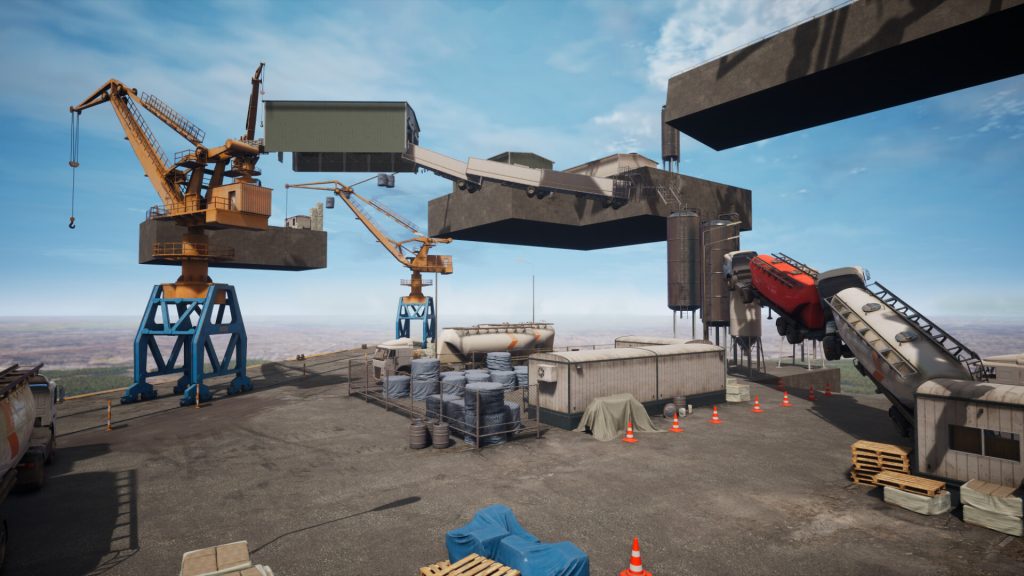
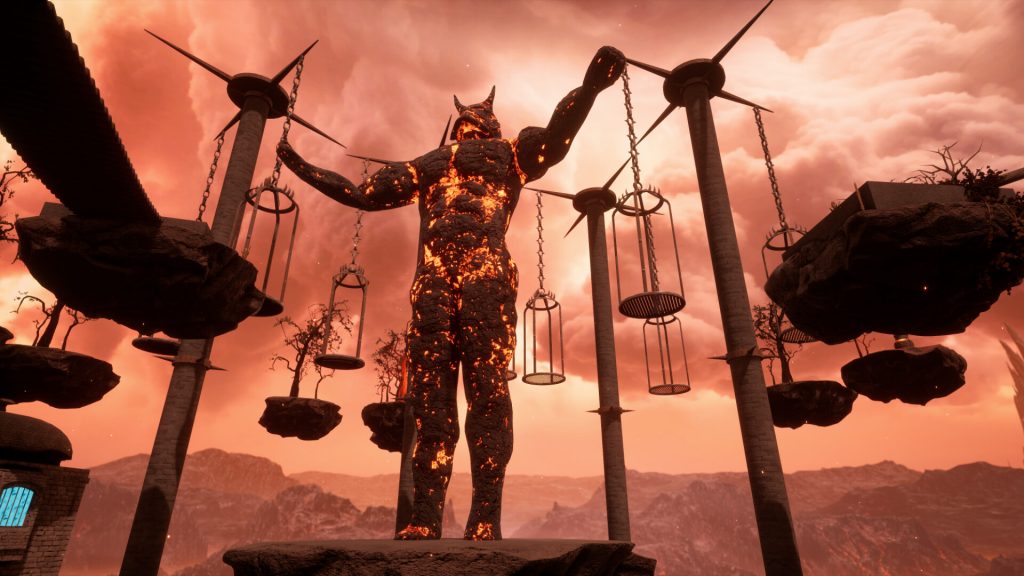
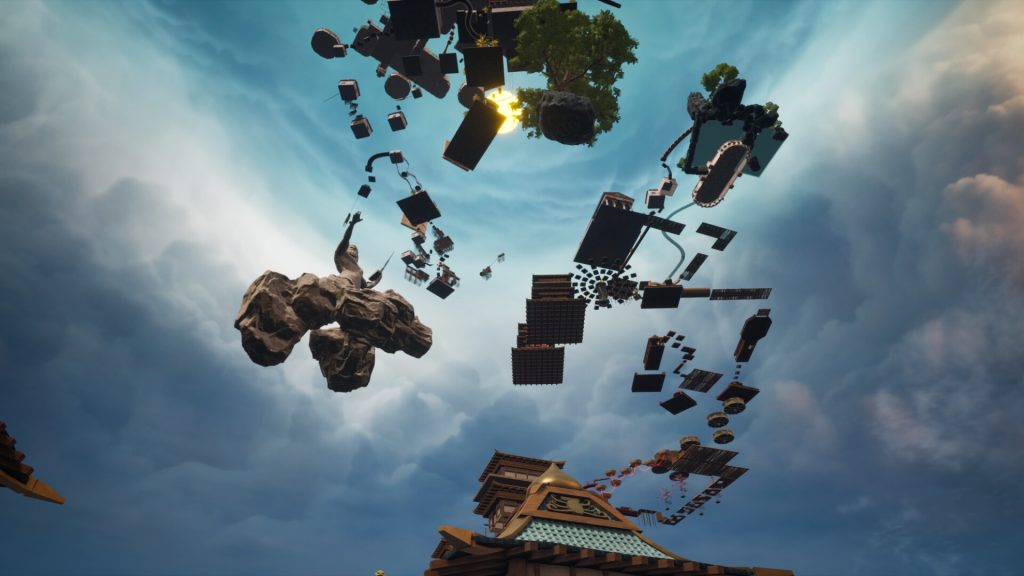
The game’s structural choice — climbing from hell’s deepest point upward toward heaven — provides narrative justification and gameplay variety simultaneously. Each region has distinct atmospheric and visual themes, with higher elevations introducing more challenging obstacles and complex structures.
The hardcore mode adds tension through rising lava that constantly threatens players from below. The pressure of literal rising death imposes pace and consequence on what would otherwise be pure climbing. Conversely, golden wings obtained from higher regions provide gliding capability during falls, creating recovery options that make ambitious play viable.
The visual contrast between hell’s red lava and heaven’s golden landscapes produces a strong identity that streamers can immediately leverage. Players can see, at a glance, how far a player has progressed — and the visual transformation from infernal beginnings to celestial heights provides a satisfying narrative arc beyond pure mechanical progression.
The “climb upward” structure is also psychologically clever. Vertical progression is one of gaming’s most universally satisfying metaphors. Going up = winning. Falling = losing. Players from any cultural background immediately understand the visual logic without explanation. This semantic clarity contributes to Chained Together‘s international viral spread — the game’s appeal doesn’t depend on cultural context.
The Difficulty Spectrum
Chained Together‘s difficulty mode structure shows mature design thinking about audience range.
Hardcore Mode with rising lava maximizes tension for players seeking peak intensity. The lava creates time pressure that doesn’t otherwise exist in climbing games, transforming what could be patient platforming into desperate scrambling for height. For streamers especially, this mode provides the maximum content potential — falls happen quickly, recovery time is limited, and the visual drama of rising danger reads instantly on camera.
Beginner Mode provides an immediate return to the highest point reached. This convenience function specifically serves players who want to enjoy the cooperative mechanics without the punishment that defines hardcore modes. Chained Together could have leaned exclusively into rage-game intensity, but choosing to include beginner options expands the audience meaningfully without diluting the experience for hardcore players.
This dual-tier approach is exactly what successful party games need. Hardcore play satisfies committed players and produces optimal streaming content; accessible play welcomes casual players who would otherwise be excluded by rage-game intensity. Chained Together serves both audiences through structural design rather than compromising for either.
The Secret Mode Partnership
The publishing partnership with Secret Mode is the announcement’s most significant strategic dimension. Secret Mode’s credentials are substantial: MCV/Develop Indie Publisher of the Year 2025, Ukie Best UK Publisher 2024, and Debug Best Indie Game Influencer Marketing 2025. Their catalog includes the triple-BAFTA-winning Still Wakes the Deep, plus A Little to the Left, Wobbledogs, and Loddlenaut.
Most relevant to Chained Together specifically: Secret Mode successfully managed Escape the Backrooms‘ official release and post-launch content support. Escape the Backrooms shares structural similarities with Chained Together — cooperative gameplay, streamer/community-driven discovery, and viral momentum that needed transition to sustained operational support. Secret Mode’s proven experience managing exactly this kind of property is the most important qualification for the Chained Together relationship.
The partnership framing emphasizes “long-term growth and content expansion” rather than just commercial publishing services. This suggests Chained Together will receive ongoing content updates, possibly new modes, expanded regions, additional mechanics, seasonal content, or other systematic expansions of the base game. The viral-game-to-service-game evolution is a relatively recent indie business model, and Chained Together now joins the small group of indie titles attempting it seriously.
For Anegar Games, the partnership likely also frees development resources from publishing/operational responsibilities. Successful indie studios often face the challenge of dividing time between continuing development and managing the operational demands of successful releases. Secret Mode’s involvement should let Anegar Games focus on new development and content creation while Secret Mode handles community management, platform relations, marketing, and operational support.
The Streaming Era’s Commercial Dynamics
Chained Together‘s success illustrates broader patterns in contemporary indie gaming commerce.
Price Point Strategy: The $4.99 pricing was crucial. At the impulse-purchase scale, casual players try games they wouldn’t pay $20 to experience. The 10 million sales figure would have been impossible at higher pricing, even with the same viral momentum. Indie developers increasingly recognize that volume strategies at low price points can produce greater total revenue than premium pricing for similar-quality content.
Cooperative Multiplayer as Audience Multiplier: Single-player viral hits require each viewer to consider whether they personally want the experience. Cooperative multiplayer hits convert each player into a potential 2-4 player audience because friends typically purchase together. Chained Together benefits from this multiplication factor consistently.
Physics Engine as Comedy Generator: Games with sophisticated physics systems produce emergent comedy that designer-authored humor can’t match. Goat Simulator, Untitled Goose Game, and Chained Together all leverage physics to create situations that surprise even their developers. This emergent quality keeps content fresh long after scripted humor would have worn out.
Streamer-Compatible Design: The game’s structural choices favor streaming visibility. Visual progress is immediately apparent. Failure is dramatic. Success is satisfying. Player reactions are intense and visible. The design is structurally optimized for the kind of content that performs well on streaming platforms.
Who This Is For (And Who’s Still Discovering It)
Strong fit for: cooperative gaming groups seeking accessible party experiences; streamers and content creators looking for content-friendly games at low entry cost; rage game enthusiasts; physics comedy fans; anyone who enjoyed Fall Guys, Among Us, or similar accessible viral co-op experiences; new players just discovering the game two years after its peak hype.
The “new players still discovering” segment is particularly important. Chained Together continues generating new audience discovery despite being two years old, partly through ongoing streamer content, partly through Steam algorithm promotion of its accumulated review momentum, and partly through pure word-of-mouth between friend groups.
Cautious fit for: players who specifically prefer single-player experiences; anyone whose cooperative gaming groups don’t have time for chaotic physics comedy.
Less ideal for: players seeking serious narrative experiences; anyone who prefers competitive over cooperative gaming; players whose social circles don’t include cooperative gaming partners.
What the Partnership Means for Long-Term Direction
A few questions will shape Chained Together‘s next phase under Secret Mode’s involvement.
The first is the content expansion direction. Possibilities range from new regions extending the existing climb to entirely new game modes (downward racing? horizontal challenges? competitive variants?) to seasonal content with limited-time themes. How Anegar Games and Secret Mode approach expansion will determine whether Chained Together maintains its identity or evolves into something different.
The second is platform expansion possibilities. The game has remained PC-exclusive throughout its two-year success. Console and mobile expansions could significantly extend the total audience, though they bring development complexity that Anegar Games may have deliberately avoided.
The third is the lifecycle planning. Successful service-style indie games typically need 3-5 years of operational planning. How Secret Mode and Anegar Games structure ongoing development will affect whether Chained Together sustains relevance for years or fades despite the partnership investment.
The fourth is community feature development. Service-style games depend heavily on community features (leaderboards, cosmetics, social systems) that Chained Together hasn’t emphasized significantly. Building these features without compromising the game’s core simplicity is a design challenge worth watching.
The Takeaway
Chained Together‘s evolution from $4.99 viral indie launch to 10-million-selling cultural phenomenon to long-term service operation represents one of the more interesting commercial trajectories in contemporary indie gaming. The Secret Mode partnership formalizes what the commercial success has revealed — that Chained Together has matured beyond viral release into an established property with multi-year operational potential.
For current and prospective players, the announcement signals that Chained Together will continue receiving development support rather than being abandoned to maintenance mode. The 50,000+ Very Positive reviews and 10 million sales weren’t a peak — they were a foundation for what comes next.
For indie scene observers, the project’s trajectory provides a case study in how viral indie success can be converted into sustainable long-term business through strategic partnership decisions. Anegar Games’ choice to align with Secret Mode (rather than continuing to self-publish, attempting to grow internal operational capabilities, or selling the IP entirely) represents one path through the post-viral-success challenges that all successful indie studios face.
For the broader gaming industry, Chained Together‘s success and continuing development demonstrate that the $4.99 viral cooperative space has more depth than it might appear. These aren’t disposable games that briefly capture streamer attention and disappear — they can become genuine commercial properties with multi-year relevance when developers and publishers approach them strategically.
A simple premise. Up to four players chained together. A climb from hell’s depths toward heaven’s heights. Two years of streamer/YouTuber content. 10 million Steam sales. 50,000 reviews, maintaining 90% positive status. And now, a partnership with one of indie publishing’s most awarded organizations to sustain development for years to come.
As indie success stories go, Chained Together‘s is one of the more genuinely instructive of recent memory — and based on the Secret Mode partnership announcement, the story isn’t ending. It’s just entering its next chapter.
The chain is still connecting players. The climb is still happening. The lava is still rising. And one of indie gaming’s most genuinely viral successes is positioning itself for sustained relevance in a space where most viral hits fade within months of release.
Information regarding ‘Chained Together’
| item | detail |
|---|---|
| Developer | Anegar Games |
| Publisher | Secret Mode (MCV/Develop Indie Publisher of the Year 2025) |
| Genre | Cooperative Platformer / Physics-based Rage Game / Party Game |
| Release platform | PC (Steam) |
| First release date | June 2024 |
| price | $4.99 |
| Steam sales volume | 10 million copies+ |
| Steam Review | Very positive 90% (50,000+) |
| premier | Golden Joystick Awards 2024 / Streamer Awards 2024 |
| Play Mode | Solo / Co-op up to 4 players |
| core system | Chain Physics / Lava Pool Hardcore Mode / Golden Wings / Beginner Mode |
| Main Keywords | Co-op, Rage-inducing, Platformer, Hell, Chains, Viral, Party Game |
| Official Channel | Discord · X · YouTube · TikTok |
| Steam Page | Shortcut |