The press comparison that has stuck for Go-Go Town! — a cozy, cheerful exterior over “a surprisingly satisfying management game about building a self-running economy” — identifies the design quality that keeps the 95% Overwhelmingly Positive Steam rating honest rather than charitable. This is not a game whose approval comes from being gentle. It comes from being genuinely good at what it does, wearing approachability on the surface while delivering something more demanding underneath.
Prideful Sloth is five people in Brisbane with collective résumés from Batman, Elder Scrolls, and Guitar Hero. Go-Go Town! is their third game and their biggest commercial result — 100,000 copies in the first month, Nintendo Switch charts topped in three major markets simultaneously. Two years of Early Access built the community that made the 1.0 launch land the way it did. This is the shape of what patient, community-engaged indie development is supposed to produce.
The Mayor’s Desk
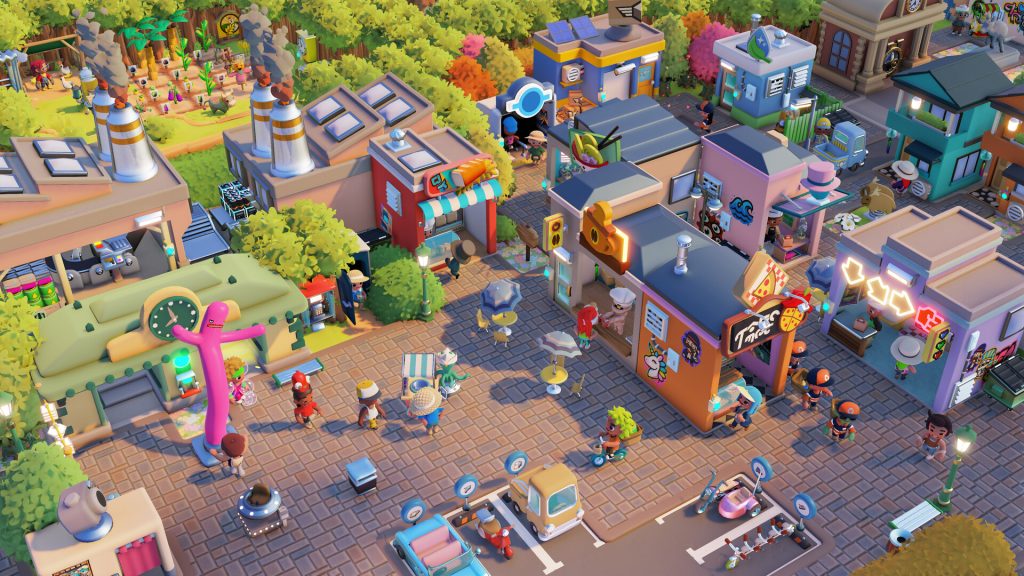
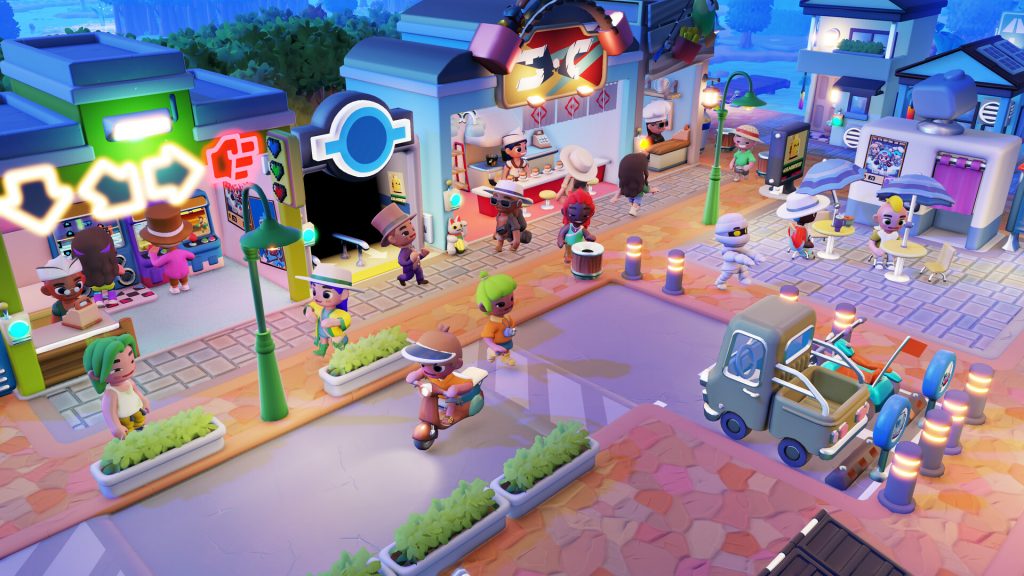
TownCo. — the mysterious corporation that apparently acquires neglected settlements for improvement — has appointed you Mayor. The town needs shops built, staff hired, delivery routes automated, tourists attracted, infrastructure maintained, disasters prevented, and the whole mess turned into something that actually functions. The metaphor of the corporate-appointed public servant trying to make a genuinely livable community from a corporate mandate is the specific political comedy the game is running quietly in the background.
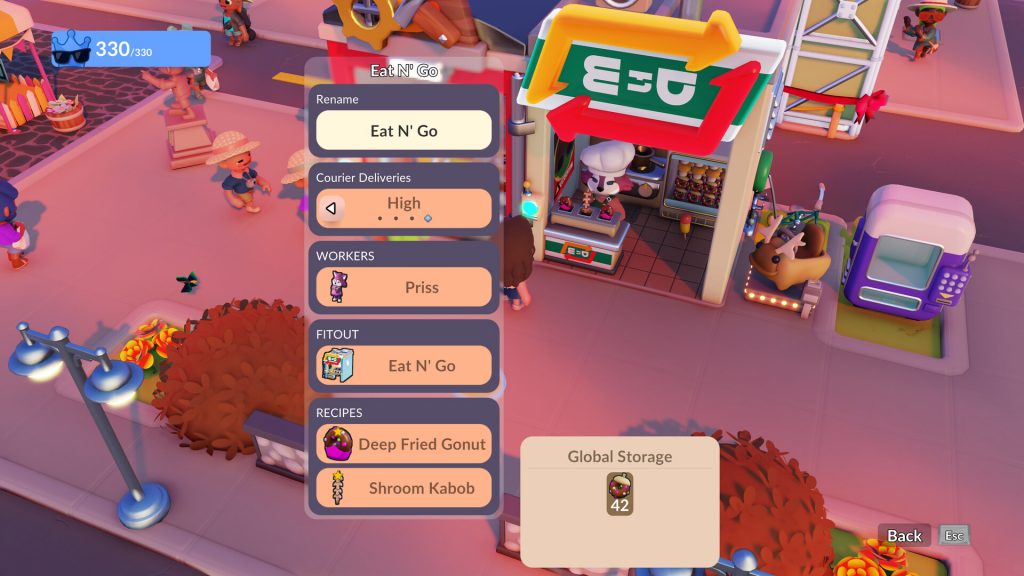
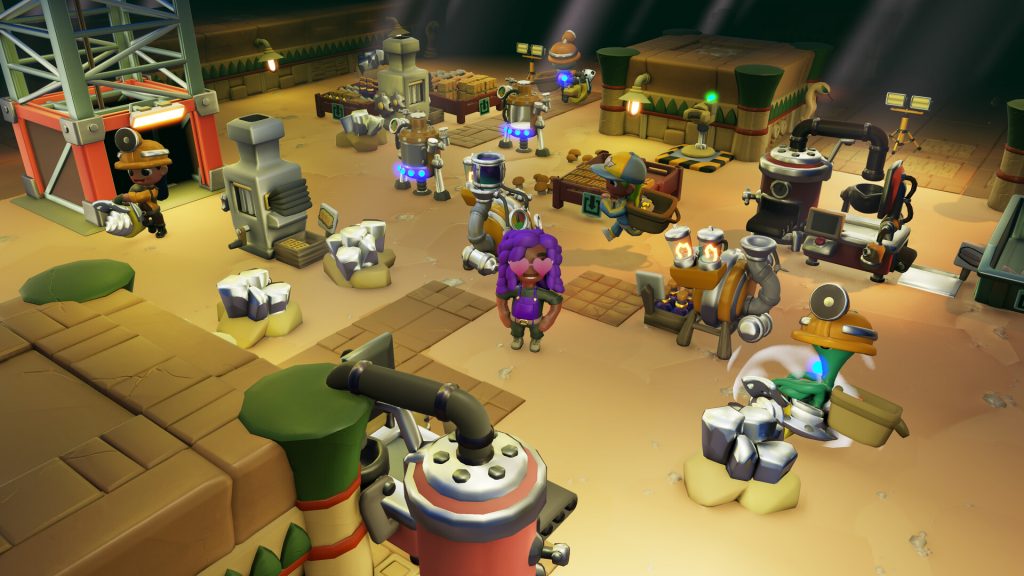
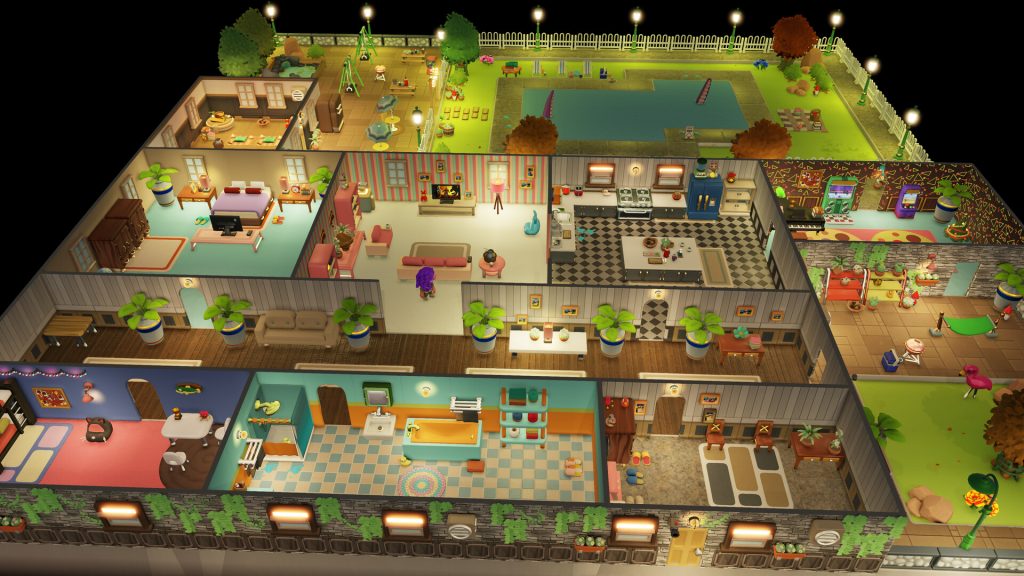
The management structure beneath the cheerful aesthetic is what makes Go-Go Town! Interesting as a design. Early town management is direct and hands-on — you’re building things, moving things, managing things personally. Late-stage town management is systems management — you’ve built enough infrastructure that the town runs itself, and your job is to optimize the systems rather than operate them manually. This is the correct arc for a management simulation: front-loading player involvement while back-loading the satisfaction of watching something you designed run autonomously.
The self-running economy is the specific design goal that makes the late game feel like a payoff rather than endgame content waiting. A town economy where delivery chains operate independently, where shops stock themselves from automated supply, and where tourism income arrives as a consequence of infrastructure rather than constant intervention — this is the simulation depth the comparison to Cities: Skylines (in lighter form) is pointing at. The cozy exterior does not fully prepare players for the pleasure of eventually having built something that doesn’t need constant tending.
The Co-op Chaos
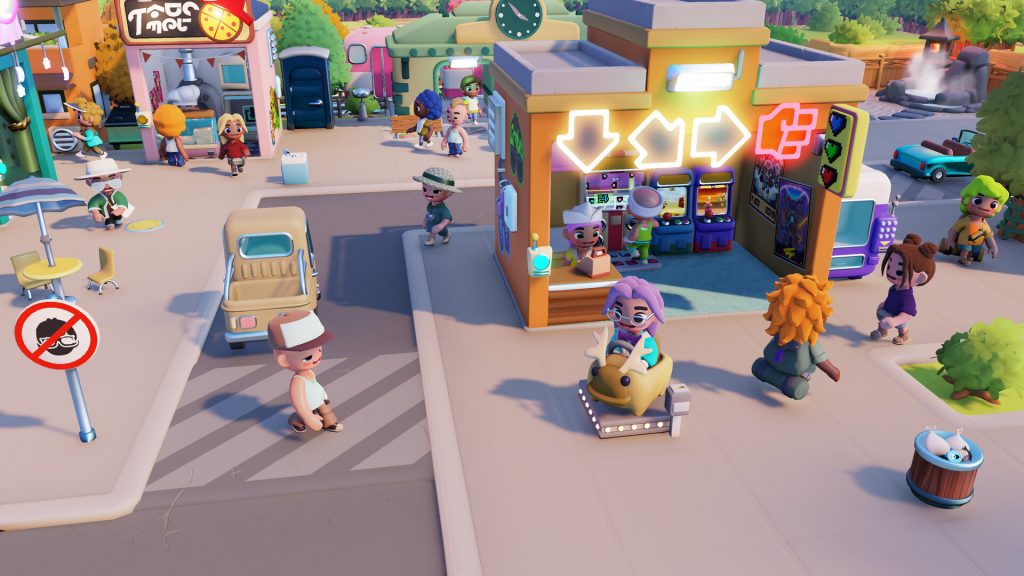
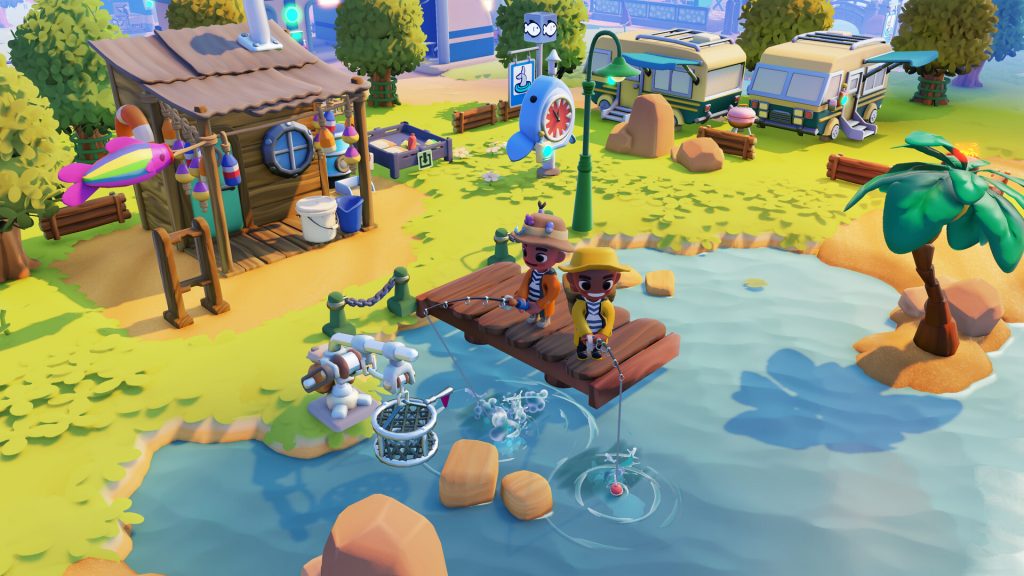
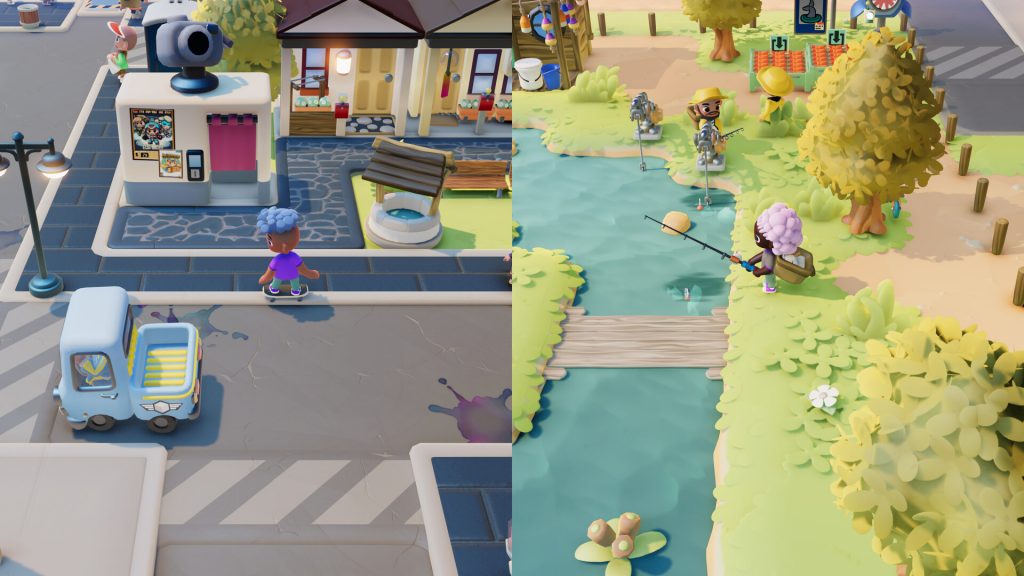
Go-Go Town!‘s co-op is built around the specific comedy of four people trying to run the same town simultaneously without adequate coordination. In single-player, the town does what you tell it. In multiplayer, the town does what everyone tells it, which is a different and consistently funnier thing.
The “unpredictable situations” that emerge from multiple mayors occupying the same town aren’t designed specifically — they emerge naturally from the collision of individual decision-making in a shared space. One player is extending the delivery route while another has redirected the supply chain. Two players are trying to build adjacent structures at the same time. The chaotic mutual interference that the game doesn’t prevent is the co-op content, and the emotes and communication tools (chat, location pings) provide just enough coordination capability to make organized chaos possible without making disorder impossible.
This is the correct approach for co-op simulation: making communication infrastructure available while not requiring its use, so that organized play is possible for groups that want it and chaotic play is equally valid for groups that don’t.
The local co-op support extends the audience beyond online gaming groups to households and physical spaces — the Switch version specifically serving the way that Nintendo’s platform enables shared-screen multiplayer that PC gaming doesn’t as naturally accommodate.
The Sound Design
The detail that critics and players have consistently flagged as unexpectedly excellent is the sound design. The chainsaw sounds for construction, the satisfying audio feedback of management actions, the ambient town audio that scales with development — these are the signals that communicate progress and activity in ways that visual feedback alone doesn’t fully achieve. A management simulation where actions feel and sound different from each other demonstrates the craft that separates polished games from competent ones.
Sound design in management games is often the first quality that gets cut when scope needs to be reduced. Its consistent praise in Go-Go Town! is an indication of a development team that kept it on the priority list even when a five-person studio in Brisbane had many reasons to deprioritize it.
The AAA-to-Indie Transfer
Prideful Sloth’s team backgrounds in Batman: Arkham, Elder Scrolls, and the music game franchises (Rock Band, Guitar Hero) are not arbitrary details — specific skills transfer from AAA contexts to indie work in specific ways. Combat feel, narrative design, and rhythm game responsiveness are skills that don’t obviously apply to town-building simulations. What transfers from these backgrounds is a collective understanding of what polished game feel means across different categories: how actions should sound, how interfaces should communicate, how feedback systems should reinforce player investment.
Go-Go Town!‘s specific qualities — the sound design, the feedback clarity, the co-op coordination tools — are the places where that AAA production knowledge expresses itself on an indie budget. The game doesn’t look like it was made by a AAA team. It feels like it was made by people who have internalized what good feel means and applied that internalization to a much smaller-scale project.
The Early Access Covenant
Two years of Early Access before the July 16 launch means the Go-Go Town! community has had meaningful input on what the 1.0 delivers. Cheryl Vance’s acknowledgment of that community — “thanks to the Early Access community that stood with us for two years, we were able to successfully launch version 1.0” — is the kind of public recognition that validates the specific investment players made in following and shaping the game’s development.
The post-launch roadmap continuing beyond the 1.0 (with the Industrial and Rustic decoration sets and six new language additions already announced as initial post-launch content) signals that the community relationship continues past the commercial launch rather than concluding with it. For a game whose player community built genuine investment over two years, this continuation matters.
The languages note: Polish, Turkish, Russian, Italian, Dutch, and Indonesian are incoming. Korean is not in this wave, which is worth noting plainly for the Korean indie game audience this coverage primarily serves.
The Reference Points
Animal Crossing, Dinkum, and light Cities: Skylines are the comparison set that the game’s critical coverage has reached for. Each of these captures something real: the warm, cozy register of Animal Crossing, the Australian-flavored town building of Dinkum, the systems-depth aspiration of Cities: Skylines. None of them captures what Go-Go Town! Adds to this combination: the specific comedy and coordination dynamic of its co-op implementation.
The game that Go-Go Town! most resembles it in its co-op ambition is Overcooked — the kitchen management game whose genius was finding a setting where individual competence and group coordination collide in ways that are both frustrating and hilarious. Go-Go Town!‘s town management context is more complex and less structured than Overcooked‘s kitchen, which makes it both more interesting as sustained management and less precise as coordinated chaos. The comparison isn’t direct, but the design thinking about what multiplayer simulation comedy needs is related.
Who This Is For
Strong fit for: Stardew Valley and Animal Crossing players who want a management simulation layer alongside the cozy aesthetic; Cities: Skylines players who want the genre’s systems depth in a warmer, more approachable form; co-op groups who specifically enjoy the chaos of shared spaces; Nintendo Switch players who want a showcase game for the platform’s multiplayer capabilities; town-building enthusiasts who have been looking for a new entry in a genre with few high-quality recent titles.
Cautious fit for: players who want the management simulation genre’s full complexity rather than its accessible form; solo players who specifically want solo-optimized design rather than co-op-first design that works alone; Korean-language players who need localization (not in current plans).
Less ideal for: players who dislike management simulation regardless of aesthetic; anyone wanting competitive or action-focused gameplay; players who find co-op chaos frustrating rather than fun.
The Takeaway
Go-Go Town! is the third game from a five-person Brisbane studio that has been building patiently toward its commercial peak, arriving with an 81 Metacritic score, 95% Overwhelmingly Positive Steam reviews, 100,000 first-month sales, and chart positions across three Nintendo Switch markets. The AAA background of the team expresses itself in craft qualities — sound design, feedback clarity, co-op coordination — rather than in scale. The management depth is real, the co-op chaos is genuine, and the two years of Early Access community development produced a 1.0 that a community of committed early players helped shape.
The self-running economy you eventually build is the reward for the chaotic mayor’s office you started in. And four people trying to run the same town simultaneously is reliably funnier than any of them expected going in.
Available now on Steam, Nintendo Switch, and Nintendo Switch 2.
Information related to ‘Go-Go Town!’
| item | detail |
|---|---|
| Developer | Prideful Sloth (Brisbane, Australia) |
| Publisher | Prideful Sloth |
| Genre | City building, simulation, cooperation |
| platform | PC (Steam), Nintendo Switch, Nintendo Switch 2 |
| Release date | July 16, 2026 (1.0 Official Release) |
| Sales volume | Over 100,000 copies sold within a month of release |
| Reactions/Evaluations | Metacritic 81 (Mostly Favorable), Steam Reviews Overwhelmingly Positive (95%) |
| Steam Page | Shortcut |