By IndieGame.com Desk — December 16, 2025 (Updated December 17, 2025)
In 2025, Steam recorded its highest number of game releases in history, with more than 19,000 titles launched in a single year. While this milestone reflects the platform’s openness and accessibility, it also exposes a growing crisis: most games are never discovered by players at all.
For indie developers, the barrier to entry may be lower than ever—but the barrier to survival has never been higher.

A Flood of Releases, but Shrinking Player Attention
According to SteamDB, as of December 13, 2025, a total of 19,112 games were released on Steam this year, surpassing 2024’s 18,559 titles and setting a new record.
However, increased supply has not translated into increased visibility.
- 2,229 games released in 2025 have zero user reviews, up sharply from 1,711 in 2024
- Games with only 1–9 reviews increased from 6,377 to 7,098
- Meanwhile, games with 100+ reviews fell to 3,096, down from 3,406 last year
The data reveals a stark reality: more games are released, but fewer games meaningfully reach players.
The Paradox of Steam’s Open Publishing Model
Steam’s open publishing policy has democratized distribution, allowing virtually any developer to launch a game. But that same openness has created intense noise and discoverability issues.
Industry analysts note that small teams with limited marketing budgets are hit the hardest. SteamDB data suggests that only around 20% of released games generate enough engagement to unlock community features such as trading cards and badges—often seen as a proxy for meaningful traction.
In short, being able to launch a game no longer means being able to compete.
The Rise of Low-Quality AI-Generated Games
Another growing concern is the influx of AI-generated, low-effort simulator titles, often produced rapidly with minimal design intent. Among players, these are increasingly referred to as “one-click AI games.”
Dozens of such titles reportedly appear on the Steam store each week, making it harder for handcrafted indie games to stand out. Many developers argue that this trend actively degrades store quality and player trust.
Discoverability Is the Core Crisis
Steam offers tools such as wishlists, algorithmic queues, and curator systems, but developers argue these mechanisms are no longer sufficient in an oversaturated marketplace.
As a result, many teams are forced to rely on external marketing, community-driven promotion, and influencer outreach, even before their games are finished.
UK tech outlet KitGuru summarized the situation bluntly:
“Steam has democratized game distribution, but the sheer amount of noise means discoverability is worse than ever—even as release numbers hit record highs.”
How Indie Developers Are Fighting Back
Despite the harsh environment, indie developers are adapting with multi-layered survival strategies.
Community-First Development
Many teams now begin community-building months or years before launch, using platforms such as Discord, Reddit, and X (Twitter) to share devlogs, prototypes, sketches, and test builds.
Early demos and limited-access playtests—often distributed via itch.io or private Discord channels—help validate core gameplay and reduce development risk.
Festivals and Platform Tools Matter More Than Ever
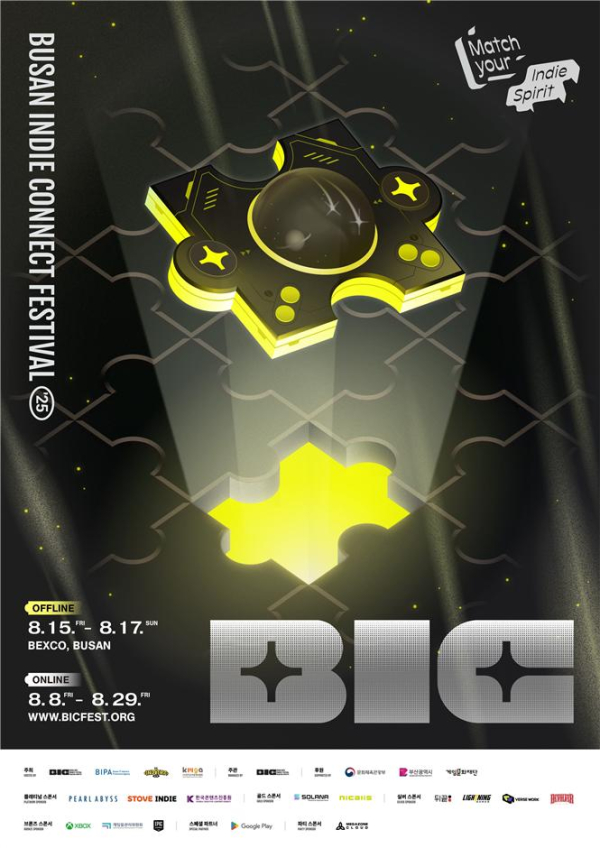
Participation in events such as Steam Next Fest, Busan Indie Connect Festival (BIC), IndieCraft, and BEAVEROCKS has become critical.
These events provide:
- Immediate player feedback
- Press and streamer exposure
- B2B networking and publisher meetings
In parallel, developers are increasingly leveraging platform-native tools—wishlist campaigns, developer updates, streamer key distribution—to gain visibility at minimal cost.
Government and Regional Support as a Lifeline
In South Korea, institutional support plays a significant role. Programs such as:
- KOCCA’s Indie Game Development Grants (up to KRW 180 million)
- Regional Global Game Centers (12 nationwide)
- STOVE Indie and Smilegate programs
offer not only funding, but also office space, mentoring, QA, marketing support, and exhibition opportunities.
Regions such as Chungnam, Chungbuk, Daejeon, and Gwangju are increasingly strengthening indie-specialized pipelines.
Differentiation Is No Longer Optional
On the content side, developers are focusing on:
- Niche genres
- Distinctive art styles
- Streamer-friendly mechanics
- Narrative-driven experiences
Professor Jung Musik of Gachon University, a longtime mentor to indie developers, explains:
“After mobile ad platforms matured and revenues declined, many small studios shifted to Steam, where visibility once felt more attainable. But global economic pressure has raised purchase barriers everywhere. Even wishlists no longer convert reliably into sales.”
He adds:
“Developers often panic and jump to the next project too quickly. Instead, they should ask a simple question from the player’s perspective: Why should I buy this game?
Whether it’s deep narrative like Clair Obscur: Expedition 33 or SANABI, exceptional polish like Hollow Knight: Silksong, or niche appeal through art and genre—success comes from committing to a clear, sustained identity.”
The Platform Must Evolve Too
Experts increasingly argue that Steam itself must take a more active role. Suggested measures include:
- Stronger filtering options
- Clear tagging for AI-generated content
- Enhanced quality control signals
Without these changes, both players and developers risk being buried under sheer volume.
Quantity Has Won — Now Quality Must Catch Up
Steam’s record-breaking release numbers are undeniable. But unless discoverability, quality control, and player trust are addressed, the platform risks becoming a place where most games vanish without a trace.
For indie developers, survival in 2025 is no longer about simply finishing a game—it’s about building identity, community, and trust long before release.
The era of “launch and hope” is over.
The era of strategic indie development has begun.