The magical girl genre has a standard contract with its audience: a young person is chosen, given extraordinary power, and uses that power to protect the world from evil. The genre’s emotional core is transformation — the moment of becoming something more than ordinary, the exhilaration of power, the clarity of a mission. It is, fundamentally, a power fantasy shaped for young women.
Dear Magical Girls from GIGABlock Studio (published through Jungle Game Lab, part of this month’s Krafton Jungle Game Lab Cohort 5 cluster) breaks this contract deliberately. Arin is four years into her career as a magical girl. The transformation sequence doesn’t exhilarate her anymore. The emergency dispatches keep coming after her shift ends. The mana stones she’s protecting are infrastructure rather than sacred objects — operational requirements in a magical utility system. TechTimes described the characterization as taking the typical magical-girl-who-saves-the-world and turning her into “someone who has been doing the same thing for four years and is exhausted.”
The 98% Very Positive rating from 88 launch reviews — the highest launch rating of this month’s Jungle Game Lab cohort — confirms this subversion is resonating with players who have spent years doing the same thing and recognize something in it.
The Barrier Combat System
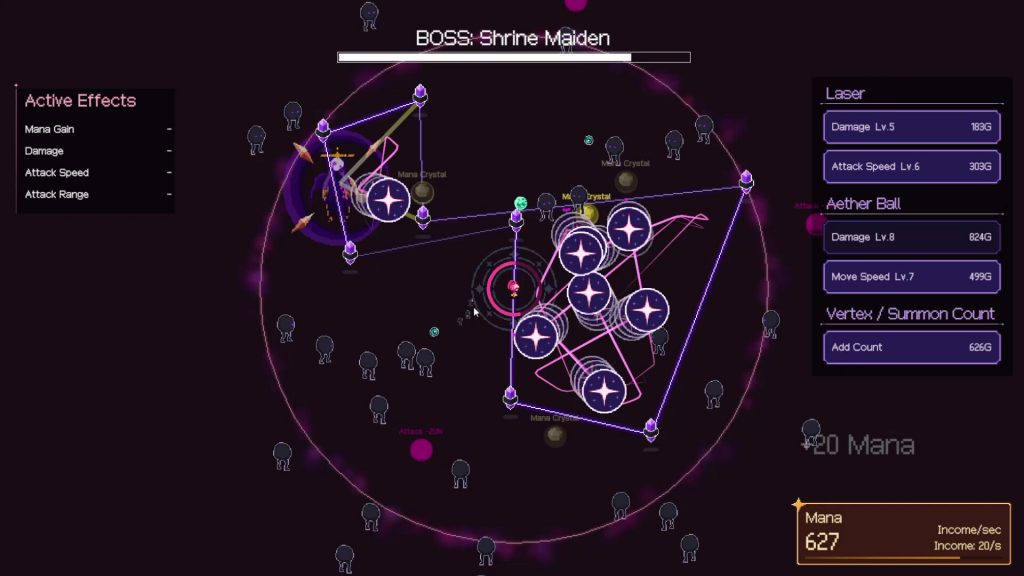
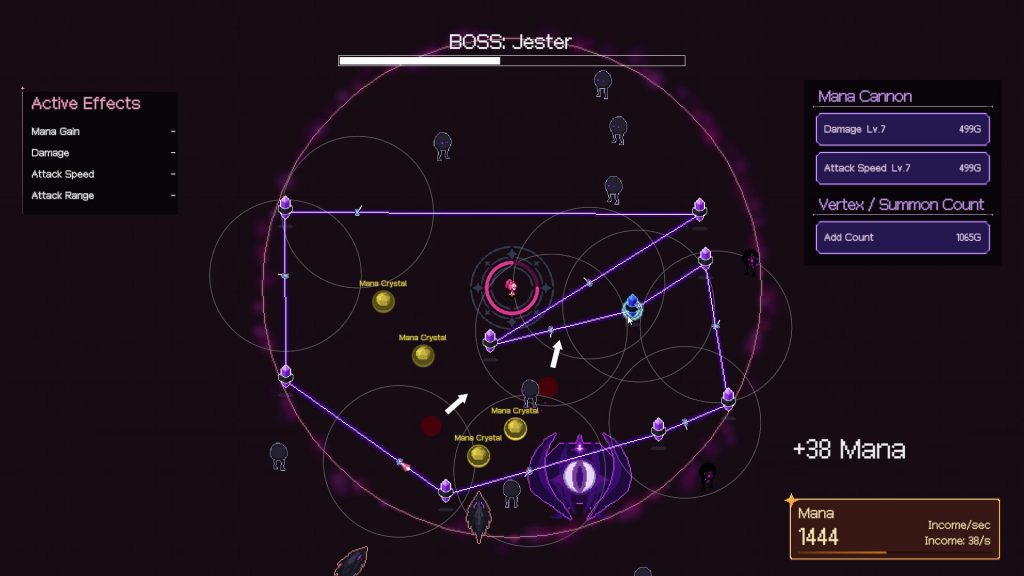
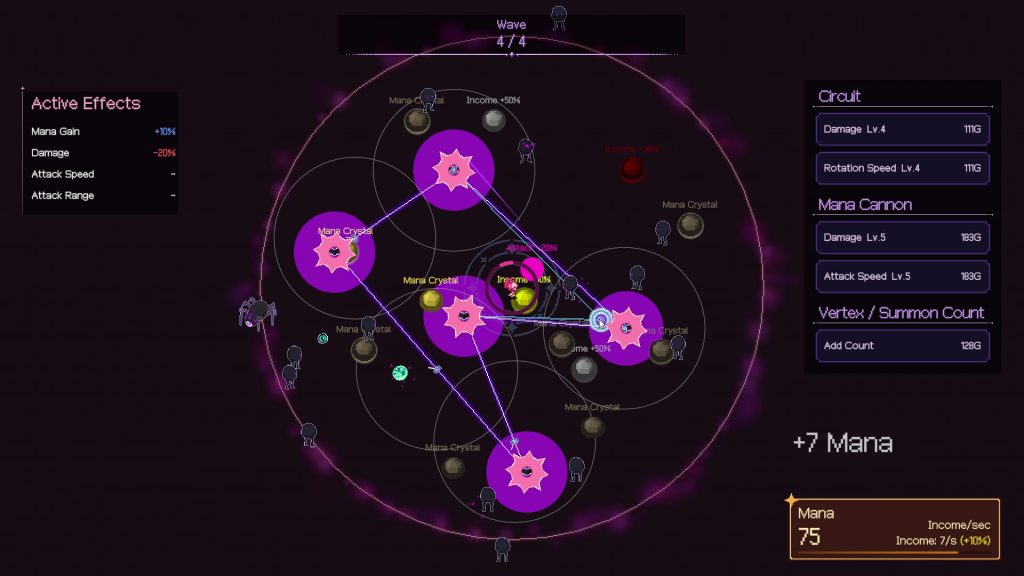
The manipulation of the barrier’s vertices to change the battlefield’s shape is Dear Magical Girls‘ most mechanically distinctive element. Standard tower defense games fix the zone of defense; players place towers to defend it. Dear Magical Girls makes the defended zone itself a manipulable variable: expand the barrier to cover more territory and control more resources, but distribute the mana cannon’s firepower across a larger perimeter; contract the barrier to concentrate firepower in a narrower zone with less resource coverage.
The mana cannon moving along the barrier’s edge rather than firing from a fixed position is the specific mechanical consequence of this design. In fixed-position defense games, tower placement determines fire coverage. In Dear Magical Girls, barrier shape determines where the cannon travels and what angles it engages enemies from. A square barrier creates predictable coverage; an irregular barrier can concentrate coverage along a particular approach vector.
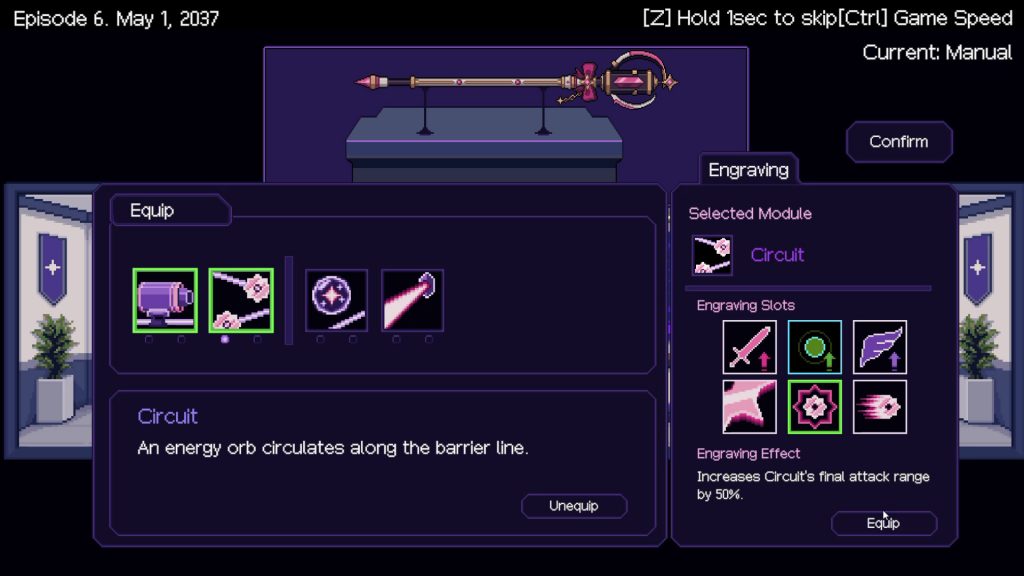
The module and inscription (Bounds) customization system before combat — building the specific configuration for each engagement — gives the defense strategy a build preparation layer that runs before the real-time barrier manipulation. The pre-mission build and the in-mission barrier adjustment are two distinct strategic phases that together constitute the game’s tactical identity.
This is a genuinely unusual defense game architecture, and the press coverage specifically identifies it as differentiating: “the unique system of fighting while directly transforming the barrier creates distinctive personality.” Competitive mechanics within a familiar genre register is exactly the design achievement that enables a free game to earn 98% positive reviews rather than “acceptable for free.”
The Burnout Narrative
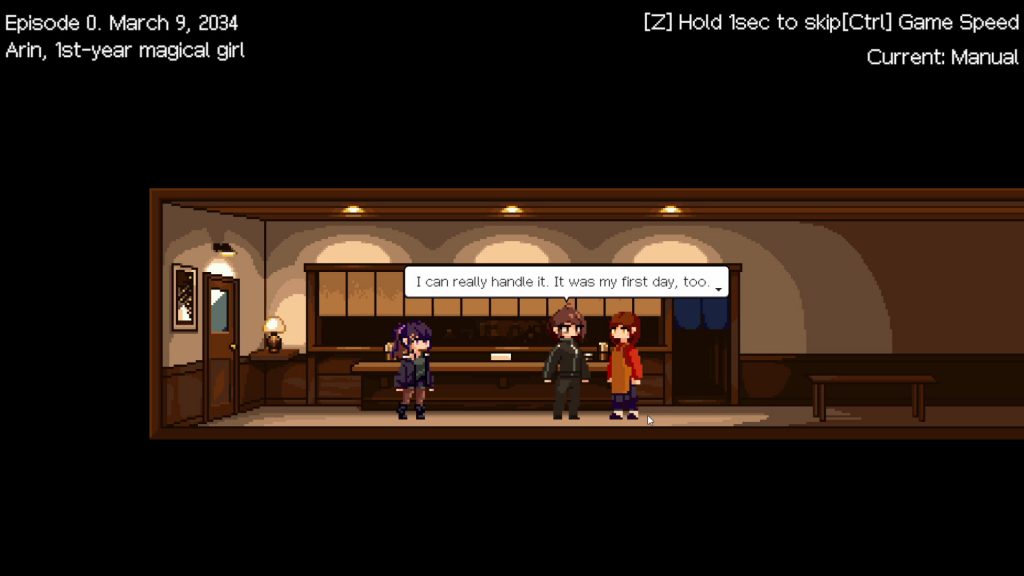
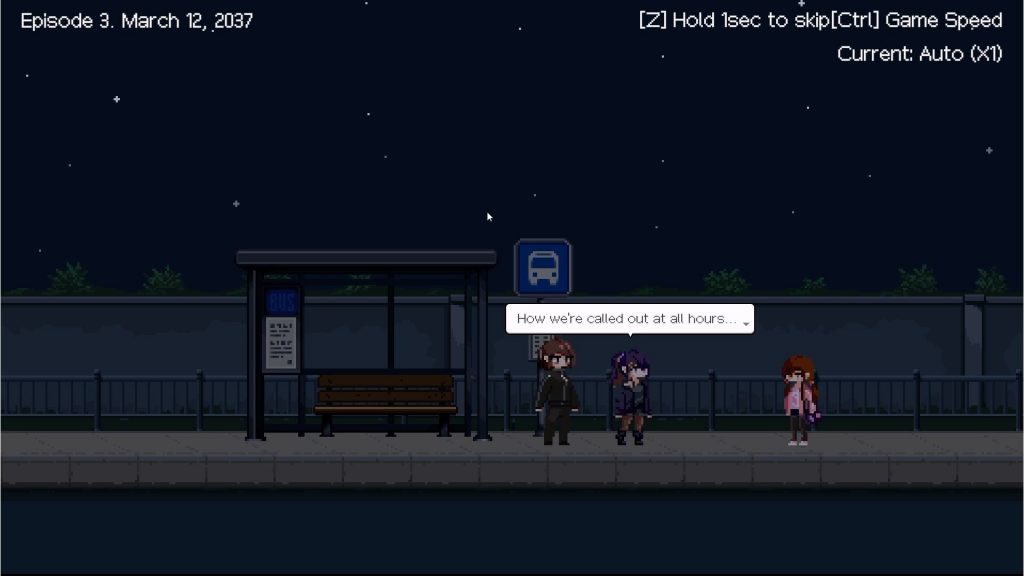
Arin’s story is specifically not about rediscovering her purpose through heroism. It’s about the slower, quieter process of finding reasons to continue that aren’t heroism. Senior colleague Charlotte — who has apparently been doing this longer and has developed her own relationship to the exhaustion. Cousin Lily — who still has the starry-eyed view of magical girls that Arin had four years ago, before the reality replaced it. The ordinary daily life that Arin wants to protect, not because it’s a mission but because it’s hers.
The emotional arc the development team describes — “the story of emotional erosion, and what makes her rise again” — is a more mature narrative structure than the genre typically provides. The rising again here is presumably not triumphant restoration of the original exhilaration; it’s something more sustainable and less easily won. The reasons that sustain years of work, rather than the motivation that initiates it.
This is why the cute pixel art and the dystopian subtext coexist productively rather than contradicting each other. The genre aesthetic signals “this is a magical girl story” to the player’s pattern recognition; the actual content delivers something that the aesthetic is specifically designed to make strange. The gap between the visual register and the emotional register is the game’s critical space — where the familiar form shows you something unfamiliar about the thing it’s representing.
The press response reflects this: “the visual ‘light’ and the narrative ‘darkness’ are expertly interspersed, creating a unique and deep sensibility that differentiates this from typical magical girl games.”
The Free-to-Play Without Monetization Choice
Free-to-play with no DLC and no in-app purchases — all content available to every player from launch — is a business model that international press specifically noted as “rare in the Steam free-to-play category, where multiplayer-focused games with partial monetization are the mainstream.”
For a story-driven game where the narrative is the primary value, this makes commercial sense: a narrative with a paywall undermines the storytelling by creating artificial barriers between the player and the story. But free complete story games on Steam are uncommon precisely because developers need to earn returns on development investment somehow. Jungle Game Lab’s publishing infrastructure subsidizes this model for debut teams — the program covers development costs, which enables the game to be fully free at launch.
The 8,000 wishlists accumulated in two weeks and the 75,000 YouTube trailer views in three days suggest the combination of free price and genuine quality — 98% positive isn’t the rating of a game that earned goodwill by being free — is producing the player reach that the program intends.
The Jungle Game Lab Cohort Context
Dear Magical Girls is the seventh Jungle Game Lab Cohort 5 project covered this month, completing a remarkable cluster: No Results Found (internet cult investigation), ON&OFF (circuit-design deckbuilding), A.D.D. (Backrooms bureaucracy), SURA: Shattered Star (batdo/napdo sword combat), Wave of Signatures: Blue Sign (maritime insurance underwriting), UNLOAD (bullets-as-health boss rush), and now a story-driven barrier defense game about magical girl burnout.
The common thread across all seven is design specificity: each team identified a particular angle — whether mechanical, thematic, or both — and built their game around expressing that angle rather than approximating genre conventions. Dear Magical Girls is the one that most fully integrates mechanical and thematic specificity: the barrier manipulation and the burnout narrative are saying the same thing in different registers. Defense is the job. The job is endless. The shape of what you’re defending can be changed, but you’re still defending.
The 98% rating is the highest launch rating in the cohort — which, given the quality of the other releases, is a notable achievement.
Who This Is For
Strong fit for: magical girl genre fans who have wanted the genre to engage with what happens after the exhilaration — who have thought about the labor and repetition that “saving the world” as a career would actually involve; story-driven defense game players who want emotional narrative weight alongside the strategy; players who have experienced professional burnout and want to see their experience reflected in a genre that rarely makes space for it; Jungle Game Lab followers completing the month’s cohort; K-indie game enthusiasts; players who specifically appreciate free complete games without monetization barriers.
Cautious fit for: players who want traditional magical girl power fantasy without the labor critique subtext; defense game players who want mechanical complexity over narrative integration; anyone who needs action variety rather than the specific barrier manipulation mechanic.
Less ideal for: players who dislike story-driven games; anyone wanting multiplayer options; players who specifically want the genre’s transformation exhilaration as their primary engagement.
The Takeaway
Dear Magical Girls is the Jungle Game Lab Cohort 5’s highest-rated launch, built around the specific observation that a person who has been doing extraordinary work for four years is not in the same relationship to that work as they were on the first day — and that this is worth making a game about. The barrier manipulation mechanic makes the strategy of defense feel like the daily management of an ongoing responsibility rather than a heroic moment; the narrative makes Arin’s exhaustion feel like something true rather than a character detail.
Free. 98% positive. A magical girl who has been doing this for four years is still defending the barrier. The mana cannon follows the shape you gave it. And somewhere in the difference between what this work felt like at the beginning and what it feels like now, there’s the question of what makes continuing worth it.
Available now on Steam. Free. All content included.
Information regarding ‘Dear Magical Girls’
| item | detail |
|---|---|
| Developer | GIGABlock Studio (Jungle Game Lab, 4-person team) |
| Publisher | Jungle Game Lab |
| Genre | Story-driven Barrier Defense / Strategy |
| Release platform | PC (Steam) |
| Release date | July 31, 2026 |
| Player count | Single player |
| price | Free to Play |
| Supported languages | Korean, English, Japanese, Simplified Chinese · Traditional Chinese |
| Wishlist (2 weeks before release) | Surpassing 8,000 cases |
| YouTube Trailer (as of 3 days) | Approx. 75,000 views, approximately 150 comments |
| Steam rating | Very positive (98%, 88 cases) |
| Official Channel | X (@gigablockstudio) |
| Steam Page | Shortcut |