The survivors-like genre has been asking the same question since Vampire Survivors defined it: how do you differentiate from the original when the original’s core loop is already excellent? Mongma Studio’s answer in Revenant Survivors is to make the boss fight consequences more substantial than additional abilities. When you defeat a boss in most survivors-like games, you get a reward. In Revenant Survivors, you get the boss.
Not just their skills. Their soul, their equipment, their physical form. The player character isn’t a hero defeating darkness — they’re becoming it, absorbing the power of each defeated enemy until they are, as the game describes, “the last evil in the world.” This framing reversal — playing as the antagonist-becoming entity rather than the protagonist-resisting one — gives the boss absorption mechanic specific thematic weight rather than just mechanical interest.
The August 1 playtest opens for anyone through the Steam page. No key required.
The Boss Absorption System
The three-tier boss absorption — soul (ability enhancement), equipment (boss-specific skill access), body (new playable character) — creates progressively deeper engagement with each boss encounter beyond the standard survivors-like reward structure.
Soul absorption is the most immediate: each boss you defeat strengthens your current character. This layer is familiar from other survivors-like games with boss power transfers.
Equipment absorption is the second layer: acquiring the boss’s gear means accessing their specific skills as part of your build. This isn’t just stat improvement — it’s incorporating the boss’s combat identity into your own.
Body absorption is the most distinctive: defeating a boss can give you access to a new playable character built from their physical form. This means run progression can unlock entirely new starting points for future runs, not just stronger versions of the current character.
The cumulative design intention is that each boss you encounter is a choice about which direction your character evolves toward. Which boss to prioritize first isn’t just a tactical decision about current power — it’s a decision about what kind of entity you’re becoming, which bodies you’ll unlock, which skills you’ll have access to throughout the run.
The Combat Architecture
Attack evolution and elemental detonation are the two combat systems operating beneath the boss absorption layer.
Attack evolution replaces the standard survivors-like upgrade selection with transformation: attacks change form as you develop them rather than simply increasing in numerical power. This creates visual and mechanical identity shifts during runs rather than statistical accumulation with the same basic attacks.
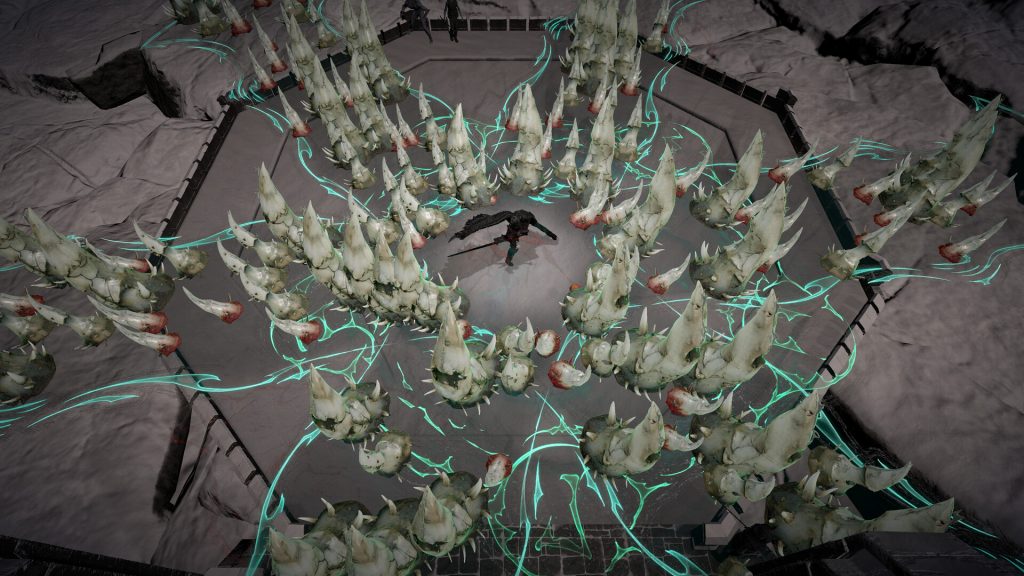
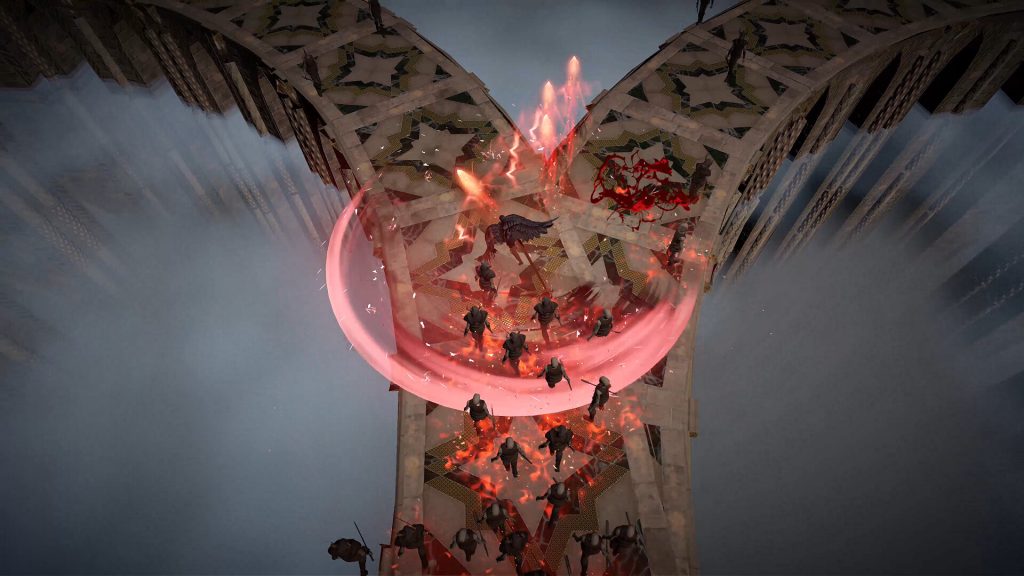
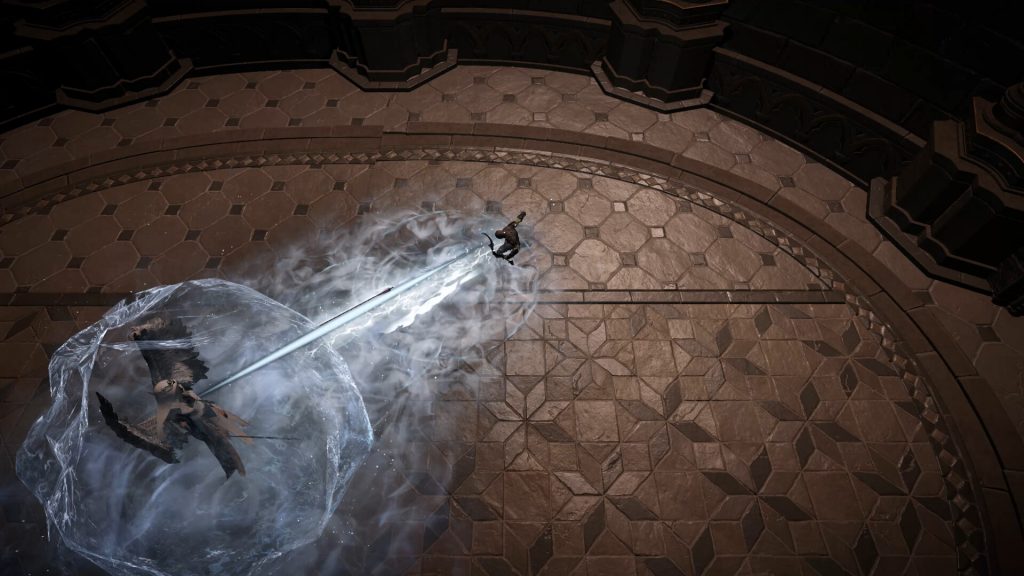
Elemental detonation is the active skill dimension. Players accumulate elemental effects on enemies through their attacks, then detonate those accumulated stacks with active skills for burst damage. This creates a rhythm in combat — applying stacks during wave survival and triggering detonations at peak accumulation — that distinguishes combat from a pure auto-attack structure.
The combination of elemental detonation timing with the passive auto-attack nature of the survivors-like genre creates a hybrid engagement structure: mostly auto-combat with active decision points around detonation timing that rewards attention without requiring constant manual input.
Powers, traits, relics, and equipment, as the build-construction system, provide the combinatorial space that survivor-like games need for run-to-run variety. The boss equipment set bonuses adding another layer to this system, mean builds can be oriented around maximizing boss equipment synergies as well as the standard ability combinations.
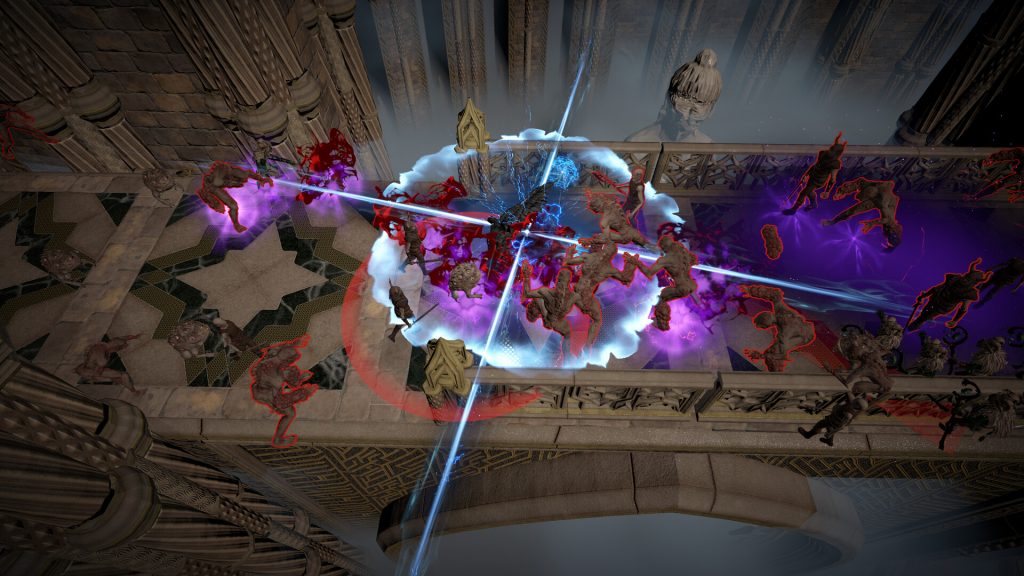
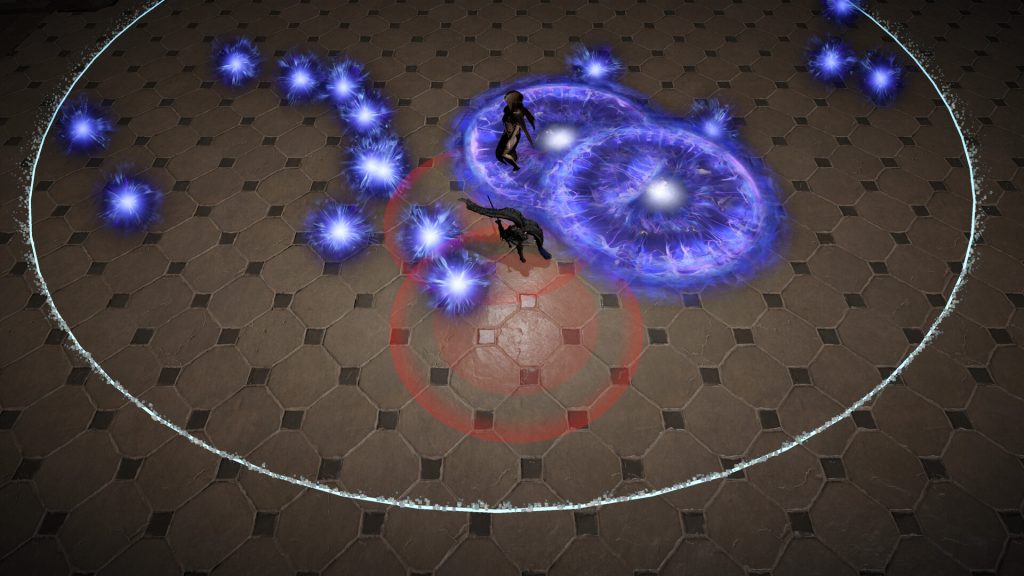
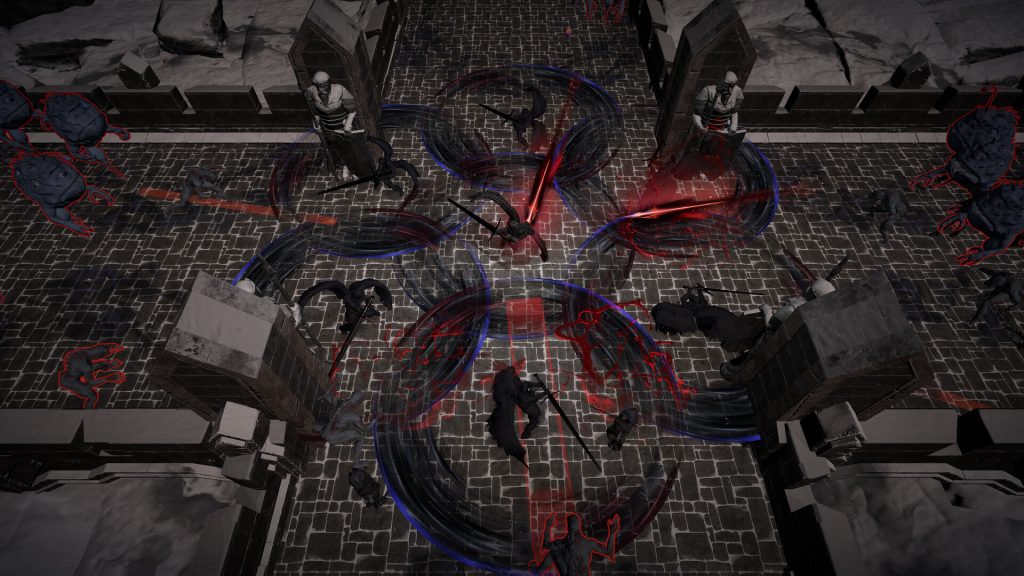
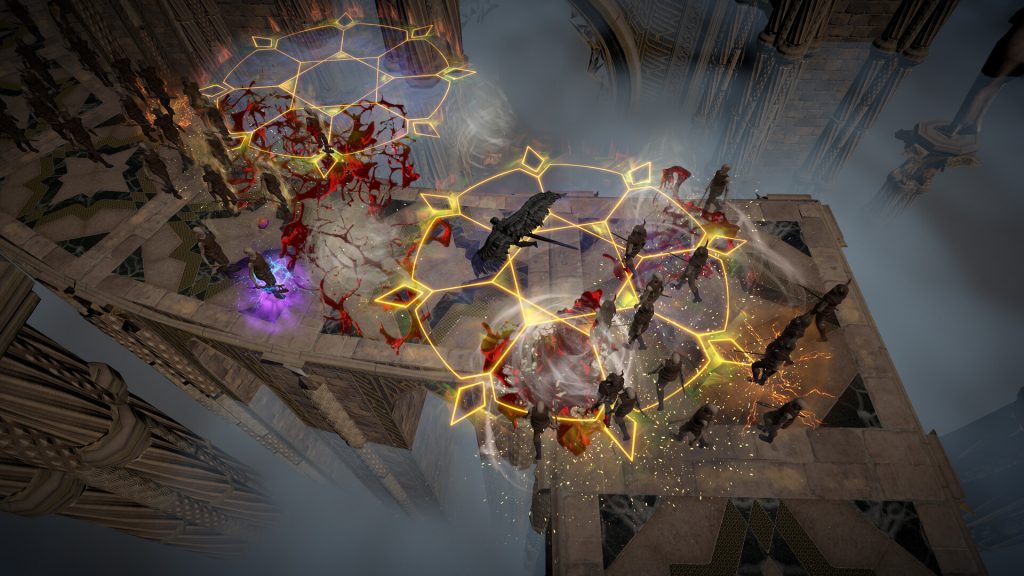
The Dark Fantasy Aesthetic
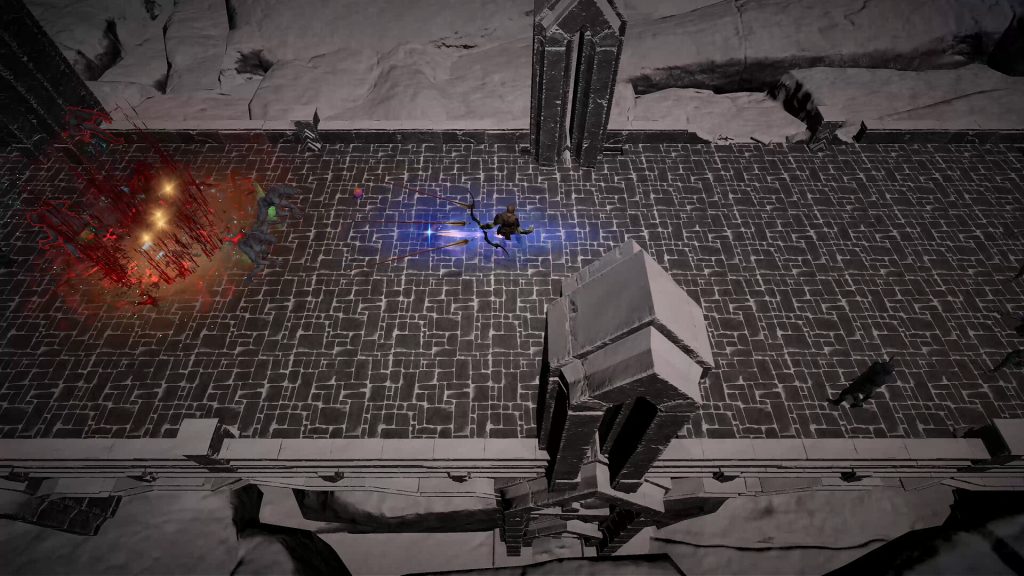
Topdown 3D with dark world backgrounds and intense elemental detonation visual effects is the presentation style that the genre’s best executions use to make late-run combat feel appropriately overwhelming. The genre’s satisfaction peak — when the screen fills with effects from a well-developed build clearing waves of enemies — requires visual design that makes the player’s power feel genuinely impressive rather than cluttered.
The soul absorption and body takeover thematic framing gives the dark fantasy aesthetic specific purpose rather than general atmosphere. Players aren’t fighting darkness in a dark world — they’re becoming the darkness, and the visual intensity of the combat is the expression of that accumulation. This thematic coherence between aesthetic and mechanic is the design detail that distinguishes intentional dark fantasy from generic darkness as backdrop.
Kotaku Español’s characterization — “freshly reimagining the Vampire Survivors-like formula” — reflects the specific differentiator the international press has identified: the boss absorption system changes the genre’s standard progression relationship in a way that reads as genuine innovation rather than feature addition.
The Mongma Studio Debut Context
A first game from a new studio is always evaluated differently than a fifth game from an established one. The playtest provides exactly the right validation mechanism: free public access to the combat and boss absorption systems, genuine first-player responses to the build variety and combat feel, and feedback data that shapes the development between playtest and eventual release.
The 16-language support at playtest stage — including Chinese (Bilibili and QQ channels alongside the Western platforms) — signals international launch ambition that isn’t limited to the Korean and Western markets most Korean indie games prioritize initially.
Who This Is For
Strong fit for: survivors-like enthusiasts who specifically want the boss fight to change the fundamental nature of what they’re playing rather than just add a power; dark fantasy fans who want the aesthetic to be mechanically expressed rather than just cosmetically applied; players who enjoyed the elemental reaction system in games like Phantom Tower (covered this month) and want it in a survivors-like context; K-indie game supporters who want to engage with a debut studio’s playtest process; players curious about the role reversal of becoming the final evil rather than defeating it.
Cautious fit for: survivors-like purists who prefer the genre’s standard structure; players who want finished games before engaging rather than playtest feedback contributors; anyone who needs visual clarity in combat (elemental detonation effects at scale can be visually intense).
Less ideal for: players who dislike the survivors-like genre structure regardless of differentiation; anyone wanting cooperative or multiplayer options; players seeking narrative depth beyond the dark fantasy framing.
What to Watch For
The playtest’s primary purpose is validating whether the boss absorption system creates genuine strategic variety or primarily feels like a reward structure with additional steps. If players who defeat different bosses first genuinely feel like they’re playing different games rather than the same game with different abilities, the system is working as designed.
The elemental detonation timing’s balance will also emerge from playtest data. If the optimal strategy is always to detonate as soon as possible, the timing decision isn’t actually interesting; if different situations genuinely reward different detonation strategies, the active skill layer adds meaningful decision points.
The Takeaway
Revenant Survivors is a dark fantasy survivors-like built around a specific design premise: bosses are not obstacles you defeat but power sources you absorb, and the direction of your character’s evolution depends on which bosses you absorb and in which order. The soul-equipment-body absorption hierarchy gives this premise three levels of mechanical expression, from immediate ability enhancement to run-unlocking new playable characters.
The August 1 playtest is the first opportunity for players outside the development team to evaluate whether this premise creates the strategic depth and combat satisfaction that Mongma Studio’s description implies. For a debut studio asking a genuinely interesting question about what survivors-like progression can mean, the playtest is the right format — the answer comes from players encountering the system fresh, not from development team assessment.
The world’s last evil is being assembled, one defeated boss at a time. The playtest opens August 1. The souls are available.
Information regarding ‘Revenant Survivors’
| item | detail |
|---|---|
| Developer / Publisher | Mongma Studio (South Korea) |
| Genre | Dark Fantasy Survivors-like Action Roguelite |
| Release platform | PC (Steam) |
| Public Playtest | Starting August 1, 2026 at 9:00 AM (KST), free, no separate key required |
| Official release date | Undetermined (Under development) |
| core system | Attack Evolution, Elemental Explosion, Boss Skill/Equipment/Body Usurpation |
| Supported languages | 16 languages including English |
| Steam rating | Pre-counting (Upcoming Releases) |
| Official Channel | Discord, YouTube, X, Bluesky, Bilibili, QQ |
| Steam Page | Shortcut |