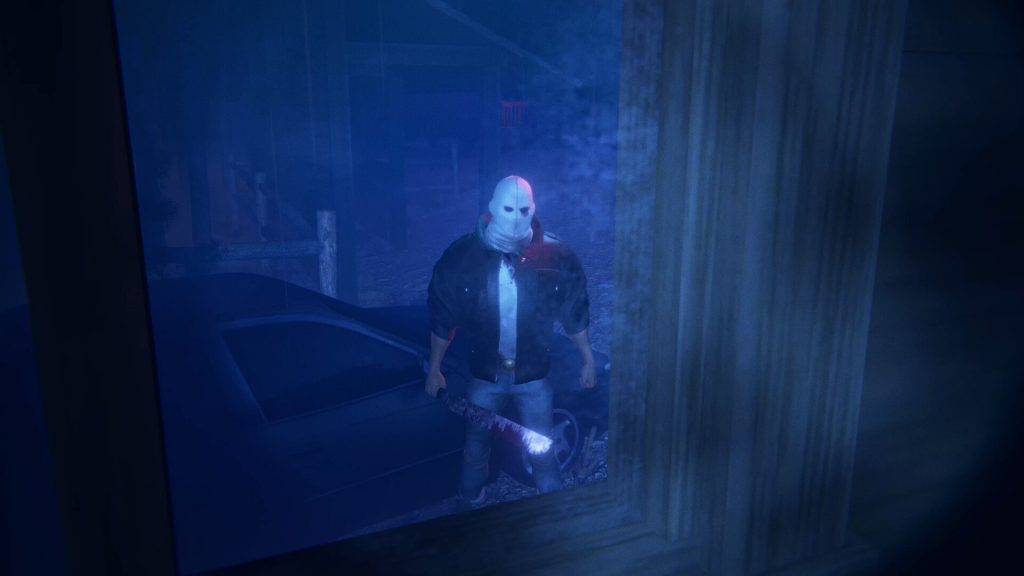
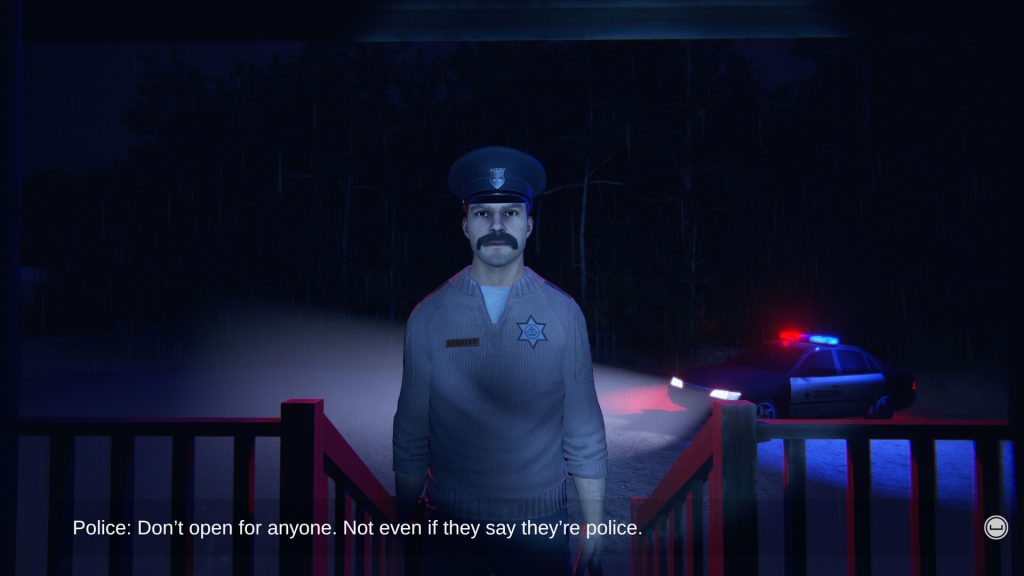
A writer goes to a mountain cabin for inspiration. A storm rolls in. Something knocks on the door. Outside in the rain, motionless in the downpour, stands a masked figure holding a logging axe. He’s been waiting.
Yellowcreek Stories: The Cabin Watcher is the first chapter in Barcelona publisher JanduSoft’s collaboration with solo developer Carlos Azuaga — a debut project that commits fully to the 1980s VHS slasher aesthetic while building a modern stealth system around it. The August 6 simultaneous release across PC, PlayStation 5, and Xbox Series is a multi-platform ambition that reflects JanduSoft’s confidence in the project despite its solo development origins.
The community comparisons emerging since the announcement — “Outlast meets Halloween,” “scarier because there’s no combat” — accurately identify what The Cabin Watcher is attempting: the specific fear of being hunted without recourse, in an aesthetic register that pays genuine tribute to the slasher films that established the genre’s visual and tonal vocabulary.
The No-Combat Design Commitment
The explicit absence of a combat system is the most significant design decision in The Cabin Watcher, and it deserves examination beyond simply noting it as a feature.
Combat in horror games, even when mechanically weak, fundamentally changes the psychological relationship between player and threat. A monster that can theoretically be pushed back, stunned, or temporarily defeated is a different kind of fear than a monster that cannot be engaged at all. The player’s brain continues to model “what if I fight back” even in games where fighting is inadvisable, and this possibility — however dim — prevents full surrender to the horror.
The Cabin Watcher closes this possibility entirely. The killer cannot be fought. The only verbs available to the player are movement, hiding, and noise management. This creates the specific fear that the slasher film genre was always actually about: the complete powerlessness of the victim against a threat that doesn’t respond to resistance, negotiation, or appeal.
The no-second-chances structure compounds this. Death in most horror games is a narrative interruption — you reload, you try again, the threat becomes familiar through repetition, the fear decreases. When death means starting over with no checkpoint recovery, every close call carries the weight of the entire run rather than just a single attempt. The killer in the cabin doesn’t become less frightening through repeated encounters; each encounter retains the stakes of the first.
The Stealth System Architecture
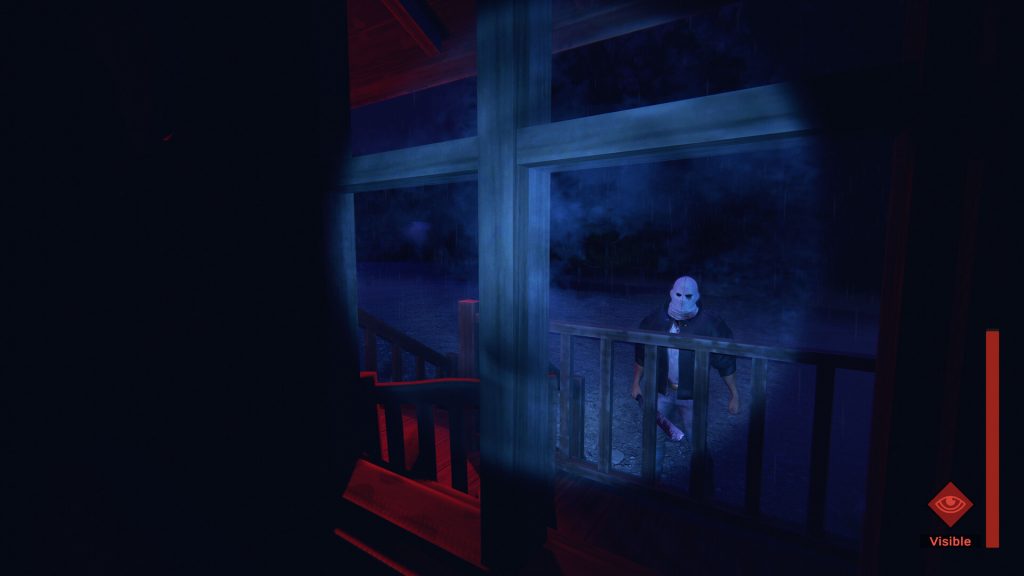
The three-axis stealth detection system — sound, light, movement — creates a specific cognitive demand that pure avoidance games don’t. Rather than a single visibility meter, players must manage three simultaneous variables with different tactical implications.
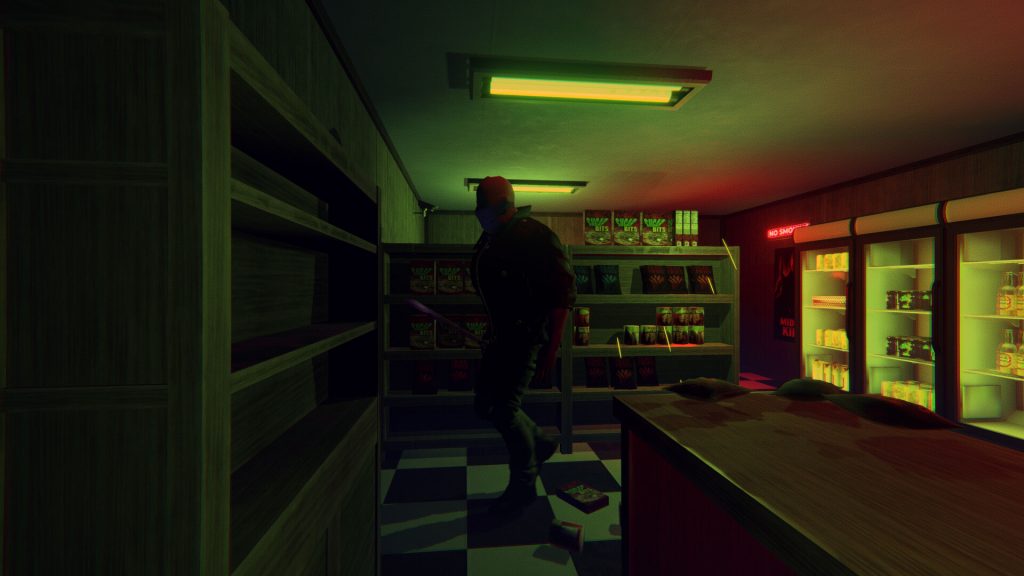
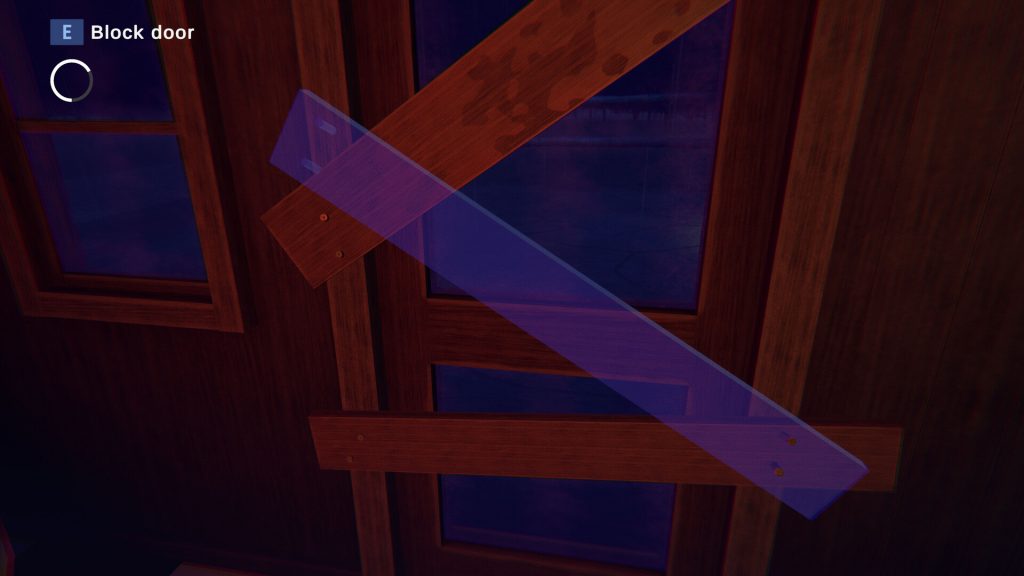
Sound detection means footstep management. Moving slowly is quieter; moving quickly covers ground faster but announces position. Opening and closing doors make noise; every environmental interaction is a potential sound event. The killer responds to specific sounds rather than general proximity, which means players can sometimes be very close to the threat while remaining undetected through absolute silence.
Light detection means spatial awareness of illumination. Being in darkness provides concealment even from proximity; being in a lit area exposes position even at a distance. This creates the specific tactical consideration of routing through dark corridors versus taking direct paths through lit spaces — slower safe routes versus faster dangerous ones.
Movement detection adds the third variable: even in darkness, movement creates contextual signals. A still silhouette in shadow is less detectable than a moving one. This creates the specific horror of moments where the killer passes nearby, and the player must hold completely still, holding their breath along with their character.
The reactive AI that doesn’t follow fixed patrol routes extends this system into psychological territory. A killer with scripted behavior becomes learnable — a problem to be solved through pattern recognition. A killer who responds to the player’s actual behavior cannot be memorized; each encounter requires genuine real-time assessment rather than executed knowledge. The same hiding spot that worked in one encounter may be the first place searched in the next.
The VHS Aesthetic as Design Language
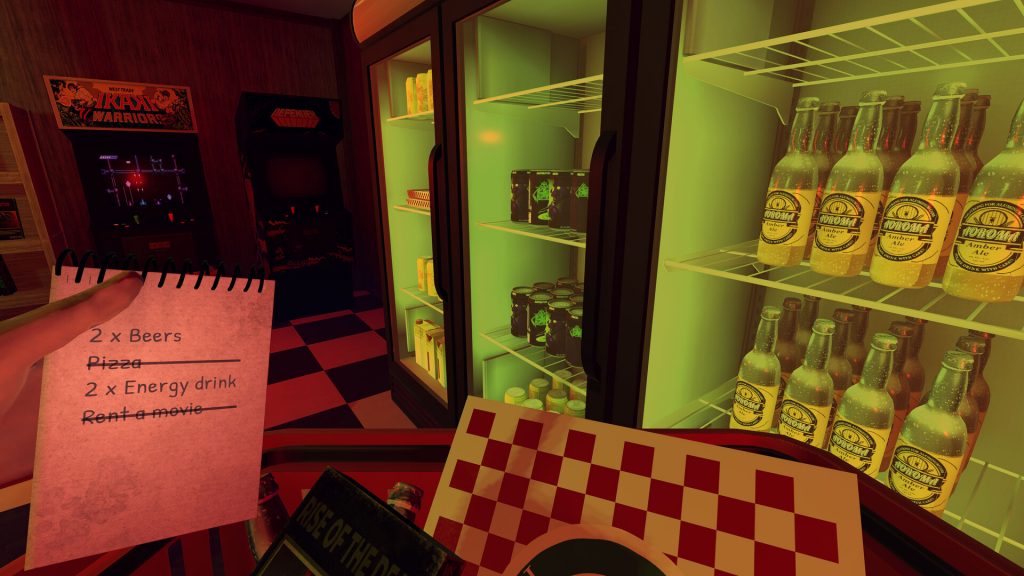
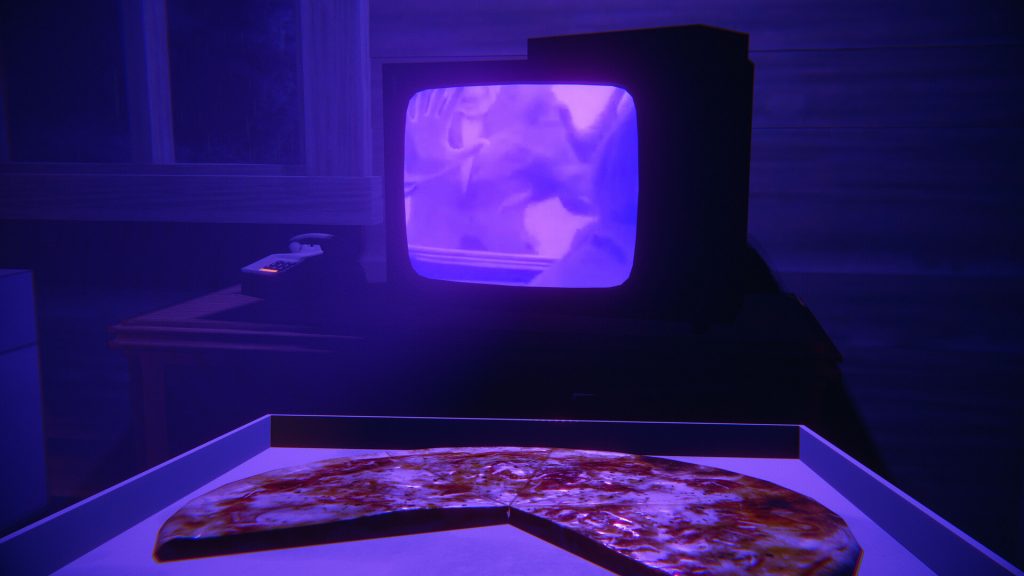
The VHS visual treatment — rough grain, degraded color, the specific visual artifacts of analog video recording — is doing more than nostalgic surface work. The specific visual properties of VHS footage create particular horror-relevant qualities that modern high-definition presentation doesn’t provide.
VHS grain reduces visual clarity in ways that prevent players from definitively seeing exactly what’s there. The killer in the rain is a silhouette, not a detailed character model. The shadowed corner might contain something or might not — the grain and contrast make certainty impossible. This visual uncertainty is precisely the horror aesthetic that 1980s slasher films cultivated deliberately: what you don’t fully see is more frightening than what you do.
The VHS treatment also creates temporal displacement. The viewer’s brain associates this visual quality with found footage, with recordings of real events, with documentation rather than performance. Horror that looks like documentation — even fictional documentation — produces different psychological responses than horror that looks like cinema. This is why the found-footage genre has remained commercially viable for decades despite limited production values: the visual language itself implies authenticity.
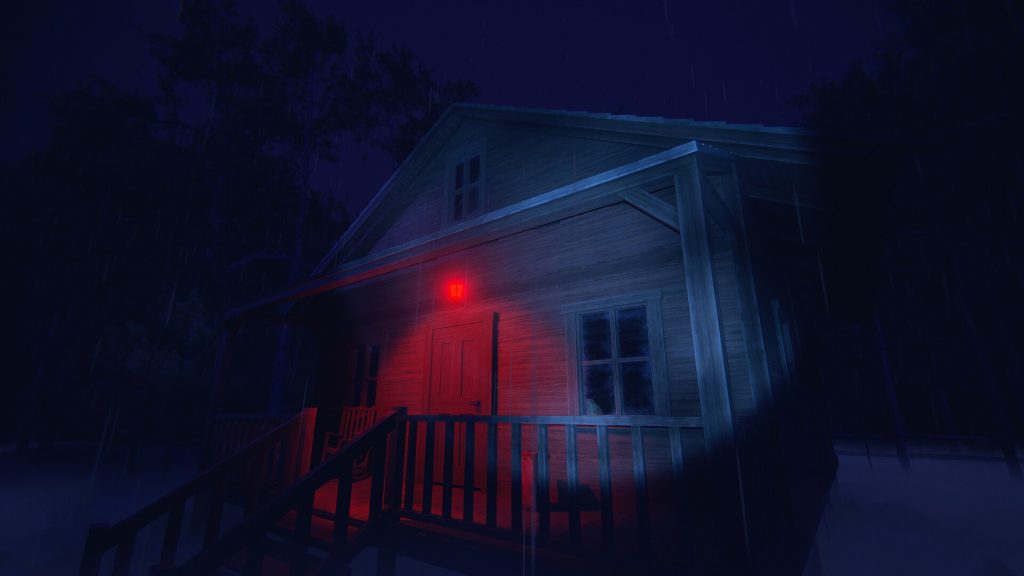
The cabin setting under storm conditions is the correct environmental canvas for this aesthetic. Interior illumination flickering against exterior darkness, rain rendering the outside world visually opaque, the specific acoustic properties of a wooden structure in a storm — these are the sensory conditions that 1980s slasher films used because they’re specifically effective at creating the isolated, enclosed feeling that makes the threat feel inescapable.
The JanduSoft Publishing Context
JanduSoft’s framing of Carlos Azuaga as a “JanduSoft family member” signals a relationship orientation rather than a purely transactional publishing arrangement. For a debut solo developer, the publisher relationship shapes the commercial path significantly — distribution reach, platform certification management, marketing infrastructure, and the credibility signal of an established publisher’s endorsement.
JanduSoft’s Barcelona base and Spanish origin connect to Azuaga’s own background, suggesting a publisher-developer alignment that extends beyond commercial calculation into shared creative context. Spanish indie gaming has been producing varied work across multiple genres, and JanduSoft’s track record of publishing smaller projects gives Azuaga access to a distribution infrastructure he couldn’t build independently for a debut.
The simultaneous multi-platform release — PC, PS5, and Xbox Series all on August 6 — is ambitious for a debut solo project and reflects publisher infrastructure rather than developer capacity. Solo developers typically release on PC first and pursue console ports later; a multi-platform day-one release requires platform certification work that publishers are better positioned to manage.
The Yellowcreek Stories Series Framing
Releasing The Cabin Watcher as Chapter 1 of the Yellowcreek Stories series rather than as a standalone game creates specific commercial and creative implications. Series framing sets expectations about future content while potentially limiting the standalone value of the first chapter — players who feel the chapter ends too abruptly may feel sold half an experience.
The advantage is that each chapter can be designed for a specific scope without attempting to justify the full experience of a complete horror game. A slasher horror chapter can be deliberately brief — as many classic slasher film premises sustain only about 90 minutes before resolution — without this being perceived as insufficient value if the chapter framing sets appropriate expectations.
The cabin setting is inherently location-specific. A series called “Yellowcreek Stories” presumably visits different locations within a shared geographic universe, with each chapter centering on a different incident. This anthology structure allows each chapter to explore different characters, killers, and scenarios while maintaining tonal and aesthetic consistency.
Who This Is For
Strong fit for: 1980s slasher film enthusiasts who want interactive engagement with that aesthetic; Outlast and Amnesia fans who appreciate horror without combat options; stealth game players who want stakes higher than typical stealth game failure states; survival horror enthusiasts who find combat in horror games reduces tension; solo developer horror fans who appreciate the focused vision that single-creator projects can achieve; PS5 and Xbox Series horror game players who want a genuine console-first experience.
Cautious fit for: horror players who specifically want combat options as a survival mechanism; players who find no-second-chances structures frustrating rather than tension-amplifying; anyone who prefers horror games with clear mechanical progression over pure survival.
Less ideal for: players who dislike stealth game mechanics; anyone who finds first-person horror physically uncomfortable; players seeking horror with humor or genre subversion rather than earnest execution.
What to Watch For
The primary evaluation question for The Cabin Watcher is whether the reactive AI delivers on its promise. A killer who genuinely adapts to player behavior — searching locations where players have actually hidden, varying patrol patterns based on detected sounds — produces a fundamentally different horror experience than a killer with sophisticated-seeming but ultimately scripted behavior. Whether this implementation achieves genuine reactivity or pattern-complexity that mimics it will determine the game’s replay tension.
The chapter length and value question will also emerge at launch. Horror games without combat tend to be shorter than action-horror games because progress is determined by stealth success rather than mechanical skill development. How The Cabin Watcher‘s length is received relative to its price point will shape perception of the series model going forward.
The Takeaway
Yellowcreek Stories: The Cabin Watcher is a focused debut with a clear creative identity — 1980s VHS slasher horror translated into first-person stealth survival with no combat, no second chances, and an AI killer who responds to actual player behavior rather than following fixed routes. The premise is immediately legible, the aesthetic commitment is genuine, and the no-combat design decision creates the specific kind of horror that combat options inevitably undermine.
For slasher film enthusiasts and pure-stealth horror fans, this is one of August 2026’s more specifically appealing horror releases. Carlos Azuaga has built a game that knows exactly what it is and has eliminated everything that contradicts that identity.
The storm is still going. The writer is still in the cabin. The figure in the rain has stopped moving but hasn’t left.
There is no weapon. There is no fight. There is only the question of how quiet you can be, and whether quiet is quiet enough.
August 6. No combat. No second chances. No escape except the one you find yourself.
Information regarding ‘Yellow Creek Stories: The Cabin Watcher’
| item | detail |
|---|---|
| Developer / Publisher | Carlos Azuaga (Solo Developer) / JanduSoft SL (Barcelona) |
| Genre | First-person stealth slasher horror |
| Release platform | PC (Steam) / PlayStation 5 / Xbox Series |
| Release date | August 6, 2026 |
| series | Yellow Creek Stories Part 1 |
| core system | Sound, light, and movement-based stealth / Reactive killer AI / Interactive cinematics |
| Whether or not there is combat | None (Pure Stealth Survival) |
| Retry | No Second Chances |
| Reference | 80s VHS slasher film |
| Main Keywords | Stealth, Horror, Slasher, 80s, VHS, First-person, Solo development, Indie |
| Steam Page | Shortcut |