Belgium has spent the better part of a century as one of comics’ most consequential cultural centers. Hergé and André Franquin — masters who helped define European comics’ 20th-century golden age — emerged from this same cultural soil. Helix: Descent N Ascent, the debut project from Walloon studio Badass Mongoose, is a contemporary reinterpretation of Franco-Belgian comics sensibility translated into interactive form — a stark black-and-white puzzle adventure launching simultaneously on Steam and Nintendo Switch on July 23, following a brief delay from its original May target specifically to deepen content and polish the Switch version.
The demo’s 98% Very Positive rating from 63 reviews is an exceptional number, and understanding why requires looking at the specific design decisions Badass Mongoose made — chief among them, building an entire game around a composer’s music rather than the more conventional reverse process.
The Black-and-White Visual Commitment
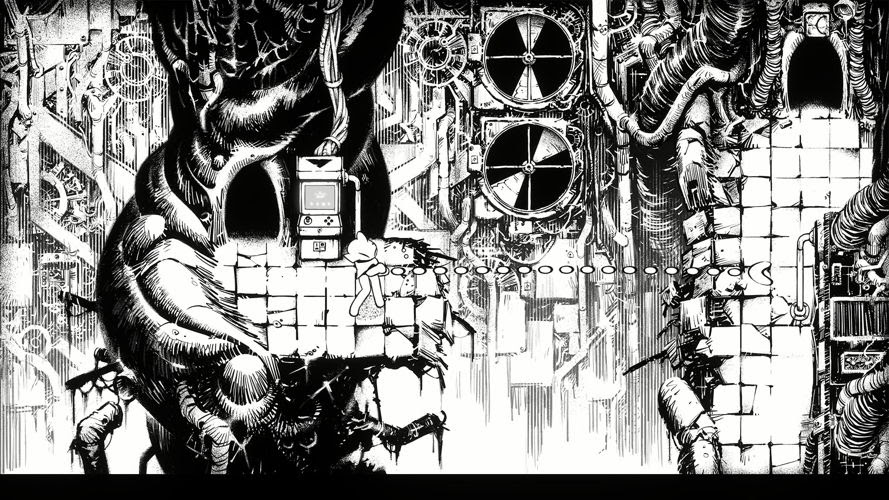
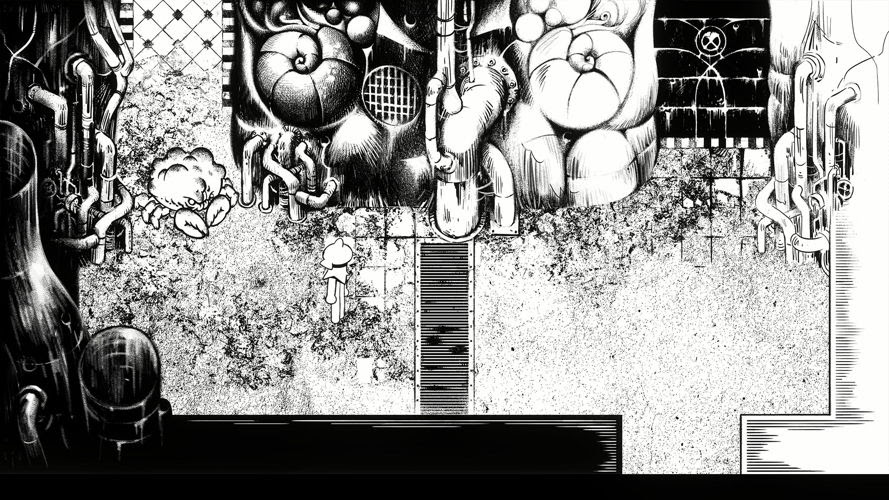
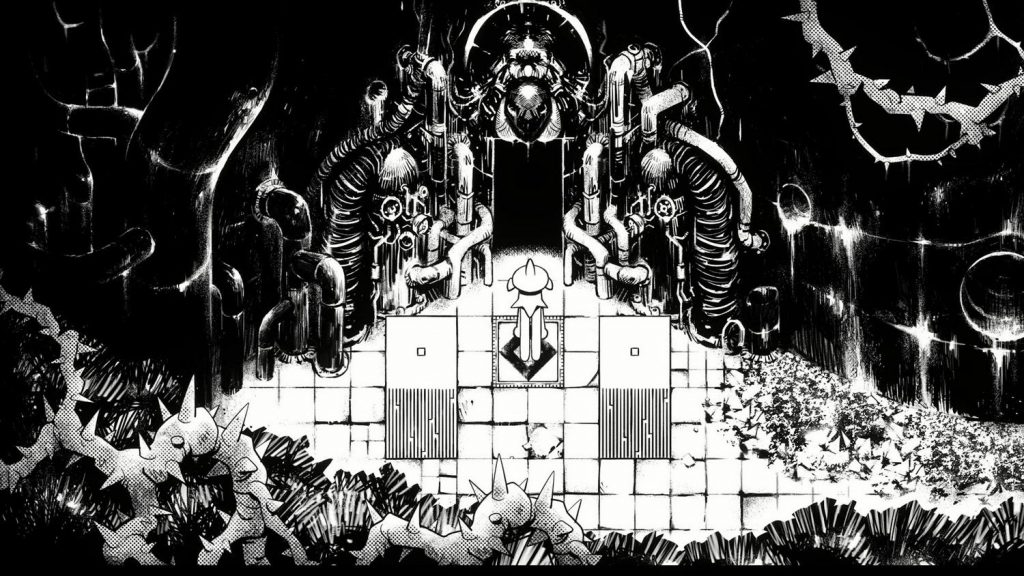
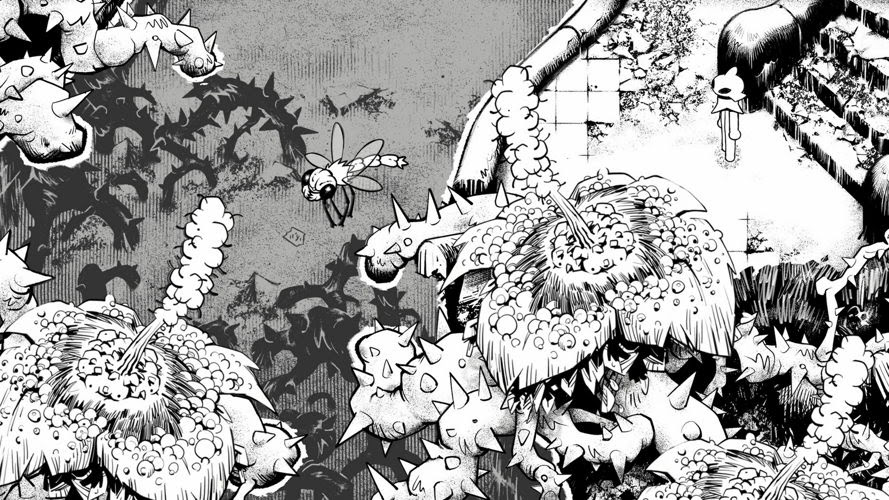
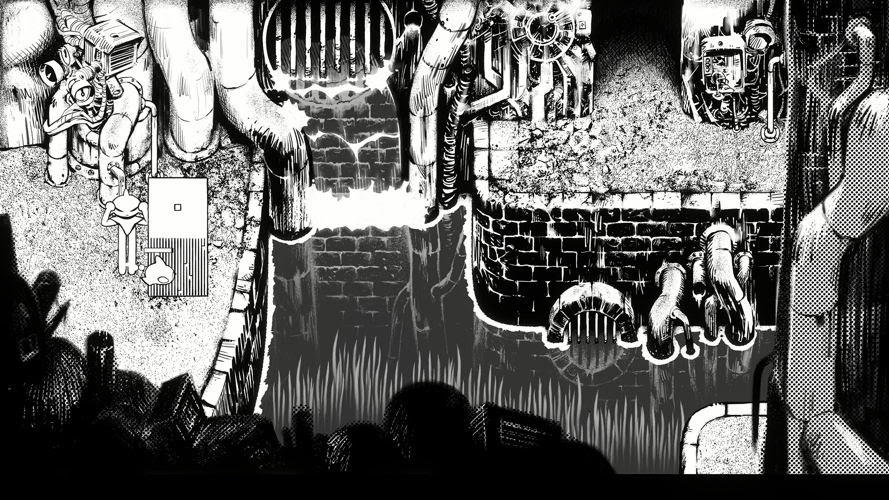
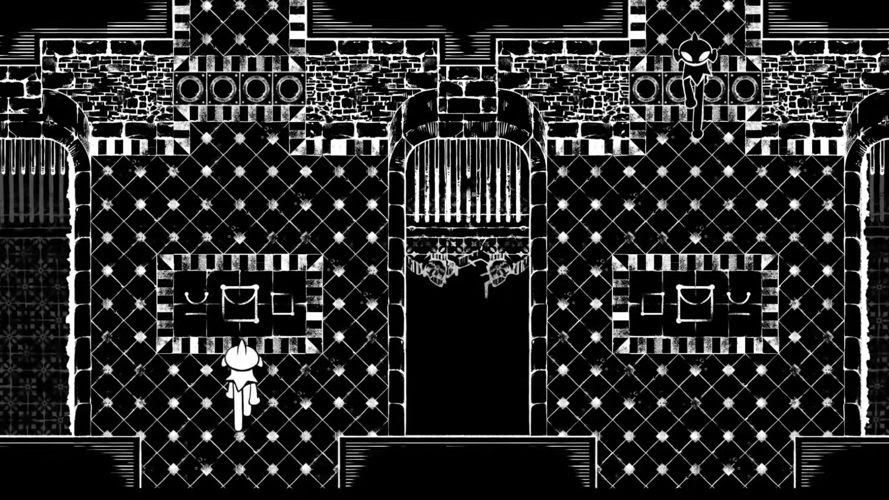
The stark black-and-white visual presentation is Helix‘s most immediately distinctive quality, and it’s worth taking seriously as design philosophy rather than aesthetic restriction. The development team drew inspiration from 1980s black-and-white indie comics, 1990s Japanese manga, and the 1970s works that defined Franco-Belgian comics’ golden era — a specific lineage of visual storytelling that achieved emotional and narrative complexity without color as a tool.
This lineage matters because black-and-white comics art developed sophisticated techniques for conveying mood, depth, and texture entirely through line weight, hatching, negative space, and contrast — techniques that color art doesn’t need to develop because color does that work instead. A game built from this visual tradition inherits those techniques: the absence of color isn’t a limitation being worked around but a established visual language being deployed.
The hand-drawn quality and strong light-dark contrast the developers describe suggests Helix is using black-and-white the way the best black-and-white comics use it — not as grayscale photography but as a deliberate compositional tool where the placement of black and white shapes creates meaning. This is a harder discipline than full-color art in some respects, because every visual decision has fewer tools available and must work harder to communicate.
The Music-First Development Process
The most unusual production decision behind Helix is that Badass Mongoose built the game around composer Jim Guthrie’s music rather than commissioning music after the game was designed. Their own description is precise: “we didn’t make music for the game, we developed the game with the music in mind.”
This reversed development process has specific creative implications. Games typically treat music as supporting the established gameplay and narrative rhythm — composers receive build versions, gameplay footage, or narrative beats and write music that serves those existing elements. When a game is built around the music instead, the music’s emotional architecture, pacing, and tonal shifts become the structure that level design, pacing, and narrative beats are built to serve.
Jim Guthrie’s credentials make this approach especially significant. His work on Superbrothers: Sword & Sworcery EP established him as one of indie gaming’s most distinctive composers — that game’s dreamlike, tense atmospheric soundtrack became inseparable from its identity, frequently cited as one of the medium’s best marriages of music and game design. His subsequent work on Below and Nobody Saves the World extended this reputation across different genres while maintaining his specific compositional voice: atmospheric, slightly unsettling, emotionally precise.
Building Helix around Guthrie’s music suggests Badass Mongoose recognized that his specific compositional sensibility — dreamlike yet tense — was exactly the emotional register they wanted Helix to occupy, and that the most reliable way to achieve that register throughout the game was to let his music define it from the start rather than retrofit music to match a vision built independently.
The Wordless Narrative Approach
Helix tells its story through staging and atmosphere rather than dialogue — a choice that aligns naturally with both the comics tradition it draws from and the music-first development approach. Comics can convey enormous narrative and emotional content through panel composition, character posture, and visual pacing without dialogue; Helix applies similar principles to interactive space.
The doppelganger mechanic — encountering an entity that seems to mirror the player’s own actions during a solitary journey — is the central narrative device. Whether this mirroring presence is ally or antagonist is revealed gradually through play rather than exposition. This is a well-established device in puzzle and exploration games (doppelganger and mirror mechanics appear across the genre from Inside to Limbo to numerous indie puzzle platformers) precisely because it generates uncertainty and tension without requiring narrative explanation — the player’s relationship to the doubled figure develops through gameplay interaction rather than through being told what to feel.
The game’s stated themes — identity, solitude, relationship — are conveyed through black-and-white artwork, living 2D backgrounds, and music rather than explicit narration. This wordless approach demands a higher level of craft from every other element, since there’s no dialogue to clarify ambiguous moments or guide emotional interpretation. The exploration of a forgotten civilization’s traces and memories adds narrative depth through environmental discovery — the world itself becomes the text that players read through exploration rather than through any character explaining what happened.
The Studio Origin and Development Path
Badass Mongoose, founded by Cédric De Mulenaere and Gillian Sampont, represents Helix as a genuine debut project — first revealed in May 2024, refined through a February 2026 Steam Next Fest demo, and now reaching release after a deliberate delay specifically to strengthen content and Nintendo Switch quality. This is a studio that has taken the patient, iterative development path that produces polished debut work rather than rushing to market.
The Wallonia government’s Rayonnement Wallonie grant and Wallimage support reflect the kind of institutional backing for creative industries that several European regions provide — funding structures specifically designed to support cultural production with export and international visibility potential. This institutional support provided the stable development environment that allowed Badass Mongoose to pursue the kind of patient, music-first, visually uncompromising development process Helix represents, rather than the compressed development timelines that pure self-funding or investor pressure often requires.
For a small studio’s debut, securing Jim Guthrie’s collaboration represents significant achievement in itself — composers with his level of recognition typically have considerable selectivity about projects, and his involvement signals that Helix‘s concept and execution were compelling enough to secure a collaborator who could likely work on larger, better-funded projects.
The Franco-Belgian Comics Lineage Made Interactive
It’s worth dwelling on what it means specifically for a Belgian studio to draw on Franco-Belgian comics heritage for a video game. Belgium’s comics tradition — bande dessinée — isn’t simply a regional art form; it’s a globally influential tradition that shaped how sequential visual narrative developed as a medium. Hergé’s Tintin and Franquin’s Spirou and Gaston Lagaffe established visual and narrative conventions still visible in graphic storytelling worldwide.
A contemporary Belgian studio engaging with this heritage isn’t appropriating an external aesthetic — they’re working within their own cultural lineage, translating techniques developed in their national art form into an interactive medium. This gives Helix a specific authenticity that “comics-inspired” games made outside that tradition sometimes lack. The black-and-white indie comics influence specifically (rather than the more commercially mainstream color bande dessinée tradition) suggests the team is drawing on the more experimental, personal-expression end of comics history — closer to underground comix sensibility than mainstream adventure-comic visual language.
The 98% Demo Reception
A 98% Very Positive rating from 63 reviews is an exceptional number for any game, and particularly notable for a visually unconventional puzzle adventure from a debut studio. This level of consensus suggests the combination of visual commitment, musical integration, and wordless narrative approach is landing precisely as intended for the audience that has engaged with the demo.
The decision to delay release from May to July specifically to strengthen content and Switch quality — rather than launching on schedule with a less polished product — reflects confidence that the foundational reception justified additional investment rather than rushing to capture initial demo momentum. This is the right instinct for a debut project where reputation compounds: a stronger July launch serves the studio’s long-term position better than a rushed May launch riding on demo goodwill that might not survive contact with a less complete game.
Who This Is For
Strong fit for: puzzle adventure enthusiasts who appreciate distinctive visual presentation; Inside and Limbo fans seeking similarly atmospheric, wordless narrative experiences; players who specifically seek out games with exceptional soundtracks (Jim Guthrie’s involvement alone is a strong signal); Franco-Belgian comics enthusiasts curious about the heritage translated into games; black-and-white art appreciators; players who enjoy doppelganger/mirror narrative devices; Nintendo Switch puzzle game collectors.
Cautious fit for: players who specifically prefer dialogue-driven narrative; anyone who finds black-and-white visual presentation fatiguing over extended play.
Less ideal for: players seeking action-focused gameplay; anyone who needs explicit narrative exposition rather than atmospheric storytelling; players uninterested in puzzle-platformer mechanics.
What to Watch For
A few questions will shape Helix‘s July 23 release.
The first is whether the puzzle design escalates with sufficient variety across the full game. Puzzle platformers depend on progressive complexity and fresh mechanical ideas; whether Helix sustains this across its complete length will determine if the experience matches its atmospheric strength with comparable mechanical depth.
The second is the doppelganger narrative’s payoff. Mirror/double mechanics promise revelation about the relationship between player and double; whether Helix‘s gradual reveal delivers genuine emotional or narrative satisfaction will determine if the wordless storytelling approach fully succeeds.
The third is the Nintendo Switch version’s specific quality, given that the delay was partly attributed to strengthening this platform specifically. Whether the black-and-white visual presentation and Guthrie’s atmospheric music translate effectively to Switch’s handheld and docked contexts will affect that platform’s reception.
The Takeaway
Helix: Descent N Ascent represents a debut studio’s unusually confident execution of a genuinely distinctive vision — black-and-white visuals drawn from a specific Franco-Belgian comics lineage, a soundtrack-first development process built around one of indie gaming’s most respected composers, and a wordless narrative approach trusting atmosphere and visual storytelling over exposition. The 98% Very Positive demo reception suggests this combination is connecting with exactly the audience it’s designed for.
For puzzle adventure enthusiasts and players who specifically seek out games with exceptional musical identity, Jim Guthrie’s involvement alone makes Helix worth attention — his Sword & Sworcery work remains a reference point for atmospheric game scoring nearly fifteen years later, and a studio building an entire game around his compositional sensibility represents a specific bet on music as foundational rather than supplementary.
A solitary journey through stark black-and-white landscapes. A doubled figure whose intentions remain genuinely uncertain. The traces of a forgotten civilization waiting to be read through exploration rather than explained through dialogue. And throughout all of it, Jim Guthrie’s music — not scoring the journey, but having defined its shape before the journey was built.
July 23. Belgium’s comics tradition finds its way into interactive form, one black-and-white frame at a time.
Information regarding ‘Helix: Descent N Ascent’
| item | detail |
|---|---|
| Developer / Publisher | Badass Mongoose (Belgium / Cédric de Moulenaier · Gillian Sampont) |
| Genre | Black and White Atmospheric Puzzle Adventure / Puzzle Platformer / Exploration |
| Release platform | PC (Steam) / Nintendo Switch |
| Release date | July 23, 2026 |
| Steam Demo Review | Very positive 98% (63 items) |
| Soundtrack | Jim Guthrie (Same composer as Sword & Sworcery, Below, and Nobody Saves the World) |
| Major announcements | May 2024 / Steam Next Fest February 2026 Demo |
| Financial support | Wallonia Government Rayonnement Wallonie Subsidy / Wallimage |
| Main Keywords | Black and White, Puzzle, Adventure, Doppelganger, Forgotten Civilization, Atmosphere, Non-violence, Jim Guthrie |
| Official Channel | X · Instagram · YouTube · TikTok · Discord |
| Steam Page | Go to Wishlist |