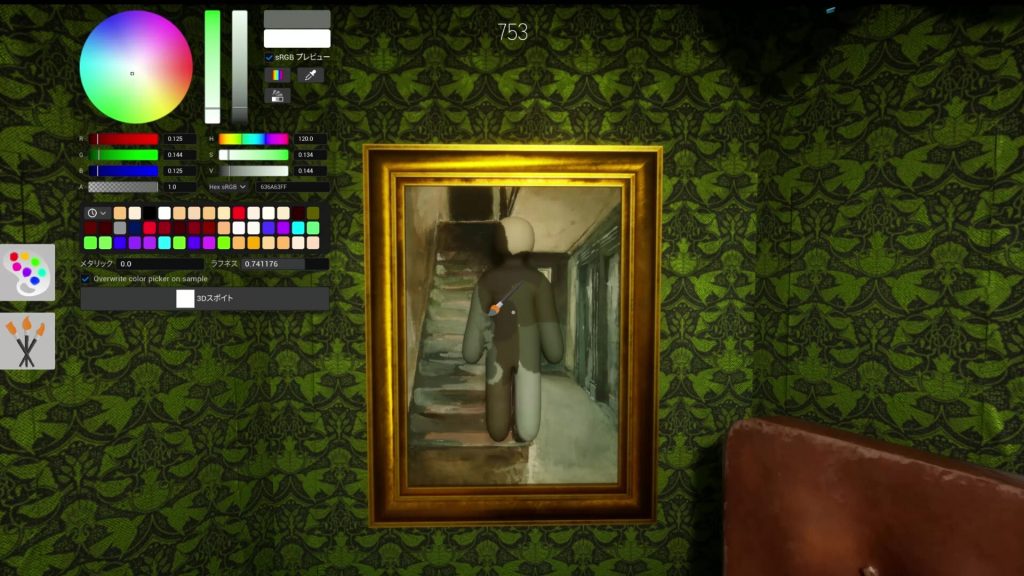
A white character picks up a paintbrush and carefully copies the wallpaper pattern onto its entire body. It then lies down in front of a bookshelf and holds perfectly still among the book spines. This is the entire concept. And this concept — executed cleanly, priced at $5.99, built by one developer in two months with no marketing budget whatsoever — has generated 5 million sales in 10 days, peaked at 244,731 concurrent players, hit #1 on Steam’s global sales chart, and become 2026’s defining indie gaming moment.
MECCHA CHAMELEON is not the most technically sophisticated game released this year. It is not the most narratively ambitious. It does not have the largest content scope or the most innovative systems. What it has is one crystal-clear idea executed so well that every clip anyone makes of it instantly makes the person watching want to play it themselves. In indie gaming, that is a rarer and more powerful quality than almost anything else.
The Idea
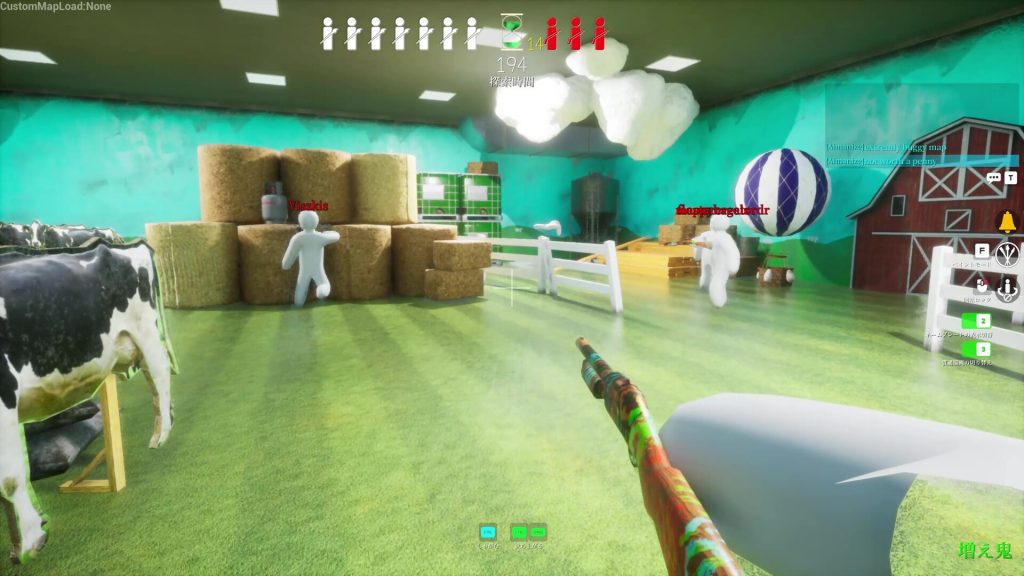
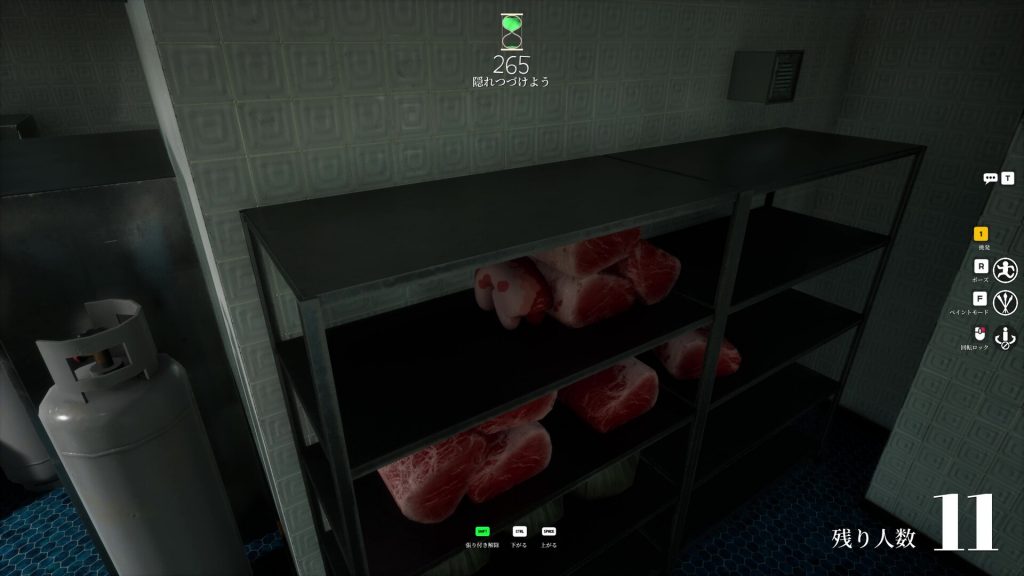
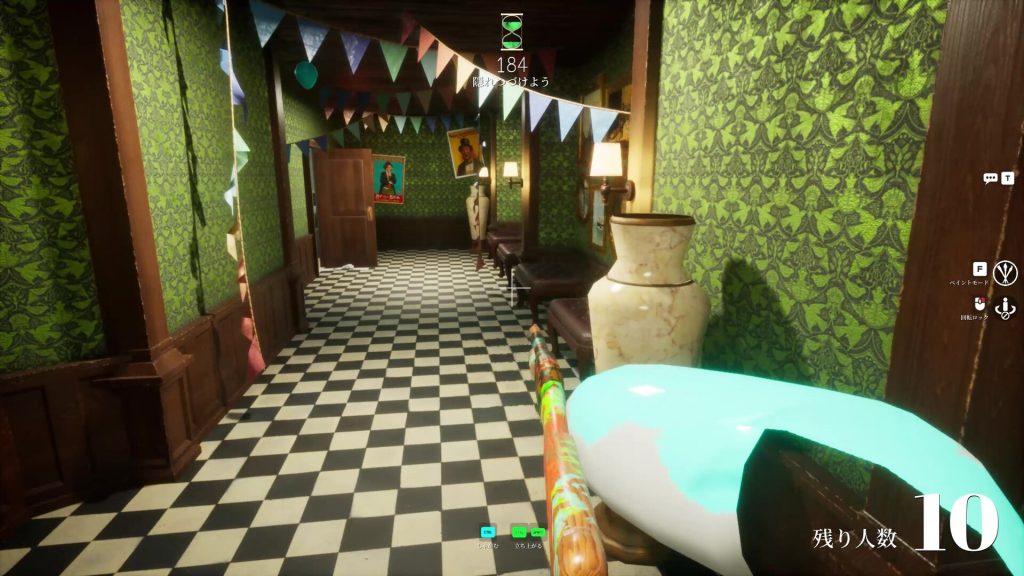
The concept is so simple that explaining it fully takes two sentences: players disguise themselves by painting their character to match the environment, then hold still while the seeker searches. The seeker must identify which objects are actually players in disguise.
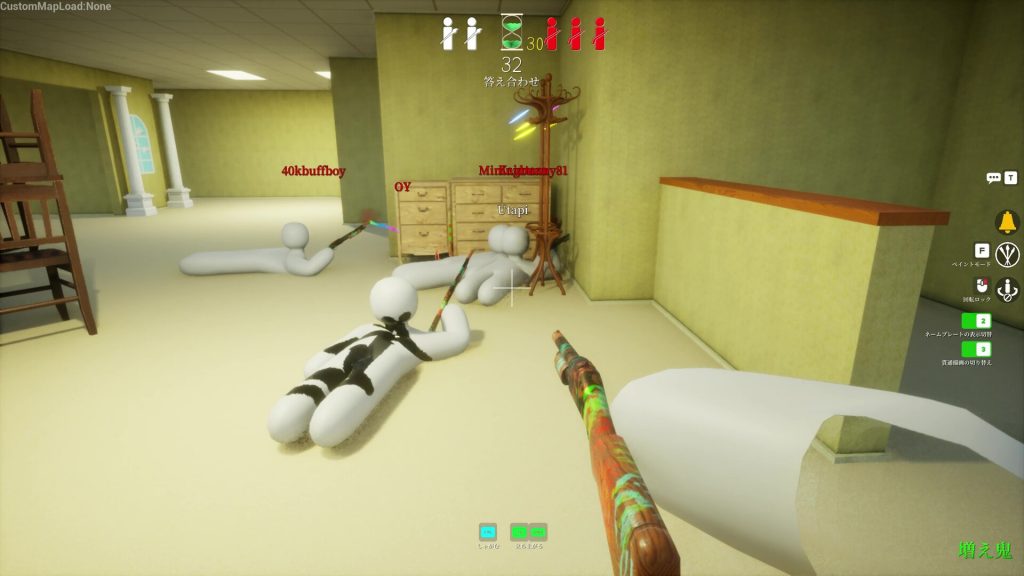
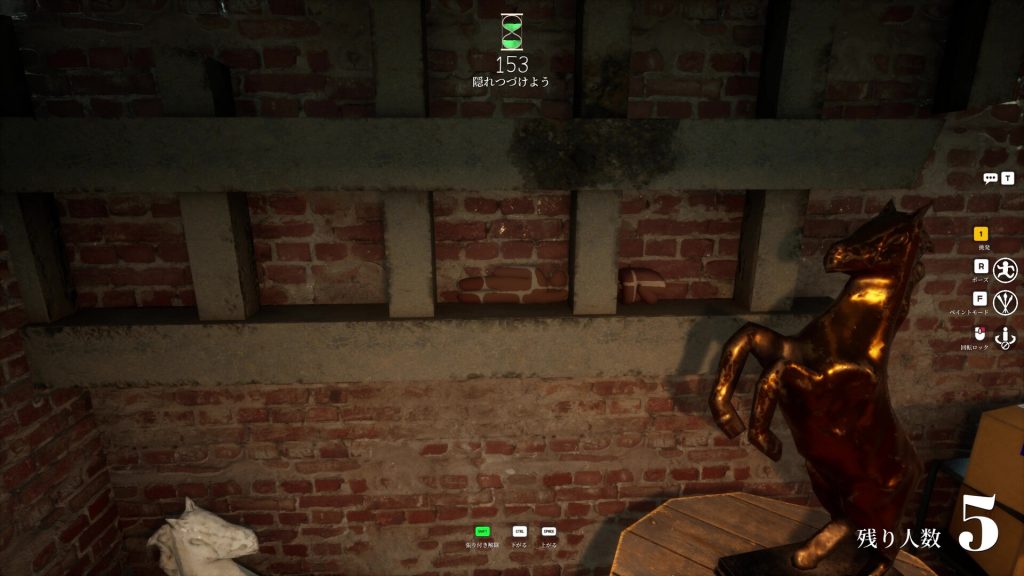
The creative richness comes from the disguise process itself. MECCHA CHAMELEON provides color palettes and eyedropper tools so players can precisely replicate the exact hues of walls, furniture, and decorative elements. The game rewards genuine attention to environmental detail — not just “I’m hiding behind the bookshelf” but “I’m hiding as a book on the bookshelf, with my colors matching these specific book covers.” Crouching and lying down adjust the character’s shape to blend with nearby objects.
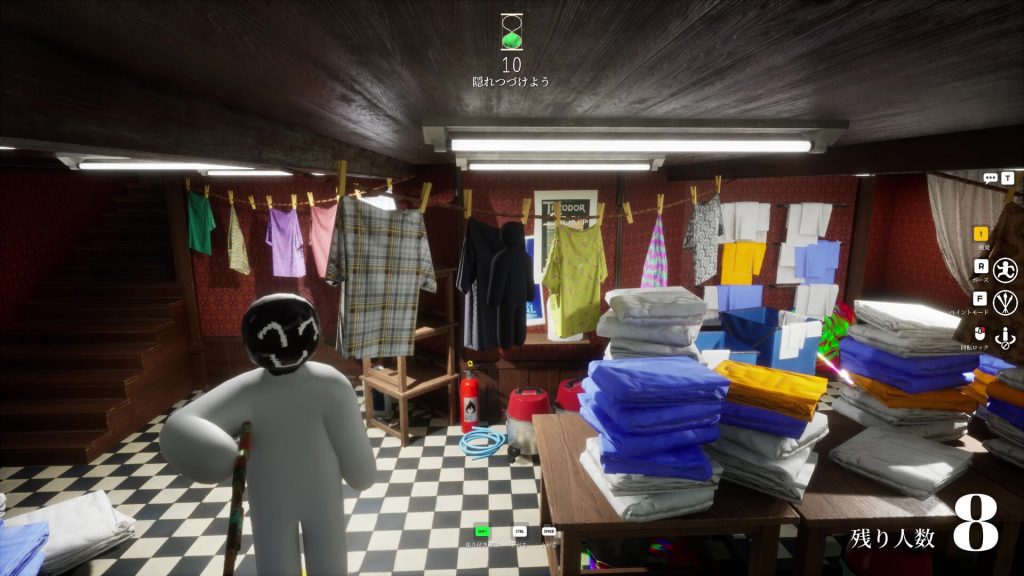
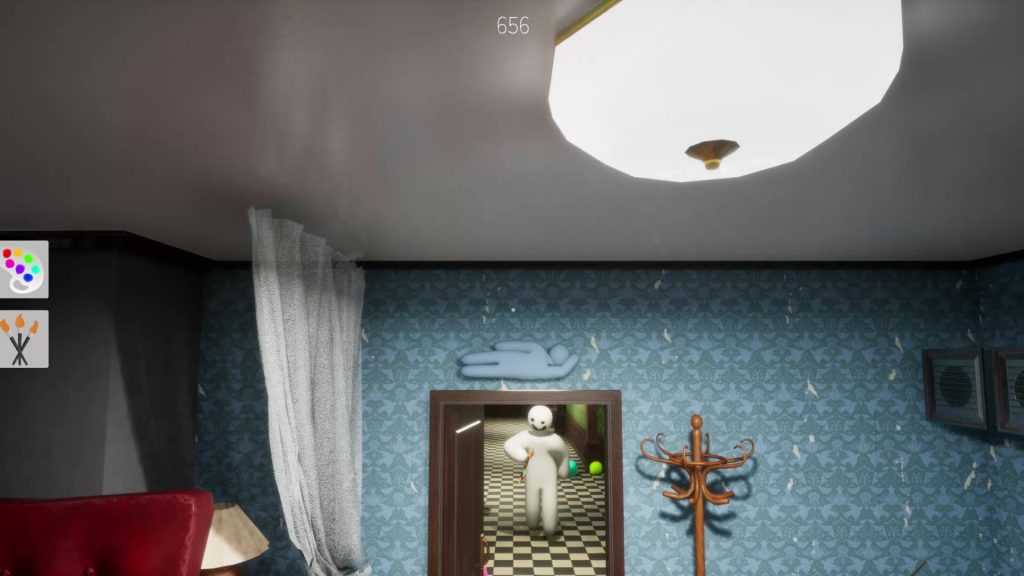
This creates a specific kind of humor that screenshots and clips communicate perfectly. The seeker passing directly in front of a player who has successfully disguised themselves as a wallpaper pattern produces comedy that doesn’t require language or cultural context to understand. The moment when the seeker suddenly stops and says “wait…” right next to a hidden player who has been holding perfectly still — the pause before discovery — is universally tense. And the moment of failed disguise — the seeker notices something slightly off, investigates, and finds a player who thought they were invisible — produces the combination of shock and laughter that makes gaming clips shareable.
The Virality Mechanics
Understanding why MECCHA CHAMELEON spread so fast requires understanding what makes content shareable on streaming platforms and short-form video.
Successful streamable game moments need three qualities: they must be instantly comprehensible to viewers who don’t know the game, they must produce visible emotional reactions in the person playing, and they must be short enough to function as clips. MECCHA CHAMELEON satisfies all three simultaneously better than almost any game in memory.
A viewer who has never heard of the game sees: a streamer carefully painting their character to look like a carpet, then lying down on what appears to be the floor, then trying not to breathe while someone walks past. The viewer immediately understands what’s happening without any explanation. The streamer’s suppressed laughter, the tension of almost-being-found, the eventual discovery — these are visible emotional beats that create viewer investment. And each of these moments is self-contained in 30-60 seconds.
The developer spent nothing on advertising. The game found its audience entirely through the organic behavior of streamers and content creators who played it, clipped it, and caused viewers to immediately go search for it. This is the rarest and most valuable form of marketing in gaming: the game itself generates its promotional content through play.
The social element amplifies this further. MECCHA CHAMELEON is inherently better with friends, and the clips people make playing with friends are more shareable than solo play. The Infection and Double modes add social complexity that generates different kinds of moments — the betrayal of an ally who turns seeker, the chaos of everyone hunting everyone simultaneously. Friend groups who see one clip tend to buy it together, which is exactly the multiplication effect that took the game from 50,000 sales to 5 million in ten days.
The Sales Trajectory
The day-by-day sales progression deserves specific attention because it tells a story about how viral gaming works in 2026:
Day 1-3 (June 9-11): Organic discovery by early adopters and streamers who happened across the game. Small initial spike.
Day 3 (June 12): 500,000 sales. The first wave of streamer content has circulated enough to create purchasing momentum.
Day 5 (June 14): 1 million sales. The clip cycle has completed its first major circulation — people who saw clips have bought and made their own clips.
Day 6 (June 15): 2 million sales. Mainstream gaming press coverage begins as the numbers become newsworthy, creating a secondary discovery wave beyond pure social media.
Day 8 (June 17): 3 million sales / Steam Global #1. The game has now surpassed the discovery threshold where being #1 on Steam’s own charts creates additional discovery through platform visibility.
Day 11 (June 20): 5 million sales.
This trajectory — slow ignition, then exponential acceleration — is the characteristic shape of viral gaming success. The initial discovery period creates content; that content generates more buyers who create more content; the acceleration compounds until it reaches a plateau determined by the total addressable audience.
The Steam Global #1 ranking is itself a meaningful commercial event because Steam’s visibility algorithms amplify top-charting games. Being #1 means appearing prominently in store discovery features, which creates a self-reinforcing cycle.
The $5.99 Price and Its Role
The pricing deserves specific analysis. $5.99 (with a first-week discount bringing it to $4.79) positions MECCHA CHAMELEON in the impulse-purchase tier, where friend group decisions become very easy.
When a game costs $5.99 and a friend recommends it, the cost-benefit calculation for most players is almost immediate: “I can see from the clip that this is worth $6 to play with these people.” There’s no extended consideration period, no waiting for a sale, no research required. The low price converts social proof directly to sales without friction.
At the same time, 5 million sales at $5.99 generates approximately $25 million in gross revenue before platform fees — an extraordinary outcome for a project built in 2 months by a solo developer with a collaborating artist. The low price didn’t reduce commercial success; it maximized purchase velocity in a way that higher pricing couldn’t have achieved.
This is a recurring lesson in viral gaming that the industry relearns periodically. Among Us was free on mobile; when it went viral, it was already installed. Fall Guys succeeded partly because of PS Plus accessibility. Vampire Survivors was $3 at launch. When a game’s concept is strong enough to sell through clips, the barrier to conversion needs to be as low as possible.
The Development Background
The “overnight success” narrative around MECCHA CHAMELEON requires context. Developer lemorion_1224 has been making games for years: LINK Penguins, PENGUIN HOTE, DEATH BURGER, PEXIT 8 — small projects that didn’t break through but built accumulated experience in designing game feel, managing small multiplayer interactions, and creating the kind of immediately comprehensible design that MECCHA CHAMELEON demonstrates.
The conceptual development also wasn’t sudden. The developer is known to have experimented with disguise and social deception mechanics within Fortnite Creative mode, testing the core hide-and-seek-with-camouflage idea in a platform with an existing player base before building it as a standalone product.
This is how major indie successes typically emerge when examined closely. The breakthrough moment appears sudden because the world only notices when the viral inflection point hits. But the design competence that makes the game work — the refinement of the disguise system, the room layouts that create interesting hiding opportunities, the social structure that generates shareable moments — is the product of accumulated experience and iterative testing, not a single two-month sprint.
The two months was the production time. The development history is much longer.
The 85% Review Situation
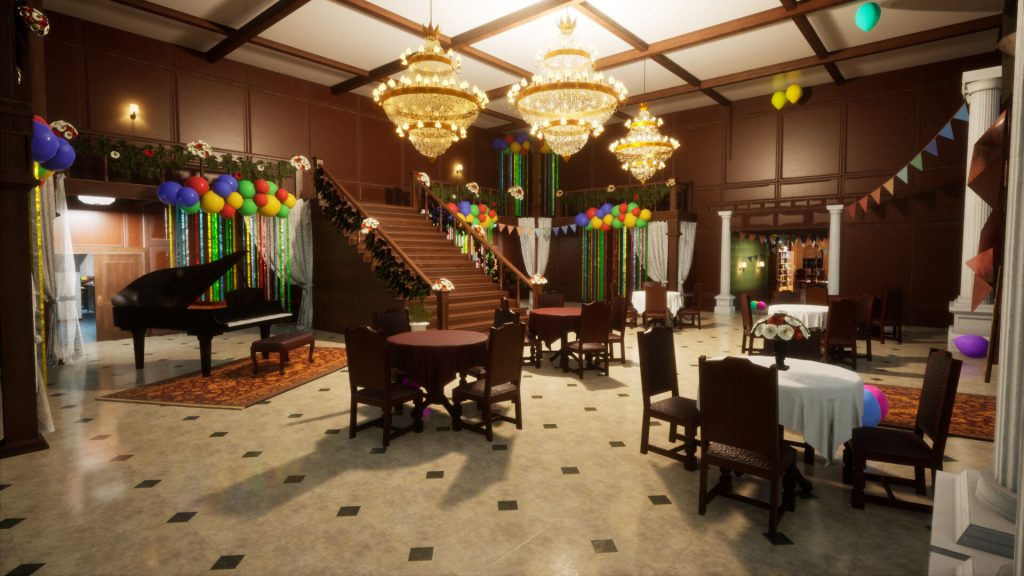
85% Very Positive from 6,000+ reviews is strong but not unanimous, and the critical reviews are worth understanding. Common patterns in the critical minority of viral party games typically include: server stability issues during peak concurrent player periods (244,731 concurrent players on a game built by a solo developer will stress infrastructure), content concerns (five official maps may feel limited after many hours of play), and matchmaking complaints (public lobbies can create skill mismatches or language barriers in an international player base).
None of these typically represent fundamental design failures. They’re the growing pains of a game that scaled from small project to massive hit faster than any infrastructure planning could have accommodated. The developer’s response — multiple emergency patches on launch day and the announcement of new maps and options — reflects an appropriate prioritization of the issues the player base has identified.
The 85% rating 10 days after a viral explosion is actually a strong foundation. Players who come to games through viral clips sometimes have expectation mismatches (the clip showed the best moments; the game experience also includes lobby-finding and setup that clips edit out). The continued high rating through this potential expectation adjustment suggests the core experience is delivering on what the clips promised.
What MECCHA CHAMELEON Tells the Industry
MECCHA CHAMELEON will be studied as a case study in viral indie success for years, and several of its lessons are worth stating explicitly.
Clarity of concept is not simplicity of execution. The idea is instantly communicable; the execution required genuine design work to make the disguise system feel satisfying, the maps feel interesting, and the social dynamics feel balanced. Many games have simple concepts; few make those concepts produce the specific emotional experiences that generate shareable moments.
Low price and no marketing can coexist with massive revenue. $25 million from a $5.99 game with zero advertising spend demonstrates that the right concept eliminates the need for traditional marketing investment when distribution infrastructure (Steam) and content creator culture (Twitch, short-form video) create natural discovery channels.
Prior work creates a breakthrough capability. lemorion_1224’s previous games didn’t make him famous; they made him good enough to make MECCHA CHAMELEON in two months. The overnight success required years of background work that nobody was watching.
Content creator culture has fully replaced traditional game marketing for the right genres. A hide-and-seek game in which the funniest moments are inherently visual and social is perfectly suited to clip-based discovery. The game doesn’t need to be marketed; it needs to be played on stream.
Workshop support extends longevity. Five official maps is a thin content base for sustained engagement; Steam Workshop user-created maps immediately extend this. The developer built the infrastructure for community content creation into the initial release, which is the correct long-term thinking for a game that will need content variety to retain players.
Who This Is For
Strong fit for: anyone with a friend group who plays games together online or locally; streamers and content creators looking for reliably funny and clip-worthy content; party game enthusiasts who appreciate socially deceptive mechanics (Among Us, Jackbox audiences); casual gamers who want simple entry but deep mastery ceiling in disguise skill; anyone who has ever played hide-and-seek and wished they could be invisible.
Cautious fit for: solo players without a friend group to play with (the experience is significantly diminished in random public lobbies compared to friend lobbies); players seeking complex mechanical depth or narrative content.
Less ideal for: solo-focused players; anyone who dislikes social deception gameplay; players seeking content they’ll engage with for hundreds of hours without updates.
The Takeaway
MECCHA CHAMELEON is 2026’s most important indie success story — not because it’s the most ambitious or the most technically impressive game released this year, but because it demonstrates something the industry needs to be reminded of periodically: the right idea, executed cleanly, priced correctly, and released with the structural features that enable organic discovery, can create commercial outcomes that dwarf most AAA marketing spends.
Five million sales. Twenty-five million dollars. Zero advertising. Two months of development. One crystalline concept about painting yourself to look like wallpaper and hoping nobody notices.
The white character lies perfectly still against the bookshelf. The seeker walks past. The player holds their breath. And somewhere, the clip of this moment is being posted to social media, and someone is watching it, and that someone is about to open Steam and buy the game.
That’s the whole story. And in 2026, that story is worth $25 million.
Information regarding ‘MECCHA CHAMELEON’
| item | detail |
|---|---|
| Developer / Publisher | lemorion_1224 (Solo developer, Japan) / Collaboration with artist Haganeiro |
| Genre | Multiplayer Casual Party Game / Hide and Seek / Comedy |
| Release platform | PC (Steam, Windows) |
| Release date | June 9, 2026 (US time) / June 10 (Japan time) |
| Development period | About 2 months |
| price | $5.99 (20% off for the first week of launch, $4.79) |
| Cumulative sales volume | 3 million+ copies (7 days since launch) / Announcement of surpassing 5 million copies |
| Peak concurrent users | 244,731 people (June 18, Steam All-Time Top 100) |
| Cumulative sales | Estimated at approximately $8.7 million to $14.3 million |
| Chart Performance | #1 in Steam Global Sales / #1 on Japan Charts (Overtakes Forza Horizon 6 and FF7 Remake) |
| Steam Review | Very positive 85% (6,099+) |
| Player count | 2 to 10 people per lobby |
| Game Mode | Basic Hide and Seek / Infection / Double |
| Map | 5 Official Types + Workshop User-Created Maps |
| Developer’s previous work | LINK Penguins · PENGUIN HOTE · DEATH BURGER · PEXIT 8 |
| Main Keywords | Hide and Seek, Camouflage, Painting, Viral, Solo Development, Party Game, Streamer |
| Steam Page | Shortcut |