The vampire survivors-like genre has generated enough entries that the default pitch — “survive waves of enemies, auto-attack, get upgrades” — no longer differentiates. The games that find audiences now do so by adding something specific that the genre’s core doesn’t offer. Luminas: Parasite Reign, the debut project from Athens-based three-person studio SOTO Game Studio, has a specific answer: instead of building one character’s power, you build a party of three Luminas and the relationships between them.
The Early Access launch arrives July 24 with 8 Lumina types, 64 skills, 90+ treasure items, 3 biome maps, and the party-building combinatorics that emerge from choosing which three Luminas to bring and which of their interactions to develop.
The Party as Built Architecture
The core design distinction is structural: in standard survivor roguelites, the build is a single character with accumulated abilities. In Luminas, the build is three characters whose abilities interact with each other. The distinction matters because it multiplies the strategic space considerably.
A single-character build is a set of abilities that work together. A three-character party build is three sets of abilities that work together internally and interact across characters through synergy mechanics. The specific Lumina combinations that trigger combo abilities — two characters whose abilities combine into a third, more powerful effect — create design territory that single-character builds can’t explore.
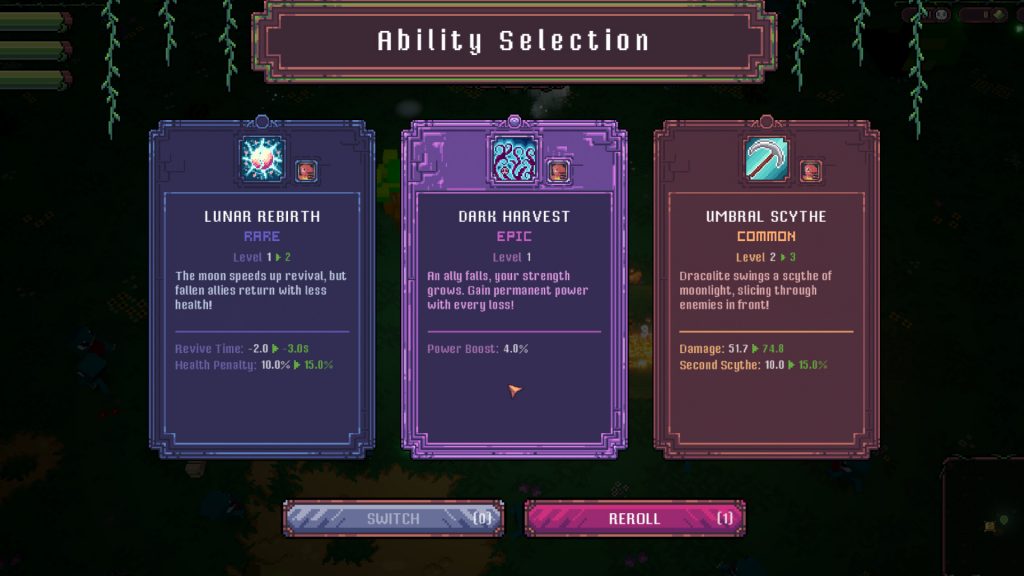
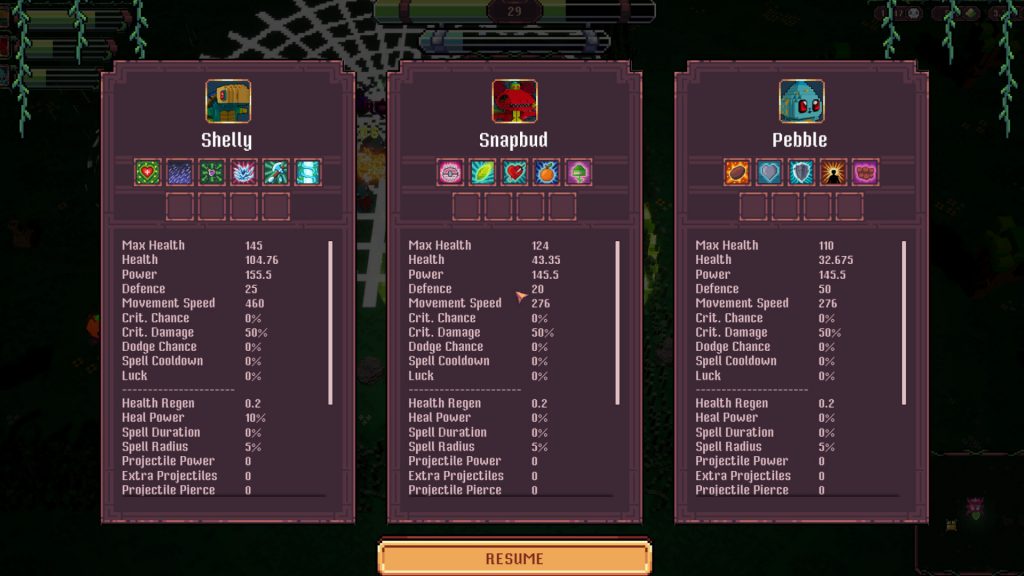
The role differentiation among the 8 Luminas provides the party composition vocabulary. Glass Cannon types deal maximum damage at the cost of survivability — they need party members who can protect them long enough for their damage output to matter. Tanker types absorb threats and sustain, protecting the party but generating less direct output. The death-and-resurrection character introduces risk mechanics that the others don’t — building around death becomes a viable strategy when one party member specifically gains power from dying and returning.
These aren’t just different stat profiles. They’re different relationships to the gameplay situation that require different thinking about party composition. A Glass Cannon party is a glass cannon — high damage ceiling, low margin for error. A tanker-heavy party is durable but slow to close out encounters. The party composition IS the strategic decision before any skills or treasures are factored in.
The Synergy System
The specific mechanic of certain Lumina combinations triggering unique combo abilities is the most significant design claim Luminas is making. If implemented with genuine depth, this creates party composition as its own layer of build construction — not just “which three characters are strong” but “which three characters have interesting interactions with each other.”
This is the design logic that team-based roguelites pursue when they work: Monster Train‘s clan combinations, Cobalt Core‘s character pairings, Across the Obelisk‘s party dynamics. The best implementations create situations where the most interesting options aren’t the individually strongest choices but the combinatorially most interesting ones.
The 64 skills distributed across 8 characters give each Lumina approximately 8 skills on average, though the distribution presumably isn’t even. A party of 3 draws from a subset of those 64, and the treasure items and evolution paths shape which of those skills develop most strongly. The combinatorial space expands rapidly: 8 choose 3 gives 56 possible party compositions, each with different synergy combinations, and the 90+ treasure items intersect with those compositions in various ways.
Whether the implementation produces genuine emergent depth or primarily creates the appearance of variety will be the central Early Access evaluation question.
The Corruption System
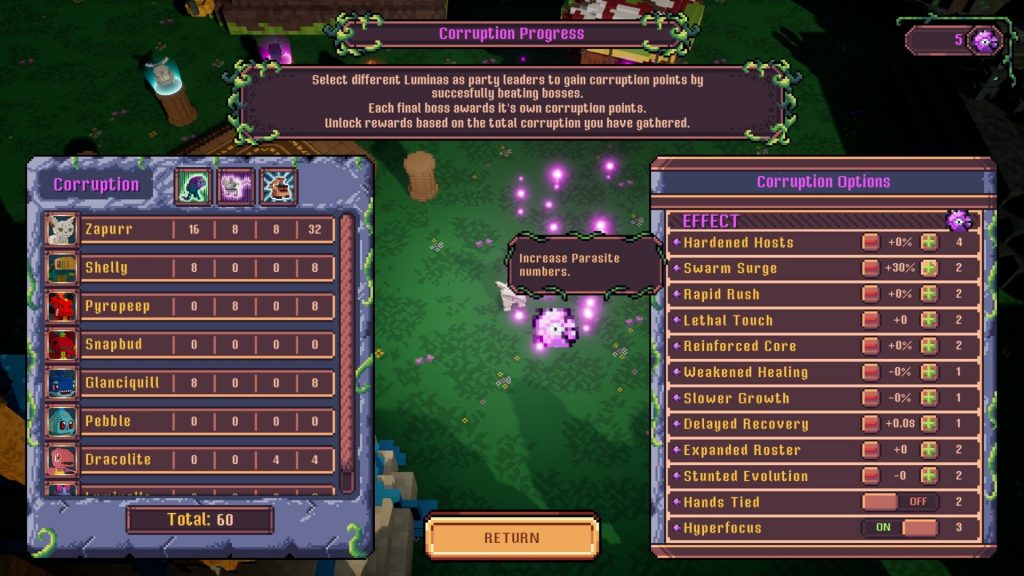
The Corruption mechanic — adding modifiers that increase enemy difficulty or introduce new variables — is the roguelite difficulty extension mechanism that separates players who want the standard difficulty progression from those who want to push the system’s limits.
This mechanic serves multiple design functions simultaneously. For players who find the default progression too easy, Corruption provides a scaling challenge without requiring separate difficulty modes. For players chasing optimal strategies, Corruption creates risk-reward decisions about accepting disadvantages in exchange for presumably greater rewards. For build theorycrafters, Corruption modifiers that interact specifically with certain builds create the “Corruption X is actually advantageous for Y build” discoveries that roguelite communities enjoy exploring.
The system also extends the game’s effective content depth beyond the raw numbers — 3 maps with 8 Luminas and 90 treasures have a certain combinatorial space, but adding Corruption modifiers to each run multiplies the situation variety that the base content can generate.
The Voxel Visual Strategy
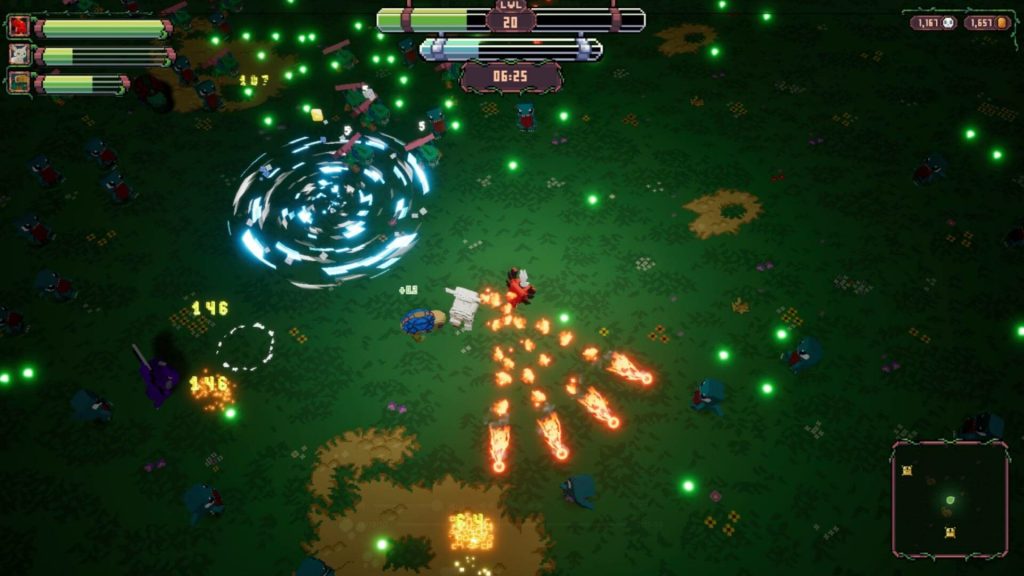
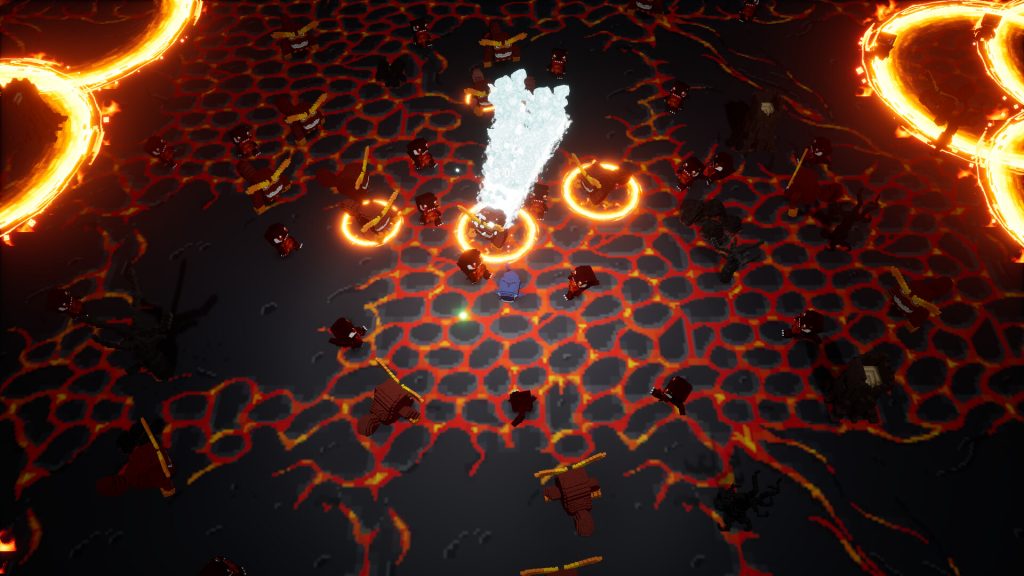
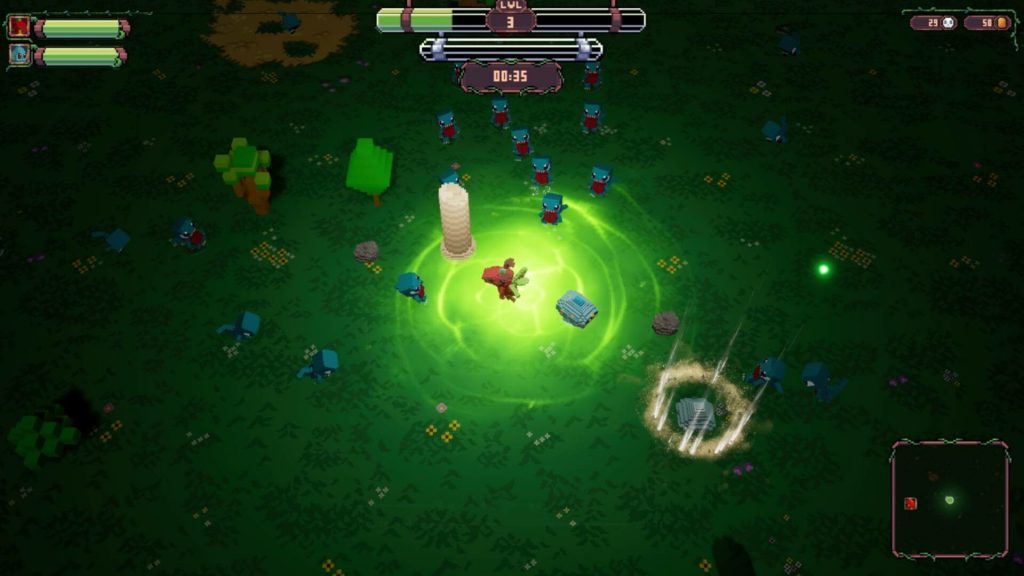
Voxel art in a bullet-heaven game addresses a specific readability problem. Games with hundreds of enemies simultaneously on screen create visual chaos that can obscure the gameplay-relevant information: where the player character is, where the dangerous enemies are, what projectiles are incoming. Voxel art’s blocky, high-contrast visual style tends to maintain object legibility at density levels where more detailed art styles become visually undifferentiated.
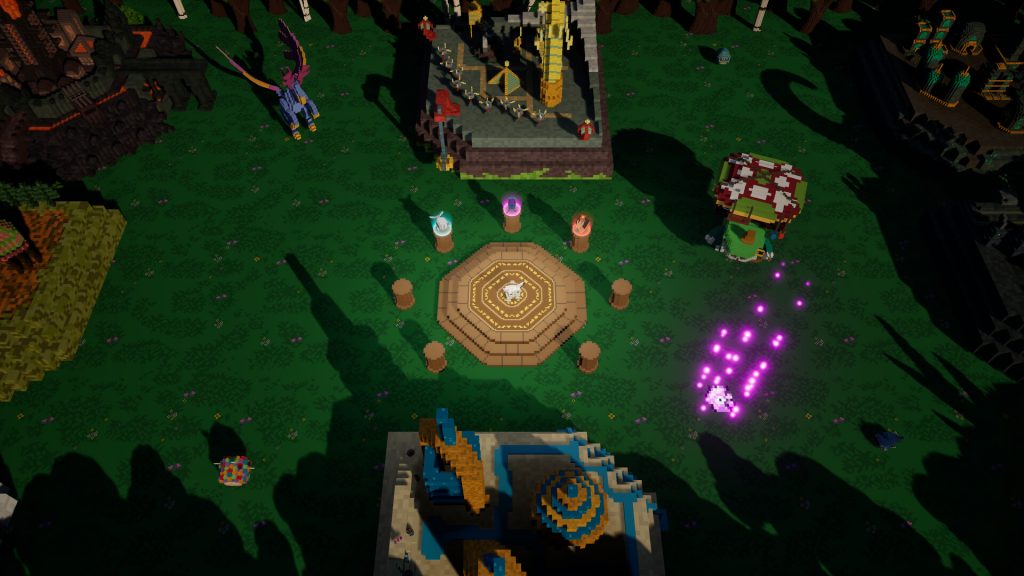
The three-biome structure also gives the voxel aesthetic visual variety that would be harder to achieve with a single environmental palette. Different biomes with distinct color ranges and environmental designs provide visual context that tells experienced players something about the challenge content they’re entering.
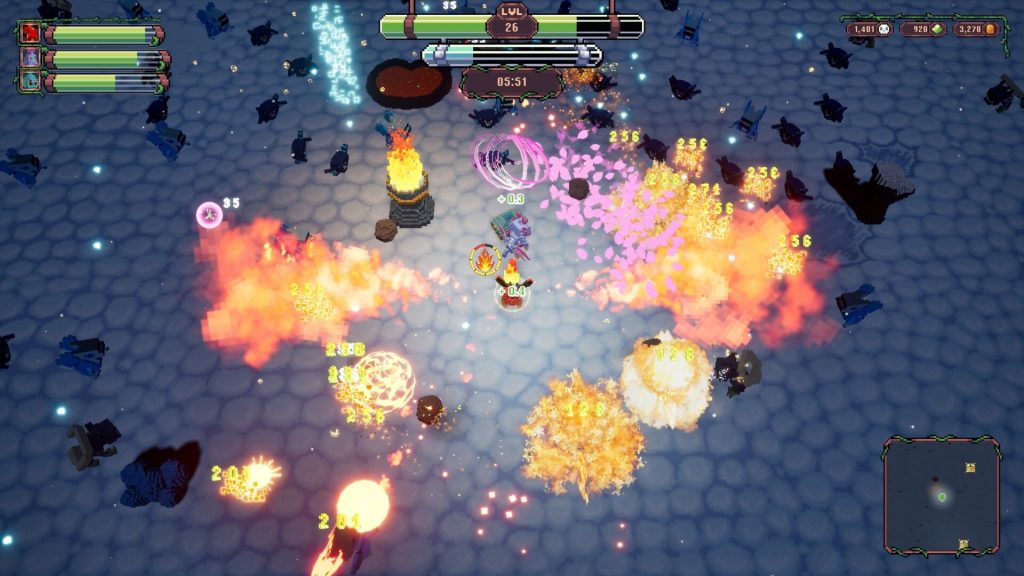
The elemental skill effects and combo ability visuals are described as adding visual satisfaction to the combat — which is the correct priority for a genre where the game is most enjoyed when what you’ve built feels spectacular in execution. The moment when an overpowered build generates screen-filling effects and hundreds of enemies disappear simultaneously is the genre’s peak satisfaction, and the visual design needs to make that moment feel as good as the mechanical achievement it represents.
The SOTO Game Studio Origin
Three friends from a digital agency in Athens — one with marketing experience, one with development, one with creative direction — deciding to build a roguelite together is the kind of origin story where the complementary skill set is immediately legible. A studio with all three functions covered from the start has a different structural foundation than studios heavy on development but light on design direction or commercial thinking.
The shared passion for roguelite as a genre provides the creative coherence that carries teams through the difficulty of first projects. Building what you genuinely want to play produces more motivated development than building what seems commercially viable, and for debut studios in competitive genres, the quality of creative investment often shows in the work.
The planned Early Access approach — direct Discord community engagement for feedback, planned additions of new modes, Luminas, skills, maps, and bosses — reflects awareness that Early Access success depends on treating the launch as the beginning of a development relationship with players rather than a finished product release. Three-person studios are also appropriately sized for responsive Early Access development: small enough that community feedback can quickly reach the decision-makers, agile enough to implement changes without large organizational overhead.
Who This Is For
Strong fit for: Vampire Survivors and bullet-heaven players specifically looking for more strategic depth than single-character builds provide; Cobalt Core and Monster Train fans who enjoy party-based roguelite synergy systems; players who specifically enjoy theorycrafting character combination possibilities; roguelite enthusiasts who want the wave-survival structure with more tactical decision space; voxel art appreciators; Early Access players who want to help shape a game’s development direction.
Cautious fit for: players who prefer the accessibility and simplicity of pure auto-attack survivor games and find party management adds unwanted complexity; Early Access skeptics who prefer waiting for full release; players who want competitive or cooperative multiplayer modes alongside single-player content.
Less ideal for: players who specifically dislike voxel art aesthetics; anyone who wants narrative-driven roguelites over pure mechanical engagement; players seeking action-RPG depth over bullet-heaven structure.
What to Watch For
A few questions will shape Luminas: Parasite Reign‘s Early Access trajectory.
The first is whether the combo synergy system delivers genuine emergent depth or primarily produces predictable optimal combinations. If a small number of party compositions dramatically outperform all others, the 56 possible compositions become irrelevant in practice. Whether the balance encourages genuine variety in what’s viable will determine the build variety’s actual depth.
The second is pacing across the 3 available maps. Early Access with 3 maps is a reasonable starting scope; whether those 3 maps provide sufficient variety to sustain engagement while additional content is developed will affect initial retention.
The third is the Corruption system’s balance between challenge and frustration. Modifiers that increase difficulty are engaging when they create interesting constraint situations and frustrating when they simply make the game harder without adding strategic interest. Whether the Corruption modifiers are designed for interesting situations or merely punitive challenges will affect how the difficulty extension is received.
The fourth is the Early Access content cadence. Three-person studios face genuine resource constraints on update frequency; how SOTO Game Studio manages the expectation gap between community desire for content and their capacity to produce it will affect the Early Access community’s long-term patience and support.
The Takeaway
Luminas: Parasite Reign is a focused debut that takes one specific design idea — building a party of three characters with meaningful synergies rather than a single character with accumulated abilities — and builds a complete survivor roguelite around it. The 8 Luminas, 64 skills, 90+ treasures, and 3 biome maps provide a solid Early Access foundation, and the Athens trio’s complementary backgrounds give the project structural advantages that many debut studios lack.
For bullet-heaven enthusiasts who have felt the genre’s depth ceiling — who have optimized single-character builds thoroughly and want more strategic complexity in their wave-survival sessions — the party-based architecture offers exactly that extension. Whether the synergy system delivers on its combinatorial potential, and whether the Early Access development relationship produces the content additions the format promises will determine if Luminas becomes a notable entry in the genre.
Solaris Land is overrun. The Parasites are endless. And somewhere in the party composition of three Luminas — a Glass Cannon who needs protection, a Tanker who provides it, and a resurrection-mechanic character who turns death itself into a resource — there’s a build that makes the impossible run finally work.
July 24. Build the party. Find the synergy.
Information regarding ‘Luminas: Parasite Reign’
| item | detail |
|---|---|
| Developer | SOTO Game Studio (Athens, Greece / 3-person team) |
| Genre | Single-player party-based survivor roguelite |
| Release platform | PC (Steam) |
| Release date | July 24, 2026 (Early Access) |
| graphic style | Voxel art |
| Playable character | 8 types of Lumina (Party consists of up to 3 people) |
| Skill count | 64 |
| Treasure Item | Over 90 types |
| Map | 3 biomes (including dedicated bosses and parasites for each) |
| Major systems | Party Building / Lumina Evolution / Combo Synergy / Corruption / Skill Tree |
| Main Keywords | Roguelite, Bullet Heaven, Party Strategy, Voxel, Survivor, Indie |
| Steam Page | Shortcut |