No timers. No quests. No failure conditions. Just a forest, a lake, a campfire, a loyal dog walking beside you, and the question of where exactly you’d like to set up your tent.
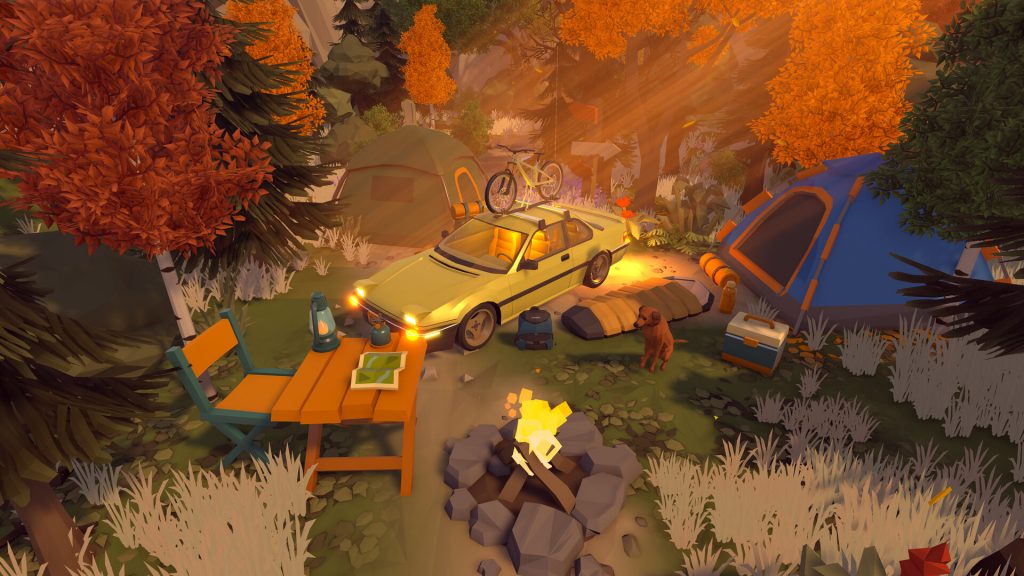
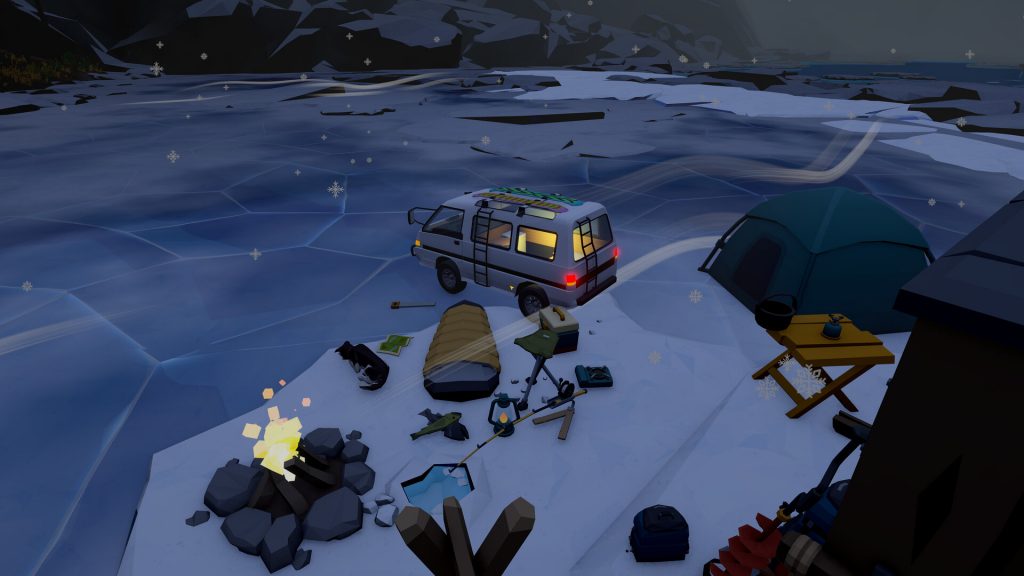
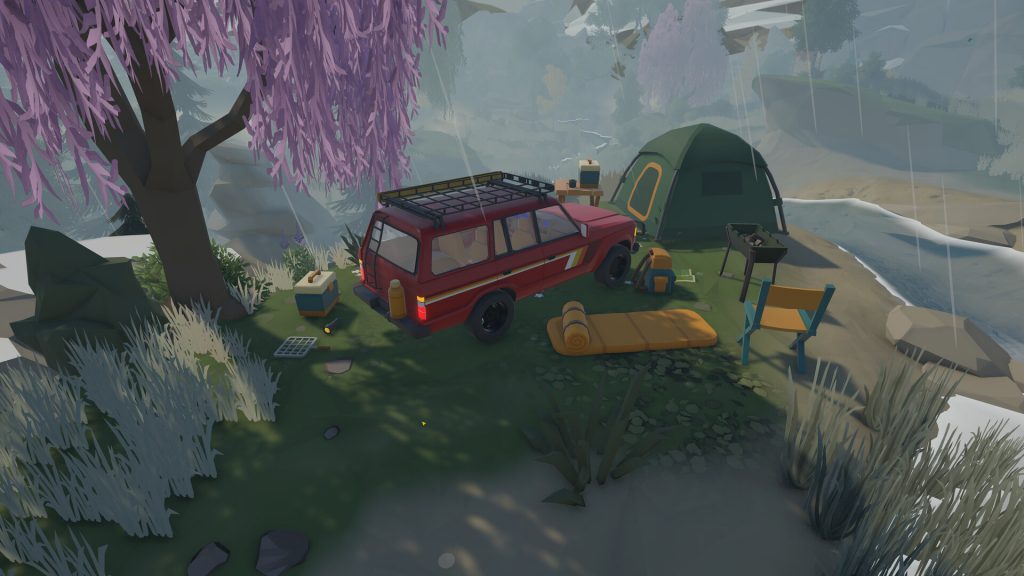
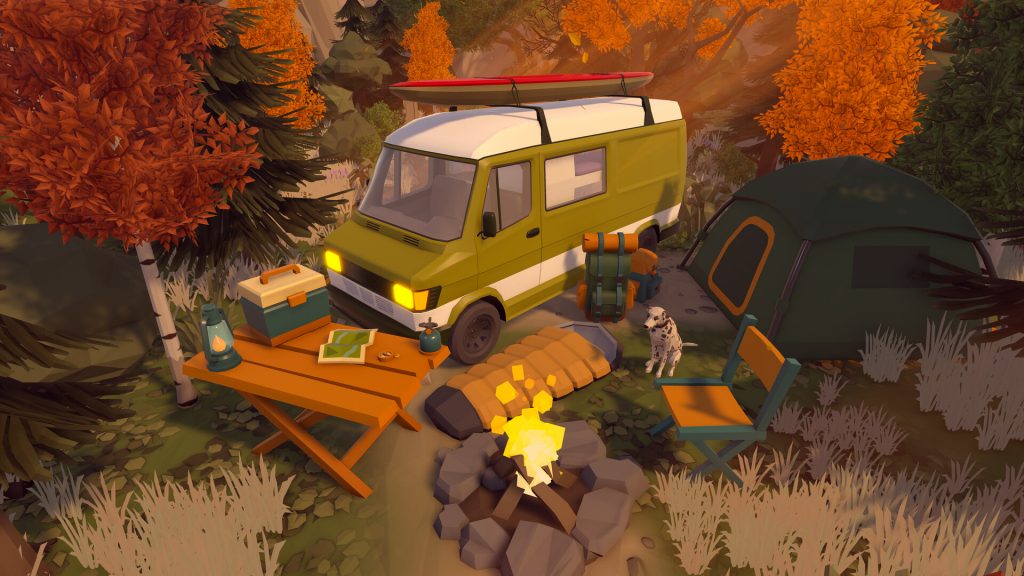
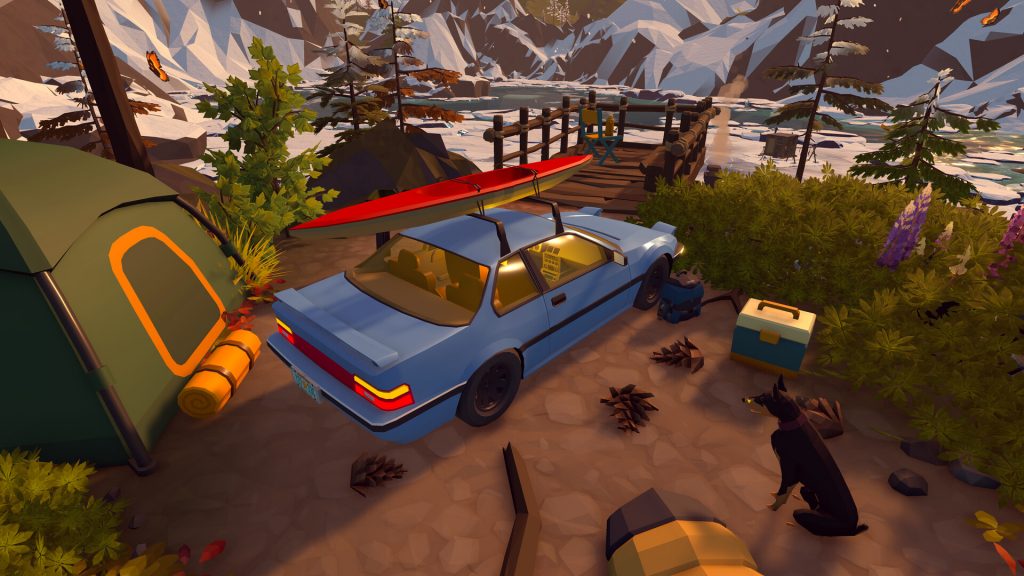
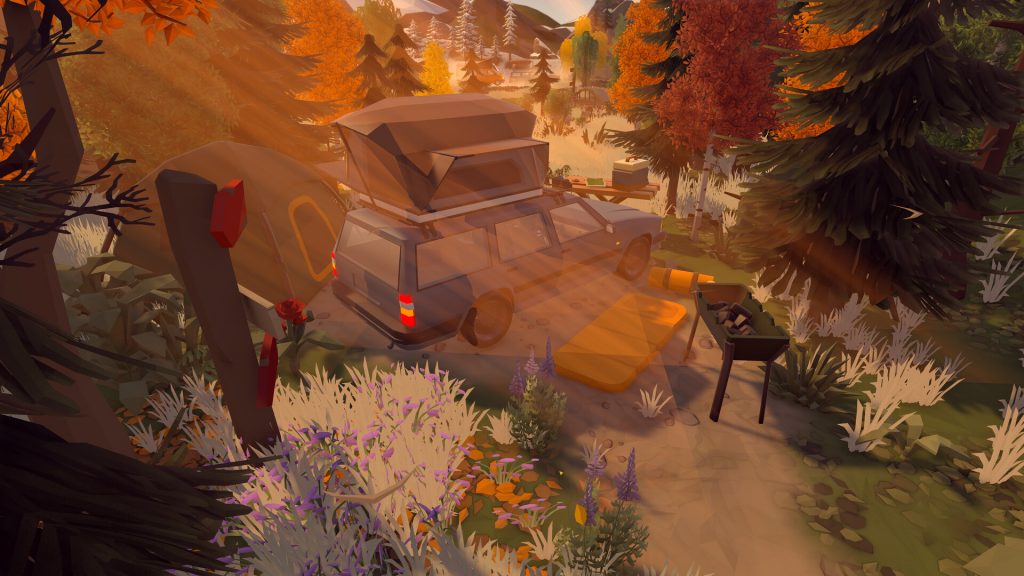
I Know a Spot, the debut project from Ukrainian solo developer Bohdan Kvas, arrives July 14 on Steam. The campsite building game offers the specific freedom of placing tents, tables, campfires, and camping equipment wherever feels right across naturally beautiful environments — forests, lakesides, snow-covered mountain slopes — with a companion dog who wanders the camp perimeter and reacts to the surrounding world.
The community comparison that has emerged since the demo release is precise: “If Tiny Glade is a game about decorating indoor spaces, I Know a Spot takes the same concept outdoors.” This captures the genre positioning exactly — cozy building without mechanical pressure, expressed through natural outdoor environments rather than architectural interiors.
The Pressure-Free Design Philosophy
The specific design choice to eliminate timers, quests, missions, and failure states is a meaningful commitment rather than an absence. Games that retain any of these elements, even in a limited form, create an underlying pressure that cozy game players are specifically trying to escape. I Know a Spot appears to have identified this clearly and eliminated the entire category.
The result is a game where every decision is aesthetic rather than strategic. Tent placement isn’t optimized for proximity to the fire ring; it’s placed where it looks right against the treeline. The vehicle parked beside the campsite is customized for appearance rather than stats. The dog companion has no needs to meet, no happiness meter to manage — it simply exists in the space, wandering naturally, occupying the camp with its presence.
This sounds simple and is actually difficult to design well. Games without objectives risk feeling purposeless — why am I doing this if nothing is tracking my progress? The answer that the best cozy builders provide is that the activity itself is the purpose, and the visible result of the activity (a campsite that looks the way you wanted it to look) is the reward. Whether I Know a Spot achieves this balance — making the placement and customization engaging enough to feel meaningful without any external validation structure — will be the primary evaluation question for its release.

The Sound Design as Atmosphere
The audio description in the game materials is specific in ways that signal intentional design rather than incidental sound effect work: crackling campfire, wind through leaves, the dog’s footsteps on the ground nearby. These are the ambient sounds specifically associated with a genuine camping experience — not the dramatic or musical sound design that makes games feel cinematic, but the quieter environmental sounds that make a space feel inhabited and real.
This distinction matters for healing games specifically. Dramatic music in a cozy game creates stimulation that works against the rest-and-decompress effect the game is trying to create. Environmental sounds that accurately simulate natural quiet — where the prominent sounds are fire and wind rather than composed music — create the specific auditory condition of being somewhere calm.
The dog’s footsteps as ambient sound is a particularly good detail. Pets in domestic space produce a specific kind of comfortable, companionable sound — the awareness of another living creature’s presence without the demands of direct interaction. A dog walking nearby while you set up the campsite is specifically the kind of background presence that makes solitary activity feel less lonely without making it social in ways that require engagement.
The Tiny Glade Lineage
Tiny Glade‘s 2024 release established a specific template for cozy builders that I Know a Spot is explicitly working within: building without mechanics, where the creative output is the entire value proposition. Tiny Glade achieved this by making the placement of building elements — walls, towers, cobblestones, vegetation — a genuinely satisfying activity through excellent visual feedback and procedural adaptation to placement choices.
I Know a Spot‘s outdoor camping context offers both advantages and challenges compared to the Tiny Glade template. The advantage is that natural environments have inherent visual interest that architectural elements need to earn — a well-placed tent against autumn foliage doesn’t require the same design sophistication to look appealing as a well-composed medieval courtyard. The challenge is that outdoor space is inherently less compositionally constrained than indoor space, which can make the building feel less purposeful.
Whether the campsite equipment — tent, table, campfire, camping gear — provides enough variety and visual combination potential to sustain creative engagement across extended sessions will determine how the Tiny Glade comparison ultimately holds up.
The Vehicle Customization
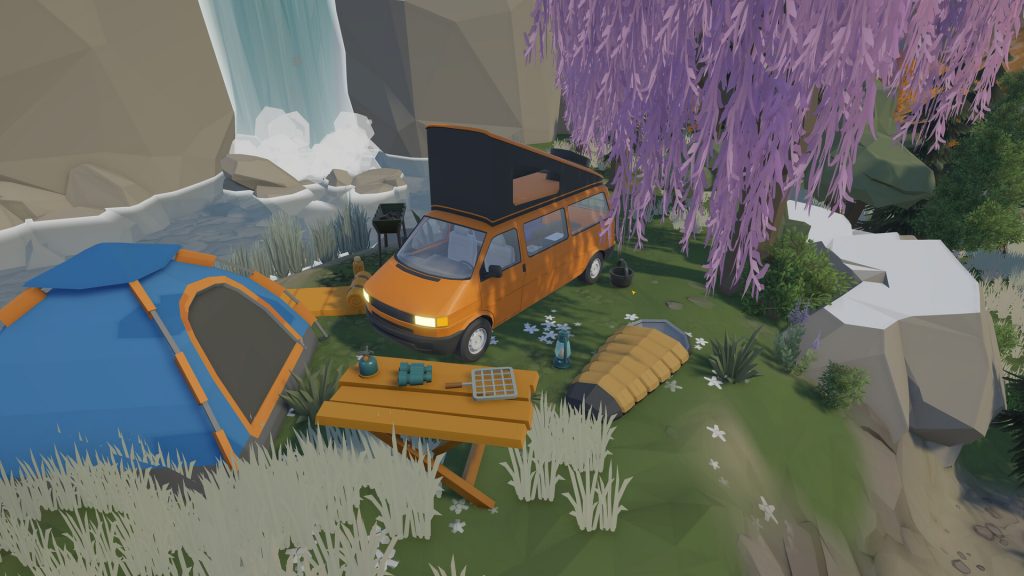
The inclusion of vehicle customization alongside campsite building is an interesting scope expansion. Vehicle choice with color, wheel, and accessory customization adds a layer of personal expression that extends beyond the campsite itself — the vehicle is part of the campsite’s visual identity, and its aesthetic relationship to the tents and equipment is a genuine creative consideration.
This element also suggests the game understands its specific audience. The van life and camping aesthetic communities that provide I Know a Spot‘s natural audience are specifically attentive to vehicle aesthetics as part of the camping lifestyle — the vehicle parked at the campsite isn’t incidental background but an integral part of the visual composition. Including it in the customization system acknowledges this rather than treating the vehicle as set dressing.
The Ukrainian Developer Context
Bohdan Kvas, developing a game about peaceful natural spaces and quiet companionship from Ukraine, carries emotional resonance that doesn’t need to be overstated but also shouldn’t go unacknowledged. Creating something specifically about calm, about finding a good spot, about the uncomplicated pleasure of a fire and a dog and natural surroundings, is a particular kind of creative act from a particular kind of circumstance.
This is the third Ukrainian indie project featured in recent coverage — alongside Woodo (Tiny Monks Tales) and The Road of Dust and Sorrow (Painted Black Games), representing radically different genres. Ukrainian creative work’s continued vitality across cozy healing games, wooden diorama puzzles, and survival horror demonstrates the breadth of creative output that continues despite difficult conditions.
Who This Is For
Strong fit for: Tiny Glade and ShantyTown players who specifically want outdoor natural settings; camping and van life enthusiasts who want a digital version of the campsite setup experience; cozy game fans who specifically want zero mechanical pressure; players who find even light gameplay objectives too demanding for genuine relaxation; dog owners or dog enthusiasts who appreciate companion animal presence in games; anyone who has felt the specific satisfaction of finding and setting up a perfect campsite.
Cautious fit for: players who need some form of objective or progression tracking to feel engaged; anyone who finds pure building without mechanical stakes insufficiently engaging over extended sessions.
Less ideal for: players seeking gameplay challenge of any kind; anyone who specifically dislikes building/placement games; players wanting narrative or character-driven content.
What to Watch For
The primary question for I Know a Spot is whether the campsite building variety is rich enough to sustain creative engagement across the game’s environments. Three key elements determine this: the number and variety of placeable items, the quality of how items visually interact with each other and the environment, and the variation across the different natural settings (forest, lake, mountain, seasonal).
The free demo currently available on Steam provides the most direct answer to this question for anyone considering the July 14 purchase.
The Takeaway
I Know a Spot is asking a simple question — can a game make you feel like you’ve found a good camping spot and set it up exactly right? — and building everything around delivering that specific feeling with no mechanical distractions. The Tiny Glade community’s warm reception of the concept, the favorable demo responses, and the clarity of the design philosophy all suggest Bohdan Kvas knows what experience he’s building toward.
For the players who specifically want the experience of a cozy outdoor space, a loyal dog at their side, and no particular place to be, July 14 is when that specific kind of quiet becomes available.
The crackling fire is already going. The dog is somewhere nearby. The tent is almost exactly where you wanted it, but maybe a few steps closer to the treeline.
That’s the whole game. That’s enough.
Information regarding ‘I Know a Spot’
| item | detail |
|---|---|
| developer | Bohdan Kvas (Ukraine, one-person development) |
| Genre | Cozy Campsite Building / Healing Simulation |
| Release platform | PC (Steam) |
| Release date | July 14, 2026 |
| demo | Free Steam demo available |
| core system | Free Campsite Building / Vehicle Customization / Dog Companion / Nature Exploration |
| Background environment | Forests, lakes, mountains, and seasonal natural environments |
| Game characteristics | No timer · No goal · No pressure play |
| Similar works | Tiny Glade, ShantyTown |
| Main Keywords | Cozy, Healing, Camping, Building, Dog, Nature, Solo Development, Indie |
| Steam Page | Shortcut |