The first commandment of bullet hell shooting games has always been clear: maintain distance from enemies. Stay safe, weave through patterns, pick off threats from afar, never get caught in the dense bullet clouds at the heart of the action. Brave Rounds, the just-released vertical-scrolling bullet hell from Jakarta-based PlayShift Games, breaks this commandment systematically — and it’s exactly the right kind of design provocation the genre has needed for years. Released June 4 on PC (Steam) and Nintendo Switch simultaneously, with a demo running June 8-15 during Steam Bullet Fest, Brave Rounds makes its central thesis immediately clear: the closer you get to enemies, the more damage you deal. Survival means courage, not caution.
For a genre that’s spent decades refining the “stay back and dodge” template, Brave Rounds‘ inversion isn’t just clever — it’s a meaningful design statement that connects directly to broader questions about how genre conventions calcify and what it takes to genuinely refresh them.
The Inversion: Why “Get Closer” Changes Everything
Bullet hell as a genre operates on specific psychological principles. The dense bullet patterns are designed to be threatening; safe spaces emerge only through careful pattern reading and precise movement. Players experience tension through proximity to danger and release through successful avoidance. The classical pattern (Touhou, DoDonPachi, Cave’s catalog) trains players to identify safe zones and maintain them.
Brave Rounds takes this trained instinct and weaponizes it against the player. The closer you get to enemies, the higher your damage output. Your trained instinct says “back away from danger.” The game’s reward structure says “advance into danger.” This conflict between learned behavior and required behavior creates exactly the kind of psychological friction that distinguishes innovative game design from genre exercise.
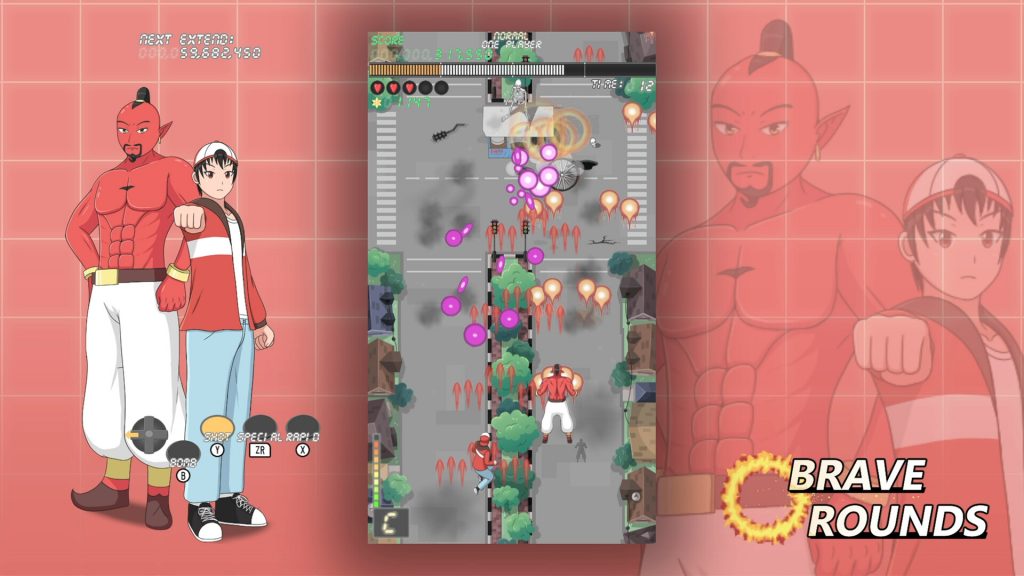
The implications extend throughout gameplay. Wide shots become less effective; focus shots and close-range engagement become more valuable. Bombs become critical resources for the moments when proximity goes wrong. Each character’s special abilities matter differently depending on whether they support close-range commitment or provide protection during exposure.
This design philosophy also addresses one of bullet hell’s persistent problems: the way pattern memorization can flatten skill expression at higher levels. Players who memorize bullet patterns can execute “safe” paths through encounters that minimize their actual engagement with the game’s tension. Brave Rounds makes that strategy mechanically suboptimal — you can still survive at distance, but you can’t excel without committing to proximity. Skill expression becomes about how much risk you can manage rather than how perfectly you can execute pre-planned paths.
The 20XX Setting and Visual Identity
The setting is described as “20XX” — a mysterious occult sci-fi world that draws on 2000s arcade and anime aesthetics. This specific era reference matters because the 2000s represented bullet hell’s commercial peak in arcades and home consoles. Cave’s Mushihimesama, DoDonPachi DaiOuJou, and Ketsui; Treasure’s Ikaruga; numerous Touhou releases; the broader Japanese arcade culture that defined the era. Brave Rounds‘ aesthetic explicitly invokes this period while applying contemporary execution standards.
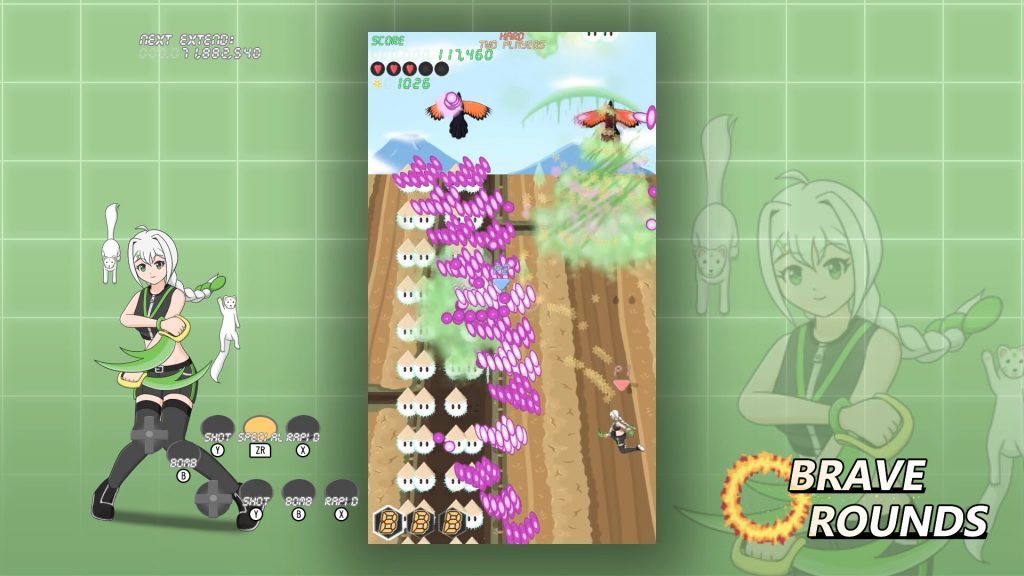
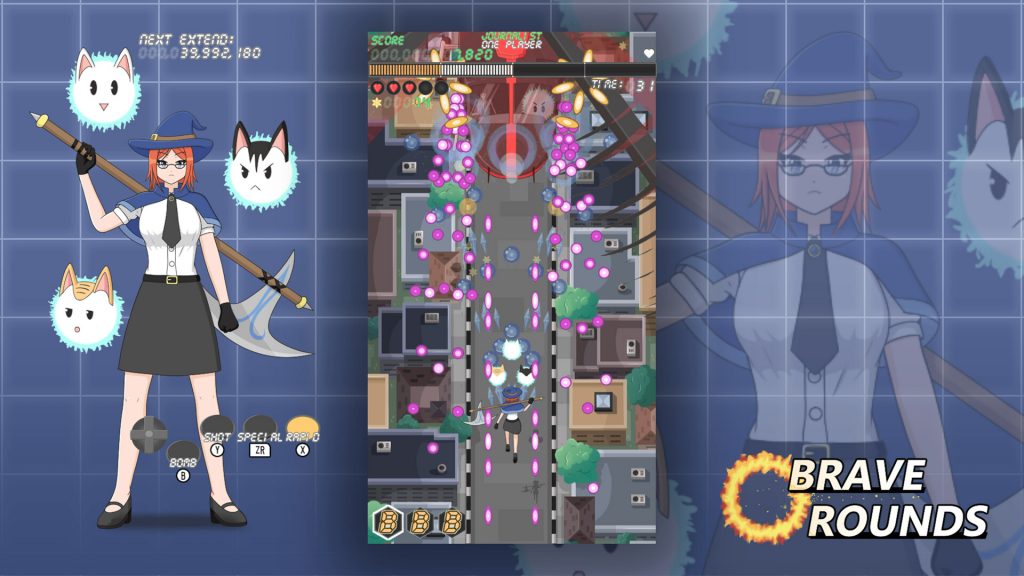
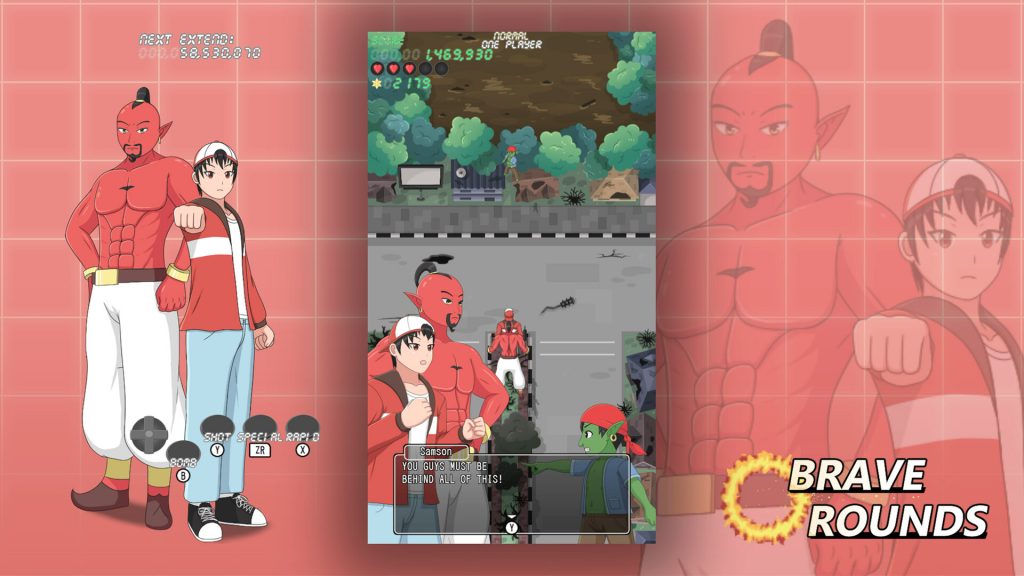
The high-resolution hand-drawn 2D artwork, combined with dynamic character animation, captures both the nostalgic register and modern presentation quality. The screen-filling bullet patterns and explosive effect work maintain the visual density that bullet hell requires — these games depend on visual saturation to create their distinctive tension, and Brave Rounds doesn’t compromise that intensity.
The anime-influenced character design connects to the genre’s cultural lineage. Bullet hell shooters have historically operated in anime-aesthetic territory through both Japanese cultural origin and visual register choices. Brave Rounds honors that tradition while bringing its own distinctive character work to the format.
The visual novel format used for story sequences adds another dimension. Bullet hell shooters typically minimize narrative content, focusing on pure gameplay intensity. Brave Rounds allocates significant space to character-driven storytelling through visual novel sequences, which expands the genre’s traditional emotional palette while preserving its mechanical identity.
The Multi-Composer Soundtrack
The three-composer soundtrack — Dicky Teja Pratama, Jasson Prestiliano, and Scowsh — deserves attention because soundtrack quality has historically been central to bullet hell appeal. The genre’s classical entries are remembered partly through their music; Cave games specifically established soundtrack quality as part of the developer’s identity.
Multi-composer approaches for individual games are unusual but can work well when scoped appropriately. Different composers bringing different sensibilities to different game sections (combat versus narrative, different stages, different emotional registers) can produce wider musical variety than single-composer projects typically deliver.
The combat sections reportedly leverage fast-tempo composition for intensity, while the visual novel-style story sections support character emotional content. This musical bifurcation matches the dual gameplay nature — combat and narrative require different emotional registers, and the soundtrack architecture serves both rather than compromising for either.
The Cooperative and Dual Control Modes
The multiplayer structure shows genre-conscious design. Standard 2-player co-op lets the second player control the “option” (sub-fire unit) directly — a classic bullet hell co-op approach that distributes offensive and defensive responsibilities across two players. This makes co-op meaningfully cooperative rather than just parallel play, since the players’ inputs combine into a coordinated strategy.
The Dual Control Mode allows a single player to control two characters simultaneously — a high-difficulty option that targets bullet hell enthusiasts seeking maximum challenge. This is the kind of feature that veterans appreciate while remaining optional for newer players. Bullet hell’s hardcore community values games that include challenge modes specifically designed for mastered players, and Brave Rounds explicitly serves this audience without compromising the experience for casual players.
The three playable characters provide variety across the modes. Different characters likely emphasize different play styles, weapon configurations, or special abilities — providing replay value through character variation in addition to score attack progression.
The Content Structure
The mode roster reflects mature design thinking about audience range:
Arcade Mode (5 stages): The classical bullet hell experience for players seeking traditional genre engagement.
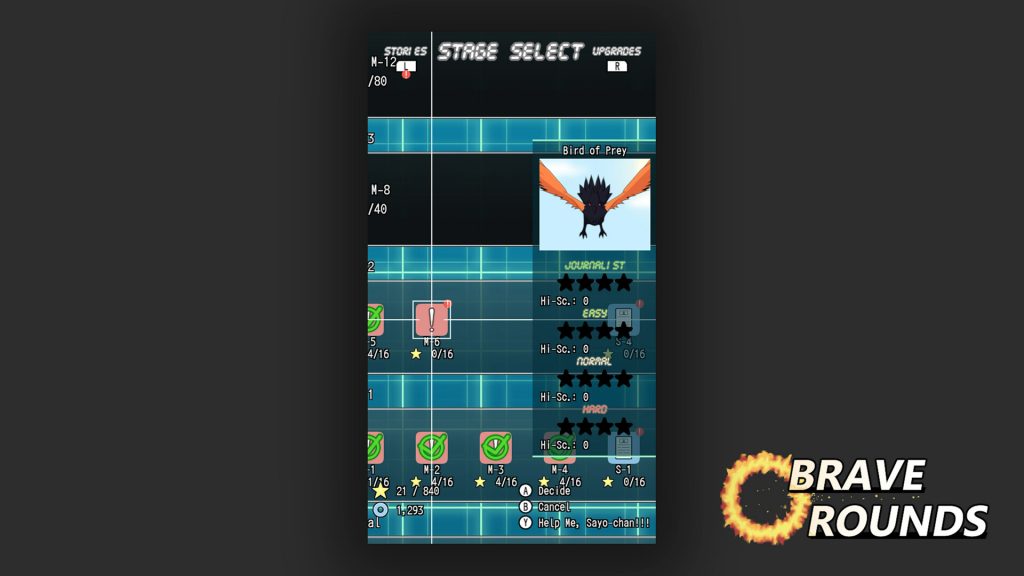
Story Mode (41 challenge stages): Substantially expanded content with upgrade systems, collection elements, and visual novel narrative integration. This is where Brave Rounds‘ narrative ambitions express themselves most fully.
Score Attack Mode: Pure mechanical mastery focus for players prioritizing leaderboard competition.
This structure addresses multiple audience segments simultaneously. Arcade purists get the focused traditional experience. Players seeking deeper engagement get the substantial story mode with progression systems. Score chasers get the pure mastery mode. Different players can engage with Brave Rounds according to their preferences rather than being forced into a single format.
The 41 challenge stages in Story Mode represent significant content for an indie bullet hell shooter. The genre typically delivers compact campaigns (5-7 stage arcade releases being standard); 41 stages of additional content means Brave Rounds offers genuinely substantial content beyond the traditional arcade structure.
TATE Mode and Veteran Features
The TATE (vertical) mode support deserves specific recognition. TATE refers to rotating the screen 90 degrees to play vertical-scrolling shooters in their native aspect ratio — a feature beloved by hardcore bullet hell enthusiasts who often rotate their actual monitors for the proper experience.
Including TATE support signals deep genre understanding. Casual bullet hell projects often omit this feature because it serves a small but committed audience segment. Including it demonstrates that Brave Rounds takes its veteran audience seriously and provides the technical features that enthusiast players require.
The replay system and rebindable controls represent similar quality-of-life commitments. These aren’t headline features, but their inclusion shows that PlayShift Games has thought carefully about what bullet hell players actually need from their games beyond the core gameplay loop.
The PlayShift Games Context
PlayShift Games is a bullet hell shooter specialist studio operated by wltr3565, a veteran shooter gamer. This specialist focus is significant. Studios that commit to specific genres typically deliver higher craft quality than studios attempting various formats simultaneously — the specialized knowledge accumulates across projects.
The 2022 release of Hell Blasters established the studio’s competence and provided the foundation for Brave Rounds‘ more ambitious approach. Hell Blasters experimented with adding story elements to bullet hell; Brave Rounds extends this experimentation significantly while maintaining the developer’s commitment to the genre’s mechanical foundations.
For Indonesian indie development specifically, Brave Rounds represents one of the more visible international releases. Indonesia’s indie scene has been growing, but hasn’t yet achieved the visibility of neighboring Southeast Asian regions. A Jakarta-based studio releasing on PC and Nintendo Switch simultaneously, with substantial press attention, contributes to Indonesia’s growing indie gaming presence.
The “veteran shooter gamer turned developer” origin story is particularly resonant for the bullet hell genre. The genre’s enthusiast culture values developers who genuinely understand what makes bullet hell satisfying at the deepest mechanical level. wltr3565’s player-first background suggests the kind of design priorities that bullet hell fans appreciate: respecting the genre’s traditions while finding meaningful innovation within them.
Press Reception
International gaming media have noted Brave Rounds‘ distinctive approach. The combat system that requires advancing toward danger rather than fleeing from it has been highlighted as the key differentiator from traditional bullet hell games. The combination of Indonesian indie origin and distinctive design philosophy has generated interest beyond the genre’s typical commercial visibility.
The Steam Next Fest February 2026 appearance and the upcoming Steam Bullet Fest demo participation (June 8-15) provide structured discovery opportunities. The Bullet Fest specifically targets bullet hell enthusiasts who are most likely to appreciate Brave Rounds‘ design innovations, positioning the game for community discovery within its primary audience.
Who This Is For
Strong fit for: bullet hell shooter veterans seeking innovative variations on familiar formulas; Cave game fans and Touhou enthusiasts who appreciate genre depth; players who enjoyed Crimzon Clover, ZeroRanger, or similar modern bullet hell projects; cooperative shooting game enthusiasts; players who specifically enjoy high-skill-expression games; score attack and leaderboard chasers; Indonesian indie scene followers.
Cautious fit for: casual shooter fans who prefer accessible action over high-skill demands; anyone who finds traditional bullet hell intimidating.
Less ideal for: players who avoid bullet hell as a genre due to visual density concerns; anyone seeking simplified shooter experiences; players who prefer 3D shooters over 2D vertical scrollers.
What This Means for the Genre
Brave Rounds arrives during an interesting moment for bullet hell as a genre. Cave, the genre’s commercial leader during its 2000s arcade peak, has reduced new development significantly. Touhou continues producing community works but operates outside mainstream commercial channels. Modern bullet hell development has largely shifted to indie studios working with a smaller scope but often impressive craft (ZeroRanger, Drainus, various others).
Brave Rounds‘ contribution to this landscape isn’t just another genre entry — it’s a meaningful design provocation. By inverting the “maintain distance” principle, the game challenges players and developers to reconsider what bullet hell’s mechanical foundations actually require. The genre has spent decades refining the dodge-and-shoot template; Brave Rounds suggests there’s still significant unexplored territory within bullet hell’s basic format.
For the broader indie scene, Brave Rounds demonstrates how genre specialists can contribute meaningful innovation while remaining committed to specific formats. PlayShift Games’ specialization in bullet hell shooting has produced sequential improvements across releases rather than scattered experimentation across genres. This kind of focused specialization typically produces deeper craft than studios attempting too much breadth.
What to Watch For
A few questions will shape Brave Rounds‘ longer reception.
The first is whether the “get closer for more damage” mechanic delivers genuinely satisfying gameplay across the full game scope. The concept works in theory; whether the execution sustains across 41 challenge stages and various difficulty levels will determine whether the design philosophy succeeds beyond initial novelty.
The second is the balance between accessibility and challenge. Bullet hell’s reputation for high difficulty can intimidate newcomers; Brave Rounds‘ close-range mechanic potentially adds another layer of complexity. How well the game introduces these systems to less experienced players will affect its commercial reach.
The third is community competition development. Score Attack Mode’s value depends on active competitive communities engaging with leaderboards over time. Whether Brave Rounds builds the kind of competitive community that bullet hell veterans value will affect its long-term cultural standing.
The fourth is PlayShift Games’ continued trajectory. With Hell Blasters establishing the studio and Brave Rounds extending the design ambition, the question is what comes next. Studios that maintain genre specialization while continuing to innovate within it typically build the kind of reputation that supports sustainable indie careers.
The Takeaway
Brave Rounds is one of the more genuinely interesting bullet hell shooters of recent indie release, combining genre-conscious design (TATE support, replay systems, cooperative modes), meaningful innovation (the close-range damage mechanic that inverts genre tradition), substantial content scope (41 challenge stages, multiple modes, three characters), and craft commitment across multiple dimensions (hand-drawn artwork, three-composer soundtrack, visual novel narrative integration).
For bullet hell veterans, this is a clear recommendation. The combination of genre respect and design innovation is exactly what the genre needs more of, and PlayShift Games’ specialist focus produces the kind of attention to detail that veterans appreciate.
For newcomers to bullet hell, Brave Rounds offers an interesting entry point. The visual novel narrative elements provide context that traditional bullet hell minimizes, and the multiple difficulty options should accommodate players still developing their bullet hell skills.
For the Indonesian indie scene, Brave Rounds represents another step in the country’s growing international gaming presence. A specialist studio delivering simultaneous PC and Nintendo Switch release with substantial international press attention contributes meaningfully to Indonesia’s indie gaming visibility.
Bullet patterns that fill the screen. Three playable characters. 41 challenge stages of content. The fundamental inversion of genre tradition: get closer to win. A veteran shooter gamer’s design vision realized through a specialist studio craft. Simultaneous PC and Nintendo Switch release. TATE mode for the hardcore enthusiasts. Three composers building energy and emotion across combat and story.
As bullet hell shooter pitches go, Brave Rounds‘ is one of the most genuinely thoughtful of recent years — and the execution appears to honor the conceptual ambition. The Steam Bullet Fest demo (June 8-15) provides an immediate evaluation opportunity for players curious about whether the design innovations actually work in practice.
The bullet patterns are waiting. The optimal range is closer than instinct suggests. And one of the more genuinely innovative bullet hell releases of 2026 is asking players to overcome their training and discover what the genre can do when its cardinal rules get rewritten.
Information regarding ‘Brave Rounds’
| item | detail |
|---|---|
| Developer / Publisher | PlayShift Games (Jakarta, Indonesia / Developer: wltr3565) |
| Genre | Vertical Scrolling Bullet Hell Shooting / Arcade Action / Visual Novel |
| Release platform | PC (Steam) / Nintendo Switch |
| Release date | June 4, 2026 |
| Play Mode | Solo / 2-Player Co-op / Dual Control Mode |
| Playable character | 3 types |
| Main Mode | Arcade Mode (5 stages) / Story Mode (41 Challenge stages) / Score Attack Mode |
| Soundtrack | Dicky Teja Pratama / Jasson Prestiliano / Scowsh |
| Public history | Steam Next Fest February 2026 / Steam Bullet Fest 2026 (June 8–15 Demo) |
| Previous work | Hell Blasters (2022, Steam·Itch.io·Nintendo Switch) |
| Support features | TATE / Vertical Mode / Replay / Rebindable Controls |
| Main Keywords | Bullet Hell, Shooting, Close Range, Co-op, Arcade, Animation, 20XX, Krakatau |
| Official Channel | X(@PlayshiftG) · Discord · YouTube |
| Steam Page | Shortcut |