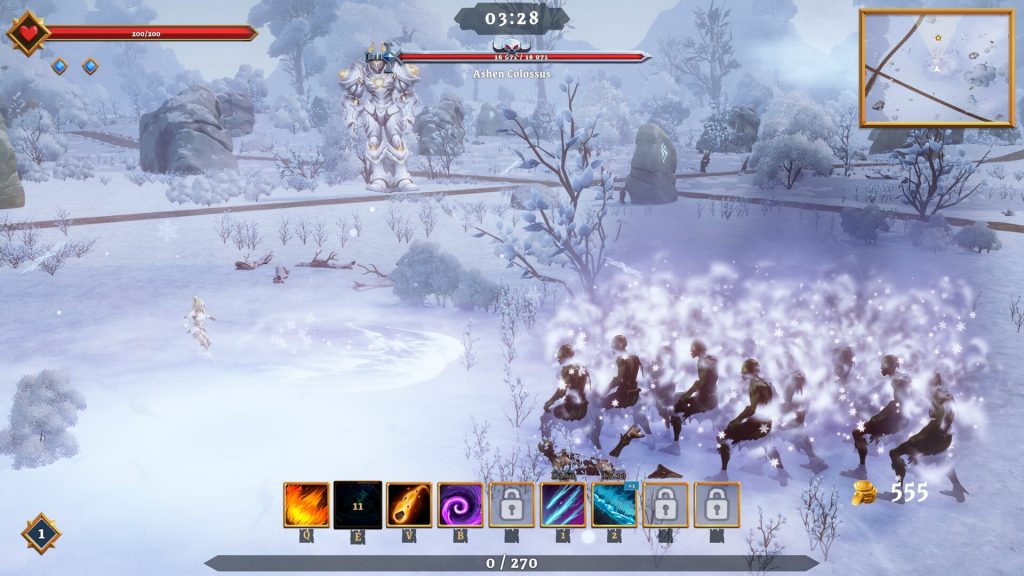
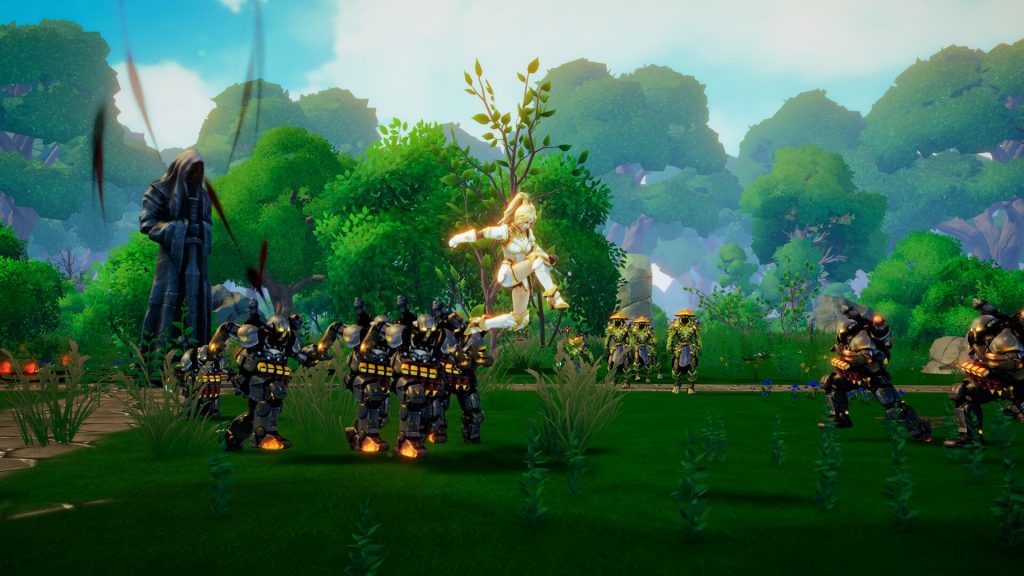
While automatic weapons handle the enemies, the player makes the more important decisions. Which weapon to grow, which abilities to choose, and — at the decisive moment — when to unleash the ultimate. Where Giants Fall, the new 3D top-down vampire-survivors-like action roguelite from indie studio Everclear Games, enters the bullet heaven market (a genre Steam recently designated officially) with a design philosophy that aims to add genuine strategic depth to a genre often criticized for passive gameplay.
The project’s central proposition: where conventional vampire-survivors-like focus on automatic attacks and passive growth, Where Giants Fall introduces manual ultimates and active skills as core systems, pursuing deeper strategic engagement. Fast-paced run progression, procedurally generated fantasy battlefields, growing build systems, massive boss fights, and an endless mode form the core content.
The Bullet Heaven Evolution
Understanding Where Giants Fall‘s significance requires understanding the genre it’s iterating on. The “bullet heaven” or “vampire-survivors-like” genre — named after the genre-defining 2022 breakout Vampire Survivors — has become one of indie gaming’s most prolific categories. The core formula: automatic weapons attack enemies while the player focuses on movement and build choices, surviving against escalating enemy hordes.
The genre’s appeal is its accessibility combined with built depth — anyone can play (the attacks are automatic), but mastery comes through understanding weapon synergies and build optimization. Vampire Survivors, Halls of Torment, Brotato, and dozens of others have explored this space, achieving substantial commercial success and establishing the genre enough that Steam now recognizes “Bullet Heaven” as an official genre tag.
But the genre also faces a persistent criticism: passivity. Because attacks are automatic, gameplay can feel like watching rather than playing — the player makes occasional build choices and steers their character, but moment-to-moment engagement can feel limited. Different games have addressed this differently, but the tension between accessibility (automatic attacks) and engagement (active gameplay) remains the genre’s central design challenge.
Where Giants Fall addresses this tension directly through its manual ultimate and active skill systems. The automatic attacks preserve accessibility; the manual ultimates and active skills add the moment-to-moment decision-making that pure auto-battlers lack. This is a thoughtful response to the genre’s core limitation.
The Manual Ultimate System
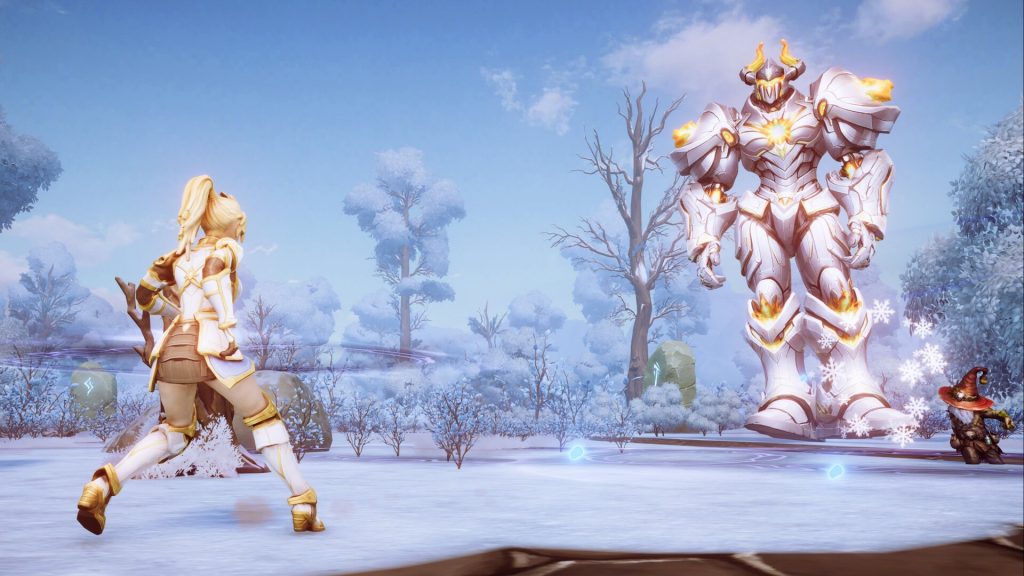
The most distinctive mechanical element of Where Giants Fall is its manual ultimate system. Every weapon has a 10-stage growth path, and reaching maximum level unlocks a unique ultimate ability. These ultimates aren’t automatic — the player decides when to activate them, and that timing decision can determine combat outcomes.
The weapon roster includes 11+ weapons, each with distinctive ultimates: Astral Fang’s “Starfang Tempest,” Manaburst’s “Singularity,” Chain Lightning’s “Tempest Ascension,” Frostwave’s “Glacial Wall,” Golden Gun’s “King’s Judgment,” and more. Each ultimate has its own cooldown, making activation timing a meaningful strategic decision.
This system fundamentally changes the genre’s engagement model. In conventional vampire-survivors-likes, reaching maximum weapon level produces automatic improvement — the weapon just gets better and continues attacking automatically. In Where Giants Fall, reaching the maximum level unlocks a tool that the player must deploy strategically. The decision of when to use each ultimate — saving it for a dangerous moment, combining multiple ultimates for maximum effect, using it to escape an overwhelming situation — adds the active decision-making that the genre often lacks.
The cooldown management across multiple ultimates creates the kind of resource management that distinguishes strategic depth from button-mashing. Players with multiple maxed weapons must decide which ultimates to use when, how to sequence them, and when to hold them in reserve. This transforms the late-game from passive watching into active tactical management.
The Active Skill Layer
Beyond the weapon ultimates, Where Giants Fall includes a separate active skill system that further deepens the strategic engagement. Skills like Frost Nova, Void Pool, Earthspike, Blink, Dragon Breath, and Blood Pact provide crowd control, survival, movement, healing, and area damage functions that players deploy actively.
These active skills determine build direction in ways that pure weapon selection doesn’t. A build emphasizing Blink (movement) plays very differently from one emphasizing Void Pool (crowd control) or Blood Pact (presumably risk-reward resource mechanics). The active skill selection adds a build-defining dimension beyond weapon choice.
The combination of automatic weapons, manual ultimates, and active skills creates three distinct engagement layers. The automatic weapons provide the genre-standard accessible foundation. The manual ultimates add timing-based tactical decisions. The active skills add real-time ability management. Together, these layers transform the typically passive vampire-survivors’ experience into something requiring continuous active engagement.
The optional Trial challenge content adds another progression dimension. Through Trials, players acquire new abilities or strengthen existing ones, experiencing different growth paths each run. This optional challenge content provides the kind of risk-reward decision-making that gives roguelite runs their distinctive tension.
The Procedural Fantasy Biomes
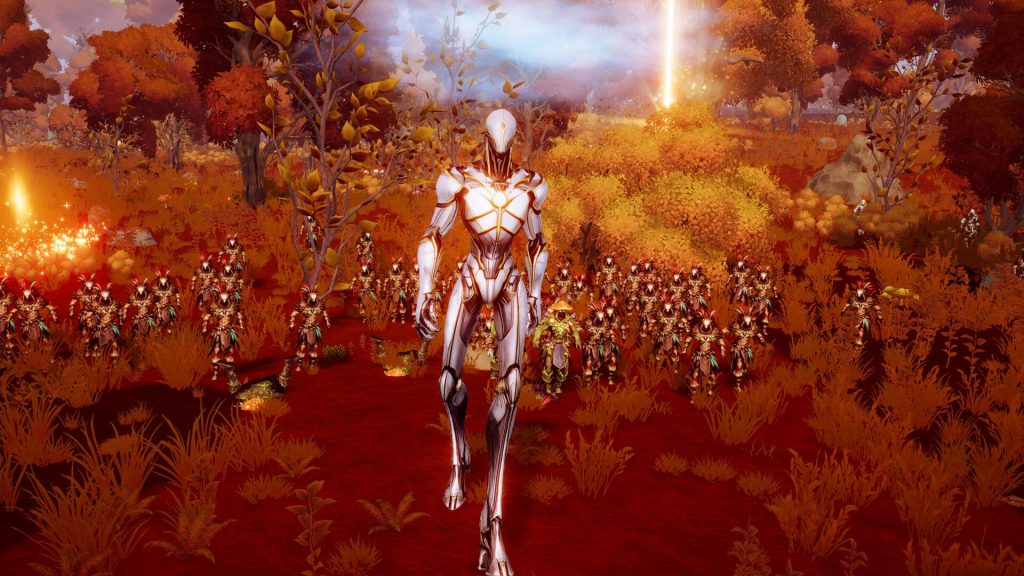
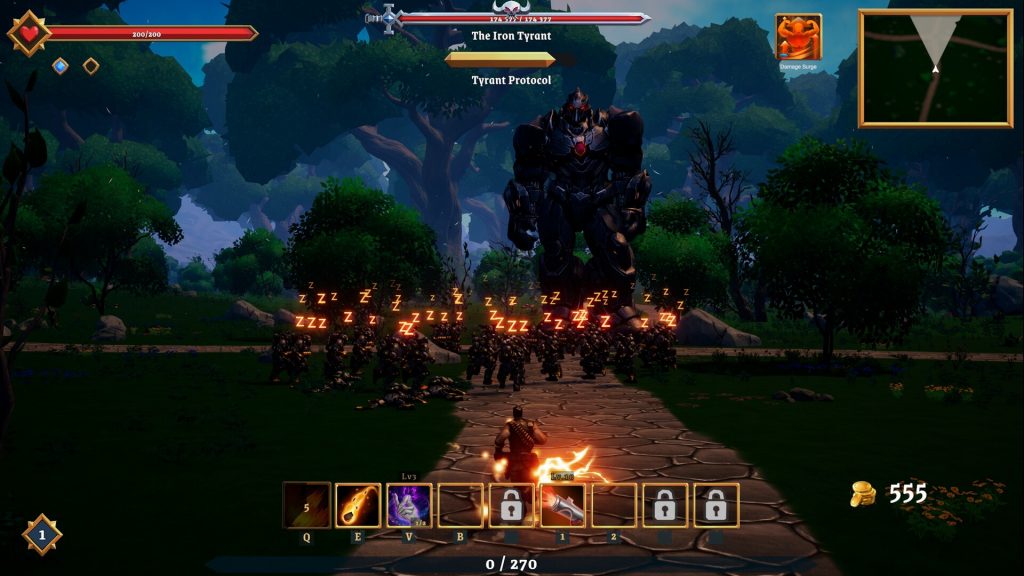
The world of Where Giants Fall is built on diverse fantasy environments that procedurally generate to create new battlefields each run. Seasonal forests that shift through winter, summer, and autumn, along with swamps, deserts, mountains, and volcanic terrain, are procedurally generated to produce varied combat spaces.
Crucially, each biome differs in more than just appearance. Enemy composition, combat atmosphere, and visual presentation all change between biomes. The volcanic region’s glowing red lava light, the swamp’s eerie mist, and the seasonal forests’ changing landscapes all maintain a strong presence even from the top-down perspective.
This biome variety addresses another common genre limitation. Many vampire-survival-like games confine players to single arenas or minimally varied environments, which can make extended play visually monotonous. Where Giants Fall‘s 6+ distinct biomes with different enemy compositions and combat atmospheres provide the kind of variety that sustains engagement across multiple runs.
The audio design reinforces the combat dynamics. When enemy hordes begin their assault, the music shifts to greater urgency. During the “Ritual Siege” phase that awakens the giants, tension reaches its peak. The intense sound effects at ultimate activation maximize the satisfaction of a completed build coming together. This dynamic audio approach makes the combat escalation viscerally felt rather than just visually presented.
The Ritual Siege and Giant Hunting
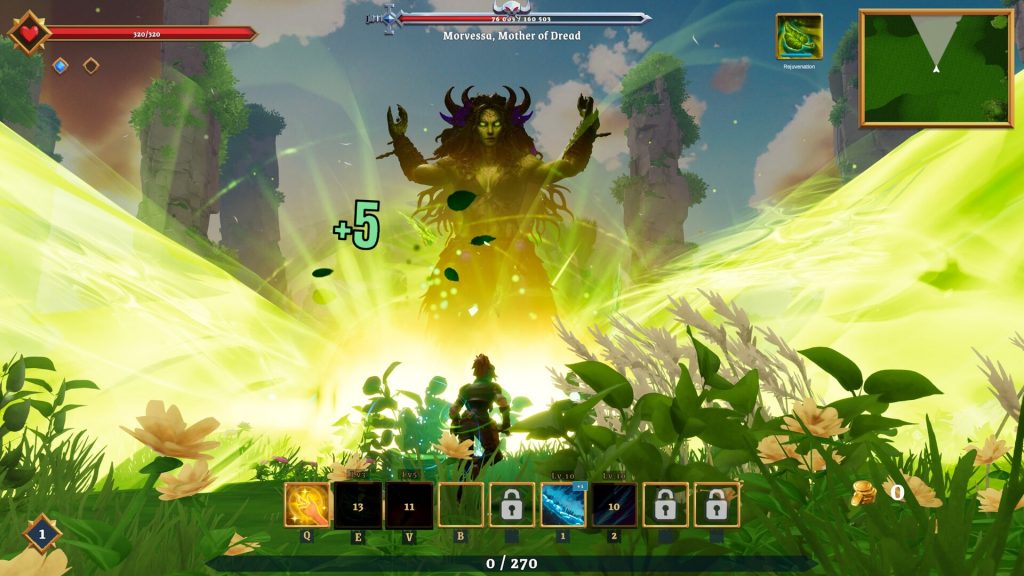
The run structure introduces distinctive escalation through the Ritual Siege and giant-hunting mechanics. Players survive and grow through standard stages, then must disrupt the Ritual Siege before the sleeping giant grows stronger. After defeating the giant boss, players move to a new biome, repeating the process.
This structure gives Where Giants Fall a clearer progression rhythm than the pure survival-timer approach of many genre entries. The giant-hunting objective provides concrete goals beyond just surviving — players have specific boss encounters to prepare for and defeat. The “disrupt the Ritual Siege before the giant strengthens” mechanic creates time pressure that adds urgency to the growth phase.
Giants and mini-bosses appear continuously throughout runs, applying constant pressure. This sustained boss presence distinguishes Where Giants Fall from genre entries where bosses are occasional interruptions. The continuous threat maintains engagement and gives the build progression clear purpose — players grow stronger specifically to handle the escalating boss challenges.
After defeating the final boss, endless mode opens. With a completed build, players aim to survive as long as possible and beat their records. This endless mode provides the score-chasing replayability that the genre’s enthusiasts appreciate, and the planned leaderboard system (coming at launch) will add competitive comparison that extends long-term engagement.
The Build Variety Systems
Where Giants Fall emphasizes building diversity through multiple interacting systems. Weapon upgrade tracks, passive items, upgrade drafts, beacons, wheel rewards, and optional trials all combine to produce entirely different builds each playthrough.
This build variety is essential for roguelite replayability. The genre lives on the “just one more run” compulsion that emerges when each run offers different build possibilities. The more meaningfully different builds a game enables, the more replayability it provides. Where Giants Fall‘s multiple interacting build systems suggest substantial build diversity potential.
The draft-based upgrade system specifically adds decision-making depth. Rather than purely random upgrades, draft systems present choices, letting players steer their builds toward specific strategies while adapting to what’s offered. This balance between player agency (choosing from drafts) and roguelite variety (the drafts themselves vary) provides the kind of build-crafting engagement that distinguishes strategic roguelites from pure luck-based progression.
The No-Microtransaction Commitment
One notable design decision deserves specific recognition: Where Giants Fall adopts a single-purchase complete-version structure without microtransactions. The developers explicitly frame this as focusing on the game’s core play experience.
This commitment is meaningful in the current gaming landscape. Many vampire-survivors-like, particularly on mobile, have embraced free-to-play models with aggressive monetization — energy systems, premium currencies, character unlocks behind paywalls. The genre’s accessibility has made it particularly susceptible to predatory monetization.
Where Giants Fall‘s single-purchase commitment positions it as a premium PC experience focused on gameplay rather than monetization optimization. For players frustrated by the monetization creep in many genre entries, this design philosophy represents exactly the kind of player-respecting approach that builds long-term goodwill. The complete version structure means players who purchase get the full experience without ongoing monetization pressure.
The Everclear Games Approach
Where Giants Fall is being developed by indie studio Everclear Games. The development philosophy centers on maintaining the vampire-survivors genre’s accessibility and addictiveness while implementing structures where player choices and intervention can change combat outcomes.
This design intention — preserving accessibility while adding strategic depth — represents the central challenge of evolving an established genre. Too much added complexity risks losing the accessibility that made the genre popular; too little added depth fails to address the passivity criticism. Where Giants Fall‘s layered approach (automatic foundation, manual ultimates, active skills) attempts to thread this needle by preserving the accessible base while adding optional depth.
The framing of “build research and optimal timing management as fun elements in themselves” reflects a sophisticated understanding of what makes roguelites engaging. The best roguelites make the meta-game of build optimization as engaging as the moment-to-moment gameplay. Where Giants Fall‘s emphasis on building research and timing mastery suggests the developers understand this dimension of roguelite appeal.
Who This Is For
Strong fit for: vampire-survivors-like enthusiasts seeking more strategic depth; Vampire Survivors, Halls of Torment, and Brotato fans wanting active engagement additions; players who enjoy build optimization and theorycrafting; roguelite enthusiasts who appreciate run variety; Steam Deck players (explicitly supported); players who prefer single-purchase games over free-to-play monetization; score-chasing competitive players (endless mode + leaderboards).
Cautious fit for: players who specifically enjoy the passive relaxation of conventional vampire-survival-like games (the added active engagement changes the experience); anyone who prefers minimal mechanical complexity.
Less ideal for: players seeking narrative-driven experiences; anyone who dislikes roguelite structure; players who prefer the pure automatic gameplay that Where Giants Fall deliberately moves beyond.
What to Watch For
A few questions will shape Where Giants Fall‘s development toward release.
The first is whether the manual ultimate and active skill systems achieve the right balance between accessibility and depth. The design intention is sound, but execution determines everything — whether the added active engagement feels rewarding or whether it complicates the accessible appeal that draws players to the genre.
The second is the build-to-order delivery. The multiple build systems suggest substantial variety potential, but whether the builds feel meaningfully different across runs or whether they converge toward optimal strategies will determine long-term replayability.
The third is the boss encounter design. The giant-hunting structure provides clear goals, but whether the boss fights feel genuinely challenging and satisfying — testing the player’s build and skill management — will significantly affect the experience.
The fourth is the endless mode and leaderboard execution. Score-chasing content lives on whether the scoring feels fair and the competition feels meaningful. How well these systems are implemented at launch will affect the long-term engagement that sustains roguelites.
The Takeaway
Where Giants Fall is one of the more thoughtfully designed vampire-survival-like evolutions on the horizon, addressing the genre’s central passivity criticism through layered active engagement systems while preserving the accessibility that makes the genre popular. The combination of manual ultimates (timing-based tactical decisions), active skills (real-time ability management), procedural fantasy biomes (6+ distinct environments), distinctive run structure (Ritual Siege and giant-hunting), and player-respecting monetization (single purchase, no microtransactions) represents a serious attempt to advance the genre.
For vampire-survival enthusiasts specifically, Where Giants Fall offers exactly the strategic depth additions that the genre’s more engaged players have been wanting. The manual ultimate system transforms the typically passive late-game into active tactical management, addressing the genre’s most persistent criticism directly.
For roguelite fans more broadly, the build variety systems, the procedural biome diversity, and the endless mode with leaderboards provide the replayability and progression depth that the genre’s enthusiasts appreciate. The single-purchase commitment ensures the experience respects players rather than optimizing for monetization.
For the bullet heaven genre’s continued evolution, Where Giants Fall represents the kind of thoughtful iteration that keeps established genres vital. Rather than just producing another vampire-survivors clone, Everclear Games is attempting to advance the genre’s design — preserving what works while addressing what doesn’t.
Automatic weapons are clearing the hordes. Manual ultimates held in reserve for the decisive moment. Active skills deployed for crowd control, survival, and movement. Giants awakening through Ritual Sieges that must be disrupted. Procedural biomes shift through seasons and terrains. Builds crafted from weapons, passives, drafts, beacons, and trials. And the endless mode is waiting for completed builds to chase records on the leaderboards.
As vampire-survivors-like evolution pitches go, Where Giants Fall‘s is one of the more genuinely strategic of 2026 — and the Steam page availability means interested players can wishlist now while Everclear Games builds toward the full release. The genre’s accessibility remains; the strategic depth expands; and the question of when to unleash the ultimate becomes the difference between surviving and falling.
The giants are sleeping. The Ritual Siege approaches. And the decision of when to act — which build to research, which ultimate to save, which skill to deploy — is what separates those who fall from those who bring the giants down.
Information regarding Where Giants Fall
| item | detail |
|---|---|
| Genre | 3D Top-Down Fantasy Bullet Heaven / Action Roguelite |
| Release platform | PC (Steam) |
| Payment methods | Single purchase (no microtransactions) |
| Weapon count | 11 types+ (10-stage upgrades each + Ultimate) |
| Active Skill | Frost Nova, Void Pool, Earthspike, Blink, Dragon Breath, Blood Pact, etc. |
| Biome | Seasonal Forest (Winter, Summer, Autumn) · Wetland · Desert · Mountain · Volcano (6 types+) |
| Run structure | Normal Stage → Ritual Siege → Boss Battle → Endless Mode |
| Major systems | Passive Ultimate (Unlocked at Level 10) / Active Skill / Build Draft / Beacon / Optional Trial |
| End content | Endless Mode + Run Completion Scoring + Leaderboard (Coming Soon) |
| Main Keywords | Bullet Heaven, Roguelite, Fantasy, Giant, Ultimate, Active Skill, Top-down, Build Depth |
| Steam Page | Go to Wishlist |