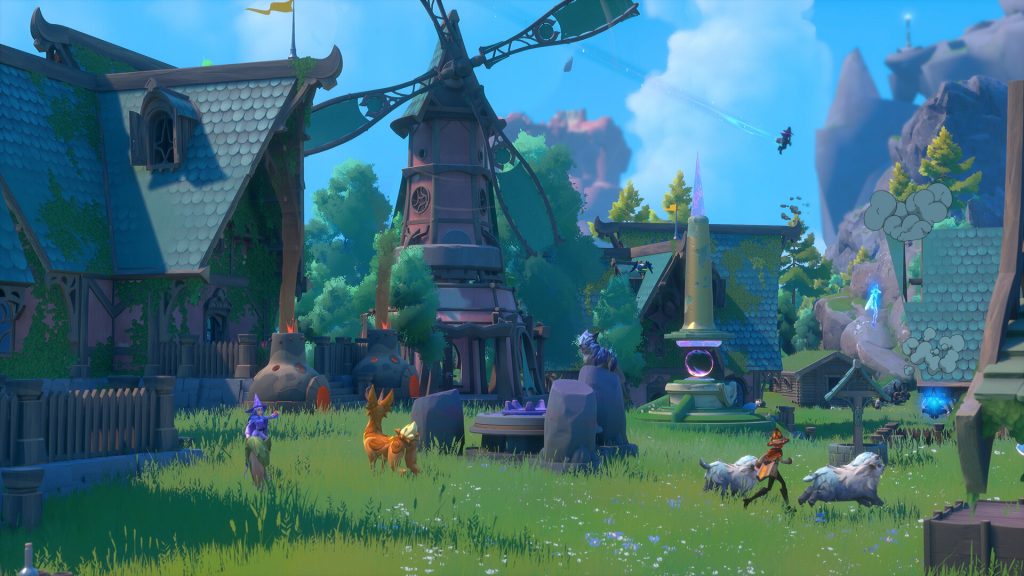
Fly across vast skies on a broomstick. Collect spiritual creatures as familiars. Build your own witch’s hideaway through astral projection. Chop entire trees with a single magical strike and summon ore comets to gather resources. Witchspire, the debut original IP from Stockholm’s Envar Games, launched into Steam Early Access on June 10 — and it carries the pedigree of developers who worked on League of Legends and Overwatch 2, along with 300,000+ wishlists that signaled substantial pre-launch anticipation.
The Early Access reception has been broadly positive with the kind of qualified criticism that Early Access projects typically receive — praise for the technical stability and magical reimagining of survival mechanics, alongside observations that the content distinctiveness hasn’t yet fully realized the project’s evident potential. For a debut original IP from an experienced team, Witchspire represents both impressive immediate execution and clear room for the kind of growth that Early Access exists to enable.
[Related Article: Wishlist Surpasses 100,000, Open-World Survival ‘Witchspire’ Demo Released]
The Magic-Reimagined Survival Foundation
The core design philosophy of Witchspire is its commitment to reimagining survival mechanics through magic rather than simply adding magical aesthetics to conventional survival gameplay. This distinction is meaningful and represents the project’s most interesting design contribution.
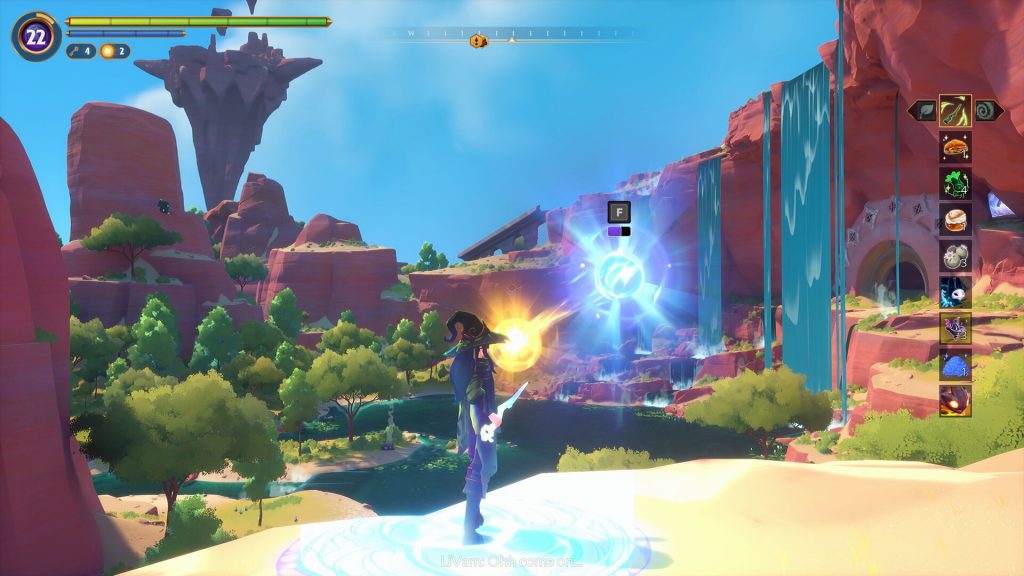
Conventional survival games involve repetitive resource gathering — chopping trees one swing at a time, mining ore deposit by deposit, the grinding labor that defines the genre’s early-game loops. Witchspire reinterprets all of this through magic. Players grow magical tools and wands, chop entire trees with single strikes, and summon comets made of ore to collect resources. The repetitive gathering and labor elements that define conventional survival games are substantially reduced.
This design approach addresses one of the survival genre’s most common criticisms — that the early-game resource grind is tedious busywork before the interesting building and exploration begins. By magicalizing the gathering process, Witchspire aims to reduce the tedium while maintaining the resource-acquisition progression that survival gameplay requires.
The developers explicitly framed their design question as “how can magic make the survival genre more fun?” rather than “how can we add magic to survival?” This framing distinction matters. The former question produces systemic reconsideration of genre conventions; the latter produces aesthetic reskinning. Witchspire‘s reduced grinding and magical resource mechanics reflect the more ambitious systemic approach.
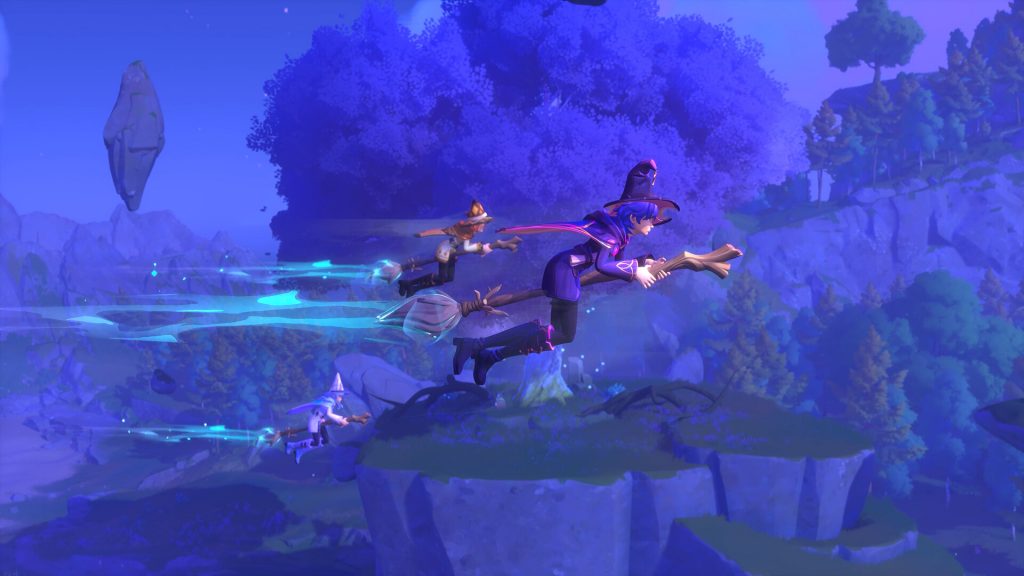
The movement systems extend this magical reimagining. Broomstick flight across the open sky provides traversal that grounds-based survival games can’t match. The astral projection system for building placement lets players design their witch hideaways with flexibility that physical-construction systems don’t allow. These systems reinforce the “everything reimagined through magic” philosophy.
The Familiar Collection System
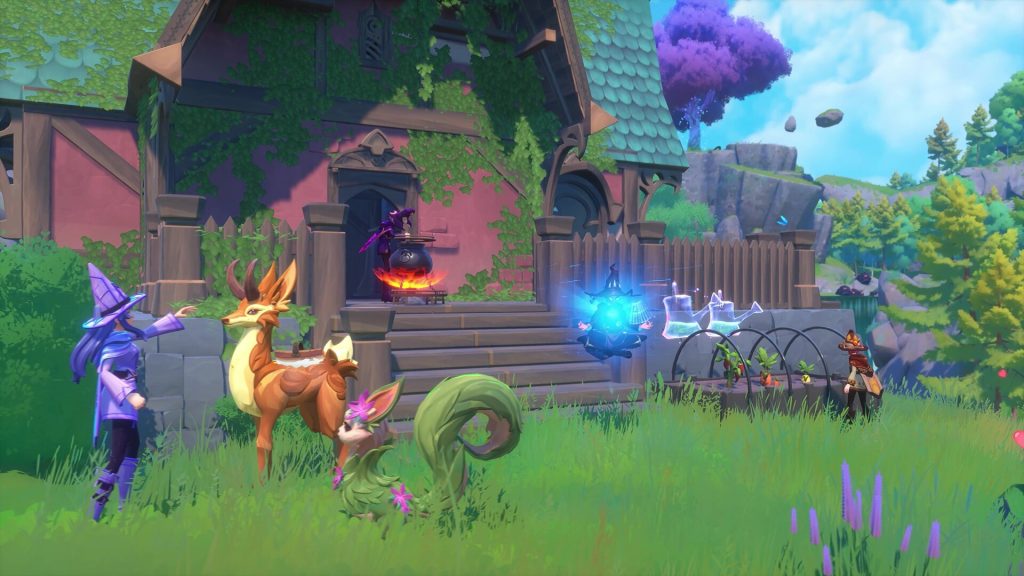
The most distinctive content system in Witchspire is the familiar collection mechanic. Spiritual creatures encountered in combat can be recruited as familiars, joining the player’s adventures or contributing to home base operations. The Early Access version includes 30+ familiars with different abilities that players can combine to build personalized playstyles.
This creature-collection dimension adds the kind of progression depth that pure survival crafting lacks. The familiar system creates collection motivation (gathering all 30+ creatures), strategic depth (combining different familiar abilities), and base-management utility (assigning familiars to home operations). The system provides multiple engagement vectors beyond the core survival loop.
The collection-and-combination approach has proven appeal across multiple genres — from Pokémon‘s creature collection to Palworld‘s recent fusion of creature collection with survival crafting. Witchspire‘s familiar system operates in this lineage while grounding it in the witch fantasy theme. The spiritual-creatures-as-familiars framing fits the witch aesthetic naturally — familiars are traditional components of witch folklore, which makes the collection system feel thematically integrated rather than mechanically imposed.
For players who enjoy creature collection specifically, the 30+ familiars provide substantial content, and the promise of more through Early Access development suggests the collection will expand. The combination of collection, strategy, and utility functions gives the familiar system depth that simple collection mechanics couldn’t achieve.
The Character Development Systems
Witchspire offers substantial character-building depth through multiple interconnected systems. At game start, players choose one of 6 Covens, each providing unique abilities and costumes. This initial choice establishes the character’s foundational identity and playstyle direction.
The cosmically-themed “Luminary” skill tree provides ongoing, detailed character development beyond the initial Coven choice. This progression system allows players to refine their characters across extended play, providing the kind of long-term growth that sustains engagement in survival RPGs.
The build variety extends to combat approaches. Magic-focused wand builds emphasize spellcasting from range. Spellblade builds combine magic with melee combat for players who prefer close-range engagement. This build diversity allows different players to pursue different combat identities within the same game framework.
The combination of Coven selection, Luminary skill tree progression, and combat build variety provides the kind of character customization depth that distinguishes RPG-survival hybrids from pure survival games. Players can develop genuinely different characters through these interconnected systems, supporting both replayability and personalized playstyle expression.
The Veteran Development Pedigree
The Envar Games team’s background provides important context for evaluating Witchspire. The studio operates under Envar Entertainment, which has collaborated with Riot Games, Blizzard Entertainment, and Tencent — some of the most significant companies in global gaming.
Developers who worked on League of Legends and Overwatch 2 bring specific expertise. These games represent some of the most technically sophisticated and commercially successful titles in modern gaming, requiring mastery of game feel, system balance, visual polish, and the kind of production quality that mass-market success demands.
This pedigree manifests in Witchspire‘s technical execution. ComicBook’s evaluation that the game “runs remarkably stably even at the Early Access stage” reflects the production discipline that experienced developers bring. Early Access games frequently launch in rough technical states; Witchspire‘s stability at launch reflects the team’s accumulated production competence.
The Stockholm location places Envar Games within the broader Nordic gaming ecosystem that has produced substantial commercial success (Mojang’s Minecraft, the broader Swedish gaming industry’s significant output). Sweden’s gaming development infrastructure, talent pool, and supportive ecosystem provide a foundation for studios like Envar Games to pursue ambitious original IP.
That this is the team’s first original IP is significant. Working on established franchises (League, Overwatch) requires different skills than creating original IP from scratch. Witchspire represents the team’s transition from contributing to others’ visions to establishing their own creative identity — and the substantial wishlist accumulation suggests the original vision resonated with audiences.

The Mixed Early Access Reception
The Early Access reception requires honest examination because it reveals both the project’s strengths and its current limitations.
Positive reception has emphasized technical execution and the magical survival reimagining. ComicBook praised the optimization and cooperative play experience, noting the surprising stability for Early Access. TheGamer described it as “the healing version of Valheim we’ve been waiting for,” specifically praising the magic-focused gathering systems. These evaluations recognize what Witchspire does well — stable technical foundation, the cozy magical survival experience, and the reduced-grind gathering systems.
Critical reception has focused on content distinctiveness. DualShockers noted that while the game “has an attractive witch fantasy world and familiar system,” it “hasn’t yet fully shown its potential.” Loot Level Chill observed that “while content is abundant, it doesn’t feel particularly original.” These critiques identify the project’s current key limitation — the systems are well-executed but haven’t yet achieved the distinctive identity that separates memorable games from competent ones.
This reception pattern is actually quite common for ambitious Early Access launches, and it’s worth understanding what it indicates. The technical foundation is strong (experienced team executing well). The systems are functional and enjoyable (magical survival, familiar collection, character building). But the content doesn’t yet feel distinctive enough to fully differentiate Witchspire from the broader survival crafting field.
The crucial context is that this is exactly what Early Access exists to address. The strong technical foundation provides the platform; the Early Access development period provides the opportunity to build the distinctive content that transforms competent-but-familiar into genuinely memorable. The 2-biome current scope will expand; the 30+ familiars will grow; the magical systems will deepen. Whether Envar Games successfully builds distinctiveness across Early Access development will determine the project’s eventual standing.
The Valheim Comparison
The Gamer’s “healing version of Valheim” framing deserves specific examination because it captures Witchspire‘s positioning precisely. Valheim became one of survival crafting’s defining recent successes through its combination of accessible survival mechanics, cooperative play, and atmospheric world. But Valheim maintains a genuine survival challenge — combat is dangerous, death has consequences, and the world is threatening.
Witchspire appears to target the Valheim audience while softening the survival challenge into cozier territory. The magical resource gathering reduces grind; the witch fantasy provides whimsical rather than harsh atmosphere; the familiar collection adds creature-collection comfort. For players who enjoyed Valheim‘s cooperative crafting but wanted a gentler, more whimsical experience, Witchspire offers exactly that alternative.
This positioning is commercially sensible. The cozy survival crafting space has grown substantially, and Witchspire‘s witch fantasy aesthetic, combined with reduced survival harshness, targets the expanding cozy gaming audience while maintaining the cooperative crafting depth that survival fans appreciate.
Who This Is For
Strong fit for: cozy survival crafting enthusiasts seeking magical themes; Valheim players wanting a gentler, more whimsical alternative; witch fantasy enthusiasts; creature-collection fans (the 30+ familiar system); cooperative players seeking 4-player magical sandbox experiences; players who appreciated Palworld‘s creature-collection-meets-survival but want witch aesthetics; anyone drawn to broomstick flight and magical traversal.
Cautious fit for: players seeking distinctive innovation over polished familiarity (the content distinctiveness criticism is real); anyone who specifically wants harsh survival challenge over cozy magical experiences; players who avoid Early Access games until full release.
Less ideal for: players seeking serious survival difficulty; anyone uninterested in creature collection or witch fantasy themes; players who require fully-realized content rather than Early Access works-in-progress.
What to Watch For
A few questions will shape Witchspire‘s Early Access development.
The first is content distinctiveness development. The primary critical concern — content that’s enjoyable but not distinctively original — is exactly what Early Access development can address. Whether Envar Games builds the distinctive content, unique systems, and memorable identity that transform competent into exceptional will determine the project’s eventual standing.
The second is biome and content expansion. The current 2-biome scope (Meadows, Shuddersands) will expand. How interesting, varied, and distinctive the new biomes feel will significantly affect whether the open world maintains engagement across extended play.
The third is the familiar system depth. The 30+ familiars provide good initial content, but whether the system develops meaningful strategic depth — familiars that genuinely change playstyles, combinations that create interesting tactics — will determine whether the collection mechanic becomes a defining strength or remains a pleasant feature.
The fourth is the community-requested feature integration. Envar Games has committed to adding community-requested features. How responsively the team incorporates player feedback will affect both the game’s development direction and the community engagement that sustains Early Access projects.
The Takeaway
Witchspire is a technically accomplished, enjoyable cozy magical survival adventure that launches Early Access with strong fundamentals and clear room for the distinctive growth that will determine its eventual standing. The combination of experienced development pedigree (League, Overwatch veterans), thoughtful design philosophy (magic-reimagined survival mechanics), substantial content systems (30+ familiars, 6 Covens, Luminary skill tree), and strong technical execution (notable Early Access stability) provides an impressive foundation.
For cozy survival crafting enthusiasts, particularly those drawn to witch fantasy aesthetics and creature collection, Witchspire offers immediate enjoyment with the promise of continued development. The magical reimagining of survival mechanics provides genuine differentiation from conventional survival games, and the cooperative play supports the social gaming that the genre’s enthusiasts appreciate.
For players seeking distinctive innovation, the honest assessment is that Witchspire hasn’t yet fully realized its potential — the content is enjoyable but not yet remarkably original. Whether this matters depends on individual preferences. Players who enjoy polished cozy survival will find immediate satisfaction; players who specifically want groundbreaking innovation may prefer to wait and see how Early Access development progresses.
For a broader gaming culture, Witchspire represents experienced developers successfully transitioning from established franchises to original IP. The substantial wishlist accumulation and broadly positive reception suggest the team’s creative vision resonates, and the Early Access foundation provides the platform for building toward the distinctive identity that the project’s evident quality suggests it can achieve.
A witch flying across open skies on a broomstick. Familiars gathered from across a magical world. Trees felled with single magical strikes. Ore comets are summoned to gather resources. A hideaway built through astral projection. 6 Covens, 30+ familiars, and a cosmic skill tree supporting personalized magical development. Cooperative play for up to 4 witches building their magical lives together.
As cozy magical survival pitches go, Witchspire‘s is one of the more polished of 2026 — and the Early Access availability means interested players can engage immediately while the development team builds toward the distinctive content that will determine whether Witchspire becomes a defining cozy survival experience or remains a pleasant entry in a crowded field. The foundation is strong; the potential is evident; the Early Access journey will reveal whether that potential becomes a reality.
The broom is ready. The familiars are waiting. The magical world spreads out beneath the open sky. And one of 2026’s more anticipated cozy survival releases has begun its Early Access journey, carrying veteran development pedigree and 300,000 wishlists toward whatever it ultimately becomes.
Information regarding ‘Witchspire’
| item | detail |
|---|---|
| Developer / Publisher | Envar Games (Stockholm, Sweden / Under Envar Entertainment) |
| Genre | Cozy Open World Magic Survival Adventure / Cooperative Crafting RPG |
| Release platform | PC (Steam Early Access) |
| Release date | June 10, 2026 (Early Access) |
| price | $22.99 (15% launch discount) |
| Wishlist | 300,000+ cases |
| Play Mode | Solo / Online Co-op Up to 4 players |
| Familiar number | 30 types+ |
| Coburn (starter class) | 6 types |
| Early Access Biome | Meadows / Shudder Sans (2 types) |
| Developer Background | Riot Games, Blizzard, and Tencent collaboration under Envar Entertainment |
| Main Keywords | Witch, Open World, Cozy, Survival, Co-op, Familiar, Broom, Crafting, Magic |
| Official Channel | Discord · Instagram · Bluesky · X · TikTok · Facebook · YouTube |
| Steam Page | Shortcut |