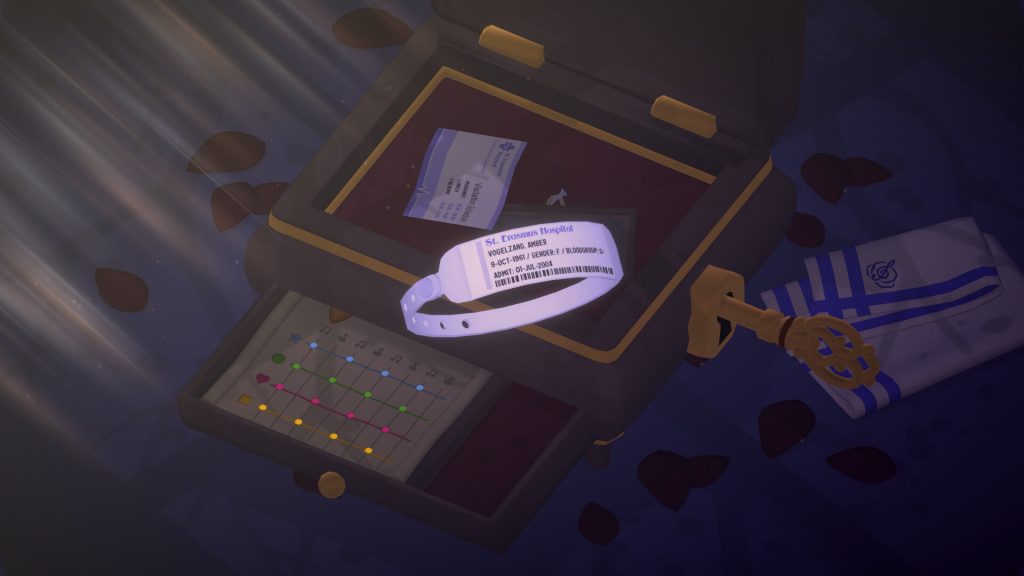
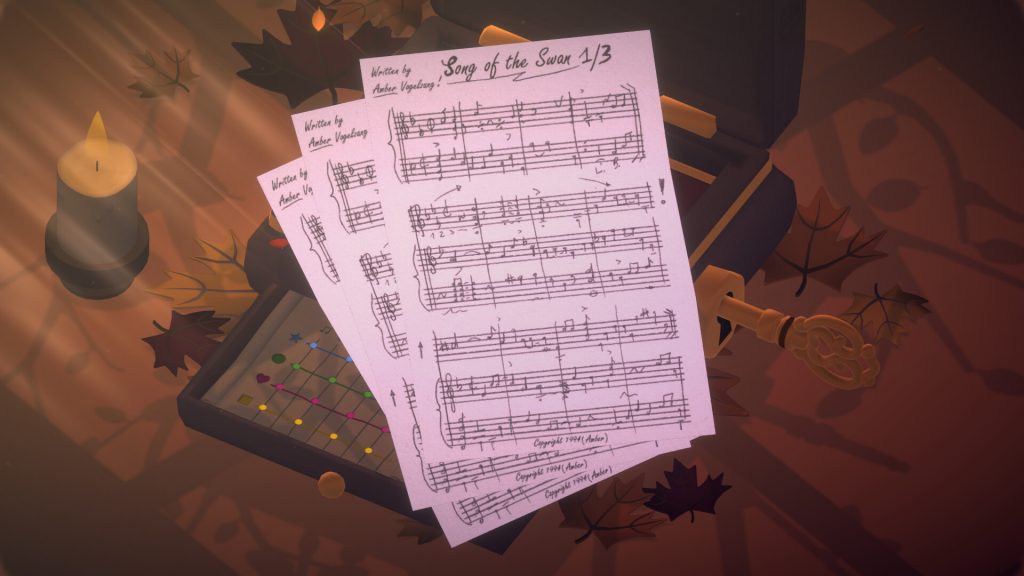
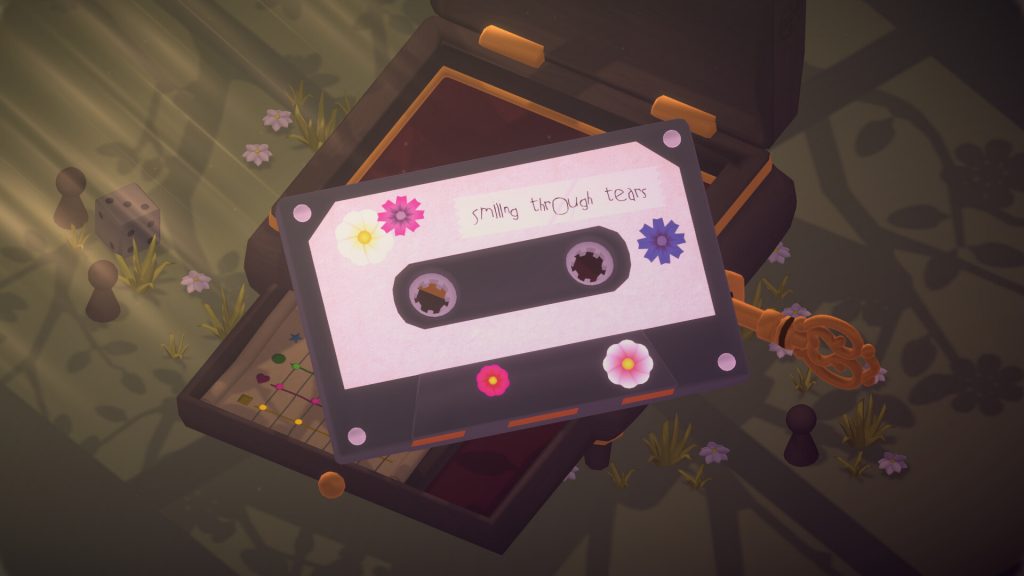
Wind the crank, and music begins to play. Follow the memories, and an entire family’s love, joy, and loss reveals itself, one note at a time. Swan Song, the just-released emotional music puzzle game from Belgian indie studio Business Goose Studios, takes one of indie gaming’s most genuinely difficult subjects — terminal illness and family grief — and translates it into a music box puzzle adventure that’s both quietly devastating and deeply hopeful. Launched June 4 on Steam at €7.99 (with a two-week 20% launch discount), the project represents Business Goose Studios’ most personal work yet, with the narrative drawing directly from real family experiences within the development team.
For a studio whose previous release Sizeable sold 200,000 copies and won Belgian Game Awards Debut Game of the Year, Swan Song represents an interesting trajectory choice. Rather than scaling up to bigger commercial ambitions, Business Goose Studios has scaled down to more intimate territory — choosing emotional depth over expanded scope, personal storytelling over genre conventions.
[Related Article: A Story of Family and Loss, Emotional Puzzle Indie Game ‘Swan Song’]
The Music Box as Memorial
The setting choice carries enormous thematic weight. Swan Song takes place inside a magical music box, where players discover letters, photographs, cassette tapes, and voice recordings hidden throughout its mechanism. Each artifact reveals another fragment of a single family’s memories, gradually building a complete picture of the relationships, love, and loss that define their story.
The music box framing accomplishes several things that more direct narrative approaches couldn’t. Music boxes are themselves cultural symbols of memory and nostalgia — objects associated with childhood, family heirlooms, and the kind of preservation that survives generations. Setting the narrative inside this specific object embeds the game’s themes about memory and continuity directly into its core metaphor.
Music boxes also have inherent emotional textures that the game leverages. The mechanical preciseness of music box compositions, the way the music continues even as the world around the box changes, the small scale that contrasts with the large emotions music boxes preserve — all of this becomes part of how Swan Song communicates its narrative content.
The decision to address terminal illness, death, and surviving grief through environmental storytelling rather than direct exposition demonstrates significant design discipline. The game doesn’t lecture players about loss. It places them inside an environment that gradually reveals what loss feels like through accumulated detail rather than explicit description. This approach respects player intelligence while creating emotional content that exposition-heavy approaches typically can’t achieve.
The low-poly visual style supports this approach. Warm, geometric simplicity creates the kind of cozy-yet-melancholy atmosphere that allows the game’s emotional content to land without becoming overwhelming. The art style is approachable enough for casual players while still serving the more substantial emotional themes the narrative explores.
The Jamal Green Soundtrack
The audio production represents one of Swan Song‘s most significant assets. Composer Jamal Green — known for TOEM‘s acclaimed soundtrack — has provided 11 original tracks that anchor the game’s emotional register.
Green’s work on TOEM established him as one of indie gaming’s distinctive composers, capable of producing music that supports atmospheric exploration without overwhelming the experience. His characteristic gentle, emotionally textured compositional sensibility appears perfectly aligned with Swan Song‘s thematic needs. Where overtly tragic music would risk making the game emotionally exhausting, Green’s lighter touch maintains the cozy register that makes the heavier content bearable.
For a music puzzle game specifically, soundtrack quality isn’t just atmospheric flavor — it’s fundamental gameplay element. The music isn’t accompanying the player’s actions; it’s responding to them. When players place notes correctly and the music plays, the result needs to be genuinely worth hearing. Green’s composition quality ensures these moments deliver the satisfaction that the puzzle solutions earn.
The 11 tracks across 9 chapters provides sufficient musical variety to maintain freshness across the campaign while ensuring each chapter has its own sonic identity. Music puzzle games with insufficient track variety quickly become tedious; Swan Song‘s ratio appears calibrated appropriately to sustain engagement.
The voice acting inclusion across all 9 chapters adds another production layer. Voice work for indie projects can either enhance or diminish the experience depending on quality. The strong critical reception suggests Business Goose Studios delivered voice acting that supports rather than undermines the game’s emotional ambitions.
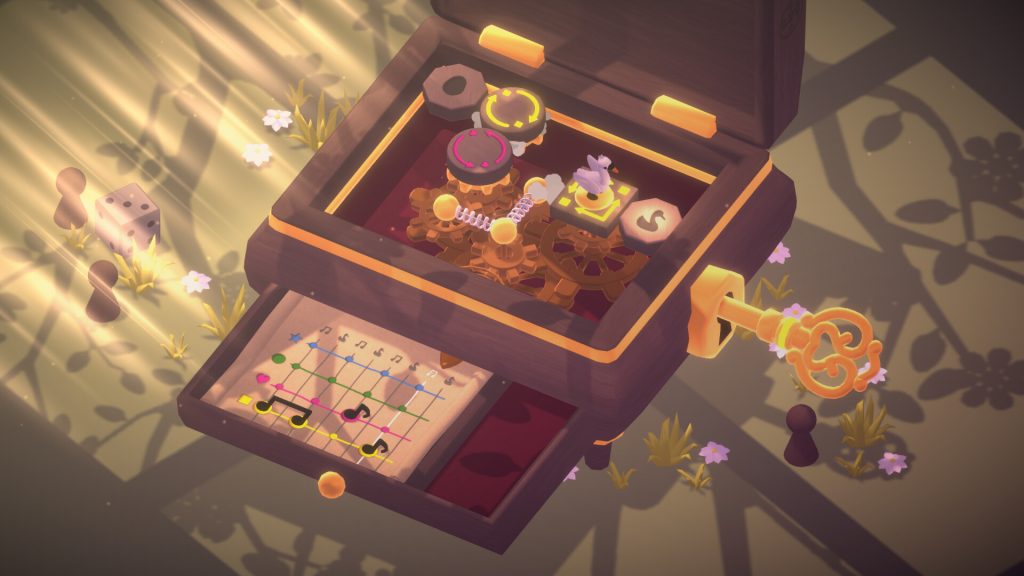
The Note-Placement Puzzle System
The core gameplay combines music and puzzle design through 4×4 grid music sheet placement. Players arrange notes on the grid, and when the music plays, various mechanisms — platforms, lifts, rotating devices — activate in sequence to create paths through each level.
This system represents an elegant puzzle design philosophy. The constraints are simple (limited 4×4 grid, fixed mechanism behaviors), but the strategic depth emerges from the combinations and timing; players must coordinate. Early chapters establish base mechanics; later chapters add new devices and rules that create increasingly complex puzzles within the same fundamental system.
The “simple system, deep gameplay” approach is the hallmark of great puzzle game design. Tetris, Portal, Baba Is You, and many other puzzle classics succeed by establishing small rule sets that produce surprisingly complex strategic territory. Swan Song operates in this tradition — accessible mechanics that develop into substantial depth across the campaign.
The thematic integration between puzzle solutions and narrative content is particularly noteworthy. Just as small music boxes contain enormous amounts of accumulated family memory, simple puzzle constructions reveal unexpected meaning and story content. The puzzle structure isn’t separate from the narrative — it embodies the narrative’s central thesis about how small objects can hold larger truths.
This kind of mechanical-thematic alignment distinguishes great puzzle games from competent ones. Players don’t just solve puzzles; they participate in the narrative through the act of puzzle solving. Every note placement becomes meaningful beyond pure gameplay accomplishment.
The Critical and Community Response
Pre-release press coverage has emphasized the project’s emotional impact. GamesHedge described it as “a work that captures players from the first moment and doesn’t let go until the end,” with a perfect score evaluation. Checkpoint called it “a work where puzzle design, narrative, and visuals interlock as precisely as a music box itself,” — recognizing the structural elegance that distinguishes Swan Song from similar projects.
GameDaily noted Swan Song as one of this year’s indie titles to watch, specifically emphasizing potential for sustained word-of-mouth recognition. Games with strong emotional content often build their audiences gradually rather than through immediate mass discovery, and Swan Song‘s critical reception suggests it has the qualities for this kind of long-term cultural presence.
Community reactions have been emotionally direct. Steam Community responses include comments like “I didn’t expect to cry while solving puzzles” and “quiet but lingering experience.” These reactions identify what makes Swan Song distinctive — it produces an emotional response that puzzle games typically don’t achieve, and that response stays with players after the gameplay ends.
The cross-section of professional and community response suggests Swan Song successfully reaches its target audience. Players who engage with emotionally serious indie work are finding what they’re looking for; press coverage reflects mainstream recognition of the project’s quality at multiple critical evaluation levels.
The Business Goose Studios Trajectory
The studio’s development path provides important context. Sizeable, their 2021 release, achieved remarkable commercial success — 200,000 copies sold, 96% Steam Overwhelmingly Positive rating, Belgian Game Awards Debut Game of the Year recognition. These metrics establish Business Goose Studios as a developer whose work consistently lands with audiences and critics.
After Sizeable, the studio released various projects, including 30 Birds, before approaching Swan Song. The trajectory shows healthy studio evolution — building on commercial success while continuing to explore different creative territory rather than just producing Sizeable clones.
Swan Song‘s decision to engage with intensely personal family experiences represents the kind of creative risk-taking that establishes studios as more than commercially-focused operations. Personal narrative work doesn’t necessarily produce larger commercial outcomes than safer genre exercises, but it builds the kind of cultural standing and artistic reputation that supports long-term studio sustainability.
The studio has also announced plans for free post-launch updates, including a level editor. This commitment to ongoing development extends Swan Song‘s long-term value beyond initial release, providing the kind of sustained engagement that helps indie projects achieve lasting commercial presence.
The Belgian Indie Context
Belgian indie development deserves brief recognition. Belgium has been producing distinctive indie work across recent years (Larian Studios’ Baldur’s Gate 3 being the most prominent example, though representing a different scale and category). The country’s indie scene has benefited from government support for cultural industries and an educational infrastructure that supports game development training.
Business Goose Studios’ continued success contributes to Belgium’s growing visibility in international indie gaming. Each studio that builds sustainable success demonstrates the viability of Belgian indie operations, encouraging continued development and supporting infrastructure investment.
The €7.99 launch pricing (with a two-week 20% discount) represents an accessible pricing strategy that should support a broad audience reach. Indie games priced below typical AAA expectations often achieve volume sales that higher-priced indies struggle to match. Swan Song‘s pricing positions it as accessible to the impulse-purchase market while ensuring meaningful revenue for the development team.
The Personal Source Material Question
The most significant ethical dimension of Swan Song is its origin in real development team family experiences. Drawing from genuine personal grief to create an entertainment product carries specific responsibilities and risks that pure fictional approaches don’t.
The way Business Goose Studios has navigated this appears thoughtful. The narrative isn’t presented as a memoir or documentary — it’s fictionalized through the music box framing and family characters that represent rather than directly recreate real people. This fictional layer provides emotional protection both for the development team members whose experiences inspired the work and for the family members they’re honoring.
The decision to share rather than privatize these experiences also has meaningful value. Players experiencing grief themselves often find that engaging with art about grief provides recognition and processing that pure conversation can’t always offer. Swan Song contributes to the body of work that helps audiences process loss through creative engagement — and this contribution emerged because the development team chose to share rather than withhold.
This kind of personal artistic risk-taking is exactly what indie development enables. Major publishers would likely steer such projects toward less personal content for commercial safety; indie development allows creators to pursue the projects that matter to them personally, sometimes producing exactly the kind of meaningful work that mainstream production can’t.
Who This Is For
Strong fit for: puzzle game enthusiasts seeking emotionally substantive experiences; players who appreciated TOEM (sharing the same composer); narrative game fans drawn to grief, family, and loss themes (similar territory to Spiritfarer, Florence, That Dragon, Cancer); music puzzle enthusiasts; players seeking shorter, more intentional experiences over open-ended scope; Sizeable fans following Business Goose Studios’ continued evolution.
Cautious fit for: players currently experiencing grief who may find the themes too immediate; anyone uncomfortable with terminal illness as gameplay subject matter.
Less ideal for: players seeking action-focused gameplay; anyone uninterested in puzzle games as a genre; players who specifically avoid emotionally challenging content.
What to Watch For
A few questions will shape Swan Song‘s longer reception.
The first is how the 9-chapter structure paces the emotional content. Emotional puzzle games can become exhausting if the weight is sustained too long; Swan Song‘s ability to balance emotional moments with gameplay engagement will determine whether players complete the full campaign or set it aside.
The second is the level editor promise. Free post-launch updates with level editor functionality could significantly extend the game’s commercial life, but the implementation quality will determine whether community engagement actually develops or whether the editor remains underused.
The third is the cultural conversation development. Swan Song has the potential to become referenced in broader conversations about indie games engaging with serious emotional content. How the project becomes positioned within these conversations will affect its lasting cultural standing.
The fourth is the impact on Business Goose Studios’ continued trajectory. Sizeable established the studio commercially; Swan Song establishes them artistically. How these dual identities support future projects will shape the studio’s long-term development.
The Takeaway
Swan Song is one of the more genuinely meaningful indie releases of 2026 — a project where personal experience, design discipline, and emotional ambition combine into something that transcends typical genre expectations. The combination of music box framing, Jamal Green’s soundtrack, elegant puzzle design, and personal narrative source material produces an experience that earns its emotional impact rather than manipulating audiences through cheap sentimentality.
For puzzle game enthusiasts, this is a clear recommendation. The mechanical depth is substantial, the design is elegant, and the emotional weight transforms what would otherwise be competent puzzle gameplay into something more lasting.
For players seeking serious indie work, Swan Song operates in territory that genuinely matters. Games about grief and family are rare; games that handle these subjects with both compassion and craft are rarer still. Business Goose Studios has delivered exactly this combination.
For a broader gaming culture, Swan Song contributes to the growing recognition that indie development enables artistic work that mainstream commercial pressures often prevent. The personal source material, the emotional risk-taking, the willingness to create something that doesn’t fit standard commercial templates — all of this justifies why following indie development matters culturally.
A music box. Letters, photographs, and cassette tapes hidden inside it. A family’s accumulated memories are revealed gradually as players place notes and listen to what those notes create. Terminal illness and the love that surrounds it. Grief and the continuation that survives. Voice acting and Jamal Green’s compositions across 9 carefully constructed chapters. A €7.99 price point that makes this remarkable work accessible to virtually anyone curious about it.
As emotional puzzle game pitches go, Swan Song‘s is one of the most genuinely affecting of 2026 — and Business Goose Studios has delivered the kind of release that creates the conditions for sustained word-of-mouth recognition rather than just an immediate commercial spike.
The music box is wound. The notes are placed. The memories are waiting to be discovered. And one of the year’s most quietly powerful indie releases is now available for players ready to engage with a small object that contains more emotional truth than most games, much larger than itself.
Wind the crank gently. The music is about to begin.
Information regarding ‘Swan Song’
| item | detail |
|---|---|
| Developer | Business Goose Studios |
| Genre | Emotional Music Puzzle / Narrative Adventure / Cozy Puzzler |
| Release platform | PC (Steam) |
| Release date | June 4, 2026 |
| price | €7.99 (20% discount for the first 2 weeks) |
| Chapter number | Chapter 9 (including voice acting) |
| Soundtrack | Composed by Jamal Green (Same composer as TOEM) / 11 tracks |
| Based on the original work | Development team’s real family experience |
| Awards | Previous work Sizeable — Belgian Game Awards debut Game of the Year |
| Previous sales | Sizeable 200,000 copies / 96% positive rating on Steam |
| Release history | Galaxies Showcase (Release Date Announcement) |
| Main Keywords | Music box, puzzle, sadness, family, loss, cozy, sentiment, musical note, swan |
| Official Channel | X · YouTube · Discord |
| Steam Page | Shortcut |